Clintonville Electric
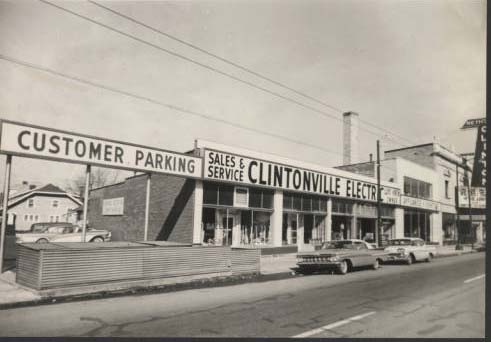 In my previous post, I described the progressive “takeover” of the addresses 3361 North High through 3367 North High, by the business Clintonville Electric [Appliance] Store. Lloyd Beaman Hinton owned that business.
From the library:
Lloyd Beaman Hinton (6/3/1904 – 4/18/1994) is said to have founded Clintonville Electric Company in 1939. Hinton was an appliance salesman in Springfield, Ohio before moving to Columbus and becoming manager of Clintonville Electric at 3367 North High. He ran and expanded the business for 20 years until his stepson, Phillip William Karshner (6/1/1934 – 7/9/2022) took over. Karshner retired in 2004 and sold the business to Paul Holmes, Scott Jester and Tom Cover. The store moved to 2136 Bethel Road the same year and was closed in 2008 due to bankruptcy.
Some very nice photos can be found on the Columbus Metropolitan Library’s web site here. You’ll see photos of the founder Lloyd Hinton, and employees, as well as some terrific pix of the interiors and exteriors of the business.
In 1945, Lloyd Hinton lived at 35 West North Broadway (but it seems he was renting that home) and later at 541 Walhalla (and eventually on Teteridge.)
(Link courtesy of The Columbus Metropolitan Library, Local History & Genealogy Dept.)
Spiros Spantithos
 I enjoy immigrant stories so thought I’d share the story of former Clintonville resident and business owner Spiros Spantithos, aka Sam Spandos. I’m piecing this story together from public records, so I may be wrong in the details and would be happy to be corrected or to receive more information!
Spantithos is the original owner of the building(s) that eventually housed Clintonville Electric.
Spantithos was born in Sparta, Greece, on Feb 15, 1884, and came to this country in 1902. In 1912 he returned to Greece and stayed until 1921, during which time he served 8 months (or perhaps 8 years, depending on the source) in the Greek army. Greece was involved in several wars during this time–the Balkan wars with Bulgaria, and a war with Turkey. I’m not sure when Spantithos married, but on this first trip home to Greece he fathered 2 sons and a daughter.
He returned to the States in 1921, and became a naturalized citizen around 1926, at age 42. Spiros names two boys on his 1926 naturalization papers—-George, age 8 [sic], and Demetros, age 6, both in Greece. His naturalization papers do not mention his wife, Nicoleta Sicaras, nor his daughter. Neither his wife nor his daughter seems to have come to the States. (Nicoleta does have a record in the Social Security Applications and Claims Index 1936-2007.) His son George came to the States in 1935 at the age of 19.
Spantithos’ U.S. draft card states he lived at 18 West Brighton (he lived there along with his brother James), and he purchased 3361 N High in November 1936. That is where he and his brother opened the Oakland Park Restaurant. (He got a beer license for his restaurant at 3361 N High in 1933, and he leased the space before he purchased it.) On occasion the 24-hour restaurant, or nightclub, had skirmishes with the law–notably for Sunday dancing (!!) and for serving alcohol after hours. He also leased an adjacent “storeroom.”
In 1938-39, Spantithos returned to Greece for a 7-month visit, and this was the first time he saw his daughter, who was by then 17 years old. I found Spiros’s name on a passenger list for a ship arriving in NY from Italy, 6-Jul 1939, and travelling back to Europe with son George and George’s wife Susan in 1951, but again, no mention of his wife. In the 1940 and 1950 censuses, he is listed as married but his wife Nicoleta isn’t listed in his household.
Spiros died in November 1970.
His son George (born Jan 25, 1920 [sic] in Sparta Greece) assumed ownership of 3361 N High, in 1972 after Spiros died. He and his wife Susan had purchased property at 4469 Rosemary Parkway in 1953 and lived there until George died in February 1994. I believe it was George and Susan who accumulated the additional properties in the Spantithos portfolio, including, for awhile, The Blue Dube.
(Newspaper clippings courtesy of the Columbus Dispatch, accessed through the Columbus Metropolitan Library’s NewsBank database. Detailed citations can be found on each clipping by clicking through their links.)
Holiday Greetings
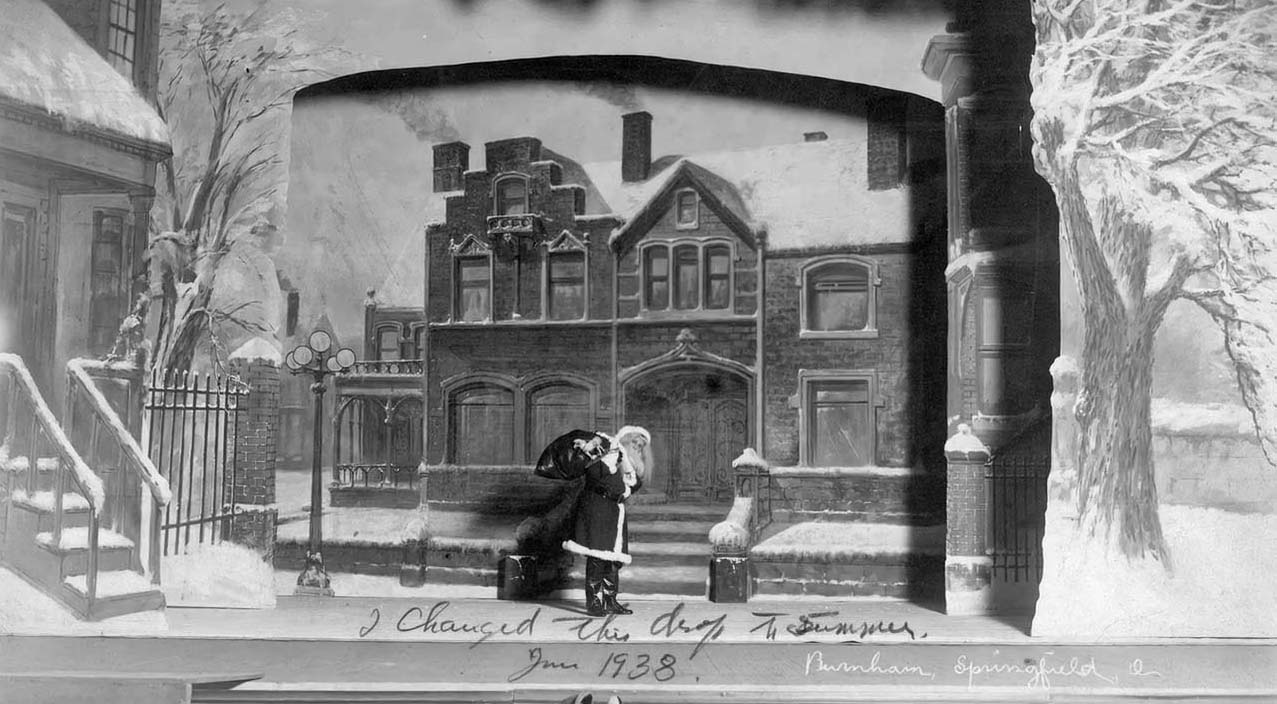
Painting by Mathias Armbruster, courtesy of the Mathias Armbruster Scenic Studio Collection at OSU, and taken from WOSU’s Broad and High clip about Mathias Armbruster’s studio.
Good News, Bad News
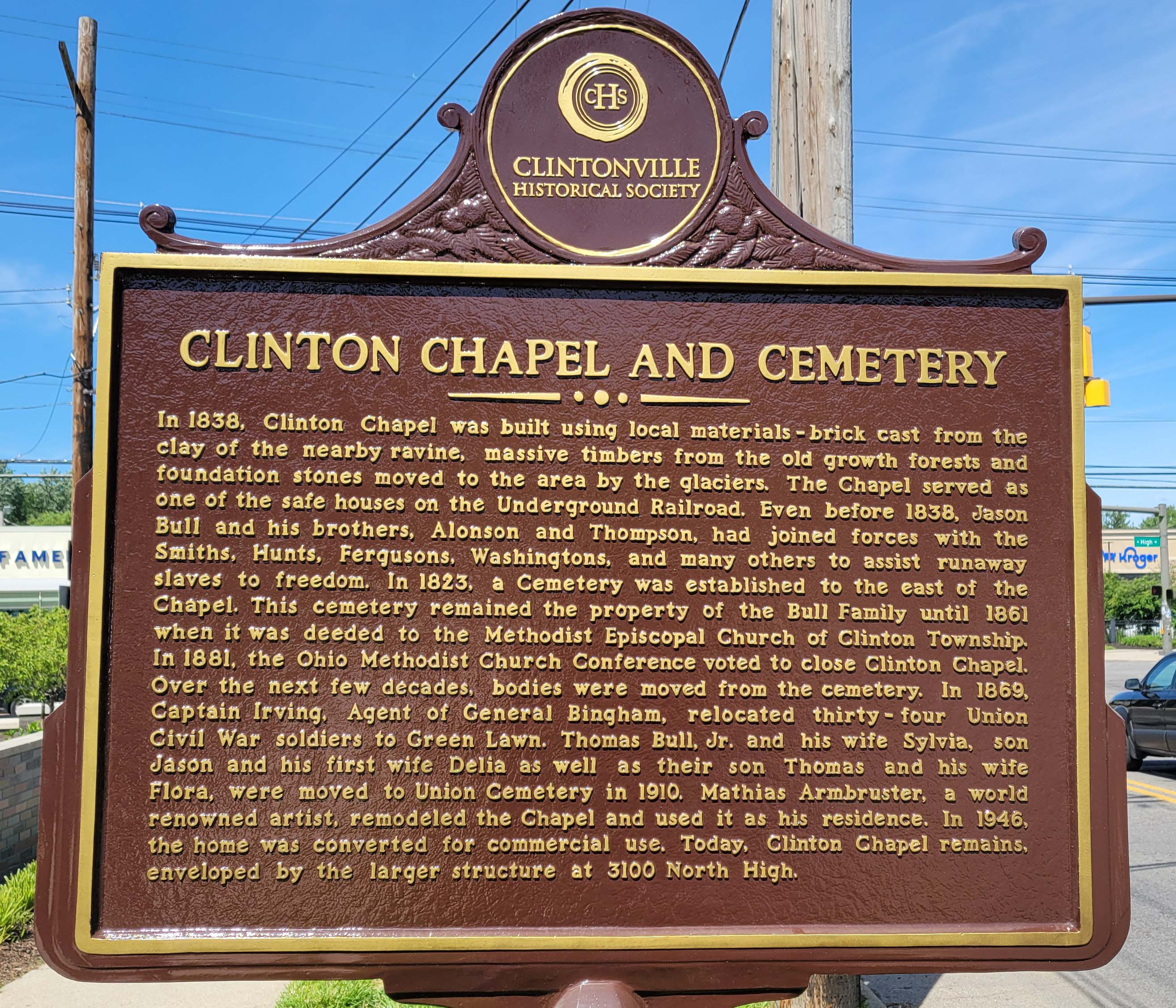
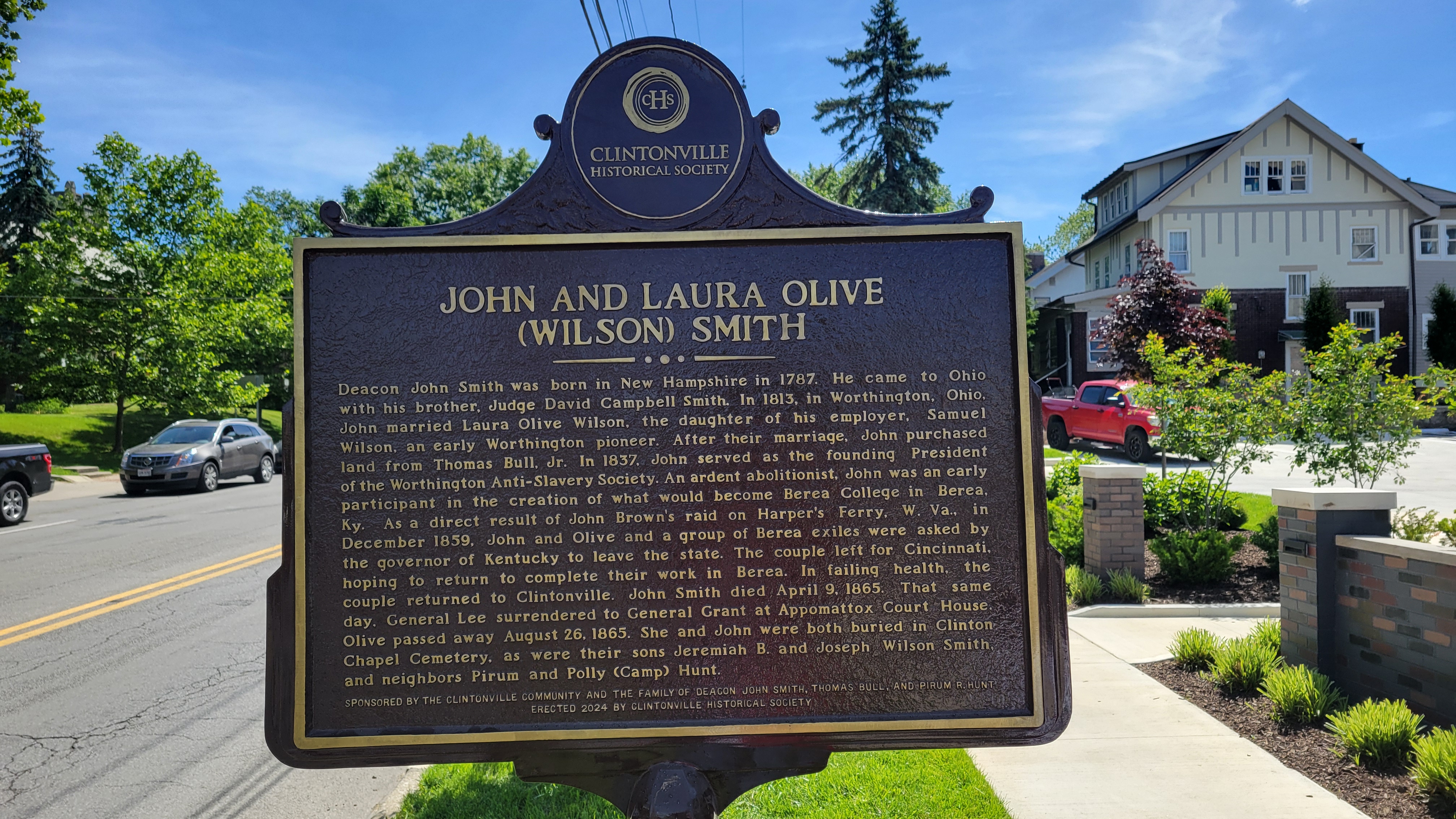
On the bright side: Clintonville Historical Society has erected a new plaque for the Clinton Chapel and for John and Laura Olive (Wilson) Smith near the corner of East North Broadway and North High. It gives us pause to remember slaves and slavery in the Unites States and to give thanks to the people who fought against it.
On the bad news side: it’s very unfortunate, from my perspective, that 12 staff were recently laid off from Ohio’s Historic Preservation Office. The federal government mandates that every state must have this sort of office, and to accompany that mandate they give the offices some money to fulfill their mission. That money was apparently withdrawn by DOGE and so Ohio History Connection had to terminate staff. Here’s a link to a newspaper article about the staff terminations.
[Photos courtesy of Joe Smith.]Bill Good, 1946 – 2025
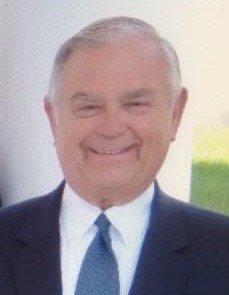 I was very sorry to recently learn of the death (in February 2025) of Bill Good, former owner of the Southwick-Good & Fortkamp Funeral Chapel. This funeral home, at 3100 N High, was located at the site of Clintonville’s Clinton Chapel, which later became the home of Mathias Armbruster, became a funeral home in 1938, and is currently a day care center.
I met Bill when I was working on my Clintonville and Beechwold book. He was a devoted caretaker of the building in which his funeral practice was located, knowledgeable about its architecture and history, and respectful of the entire property. He even made sure that expert wall builders were called in the rebuild the property’s perimeter wall, at considerable expense. He was always willing to share his knowledge, and was patient even as he had to explain to me what an “adze cut” is. He had civic pride and was pleased that the building served as a polling place each election day. More personally, he graciously advised me in planning for the funeral of my mother-in-law. I am grateful. I remember Bill fondly and extend my condolences to his wife and family.
Open House at 314 W. Kanawha
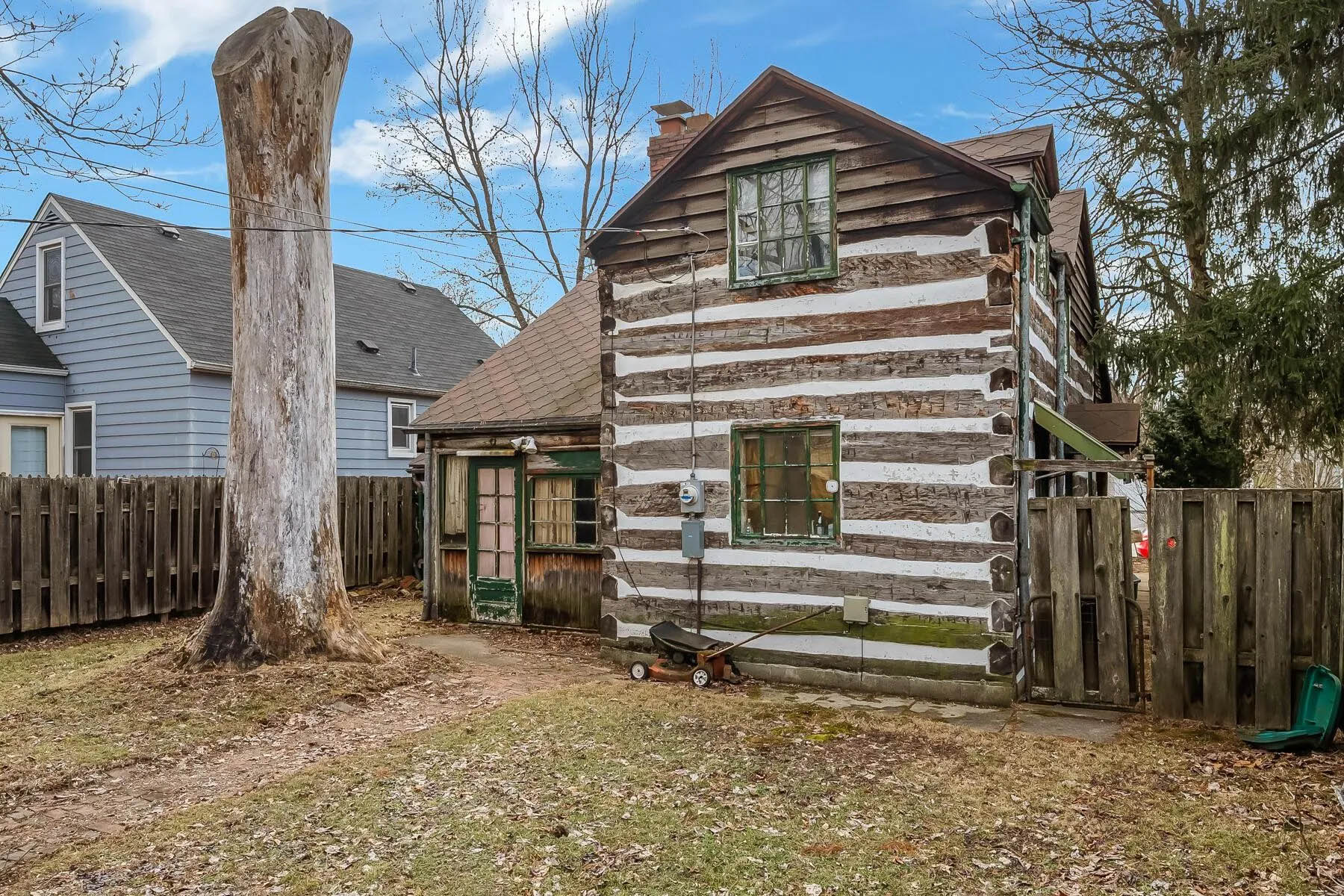
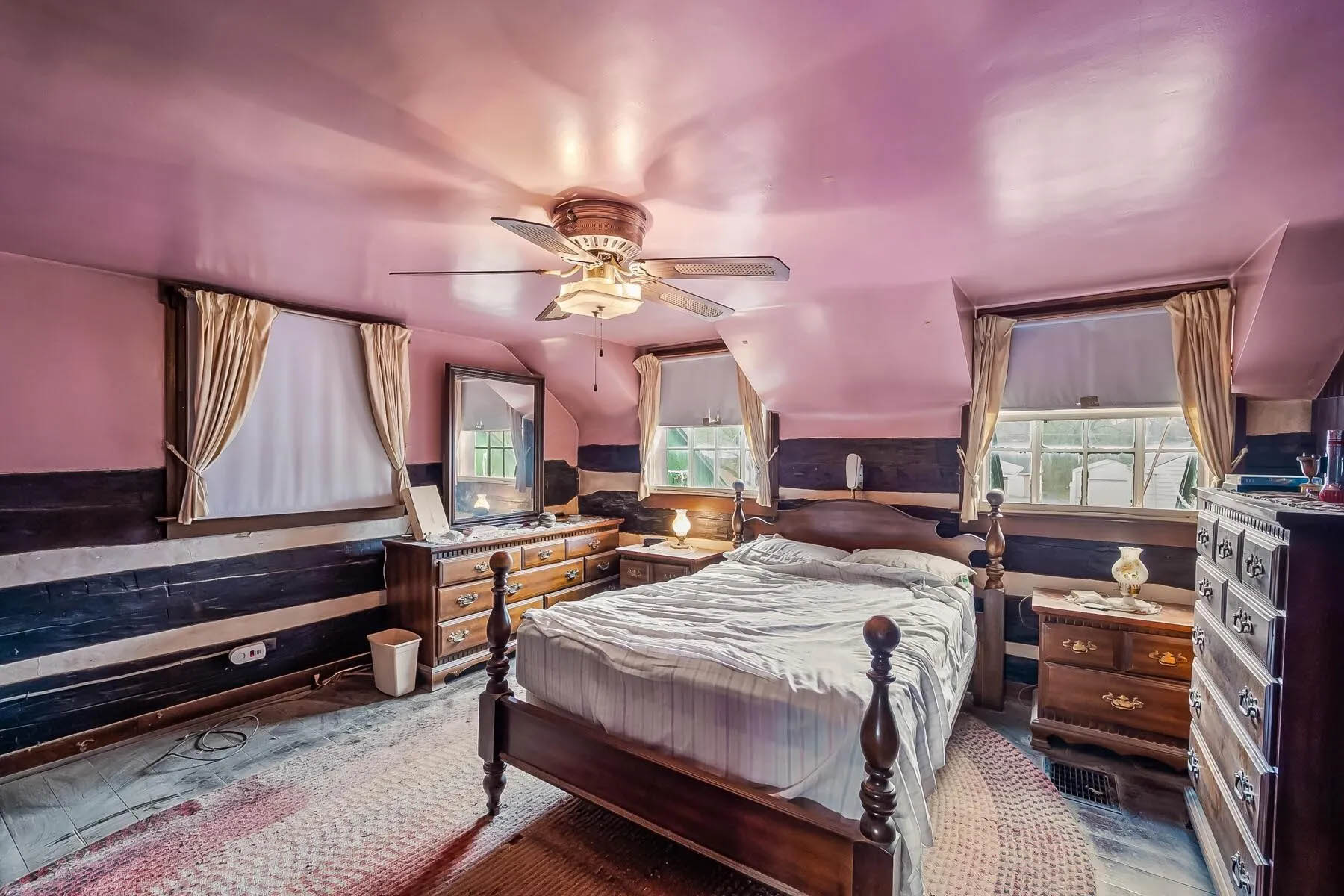
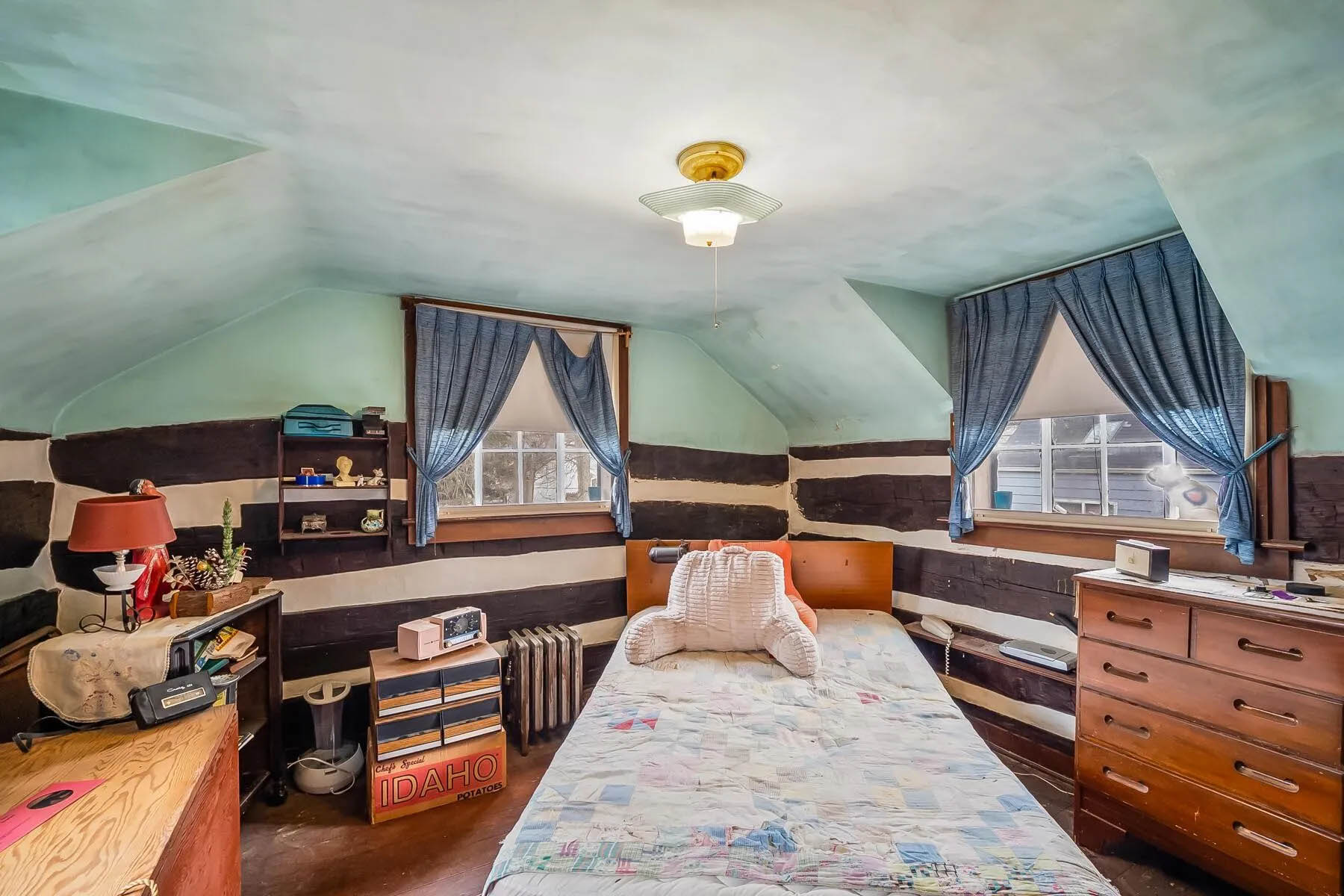
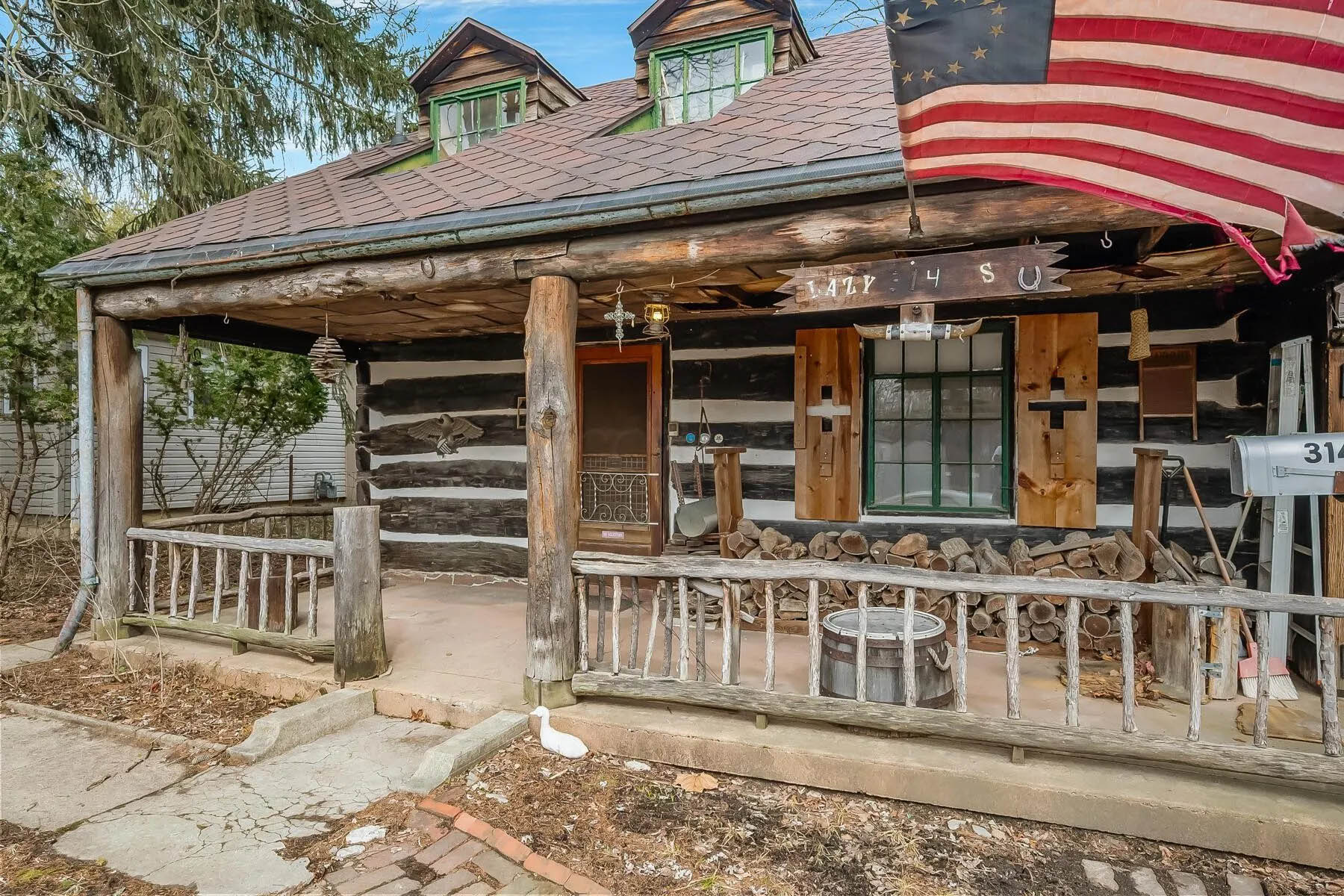 The log home at 314 West Kanawha is up for sale! Wendy Baker alerted us to this auction; the auction starts at $100,000.
Wendy had first told me about this property and the family who developed it; my post is here.
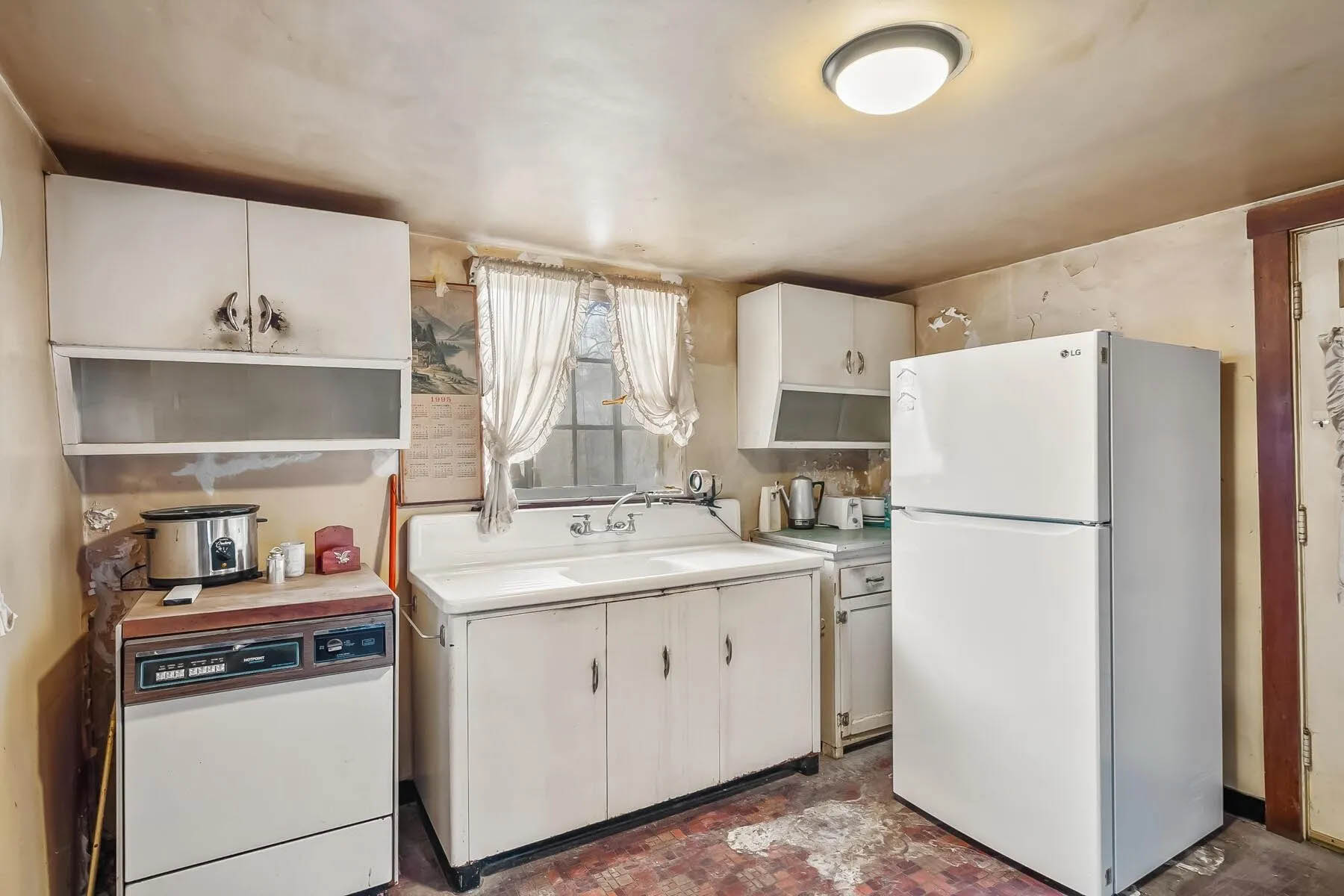
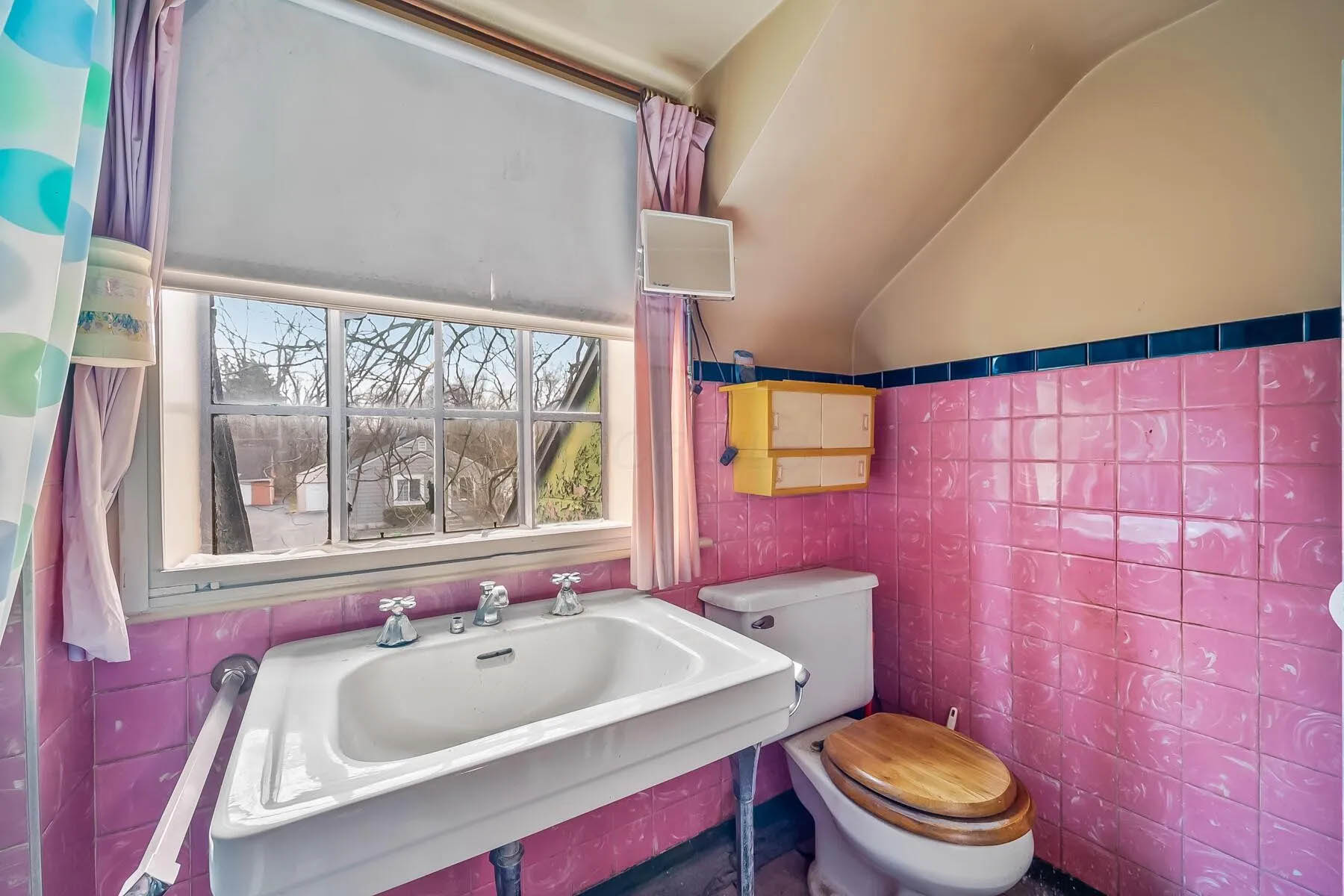
The house has had just 2 owners since the Rorers built it, and the most recent occupant purchased it in 1973. Here’s the current listing, with some pix of the houses’ internal rooms.
The Columbus Dispatch did a nice article about the auction, but does not seem to allow me to provide you with a gift link. Here is the article for those of you with a subscription.
If you’d like to see it, the home will be open from 5 p.m. to 6 p.m. Thursday March 27 and again on April 6, from 1 p.m. to 2 p.m. The auction will end 4 days later.
I went to the first open house this past week, and can attest that it needs some loving care. I certainly hope it’s not a “knock down.” And of course, I wonder who “Ma” and “Pa” are.
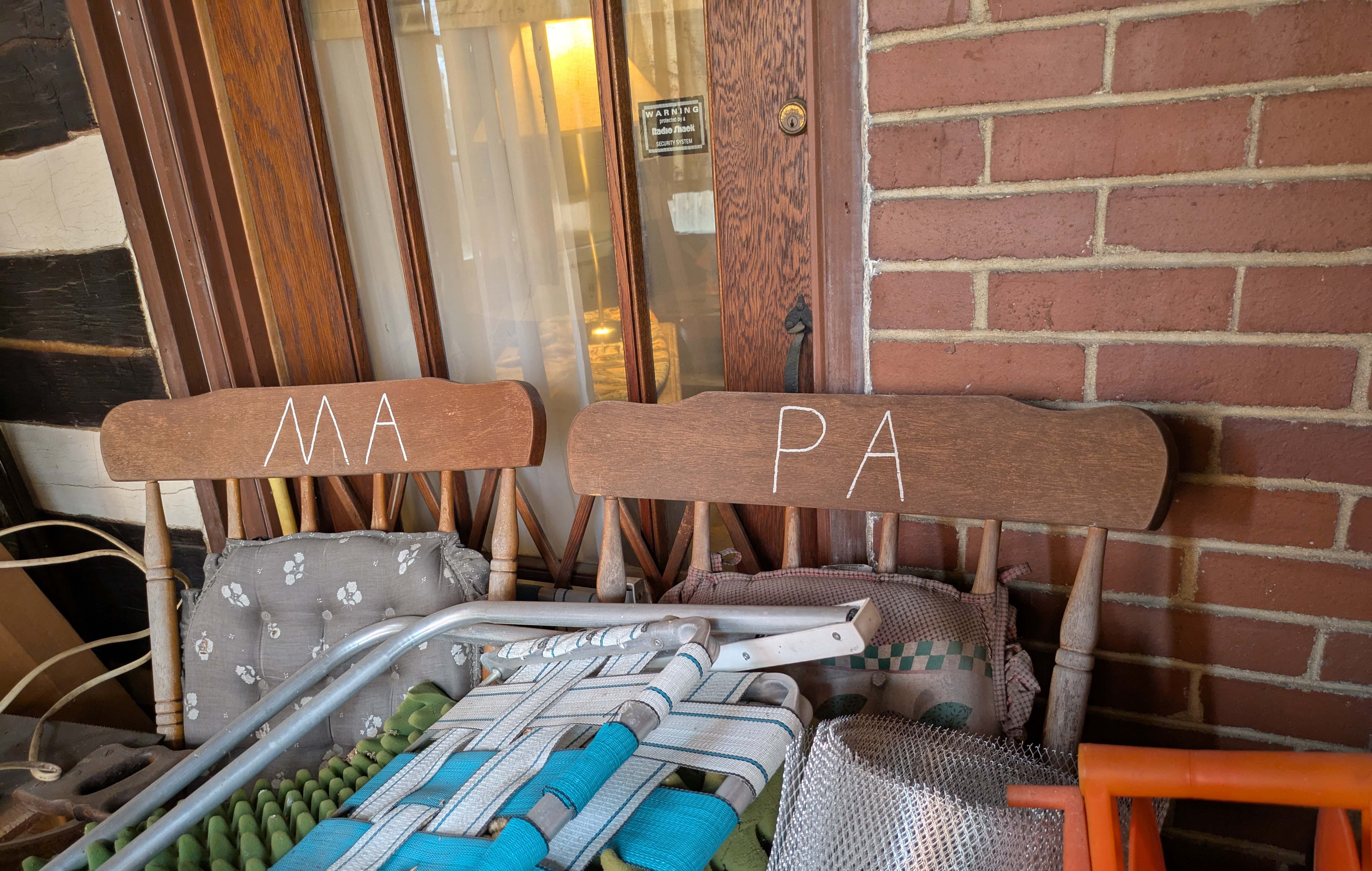
Here are a few more pix courtesy of the realtor’s web site.

A History of the North Methodist Church, by Ruth Ellen (Grove) Rutherford
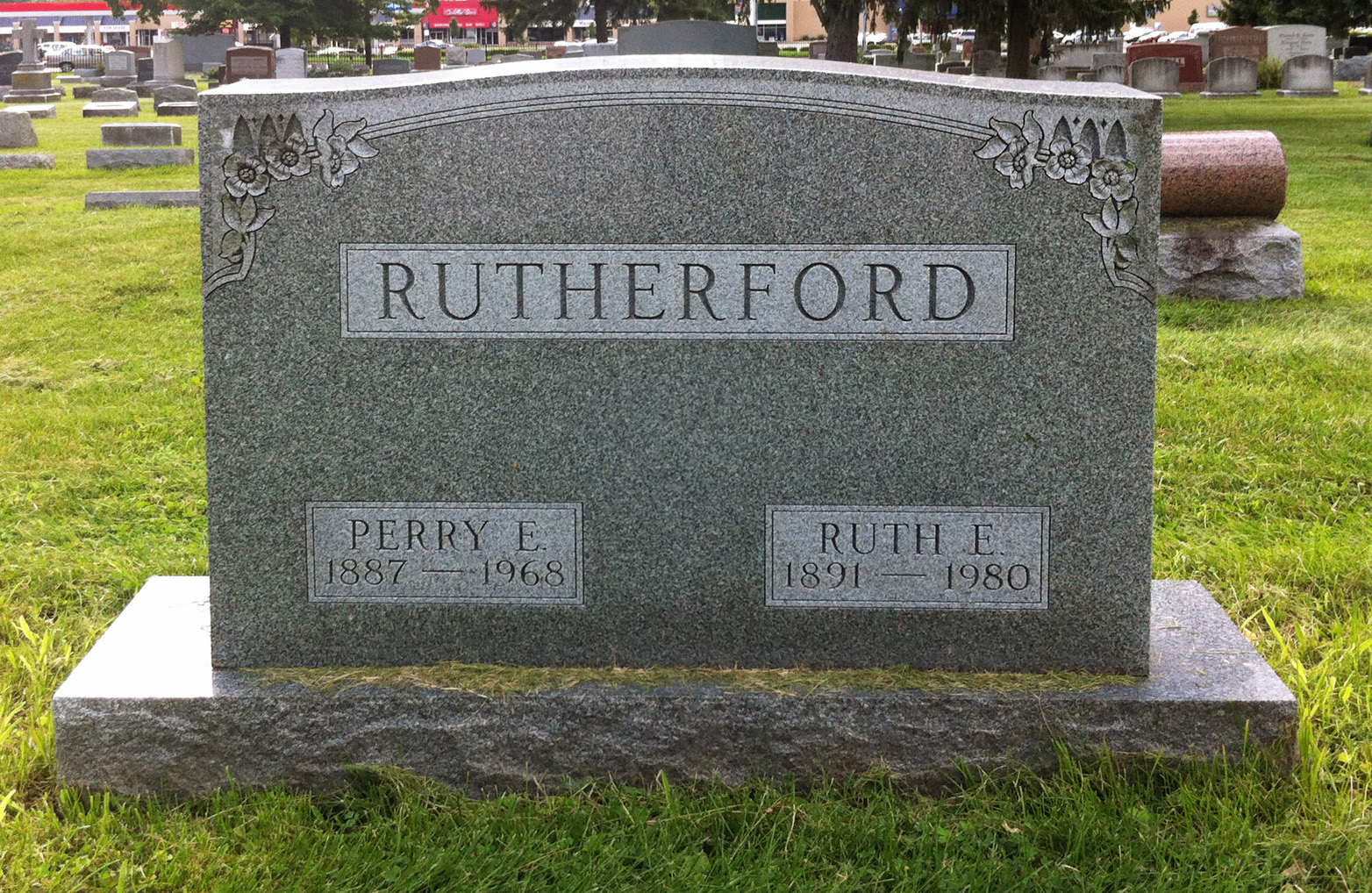
Joe Smith kindly shared this item with me, after discovering it at the Columbus Metropolitan Library. It’s A History of the North Methodist Church, Clinton Chapel, North Columbus by Ruth Ellen (Grove) Rutherford.
Ruth Ellen (Grove) Rutherford [1891-1980], a long-time area resident, wrote the history in 1970. The book includes both some history of the Clinton Chapel Cemetery, some information about the old Beers/Piatt log cabin and its move to 40 E. Norwich Ave, and info about the Underground Railroad activities of Pyrum and Polly Hunt. Joe was pleased to see mentions of his own ancestors including the Hunts–Joe’s grandfather Smith‘s maternal 2nd great-grandparents (page 16)–and his grandfather’s maternal grandparents, Horace and Sarah Theresa Young, and his mother, Minnie Belle Young, who are listed as members of North M.E. Church (page 24) in 1898. Minnie married Joe’s great-grandfather, Roy Ripley Smith, a year later, on 20 Sep 1899.
As Joe says, this is a poignant message how the Clintonville community came together and rallied around a greater cause. It’s a message of inspiration just as relevant 142 years later.
[Courtesy of Joe Smith, and the Rutherford family.]Log Home on Westwood Road
 Ann Conner allowed me to see the inside of her 168 Westwood Road home when I was working on my book. You can get a glimpse of it here, in a 1988 10tv item.
Or here, as an AirBnB listing.
Maps Maps Maps
Here are some cool links for old maps:
City of Columbus Planning Maps, Historic Maps.
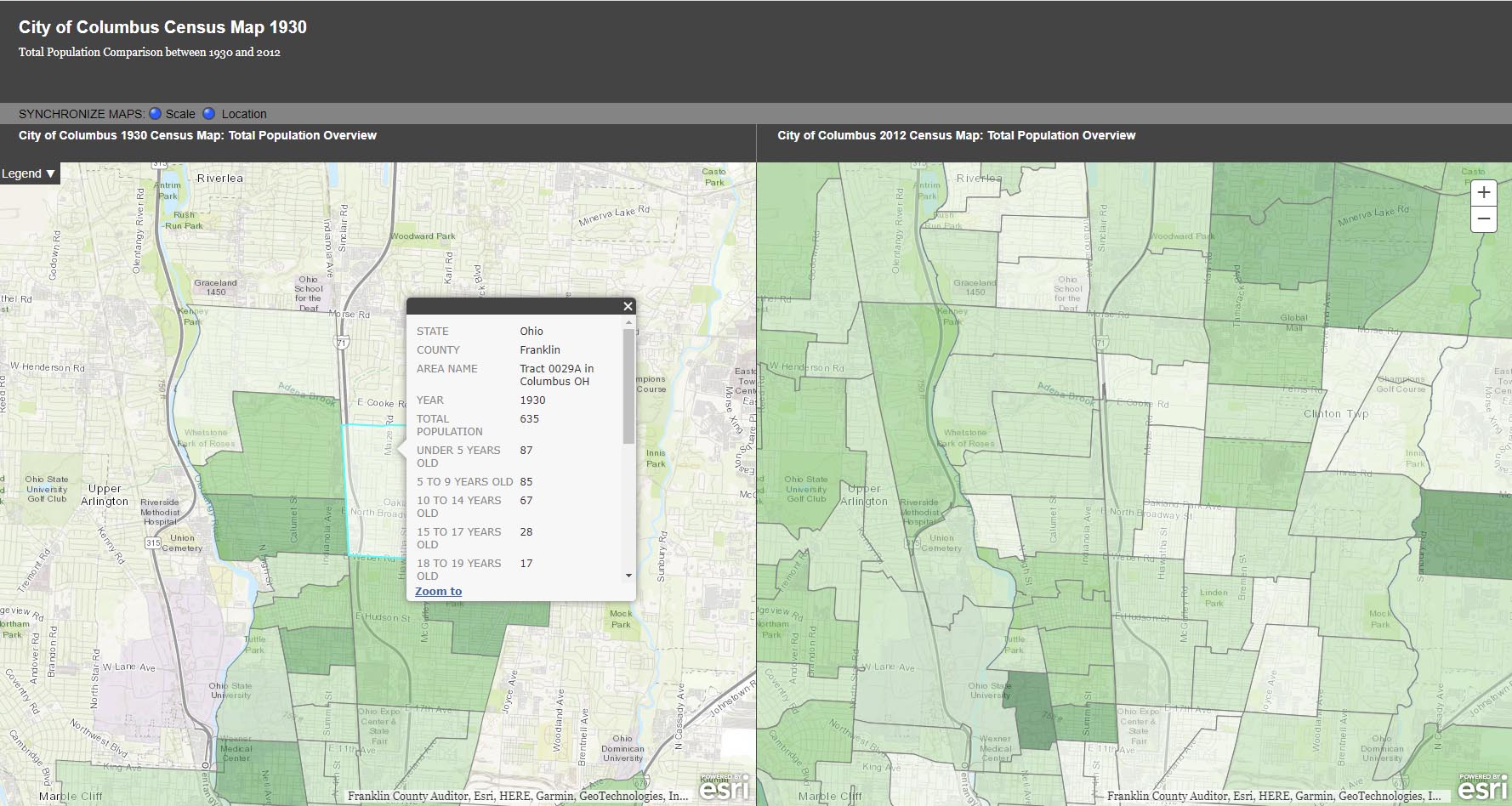
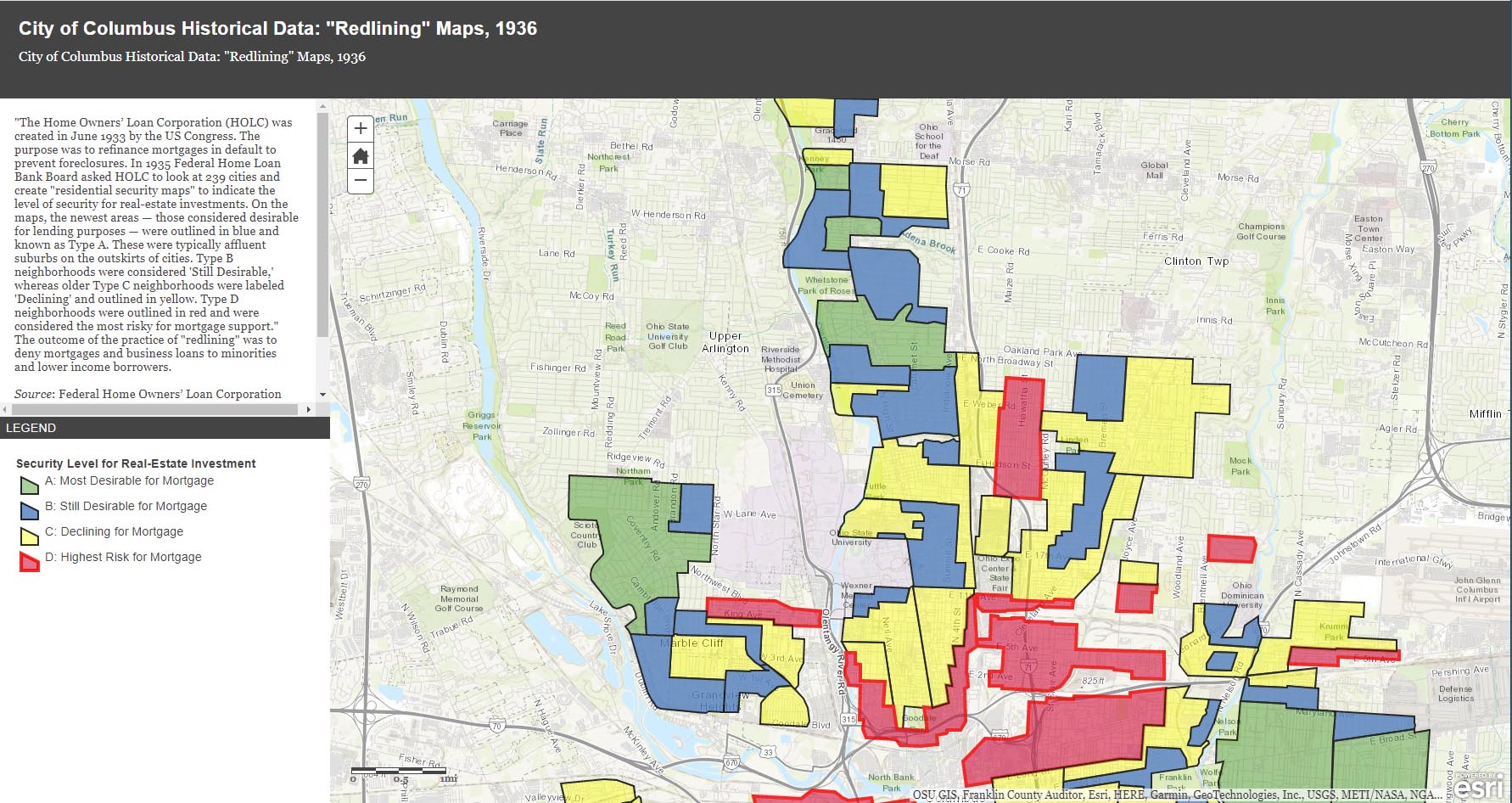
The City of Columbus’ web site gives us plenty of maps and data to play with, from Census demographic changes to despicable redlining and more. Check out especially the “City of Columbus Historic Panoramic Images, 1922,” which is based on a 1922 Ohio State University masters thesis by Forest Ira Blanchard. “Blanchard, inspired by the Chicago School of Sociology, sought to study the racial and ethnic composition of the city, with a particular focus on the role of transportation (railroads, roads) in shaping the urban landscape. Source: Forest Ira Blanchard, An Introduction to the Economic and Social Geography of Columbus, Ohio. Thesis (M.A.), Ohio State University, 1922.”
Columbus Metropolitan Library’s Columbus and Ohio Map Collection. If you haven’t donated to the library yet, now’s the time! It and and it’s staff are such great resources.
Sanborn Maps for Franklin County (scroll down to see Columbus). This is a Library of Congress site.
USGS Historical Topographic Map Explorer allows you to specify a place you want to explore, then click on a location to see its historical maps.
Prolific programmer Randy Majors has produced several products of interest, including his Historical U.S. Counties Map Tool and Auto-Checker Extension. He has also created a couple of video walkthroughs of a couple of the the software tools he has created. I recommend you view them in order, as understanding the Historical U.S. Counties map tool will help you have better success with using the Auto-Checker chrome extension.
Old Maps Online OldMapsOnline.org indexes over 400,000 maps, thanks to the archives and libraries that were open to the idea and provided their online content.
Do you know of other map resources? Let me know and I will add them to this post.
Joseph Wilton Smith & Ancestors
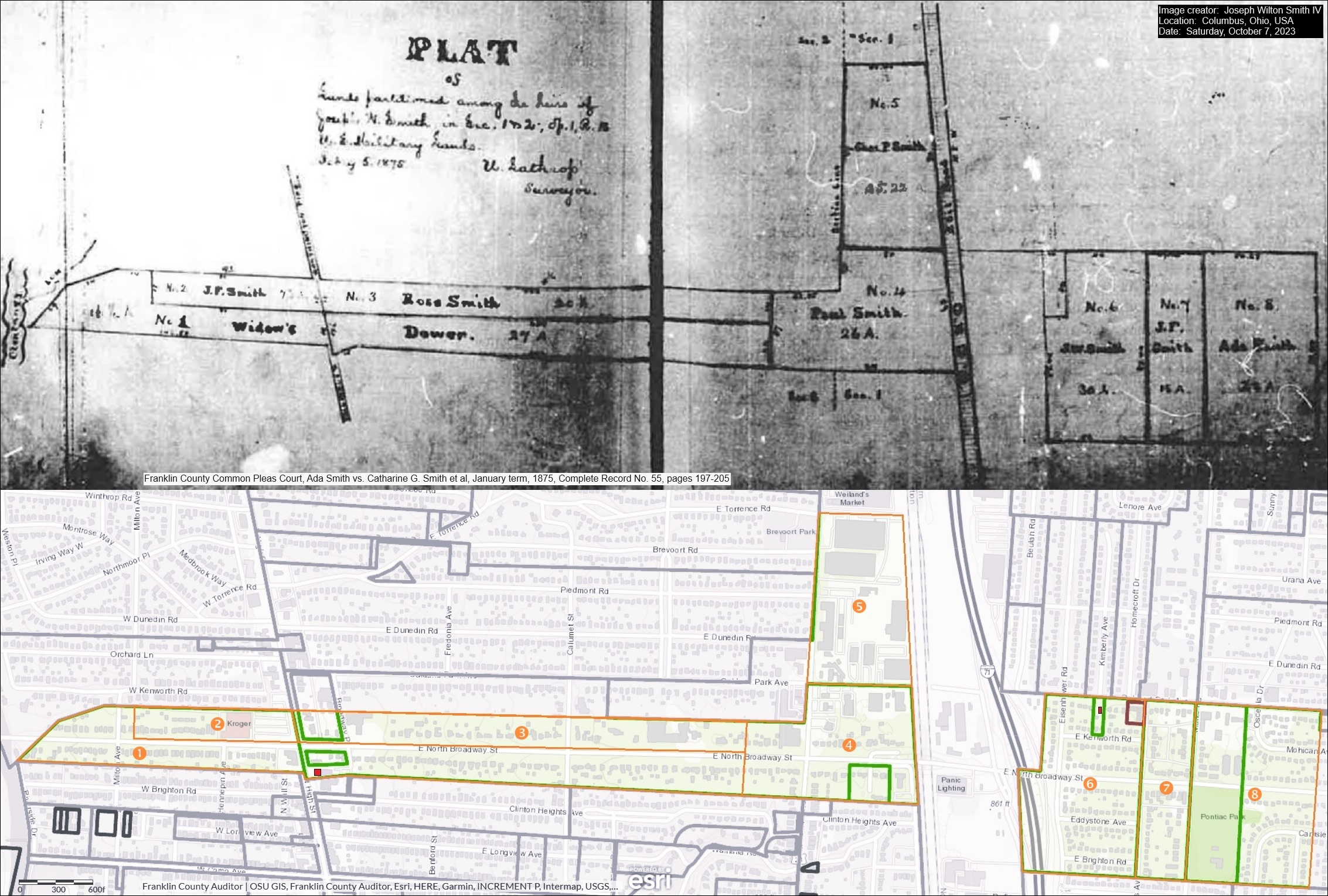 Joseph Wilton Smith IV recently contacted me. Joe’s ancestors owned a house at the southeast corner of East North Broadway and North High Streets, perhaps where the Cochran House was before it was demolished…or–as Mary Rodgers speculated in the May 2020 CHS Newsletter– possibly that very house. Joe has kindly sent along an image that includes several maps:
1) An 1875 map of the legal division of Joseph Wilson Smith’s farmland in Clintonville, Ohio to his heirs
2) A modern map extracted from the website of the Franklin County Auditor that outlines these lands in orange over the current Clintonville area streets. And,
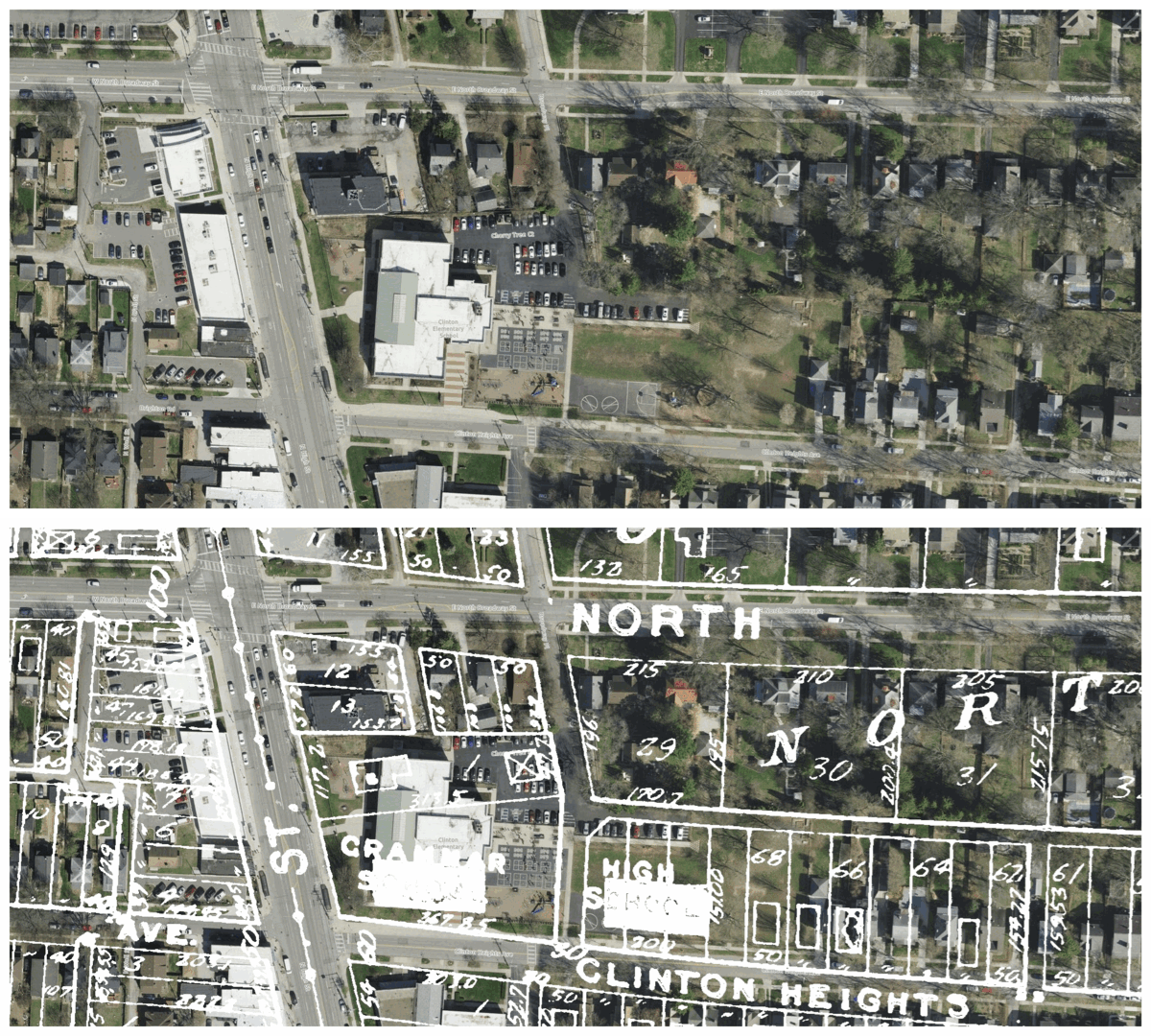
3) The property lines from the 1910 Baist map superimposed on the 2023 satellite view of E.N Broadway and N High.
Joe writes:
I am a direct descendent of three early Clintonville settlers: Thomas Bull, Deacon John Smith, and Pirum Hunt.
I am named after my grandfather, who was named after his grandfather, who was named (sort of) after his father, Joseph Wilson Smith. His wife, Catharine Gray (Piatt) Smith was my third great-grandmother. For the past three months, I have been working closely with Mary Rodgers to sponsor a historical marker honoring my ancestors and their contributions to early Clintonville. My great-grandfather was Roy Ripley Smith, who lived at 145 W. Royal Forest Blvd. in Beechwold. My dad told me Roy also owned a farm that later became part of Highbanks Metro Park.
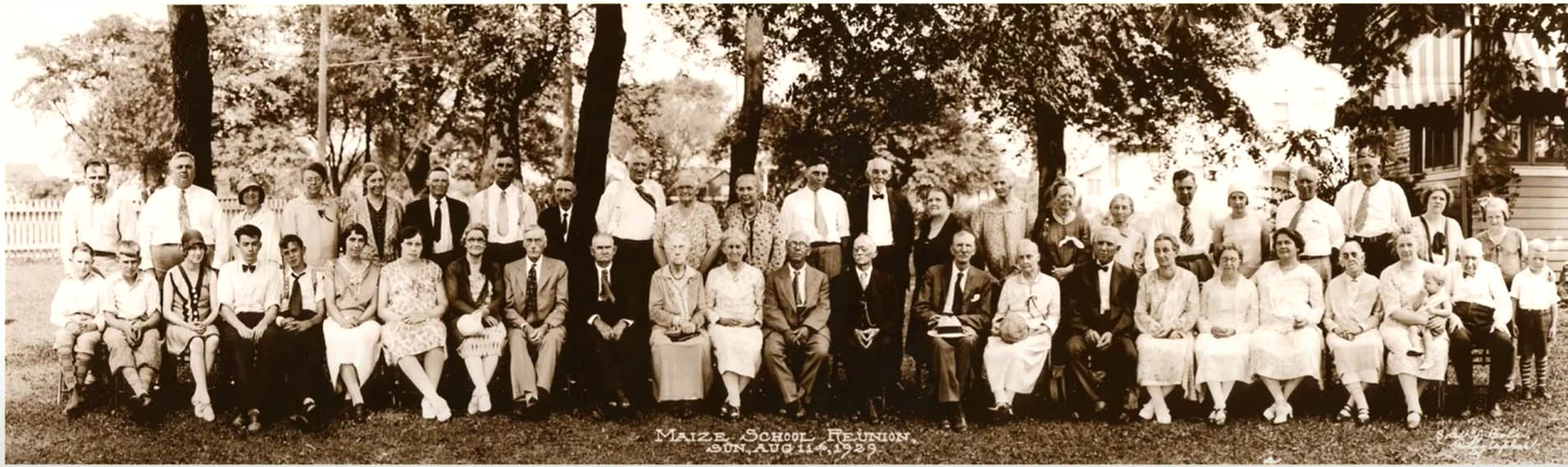 In January 2024, Joe Smith gave a presentation to the Clintonville Historical Society about his ancestors, and most especially his ancestor Deacon John Smith. John was a churchman and also an abolitionist in our area. Joe’s presentation is also a great example of what you can do if you set about researching your family’s history.
Joe’s presentation can be found here. The handout for that presentation can be found here.
Thanks Joe!
[Thanks to Joe Smith for sharing his research and his presentation. He welcomes additional information and input on his research, and extends his thanks in advance. Contributors to his research include Sharon Hendershot, Nancy J. Pendleton, Mary Rodgers, Elizabeth Renker, and Kathie Smith Brzoska.]West Kanawha: A “Surcease from City Life”
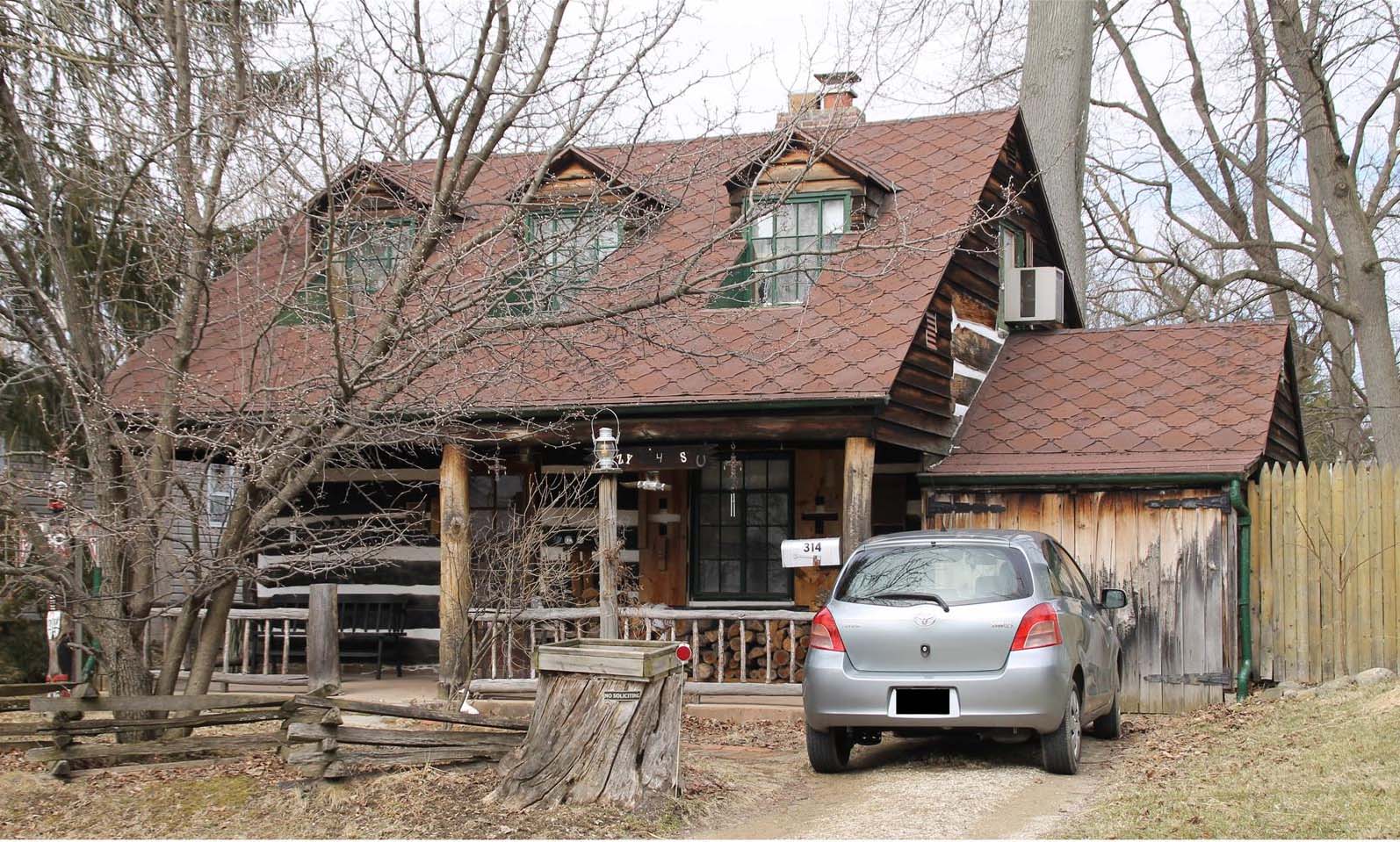
Sometimes a house tells the story of a person, right? In this case the story is about Frank and Bertha Rorer.
This story was sent to me by Wendy Bayer, who writes, “During COVID, I did quite a bit of walking around Clintonville and found myself on West Kanawha one afternoon…I noticed an intriguing house at 314 W Kanawha and did some research on it (naturally! My curiosity is so strong!) I found this great newspaper article from 1939 about the builders and residents; you might find them interesting, too.”
The Rorers bought a tract of undeveloped land on what is now West Kanawha. They took scout troops there, and hiked their property. Their first house on Kanawha was a tiny house constructed from washing machine crates. (Why? because Mr. Rorer was a plumber.) They also built a cave on the property for refrigeration. They initially used this tiny house as a weekend getaway, but Bertha spent more and more time there. Later they built a white clapboard house nearby, and then in the late 1930s they built their dream house at 314 West Kanawha from salvaged walnut-wood logs.
Today there are a cluster of properties along Kanawha formerly affiliated with the Rorers; here are some of their ownership histories:
290 W. Kanawha–nothing
300 W. Kanawha–1922-1937 Rorers owned it. This is where they lived in April 1931.
304 W. Kanawha–1923-1959 Rorers owned it, new house built 1959
310 W. Kanawha–1937-1959 Rorers owned it, new house built 1960
314 W. Kanawha–log home. Rorers owned it 1923?-59
320 W. Kanawha– nothing
Here’s the “Ohio Historic Inventory sheet” for 314 West Kanawha, from the Ohio Historic Preservation Office at Ohio History Connection.
Bertha Rorer died in 1974, her husband Frank Rorer died 1976 (You can click through to read their obituaries.)
[Research courtesy of Wendy Bauer, and inventory courtesy of Nancy Campbell/OHPO.]The John Moses Hess Jr. Homestead
 In April 2024 I wrote that Flora Hess sold her property, a flower shop at the intersection of Dodridge and Olentangy River Road, to the state in 1932. She lived in a house close by at 2637 Olentangy River Road; in 1968 Johnny Jones wrote an article about an antique sale at the Hess homestead.
I believe Flora lived in that house for many years. She ran the property as a trailer park from at least the 1930s until the late 1940s. I found several Columbus Dispatch articles that reported her conviction in 1946 of illegally operating a trailer camp on the property. The county had declined to issue her a permit because the property did not meet sanitary requirements. The trailers were mostly occupied by students. I also found many ads for sales of trailers, so the land may have been a dealership. I would love to have learned her side of this story.
The Ohio State University archives has some aerial photos of the old Hess farm with what Jones described as “part of an old windmill;” there’s a map in the collection’s finding aid and you can see the set of aerials here.
Now here’s the sad, sad, story about this homestead. According to a Hess family historian, Flora’s father John Moses Hess Jr. “received his education in the public schools of Franklin County and later attended Otterbein University. He was a farmer all his life. Uncle Moses was well over six feet tall, quiet and easy going. He always had a well groomed driving horse and took me on several Sunday afternoon drives in the north end of Franklin County, telling the history of the Dublin community. I never saw him when he was not wearing a stiff bosomed white shirt. This was one of his several oddities. Aunt Hannah was very opposite, being small and wiry and a human dynamo, and I always marveled how one so small could turn out so much work. Aunt Hannah died August 17, 1922, being murdered by an irresponsible farm hand who died from self-inflicted wounds the following day. Uncle Moses died December 15, 1923 and both are buried in Union Cemetery across the road from the farm home.” You can read the details of this sad tale of murder and suicide is the Columbus Dispatch here.
Flora died in 1962 (b. 06 Mar 1883, d. 06 Nov 1962) and is buried in Union Cemetery near her parents. Her sister Elizabeth died in 1968 at age 89 (b.30 Sep 1879 d. 5 Dec 1968) and is also buried there.
[Photos courtesy of The Ohio State University Archives. Research help courtesy of Harry Campbell.]Flower Power
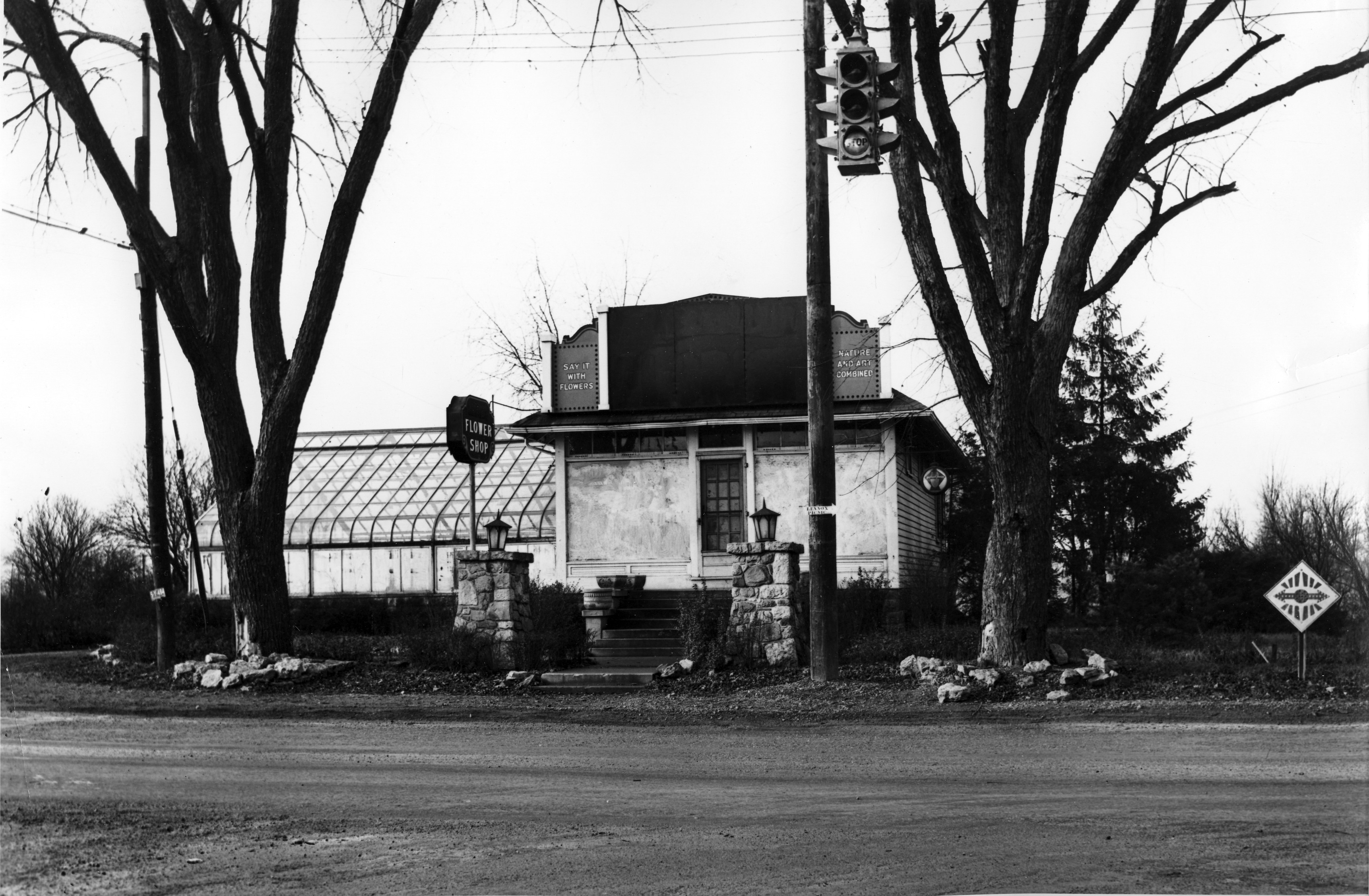 These lovely pictures are of the Albrecht Floral Shop at 2703 River (or Olentangy) Road–the intersection of Dodridge and Olentangy River Road, looking north.
According to librarian Cindy at the Columbus Metropolitan Library, the flower shop went through several hands in the 1930s.
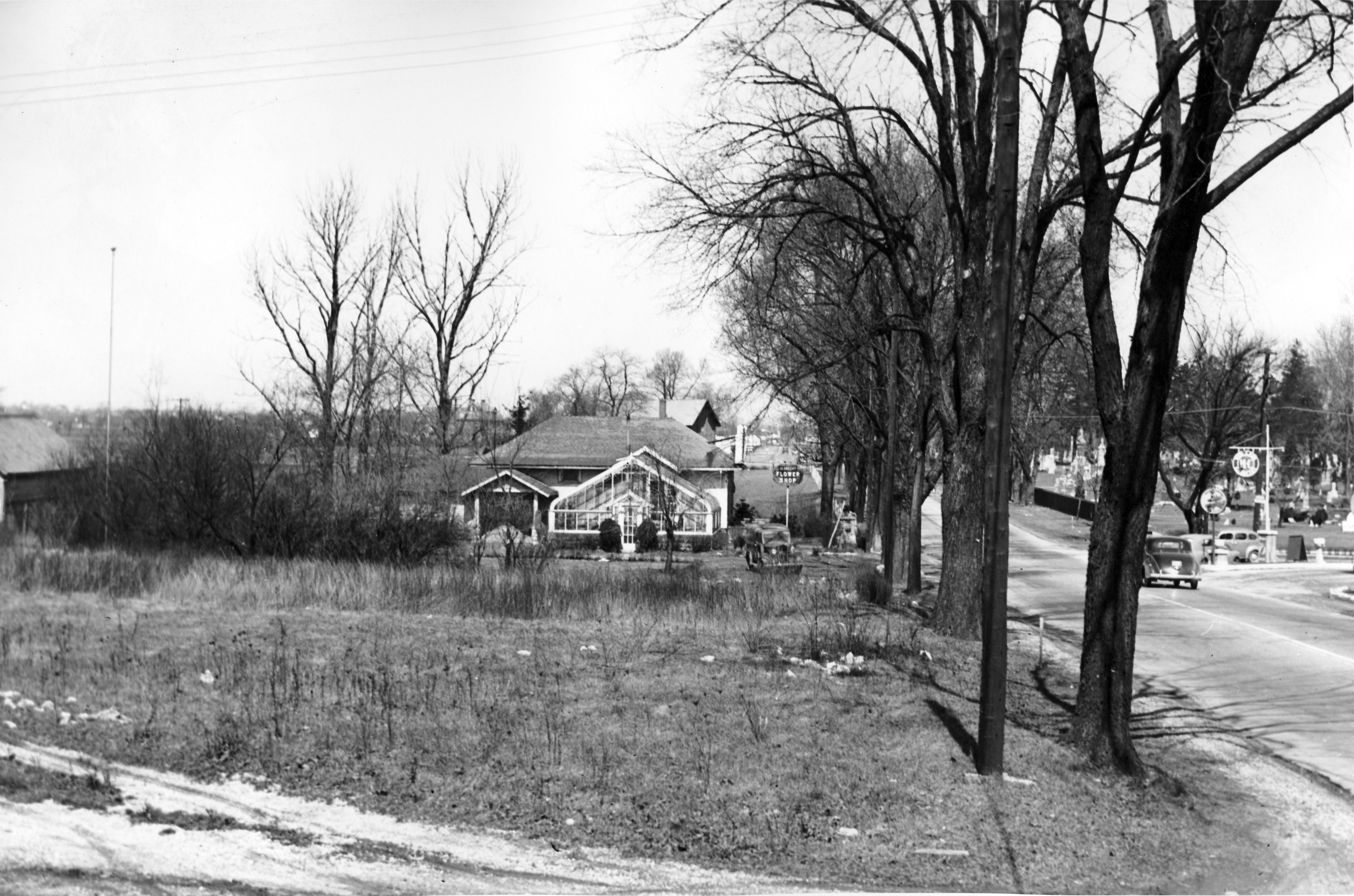
Cindy found a parcel sheet for what she believes is the property in question. The parcel sheet shows the greenhouse listed as well as a brick building.
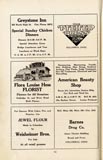 There is an ad for Flora Louise Hess, Florist in a 1925 Columbus Women’s Club cookbook that features an illustration of the building matching these photos.
Flora Hess sold the property to the state in 1932. She lived in a house close by at 2637 Olentangy River Road, however. In 1968 Johnny Jones wrote an article about an antique sale at the Hess homestead.
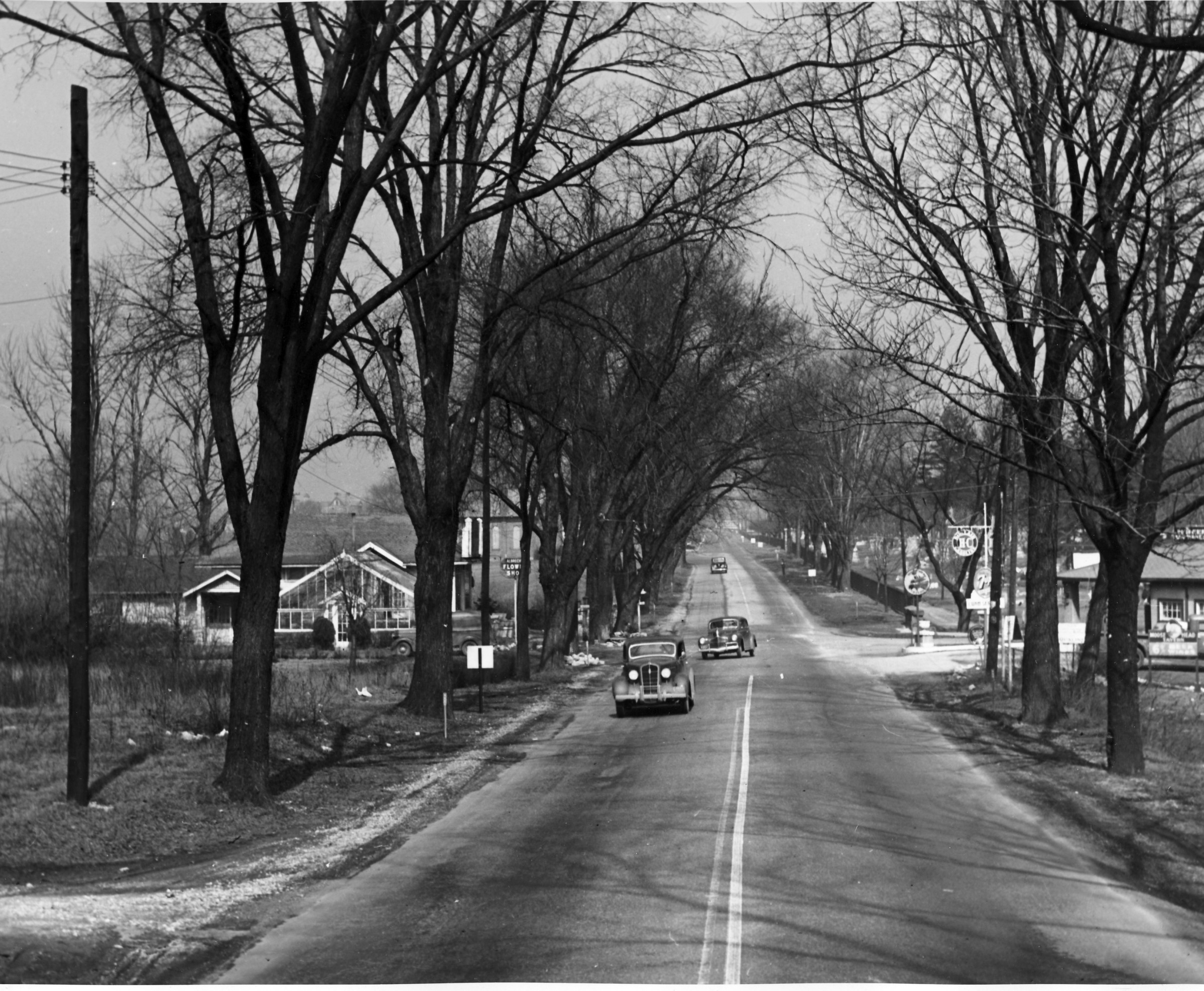 Across the street from the flower shop is a gas station. The Moosehead Filling Station and Moosehead Tavern was across the street at 2696 Olentangy Road as early as 1937. It advertised selling H-C gas; H-C was the first high-octane gasoline. In 1926, Sinclair leapt ahead of most of its competitors with H-C, the industry’s original high-octane premium gasoline for motorcars. The 72-octane auto fuel, developed at its Houston refinery, was better than anything then marketed (Lindbergh’s flight to Paris the following year was on 73-octane gasoline). H-C stood for “Houston Concentrate,” though some advertising men called it “High Compression.”
The Moosewood Tavern was apparently a trouble spot; this Columbus Dispatch newspaper article documents one incident of rowdiness.
[Photos courtesy of the Franklin County Engineers. Articles are from the Columbus Dispatch. Research on these photos and news items mostly came from Cindy at the Columbus Metropolitan Library Local History & Genealogy Desk; thank you Cindy! ]James (Jerry) Welsh, Dairyman
Here’s a very sad story about one of our Clintonville residents from former times. James Welsh, commonly called Jerry, was a dairyman along High Street. His farm burned on January 27, 1897, and Jerry was himself badly burned in the fire. Jerry survived the fire, however, and he eventually died on Sept 5, 1905 at the age of 72 or 73 of dropsy (edema, or heart failure). He was originally from Ireland, was a Civil War veteran, and is buried in Mount Calvary Cemetery.
There’s no record of his having owned a farm on High Street or in Clinton Township, so perhaps he leased the farm land. When he died, Jerry lived at 34 Richards Road with his wife Bridget; I presume he lived close to his dairy farm. The couple also lived with a lad named Fay Osborn; Osborn is likely the 14-year old boy who was also at the scene of the 1897 fire and who was credited with saving the 20 cows.
Dairy Barn Burned
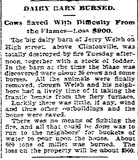
Cows Saved With Difficulty From the Flames–Loss $900.The big dairy barn of Jerry Welsh on High street above Clintonville was totally destroyed by fire Tuesday afternoon, together with a stock of fodder. In the barn at the time the blaze was discovered were about 2[0] cows and some horses. All the animals were finally removed though Welsh and his neighbors had a lively time of it taking the frantic beasts from the fiery furnace.
Luckily there was little, if any, wind and the other outbuildings and the house were saved.
There was no means of fighting the fire, and all that could be done was to run to the neighbors’ for buckets of water to pour upon the house. About [6]00 tons of millet was burned. The loss on the property will be about $900.
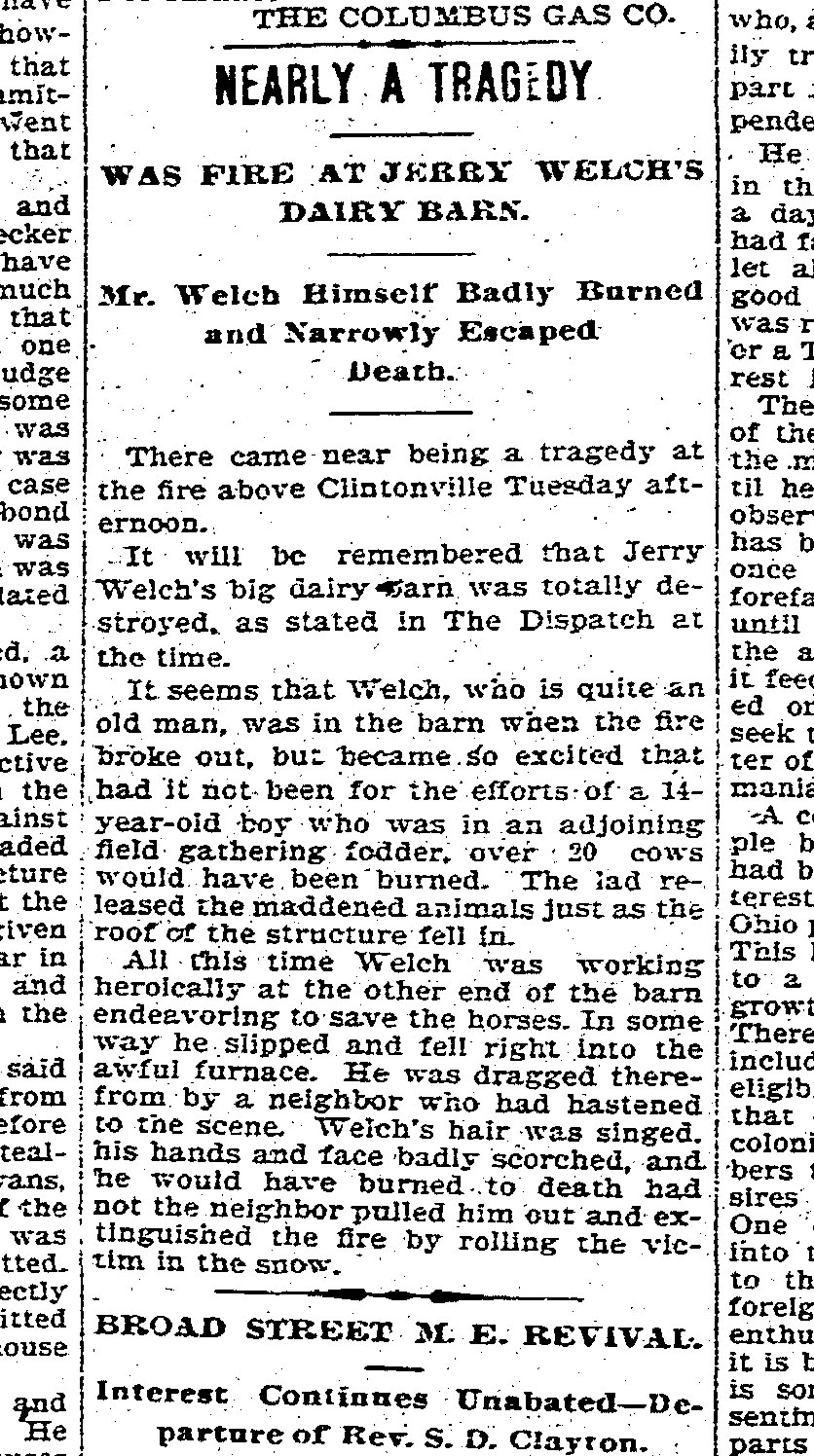
Was Fire at Jerry Welch’s
Dairy BarnMr. Welch Himself Badly Burned And Narrowly Escaped Death
There came near being a tragedy at the fire above Clintonville Tuesday afternoon.
It will be remembered that Jerry Welch’s big dairy barn was totally destroyed, as stated in The Dispatch at the time.
It seems that Welch, who is quite an old man, was in the barn when the fire broke out, but became so excited that had it not been for the efforts of a 14-year-old boy who was in an adjoining field gathering fodder, over 20 cows would have been burned. The lad released the maddened animals just as the roof of the structure fell in.
All this time Welch was working heroically at the other end of the barn endeavoring to save the horses. In some way he slipped and fell right into the awful furnace. He was dragged therefrom by a neighbor who had hastened to the scene. Welch’s hair was singed, his hand and face badly scorched, and he would have burned to death had not the neighbor pulled him out and extinguished the fire by rolling the victim in the snow.
Cindy at the Columbus Metropolitan Library shared most of the above details about Mr. Welsh with us. She writes: “I was able to find a little more information about Jerry Welsh. First, I believe the name was actually Welsh, not Welch [as in the 2nd article above]…I am attaching Mr. Welsh’s obituary. I was able to find him on the 1900 census with his wife, and it looks like he was a veteran of the Civil War because I found a grave registration card that matches up with his grave information in Mount Calvary Cemetery. Unfortunately, I was not able to find that he owned any property in Clinton Township. I checked maps, including a 1895 plat map that has landowners names on it. I also checked deed indexes on the recorder’s site for that time frame for both grantors and grantees and still did not find anything. It is possible he was renting the land that the barn was on.”
I do love our Columbus Metropolitan Library System and especially appreciate the Local History and Genealogy staff. THANK YOU CINDY!
318 Orchard Lane (Columbus Canoe Club)
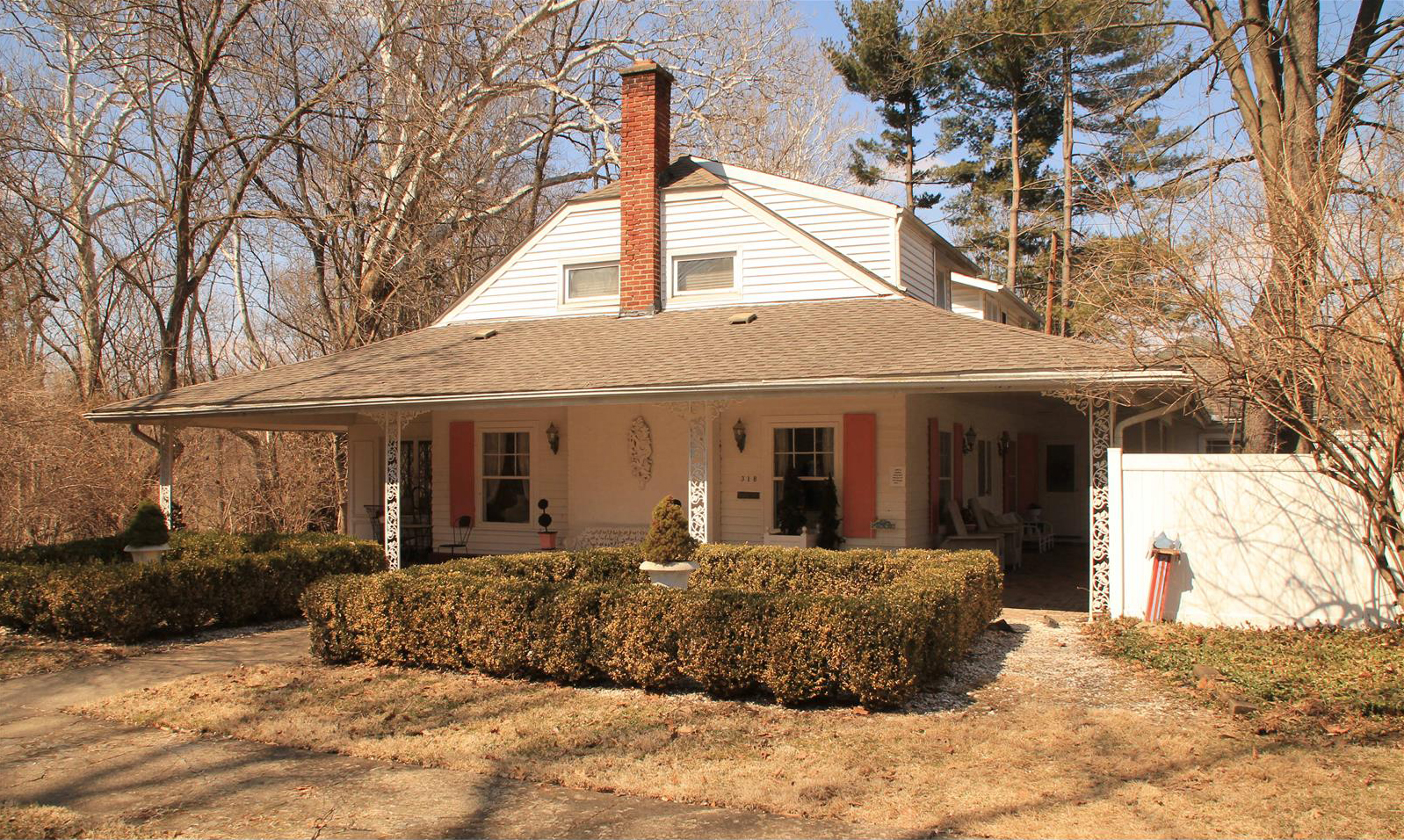 The Columbus Canoe Club–which had been turned into a residence back in 1959–is currently on the market, and you can see the inside of this residence here. It has only had 4 owners since it was built, and long-time owner Donna Hickey had given me a tour of the house back in 2009. So sorry to learn that Donna passed away in 2021.
A bit more info here
(I doubt this link to the realtor post will be up long.)
In Honor of Armistice Day
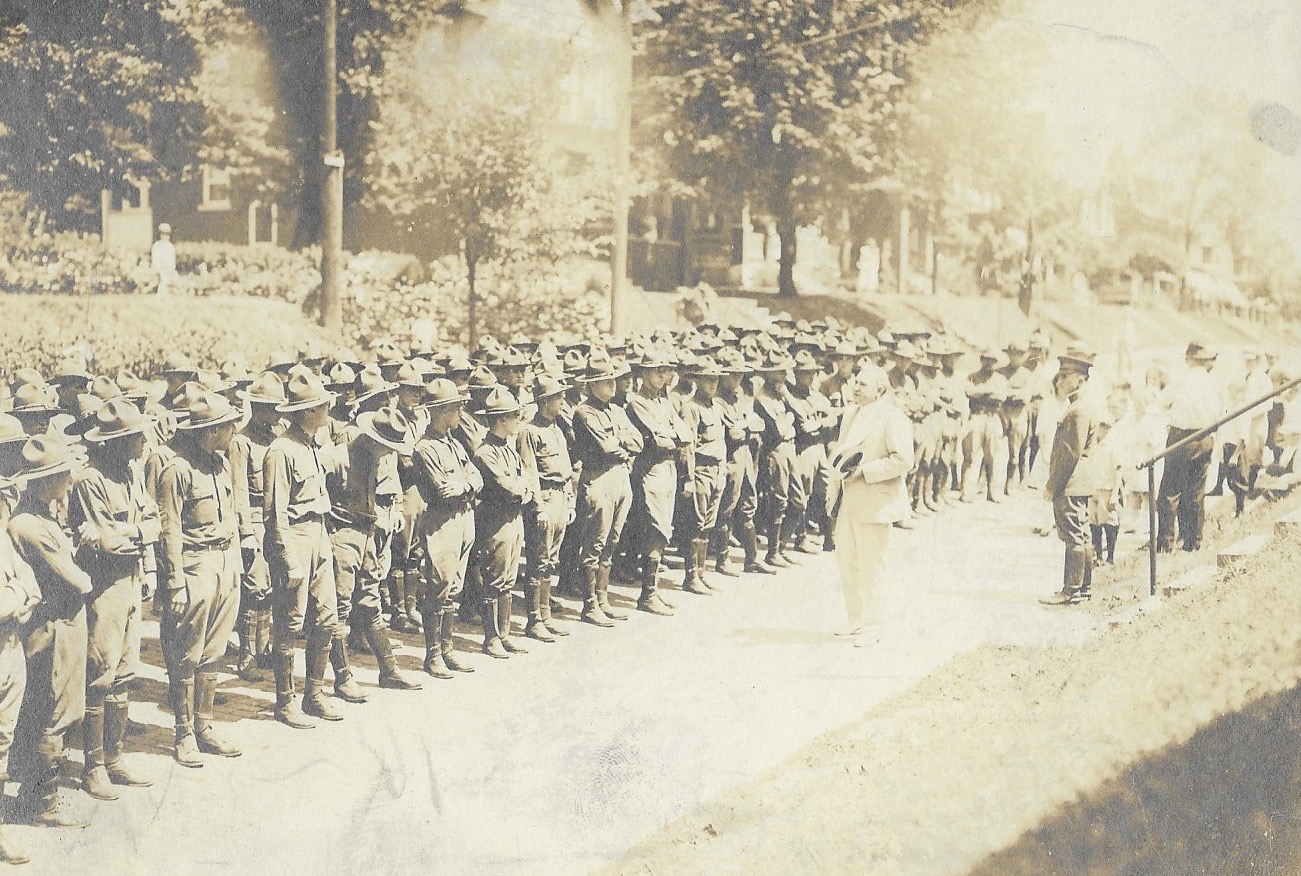 I have no World War I photos of soldiers in Clintonville. But in honor of Armistice Day aka Veterans Day, I am posting this photo of WW I soldiers, being addressed by Norman Barnes Thorp. This might be in front of 180 East Northwood, though I have been unable to confirm that location.
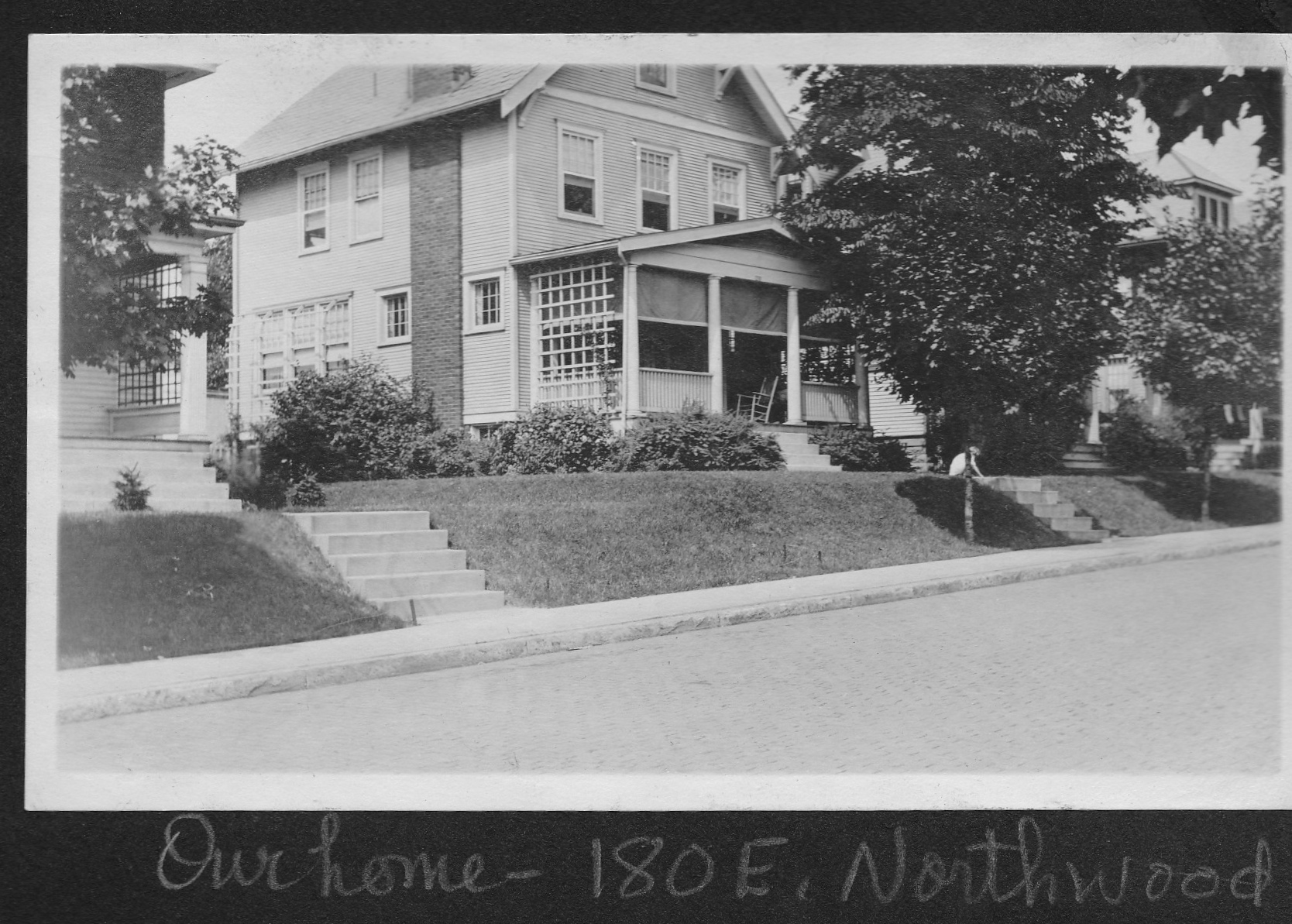 Margaret Nelson, a long time Clintonville resident who has shared many other family pix with us, shared the World War I photo with us. 180 East Northwood was built by Margaret’s grandparents, Johanna Gertrude (Edmondson) (1880-1967) and Norman Barnes Thorp (1867-1934) around 1909, and the house was subsequently owned by the Thorp’s daughter, Norma Thorp Van Ness.
Norman B. Thorp was active in the Northwood Flower and Garden Club, which in turn was active in various ways in the war effort. Of its 60 members, 9 men were in military service and 1 woman was an active nurse.
[Photos courtesy of Margaret Nelson.]School Mate? Or Soul Mate?
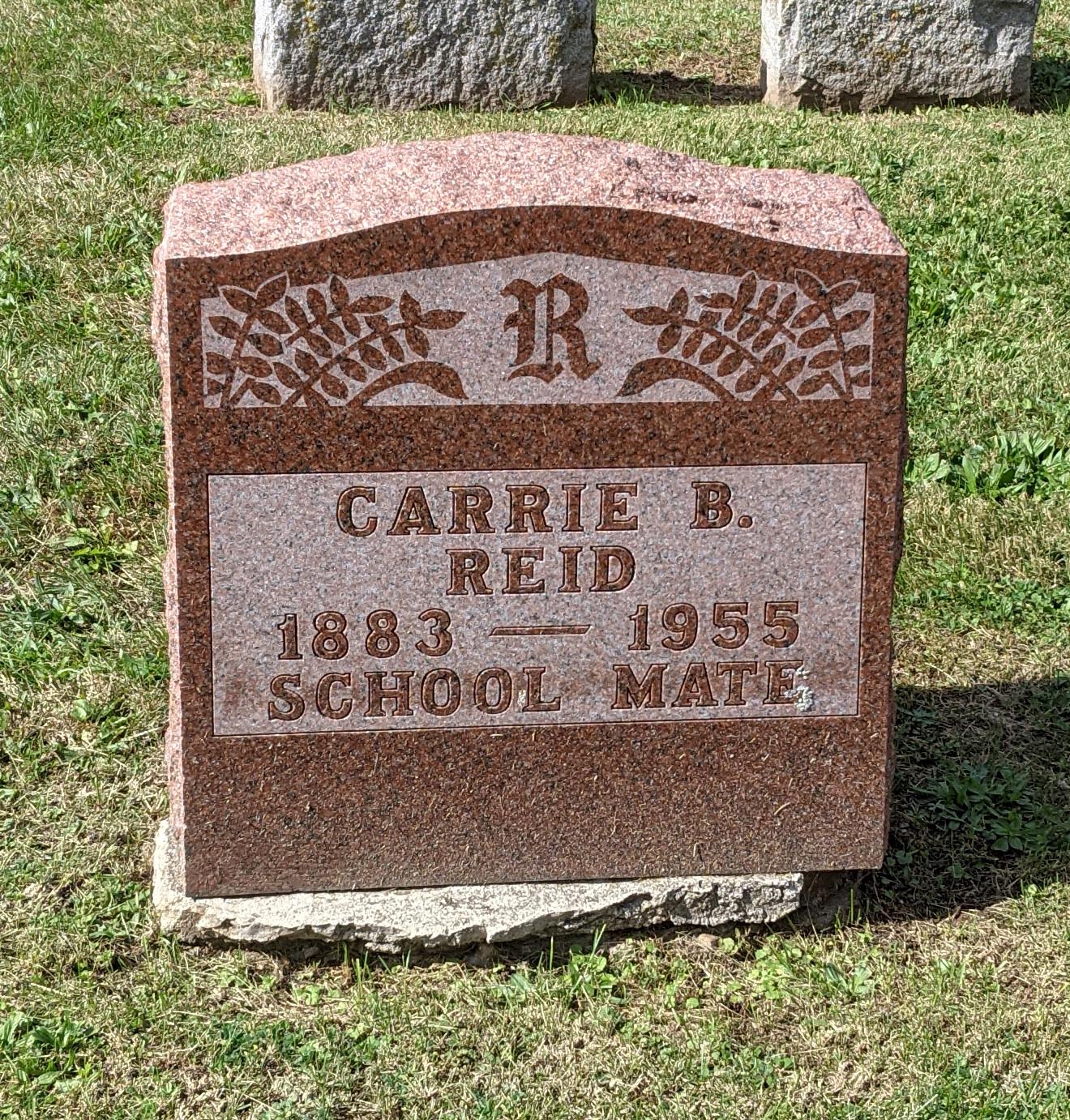
On one of my daily walks, I noticed this grave in Union Cemetery, which set me a wonderin’. “School Mate” is such a peculiar thing to put on a grave marker! I did a bit of research, and Wendy Ritter Bayer joined me in the effort.
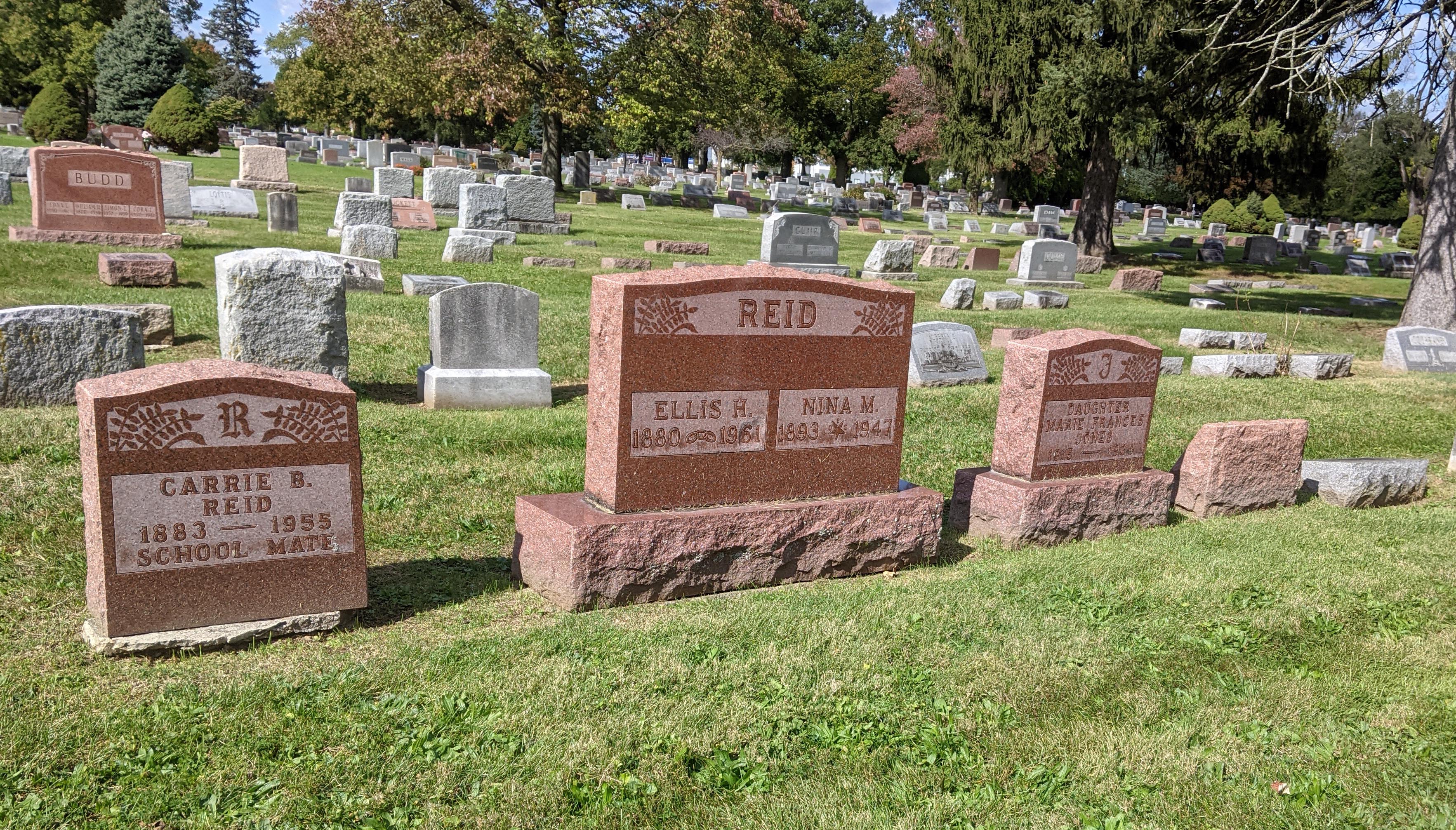 Here is the cluster of gravestones I was so curious about: Carrie Reid, Ellis & Nina Reid, Mary Frances Jones. Carrie Reid’s epitaph says “School Mate” but she shares a last name with Ellis and Nina Reid, and is their general age. Also, she died in her 70s, so it seemed unusual to hark back to her school friends.
Gravestones left to right are: Carrie Reid, Ellis & Nina Reid, Mary Frances Jones. Carrie Reid was Ellis’ 3rd and final wife. Nina married then was divorced from Ellis yet was buried alongside Ellis. Mary Frances is Nina’s child by a previous marriage.
(1) Ellis Harlen Reid was married 3 times:
–Flora Ellen Rice m. 1902. In 1903 he and Flora had 1 son, Russ, who died in 1991. Ellis and Flora presumably divorced.
–Nina Jones m. 1927. For some reason Ellis’ second wife Nina owed his first wife Flora $500 for a real estate matter which was paid in full by May 1937. Ellis Reid filed for divorce from Nina in May 1947, the same year Nina died–in September 1947–after a couple month’s illness “survived by her husband Ellis.”
–Carrie B Quinn m. 1950. Three years after divorcing Nina, Ellis married Carrie B. Quinn, who predeceased him.
(2) Nina was married 2 times:
–Thomas W Jones in West Virginia; he died in 1965 so presumably they divorced. They had a daughter, Marie Frances Jones; Marie died in 1934 and her stone is next to her mother’s.
–In 1927 she married Ellis Reid, divorced him in 1947, and died later that year. Her house at 524 Lincoln Ave was to be sold and proceeds paid “to my niece, Sylvia Cole, and my sister Ivy Robinson, share and share alike, or to the survivor of them.”
(3) Carrie was married 4 times:
–Oscar Bowman m. 1901; he died in 1954 so she must have divorced him. Carrie and Oscar had 2 living daughters: Bertha Leola, born 1903, and Helen E., b. 1906. Their address was 1268 1/2 N. High St. (Bertha married James Dolan in 1921 and Helen married Charles A. Taylor on 16 Aug 1927). Carrie and Oscar also had an infant daughter who died of “pre-mature birth” in 1909. Their address was 1181 Say Ave.
–Elmer Preston Buchanan m. 1918; he died in 1956 so presumably they divorced.
–Loren George Webster m. 1939; he died in 1940 from “barbital poisoning (addict).”
–Ellis Reid, m. 1950. He was 70, she was 67 when they married; she died 5 years after marrying him. He died in 1961.
I’m surprised at the sheer number of divorces–at least 4 between them. Ellis is buried alongside his second wife, rather than his 3rd and final wife, though that’s not all that uncommon; cemeteries and monument sellers often offer a “2 for one” price, so widowers ended up with a plot they might otherwise be unable to use. Also it wouldn’t surprise me if somehow Nina was instrumental in the choice, since her daughter by previous marriage is in the same plot and style stone.
Now, back to my original inquiry. Carrie was born and raised in Ohio, as was Ellis. Nina was born and raised in WV. So if Carrie was a “school mate,” it was with Ellis. I am unable to research whether that happened. But what kind of husband puts “school mate” on his newly deceased, current, wife’s stone? I’m wondering whether she was a SOUL Mate and the carvers got it wrong. If so, what a hoot.
138 East North Broadway
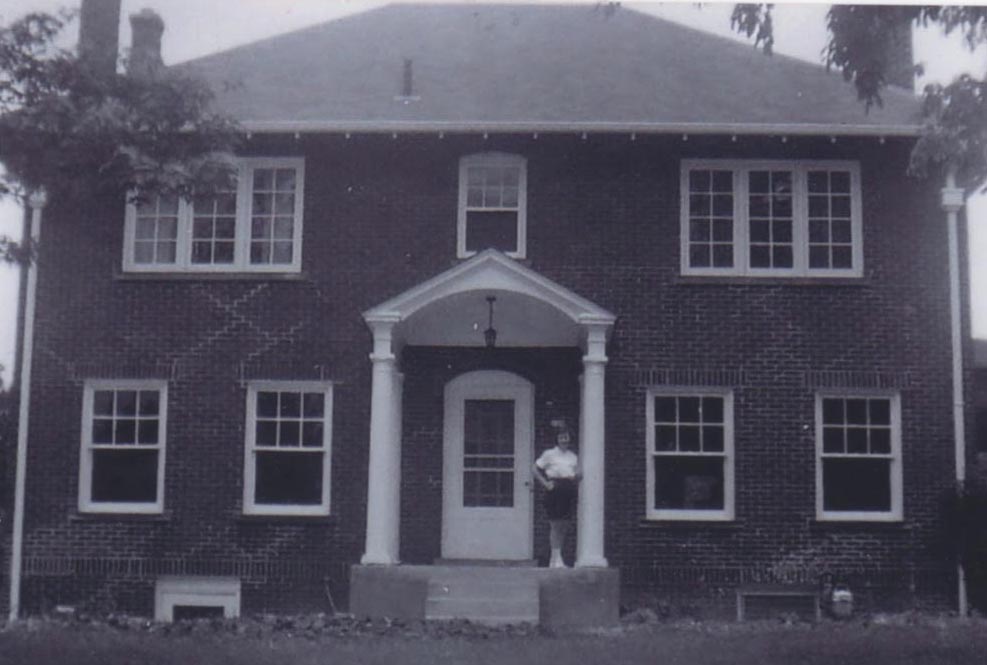
138 East North Broadway. Ralph Taylor Van Ness (1902-1989) and his wife Norma Thorp Van Ness (1910-2000) bought this house from North Broadway Methodist Church in 1960 and remodeled it.
Their daughter Margaret Van Ness (now Margaret Nelson) is shown on the porch.
Margaret writes,
Father dug out the basement and built his office downstairs. We lived next to the warden of the State Penitentiary. One time we bought a set of golf clubs from the warden’s sister. Another time, when my parents found an old safe in the attic of the garage, my father asked the trustees if there were any safe crackers amongst them. The answer: “No, Doc, but maybe next week.” My parents sent the safe to a company that could open it, so, we’ll never know if there was a treasure or a treasure map inside! Living on the other side of us was Arch Heck, a professor at Ohio State University, in charge of the Fulbright program, bringing students from abroad to study at OSU. Thus, my parents became hosts to several students, one from Nepal who, he told them, slept on the floor rather than messing up the bed.
The Van Nesses lived at this address until 1971. It has been significantly remodeled and expanded since the Van Ness time.
[Photos and narrative courtesy of Margaret Van Ness Nelson]25 and 29 Tibet Road
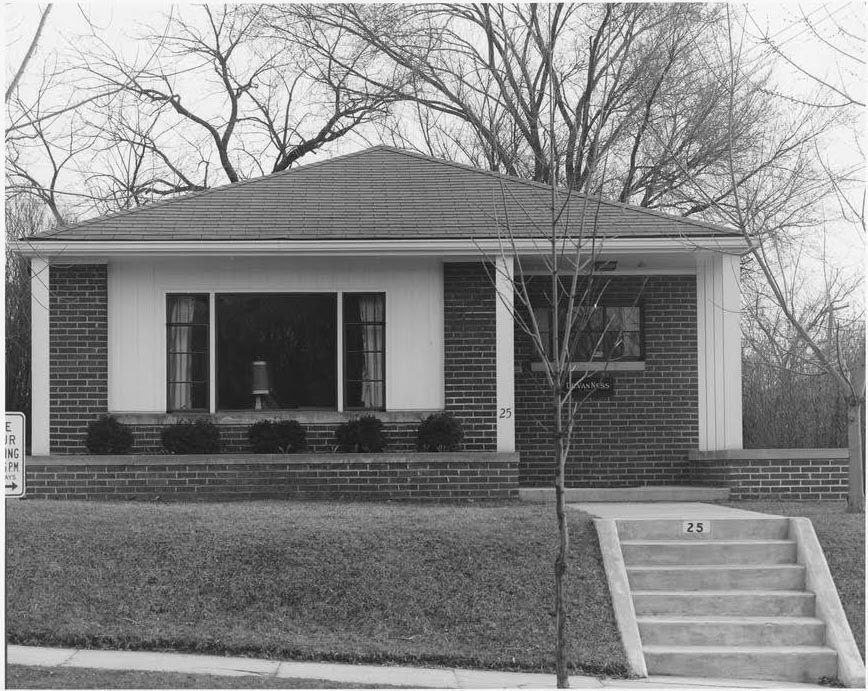 Margaret Nelson grew up in Clintonville and has kindly shared her treasure trove of pix of Clintonville with us. This is the medical office building her father, Dr. Ralph Taylor Van Ness, built in the 1950s at 25 Tibet Road.
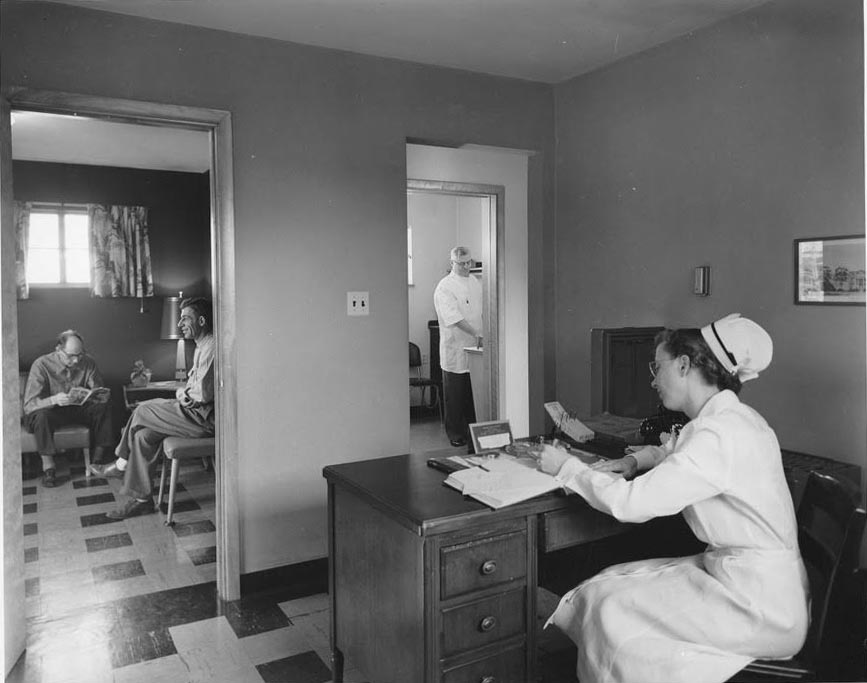
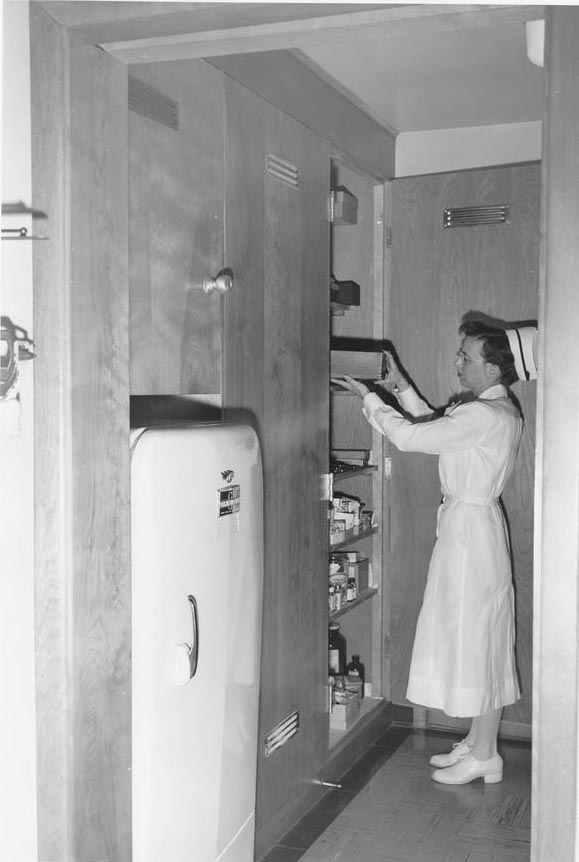
Below is a view of the inside. You can see patients in the waiting room, the nurse, Margaret Deckard, at her desk, and Margaret’s father, Dr. Ralph Taylor Van Ness, in another room. The photo on the right shows Mrs. Deckard in the supply room.
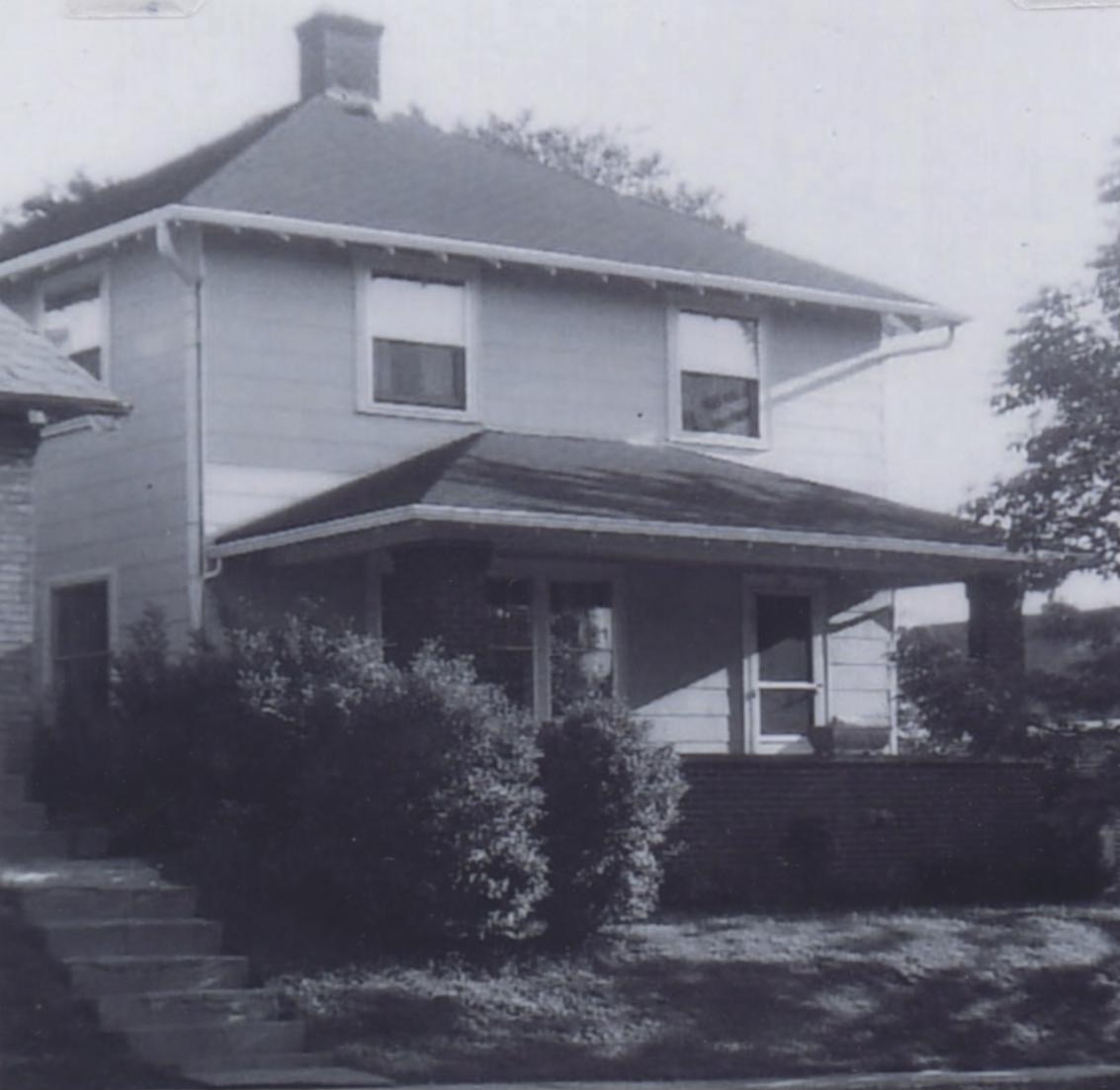 The Van Ness family lived next door to the medical office, at 29 Tibet Road.
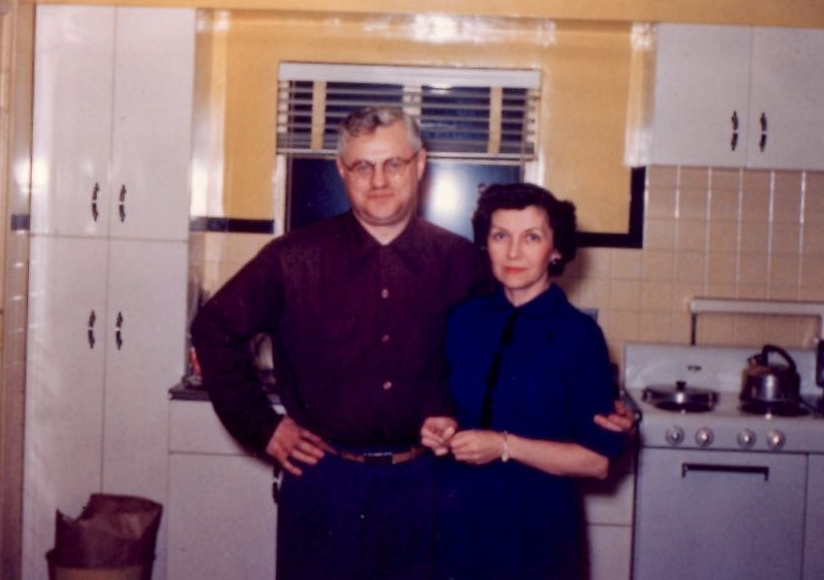 Here are Margaret’s parents in their 1950s kitchen. They sold to Dr. John Gardiner in 1959 and then moved to 138 East North Broadway.
175 East Tibet Road
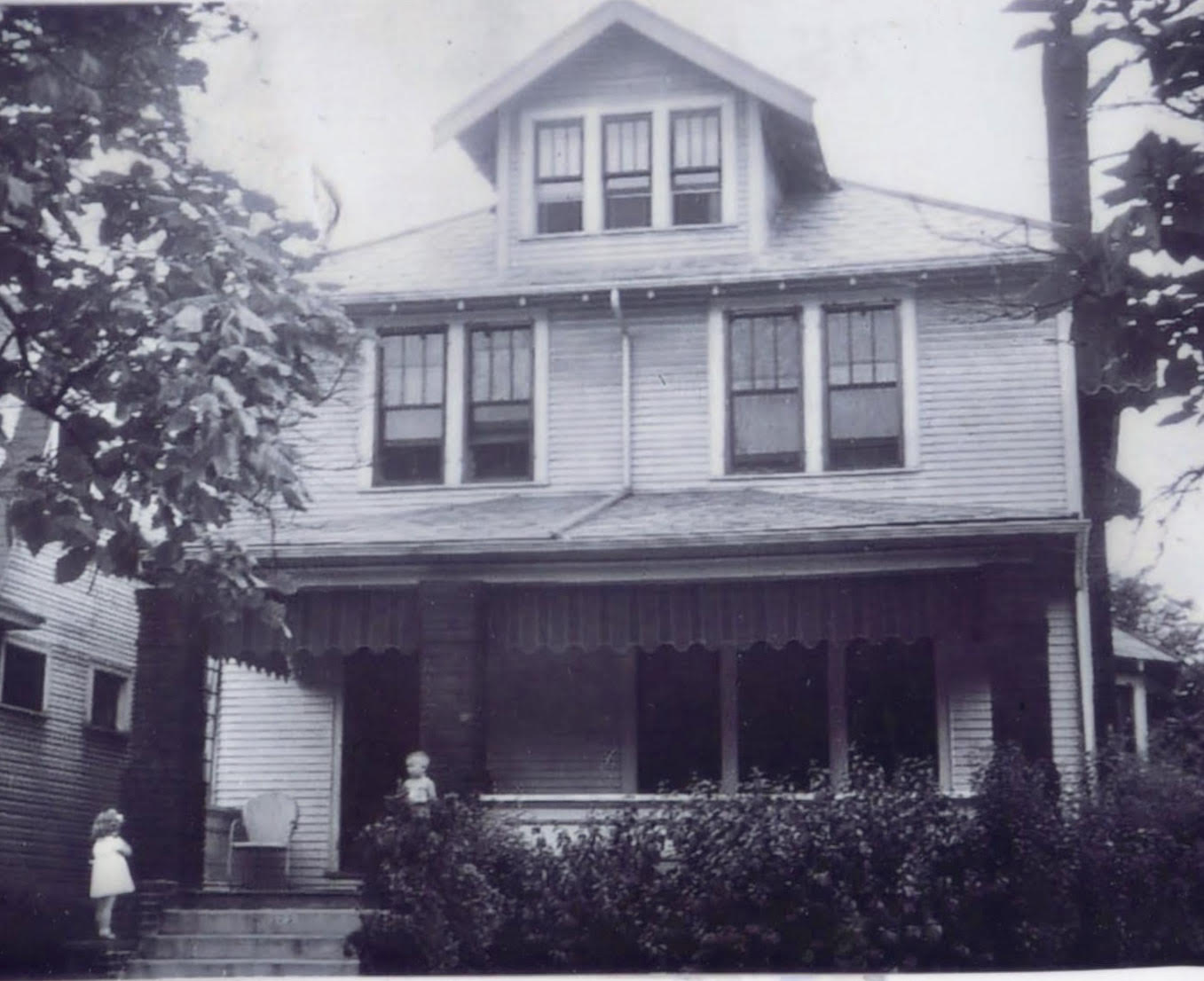 Margaret Van Ness Nelson has shared many family photos with us; this is the house her parents lived in, at 175 East Tibet Road, from 1942-1947.
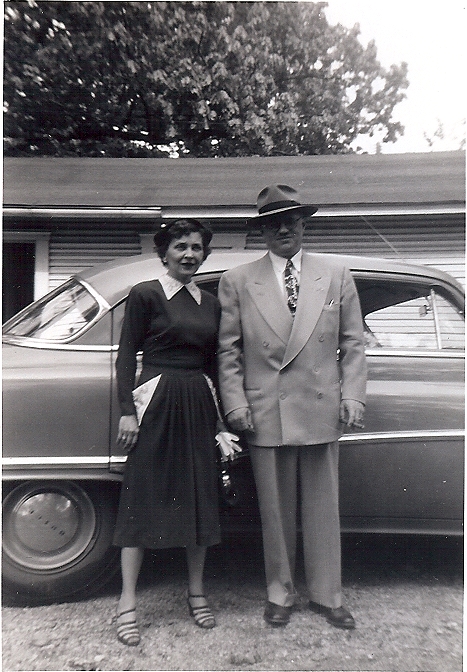 And here’s a nice contemporaneous picture. Margaret writes, “My mother, Norma Thorp Van Ness, 10 April 1946, in our Dodge, parked across from our house at 175 Tibet, back when there was lots of room to park cars.”
[Photos Courtesy of Margaret Van Ness Nelson.]
Tipping the Scales, & Life on the Edge
Today is Martin Luther King Jr. Day, and so I thought I’d use this opportunity to write about my most recent “read”. It’s the book Tipping the Scales: One Man’s Freedom, by Stanley U Robinson with revisions and editing by his son David R Robinson. The book is available as an ebook and a print book.
As an historian wrote recently, heroism is neither being perfect, nor doing something spectacular. In fact, it’s just the opposite: it’s regular, flawed human beings, choosing to put others before themselves, even at great cost, even if no one will ever know, even as they realize the walls might be closing in around them. Such heroes did not wake up one morning and say to themselves that they were about to do something heroic. It’s that, when they had to, these people did what was right.
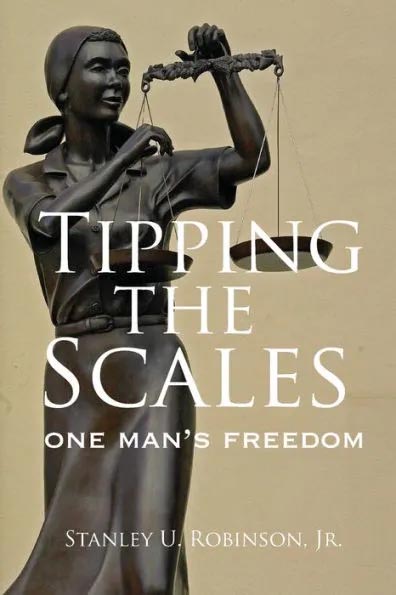 This book tells the story of some local people who were heroes. In 1954 a Columbus interracial family (Phyllis and Wilson Head and their 2 children) decided to move to an all-white neighborhood. In the racist real estate environment of the time, this was taboo. Though it was decidedly unconstitutional to discriminate on the basis of race, discrimination was rampant. The Heads were represented, for the real estate transaction, by attorney Stanley U. Robinson. They were able to conceal Wilson Head’s Black identity only because the seller, banks, and insurer never bothered to ask about race. Once the sale had gone through and the Heads moved into their new house at 2166 Indianola Avenue, all hell broke loose. Attorney Robinson faced the wrath of the banking and real estate agent community (including a threat of disbarment), and his family was deluged with crank telephone calls from the bigoted new neighbors of the Heads. The Heads themselves faced bigotry, but were physically protected by prearranged police presence and local church members’ vigilance. The Heads “stuck to their principles” and refused to be intimidated or bought out.
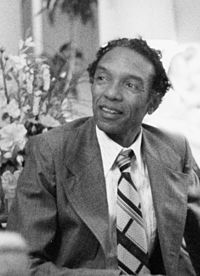 Though this act of segregation-busting was successful, in 1959 the Head family moved to Windsor, Canada “to get [the] children away from a racist society.” Wilson Head had a PhD and was a respected sociologist and civil rights leader, and the Heads’ (understandable!) move was Columbus’ loss. You can read more about Wilson Head here.
Next up on my reading list: Wilson Head’s own book, A Life on the Edge: Experiences in Black and White in North America. University of Toronto Press. ISBN 978-0-9680066-0-3.
139 West Dunedin Road
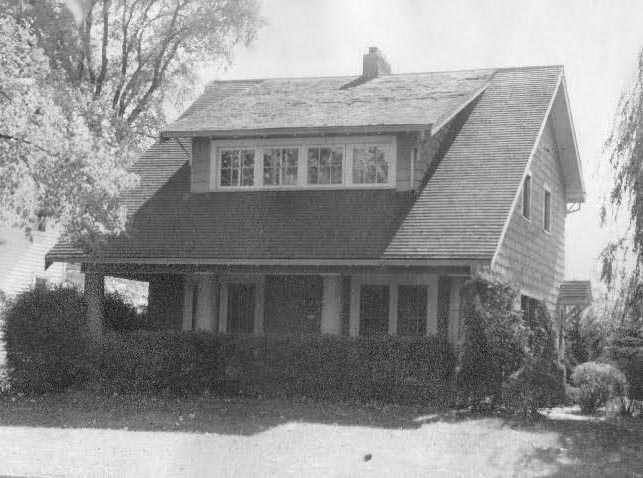
Margaret Nelson (née Van Ness) grew up in Clintonville, and has shared some old family photos.
Her family lived at the following addresses:
-
139 W Dunedin, 1939-1941 or 1942
175 E Tibet, 1942-1947
310 E Weber, 1948-1950
29 and 25 Tibet, 1950-1959
138 E N Broadway, 1960-1971
I’ll be sharing these old house photos in the months to come.
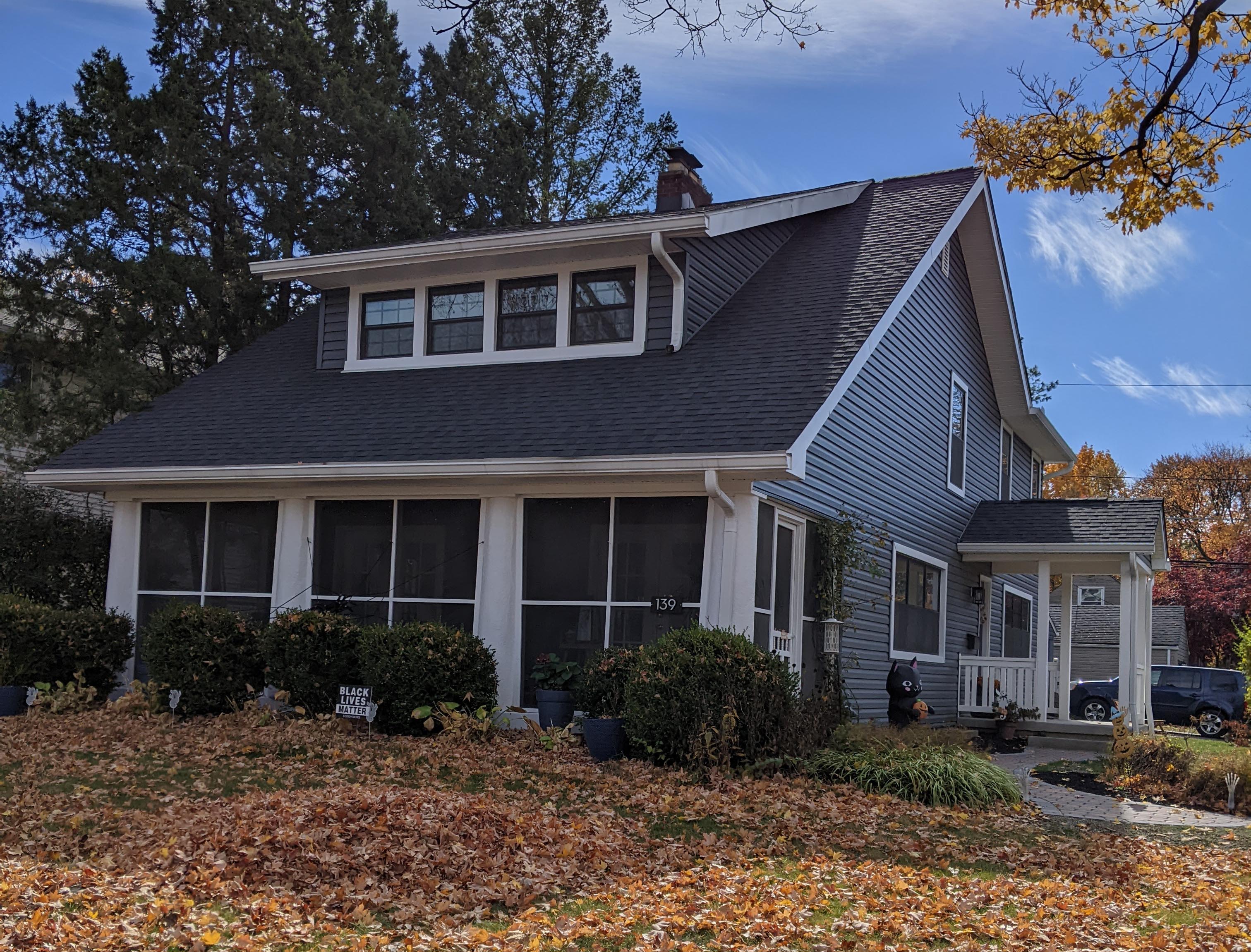
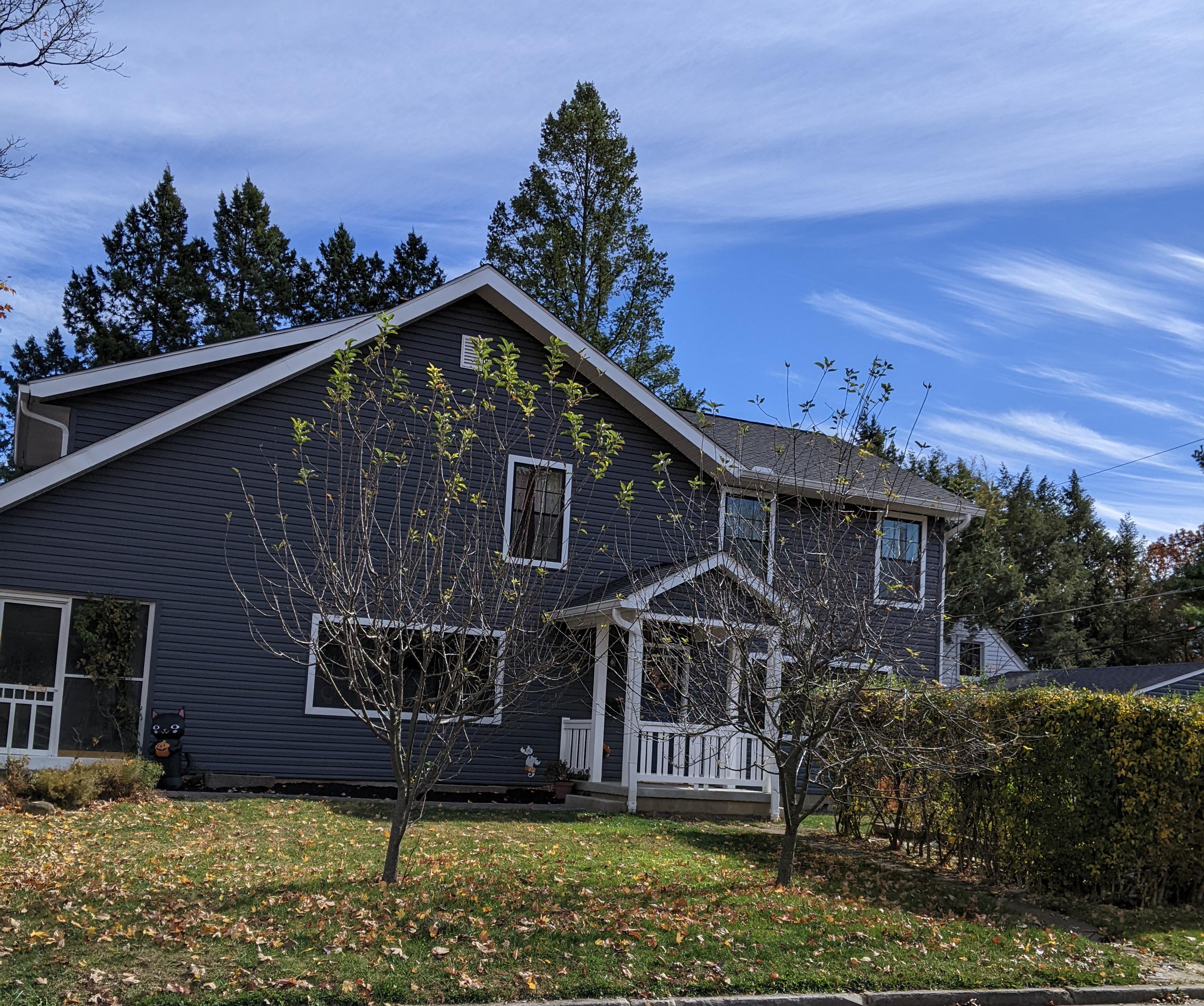
This photo is 139 West Dunedin. Ralph Taylor Van Ness (1902-1989) and his wife Norma Thorp Van Ness (1910-2000) bought this house in 1939; it was their first house as a married couple. They lived here until August 1942, when they moved to 175 Tibet Road.
Here’s are some present-day photos; the house has since been screened in and added on to.
A Little Bit of Sewage Goes a Long Way
Last month I provided a glimpse of James Chesnut, who lived at 3338 N. Wall Street. James Chesnut was involved in significant litigation with the North Broadway developers and neighbors. Though last month I said James appears to have been irascible, I’d certainly be that way too if this happened to me. From the Dispatch:
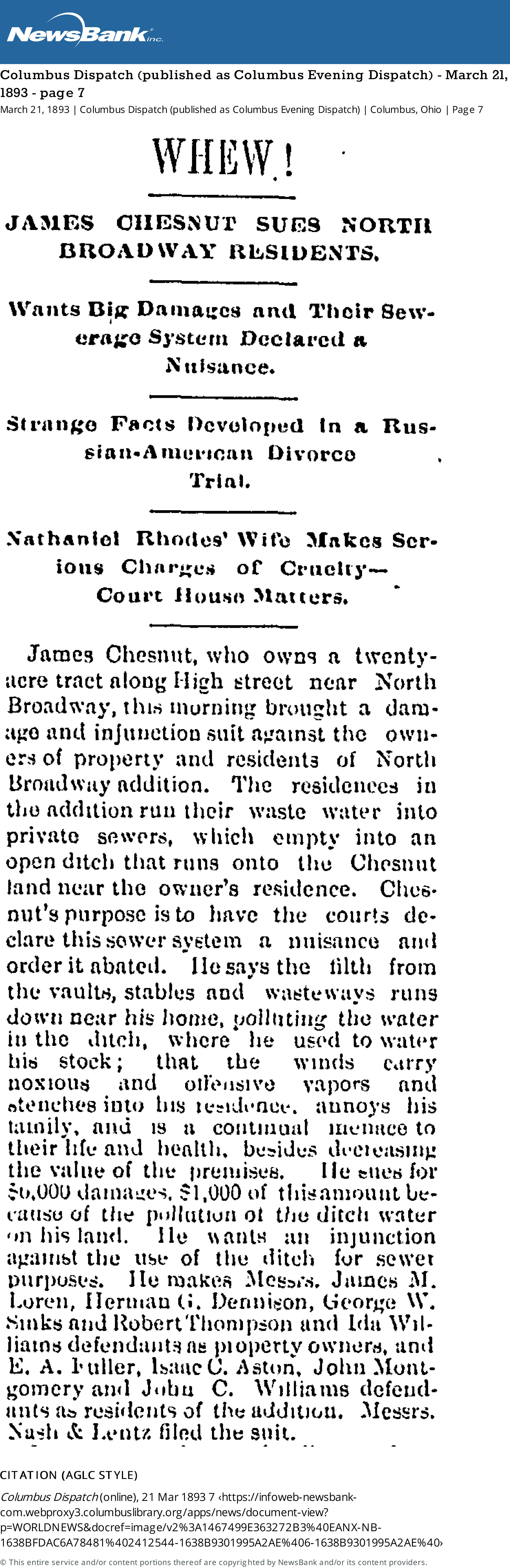
[From Columbus Dispatch (published as Columbus Evening Dispatch) March 21, 1883 page 7.]Whew!
James Chesnut Sues North Broadway Residents
Wants Big Damages and Their Sewerage System Declared a NuisanceJames Chesnut, who owns a 20-acre tract along High Street near North Broadway, this morning brought a damage and injunction suit against the owners of property and residents of North Broadway addition. The residences in the addition run their waste water into private sewers, which empty into an open ditch that runs onto the Chesnut land near the owner’s residence. Chesnut’s purpose is to have the courts declare this sewer system a nuisance and order it abated. He says the filth from the vaults, stables, and wasteways runs down near his house, polluting the water in the ditch, where he used to water his stock; that the winds carry noxious and offensive vapors and stenches into his residence, annoys his family, and is a continual menace to their life and health, besides decreasing the value of the premises. He sues for $6,000 damages, $1,000 of this amount because of the pollution of the ditch water on his land. He wants an injunction against the use of the ditch for sewer purposes…
A couple months later, the North Broadway developers issued a rejoinder:
A Tart Answer
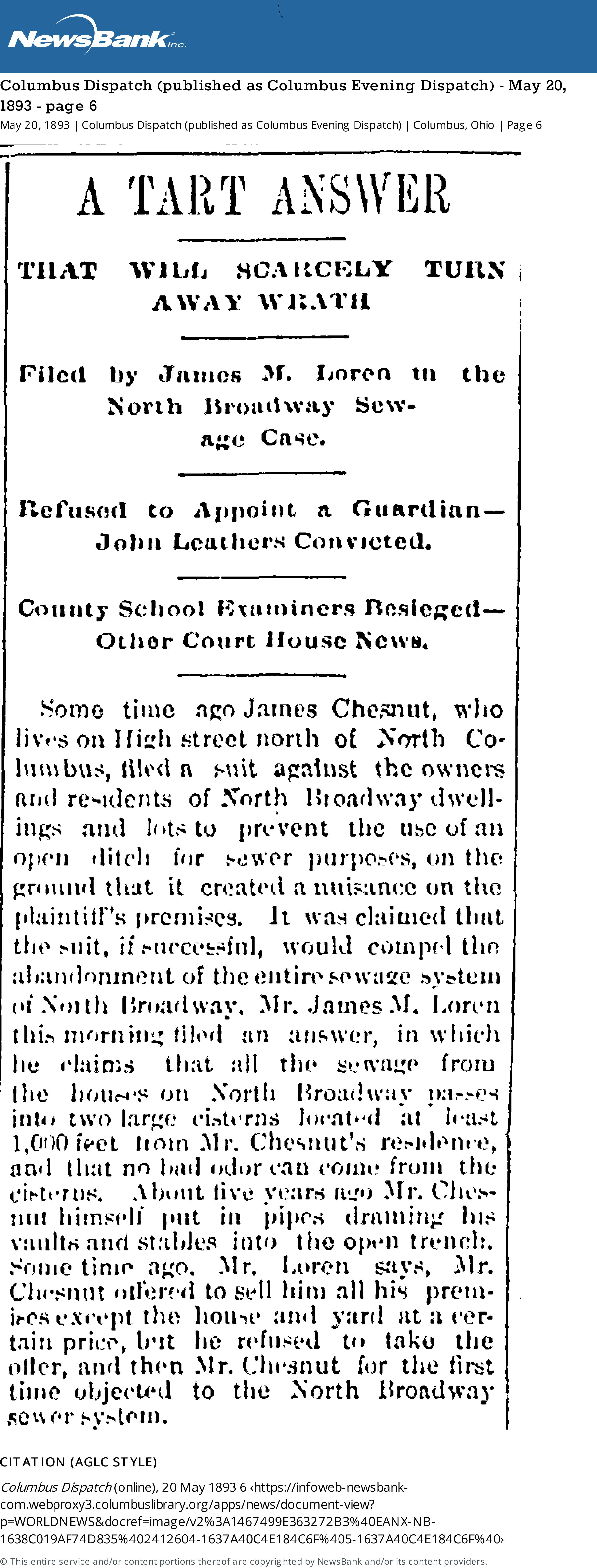
That Will Scarcely Turn Away Wrath
Filed by James M. Loren in the North Broadway Sewage CaseSome time ago James Chesnut, who lives on High Street north of North Columbus, filed a suit against the owners and residents of North Broadway dwellings and lots to prevent the use of an open ditch for sewer purposes, on the ground that it created a nuisance on the plaintiff’s premises. It was claimed that the suit, if successful, would compel the abandonment of the entire sewage system of North Broadway. Mr. James M. Loren this morning filed an answer, in which he claims that all the sewage from the houses on North Broadway passes into two large cisterns located at least 1,000 feet from Mr. Chesnut’s residence, and that no bad odor can come from the cisterns. About five years ago, Mr. Chesnut himself put in pipes draining his vaults and stables into the open trench. Some time ago, Mr. Loren says, Mr. Chesnut offered to sell him all his premises except the house and yard at a certain price, but he refused to take the offer, and then Mr. Chesnut for the first time objected to the North Broadway sewer system.
[From Columbus Dispatch (published as Columbus Evening Dispatch) May 20, 1883, page 6.]
Apparently Loren’s response was not accepted by the courts, for this article followed along in 1897:
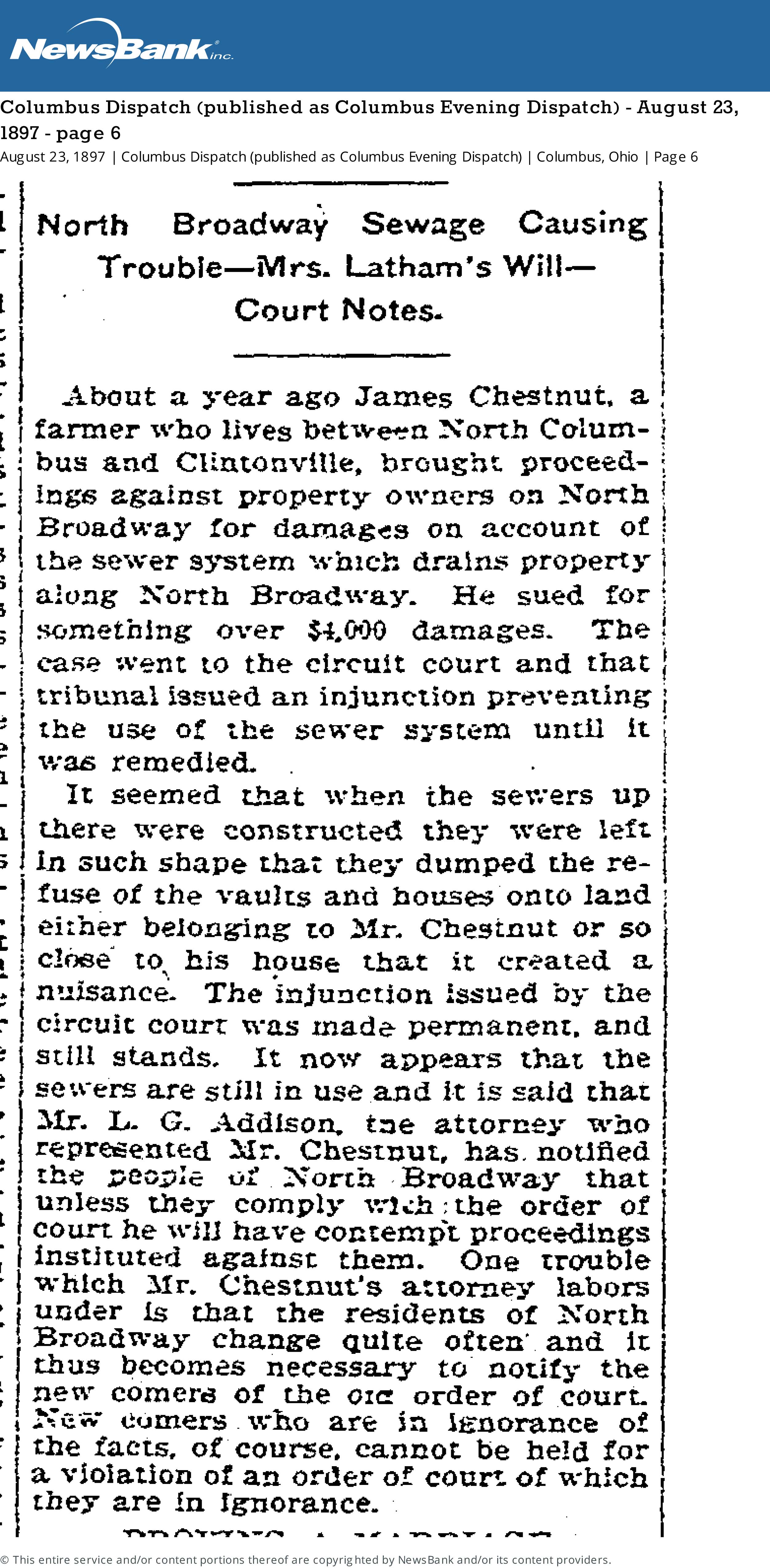
[From Columbus Dispatch (published as Columbus Evening Dispatch) Monday August 23, 1897 page 6.]North Broadway Sewage Causing Trouble
About a year ago James Chestnut, a farmer who lives between North Columbus and Clintonville, brought proceedings against property owners on North Broadway for damages on account of the sewer system which drains property along North Broadway. He sued for something over $4,000 damages. The case went to the circuit court and that tribunal issued an injunction preventing the use of the sewer system until it was remedied.
It seemed that when the sewers up there were constructed they were left in such shape that they dumped the refuse of the vaults and houses onto land either belonging to Mr. Chestnut or so close to his house that it created a nuisance. The injunction issued by the circuit court was made permanent and still stands. It now appears that the sewers are still in use and it is said that Mr. L. G. Addison, the attorney who represented Mr. Chestnut, has notified the people of North Broadway that unless they comply with the order of court he will have contempt proceedings instituted against them. One trouble which Mr. Chestnut’s attorney labors under is that the residents of North Broadway change quite often and it thus becomes necessary to notify the new comers of the […] order of court. New comers who are in ignorance of the facts, of course, cannot be held for a violation of an order of court of which they are in ignorance.
An Old Chestnut…or Rather, Chesnut
 Occasionally, the name of a local figure pops up with frequency, and one forms an image of, well may I say, an irascible neighbor? James Chesnut (often spelled “Chestnut”) is one of those guys; see other posts about him here.
Who was this guy, anyway? James Chesnut was born in Ireland on May 1, 1820, and he died at age 85 on May 26, 1905. Census records say James was a “machine sawyer,” “works in coal factory”, or “foreman and tool shop”. He seems to have owned 20 acres on North High Street. His wife was Christiana McEwan (b. Dec 24, 1825, d. Jul 14 1891). (One source says “Ewing” but I believe that’s wrong.) She is buried with James in Greenlawn Cemetery. Some census records say Christiana was born in England or Ireland, and there’s also a record that says her father lived in Ridgeway, PA.
James and Christiana had a daughter (one census record says “adopted daughter”), Fannie, who was born around 1854/55. She lived with her parents and seems to have remained single. She continued to live in the North High Street (now Wall Street) house through 1910, but by 1914 she’d moved to 2103 Summit Street. She lived there until her death in March 1932; she died at age 78 in University Hospital of injuries suffered when she was hit by a taxi the previous December. (Her obituary also names a sister, Jennie Reid, who lived in Bridgeport Connecticut.)
I love the Chesnut house, still in existence at 3338 N. Wall Street.
Clintonville Community Band
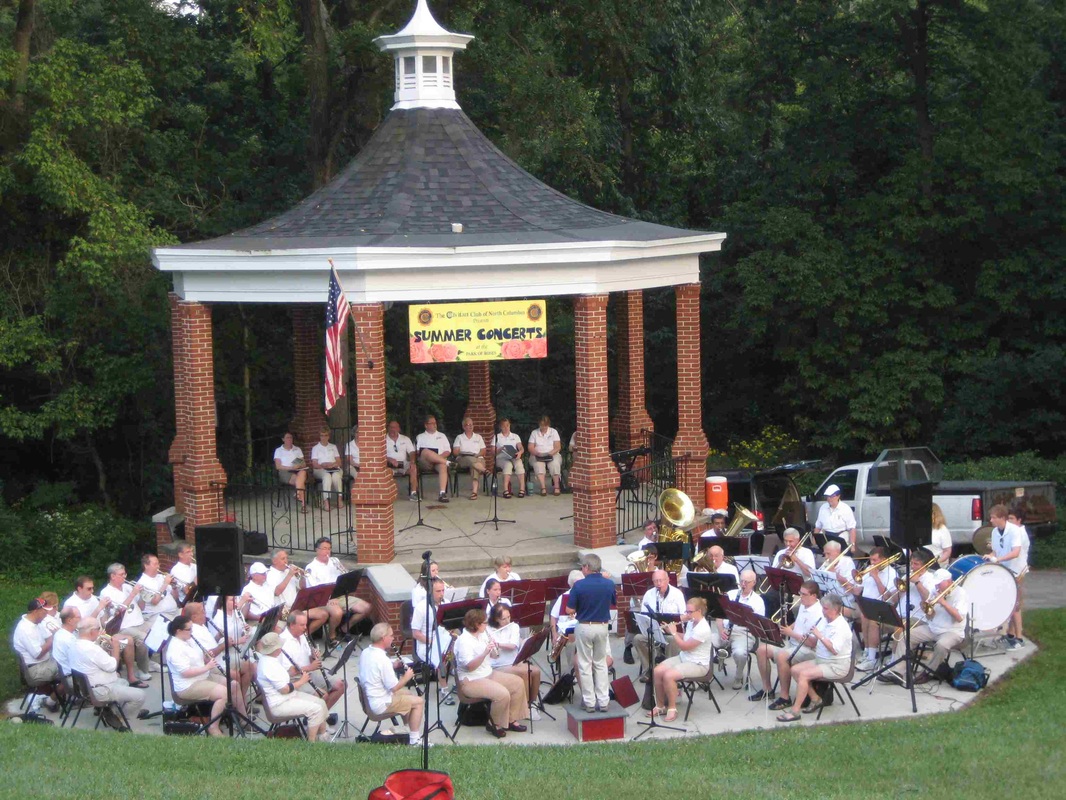 The Clintonville Community Band is one of the Clintonville’s hidden gems. Their concerts are typically free for community events, and they charge a nominal fee for other concerts. Here’s some of its history.
Glenn Williams and Greg Weber convened an organizational meeting for the band on February 27, 1986. Glenn Williams, Greg Weber, Rick Burkhart, and Les Susi, Bob Robuck, and Tom Davenport attended, and so you could credit them with being founders. At the time, the plan was to recruit musicians from any of the local high schools, and to refuse no one.
The first rehearsal was held April 15, 1986 at Whetstone High School. North Columbus Civitan funded the band’s first year. The Band had a concert that summer, as well as a Christmas concert.
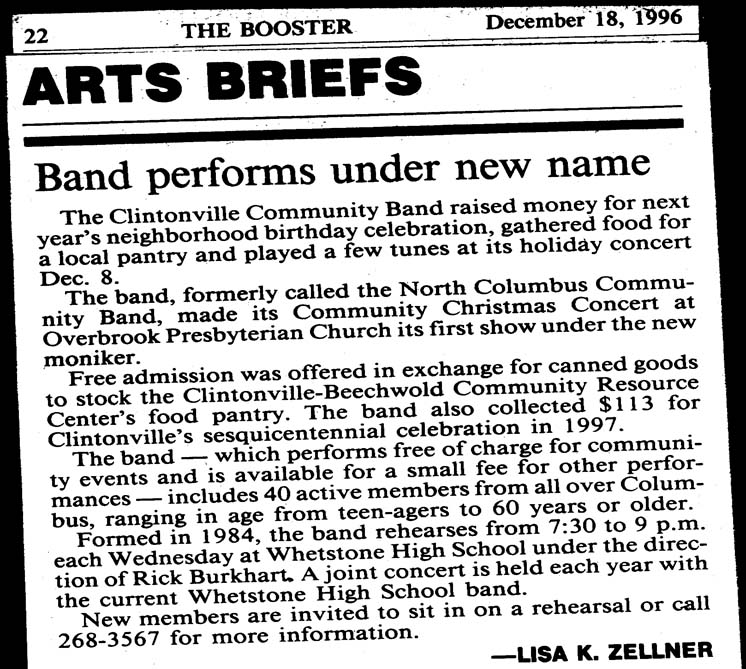 On August 31, 1996, they renamed themselves The Clintonville Community Band (from the North Columbus Community Band). By then they’d decided to play at as many local events as possible, including the “Clintonville-on-High” festival, CURB Recycling Saturday, a Christmas concert, and a children’s concert; the goal was to put themselves on a firm financial footing through good community exposure and an increase in donations. At the time they had about 40 active members.
In 2004, they celebrated their 20th year by commissioning a piece by Barry Kopetz. Would you like to hear that song? Click here.
Now, if you’ve read this far, you know they depend on donations. Just do it!
[All the material here is courtesy of the Clintonville Community Band and based on a talk that Glenn Williams, Stuart Smith, and Rick Burkhart gave at the Clintonville Historical Soceity.]Great Sale of Live Stock
Last April 2021, I posted an article by Clintonville Historical Society President Mary Rodgers, about the Clintonville Woman’s Club. The club was built on land that was once owned by a “horse trader” named E. A. Fuller.
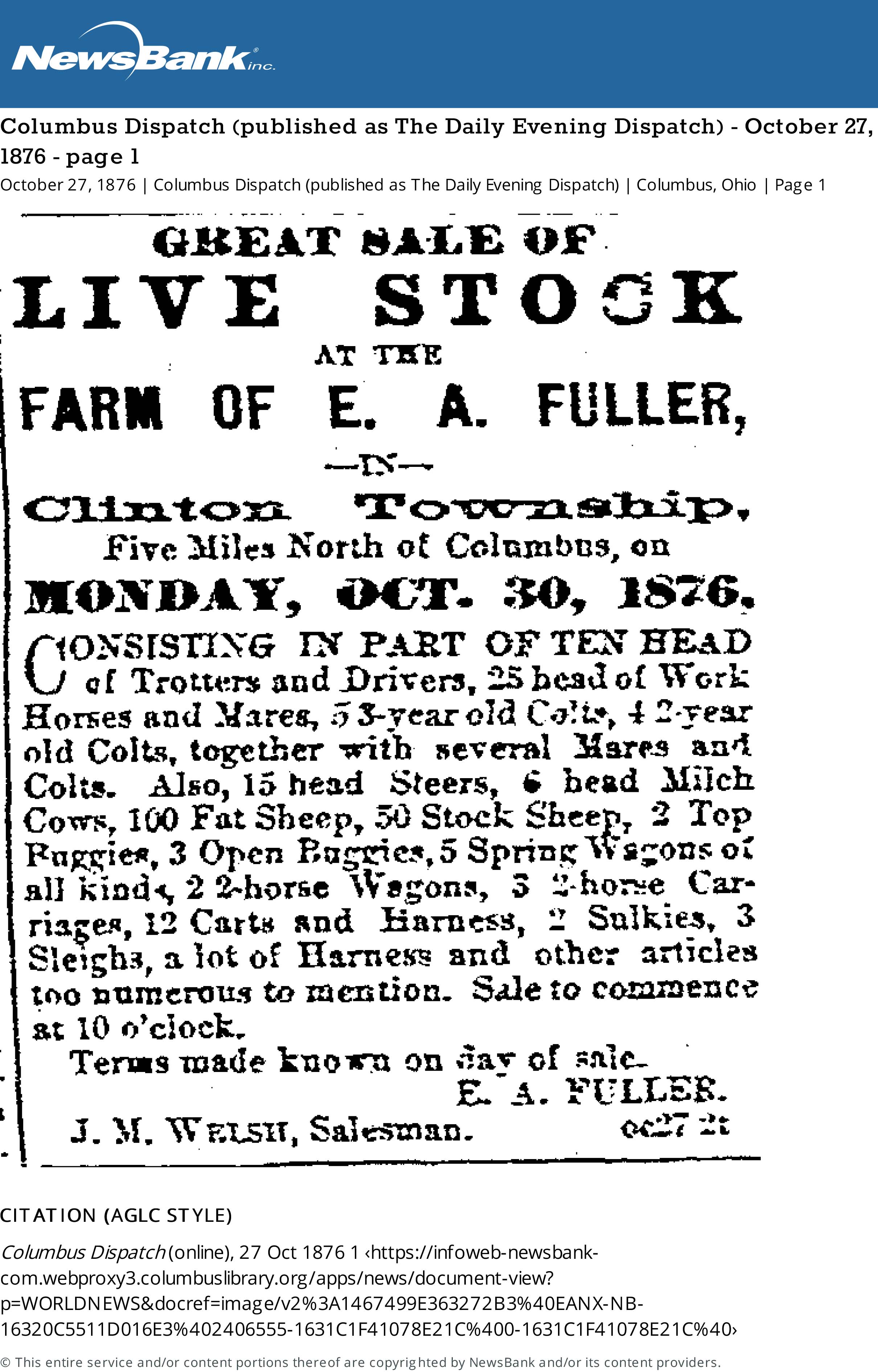 I recently found some old advertisements for horses–bought, sold, stabled–at E.A. Fullers Farm. Here’s one of them from the Columbus Dispatch (published as Columbus Evening Dispatch) October 27, 1876, page 1.
(I’m glad it was not a sale of dead stock.)
There are many more ads; here’s one for stabling horses near E.A. Fulller’s farm from the Columbus Dispatch (published as Columbus Evening Dispatch) November 12, 1877 page 4.
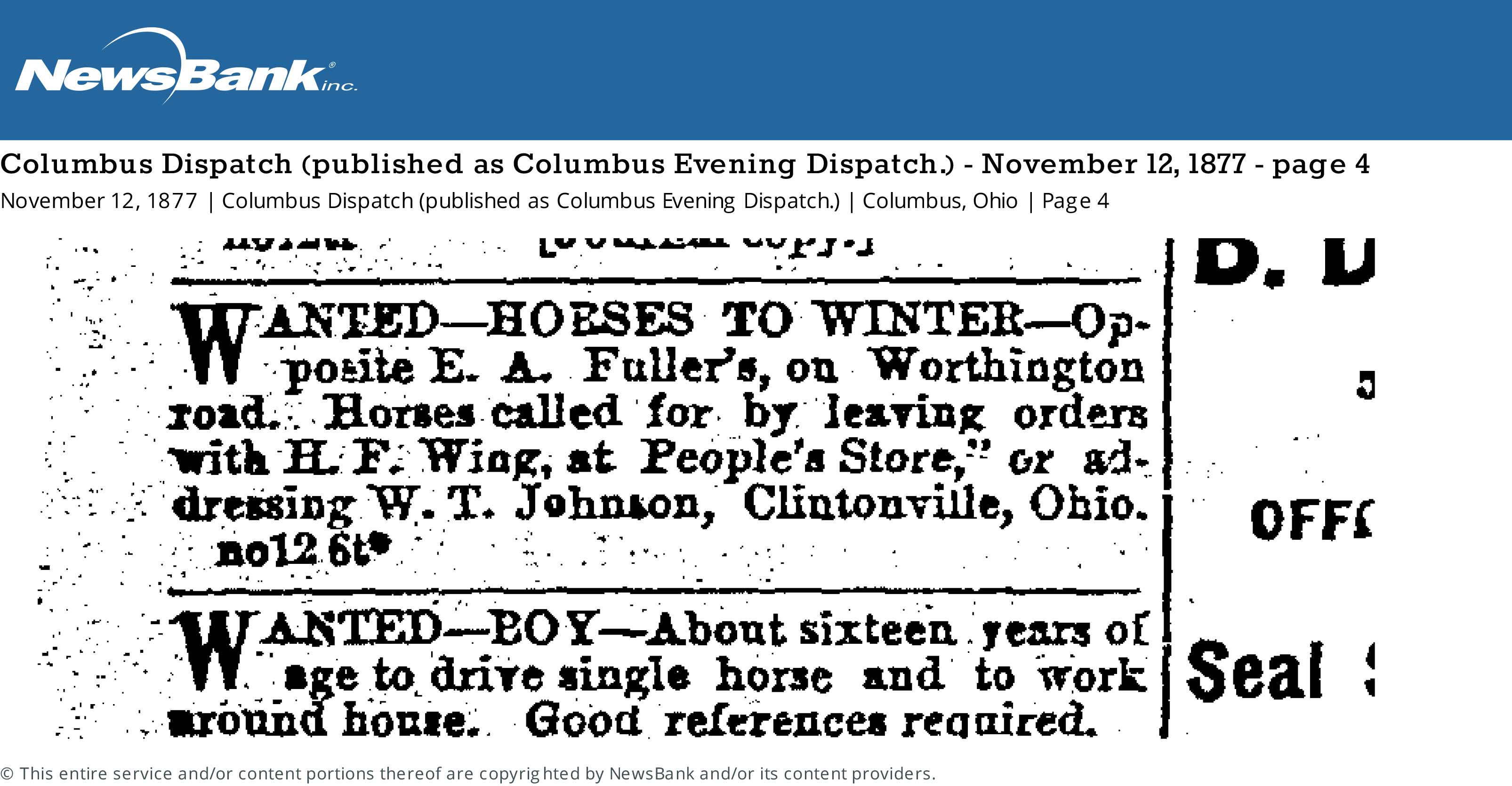
The Dispatch has lots of other ads as well, especially from 1902, for stabling horses at the Fuller farm. They’re great reminders of Clintonville’s agricultural past.
[Thanks to the Columbus Metropolitan Library for making the Digital Columbus Dispatch available and searchable online on CML’s web site.]The First Post Office
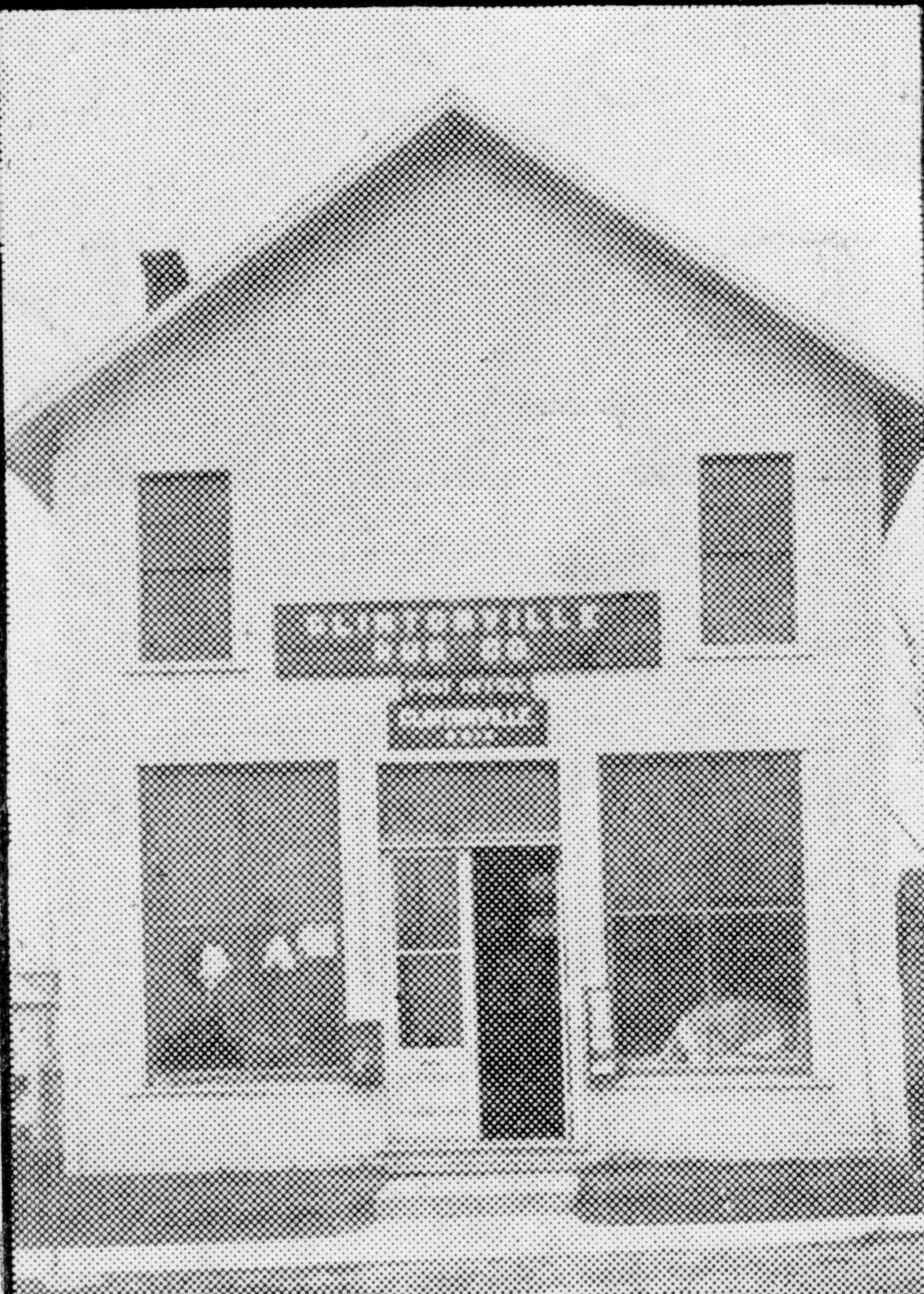 If you have not yet joined the Clintonville Historical Society, well, you ought to! Mary Rodgers sends out an interesting monthly newsletter that is chock-a-block full of good articles. In the October 2017 issue, she penned an article about Clintonville’s first post office.
Celebrating 170 years: The first Post Office
by Mary Rodgers
October 2017
We celebrate Clintonville’s birthday on September 13, 1847. That is the day that a post office opened using the name “Clintonville”. We know that the small town between Columbus and Worthington existed prior to the date but because the town was never formally platted, we do not have an alternative formal start date. On September 13, 1847, James Ferguson was appointed postmaster at the Clintonville Post Office. It was the practice at the time to locate the post office in a business operated by the postmaster. The names of the offices were determined by the postmaster and were usually associated with the area that they were located, the postmaster’s name or the postmaster’s business. In 1933, The Booster printed a photo of the post office. That photo is of a rug store! Mr. Ferguson was a blacksmith. Maybe he had a side operation?
Or, maybe this photo captured the building where Clintonville’s second postmaster set up operation? Harmon “Hammer” Houck was Clintonville’s second postmaster. He reigned from November of 1852 to April of 1854. The 1850 census lists him as a peddler. That might be consistent with a rag rug dealer.
James Ferguson reclaimed the position of postmaster in April of 1854. He and family originated in Lancaster Co. Pennsylvania. He was the son of John and Susanah (Hood) Ferguson. James was married to Hannah Murray around 1824. The Fergusons, at least three generations, came to Ohio in 1843. They arrived by wagon (note: Lancaster County, Pa is the birthplace of the Conestoga wagon!). Based on area maps, James purchased his Clintonville property from Alanson Bull. A question would be: How did Ferguson become aware of Bull’s interest in building a town? Did Bull run advertisements in Eastern newspapers of the time? That is a question for another day.
According to the 1850 Census, James Ferguson owned 5 acres of land, a home, two milk cows, a beef cow, five pigs, and 100 bushels of corn. His livestock was valued a $98, his machinery at $41 and his overall estate at $950. His estate was higher in value then his neighbors with more land. Perhaps that is an indication of its geographical position “in town”? Hannah Murray Ferguson, James’s wife, was a Quaker. Quakers were known to be involved in the Underground Railroad and the Fergusons are a part of the Clintonville Underground Railroad story. The Ferguson sons Joseph, John and Samuel all served in the Civil War. His son Joseph died in action in Perryville, KY. According to K. Haefner, 3rd great granddaughter of Hannah and James Ferguson, when sons John and Samuel returned from the war, the family moved to Findlay, OH. It would seem that John and Samuel met a number of men from Hancock County while serving. Those men told stories of the land and those tales impressed these young men. In Findlay, Samuel and John pursed wagon making. The shop they opened remained in operation beyond 1911.
Bourguignon House (193 East North Broadway)
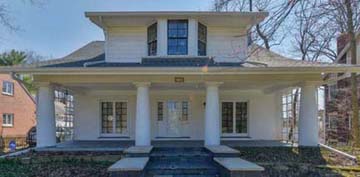
Paul-Henri Bourguignon was a talented visual artist, a prolific writer and journalist, a skillful photographer, and an avid observer of the human condition. His wife Erika was a world-renowned anthropologist. They lived at 193 East North Broadway until their deaths in 1988 and 2015 respectively.
Here’s a terrific house tour of their Clintonville home, showcasing their life and collections at 193 East North Broadway before the house was sold.
And here are some links to additional information about each of them:
About Paul-Henri Bourguignon
About Erika Bourguignon
Wilke’s Quality Market (3131 North High)
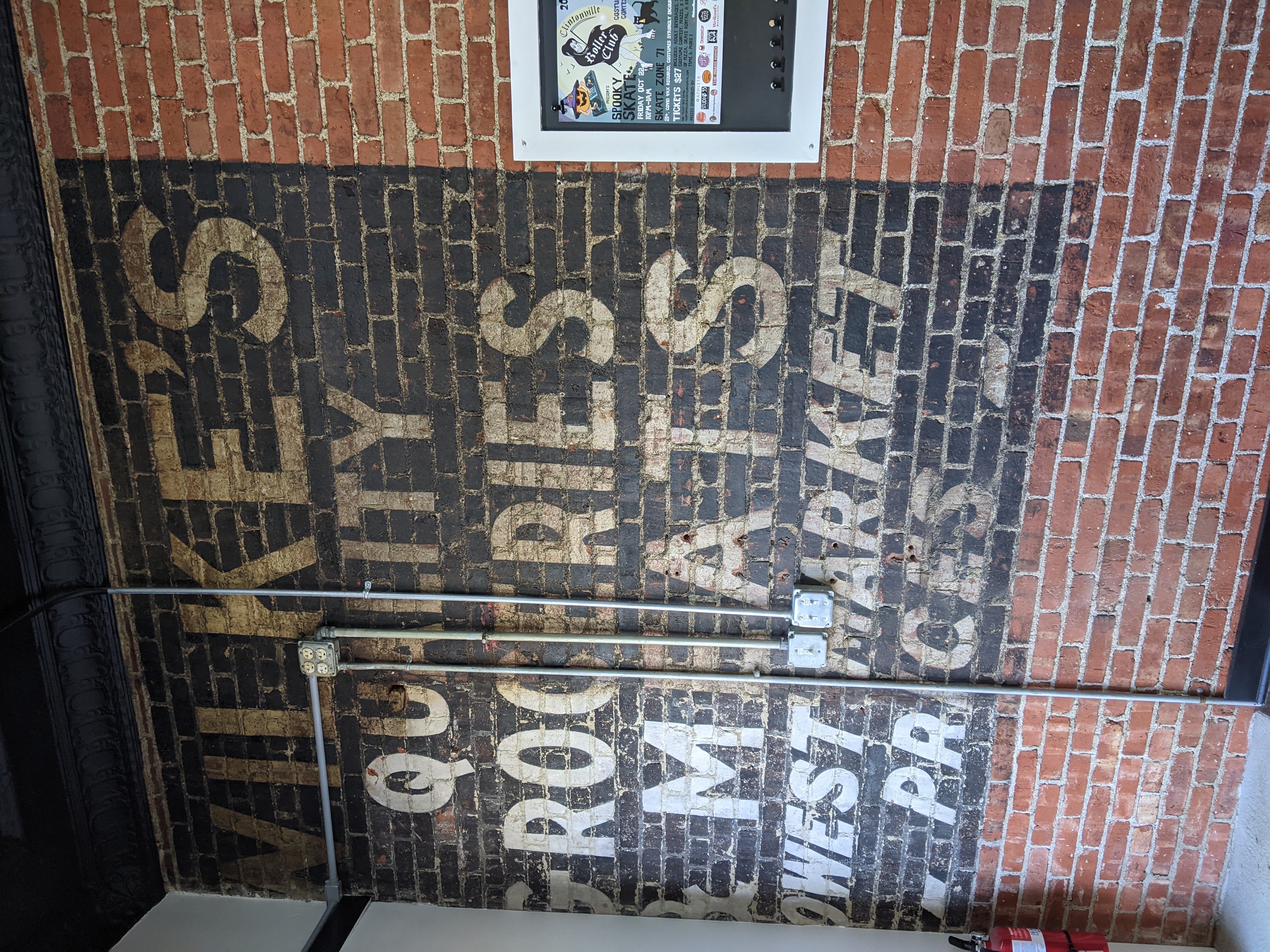 Last month I mentioned the new Clintonville store, Re-Wash, owned by Samantha White. While Sam was renovating the space, she uncovered this wonderful sign from a previous era. It was on the wall–undoubtedly the exterior wall–of 3131 North High (now “Lucky 13 Salon”). In 1926, 3131 North High Street was occupied by Wilke’s Quality Market.
 Here’s an ad from the Columbus Evening Dispatch on April 22, 1926. The Wilke family business–which eventually became Ohio Packing Company–lasted for some 107 years in Columbus. (The Wilke’s Quality Market in Clintonville seems to have been one of the Wilke family’s more minor locations.) The business was established in 1907 by Fritz Wilke as a neighborhood butcher shop in Columbus, eventually focusing on meat cutting and packing. Different aspects of the business were run by various family members–finally by 3rd and 4th generations of the family. Ohio Packing Company closed in April, 2014. You can read a little history of that business here.
In case you are wondering: that other Clintonville market mentioned in the Shredded Wheat ad, Quality Market at 3496 North High Street, was located where Seitan’s Realm is today.
And about that Dispatch ad: Yes, I would LOVE to see them making Shredded Wheat, back in the day; wouldn’t you? You can read more about Henry Perky, the inventor of Shredded Wheat, Triscuits, and the machine that made them, here.
[The ad was provided to me by Loraine of the Columbus Metropolitan Library–Local History and Genealogy Desk; it’s from the Columbus Dispatch published as Columbus Evening Dispatch, April 22, 1926, p14.]3133 North High Street (Re-Wash)
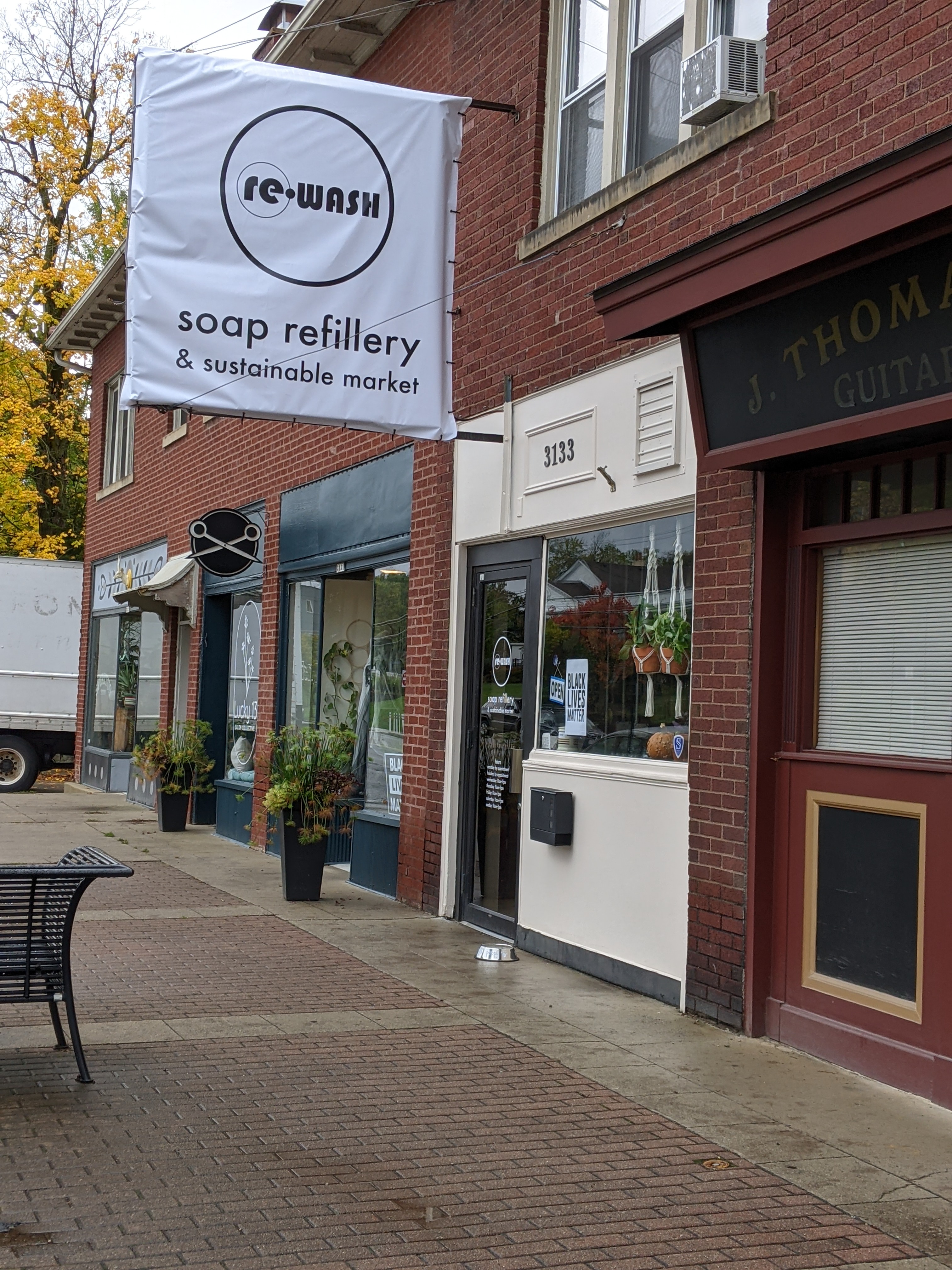 There’s a new kid in town! Re-Wash Refillery has opened in the space formerly occupied by Nancy’s Restaurant at 3133 North High Street. Owner Samantha White has done a stunning job of making “adaptive reuse” of the space and we trust this business will become as much of a Clintonville icon as her predecessor was.
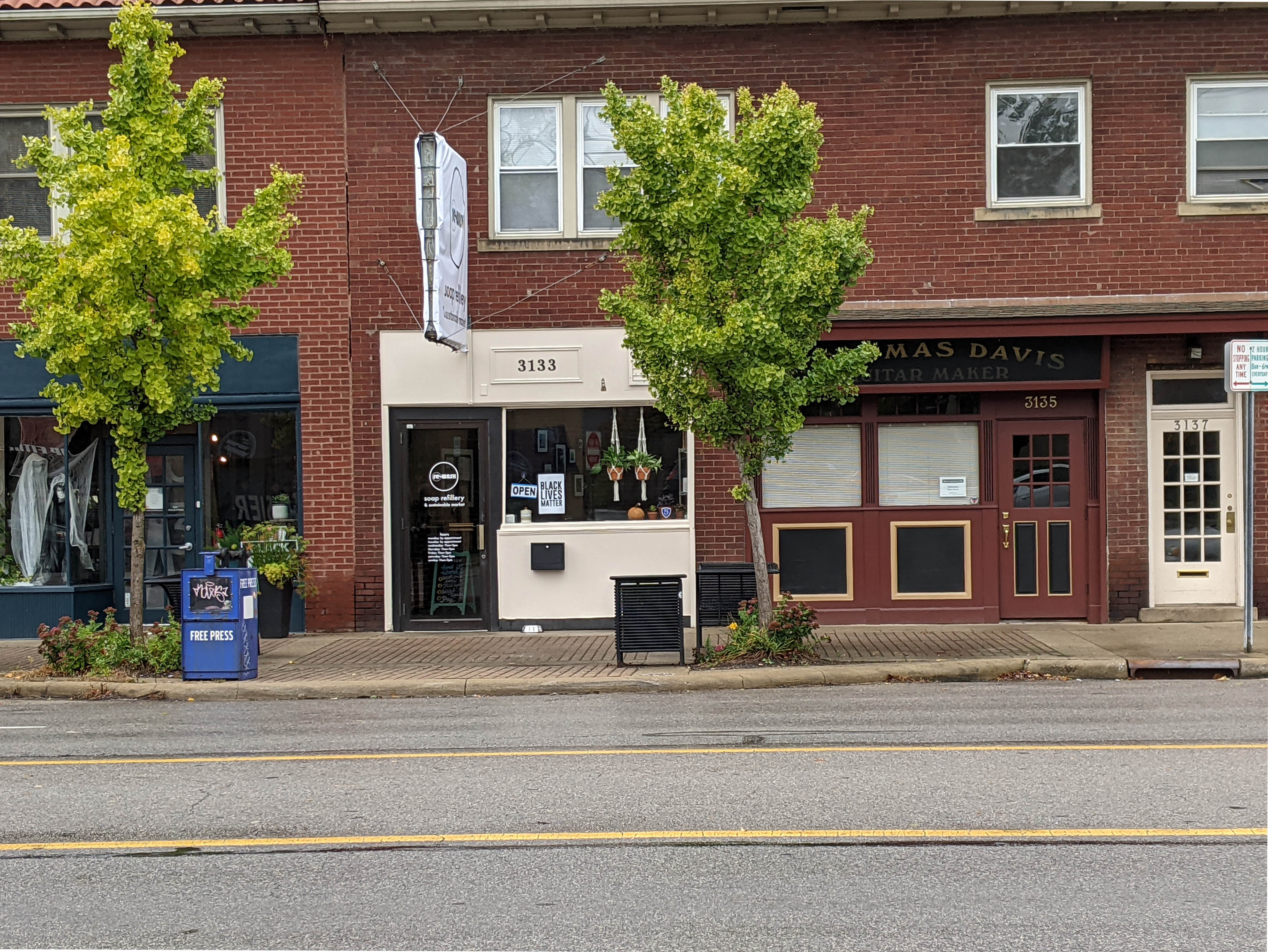 I looked at the history of 3133 North High Street. Here’s what I found.
- Prior to 1929, nothing was listed at that address.
- From 1929 to about 1932, 3133 N High was the Clinton Barber Shop, also variously listed as Clinton Beauty Shop, and F S & GD Port Beauty Shop. Floyd Port Sr and his wife were the managers.
Note: for several years, Hansen’s Bakery—a minor Columbus chain of bakeries—was located next door at 3135 N High, where J. Thomas Davis Guitar Maker is currently located.. It must have been nice to have those bakery smells!
- From 1933-1938, 3133-3135 N High was the Great A & P Tea Company, grocer. (The Great Atlantic & Pacific Tea Company, better known as A&P, was an American chain of grocery stores that operated from 1859 to 2015.) Note the combined address; they took over 3133 as well as Hansen’s Bakery next door. This is a picture of the store’s exterior, from an August 11, 1933 Dispatch page.
There is a Columbus Dispatch Aug 11 1933 newspaper ad for A&P’s opening day at this location. “One package of delicious Sparkle Gelatin Dessert with each 50¢ purchase of groceries or meats on opening days.” Yum Yum!
- From 1939 through 1947, 3133 N High was the Chas Lee Laundry. I found some Dispatch mentions of a Chan Lee Laundry; this may be the same but I am not sure.
- In October 1948 through 1949, 3133 N High was the Warner Appliance Sales and Service Co. An article about the store’s opening from the October 22, 1948 Dispatch is attached.
- 1950—the space was vacant.
- 1951-1955, 3133 N High was the Showboat Inn Restaurant, Gus Deonesos was listed as the manager. (From his obituary: “Gus P. Deonesos, 94, passed away on April 16, 2014. Gus was a United States Army and World War II veteran. He owned 2 restaurants in Columbus, OH before moving to St. Petersburg, FL in 1958.” His family were Greek and he belonged to the Greek Orthodox Church when he lived in Columbus.)
- 1956, it became Ron and Jerry’s Restaurant, Ron Kulwein, manager
- 1957 -1958, the space was Miller’s Restaurant, Walter G & Rosemary Miller, managers.
- 1959-1967, it was Fields Restaurant. Lawrence M. Fields and his wife Minnie lived at 53 Tibet. (Lawrence was listed as the owner from 1959 – 1961; from 1964 Mrs. Minnie Fields was the owner—so Lawrence had probably passed away between 1961 and 1964.)
- 1968 it became Nancy’s Restaurant. It was initially owned by Nancy Kemmerling, until 1971. By 1972, Cindy Moore was listed as the owner of Nancy’s Restaurant (so the sale occurred around 1971). Cindy’s father, Lawrence E. King Sr., was listed as a partner in the restaurant in his 1976 obituary. Cindy lived at 128 Crestview. I didn’t check when she changed her name from Moore to King (she was a widow) but it was after 1976. Cindy closed the restaurant briefly in 2009, then her niece Sheila Davis Hahn reopened it. Sheila died in 2012, and her husband took it over. From a 2006 interview with Cindy: “…I didn’t want to buy a new sign, so I bought Nancy’s name for $100, giving me the rights for 100 years. People call me Nancy all the time. It’s kind of funny.” A Dispatch article about Cindy with photograph is attached, along with another article that includes Cindy’s recipe for her famous meatloaf.

The Hollenback family—the people who started the Booster, lived across the street, and their press office was there as well. So here and here are some pictures taken by the Hollenbacks, of the area, taken from across the street, way before 3133 North High Street was built. See also pages 14, 15, 16, 52 in my book.
Remembering the Rosemary Neighborhood by Knopf & Near
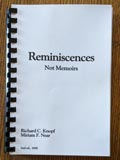
David Penniman, a resident of the Rosemary neighborhood, sleuthed out a copy of a document penned in 1984-88 by Richard C Knopf and Miriam F Near. The document, entitled Reminiscences: Not Memoirs, is a free-wheeling remembrance of growing up in the neighborhood around Henderson and Rosemary Parkway in the 1920s, 1930s, and 1940s. Dave’s copy came from Ann and Keith Bossard of Dominion Blvd; Dave then digitized the 97 page book and shared it with us. Thanks, Dave!
Both Richard and Miriam are deceased; their obituaries are linked below.
Richard C Knopf, 1/4/1925 – 7/17/2002
Miriam Fowle Near, 6/28/1924 – 12/10/2009
I’m so appreciative of people who preserve local history, as Richard and Miriam, and Dave, have done.
[Digital version of the Knopf and Near typescript courtesy of David Penniman. Knopf obituary came courtesy of the Ashtabula Public Library System based on a search and tip from Nick Taggart, retired librarian par excellence at the Columbus Metropolitan Library.]80 West Cooke Avenue
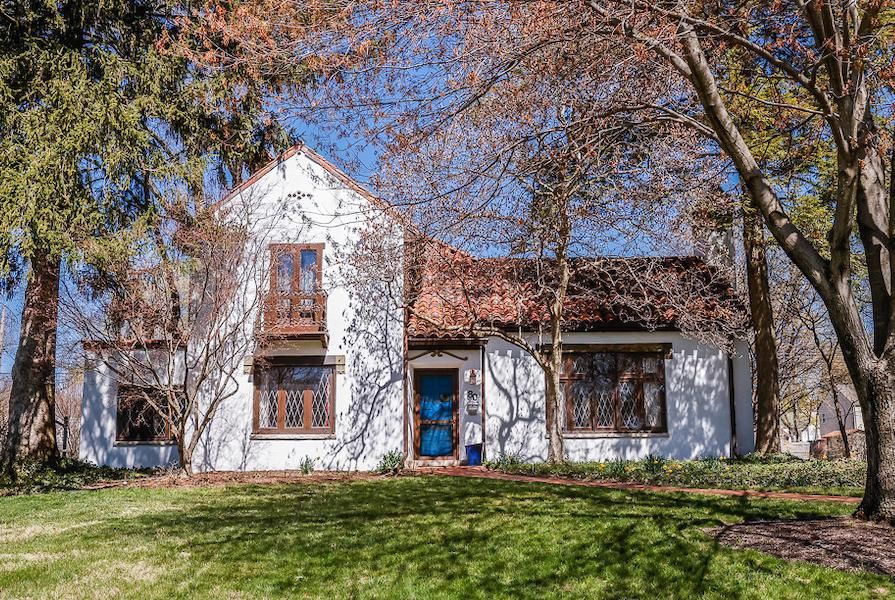 This lovely home at 80 West Cooke Rd was originally built in 1925 for Lulu & Carl Cooke. The Cookes owned it for 40 years, and the house has only had 4 owners since it was built. Fortunately the home’s original character and charm has been maintained throughout the years.
I believe I’ve passed the house many times without noticing it, and suspect its lines were obscured by foliage until recently. What a gem it is!
The house is in the Rosemary housing division, developed by Charles Johnson in 1923 and named after his mother.
As a side note, the Mediterranean Revival style–so unusual in Clintonville–reminds me of the old Zimmerman home that used to be located at the NW corner of Henderson and Olentangy River Roads.
There are also examples of that style at 44 West Jeffrey Place (left photo below) and 223 West Beechwold Blvd (right photo below) in Old Beechwold. An historic inventory for 44 West Jeffrey can be found here. 223 West Beechwold seems to have had the address “4923 West Beechwold” and may have been designed by architect Frank Kinzig, according to the Old Beechwold Historic District Nomination.
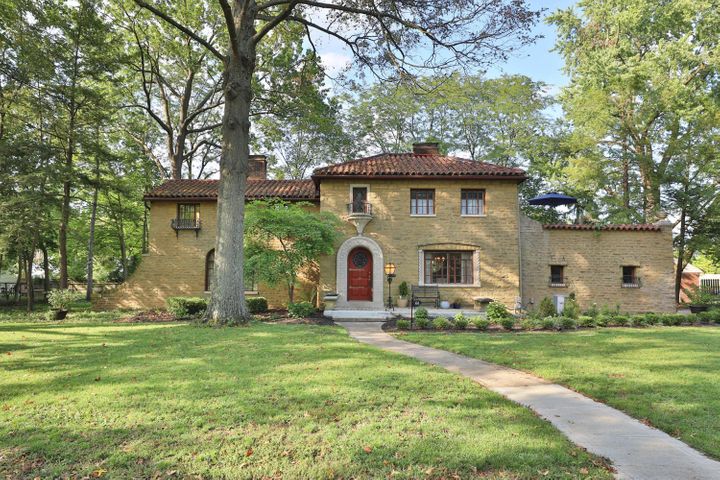
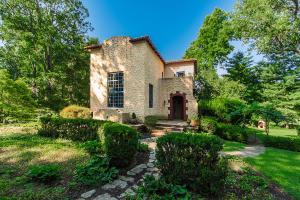
My friend Nancy Campbell tells me that in the 1920s, there was a lot of interest in exotic styles for houses, usually attributed to the young men who came back from WWI. Having seen more of the world, they were interested in Tudor, Mediterranean, Mission, Chateauesque (French) styles. The Sears and Aladdin kit houses, though offering predominantly Craftsman or “plain” styles, also offered the others. These three houses were more upscale versions of an interesting mix of styles. According to Virginia McAlester’s book, A Field Guide to American Houses: The Definitive Guide to Identifying and Understanding America’s Domestic Architecture, tile roofs were used in Spanish Eclectic, Mission, Italian Renaissance, and Prairie styles. The Cooke Rd. house seems somewhat Tudor, with the “musicians’ balcony” overlooking the living room.
[Real estate listing & photos courtesy of Judy Minister; historic architecture information from Nancy Campbell.]The Clintonville Woman’s Club: the women before the Clubhouse
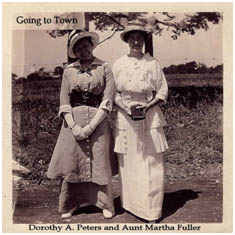 Mary Rodgers has written a very nice article about the Clintonville Woman’s Club.
The Clintonville Woman’s Club: The Women Before the Clubhouse
by Mary Rodgers
[Courtesy of Mary Rodgers]I was recently asked to speak at an evening meeting of the Clintonville Woman’s Club. Specifically, I was asked to speak on the subject of the history of the land that the Clubhouse occupies. I have always understood that the Clubhouse was located on land from the old Fuller Farm. I was surprised to learn more about the “Fuller” family.
In the 1820s, John Rathbone sold farm lot 5 to Edward Amaziah Stanley. Using today’s landmarks, that land would have been bounded on the east by Indianola Avenue, on the west by the river, on the south by roughly Torrence Road and on the north by roughly Overbrook Drive. When Mr. Stanley died in 1862, his land holdings were passed down to his children. Harriet Marie Stanley (aka Hattie) was one of those children. She was born in Connecticut in 1831. Based on the extensive land holdings throughout Ohio, I believe her father Edward was an Ohio land speculator. After acquiring several thousand acres, in 1829, he returned to Connecticut to marry Abagail Talcott Hooker. Sometime between 1831 and 1834, the family moved to the Clintonville area.
In 1856, Hattie married Erskine Asa Fuller, aka E. A. Fuller. E. A. was known as a dealer in stock animals. When her father passed away, Hattie inherited all of farm lot 5 in Clinton Township Ohio. The 1870 census shows a large extended family living together in Clintonville–the Fullers and their daughters, Hattie’s mother, brother, sister, and several farm hands and servants. The combined household value per that census was in excess of $25,000. Hattie passed away in 1879. E.A. passed away in 1894. After their deaths, the farm was transferred equally to the four Fuller daughters–Abby, Mary, Katherine and Martha.
Martha Fuller and her sister Katherine Fuller Peters lived all of their lives in Clintonville. They owned two brick homes along High Street–Katherine’s just south of where the Library sits today and Martha’s where the Christian Science church sits today. Martha Fuller passed away in 1938. She left half of her land holdings to long time farm hand Matthew McCallen and half to her niece (sister Mary’s daughter) Helen Osborn.
Eventually, all the land was sold off, some to the Christian Science Church, some to the Calvary Bible Church, and the balance to the City of Columbus.
The Clintonville Woman’s Club land was purchased by the Kiwanis Club of Northern Columbus. That Club loaned the ladies the funds needed to build the Clubhouse. In turn, they held a mortgage on the property. The Woman’s Club members worked tirelessly and retire their debt to the Kiwanis within five short years! They have owned the Club house and property ever since.
Balser Hess Family Graves
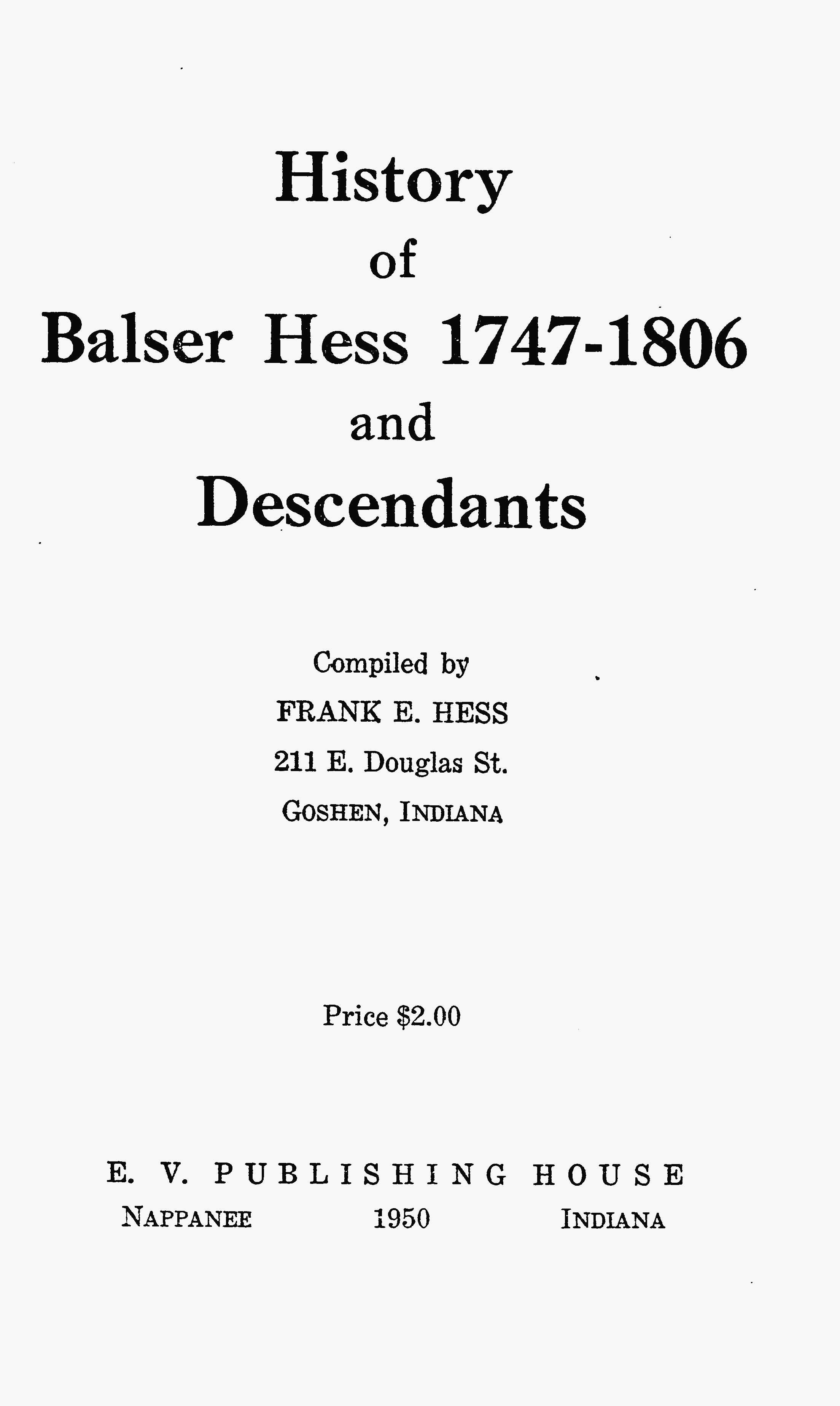 Mary Rodgers, President of the Clintonville Historical Society, did some wonderful research on the Balser Hess family graves at Union Cemetery, in response to a reader’s inquiry about this post. Apparently the reader believed that Balser Hess’s wife is not buried in this location despite the tombstone.
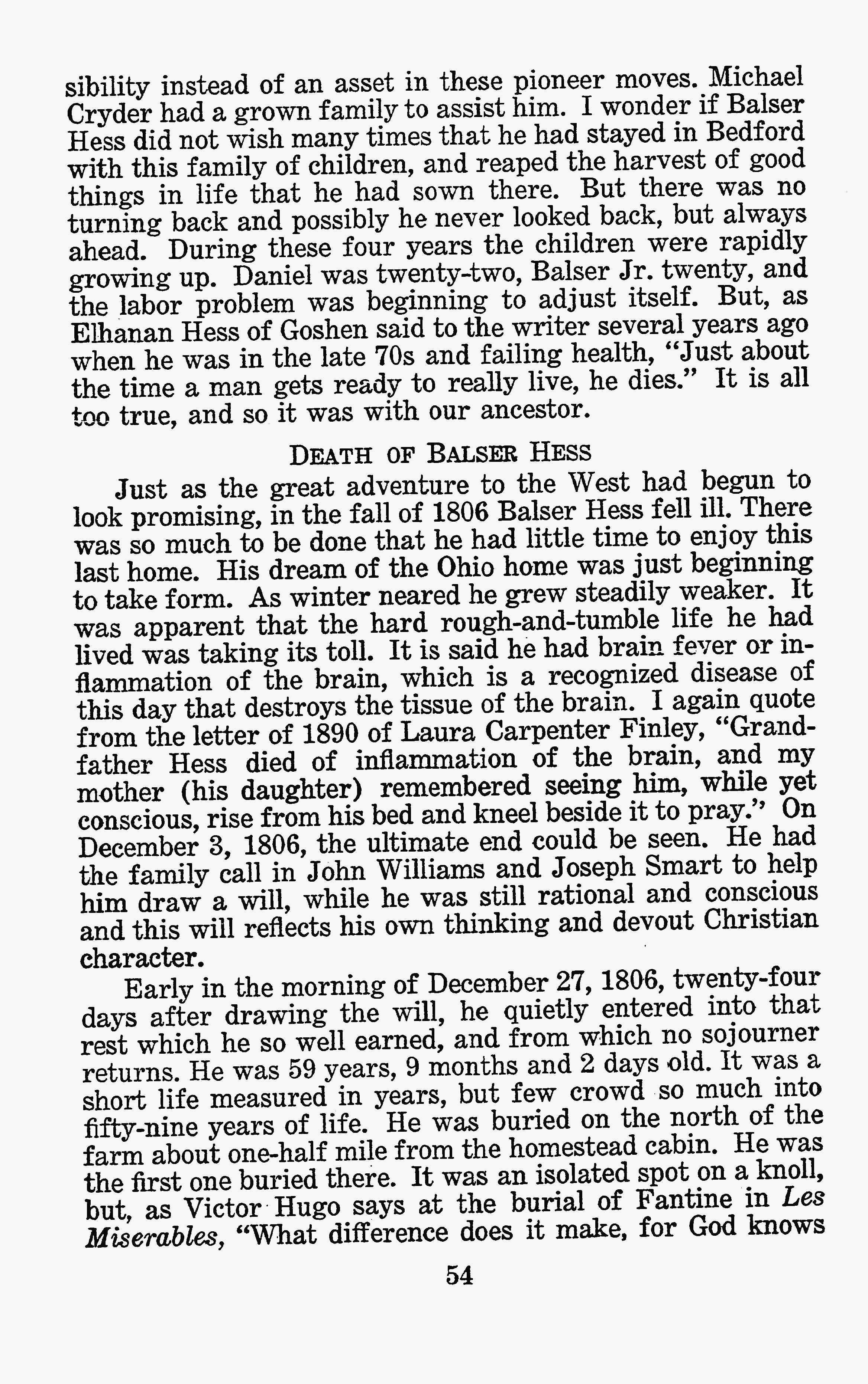 From Mary Rodgers:
[Images courtesy of Mary Rodgers]There are lots of burials on the Hess property prior to the establishment of the Union Cemetery Association in 1847. The Association purchased the Hess burial ground in 1862. The only known records of the early burials are the tombstones. Unfortunately, there are lots of illegible and missing stones.
Union Cemetery and the Historical Society believe Balser to be the earliest burial. The family arrived in Ohio around 1799. They had a child (John) born in Hopetown in 1799. He lived to adulthood. Attached is a family history that was done many years ago by Frank Hess. It states that Balser was the first burial on the family farm. I confirmed that John was the last of George’s children; she didn’t find any grandchildren prior to his death in 1806.
Balser’s wife (Mary Eva) is represented on the tombstone. We have no reason to believe that she is not buried at Union. The property was still in the family’s control at the time of her death. The tombstone that is in the cemetery is not the original. It was lost to the test of time and replaced by the family.
John was the last child to be born to Balser and Mary Eve. No mention of “lost infants” for that couple.
The only child of Balser who married prior to his death was his daughter Mary Ann. She married Henry Cryder before the Hesses moved to Franklinton. She and Henry ultimately moved to Delaware, OH (then to Illinois) but I don’t see anything that would suggest they had a child that would have been buried on the family homestead in Franklin Co. prior to her father’s death. At that time, they lived in New Hope, OH.
Bob is Identified
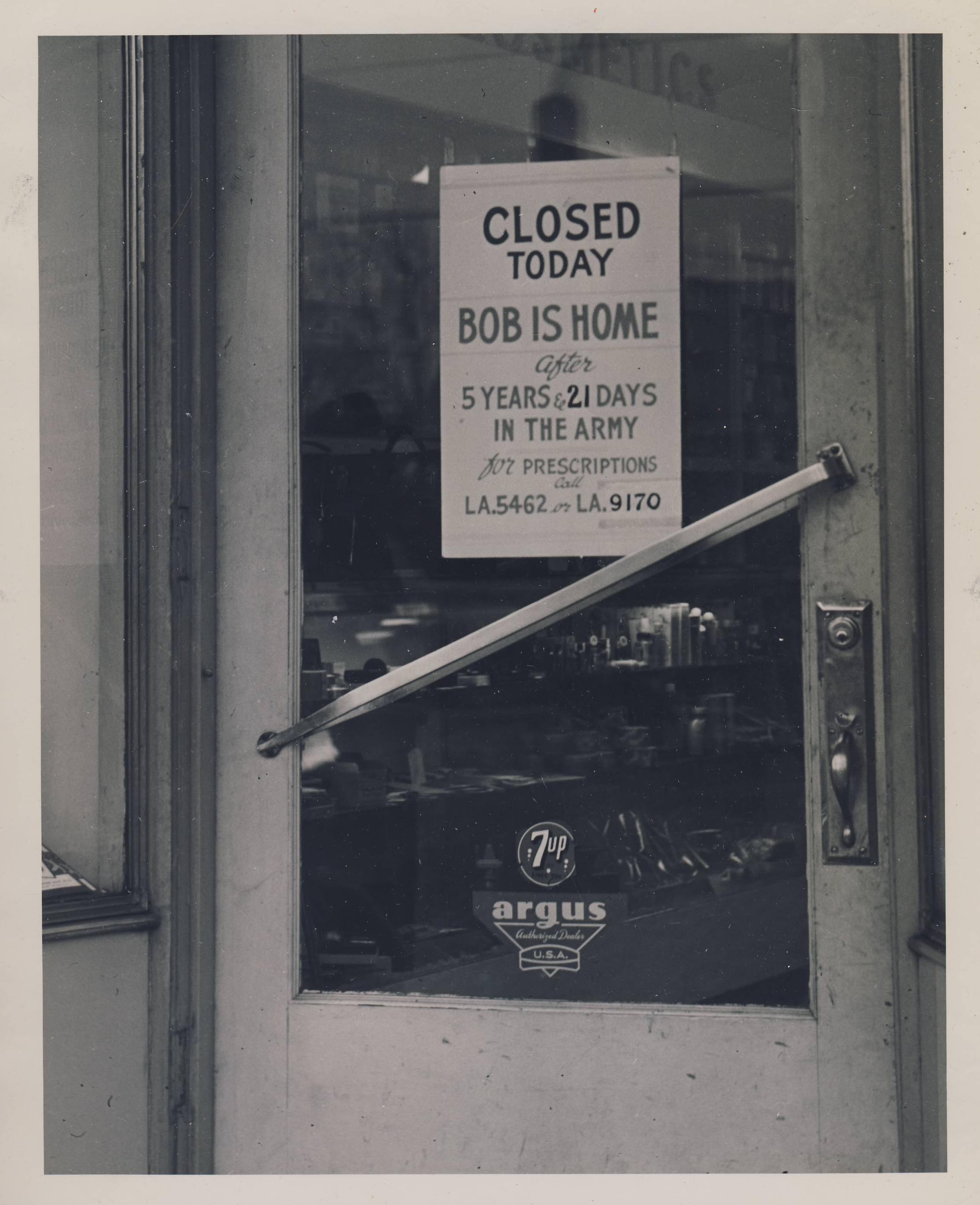 Last November, I posted a photo of a drugstore that carried a sign, “Bob is Home”. The photo spurred Clintonville Historical Society president Mary Rodgers to do some sleuthing. Here’s what she learned:
[Image is from The Booster, and courtesy of the Hollenback Collection at the Clintonville Historical Society. Mary’s article was published in the May 2020 CHS Newsletter.]We have a photo in the Clintonville Historical Society’s archive that shows a storefront door with a sign that reads: “Closed Today –Bob is home after 5 years and 21 days in the Army for prescriptions call LA.5462 or LA. 9170”. I thought I might try to find out more about veteran “Bob”. From the sign, I know his name is Bob and that is most likely short for Robert. I know he served for 5 years and 21 days in the Army. I know this photo appeared in the Booster, a local newspaper founded in 1933 (post WWI-pre WWII). I went to Ancestry.com and searched for first name “Robert”, lived in Clinton Twp., Franklin County, OH with military service from 1941-1945 (i.e. WWII). The sign also told me that someone close to Bob owned a pharmacy (“for prescriptions call…”). I added pharmacy to my search. The top search results included Robert Ranck. Could this be the right solider? I went to the Columbus Metropolitan Library’s research site and pulled up the Columbus Dispatch newspaper. I typed in “Bob Ranck”. I found a newspaper article from November 14, 1945 that read as follows: “Druggists Back From Service Are Honored–Seven druggists and the son of another druggist who recently returned from the service were honored by the Servall Druggists Alliance at a dinner-dance at the Beechwold Tavern . Sgt. Bob Ranck, son of Paul Ranck, Oakland Park Av and High St. came home after five years in the service and his father promptly closed his store for the day…”.
Mystery solved! Jesse Paul Ranck owned the Oakland Park Pharmacy–where Shim’s is today. The Ranck family lived at 234 Erie Road. Mr. Ranck was very involved in the Clintonville community. He loved nature and was an avid hunter and fisherman. In 1959, the Columbus Dispatch reported that then retired Pharmacist Ranck continued to visit the shop at Oakland Park and High. On one particular day, May 8, 1959, he told the story of a mother raccoon who had brought her babies down the chimney of his home. He was worried that the kits would become too heavy for her to remove. His son, Bob Ranck, returned from the war and attended The Ohio State University. He graduated from the School of Dentistry. For many years, his dental practice was above the Oakland Park Pharmacy. According to his 2012 obituary, he ultimately received the military rank of Captain and was awarded the Bronze Star for his heroic service to our country.
Big Tom’s Drive In @ 4850 N. High
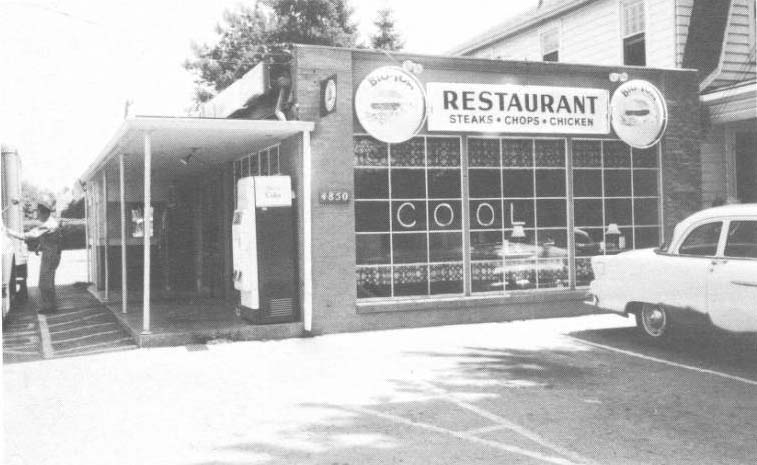
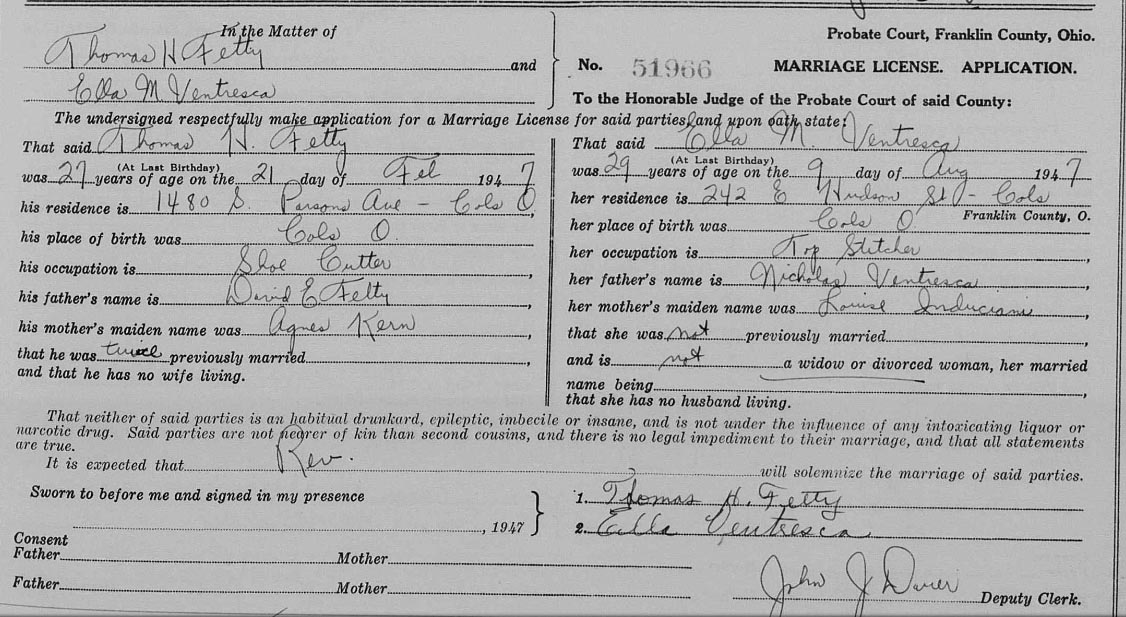
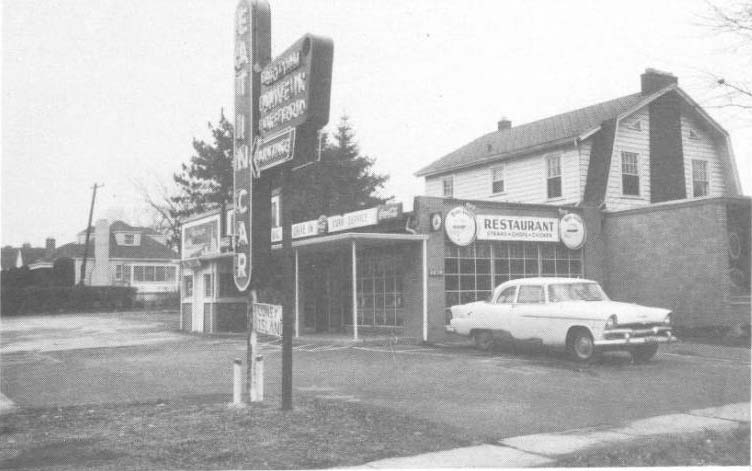 Wendy Bayer found these great photos and generously shared them with us. The photos show Big Tom’s Restaurant (or Big Tom’s Drive-In Restaurant), which occupied the southeast corner of North High and East Jeffrey from 1956 – 1959. Big Tom’s was owned by Thos H Fetty, who lived with his wife Ella M. at 353 Clinton St.
Here is Big Tom and his wife Ella’s marriage certificate:
Tom Fetty died in 1995.
Here’s some history on the location, based on the Columbus Metropolitan Library’s collection of business directories:
- –In 1950 the address did not exist.
- –From 1953 until 1956 it was Hi-Jeffrey Sandwich Shop, owned by Pete Freemas. (In April 1954 it was called Hi-Jeffrey Sandwich Shop, presumably for its corner location. By June 1954 it was also called Pete’s Drive-In. Pete passed away from a heart attack in April 1955; here’s his obituary.)
- –From 1956 to 1959 it was Big Tom’s Restaurant. There’s an April 1959 Dispatch article about an attack on “the diner’s operator Donald Acree.”
- –In August 1957, January 1958, and July 1959, there were attempts by “owner Elizabeth F. Baker” to sell or auction the restaurant including furnishings and equipment. I’m not sure whether Elizabeth F. Baker had been Pete Freemas’s wife Betty, or whether she had some other connection to the property.
- –By 1960 it had become Chicken Delight Restaurant, owned by Richard A. Potts (& Forrest W. Womeldorff). It was still Chicken Delight in 1961, but I was unable to check additional years.
- –By 1966 it had become a Kut n’ Kurl Beauty Salon.

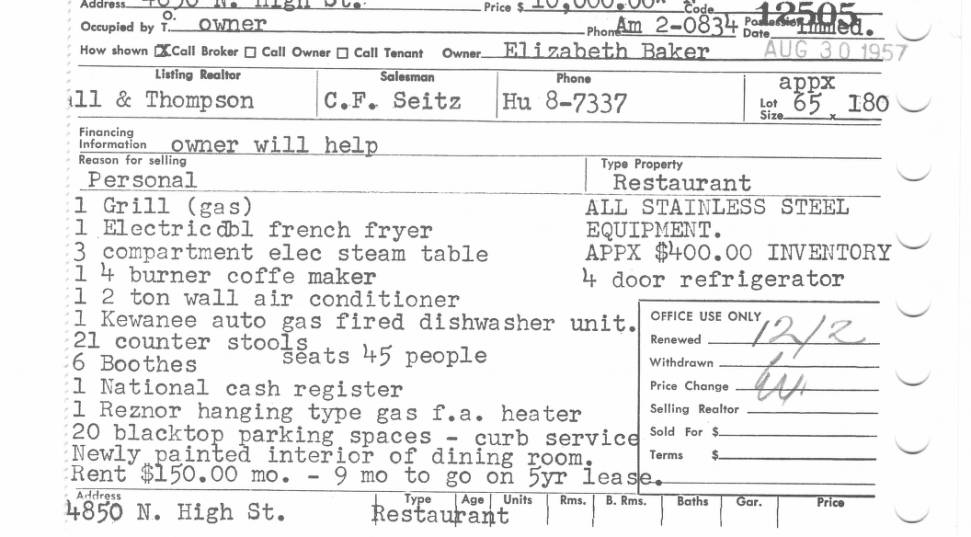
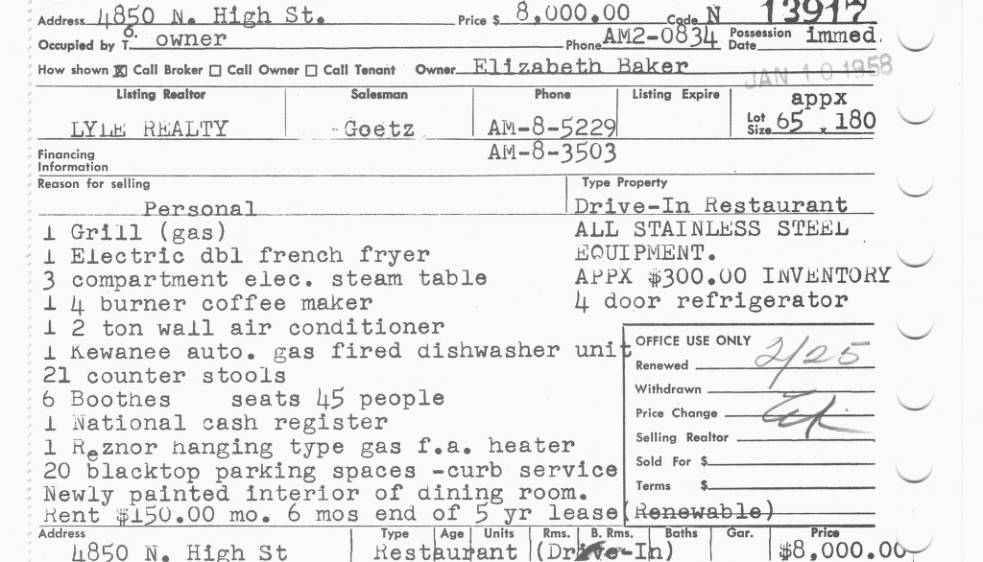

According to Wendy, Frank B. and Ola Faye Hyatt owned the parcel for a short time; they are buried in Walnut Grove Cemetery. Orr Zimmerman of Olympic Pool fame also owned the parcel… Some neighborhood folks say that it was called “Corky’s” at one time and that the “owner lived down on W. Jeffrey”; I didn’t find record of that. Someone else thought it became Ricardi’s Italian Restaurant, but my research says that Ricardi’s had an address of 4874 North High, just north of this.
Wendy Bayer found the photos on the MLS Real Estate Cards collection that Carriage Trade Realty and the Columbus Metropolitan library uploaded. Nick Taggart of the Columbus Metropolitan Library Local History and Genealogy Desk furnished the Dispatch articles.
[Images courtesy of Wendy Bayer, the Columbus Metropolitan Library, Nick Taggart at the Columbus Metropolitan Library, and The Columbus Dispatch.]Close Cover Before Striking
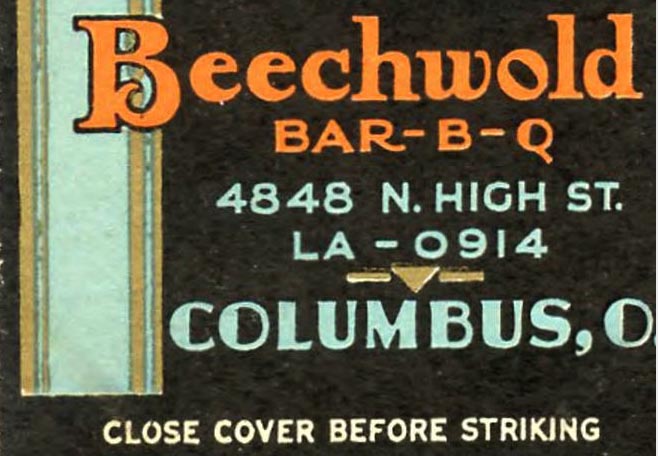 Wendy Bayer came across a matchbook for the Beechwold BBQ at 4848 N. High. Notice the address?
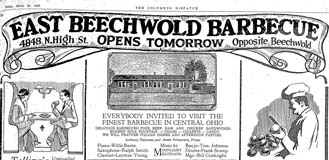
Beechwold Barbecue, owned by Anthony Delewese, was located at 4848 North High from the day it opened, March 27, 1926, until an overheated furnace caused a fire during the last week of January, 1934.

Four months after the fire (May 29, 1934), Mr Delewese reopened his restaurant as Beechwold Tavern, at 4784 North High, where Mozart’s is today. (He sold it to Henri Boyd in 1938, who in turn renamed it the Beechwold Restaurant.)

Mr. Delewese–assuming I have the right “Anthony Delewese”–died September 13, 1975.
Just to finish off the “fire” theme:

Oh and remember when we abbreviated Ohio as just “O.”? State abbreviations were standardized to 2 characters in 1963, to make room for zipcodes, as most addressing equipment at the time could accommodate only 23 characters (including spaces) in the bottom line of the address.
[Matchbook image courtesy of Wendy Bayer. Dispatch clippings researched by Nick Taggart, librarian par excellence of the Columbus Metropolitan Library’s Local History and Genealogy Desk. ]Calling Doctor Amy!
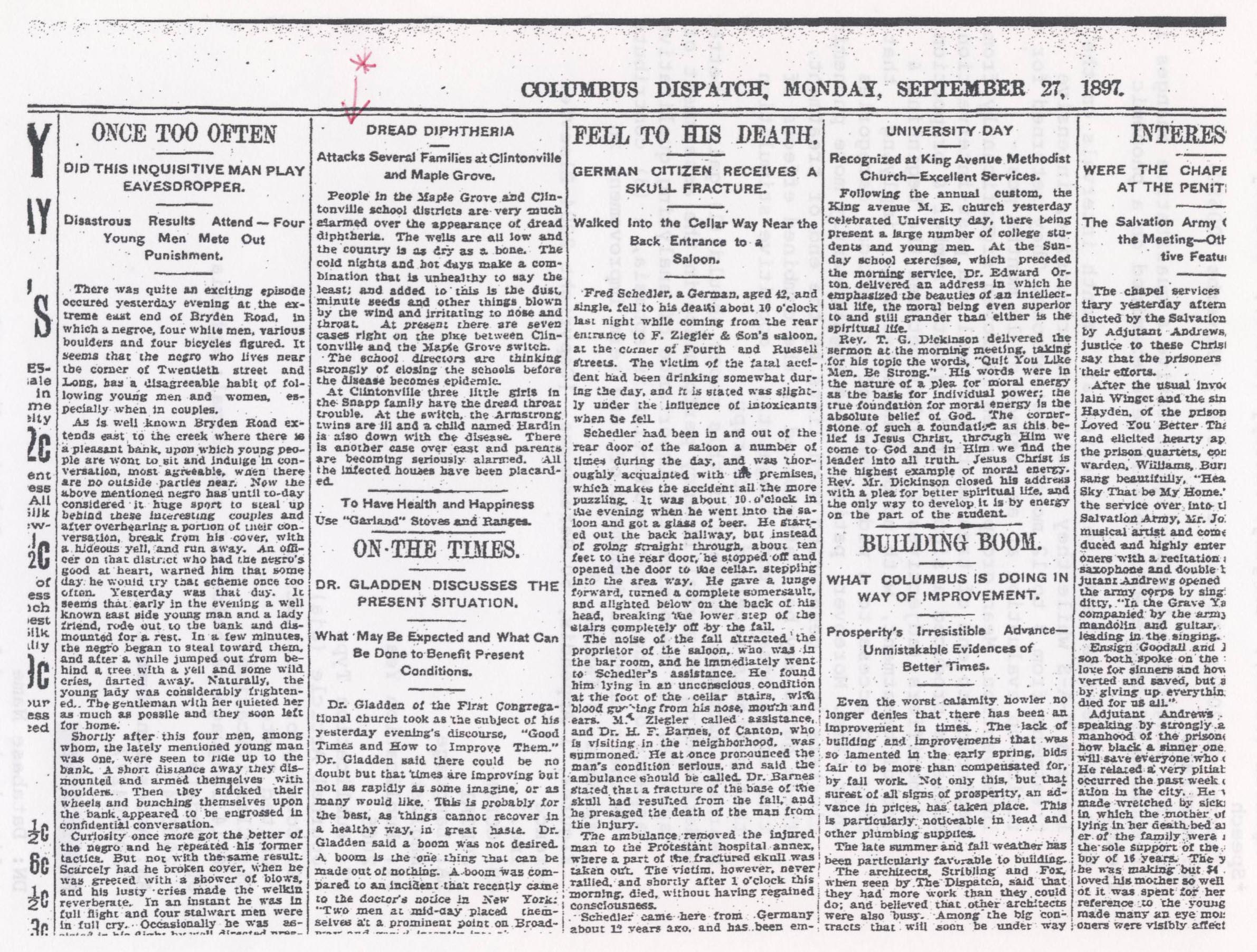 This is a Columbus Dispatch article, dated September 27, 1897, about an almost-epidemic of diphtheria. Though you can zoom in, the print is tiny, so I’m providing the text here:
“Dread Diphtheria Attacks Several Families in Clintonville.
“People in the Maple Grove and Clintonville school districts are very much alarmed over the appearance of dread diphtheria. The wells are all low and the country is as dry as a bone. The cold nights and hot days make a combination that is unhealthy to say the least; and added to this is the dust, minute seeds and other things blown by the wind and irritating to nose and throat. At present there are seven cases right on the pike between Clintonville and the Maple Grove switch.
“The school directors are thinking strongly of closing the schools before the disease becomes an epidemic.
“At Clintonville three little girls in the Snapp family have the dread throat trouble. At the switch, the Armstrong twins are ill and a child named Hardin is also down with the disease. There is another case over east and parents are becoming seriously alarmed. All the infected houses have been placarded.”
According to Wikipedia and the CDC, diphtheria is an infection caused by the bacterium Corynebacterium diphtheriae. Signs and symptoms vary from mild to severe. They usually start two to five days after exposure. Symptoms often come on fairly gradually, beginning with a sore throat and fever. In severe cases, a grey or white patch develops in the throat; this can block the airway and create a barking cough as in croup. The neck may swell in part due to enlarged lymph nodes. Complications may include myocarditis, inflammation of nerves, kidney problems, and bleeding problems due to low levels of platelets. Nowadays, children are vaccinated against diphtheria in combination with tetanus and pertussis.
Gus Grener’s
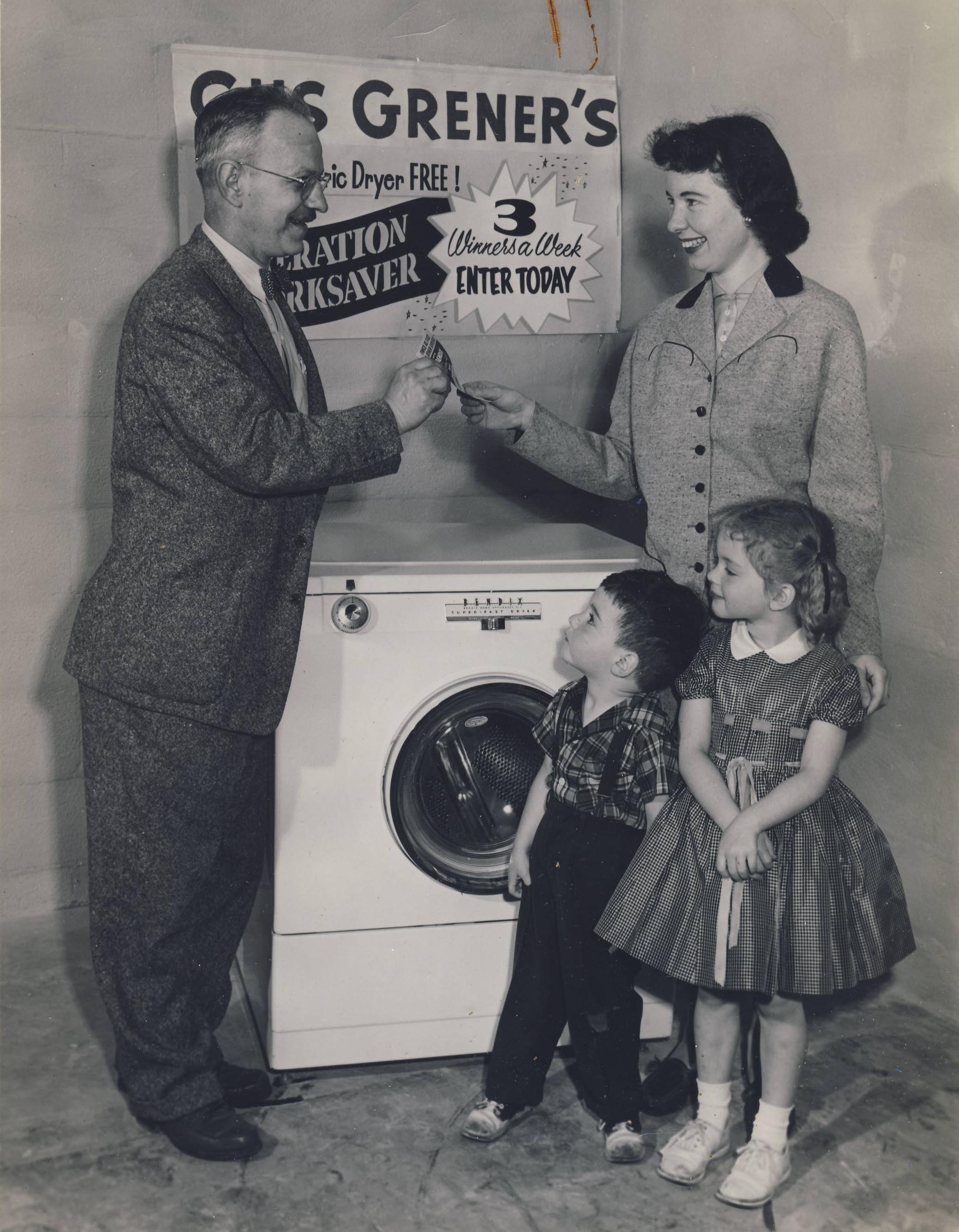 Gus Grener’s was located at 2189 North High Street (near the corner of North High and Norwich). According to the 1949 city directory, Augustus F. Grener sold “GE refrigerators, Bendix home laundry washers, radios, Sohio products, Willard batteries, and Goodyear tires.” What a marketing concept!
Soda Fountain Kids
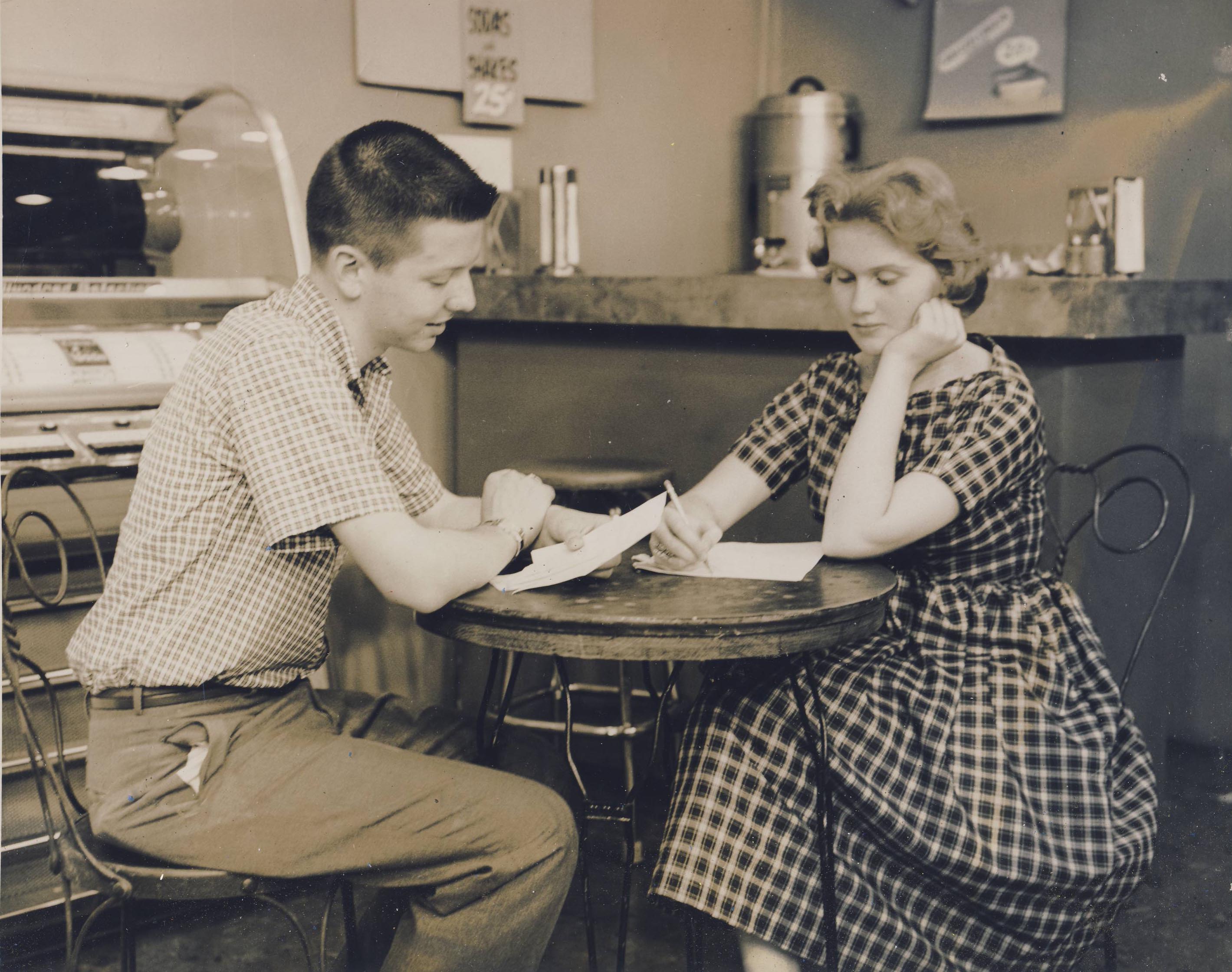 Some things never change–including people occupying tables without ordering any food or drinks!
Bob is Home
A nice homage to a veteran. I do not know who Bob is, but he certainly did his part. Thanks, Bob–and thanks to all the other vets out there.
E. A. Fuller Farm
The Clintonville Historical Society October 2017 monthly newsletter contained an interesting article about the land at the Clintonville Women’s Club by Mary Rodgers.
________
The Clintonville Woman’s Club: The Women Before the Clubhouse
by Mary Rodgers
I was asked to speak at an evening meeting of the Clintonville Woman’s Club. Specifically, I was asked to speak on the subject of the history of the land that the Clubhouse occupies. I have always understood that the Clubhouse was located on land from the old Fuller Farm. I was surprised to learn more about the “Fuller” family.
In the 1820s, John Rathbone sold farm lot 5 to Edward Amaziah Stanley. Using today’s landmarks, that land would have been bounded on the east by Indianola Avenue, on the west by the river, on the south by roughly Torrence Road and on the north by roughly Overbrook Drive. When Mr. Stanley died in 1862, his land holdings were passed down to his children. Harriet Marie Stanley (aka Hattie) was one of those children. She was born in Connecticut in 1831. Based on the extensive land holdings throughout Ohio, I believe her father Edward was an Ohio land speculator. After acquiring several thousand acres, in 1829, he returned to Connecticut to marry Abagail Talcott Hooker. Sometime between 1831 and 1834, the family moved to the Clintonville area.
In 1856, Hattie married Erskine Asa Fuller, aka E. A. Fuller. E. A. has known as a dealer in stock animals. When her father passed away, Hattie inherited all of farm lot 5 in Clinton Township Ohio. The 1870 census shows a large extended family living together in Clintonville. The Fullers and their daughters, Hattie’s mother, brother, sister and several farm hands and servants. The combined household value per that census was in excess of $25,000. Hattie passed away in 1879. E.A. passed away in 1894. After their deaths, the farm was transferred equally to the four Fuller daughters–Abby, Mary, Katherine and Martha. Martha Fuller and her sister Katherine Fuller Peters lived all of their lives in Clintonville. They owned two brick homes along High Street; Katherine’s was just south of where the Library sits today and Martha’s was where the Christian Science church sits today. Martha Fuller passed away in 1938. She left half of her land holdings to long time farm hand Matthew McCallen and half to her niece (sister Mary’s daughter) Helen Osborn. Eventually, all the land was sold off, some to the Christian Science Church, and some to the Calvary Bible Church and the balance to the City of Columbus. The lane where the Clintonville Woman’s Club land is located was purchased by the Kiwanis Club of Northern Columbus. That Club loaned the ladies the funds needed to build the Clubhouse. In turn, they held a mortgage on the property. The Woman’s Club members worked tirelessly and retire their debt to the Kiwanis within five short years! They have owned the Club house and property ever since.
A Rose Is a Rose Is a Rose Is a Rose…
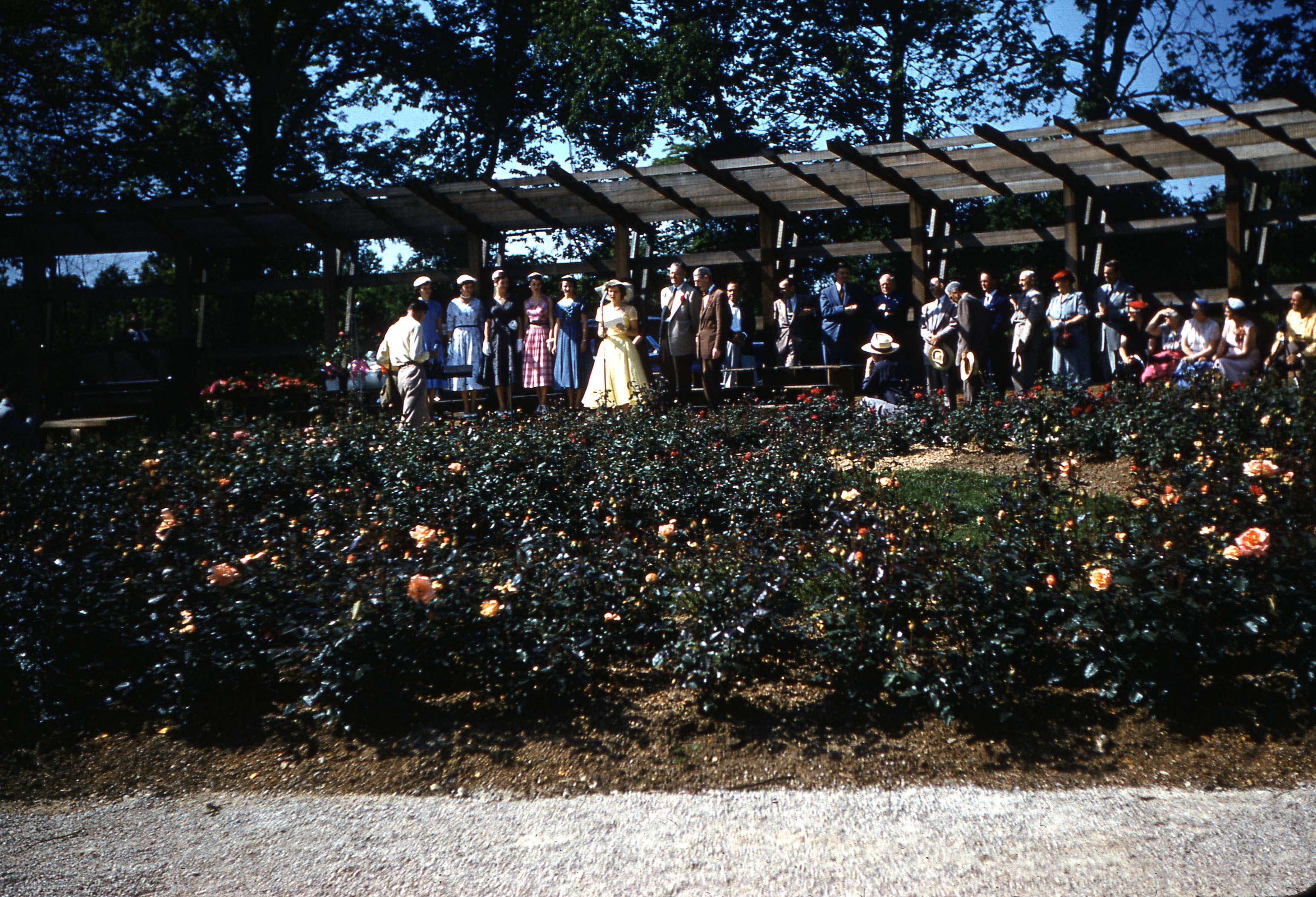
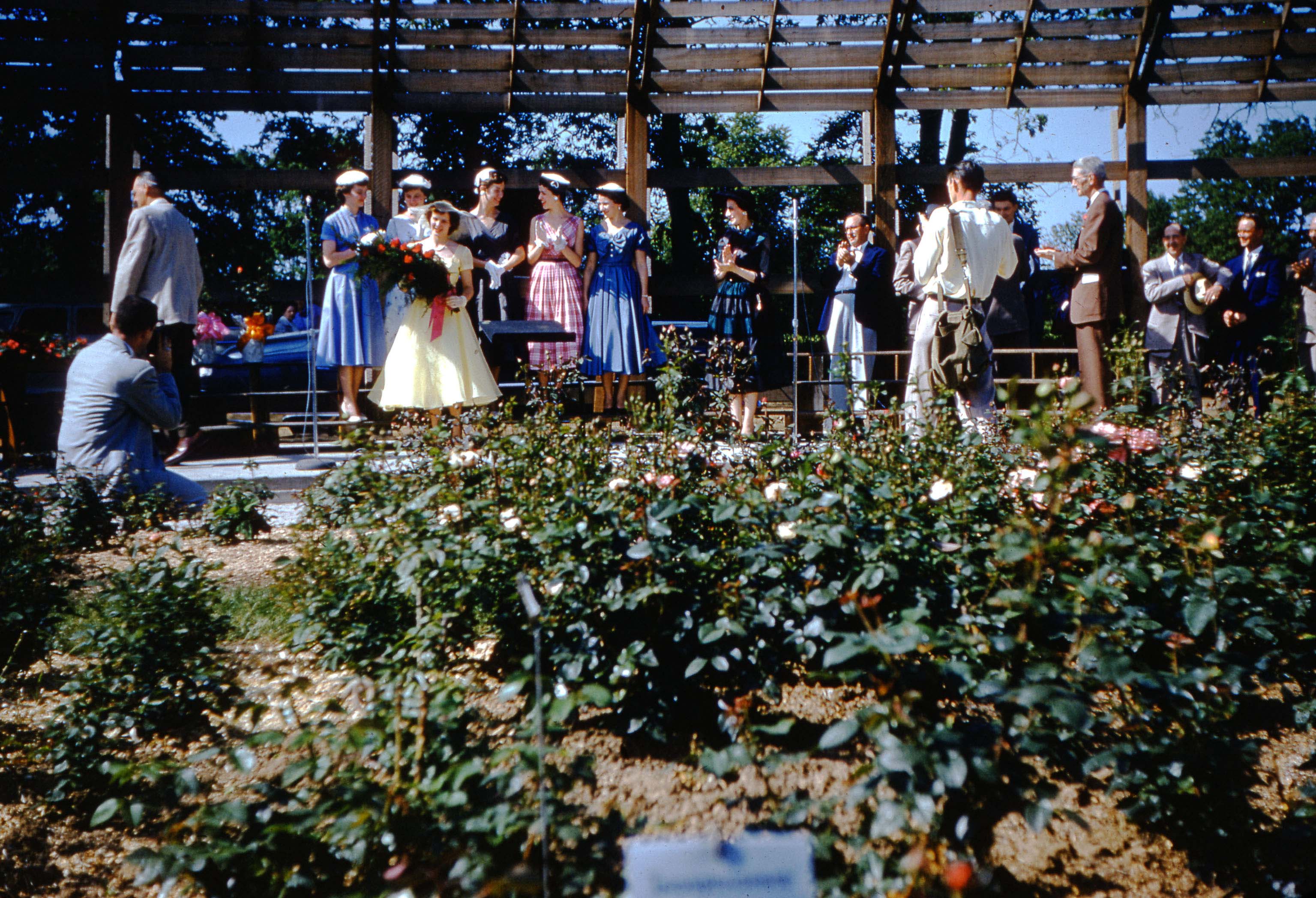
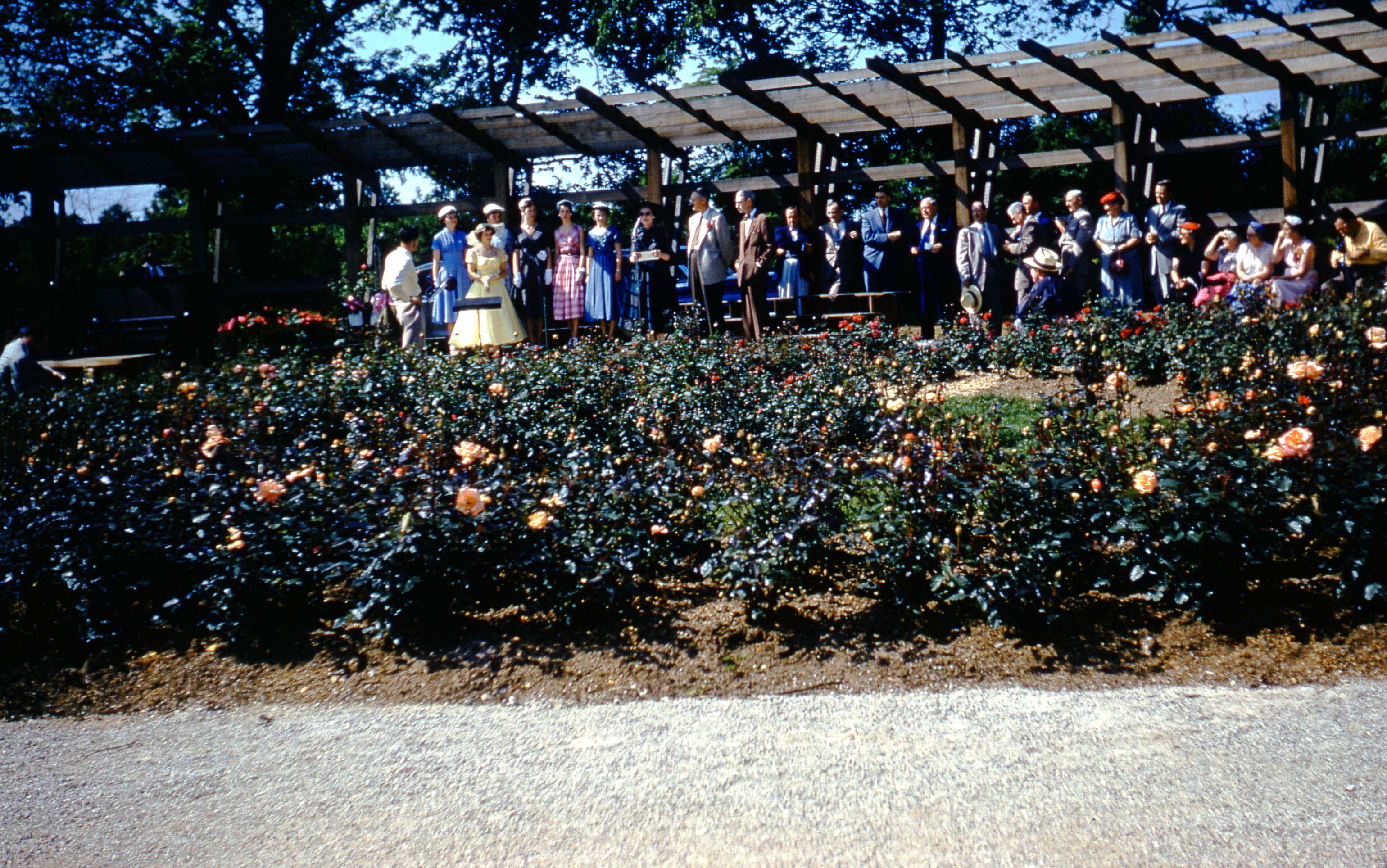
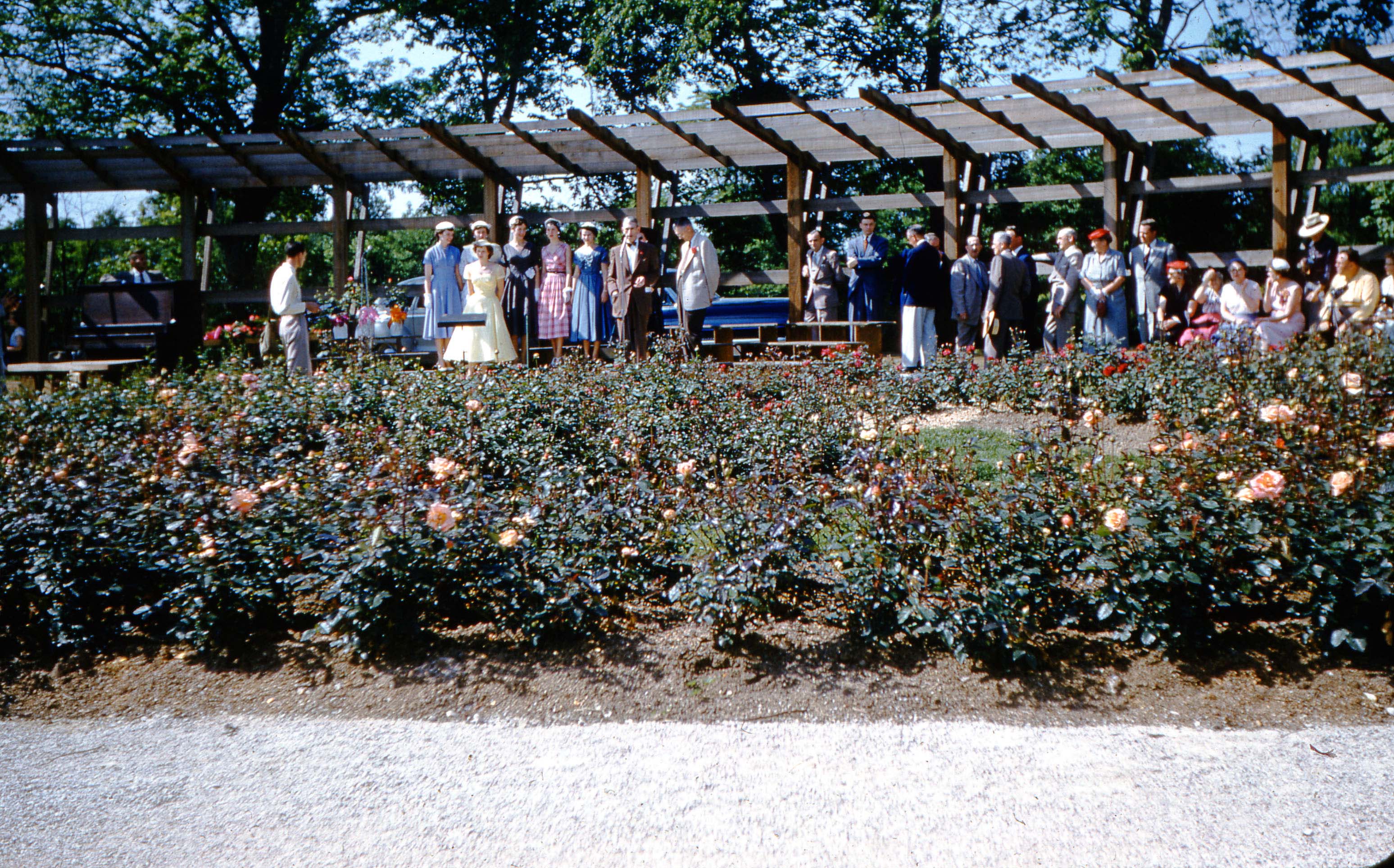
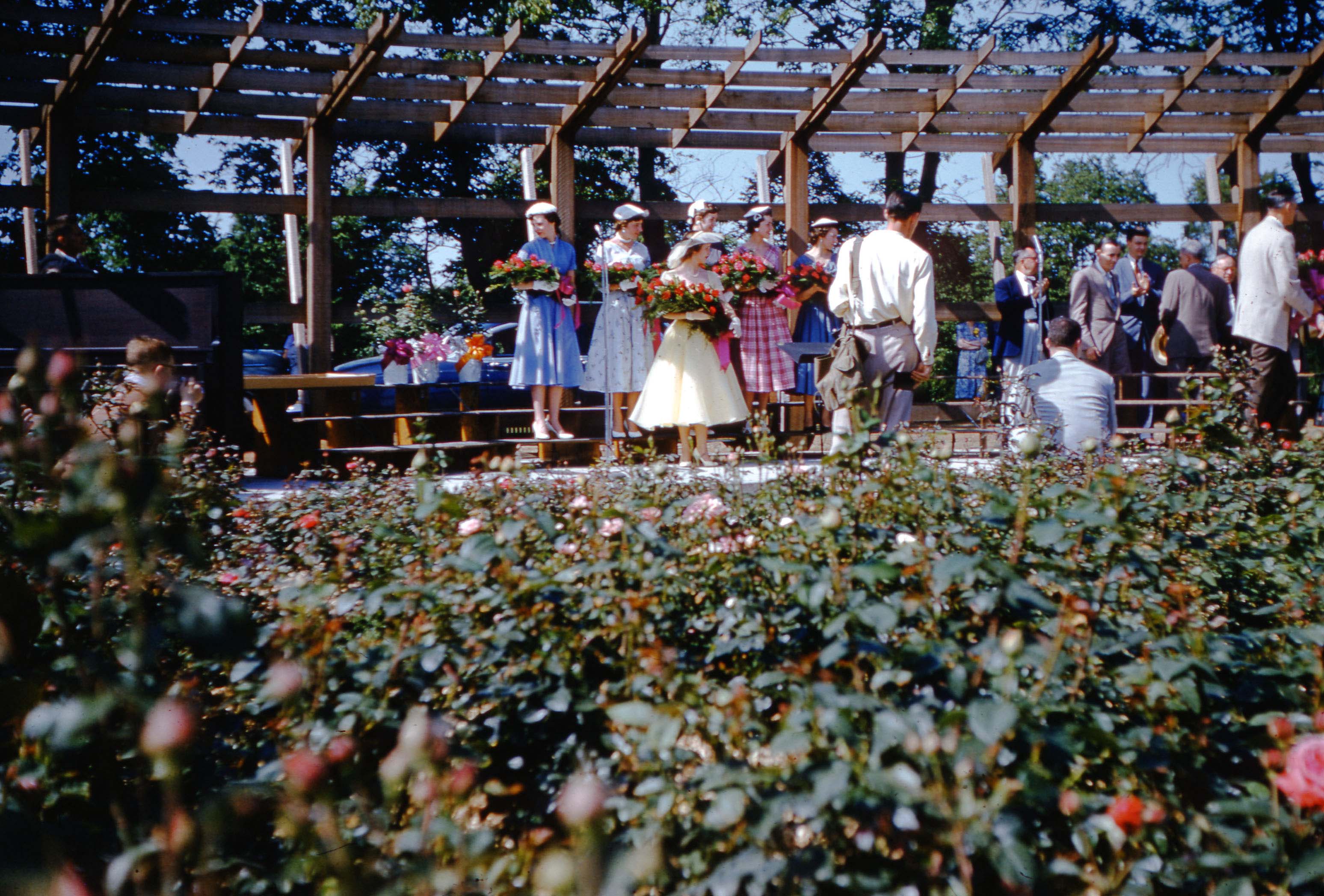
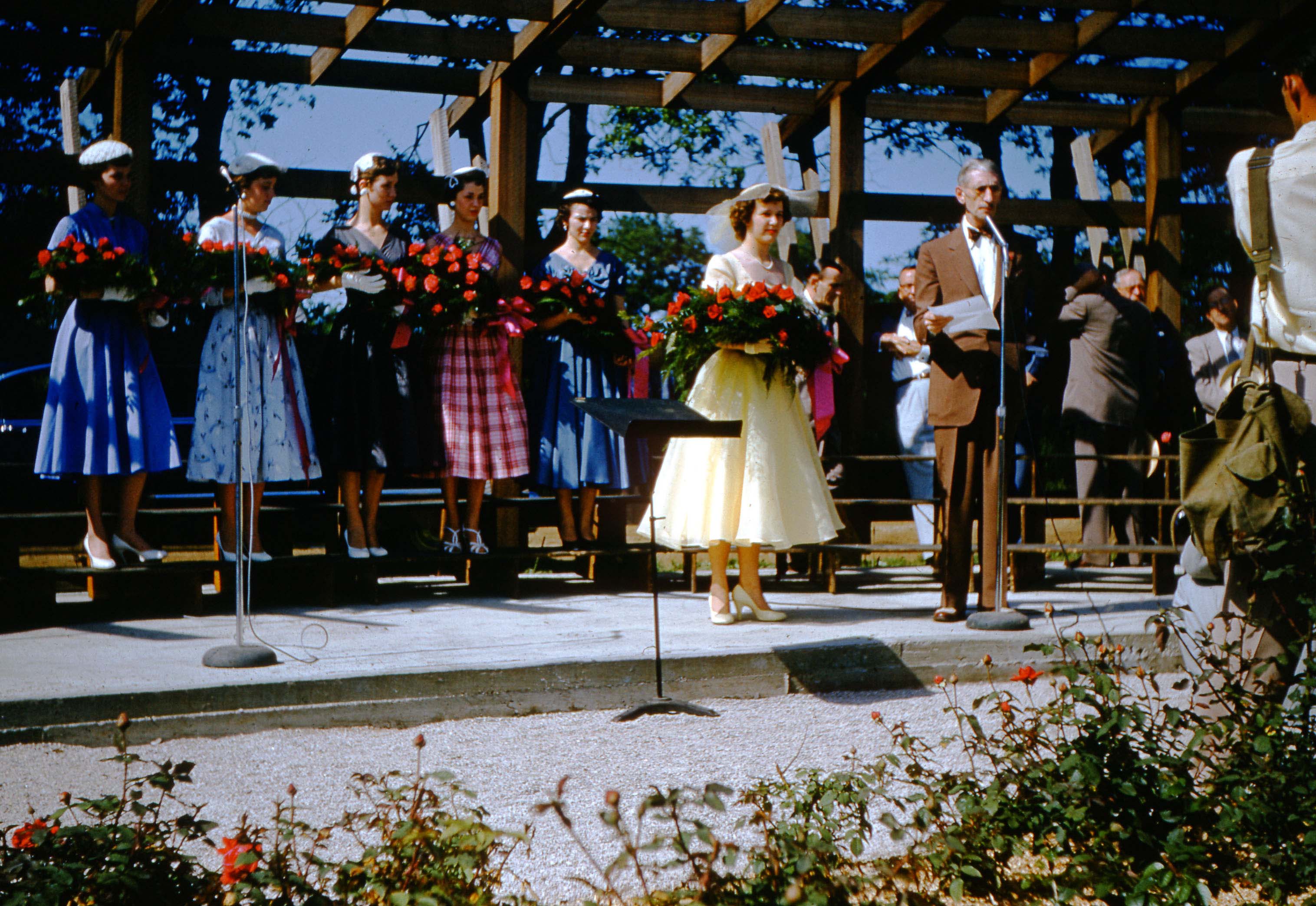 Joyce Ailes Schatz shared some wonderful Maiden of the Roses treasures with us. The photos were taken by her dad, Howard Ailes, on May 30, 1954, and they are of that year’s Maiden of the Roses pageant. The winner that year was Nancy Blanchard (later, Mrs. Clyde Graham). Nancy is Joyce’s cousin.
Nancy attended Mifflin High School, which in 1954 was a county school and located on Sunbury Road near Agler Road. Nancy was born April 23, 1938 in Columbus, and died May 10, 2018. [Images courtesy of Joyce Schatz]
You can read more about this pageant here.
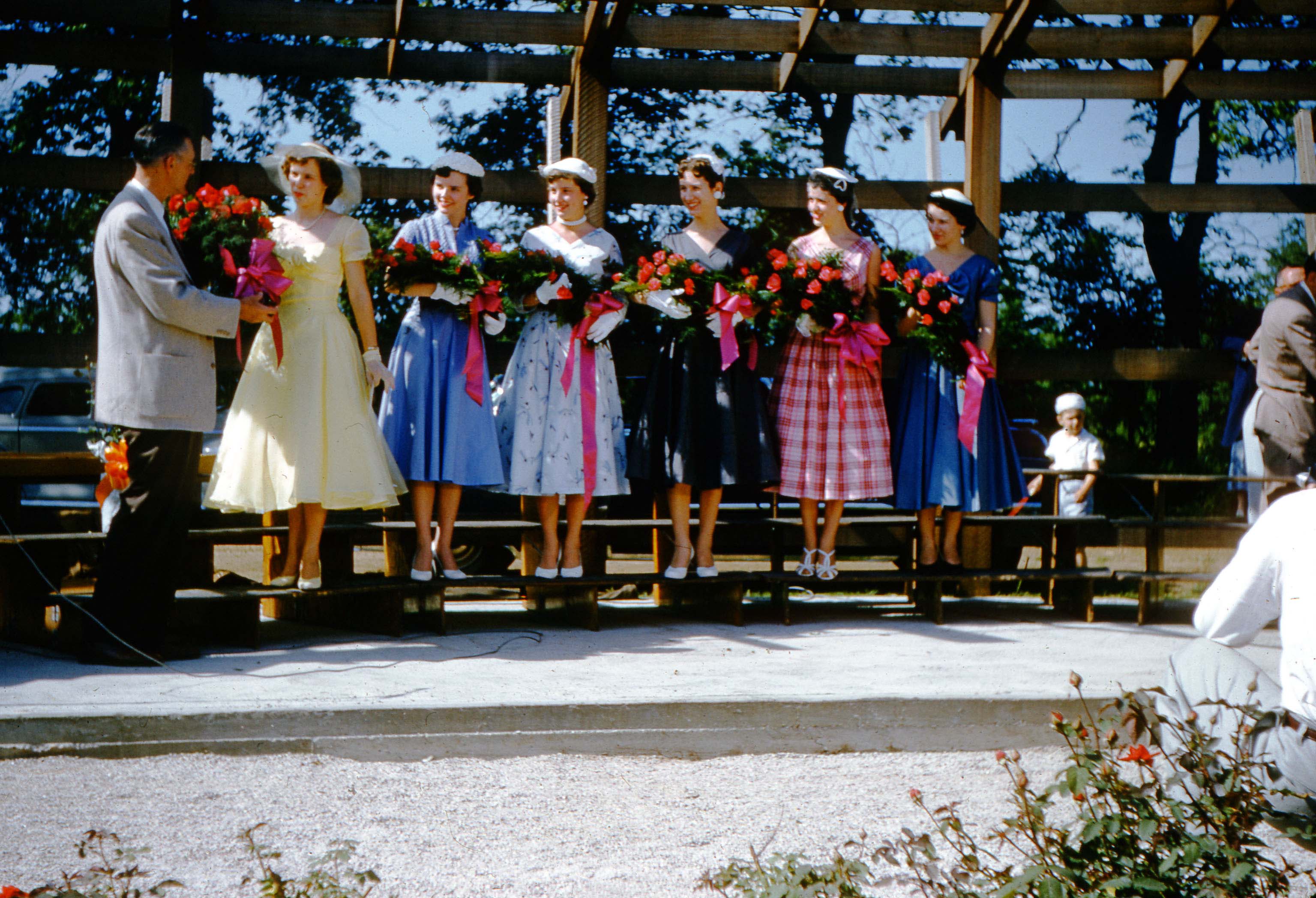 In these images, Queen Nancy is joined by her court, Ruthann Limotta, Carol Newhouse, Dorothy Corfee, Charlene McNair, & Louise Winzenreid (in unknown order). The court’s other member was Barbara Harder, but she does not appear in the picture. Does anyone know who the man is?
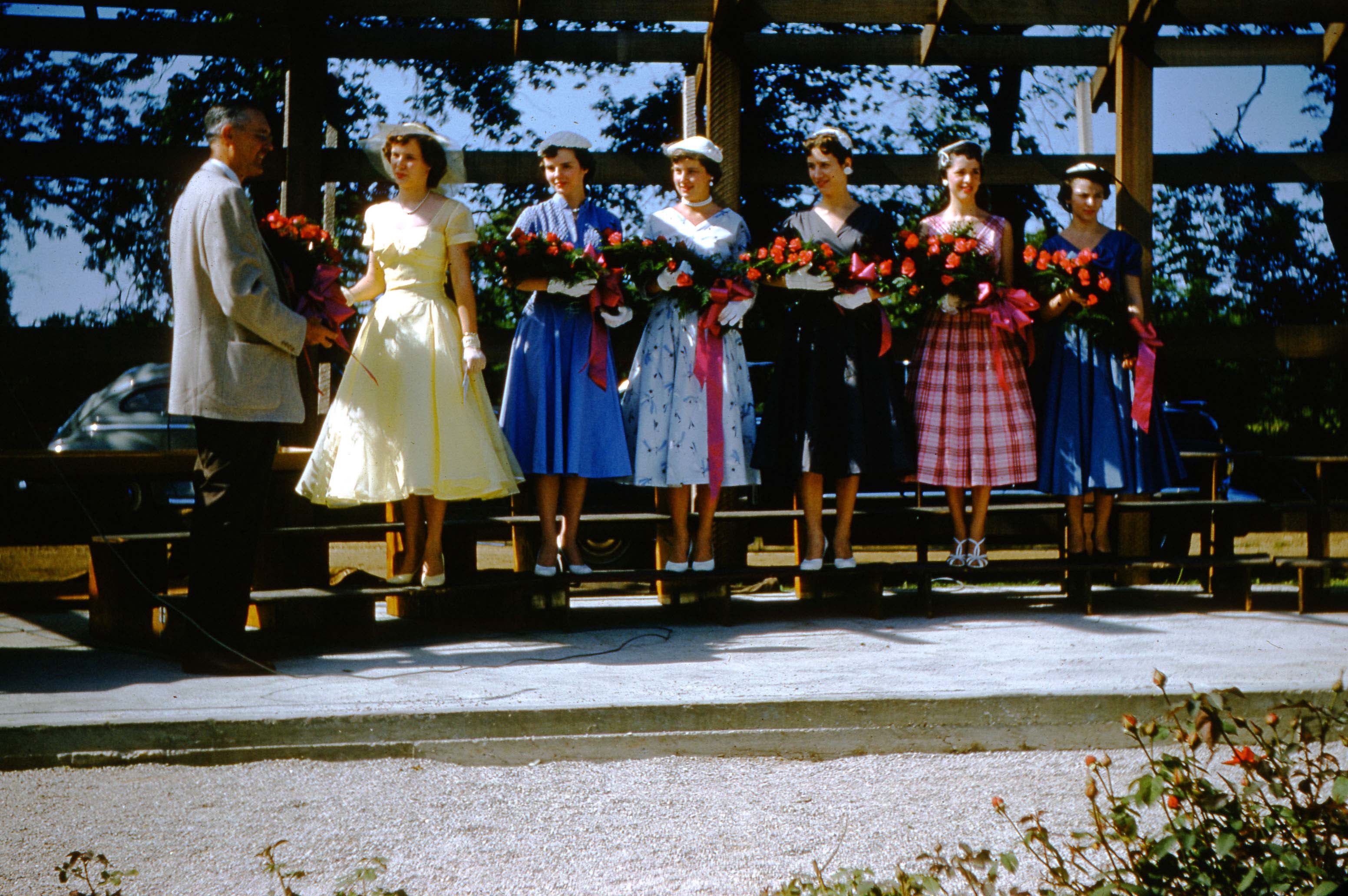
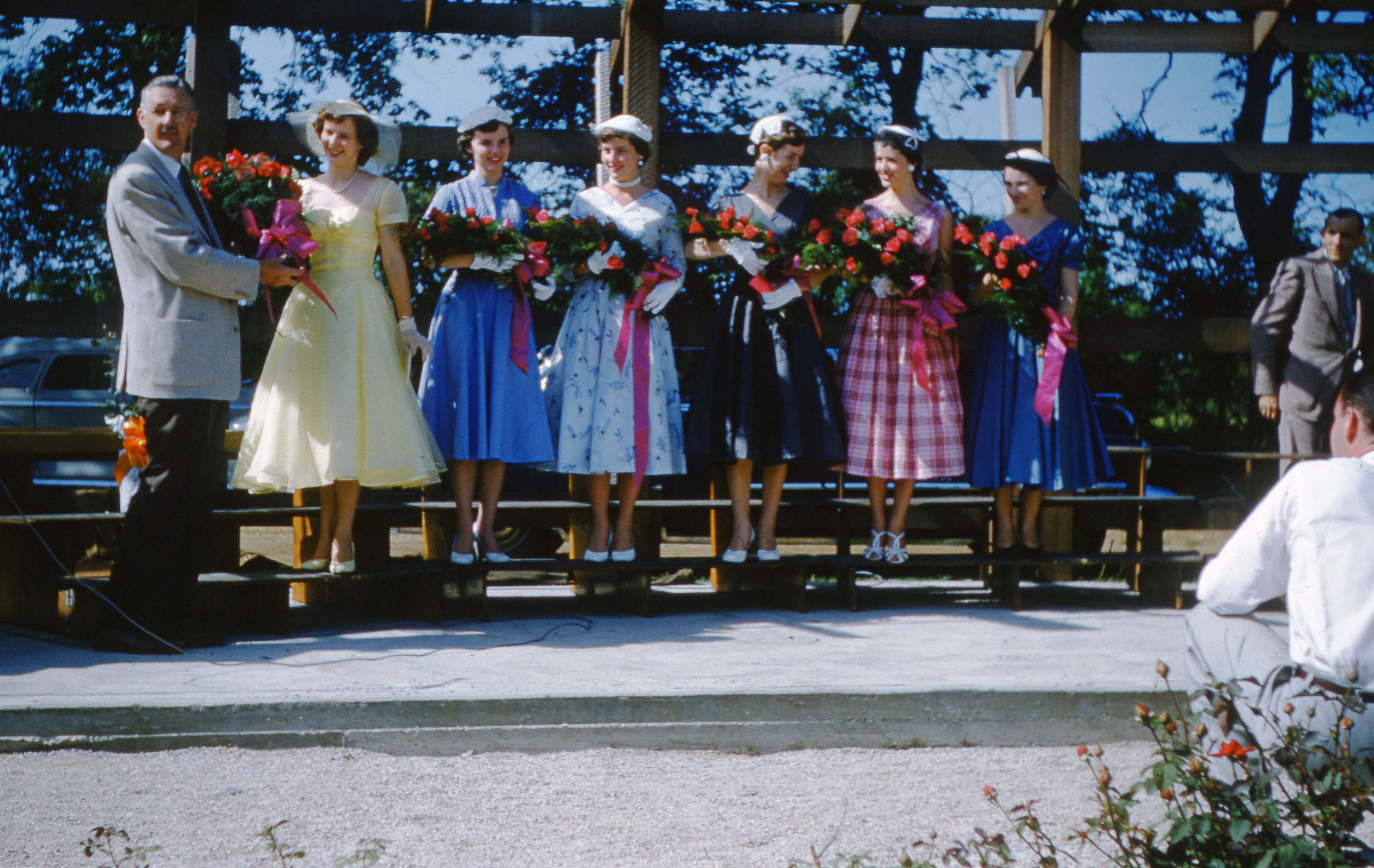
In the next two images of the queen and her court, we are not sure who the two extra women are.
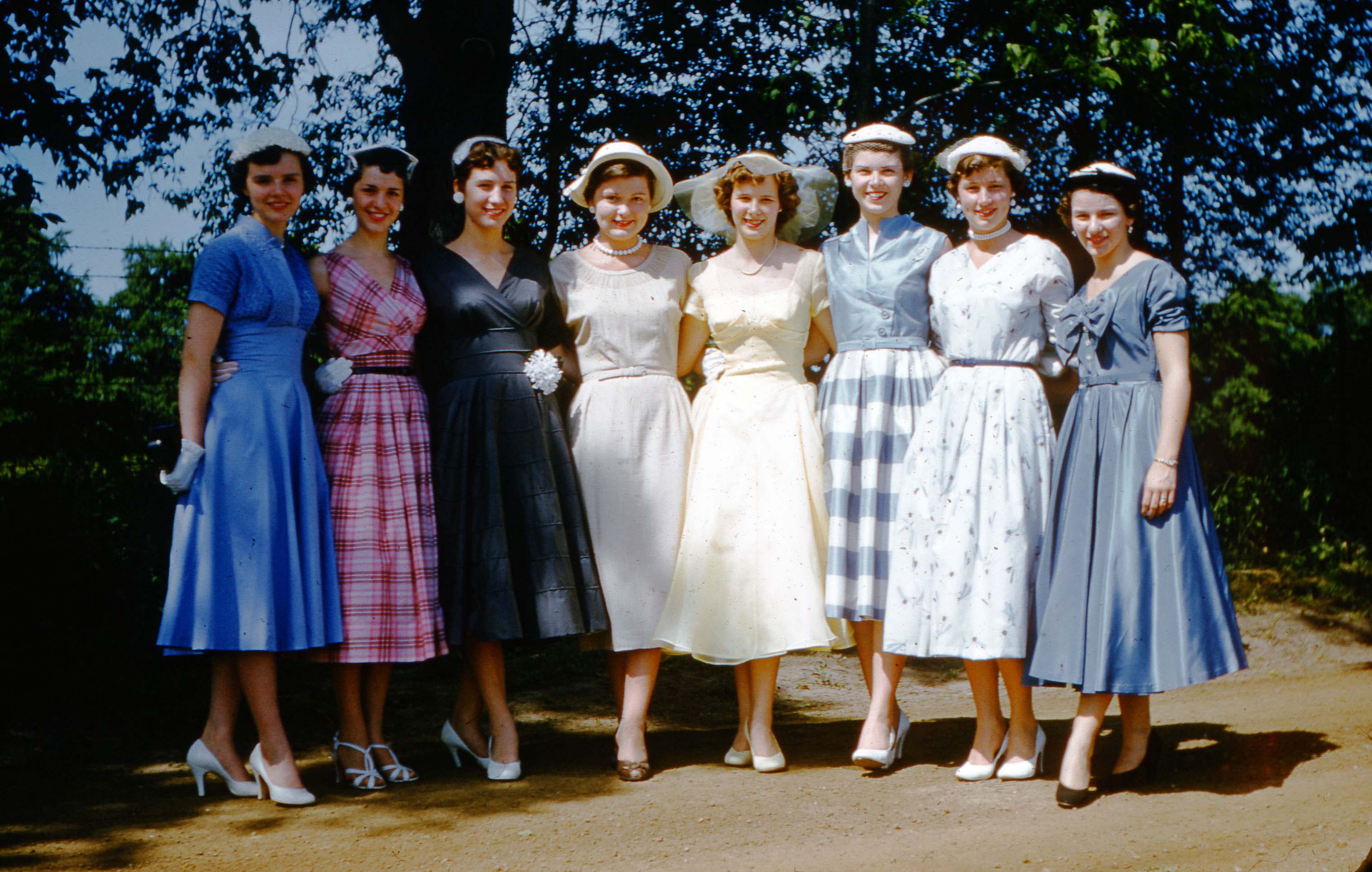
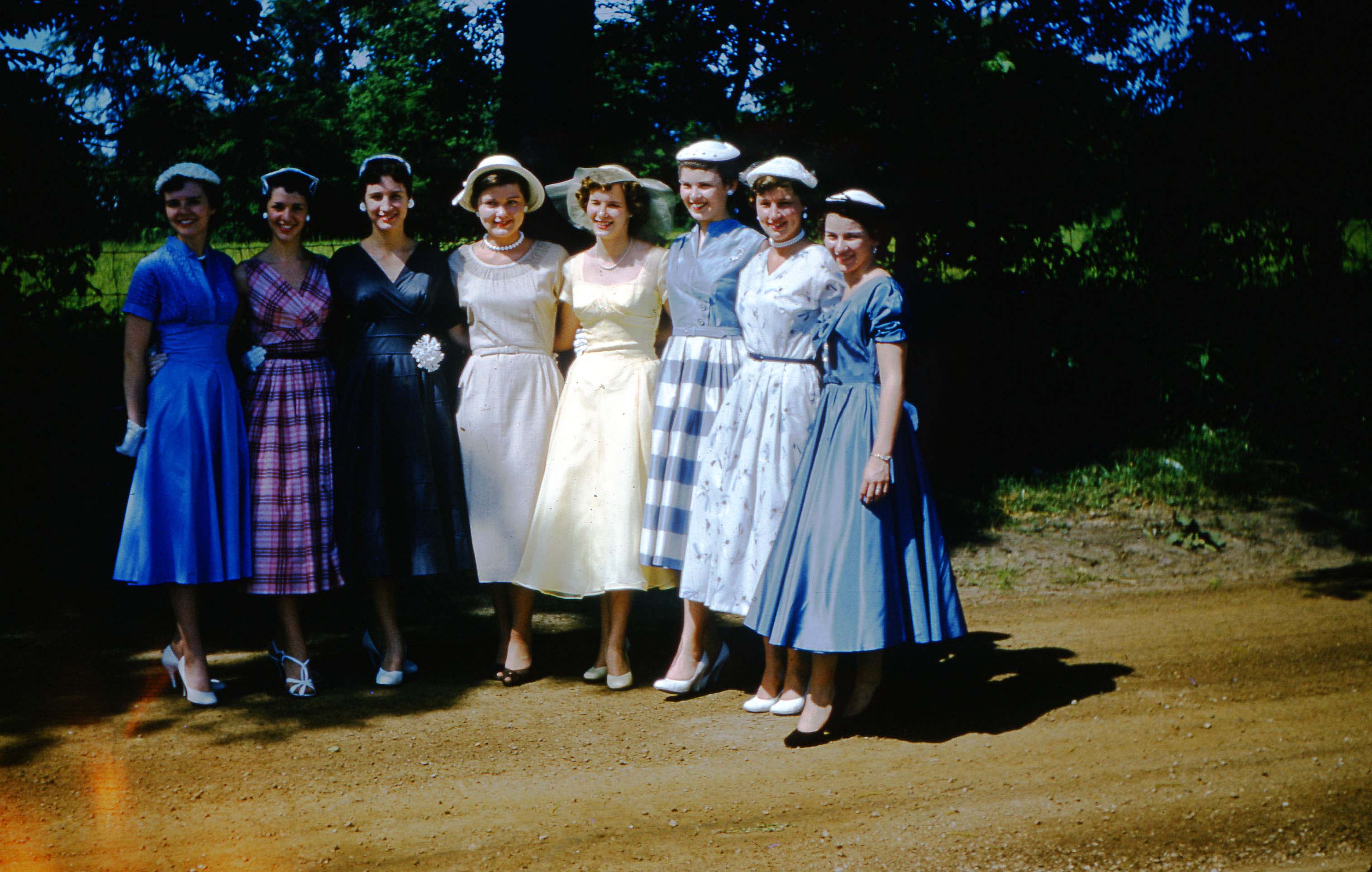
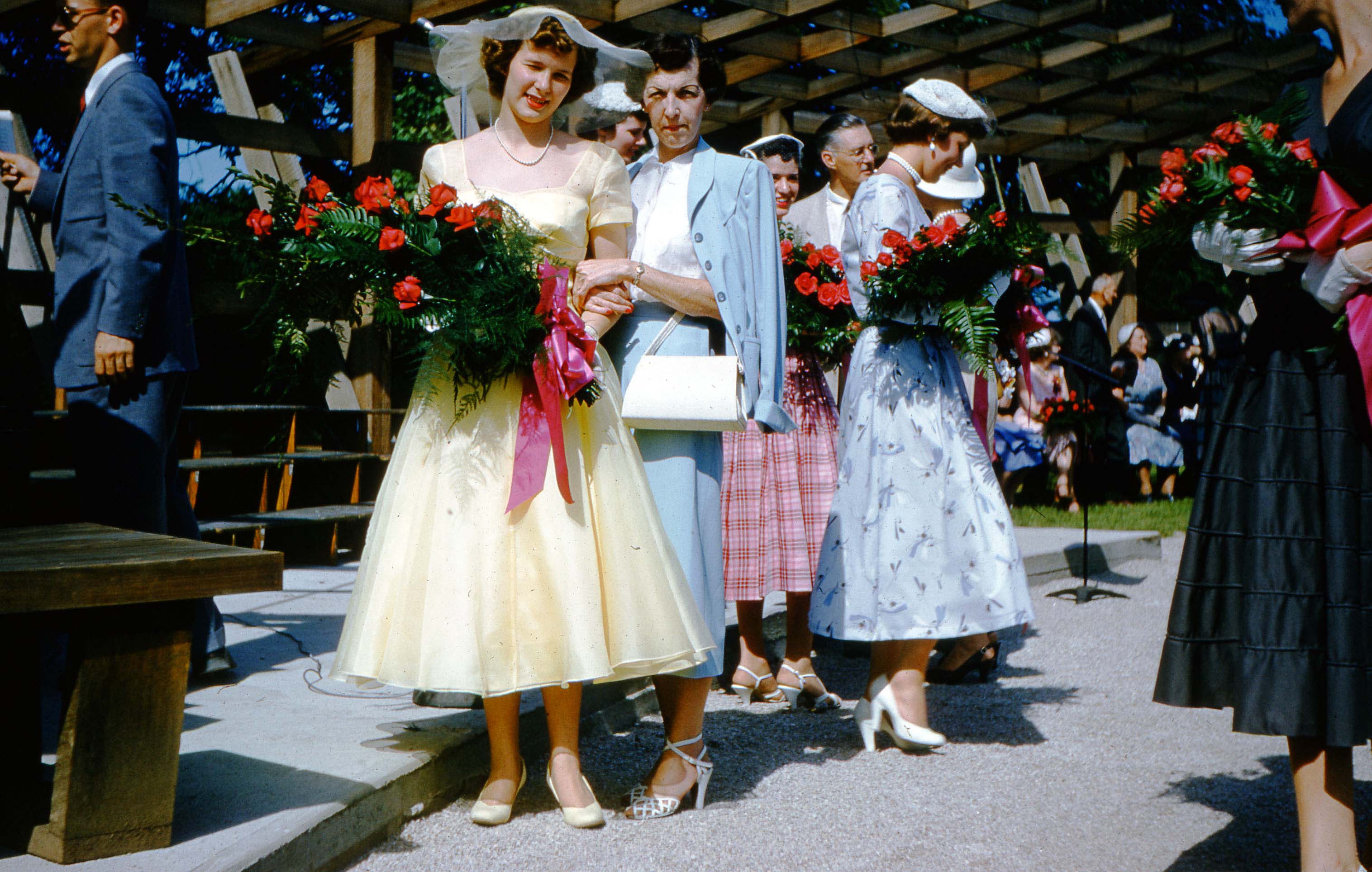 Nancy and her mother, Mrs. Bernice (Ailes) Blanchard. Bernice was the photographer’s sister.
In the next three images: Mayor of Columbus Jack Sensenbrenner, Mrs Jane Lausche (wife of Ohio Governor Frank Lausche), and Ray McNamara (Ohio Director of the American Rose Society)
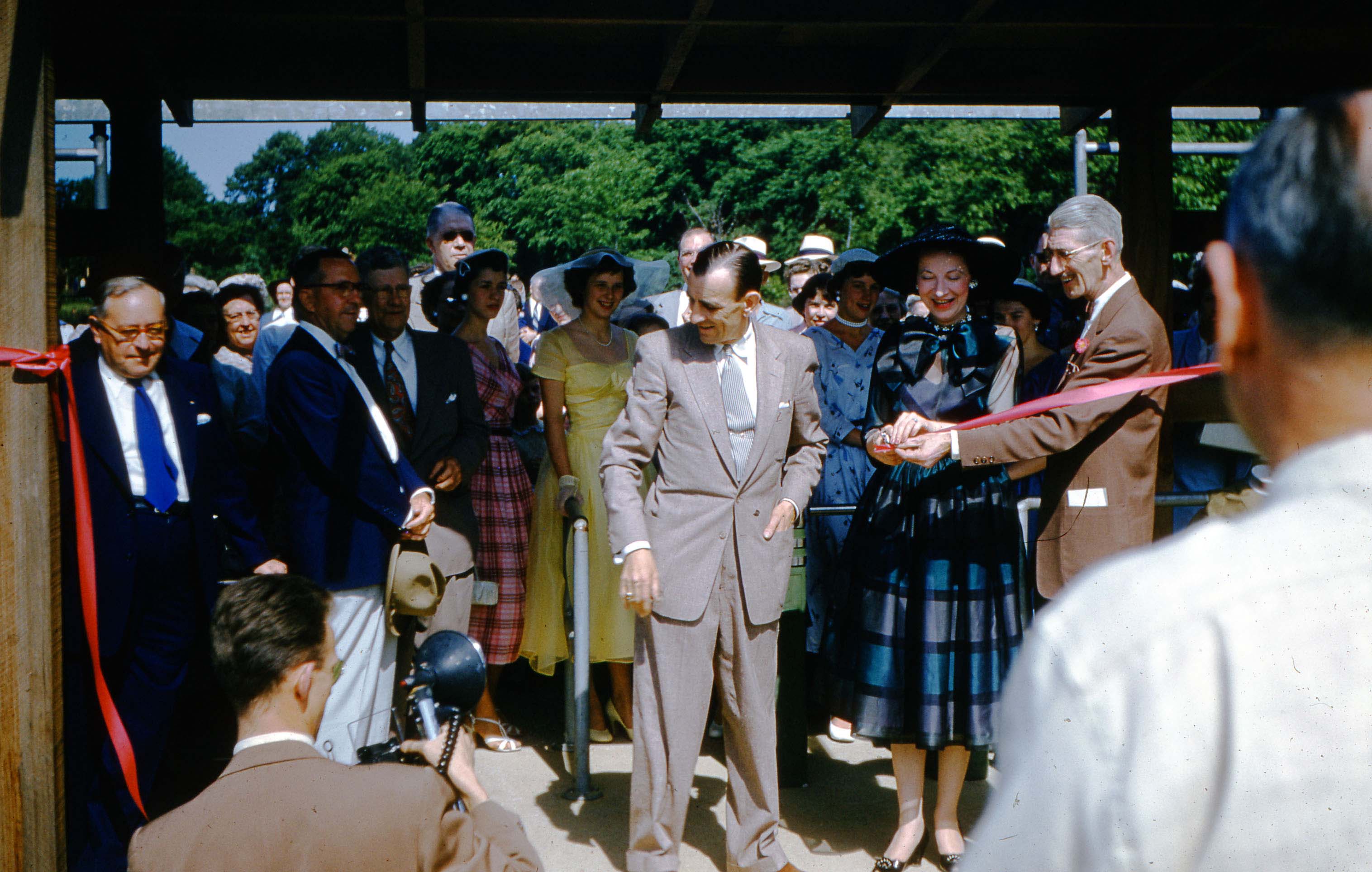
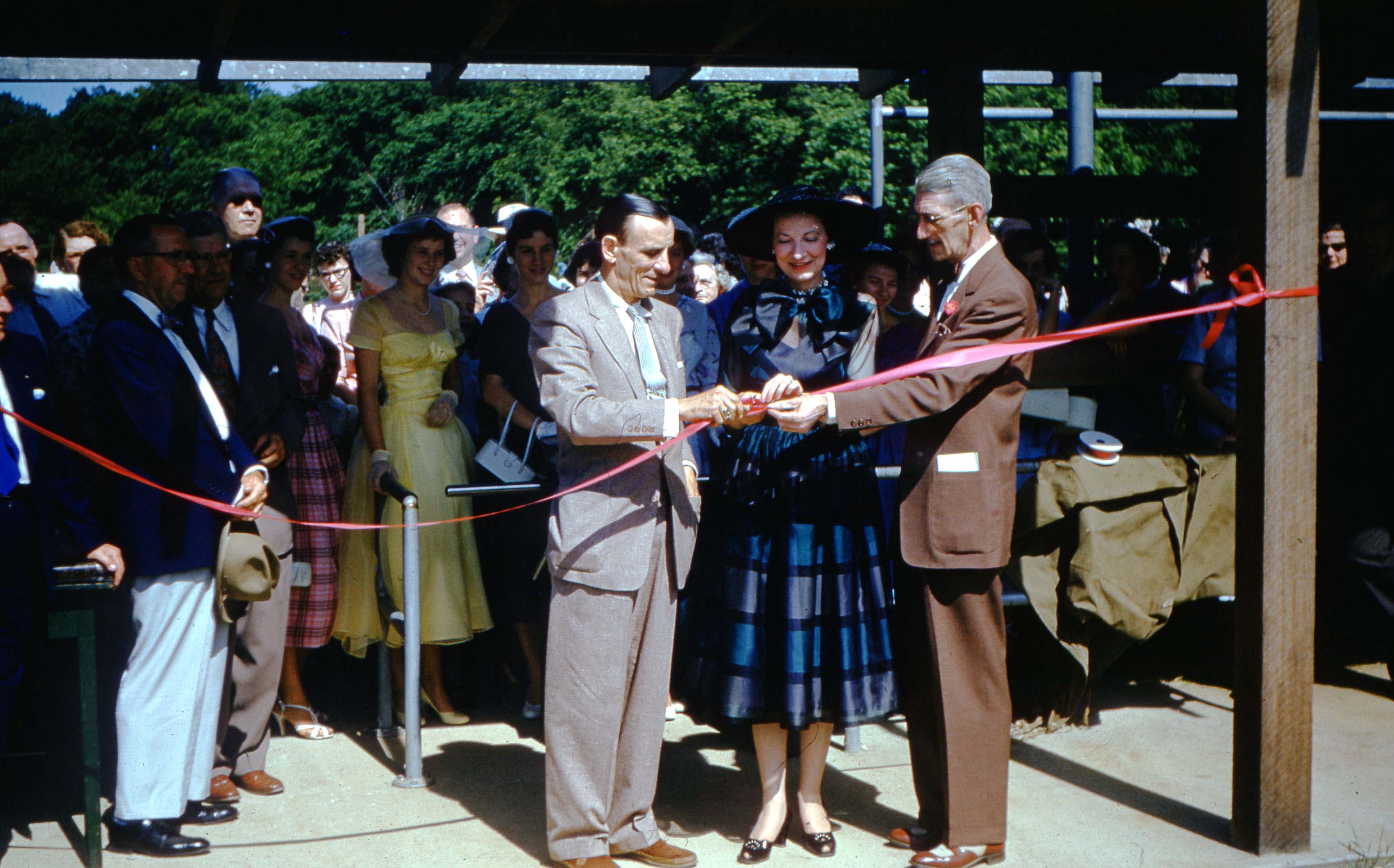
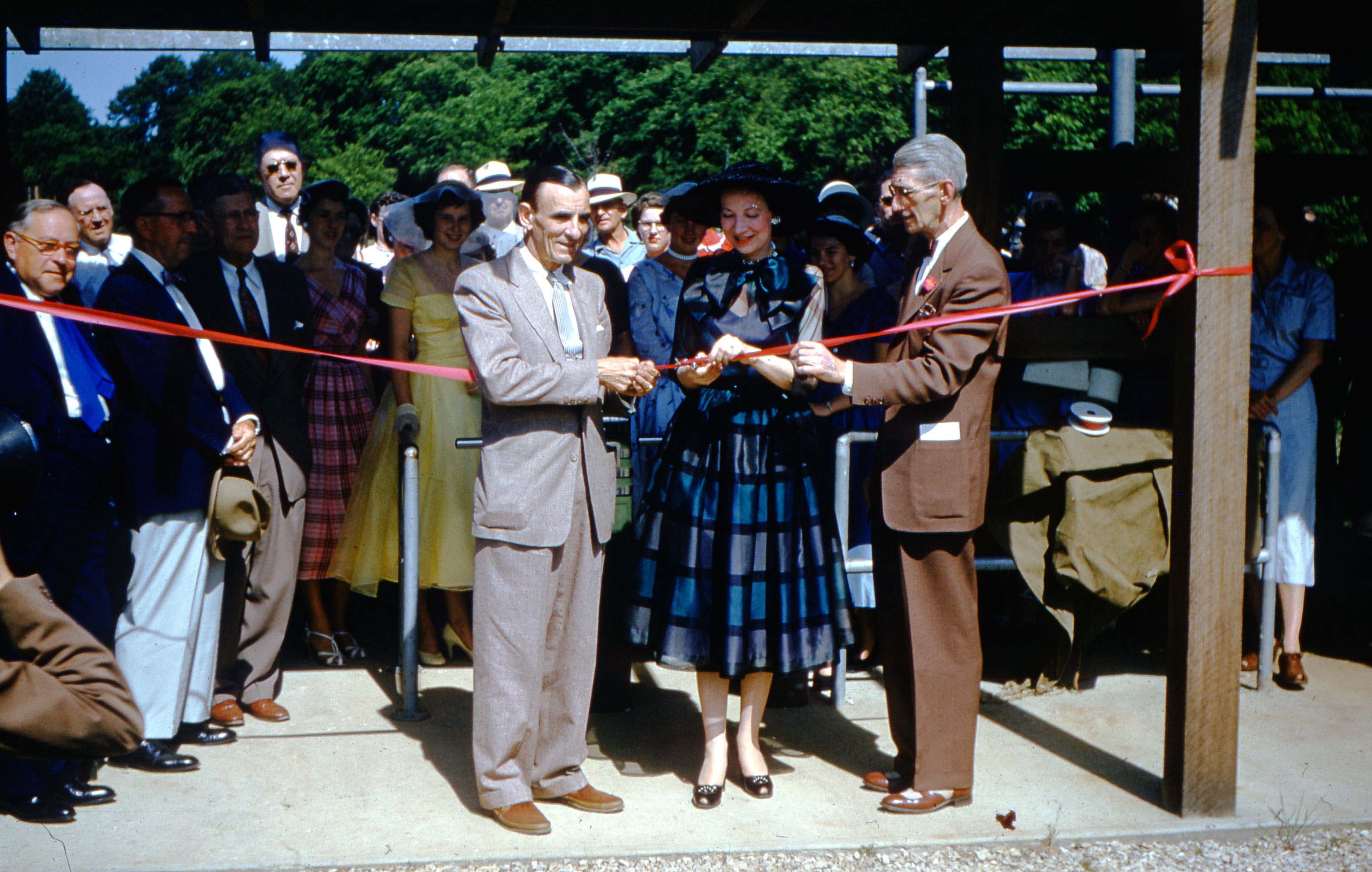
Nancy Blanchard and her court, and Ray McNamara, Ohio Director of the American Rose Society.
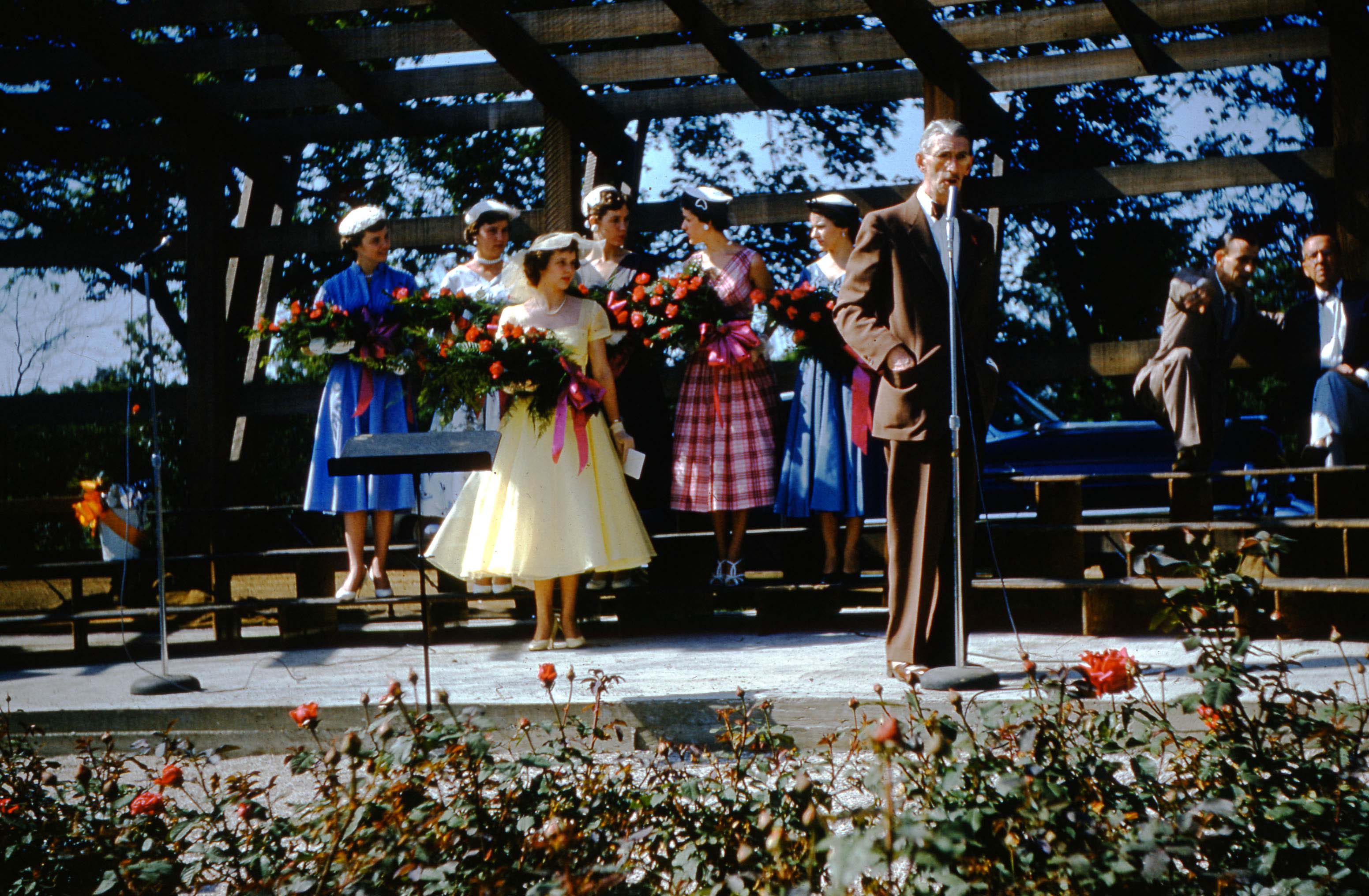
And a few more from Joyce’s treasure trove of pictures.
250 East North Broadway
 Another beautiful house on East North Broadway is on the market: 250 East North Broadway. Here, courtesy of realtor Judy Minister, is a video tour of the house.
According to Mary Rodgers, the house was built in 1927 at an original cost of $8,320. The first owner of the home was Vera Hults Benoy. Her husband Wilbur was an attorney. He graduated from Ohio State University and was admitted to the bar in 1910. He served as City Attorney, County Prosecutor, and as Special Assistant to the Ohio Supreme Court. He had some fairly large legal cases, including the 1926 prosecution of the Mayor of Grove City for race track betting. Later, he maintained an office in the AUI building (now the LeVeque Tower).
Wilbur was raised in Licking Co. His father owned a grocery in Croton. Wilbur’s mother died in a car accident in Columbus in 1921. Vera was born in Delaware, Ohio. Prior to her marriage in 1912, Vera was a school teacher.
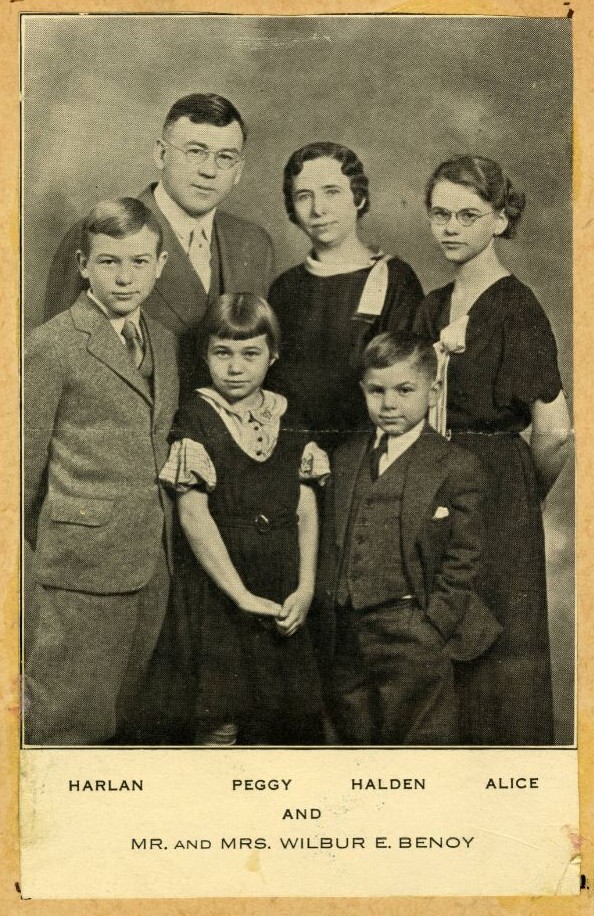 Wilbur and Vera had four children: Alice, Harlan, Ellen (aka Peggy) and Halden. Their daughter Alice was a music teacher.
Smith’s Skating Rink
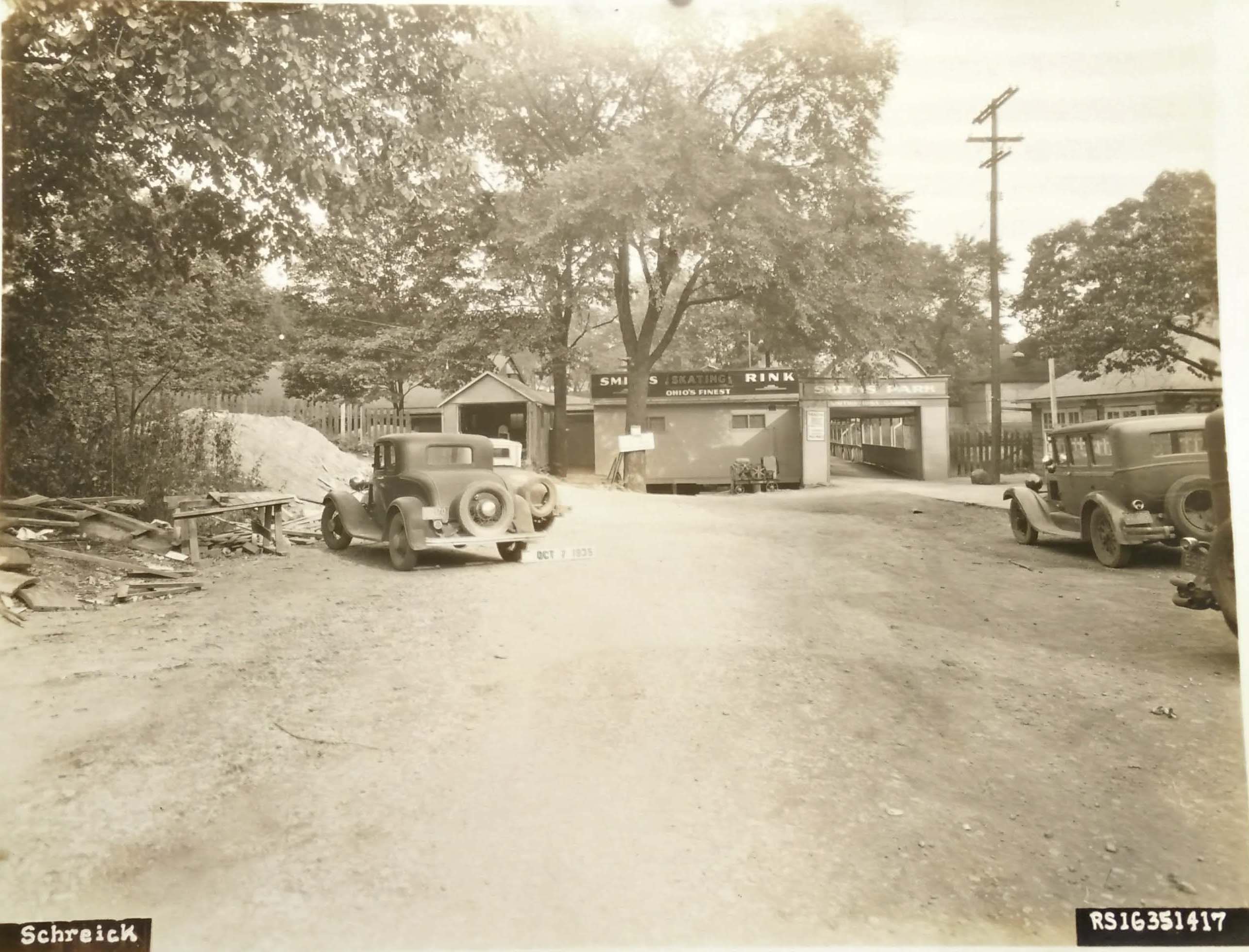 This is not Clintonville! But it is close enough that folks in the Clintonville neighborhood would surely have frequented it.
George W. Smith, a well-known Columbus dancing instructor, built Smith’s Iuka Dance Gardens around 1903. Two seasons later, Smith and his wife opened Smith’s Skating Rink, a roller skating rink.
Both establishments were located at 2150 North Fourth Street in Columbus, Ohio, until they closed in 1971.
George Willard Smith is interred in Greenlawn Abbey, and here is an excerpt about George and his wife Adele Green Smith from the Abbey’s web site:
[Image courtesy of Galen Gonser}Abbey resident George Willard Smith was known as the “King of the Outdoor Amusements” in the early days of the 20th century. He certainly didn’t start out that way. He was born on Christmas day, in 1860, in Syracuse, New York. His parents, John and Fannie Smith, were hard working blue collar kind of people. The family would make their way to Columbus in 1872 and John would find a job as a salesman. (The directories of the time list him as a “peddler”.) A few years later around 1875, George would join in with his father to help with rent and bills and they both would be carriage trimmers by the late 1870’s. Carriage trimmers were responsible for upholstering the seats, floors and roofs of buggies, and the Columbus Buggy Company was a large manufacturer in the city, employing well over 1,000 people by 1880. Work was so efficient, that they finished a buggy every 8 minutes on average. John would pass away in early 1882 at the age of 50, and which must’ve struck a chord in 22 year old George, with him not wanting to die young laboring away like his father did. It’s clear that George had another plan in mind. In those days it was very common to learn dance instruction by reading a book, as private lessons were expensive. Society minded people were getting waltz lessons and trying to be more genteel. George never spoke of any dance schools he attended, so the likely explanation as to how he learned and then taught dancing lessons was he got one of these books as well. (“The Universal Dancing Master,” written by Lucien Carpenter, was popular book published in the same year of John Smith’s death.) Although he was listed as still being a carriage trimmer until 1893, George started a “Home Academy of Dance” in 1894, giving himself the title of professor and calling himself a dancing master.
It’s not known how long Smith was courting Adele Green, daughter of William J. Green, a local Columbus physician. It’s possible that Adele, born in Knox county in 1880, was a student of George’s and he took a shine to her. George was 40 in 1900, Adele was 20, and they both shared an interest in dancing. It could also be that her father was a member of the Benevolent and Protective Order of the Elks, just like George was, and they were introduced to each other through that. Smith wasn’t an old man by any means, and even though it may look a little odd today, marrying a man many years older than her was a normal thing for a woman to do then. The age difference didn’t seem to matter to them much and they were married in 1902.
Smith actually had an article in the Columbus Dispatch claiming that he taught 26,000 people how to dance, and that he was going to officially retire from teaching his home dancing classes. He would still own them for several years, but would employ instructors. His big break was that he was able to lease some land from the Neil family in the area of Iuka Ravine where Northwood and 4th is today for a dance pavilion. A few years later, in 1905, there would also be a roller skating rink on the same property, which George named “Smith’s Iuka Park Gardens.” Roller skating competitions would be held in the rink, where the best skaters in the state would compete to see who could skate the fastest laps.1909 was the biggest year for such a competition.
George had enough money by this time to own and operate the B. F. Keith Theater on Gay Street, a vaudeville theater. His in laws lived in an apartment on the floors above the theater itself, and that’s also where Smith had his office…
As the teens waned and the 20’s came roaring, George and Adele would do less with the theater work and spend more time on their more profitable dance hall and skating rink ventures. Iuka Park Gardens became an institution for the community, even employing boys as young as 12 years old to help lace up the skate to the shoes of the patrons. Several people would meet their sweethearts for the first time at the rink, get their first kisses, and engagements there over the years. The Smith’s employees loved them and some would stay employed by them for decades. George’s brother in law Ivan would help run the business in 1938, and George would pass away in 1948. Adele would continue Iuka Park Gardens until her death in 1965, and it would remain open until Ivan had to close the business in 1971. The land was sold, the dance hall and rinks bulldozed, and the Iuka Park Commons apartments are there to this day. The Smiths had no children.
Winfield Scott & his House


Two more terrific pictures taken in the old old days of 242 East North Broadway‘s history.
This house was known as the Winfield Scott house, after the owner in the early part of the 1900s. The people in the first photo are Winfield Scott (1848-1934) and his wife Francis Anna Whipple. This homeowner bears no relation to the Civil War general. He is also not the son or brother or nephew of a former OSU President.
There were various Winfield Scotts living at the same time and in the same areas, and it makes for some confusion. There is a Winfield Scott (1846-1916) who was the brother to William Henry Scott, the OSU president; William Henry lived on North High Street a scant block from 242 East North Broadway. (This is confirmed with matching parents’ names, Alexander and Susan Scott, appearing on both of their death certificates, viewed on Familysearch.org.) This Winfield brother was married to someone named Josephine.
The Winfield Scott living at 242 E. N. Broadway was the son of Lancelot and Jane Scott, and he was married to Francis Anna Whipple. He also had a son named Winfield Kenath Scott (spelling based on his death certificate) who lived from 1876-1915. Winfield and Francis had a daughter named Florence May Scott who married Clarence B. Hoover; their daughter was Elizabeth Hoover and Elizabeth lived in the Rosemary Parkway neighborhood of Clintonville. In 1991 she sent a letter to the homeowners of 242 E. N. Broadway and you can find that letter here.
There is a mention on OhioMemory.org, that the Winfield Scott who lived at 242 E N Broadway was the son of the OSU president William Henry Scott. But that is not the case. This Winfield was of the same generation as William Henry Scott and Winfield Scott, so they may have been cousins.
By the way, both of these Scott lines lived in Athens County in the 19th Century, so that adds to the evidence that they may have been related (and also adds to the confusion!
[Thanks to Nick at the Columbus Metropolitan Library Local History and Genealogy Desk for this genealogy information. The photographs came from Elizabeth Hoover and are shared courtesy of Gary Means and Jane Hoffelt.]The Mastery of Frank Packard on Glen Echo, by Amanda Page
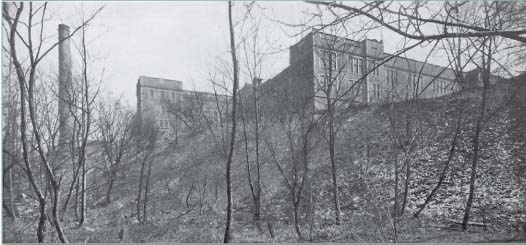 Amanda Page wrote a very nice article about Frank Packard, architect of the former North High School. The article is in Ravinia Spring/Summer 2014, pp 1,3.
Leeann Faust Passes Away
 I just learned that Leeann Faust passed away. What a loss.
If I could describe Leeann in just one phrase, that phrase would be “all in”. When Leeann was enthusiastic about a person or cause, she was all in–whether it was an actress (Leeann was a long-standing president of the Carol Lawrence Fan Club) or the North High School Polar Bears (she was the historian/editor of the Alumni Association), or the history and legacy of her family (she was a descendant of Mathias Armbruster). Leeann was extremely generous with her time and her knowledge and her collection of articles, newspapers, & memorabilia. She was indefatigable in contributing to the community around her; she kept her friends close; and she was routinely cheerful.
Leeann, you will be missed.
Leeann’s obituaray can be found here.
J. Harvey Zinn & Family
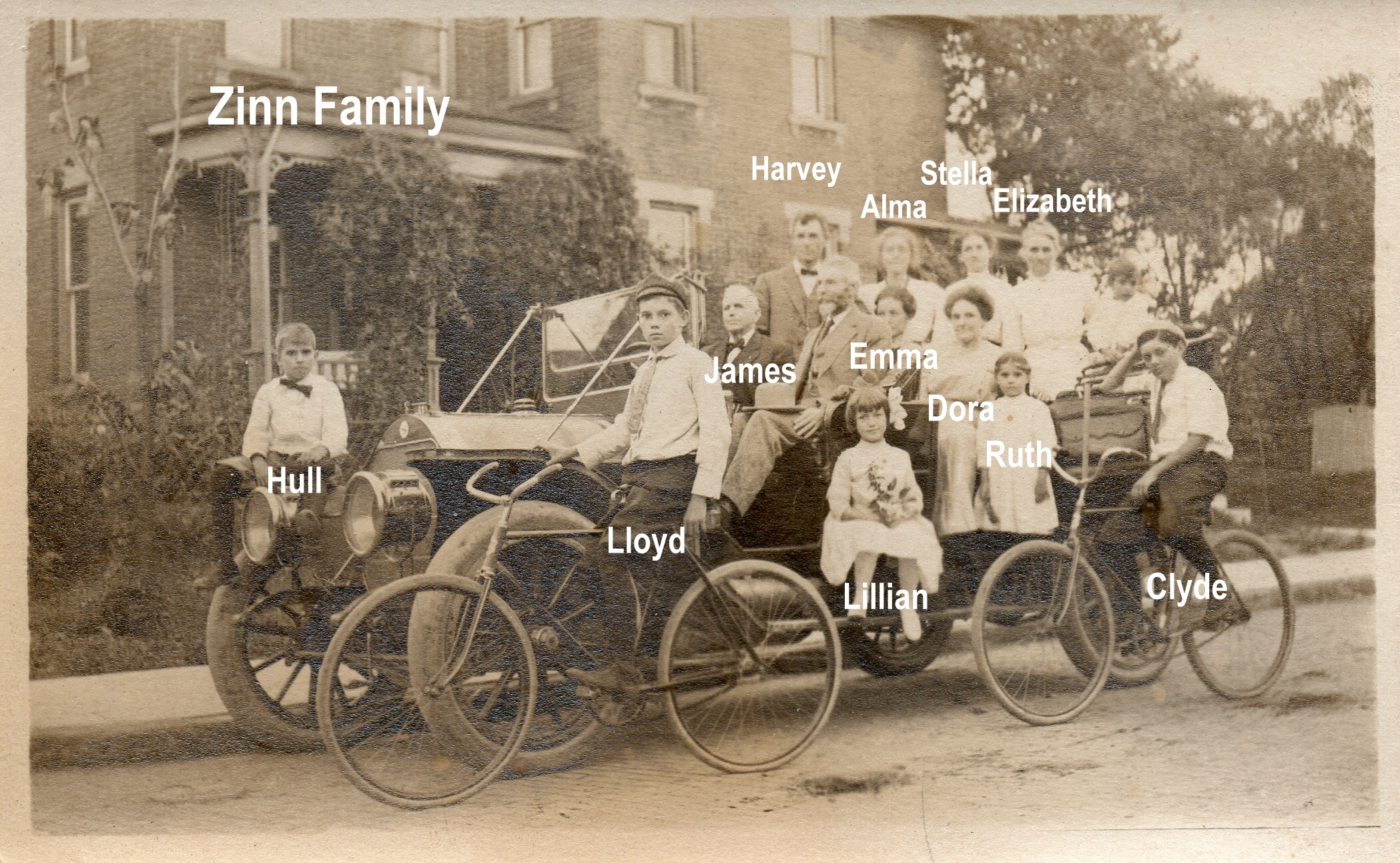 J. Harvey Zinn, owner of the Zinn lumber yard, lived in Clintonville and was a civic leader and philanthropist. Mr. Zinn was reported to be an ardent fisherman who followed his favorite sport in practically every part of Canada, as well as in Florida waters. His attractive estate “Edgewater,” was located at 285 Kenworth on the Olentangy River just north of West North Broadway. This estate still exists in Clintonville.
J. Harvey Zinn died in 1957.
Attached are some obituaries from The Columbus Dispatch and elsewhere.
The Zinns were very active in the North M. E. Church. Though the church is not, technically, in Clintonville, I’ve also posted some information about the church.
[Photos and clippings courtesy of John Clark]North M.E. Church
The North M.E. Church, located at East Ave and Tompkins, has a long history, which–thanks to John Clark, a descendant of the Zinn family–can be found here.
The church was located very close to the Zinn Lumber Yard (and the Zinn family residence), and the church was damaged in that business’ November 1925 fire. Then the church had its own fire in March 1928, which necessitated a complete rebuilding of the church. Scott Caputo at the Columbus Metropolitan Library, was kind to send us this article about the fire.
 The church was slowly but surely rebuilt and enlarged and improved. J. H. Zinn paid to have a children’s wing built, dedicated in memory to his two boys (who died in their youth) in April, 1953. The sons in whose memory the wing was built were Clyde Webster Zinn (22 Oct 1895 – 07 Apr 1912) and Walter Curry Zinn (12 Jun 1898 – 30 Jan 1903). What you see here photo of Clyde Webster Zinn (with his sister Lillian Mae Zinn). The family does not have a photo that they are confident of, for Walter. Here is an article about that philanthropic contribution. [Photo courtesy of John Clark]
 Around October 1956, North M. E. Church held a celebration of their “oldest members,” by which they meant those members who had belonged to the church at least 50 years. J. H. Zinn and his wife were among them. (See photo to the right.) You can read more about that event here and see some of the other members in the photos below. [Photos and news clippings courtesy of John Clark]

There’s more information about the Zinn family and the Zinn Lumber Yard elsewhere on this web site.
Zinn Lumber Company: Perfection Millwork
When I was working on my book, several old-timers remembered the Zinn Lumber Company at the corner of North High and Hudson. At last we have photos! Lauren Clark who is married to John Clark, the great grandson of J. Harvey Zinn, shared some of John’s family photos of the Zinn Lumber Company as well as other items related to J. Harvey Zinn. These show the lumber yard after it was rebuilt in 1926. I’ve tried to arrange the photos in geographic order from the Zinn Lumber Company’s showroom on North High Street, moving eastward along East Hudson Street to East Avenue. [Vintage photos courtesy of John Clark.]
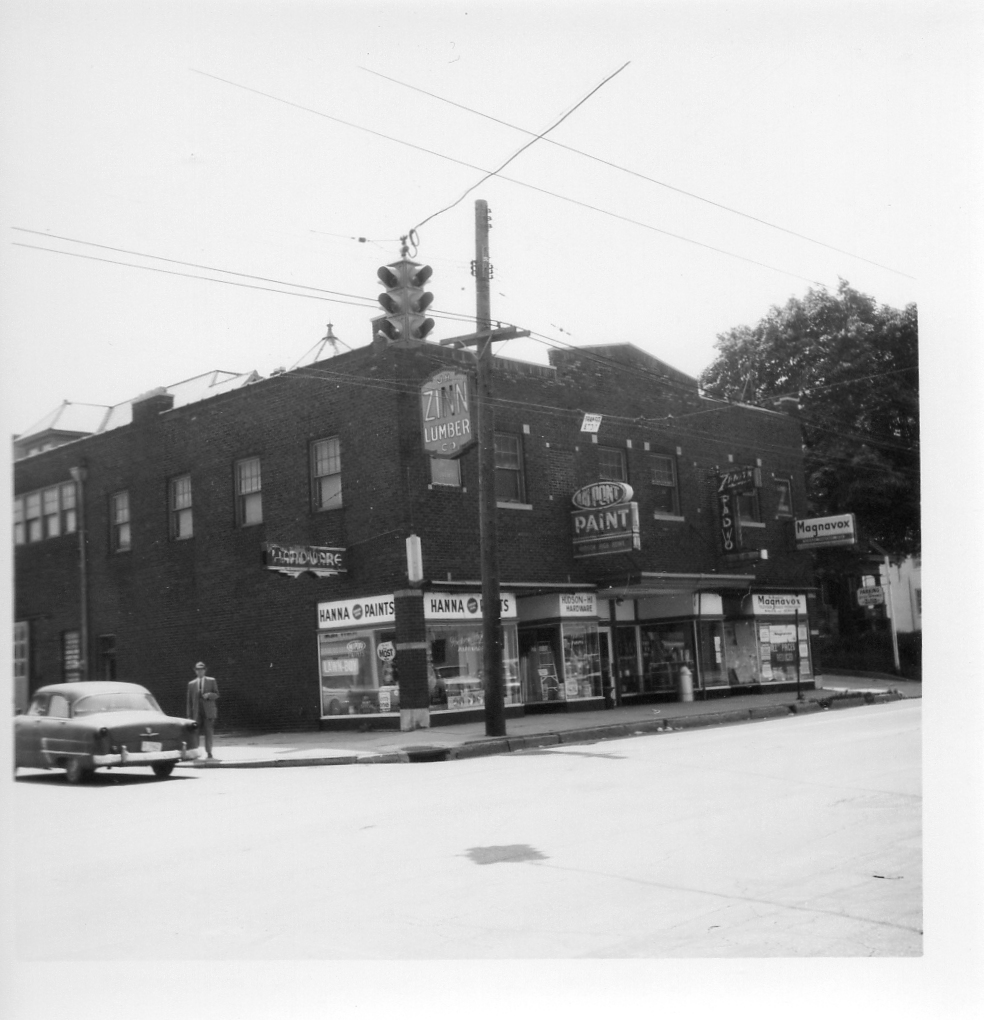
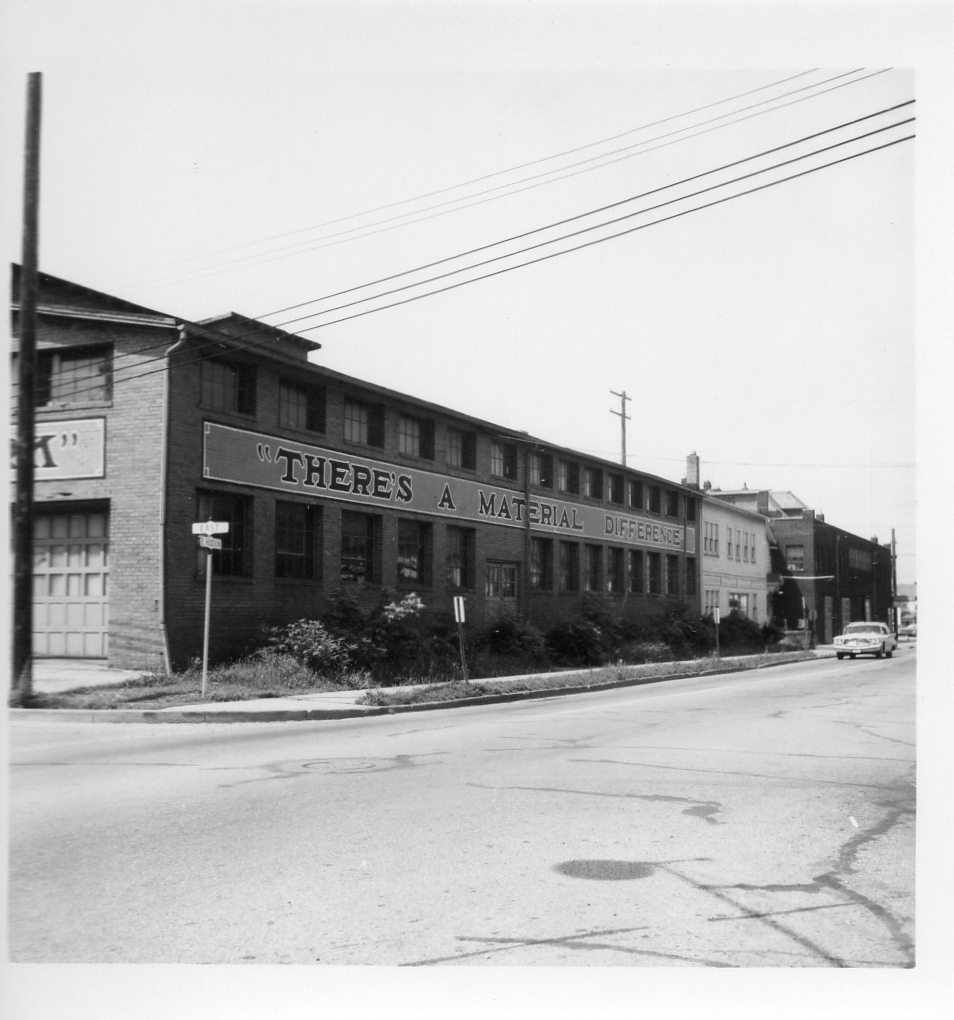
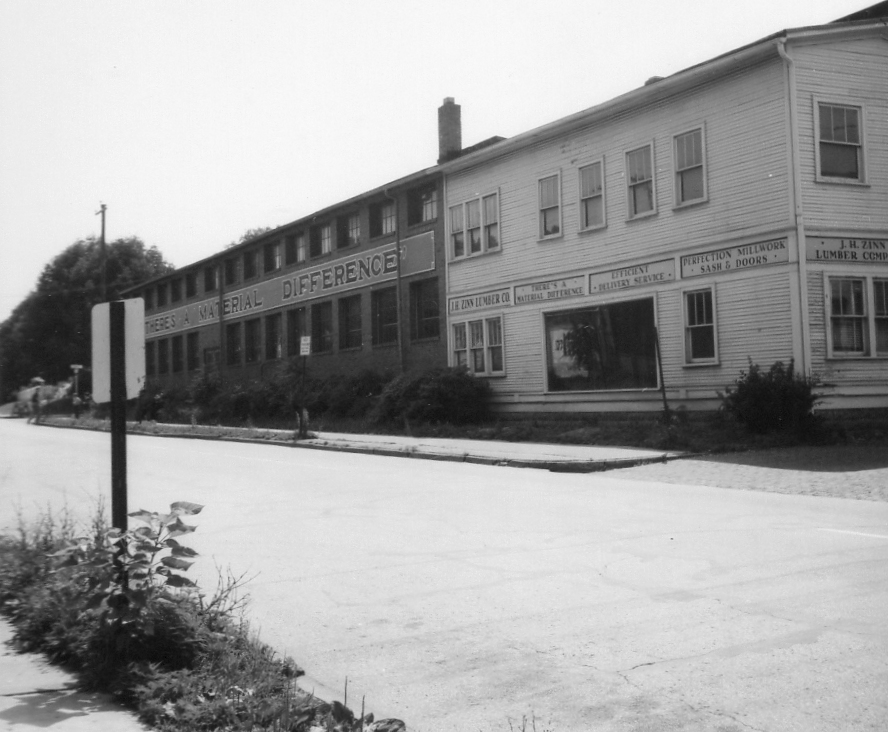

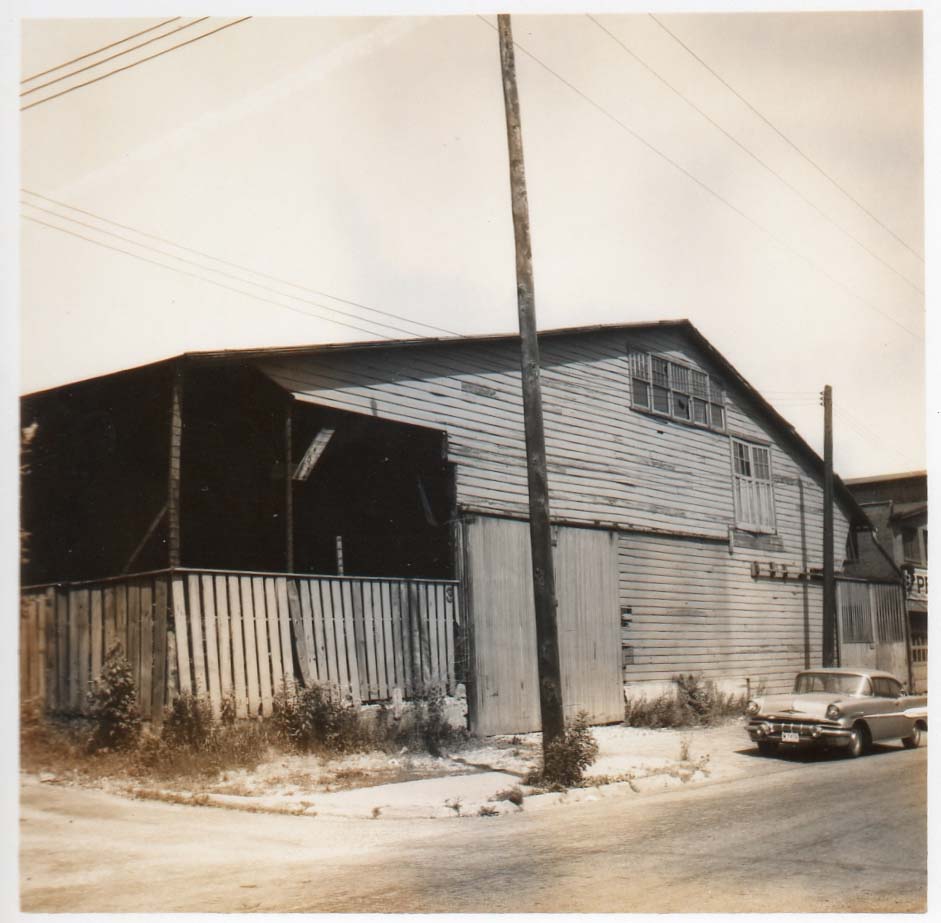
Some additional background information on the yard and the Zinn’s can be found here.
And here are some pix of that intersection today, taken by Terry Miller. Note the North M.E. Church in the background; it was damaged in the Zinn Lumber Yard fire of November 14, 1925, and then had its own fire in 1929.
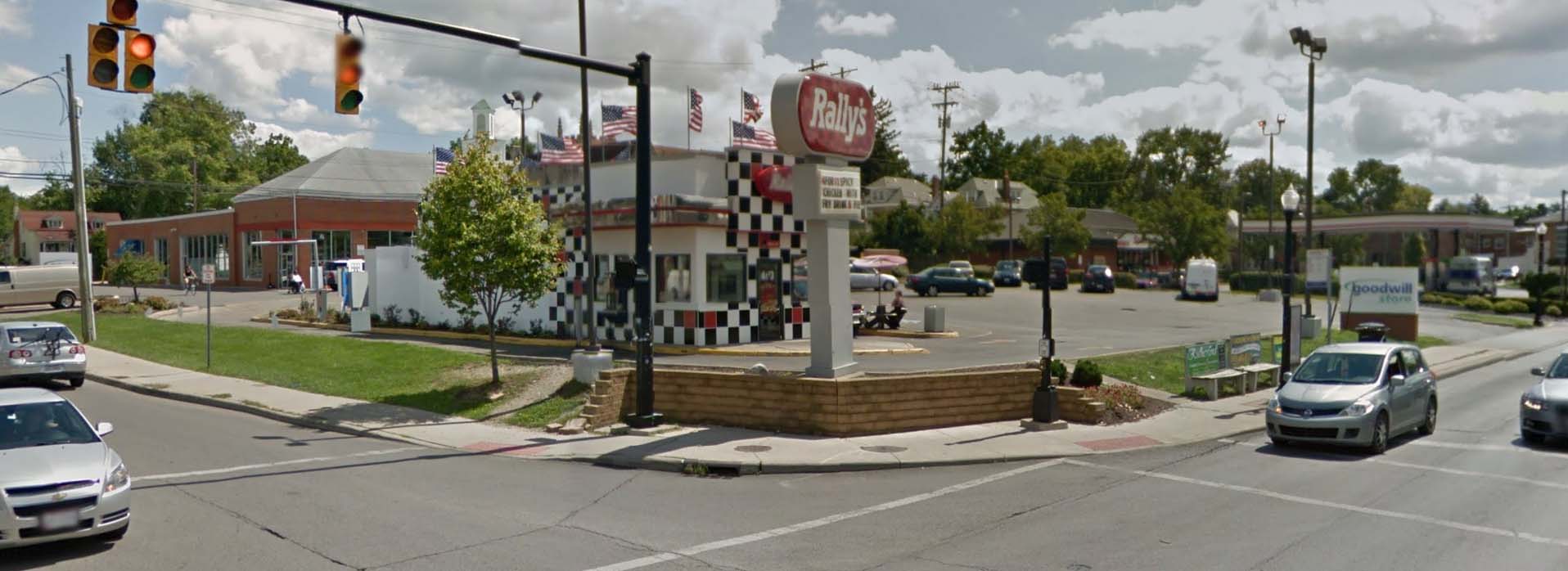
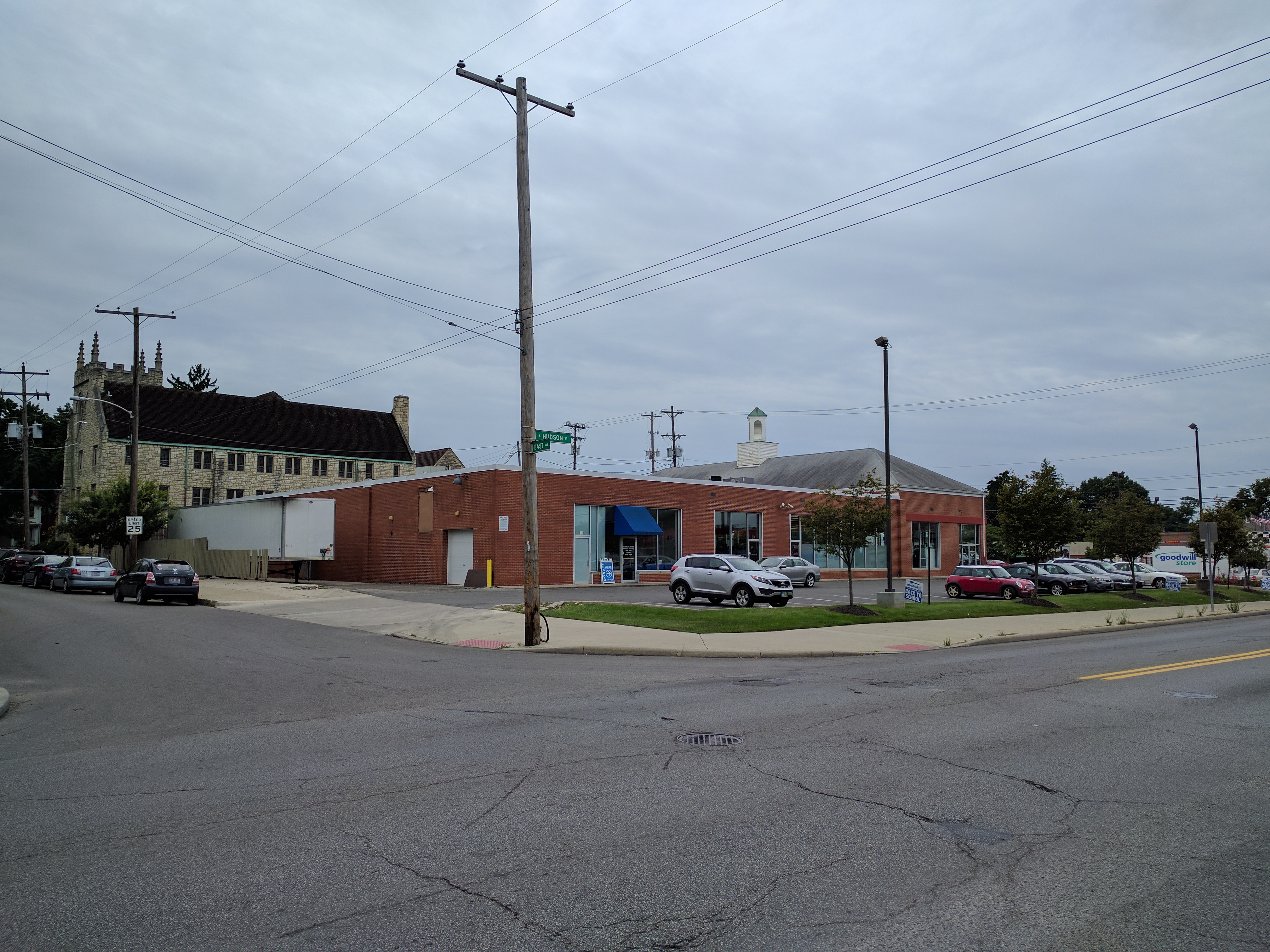
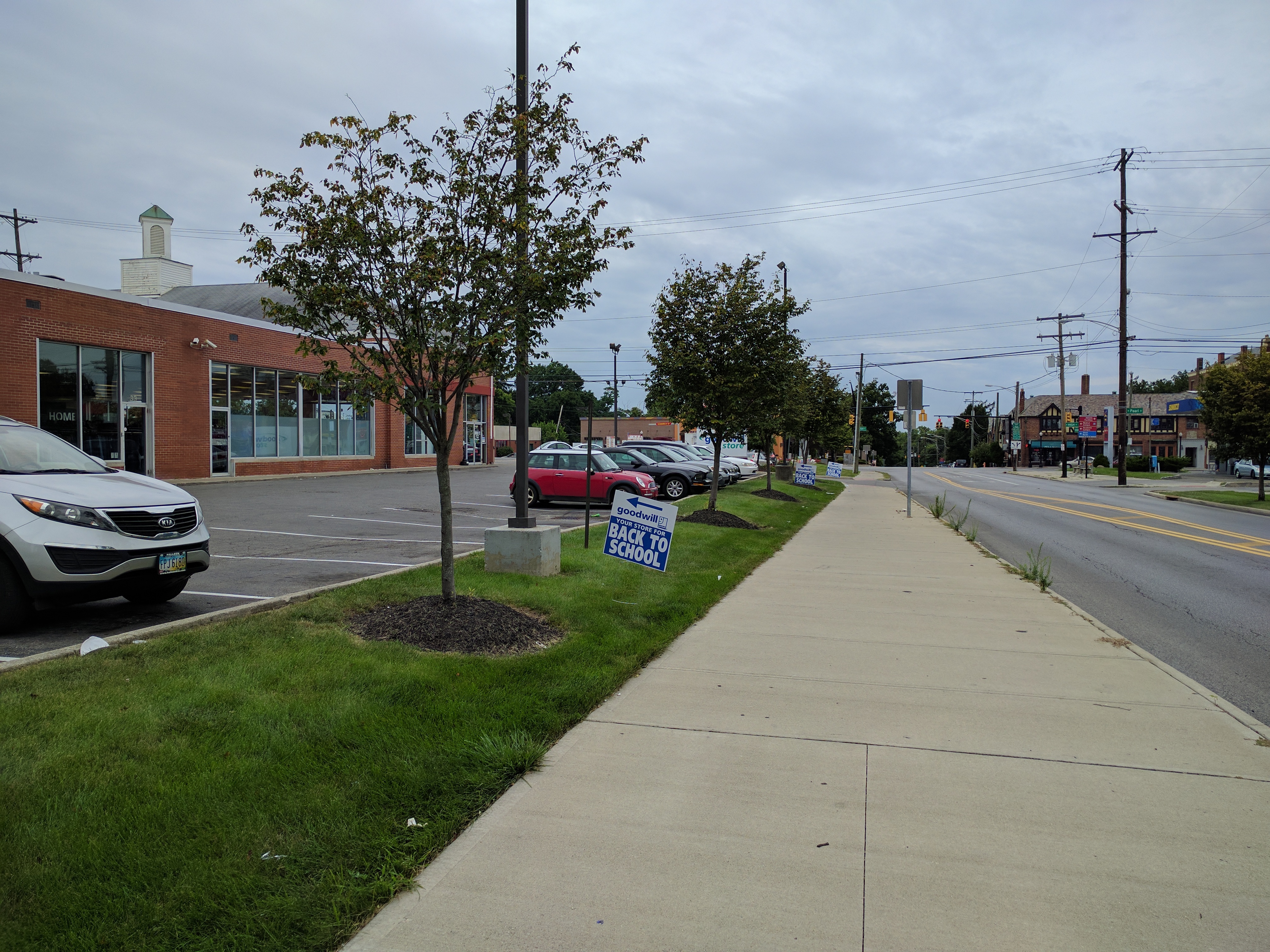

Legg Family
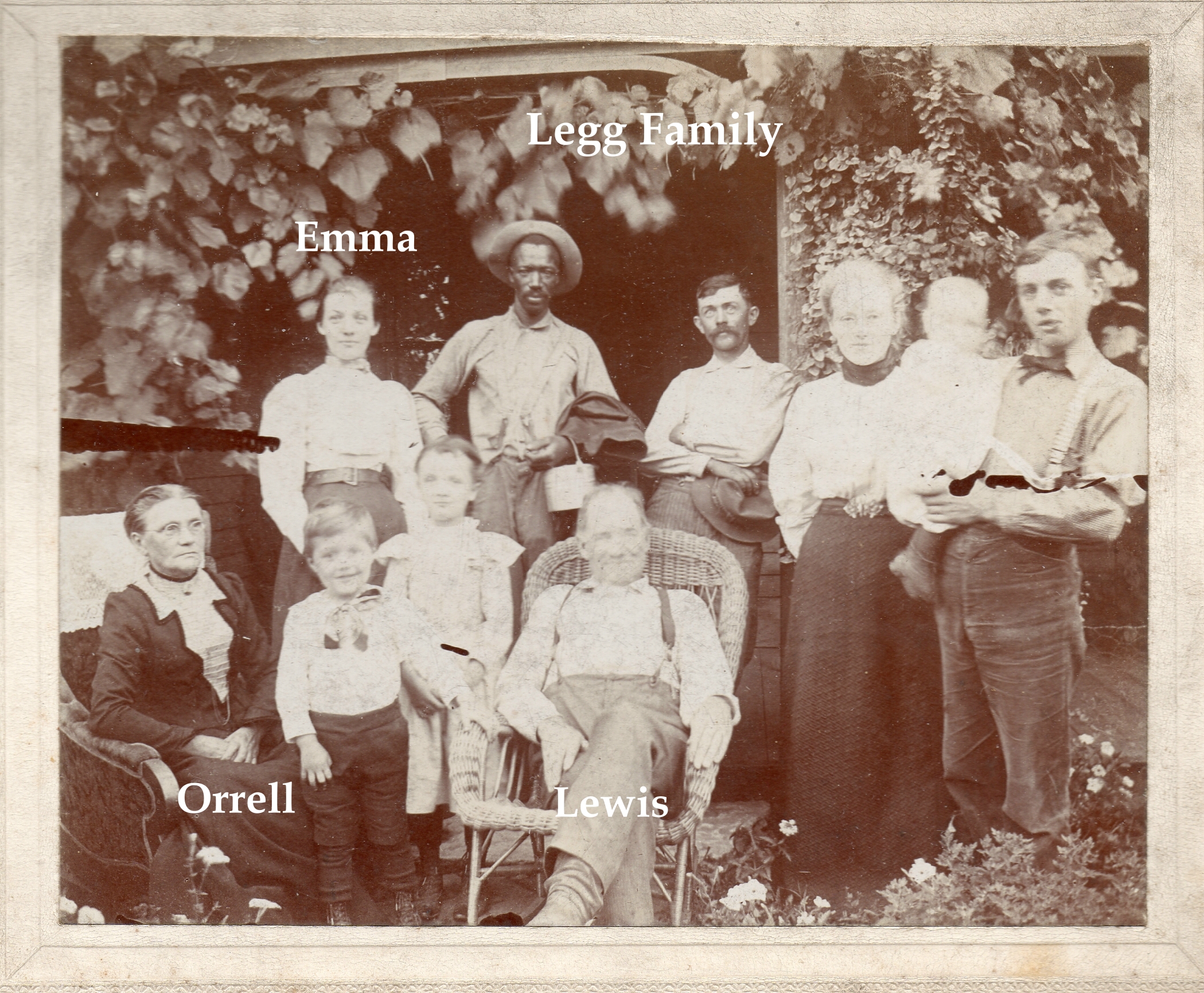
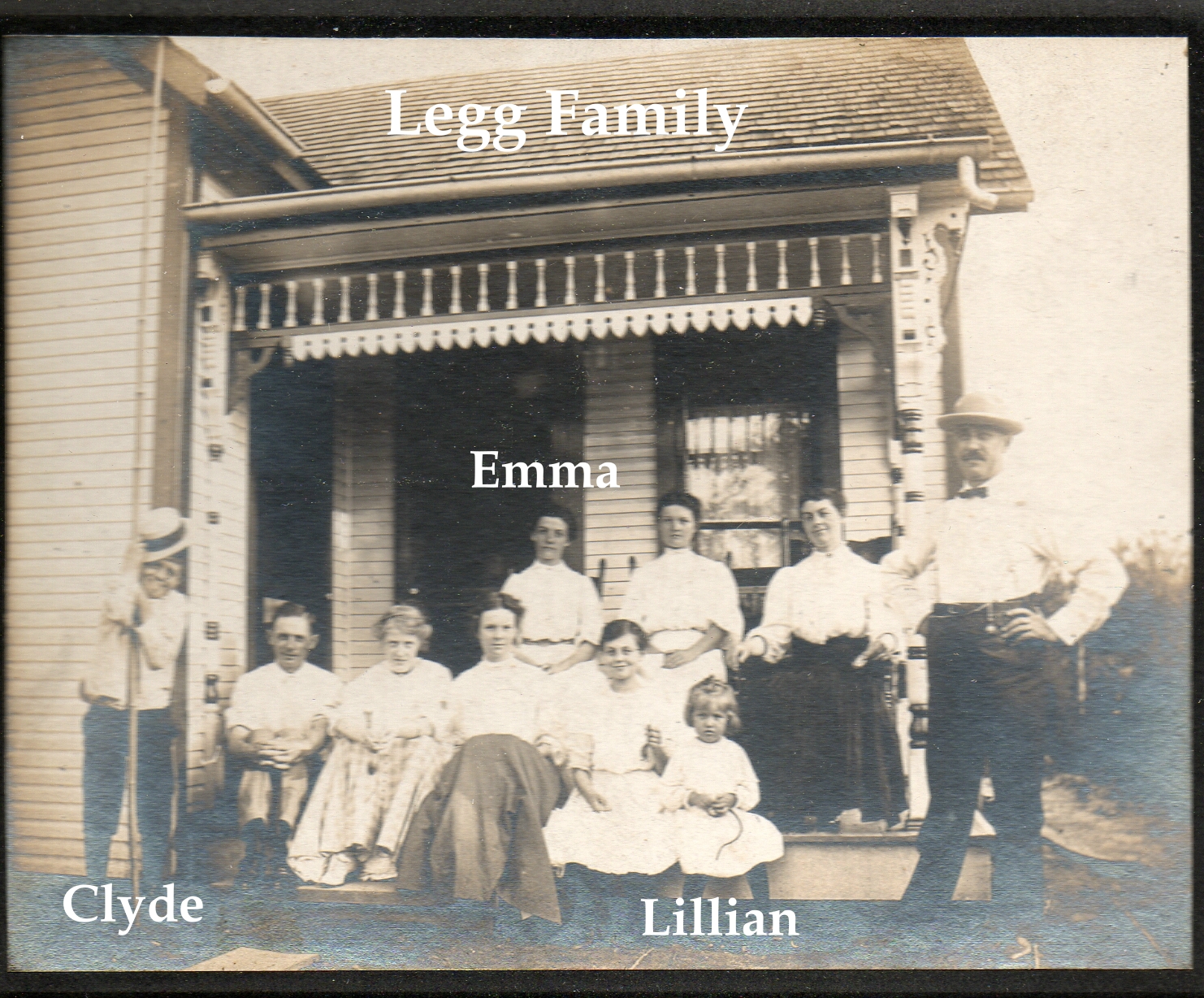
Here are two wonderful pictures of the Legg family. Emma Legg married James Harvey Zinn, born 1 October 1871 Ohio, in 1895. J. Harvey Zinn was the President of the Zinn Lumber Company located at Hudson and North High Streets. Emma and James lived at 285 Kenworth, located on the Olentangy River just north of West North Broadway. (Their house still exists in Clintonville.) [Photos courtesy of John Clark. Thanks also to his wife Lauren for sending them to me.]
For more information on the Leggs see here;
For more information on the Zinns see here;
and/or listen to Robert Ohaver’s oral history.
128 Crestview
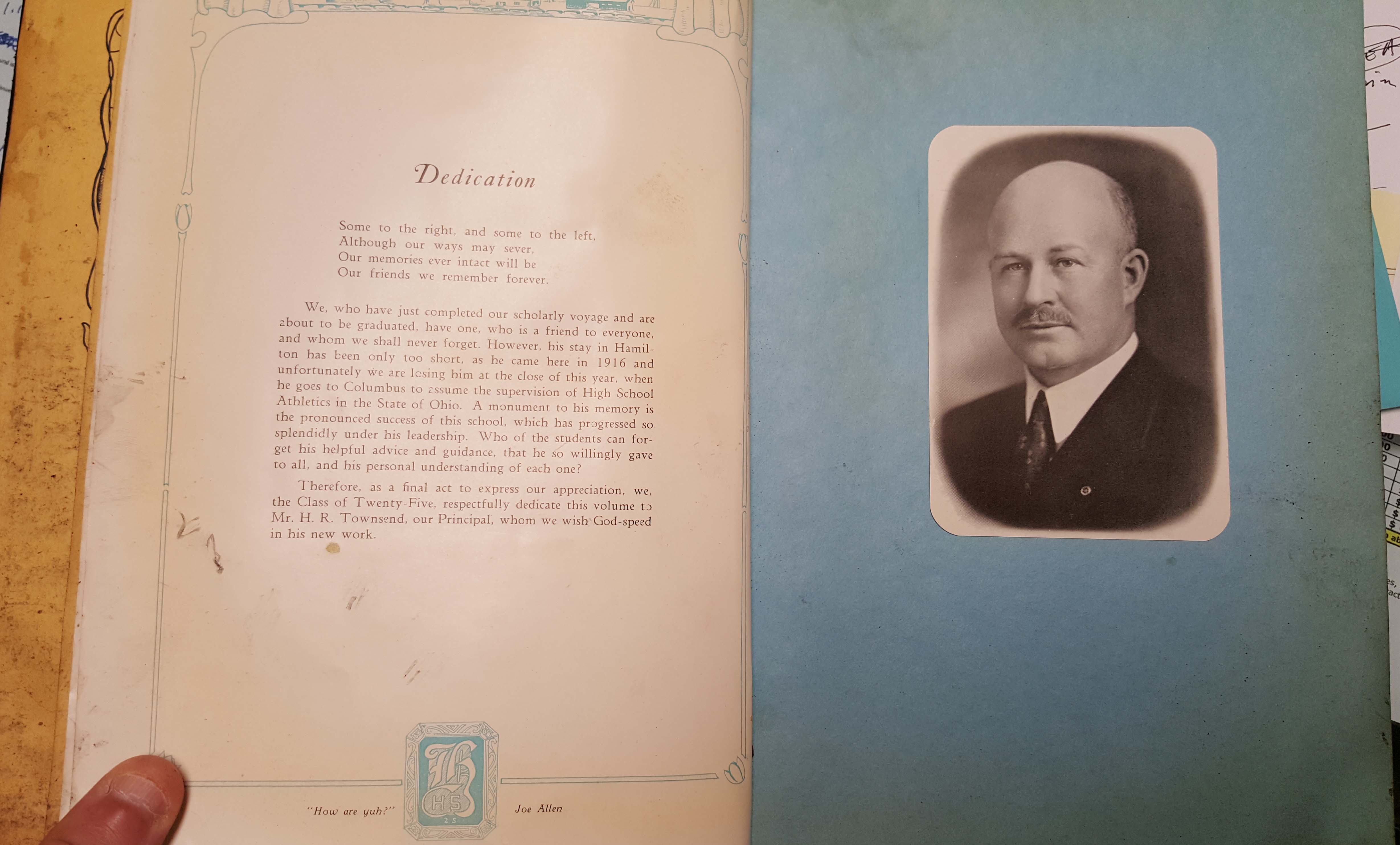 Isn’t it wonderful when you discover that your old house holds a treasure trove of old artifacts from previous owners!? Matt Earley recently found some very old documents in his attic from the original residents of his home at 128 Crestview Rd.
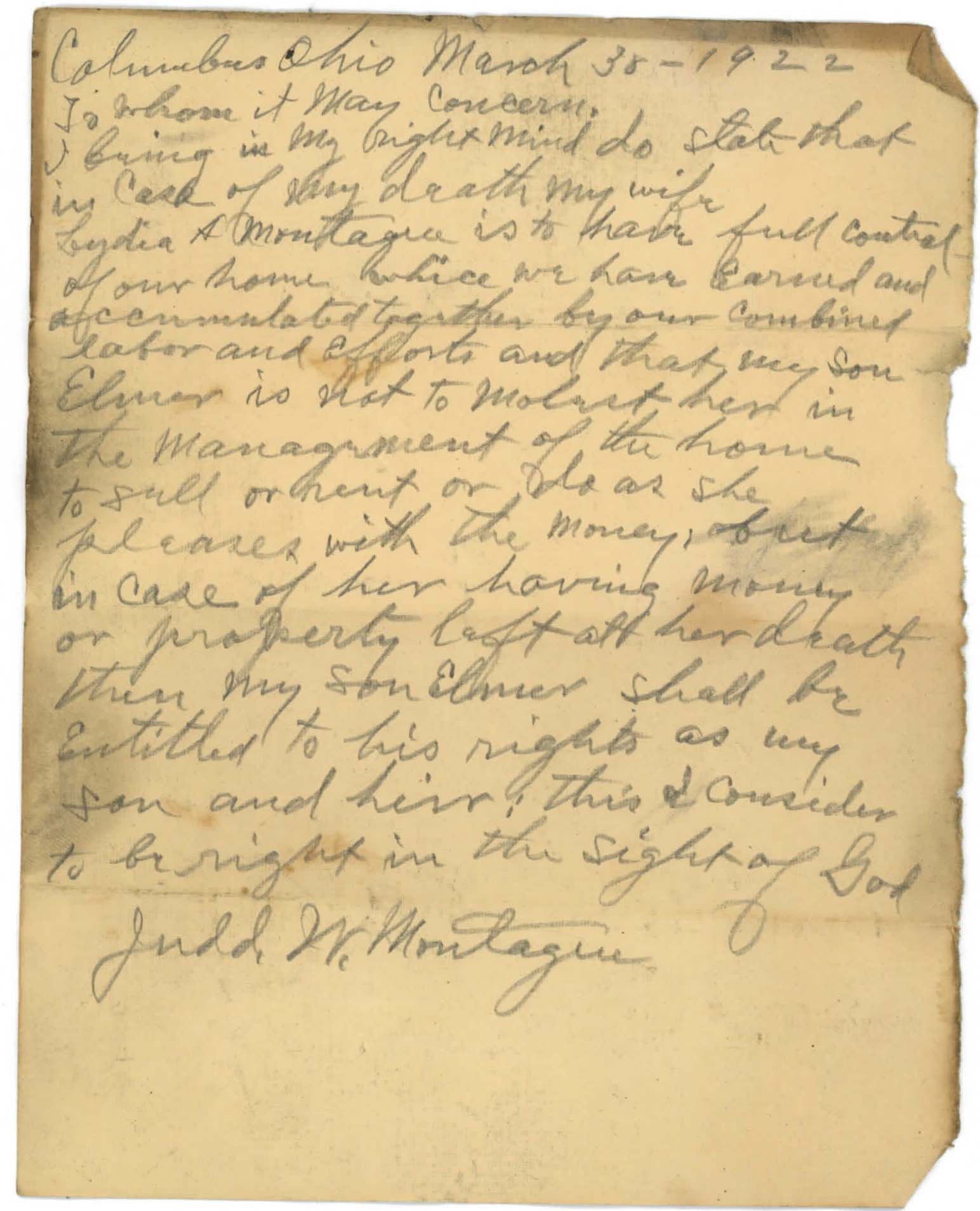 Probably the most interesting thing is this handwritten will directive from the original owner of the home, J.W. Montague. It was written in pencil, and found under a vent pipe in the attic of the house.
The Earleys also found several items from the family who rented the home during the 1930s and early 1940s, the H. R. Townsend Family. The home was a rental during this time period. Matt has spoken with a member of the family of he Townsend family, and she said that the Townsends lived in the home during the school year, but then moved back to a farm they owned near Hamilton, Ohio during the summer months. The gentleman, Horace Raymond (H.R.) Townsend, had been principal of the Hamilton High School until he assumed the full-time position of commissioner of the Ohio High School Athletic Association (OHSAA, which is currently located in Clintonville at 4080 Roselea Place, Columbus, OH 43214). He was the first commissioner of the organization, and held that post from 1925 until his death in 1944.
H.R.’s initials written on the inside of one of the attic walls:
Here is a 1939 Newspaper blurb about an event H.R. Townsend and his wife were hosting at 128 Crestview (“Entertain College Club”, 3rd column).
And, here is a 1936 article about their daughter Esther and her activities (“The Daily Grist”, Column 2).
Here are some Hamilton High School yearbook pages from 1925, the last year Townsend was principal:
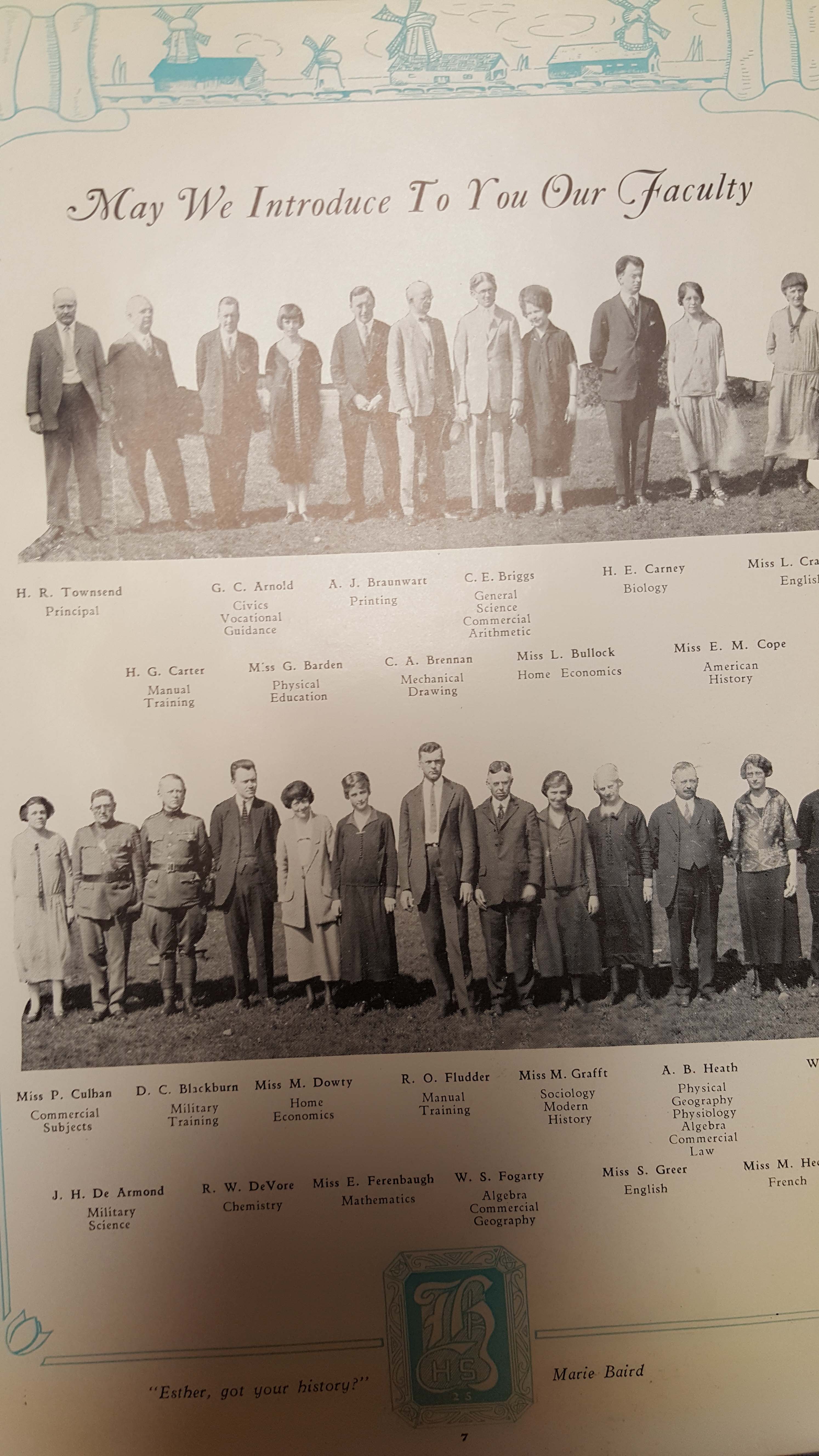
And a spread of the dedication to H.R. in the yearbook, along with his photo:
This was a photograph randomly inserted into one of the pages of the aforementioned yearbook. The Earleys are not sure who it is, but have confirmed that it is not Mrs. Townsend: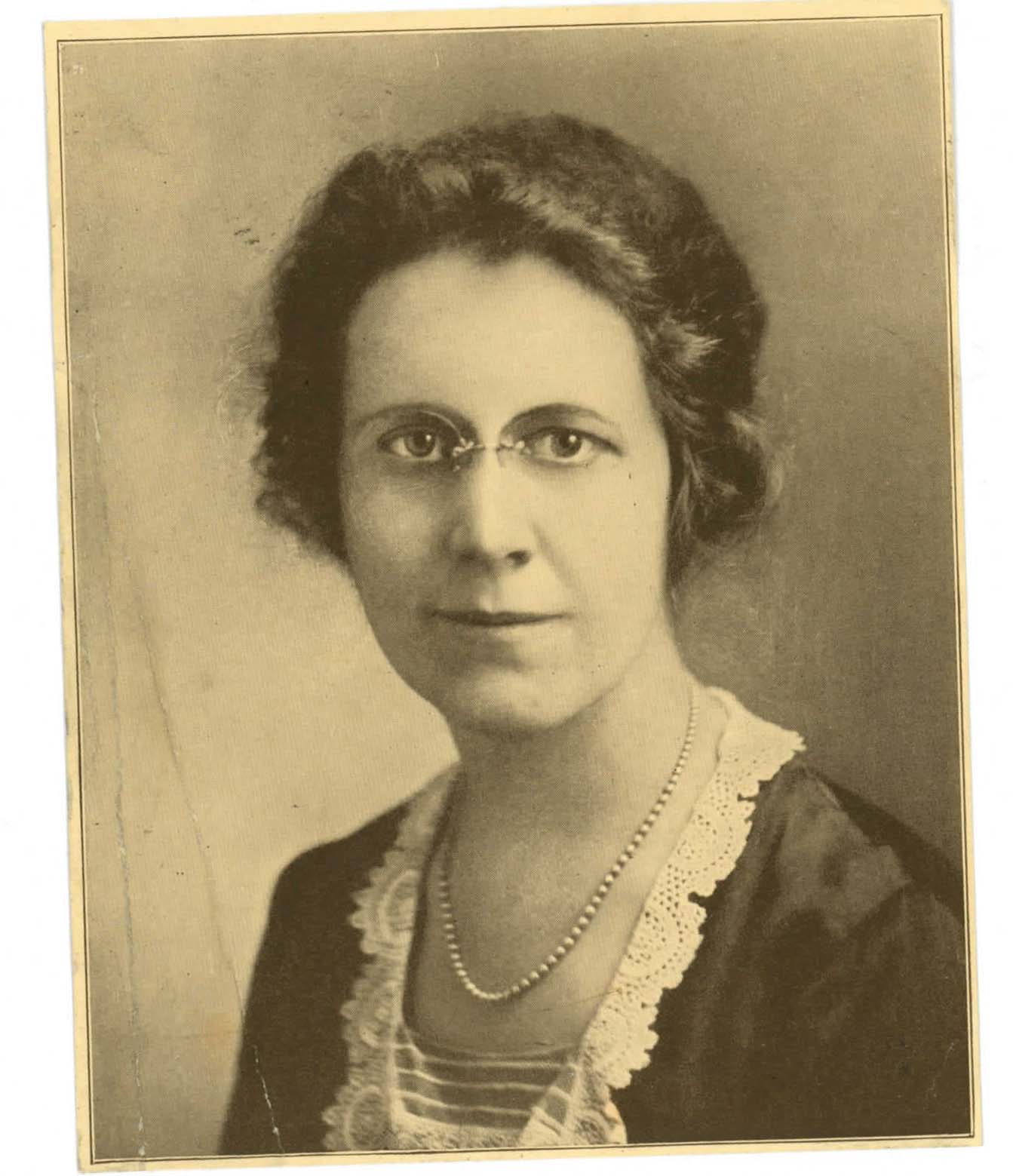
A children’s poetry book found in the attic:

The Earleys found some of their daughters’ (Elizabeth’s and possibly Esther’s) schoolwork in their attic as well, and you can see those here. (I sure hope no one finds my school work 75 years later!)
Matt has done extensive research on the history of the home and its owners, and has spoken with most of the previous owners or their extended families. He is still looking for any photographs of the home from before the 1980s (about the oldest he has been given to date). The King family (of Nancy King fame) was the longest resident of the home, but Matt has not yet obtained any photos of the home from when they lived in it (1957-1979). If anyone happens to stumble upon anything older than that around 1985 at some point, Matt would be very interested in seeing it.
Remembering Algy McBride
 Algy McBride, who died in 2015, was a long-time president of the Clintonville Historical Society. His dedication was felt throughout Clintonville and the Franklin County community. At his funeral, his family shared this article which I thought I’d re-share with you. [Article courtesy of the McBride family and reprinted from SeniorSource Winter 01/02.]
J. Harvey Zinn & his “Innocent Lamb” Lillian
The Zinn Lumberyard is always interesting; many people I met while researching my book remember it, yet I have never seen pictures of it. James Wells, long-time resident of the Olde North Columbus community has an abiding interest in it and has shared a couple items about the Zinns.
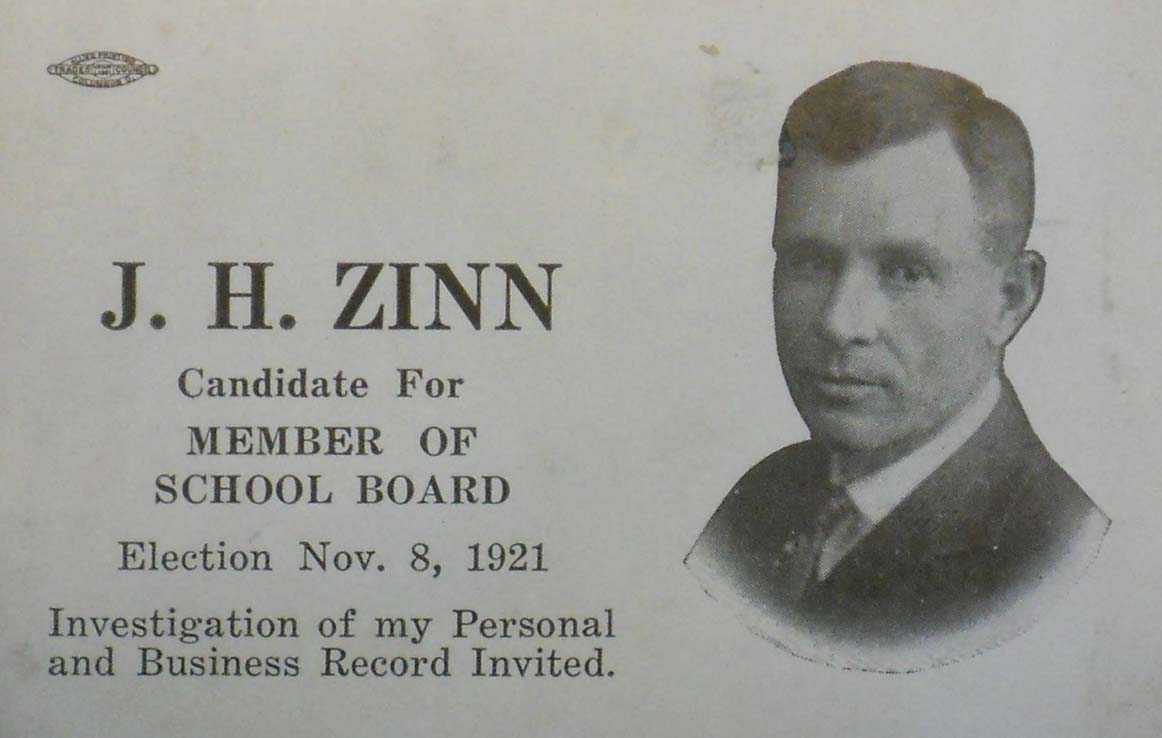 The first is a business card for Mr. Zinn when he ran for the school board in 1921. We’re not sure if he won or not, but it would be interesting to find those records. Don’t you love the directive, “Investigation of my Personal and Business Record Invited.”
 The second is Mr. Zinn’s daughter Lillian’s graduation photo from North High school in 1920. She was described as an “innocent lamb in a cruel world.”
You’ll find more information on the Zinns here.
By the way, James says he is “always interested in anything to do with J.H. Zinn and would appreciate any info about him and his family (or related subjects like his lumberyard, the North United Methodist church, where the family members were life-long attendees) or the Herron/Thornton families who lived across Tompkins street from the Zinn’s.
[Thanks for sharing these images, James!]We All Love Weiland’s Market
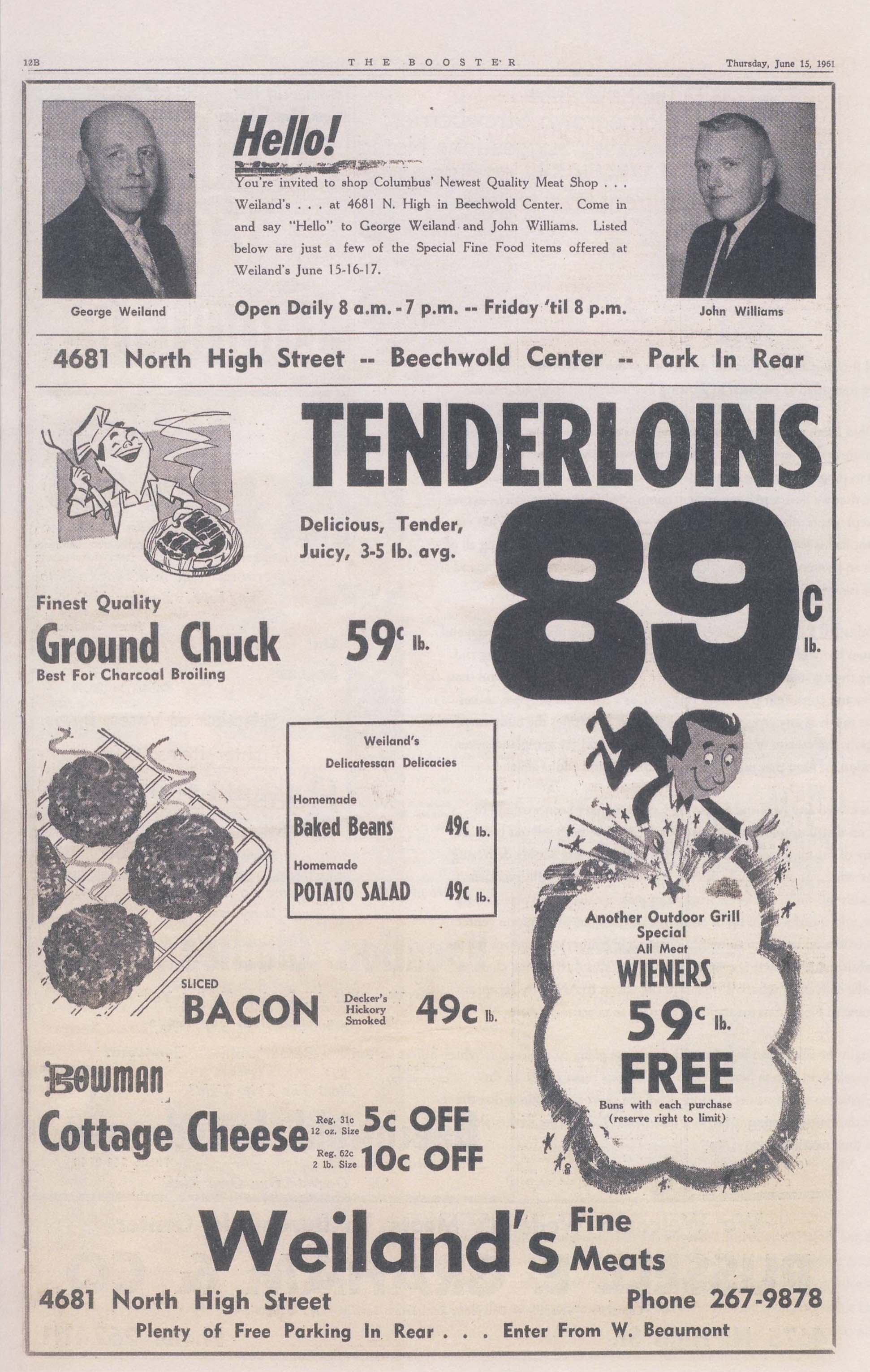 …and so we were delighted to see Weiland’s Market featured in Edible Columbus, Winter 2016, pp 58-61. Weiland’s Market, with its multiple generations of owners John Williams, Jennifer Williams and Scott Bowman, and its staff, have been exemplary and generous citizens of Clintonville and the community, and fed us all to-boot. [Booster ad courtesy of Jennifer Williams. Article courtesy of Edible Columbus with apologies in advance for not linking directly to their web site.]
Moseying with Rick Pfeiffer through Clintonville
 Columbus City Attorney Rick Pfeiffer, who grew up in Clintonville, does a wonderful job giving an informal tour of the Clintonville community. (He has done this for the other neighborhoods of Columbus as well!) Thanks Rick! and we wish you well in your 2017 retirement.
Part One: https://bit.ly/CMosey1
Part Two: https://bit.ly/CMosey2
Solved: The Mystery of Grace Backenstoe
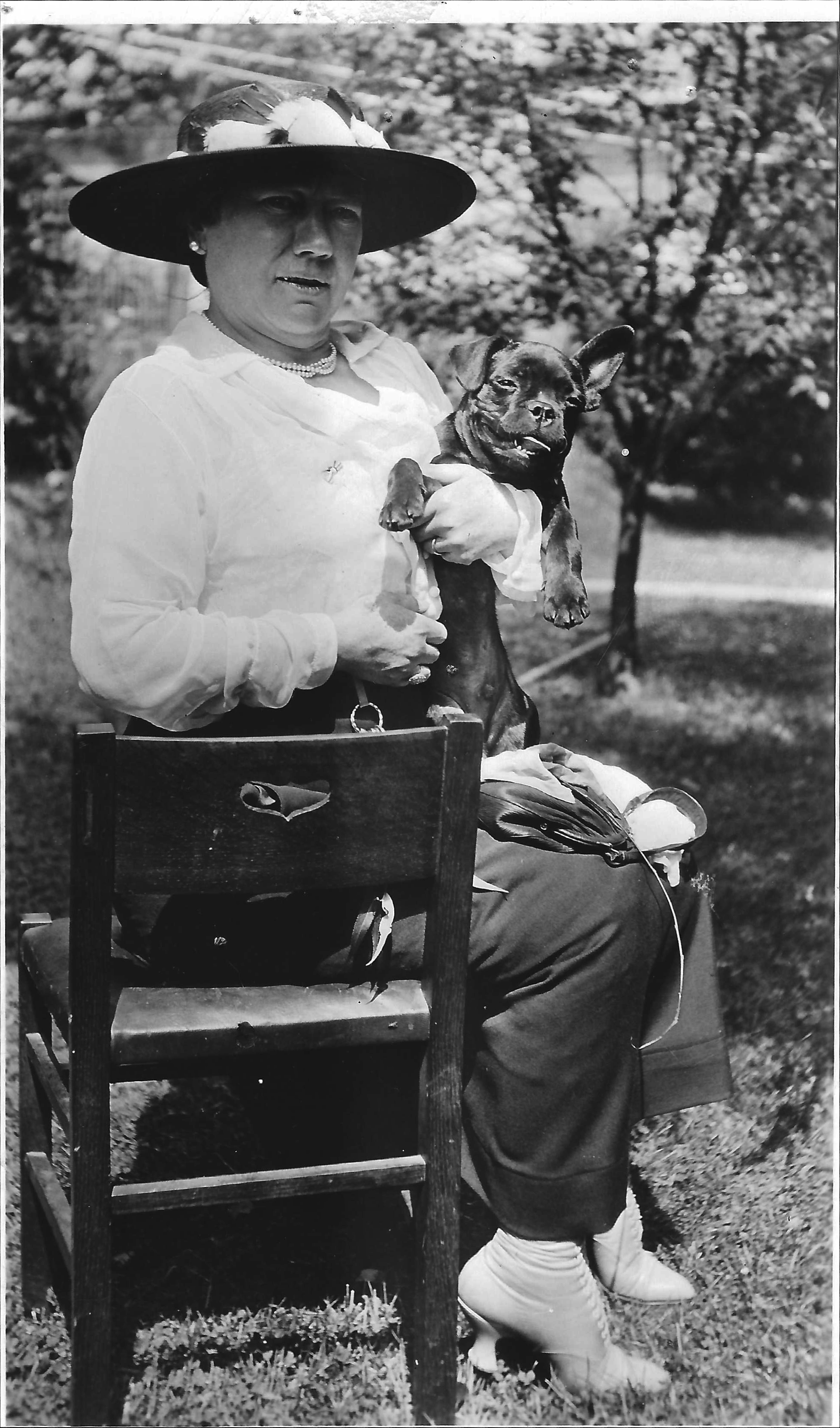
Thanks to Jeff Berichon, we now have a picture of Gracie! And he has agreed to share it with us. Thanks Jeff!
Bob Meyer’s Standard Oil Station
I realize these are low-quality photos, but they are, alas, the only photos that I have of this topic. Bob Meyer’s Standard Oil Station was located on the southeast corner of Morse Road and North High Street. It closed in 1984 after doing business more than 48 years. The photo above was taken in December, 1944, and the one below was taken in 1984 upon Bob’s retirement. Click through that 1984 image for the article about the station’s closing. [Photos courtesy of the Clintonville Historical Society]
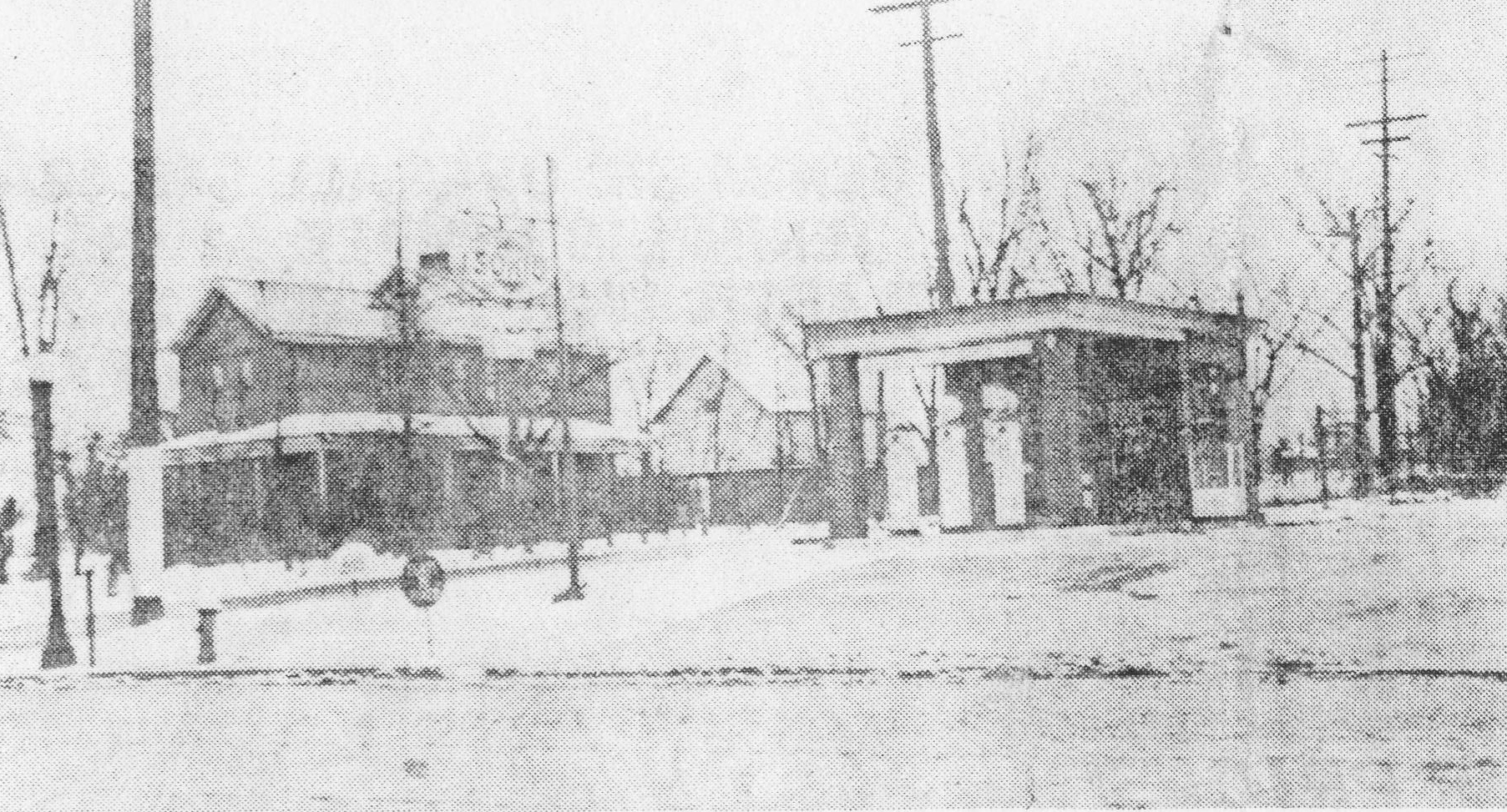
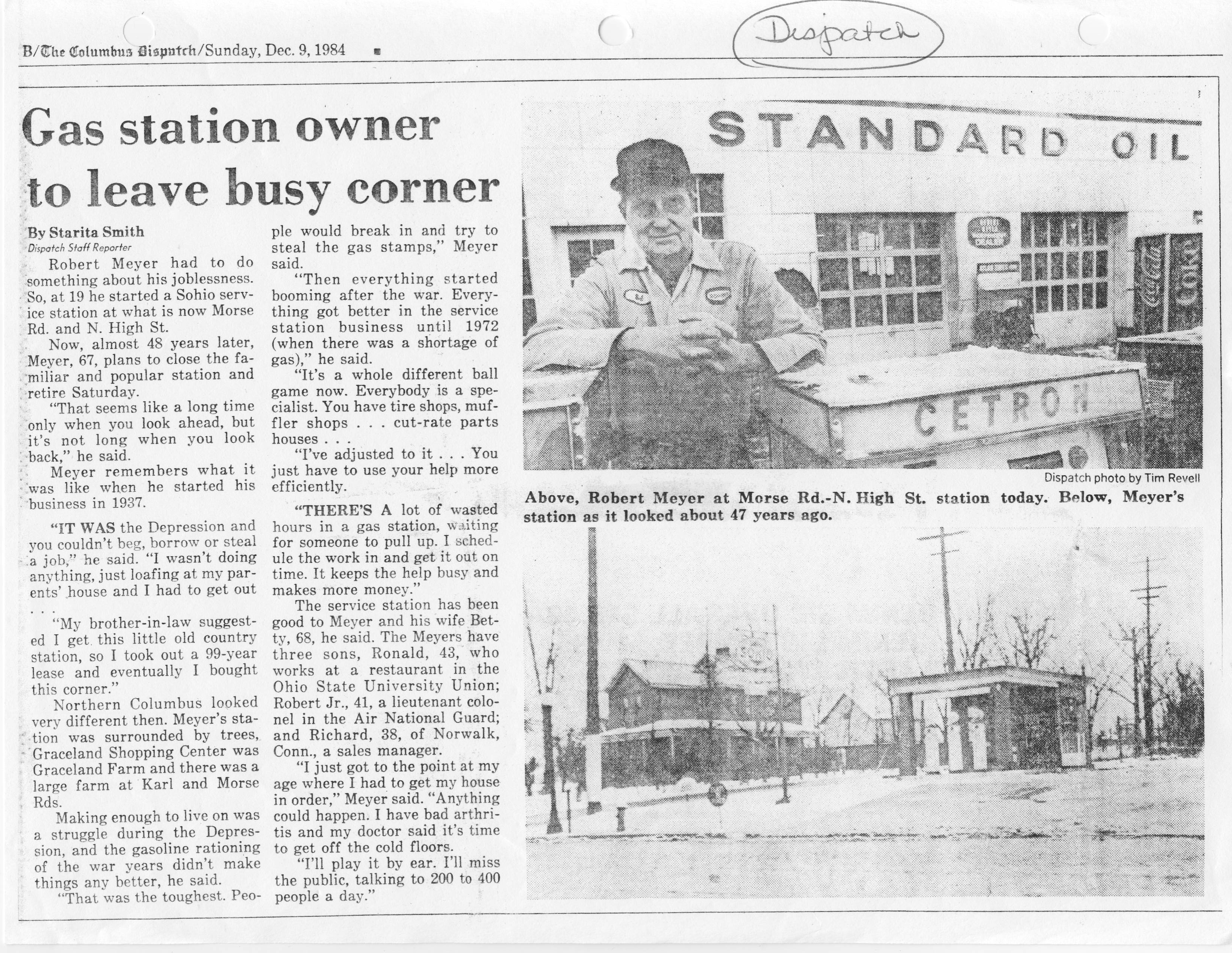
The Leggs
This is a reprint of an article by Mary Rodgers, originally appearing in the newsletter of The Clintonville Historical Society.
A brief history of Charles T and Sadie M. Legg–long time Clintonville residents–based on The Booster news article dated February 12, 1937, with additions
Charlie Legg was born on the Legg farm on April 23, 1871. This farm, a dairy, was located North of Clintonville. The lane leading to the Legg homestead would have been near where Webster Park Avenue is today.
Charlie’s mother was Orell E. Webster, daughter of Amazon Webster and a direct descendant of Noah Webster of American Dictionary fame. His father was Lewis Legg, believed to be the son (or grandson) of Elijah Legg, a revolutionary war soldier from Massachusetts who settled in Ohio in 1815.
In 1937, Charlie reported that when his grandfather, Amazon Webster, moved to Clinton Township, Indians lived in the section now known as Indian Springs. Those Indians raised cranberries. Amazon told his grandchildren that the Indians would walk to Chillicothe to sell their berries.
Charlie’s grandmother was Mary Pinney of Worthington. She was the daughter of Levi Pinney and Charlotte Beach. Levi and Charlotte were the first couple to be married in Worthington, Ohio. That was 1839.
Sadie Mitchell was born on January 27, 1874 in Circleville. Her father was a builder. She became Charlie’s blushing bride on Thanksgiving Day, November 24, 1892. When she heard of the upcoming wedding, Sadie’s grandmother exclaimed, “Oh that name!” Sadie’s response was that it was no worse than the last four letters of her present name!
The Leggs were married by Rev. Louis Postle and their first home was behind Dr. Burbacher’s Offices, which were located on the Southeast corner of Oakland Park and High. The Mennonite Church stands here today. It was reported that after a year, in 1894, they moved to into a building that had been a church at the Northeast corner of Walhalla and High street (Clinton Chapel–now Southwick-Good and Fortkamp Funeral Home). They started a dairy farm. After a year, they moved to property located west of the Olentangy River near what is now Lane Avenue. Here they set up a “business” farm including the sale of corn to the Sells Circus. Today, if you are driving north on Kenny Road from Lane Avenue, you will see a road called Legg.
When Charlie’s father could no longer care for his farm, Sadie and Charlie combined their operation with his and moved to the North Clintonville homestead. In 1907, the Leggs sold the farm to developers Thompson, Johnson and Thompson. The neighborhood called the Webster Park Addition was platted. The Leggs built and sold three homes in this development. Orell Webster Legg, Charlie’s mother, retain the portion of the farm closest to the river. In 1909, a portion of her property was set aside for a bird sanctuary. We call this area the Delta.
According to the 1914 records, 346 families, a population of 1,190, represented Clintonville. The Clinton League Memory Book reports:
In 1913, a new two story brick building was erected on the corner of Dunedin Road and High Street. It was haled with delight by residents of the neighborhood for at this place Mr. Legg opened a grocery store and Mrs. Legg had a department for notions-live-savers they were where you lived five miles from town. There were two business rooms in this building so the post-office was moved to the one adjoining the store. It remained there until 1917 when rural mail delivery was established.” Today, this building houses Shim’s tailor and Melissa’s Incredible Edibles.
On July 4, 1916, Sadie’s dry goods business moved to 3339 North High. That building was built in 1910 by J. C. Loren. The Booster reported him as a well known contractor at the time. He may have built some of the early homes on East North Broadway. In fact, the home that was located at 615 East North Broadway, the carriage house for that home still stands and is know the Fisher home, was referred to as the Loren home in the Clinton Memory Book. We know that the developer of North Broadway, James M. Loren, never lived on North Broadway, so perhaps 615 was J. C. Loren’s home. Before Sadie, the 3339 North High building was occupied by Swope’s Grocery and Bilikam’s Grocery. Bilikam’s later moved to North Columbus. In 1918, the Leggs bought the building and Sadie operated her dry goods store at the site until February of 1937. Later in life, Sadie lived in the apartment above the store.
Mr. Legg, after selling his grocery, was a city salesman for the E. E. Shedd Mercantile Company and then worked for the L. E. and C. W. Medick Co., Ford Dealers in the Clintonville community. In fact, at her retirement in 1939, Sadie said that to get full enjoyment from her upcoming vacation, she would need a new V8 Model Ford. Charlie commented that he wouldn’t be receiving a commission on the upcoming sale.
The Leggs told The Booster that they recalled when a saloon existed at what would now be the southwest corner of Orchard Lane and High Street (the Kroger parking lot). The story is that while there were a dozen saloons in North Columbus, there were none in Clintonville. Then a man was elected mayor of Columbus who closed the saloons on Sunday. This drove the liquor dealers to move outside the city. In those days there was a “one-mile limit” law which meant that city police could arrest people within one mile of the city limits. So the new saloons were set up, including the one here. The local place did a “land-office business. ” The mayor found out however that the Clintonville saloon was a few feet inside the one mile limit. (The city limit at the time was Mock Rd–now Arcadia Ave.) So, on a Sunday morning he sent the “Black Maria,” as it was called in those days, to get the drunkards and the proprietor. A new mayor reopened the City saloons on Sunday and the Clintonville establishment failed.
When interviewed by The Booster in 1937, the Leggs recalled the tollgate that used to block High Street just north of Arcadia. The gate had a 3 cent per rig fee. They also recalled when “…there was no such a thing in those days as cross streets coming into High Street, except North Broadway. So the cars stopped at numbered stops…a pleasant memory when one thinks again of Stop 6 (now Pacemont–once known as Jason Avenue); Stop 7, (now Como); Stop 8 (North Broadway); Stop 9 Clintonville (Oakland Park). And then the stops were farther apart, and little used until one reached Cooke’s Corners (Cooke Road).”
Charlie and Sadie are buried in Walnut Grove cemetery on the south side of Worthington. Charlie passed in October of 1946 and Sadie in November of 1957.
Side note: One of Charlie’s sisters, Emma, married James Harvey Zinn, born 1 October 1871 Ohio, in 1895. J. Harvey Zinn was the President of the J. H. Zinn Lumber Company of Columbus, Ohio. Mr. Zinn was reported to be an ardent fisherman who followed his favorite sport in practically every part of Canada, as well as in Florida waters. His attractive estate “Edgewater,” was located on the Olentangy River just north of West North Broadway. This estate still exists in Clintonville; for more information listen to Robert Ohaver’s oral history.
[Article courtesy of Mary Rodgers and the Clintonville Historical Society]The Mysterious Grace Backenstoe
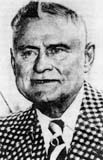 There is a new gastropub at Graceland Shopping Center, cutely named Pat and Gracie’s. The tavern is named after the early 20th century gambler who owned the land upon which Graceland Shopping Center was built: Pat Murnan and his wife Grace Backenstoe. The restaurant owners are on a quest to find an image of Grace Backenstoe. (They already have pictures of Pat.) Does anyone out there have one? Let me know and I’ll post it here as well as forward it to the restaurateurs. And thanks!
[Update: my update on this topic at here.]
The Zimmerman Family & the Olympic Swim Club
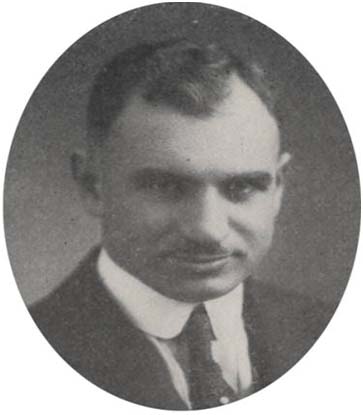
Libby Wetherholt recently gave this presentation about the Zimmerman family to the Clintonville Historical Society, and has kindly agreed to share it with us.
And More Markers!
Ron Irick recently alerted me to the Historic Marker Data Base. In it are photographs of several additional markers covering Clintonville’s notable people, places and events. The database includes the marker for Rand Hollenback, on Hollenback Drive at Whetstone Park, the Nat’l Register of Historic Places marker for East North Broadway Historic District, and the marker (currently in Powell) for the Grand Carousel which was formerly at Olentangy Olentangy Park.
Ron recently posted the Clinton Township/Clintonville Historic Marker.
Though not in this database, there is also a marker for the Old Beechwold Historical District. I believe there is also some sort of marker for the former home of the Republican Glee Club at 57 Weber Road.
A. B. Graham House
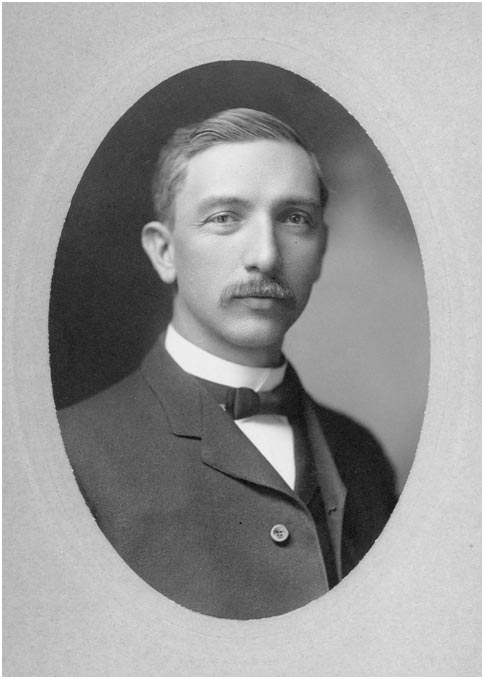 A. B. Graham (Albert Belmont Graham) was one of the key founders of the 4-H Club, and was also a leader in developing the nation’s county extension services that are still so helpful to farmers and gardeners and cooks. In his retirement years Mr. Graham lived at 159 Clinton Heights Avenue in Clintonville. (His son lived in Clintonville as well.) The Clinton Heights house is the last surviving house known to be associated with Mr. Graham, and on this basis the house has recently been put on the Register of Historic Places.
You can find more information elsewhere on this web site
Newspaper Boys
 Bob Henry (North High School Class of 1957) was kind enough to share this photograph of himself in the days when he was a Columbus Dispatch carrier.
The Dispatch sub-station he was posted from was located in the alley behind the Clinton Theater on High Street. This picture was taken circa 1950 and shows a bunch of Dispatch carriers in front of the station. Earl McBlain, shown in the doorway, was the station manager. From Bob:
[Photo courtesy of Bob Henry]In those days, the carriers, ages 10 to 15, would ride their bikes to the station after school, where Earl would count out our papers to us. The station had a bench along the walls, which we used to fold and bag our papers. In the center of the room was a pot-belly stove that burned yesterdays papers to keep us warm in the winter. Once we had bagged our papers, we rode to our routes throughout Clintonville. Mine was on West Dunedin, along Olentangy Blvd, Winthrop and Weston Place, about 70 houses. Carrying papers took a couple of hours each day, including Sat and Sun morning; on Thurs, and Fri nights we collected money from each house on the route, which required another couple of hours. I believe the cost was 40 cents per week for a seven-day subscription. The Weds Star cost another 15 cents. When my mom learned I was carrying the Star, which was a risqué paper in those days, she called Earl to complain, but he could not do anything about it.
On Saturdays before noon we had to go to the station to pay our paper bill of about $20 and kept the rest, about $8.
Underground Railroad in Clintonville
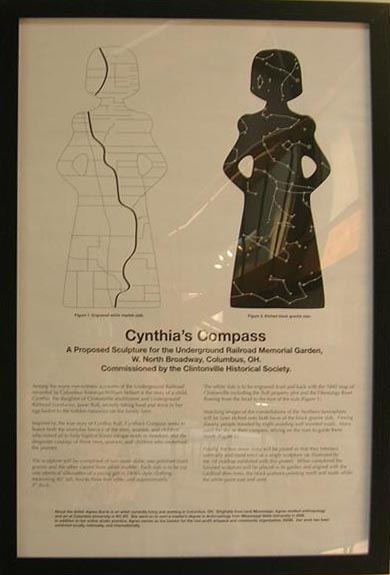 Debbie Shaw, retired CML librarian, recently provided some local resources about the Underground Railrooad in Clintonville and surrounding area. Thanks for agreeing to share this information, Debbie!
Here’s Debbie’s summary:
-
This link has a short video as well as text below it from WOSU’s Columbus Neighborhood series on Clintonville; both discuss the Underground Railroad.
and this video from the same series on Downtown/Franklinton shows another area involved in the Underground Railroad here in Columbus.
This link is from the Clintonville History site by Shirley Hyatt. The October 2008 issue discusses Thomas Bull and his family and includes a brief section about the Underground Railroad. [Shirley adds: see my book Clintonville and Beechwold here (to buy it) or here (to borrow it) for a smidgen more information.]
Article from the OSU Lantern Feb. 7, 1999.
Historic Marker on OSU Campus.
Another historical marker.
Excerpt from the book The Underground Railroad: An Encyclopedia of People, Places and Operations by Mary Ellen Snodgrass.
For a broader look at the Underground Railroad in Ohio, you can read the full text draft of The Mysteries of Ohio’s Underground Railroad by Wilbur H. Siebert here.
And of course, the Columbus Metropolitan Library has a lot of this history. You can also access a lot online at the here.
Debbie also notes, “This material was easily Googled. As a former librarian, I know that there is a lot of info that is not online. By the way, if you do an advanced book search on books.google.com and limit to full text only and content = books, there are quite a few. I put underground railroad in the ‘with the exact phrase’ field and Ohio underground railroad in the ‘with all of the words’ field. Laws, history, etc. come up, including Ohio Before 1850 and Ohio History Sketches. Of course, some of it is a very brief part of the book. If you add Ohio into the search’s ‘subject’ field, this narrows it a lot.”
Bower & Co. General Store & Family
Jim Drake recently contributed these wonderful photos and family histories of the Bower (Weber) family.
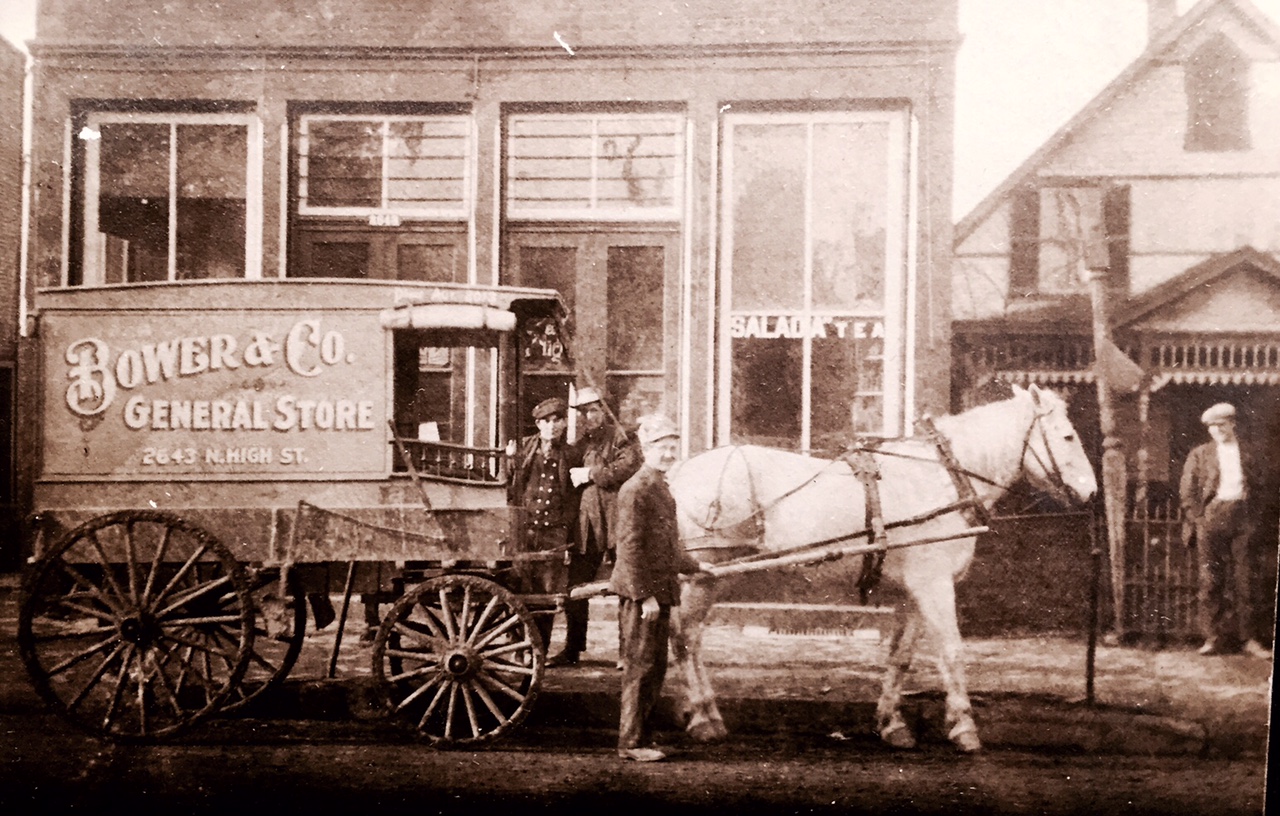 Eda Weber Bower and her spouse, Henry G. Bower owned and operated the Bower & Company General Store at 2643 North High St. The photo to the left shows the store’s delivery wagon and, at the right of the image, a section of the Bower family home at 26 East Duncan Street.
 This photo is the 1901 wedding portrait of Eda Weber (1869-1951), of the historic Frederick Weber family, and Henry Bower (1856-1935). They were married on January 1, 1901.
 This photo was taken of the Bowers in 1934. In addition to his civic activities, Henry Bower was a founder and principal stockholder in the Northern Savings Bank (which eventually became part of the Huntington Bank system).
John J. Bower, one of Henry Bower’s brothers, was initially a partner in the general store, but eventually opened a hardware store on the southeast corner of Duncan and High streets. The Bower brothers are shown in this photo (left to right): Ernest E. Bower, Henry G. Bower, Owen Bower (son of Ernest E.), John J. Bower, his son Everett Bower, and Charles Bower.
Although Henry Bower had hoped to have at least one son to inherit the general store, he fathered five daughters instead. After his first daughter, Anna, was born, he pre-selected a male name for each successive child, but in every instance he had to opt for a female form of the name.
Consequently, “Albert Bower” became “Alice Bower,” “George” became “Georgia” Bower, “Henry” became “Henrietta,” and “Wilbur” became “Wilda” Bower. 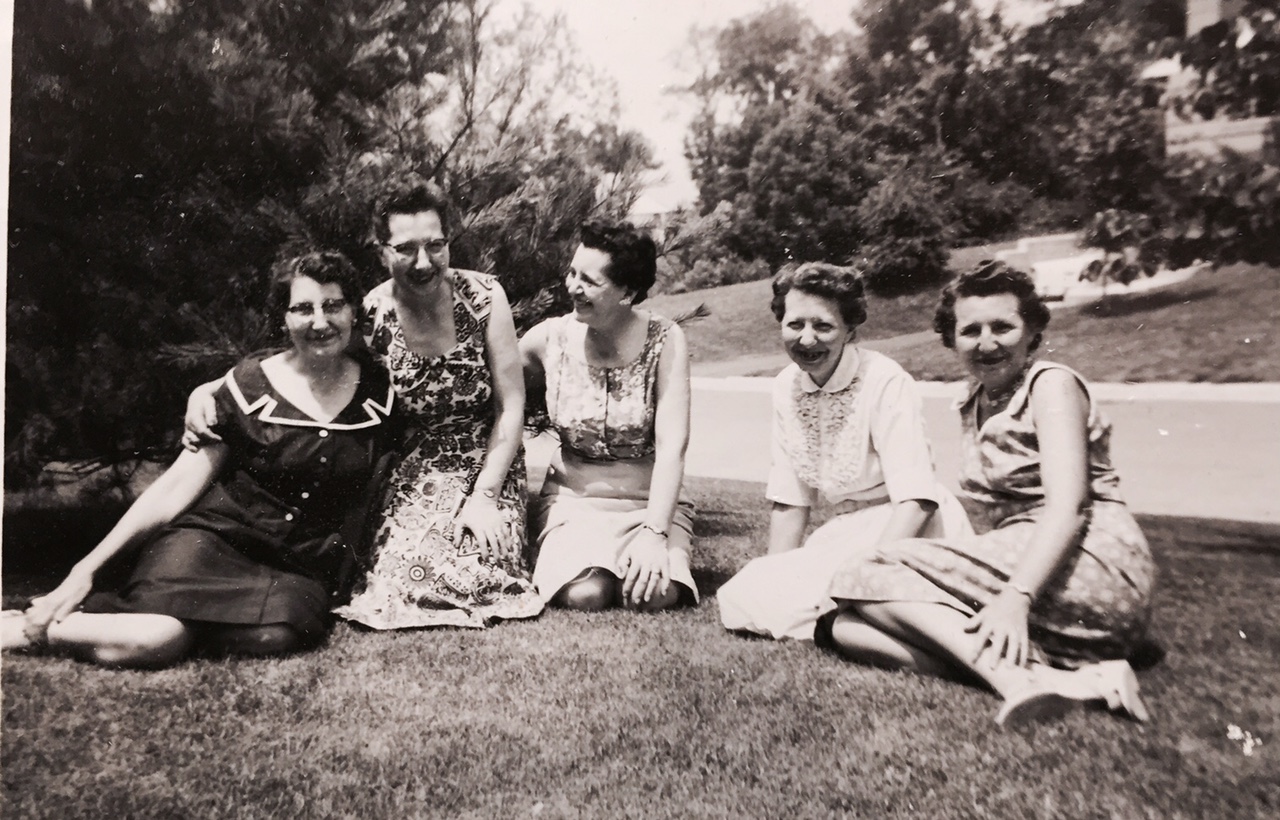 In this 1960 snapshot, the five daughters are arranged in their birth order from left to right: Anna Bower Mylander, Alice Bower Jesson, Georgia Bower O’Brien, Henrietta Bower Kuntz, and Wilda Bower Drake.
Of the five Bower daughters, Alice (Mrs. Frederick) Jesson had a long and successful career as Director of Restaurants and Cafeterias of the F. & R. Lazarus Company.
(Photos and write-up courtesy of Jim Drake) Note: there is one more image of the Bowers’ cart here.
Algy Strayer McBride, 1932-2015
 There is no doubt that my book Clintonville & Beechwold, and this dev.clintonvillehistory.org/ web site, would not exist if it had not been for the support and encouragement of Algy McBride.
I first met Algy in 2007, when I thought I “might” write a history of Clintonville. He was the long-standing president of the Clintonville Historical Society at the time, and enthusiastic about getting the book written. We were strangers, but he opened his house and the wealth of his library and history collection to me. He was an indefatigable source of information about people I should call and stories I should look into.
Algy was intellectually rich and curious, and so active and involved…with the local genealogical society, with the local senior center, with civil war discussion groups, even with the annual Clintonville Fourth of July flag raising ceremony. It takes my breath away even now, thinking back on Algy, his support of his community, his support of me.
Algy’s obituary can be found here
and Southwick-Good’s video tribute can be found here
Algy, we’ll all miss you.
Notable Clintonvillites
 I enjoy the attached article by Don Hollenback originally published in a 1997 Booster. It enumerates some of the residents who made their mark on the community–Doc Rymer, Bill Taylor, Cookie Stevens, Ted Barclay and many others who formed Clintonville Boy Association, Boy Scout and Girl Scout troops, and more.
Have a Bash
 From Unforgettable Columbus, volume 2: “Although Herb Bash is not considered a pro, he did give lessons and was considered a pretty fair golfer. [Early on, he leased Indian Springs Golf Course.] In 1948 he opened a unique golfing complex on W. Dodridge St. between Olentangy River and the Olentangy River Rd. These 60 acres consisted of an 18-hole golf course and a large driving range. He sold the land in 1962 to Chemical Abstracts and moved his entire operation to just beyond Rte 161 on Dublin Road…The driving range on Dodridge was a place where many a Columbus duffer sharpened his game. Bash died in 1979 at the age of 86.”
According to Bill Case’s web site, “former South High coach Herb Bash … made his living in the golf industry. Herb and his wife owned the Berwick Golf Course, a public facility located on the city’s southeast side. Herb helped grow the game at Berwick by conducting numerous golf clinics for the city’s youths. Shortly after joining The Elks’ in 1928, Bash, in partnership with Bugs Raymond, opened another golf course- Indian Springs, opposite Henderson Road on the east side of High Street. Herb later added the “Bash Driving Range” in Dublin to his collection of entrepreneurial golf activities. Like many of his compatriots at Elks’-Wyandot, Herb Bash could golf his ball. Prior to joining The Elks’, he won Dublin Road’s club championship. Herb was also a mainstay of the 1932 Wyandot golf team which won the inter-club championship.” [Image courtesy of Bill Case.]
Olentangy Park Redux
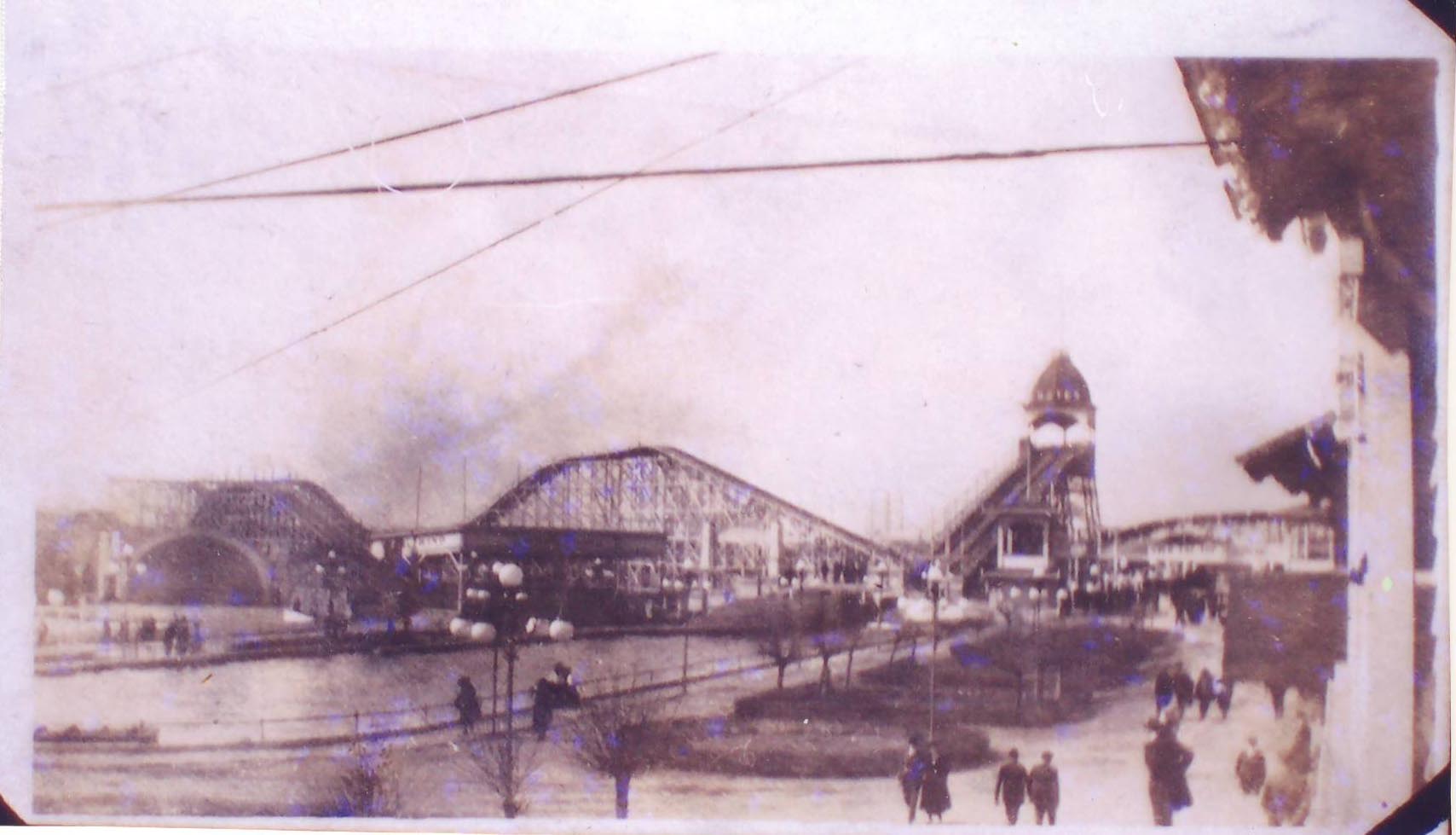 I never tire of seeing old images of Clintonville. Collector Galen Gonser shared these 1920 images with us. Admittedly they are taken with a simple box camera, but still, what’s not to like? (Photos courtesy of Galen Gonser.)
The first image below is Chute the Chutes at Olentangy Park.
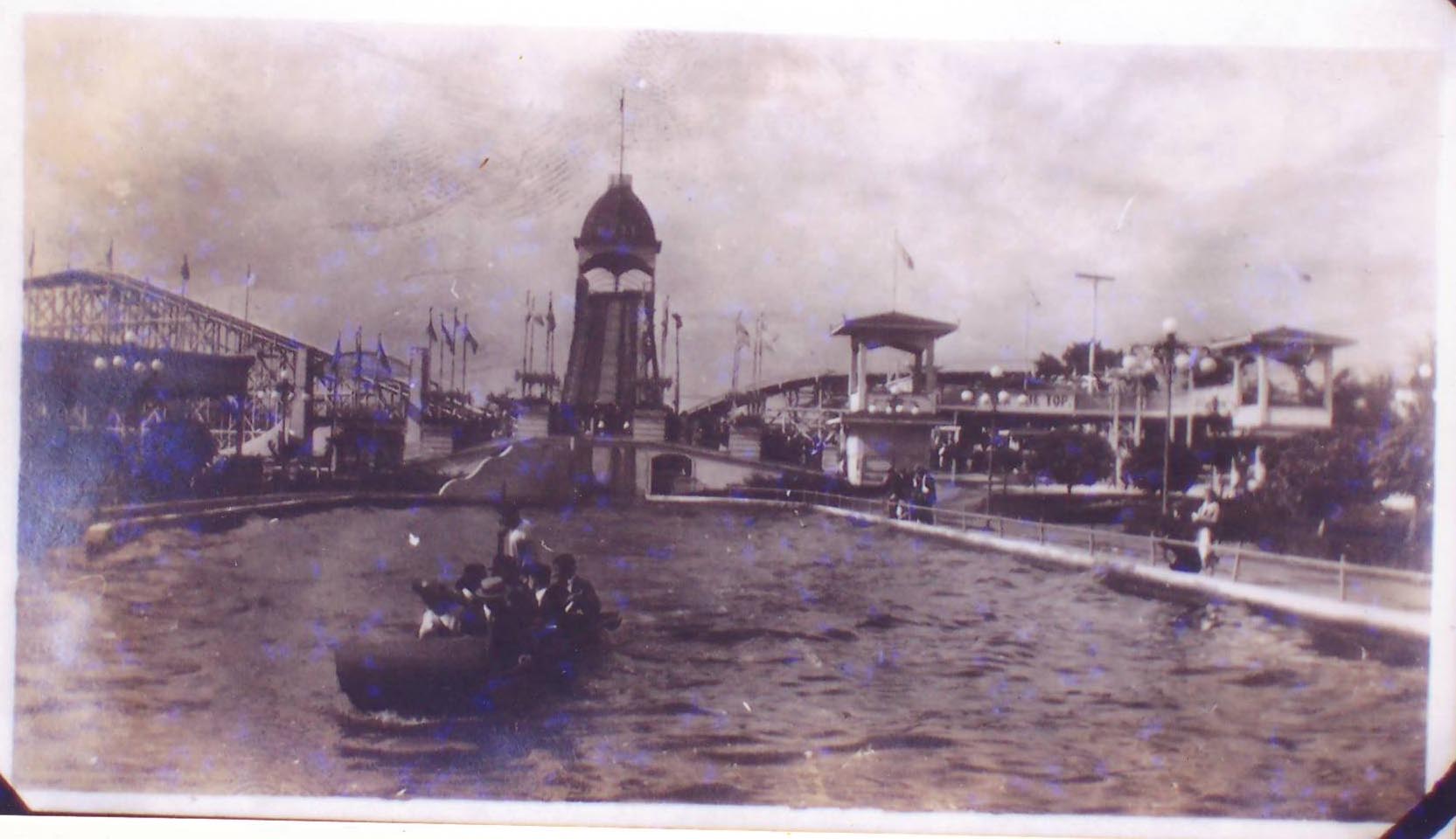
We don’t know who these gentlemen are.
These images are taken looking north from Dodridge Bridge up the Olentangy River toward Olentangy Park–the second of the pair is a close-up.
For additional photos, search “Olentangy Park” on this web site.
Finding Nelson Evans (blog)
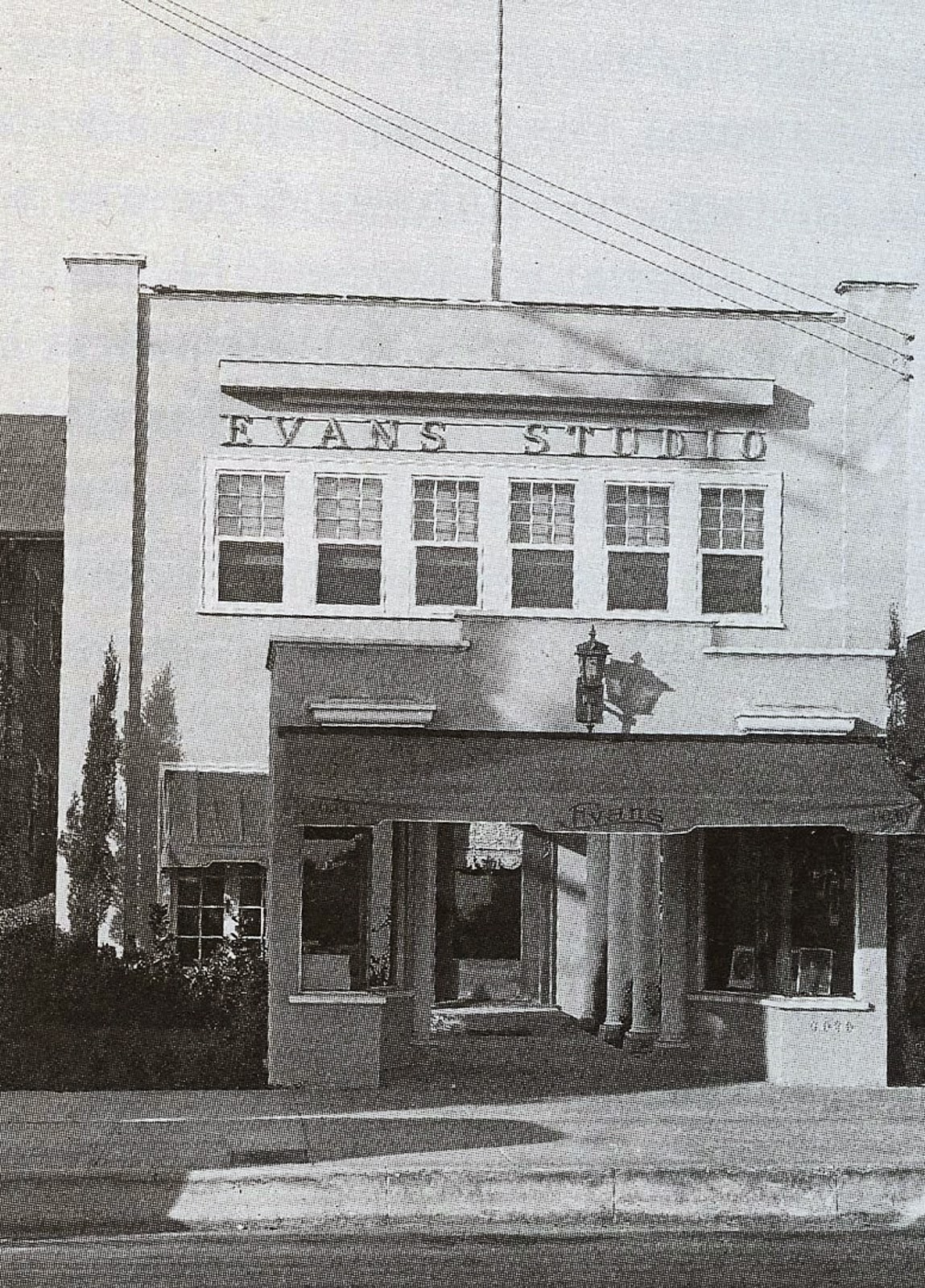 Clintonville resident Tom Thacker has been researching former Clintonville resident Nelson Evans, who lived at the end of East North Broadway near the railroad tracks between 1891 and 1910. The Evans family evenutally moved to Hollywood, and Mr. Evans became a notable photographer. Check out Tom’s blog detailing his search for Mr. Evans here.
Maple Syruping in Clintonville
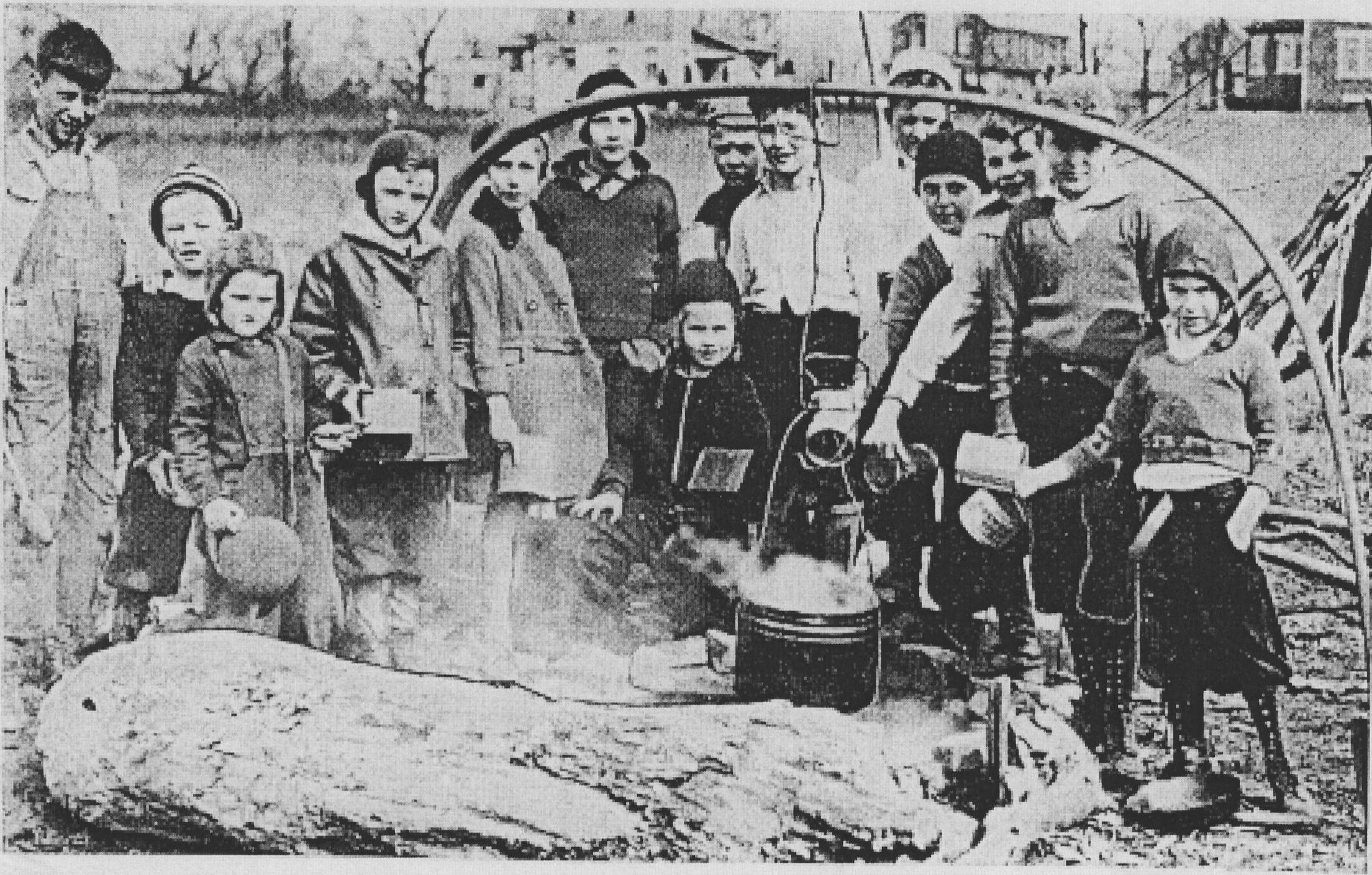 I can’t help loving this photo! Bob Fowle, left; Bob Scott, second from left; and Richard Knopf, third from right, around a kettle of sap in the old Clintonville neighborhood. (Photo courtesy of William Dunning)
92 Walhalla
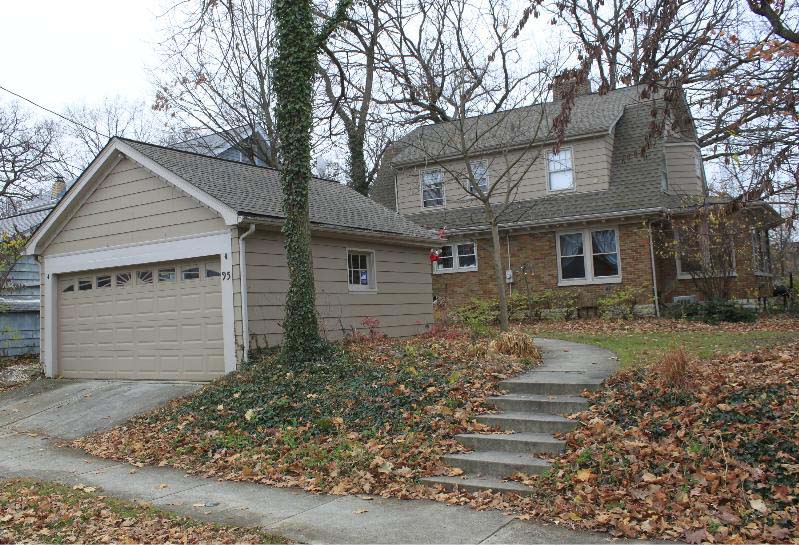 After reading the entry on this web site about 100 Walhalla, Sarah Ellis contacted me with some information about her own house, 92 Walhalla. She shared the following:
An interesting article from the OSU website, and
An article that appeared in the This Week newspaper in 2009 when 92 Walhalla was on the homes tour.
Thanks Sarah!
Bill Case’s New Book about the Wyandot Golf Club
 William R. Case has published a book about the Elks / Wyandot Golf Course. The book’s title is Golf in Columbus at Wyandot Country Club. As of this posting, The Book Loft in German Village (Columbus, OH) or Barnes and Noble at Easton Town Center have it in stock. If, like me, you are a prolific library user, you can also locate the book in a library near you here.
Bill has collected lots of great photos and researched this golf course (now the location of the Ohio State School for the Blind and the Ohio School for the Deaf) extensively. You will enjoy his book! [Images courtesy of Bill Case]
Mathias Armbruster
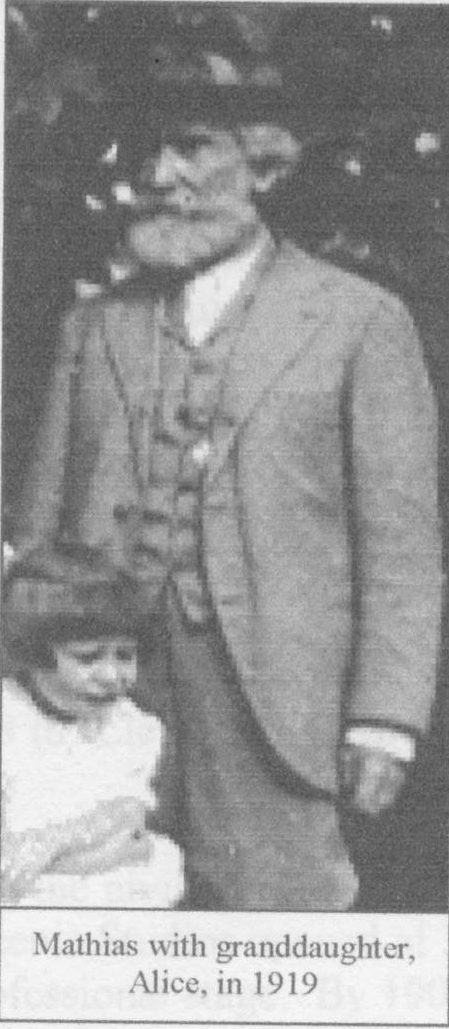 Two articles are often mentioned as sources for information about Mathias Armbruster. I thought I’d archive them here.
Leeann Faust wrote this wonderful article about her great grandfather Mathias Armbruster. It was originally published in the Polar Bear ROARS Alumni Association (=North High School) newsletter.
Karl Pauly wrote this column way-back-when, about Walhalla ravine–which Armbruster was instrumental in designing, or at the very least, naming. (First article of Leeann Faust; second article courtesy of the Clintonville Historical Society)
Little Rand
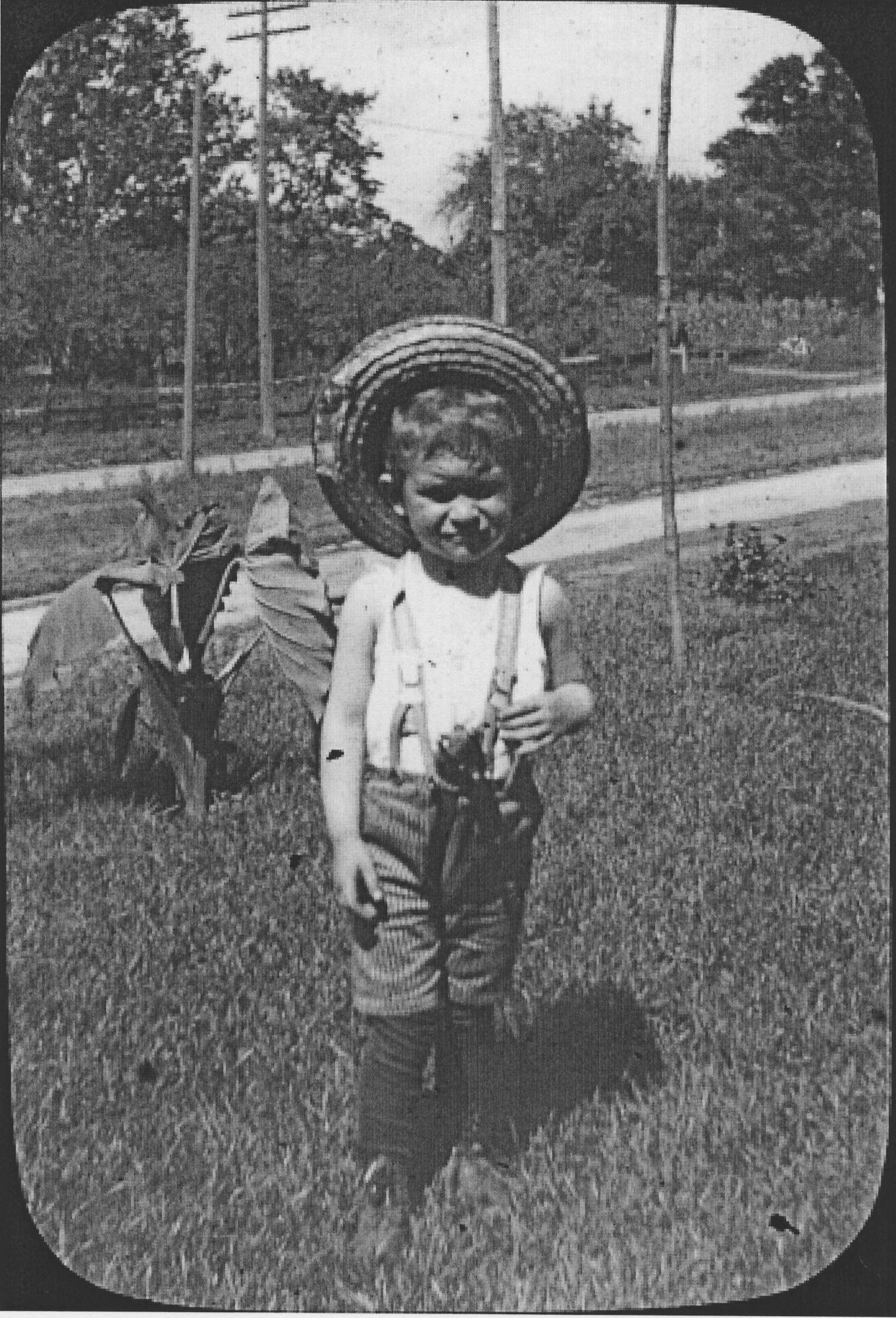 Rand Hollenback in 1904, at age 4, at the Hollenback’s 3134 North High Street address. Rand grew up to found the Clintonville Booster, and to become a major force in the community. Note the street car lines in the background.
Somebody Please Say “Cheese!”
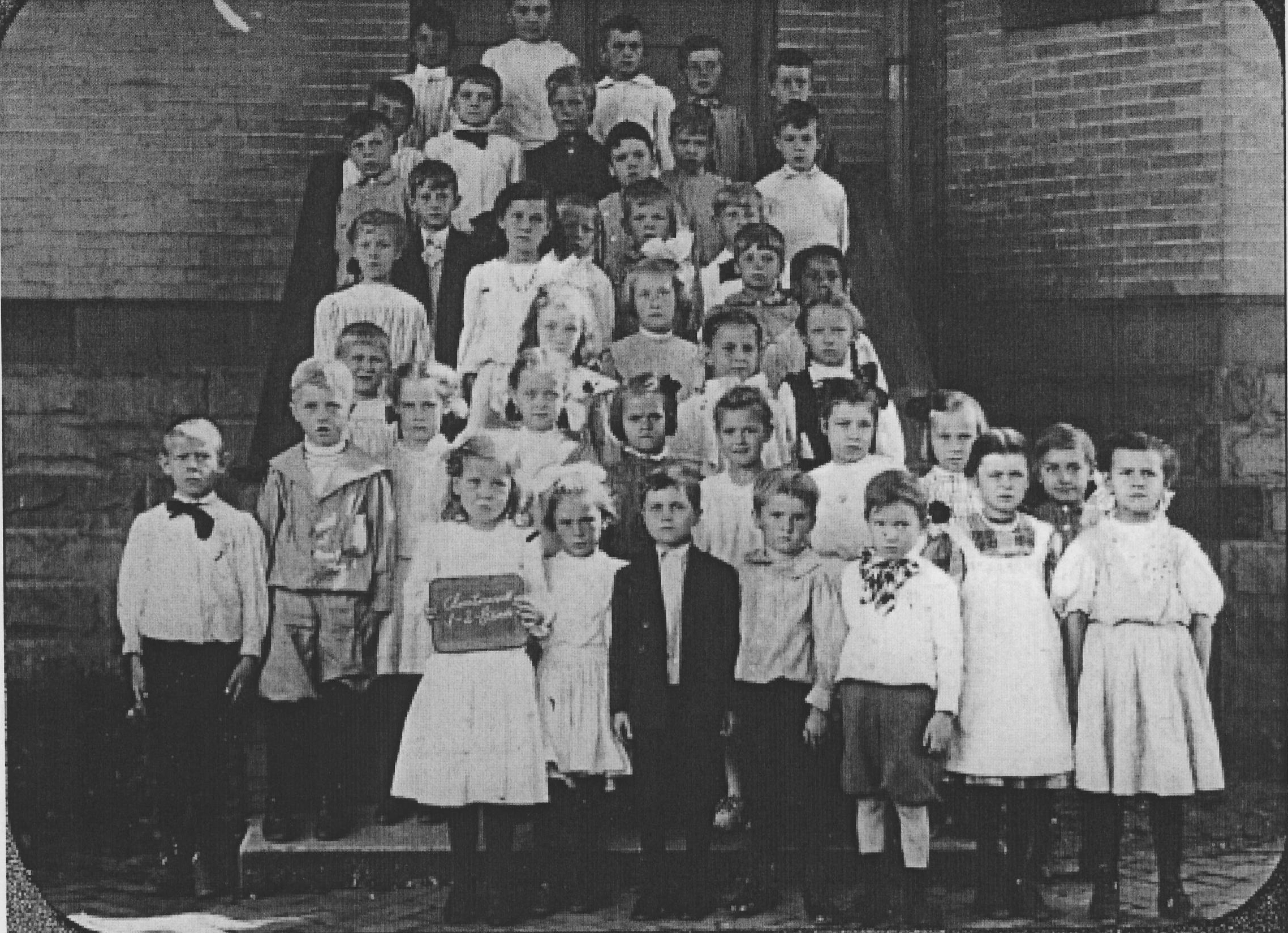 First graders at the Clinton Township School on Clinton Heights Avenue (also called the “1904 Building”). Presumably Rand Hollenback is somewhere in this photograph. As of this web posting, the building is still there, though its fate is uncertain.
Donald Ross, and the Elks / Wyandot Golf Course
 Bill Case has done a wonderful job of researching and writing the history of Donald Ross’ design of the Elks/Wyandot County Club. Check out his web site here. It’s a work in progress so check Bill’s site frequently.
The first picture (to the left) is, of course, Donald Ross. In the left-hand image below, Harold J. Kaufman, John W. Kaufman, Arthur Shannon, Donald Ross, and J.V. Taylor peruse a topo map.
The right-hand image below is the 5th hole–308 yards–par 4. See Bill’s web site for the history and for more image gems.
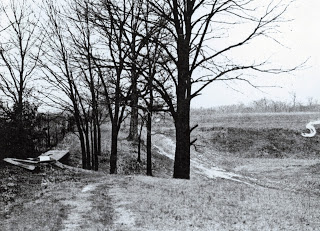
(Images courtesy of Bill Case and Betty Huber)
Flora Armbruster
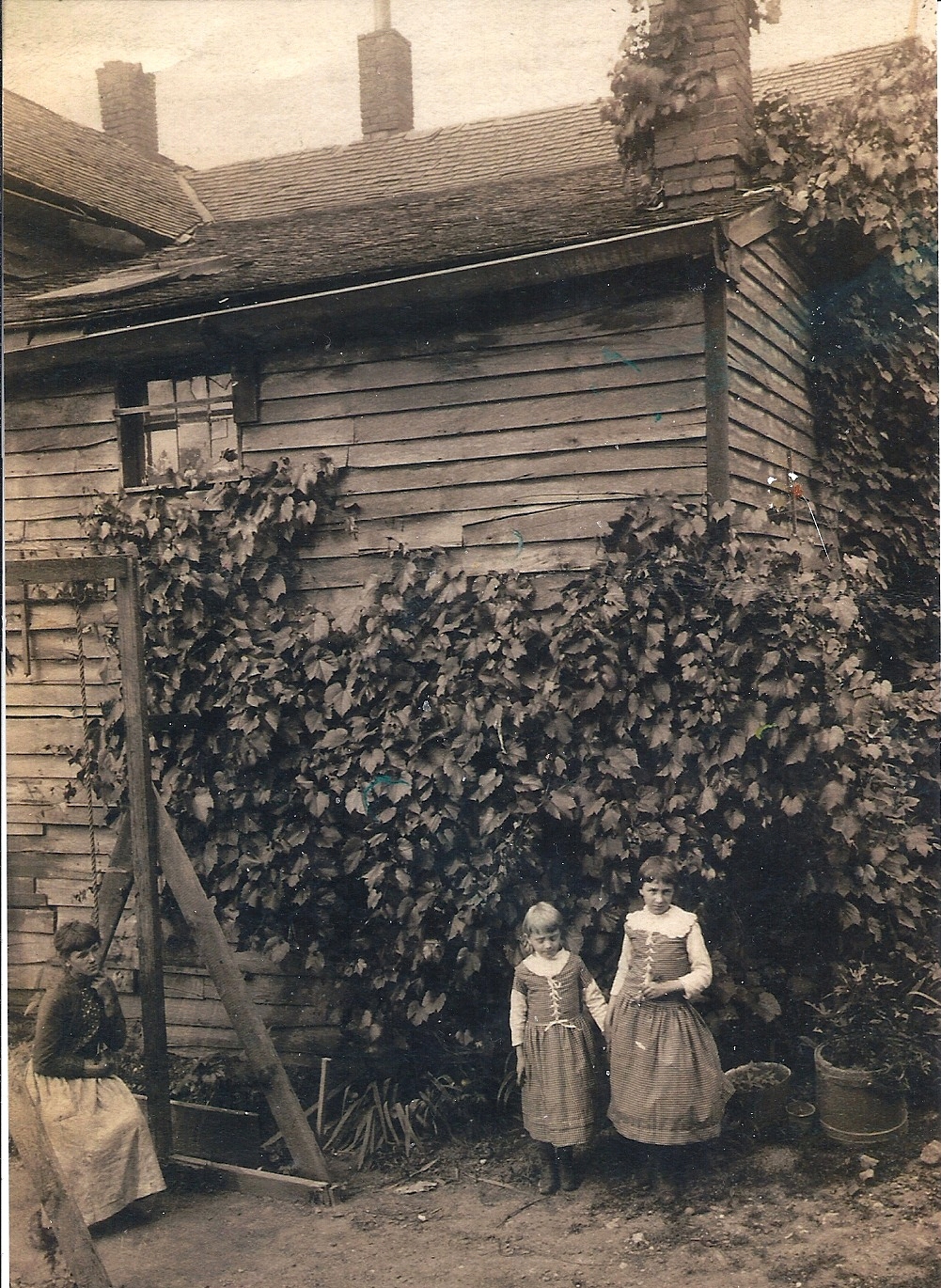 Leeann Faust has graciously shared an additional photograph of her family. This photo is of Rosa, Pauline and Flora Armbruster.
Leeann and her cousin David believe the photo was most likely taken at the house at 3100 North High Street but where and what the building–which looks the be rather rough construction–is, is not known. Leeann ponders, “Could it be the barn? That was where the house is that faces California stands today (on the east side of the side driveway). It could also be a storage building. We were looking at the things in the background. If it is the barn it might have been what was north of the house or if they were at the ends east or west. We know the barn faced the house so it couldn’t have be what was south. If it’s not the barn, we don’t know it’s position.”
If anyone has any guesses, please pass them on!
For additional photos, search “3100 North High” or “Armbruster” on this web site.
Beginnings
 Balser Hess, a cordwainer, tanner and Revolutionary War veteran, was one of the first pioneers to arrive in Clinton Township. Hess came to Ohio with his family and bought 320 acres of land along the west bank of the Olentangy River. His first house, a log structure, was a common stopping place with travelers. Balser died in 1806 and was the first to be buried on the grounds that became Union Cemetery. (Photo courtesy of Terry Miller.)
David Beers
 David Beers was another early pioneer with an exciting life story of having been captured and released by the Native Americans. Beers came to Ohio in 1802. Descendents of David Beers still live in the area to the present day. (Photo courtesy of Terry Miller)
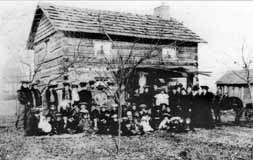 Beers had a log house near the intersection of Dodridge and North High Street. The cabin still exists but has been moved to Norwich Avenue. This photo appeared in the December 29, 1904 Dispatch, on the house’s centennial. The people included friends, relatives, and associates of the cabin’s next owner, Conn Baker, and they were reminiscing with him about early Columbus and marking the 100th anniversary of the cabin after the its move and reassembly to E. Norwich.
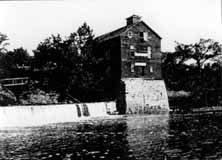 The Beers family operated a mill which existed until the early twentieth century. For many years the father of the well-known poet John James Piatt operated it. The future poet spent his boyhood days playing about the mill, and some say that the impressions made by its surroundings found expression in his work. The mill was considered to be one of the most picturesque spots in Ohio. Built around 1810, the mill burned in 1902.
There are still vestiges of the mill (foundation stones) below North Street, at the river.
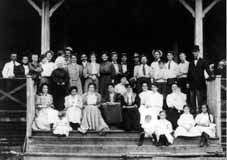 The reason for this gathering is unknown, but it includes several Beers descendants (and likely many who are not related) and was taken about 1905, probably at Olentangy Park. (Photos courtesy of Marty Cottrill)
Eliza Rathbone Wetmore, 1791-1853
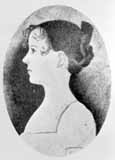 Eliza Rathbone Wetmore’s father, John Rathbone, acquired 4000 military land grant acres including all of Beechwold and much of Clintonville. John Rathbone gave Ohio a loan to build the Ohio canal and bequeathed 262 acres of land to his daughter Eliza. Eliza married Charles H. Wetmore, a physician, and the young couple settled in Clinton Township in 1819. Her land would eventually be purchased by the Columbus Zoological Company and would eventually become Old Beechwold. Some say that the stone pillars are the remains of the Wetmore driveway. (Courtesy of Columbus Metropolitan Libraries.)
Brevoort & Bull Graves
Thomas Bull’s daughter Chloe came to the area with her husband Isaac Brevoort and son Henry around 1812. Isaac Brevoort was helping build a barn across the Olentangy River and was crossing the flood-swollen river in February 1814 when his boat was swamped and he drowned. He was 23 years old, and was buried just 100 yards from the river. That grave is now someone’s back yard. Some say the grave is behind 247 Kenworth; some sources say it’s behind 253 Kenworth; some sources say that Isaac Brevoort is buried behind 253, and Thomas Bull Senior (father of Thomas Bull Junior) is behind either 247, or 253, or 257.
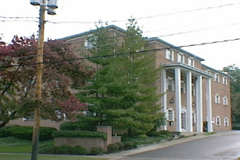 Henry Brevoort’s house was built at 3620 North High Street, behind the original Brevoort cabin. The house continued to exist until around the 1970s, when it was torn down. The Brevoorts had an 80 acre farm; Developer Charles Johnson purchased the farm in 1909, and planned the Northmoor neighborhood carefully. He had the idea that vacant space induced people to build a nice house. Accordingly, he platted Northmoor Park and gave it to the city. He also did this with the bird sanctuary that today is known as “the Delta,” at the west end of Webster Park.
An early 1970s article stated that “stones still mark the [Brevoort] cabin” and that “once past the field stone gateposts [which were just wide enough for a carriage], the ancient barn where Frank Brevoort once operated a dairy still stands.” Does any of this still exist?
Underground Railroad
Alonson Bull and his brother Jason were abolitionists, Jason serving as a “conductor” on the Underground Railroad from Clinton Chapel at 3100 North High Street. Jason’s photograph is in the Wilbur H. Siebert Collection at the Ohio Historical Society.
Edward L. Sebring (1839?-1905) worked with Jason Bull to aid fugitive slaves escaping to freedom in Canada from Columbus, Franklin County, Ohio, to the next safe station. His photograph is in the Wilbur H. Siebert Collection of the Ohio Historical Society.
James G. Bull
 James G. Bull (1838-1927) was a grandson of Thomas Bull. James served as Columbus Mayor from 1865 to 1868 and from 1871 to 1875. His grandfather, Thomas Bull, was the first white settler of the area and James’ father, Alonson Bull, founded Clintonville in 1846. (Photo courtesy of Columbus Metropolitan Libraries)
Other early settlers…
include the Smiths, Websters, Coes, Whipps, Hunts, Wilsons, Bucks, and the Cookes. John Buck acquired land around Henderson and High early on, and then sold some of the land to Chauncey Cooke. Cooke in turn donated the land to the Clinton Township in 1842 to be used as a school.
Bishop Philander Chase
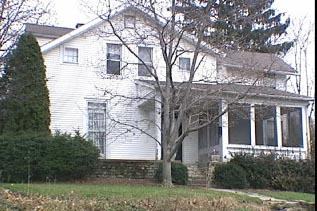 … is credited with starting Kenyon College somewhere near North High Street and Selby Roads, in a house that has since been razed. An earlier home of Chase still stands at 62 Lincoln Avenue.
The Webers
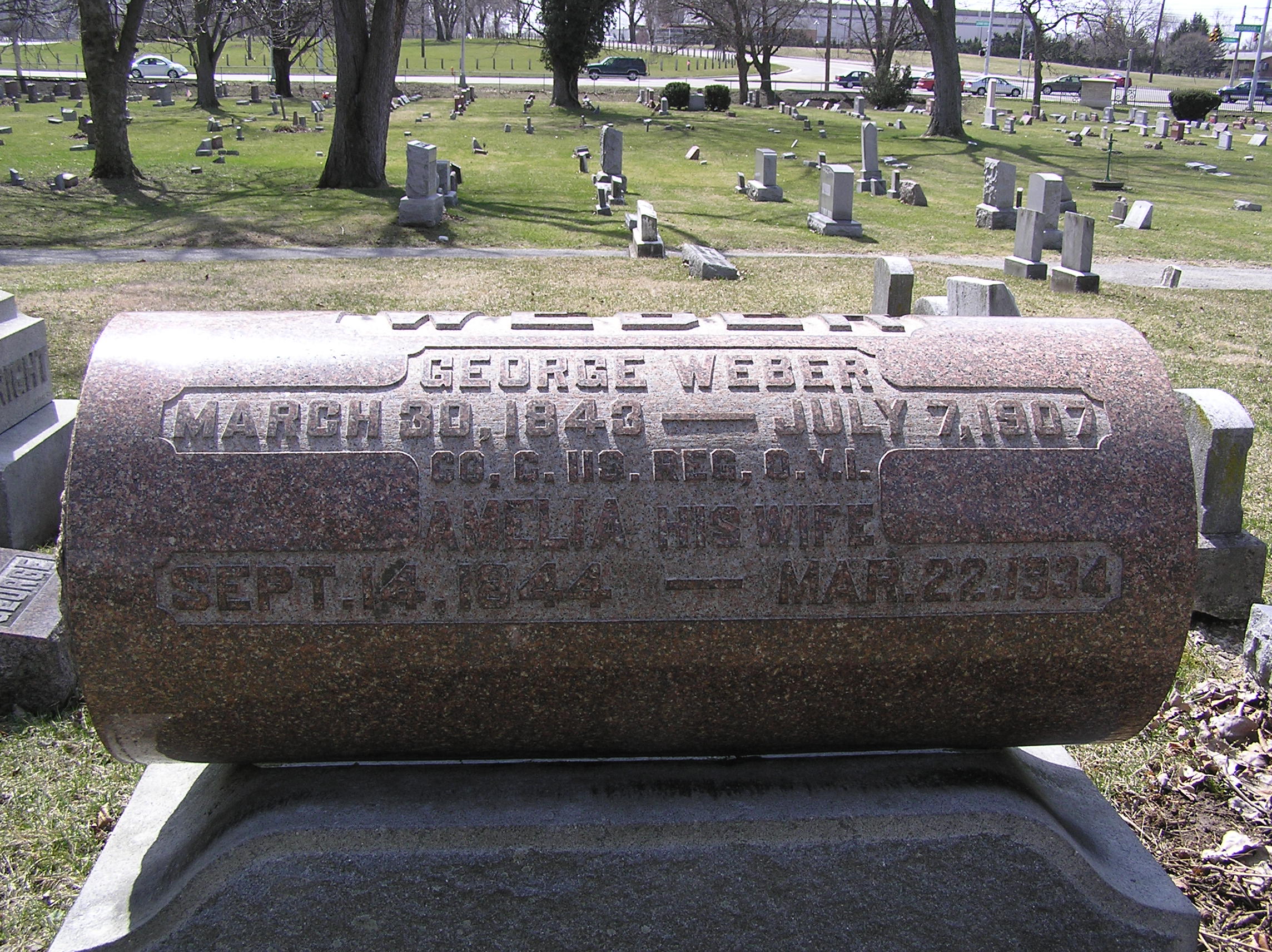 I found this little biography about Frederick Weber (1806-1885) and his son George (b. 1843) in A Centennial Biographical History of the City of Columbus and Franklin County Ohio (Chicago: The Lewis Publishing Company, 1901) pp. 278-280. I admit I have done little research on this Clinton Township family and have not even researched where their farm was located.
Barnabas Phinney (1813-1899)
 Barnabas Phinney (ca. 1813-1899) came to the area in 1838, and purchased 60 acres of land near the northwest corner of today’s Henderson Road and North High Street. In addition to farming, Phinney was an investor in the toll road running from Columbus to Worthington, and in the electric streetcar company. His house was said to be majestic. He and his wife had no children, and after his death most of the property was sold. A bit more biographical information can be found in A Centennial Biographical History of the City of Columbus and Franklin County Ohio (Chicago: The Lewis Publishing Company, 1901) p. 872 excerpted here. His obituary from the Columbus Dispatch January 30, 1899 is here.
Cooke family
 Another one of the first families of Clintonville was the Cooke family. According to the family’s history, Roswell Cooke (1764-1827) came to Ohio with his wife and five children in 1800 from Connecticut. His two eldest sons, Rodney and Chauncey, took up land 6 miles north of the state house, their farms adjoining (in the vicinity of Cooke Road and North High Street). They cleared the land and both erected “houses out of round, unhewn logs, with puncheon floors and primitive fire places, with mud-and-stick chimneys.” The brothers lived the rest of their lives on these farms. Family history states that in 1827 they constructed one of the first grist and saw mills on the Olentangy River, which later became known as the Whipp and then as the Weisheimer Mill. They also operated a distillery. (Photo courtesy of Terry Miller.)
 Rodney’s son, H.C. Cooke, was born in 1825, and took up residence on the old Cooke homestead at 4243 North High Street. Over time H.C. amassed 300 acres. He was a successful businessman, including in the stock business, and then owned the firm Cooke, Grant & Cooke, contractors in the construction of heavy masonry for railroad and other bridges. He was one of the officers of the Worthington & Columbus streetcar line. (You can click on this map to enlarge it.) (Photo courtesy of Carl Cooke.)
Just a bit more background information. The current name of the company Henry C. Cooke founded is the Fritz-Rumer-Cooke Co., Inc. They are still in business. The Secretary of State’s website states that one of their prior names was the Fritz Rumer Cooke Grant Company, changed to Fritz-Rumer-Cooke Co., Inc. in 1918. The company’s website states that it was founded in 1879 and incorporated in Ohio in 1911, and is still managed by descendants of the Cooke family. (This information courtesy of the Columbus Metropolitan Library.)
Rodney Romoaldo Cooke (1832-1866), brother of Henry C.
Roswell Cooke came to Ohio from Connecticut in 1800 with his wife and five children. The two oldest sons, Chauncey and Rodney, took up adjoining land in the vicinity of today’s Henderson Road and North High Street. Son Rodney (1793-1833) married Laura Cowles and together they had nine children: Esther (married to L. J. Weaver), Roswell (m. Lorinda Skeels), Helen (m. John Good), Rosalia (m. John Webster), Rachel (m. William Buck), Laura (m. Lester Roberts), Rodney Romoaldo (m. Chloe Williams), Demon, and Henry C. (m. Abigail Taylor).
Rodney’s son Rodney was a teacher and a farmer, and he served in the Civil War (Company G, 57th OVI). He was honorably discharged but returned from the war an invalid. Broken down in health, he was largely incapacitated for performing manual labor on his farm. He died in 1886, having been confined to his bed 11 years. A bit more biographical information can be found in A Centennial Biographical History of the City of Columbus and Franklin County Ohio (Chicago: The Lewis Publishing Company, 1901) pp. 248-252, excerpted here.
Never too many Cookes in the kitchen…
 Cooke family members married Buck, Armstrong, Hess, Maize, Webster, and Brown family members. The Cooke family held a series of family reunions from the late 1890s through the first decade of the 1910s, and maintained a log and minutes of their get-together. (Photo courtesy of Carl Cooke)
Armstrong family
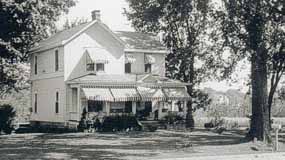 Another noted family in the vicinity of Henderson and High Street was the Armstrong family. Henry C. Cooke’s daughter Flora had married Llewellyn Armstrong. This is their house on the corner of Cooke Lane and High Street. A caption by Lulu Pearle Browne (Ohsner) also states “Clem Cooke [a son of Albert C. Cooke] born here—when first built Al and Lulu Cooke lived here.” (Photo courtesy of the Ron Ohsner family)
Alice Cooke
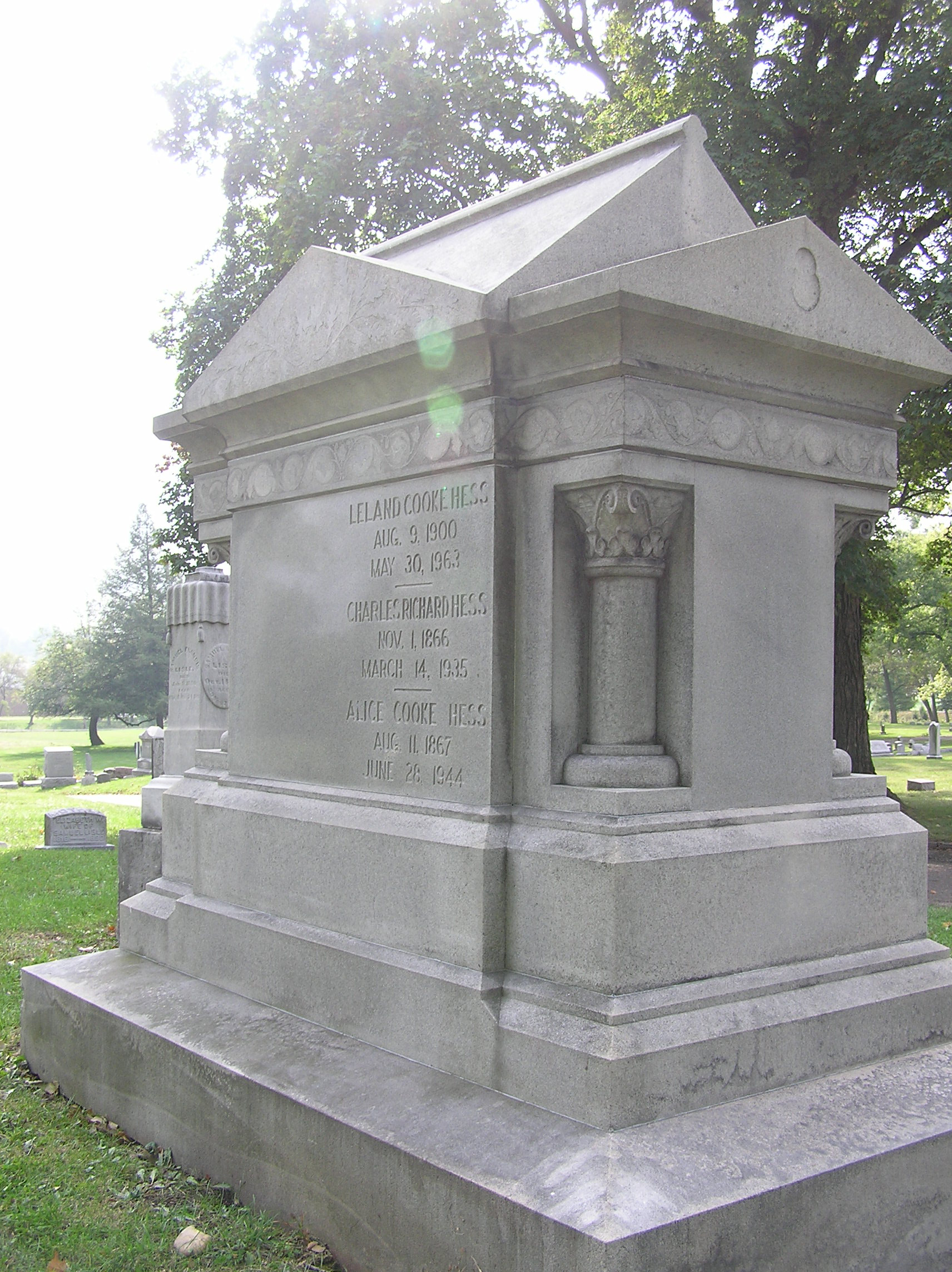
Alice Cooke Hess was the daughter of Henry C. Cooke, and worked for some years as a school teacher at the Clinton Heights Avenue School. She married Charles Hess, the great grandson of pioneer, Balser Hess. (The Hess family land formed Union Cemetery.) Alice and her husband eventually lived in the large house built by Henry Cooke at Deland and North High Street shown in my book and on this web site. This is her grave stone in Union Cemetery. (Photo courtesy of Terry W. Miller.)
Hess Barn
 Alice Cooke (daughter of Henry C. Cooke) married Charles Hess, a great grandson of Clinton Township pioneer Balser Hess. Alice had been a teacher at Clinton School. The Cooke-Hess house and farm were located just south of the corner of Henderson and High between Deland and West Cooke Roads on the west side of High Street, opposite the Ed Cooke home. The house was originally the home of Henry and Abigail Cooke. (Photo courtesy of the Ron Ohsner family)
 The bottom photo is a picture of the Hess family on their farm; Henry is supposedly in the middle. (Photo courtesy of Carl Cooke.)
Orlando Aldrich (b.1840)
 Orlando Aldrich was a prominent lawyer and OSU law professor. Aldrich was the first president of the Worthington, Clintonville & Columbus Street Railway Company and served in this position from 1891 to 1898; he subsequently held an office of the Columbus, Delaware, & Marion Electric Railway. Aldrich had purchased 23 acres of land on the southwest corner of Henderson and North High in 1882; it was a fruit farm called Maple Grove Farm. Aldrich had three great hobbies: horticulture, collecting great art, and collecting rare books about archaeology, and he engaged in these avocations from his lovely house located about where Maple Grove Church parking lot is located today. A bit more biographical information can be found in A Centennial Biographical History of the City of Columbus and Franklin County Ohio (Chicago: The Lewis Publishing Company, 1901) pp. 280-282, excerpted here.
Frank Sweigart
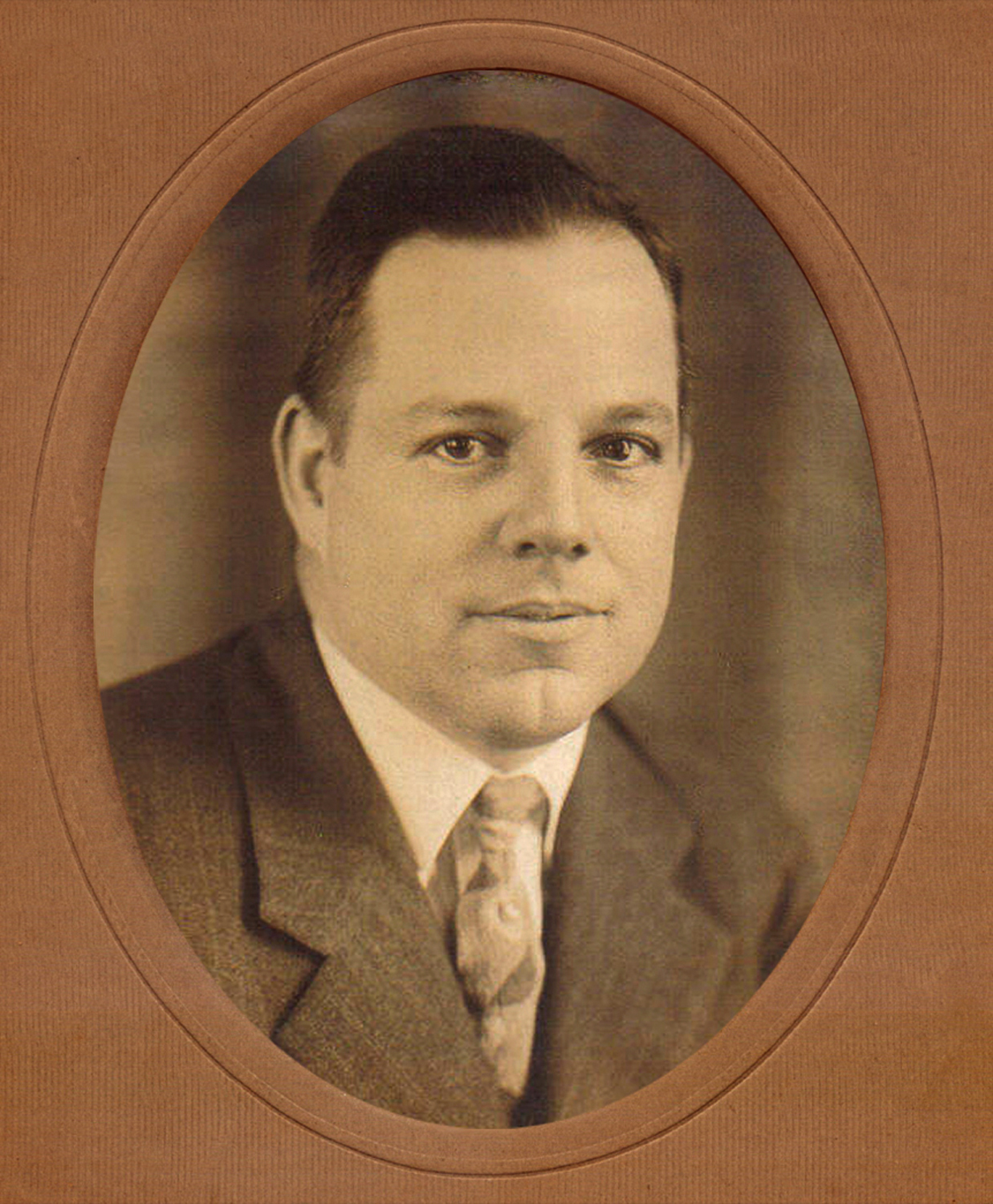 Frank Sweigart worked for Charles F. Johnson for eight years. Sweigart was a sales manager, treasurer and then advertising manager under Johnson. He was also on the educational committee of the Columbus real estate board for two years. and a member of the state educational committee. He eventually resigned from Charles Johnson’s employ to become vice president and general manager of J. E. Martindill Inc., and was in charge of Marburn, a country estate development on Olentangy River Rd. This is a picture of him in 1923, given to me by his granddaughter Karen.
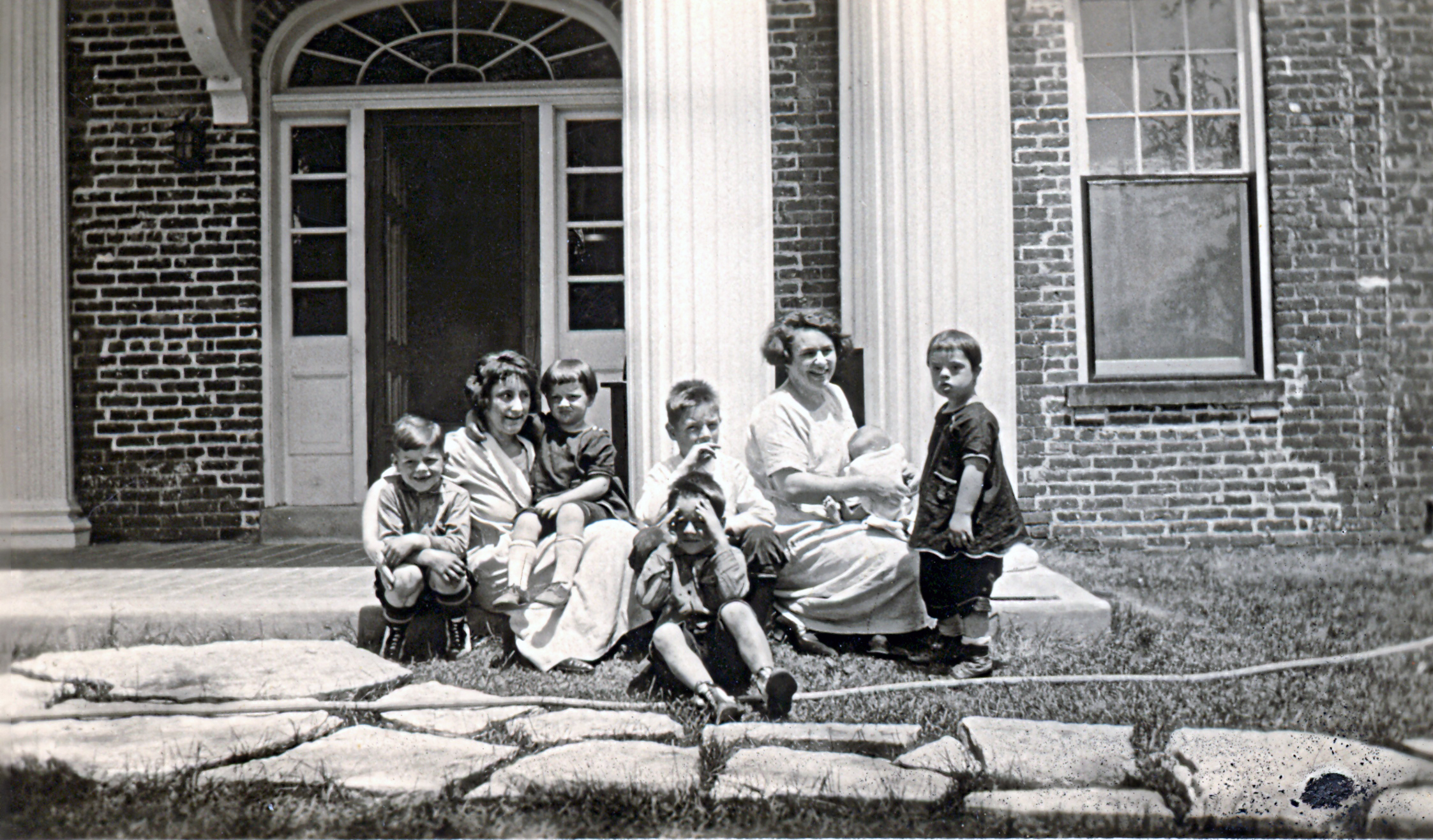 He eventually owned the house which stood just south of the southwest corner of Henderson and High Street. Here’s a picture of his wife, Anna Sweigart, and six of her children on the porch of that house at 22 Aldrich Rd. Her sister is also in the picture. Frank Sweigart is the one taking the photo. (Photos courtesy of Karen Sweigart Longava.)
Maple Grove
 Here’s a picture of High Street looking north. Lulu Pearle Browne (Ohsner) and her dog are at the entrance to the driveway dividing the Browne and Al Cooke homes—presently the corner of West Cooke Road. The Aldrich house is on the left and Maple Grove church is in the center left. (Photo courtesy of the Ron Ohsner family)
Lulu Browne Remembers
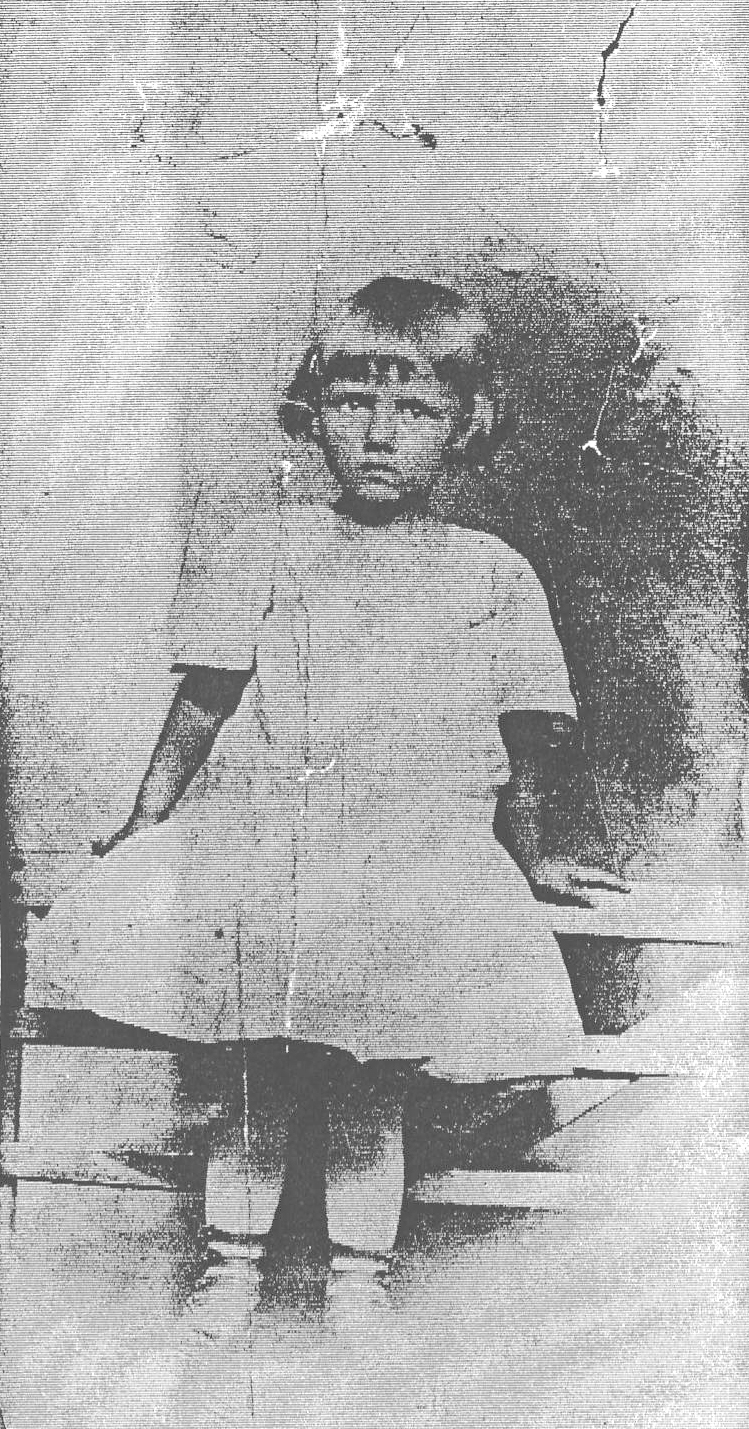 Elsewhere on this web site, I’ve praised Lulu Pearle Browne, who in 1992 gave a presentation to her church, Maple Grove United Methodist Church, and in so doing preserved some wonderful Clintonville history. Her son Ron and the church allowed me to copy some of the materials that she prepared for these presentations, as I wrote my book. Some of the material can also be found elsewhere on this web site.
Just for the archival record, I’m also including PDFs of the some of the material Lulu wrote.
She wrote her memories of some of the plays the Maple Grove community produced, up to and including the 1950s (29 pages); and she gave a presentation on changes in the neighborhood (24 pages).
(Documents courtesy of the Ron Ohsner family)
Albert Clement Cooke
 Albert Clement Cooke (shown here) was one of the sons of H. C. Cooke. To the right is a picture of Albert’s house.
Albert’s land was in modern times rented for a Sandy’s restaurant, which later became a G.D. Ritzy’s ice cream parlor. Albert’s son was the first OSU athlete to participate in the Olympics; he ran in the 1912 Olympics in Stockholm. Albert’s grandsons Carl and Grant Cooke still live in central Ohio (Photos courtesy of Carl Cooke)
Treasure Map
 A handwritten map of the neighborhood, created by Lulu Pearle Browne (Ohsner), helps to clarify who lived where in the Maple Grove neighborhood in the early 1900s. You can click on this thumbnail and zoom in for a better view. (Photo courtesy of the Ron Ohsner family)
Cooke Cemetery
The Cooke family cemetery was located near the southeast corner of Cooke Road and High Street. According to genealogy records, the earliest headstone dated to 1817. Most of the graves were moved to Greenlawn or Union Cemeteries when Bishop Watterson High School was built in 1958. A few headstones were later discovered on a lot on Lenappe Drive. I would love to have some pictures of this cemetery.
There was also a John Rathbone Cemetery at the intersection of Morse and High.
George P. Whipp (b. 1817)
George Whipp came to the area with his wife and two sons from Maryland in 1833. His son George P. was 16 years at the time, and initially worked as a carpenter. Son George married Lucinda Smiley, and they had 10 children one of whom was also named George. The family farmed and had two truck stands along North High Street. (Note: Sometimes the family spells its name with one “p”.) A bit more biographical information can be found in A Centennial Biographical History of the City of Columbus and Franklin County Ohio (Chicago: The Lewis Publishing Company, 1901) p. 770 excerpted here.
Whip family
 One of the oldest families in Clintonville is the Whipp Family (sometimes spelled Whip). They owned a farm, and a couple of stands along High Street that had big large orange signs advertising a refreshing drink consisting of freshly squeezed orange juice. The Whipps may have been the first owners of the mill located just north of Henderson Road and the Olentangy River. Here is a picture of the Whipp family circa 1889: George, Oscar, Everett, Laura, Cora, and Mabel. (Photo courtesy of Sue Gallogly)
The Whips lived at 73 East Weisheimer.
Who were Loren and Dennison?
 James M. Loren (b. 11/30/1849, d. 2/13/1931) was an attorney who loved real estate. He lived at the corner of King Avenue and North High Street (1371 North High Street) from the time of his marriage to Miss Annabel McMillen in 1878, until his death. He was closely identified with the family of former Ohio governor William Dennison, and handled their real estate affairs; he shared a suite of offices with William’s son Herman G. Dennison. Loren laid out, platted, and sold not only East North Broadway but also Dennison Place, Dennison Park, Dennison Summit, and a few other subdivision in northern Columbus and Worthington. Loren’s daughter married Joseph Walter Jeffrey. James Loren’s mausoleum is in Greenlawn Cemetery, lot 41, section 56. For more information you can read his obituary from the Columbus Dispatch Feb 13, 1936, p. 6A, and his biography from Osman Hooper’s 1920 book, History of the City of Columbus, Ohio, pp 453-454.
Herman G Dennison died in 1912 at age 59 in an automobile accident. More information here.
This information came to me courtesy of staff at the Genealogy, History, and Travel Department of the Columbus Metropolitan Library System.
Wondering who these people are?
The people at the top of my banner, I mean. Well, I am wondering too. I believe this is the Hollenback family (the family that started The Booster, and who lived on High Street) but I have been unable to confirm who the pictures are of, or where the photos were taken.

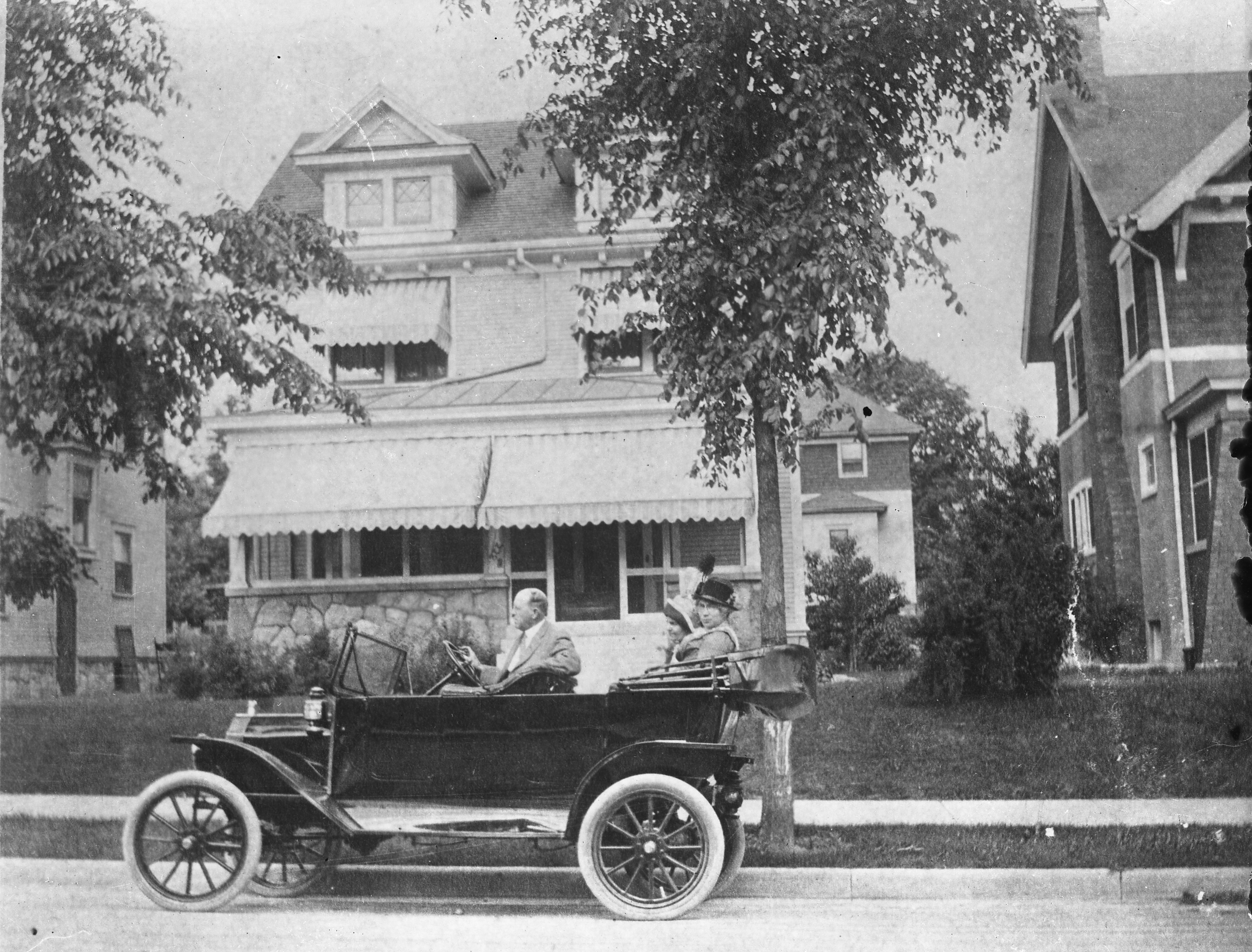
The Jones’ of North Columbus
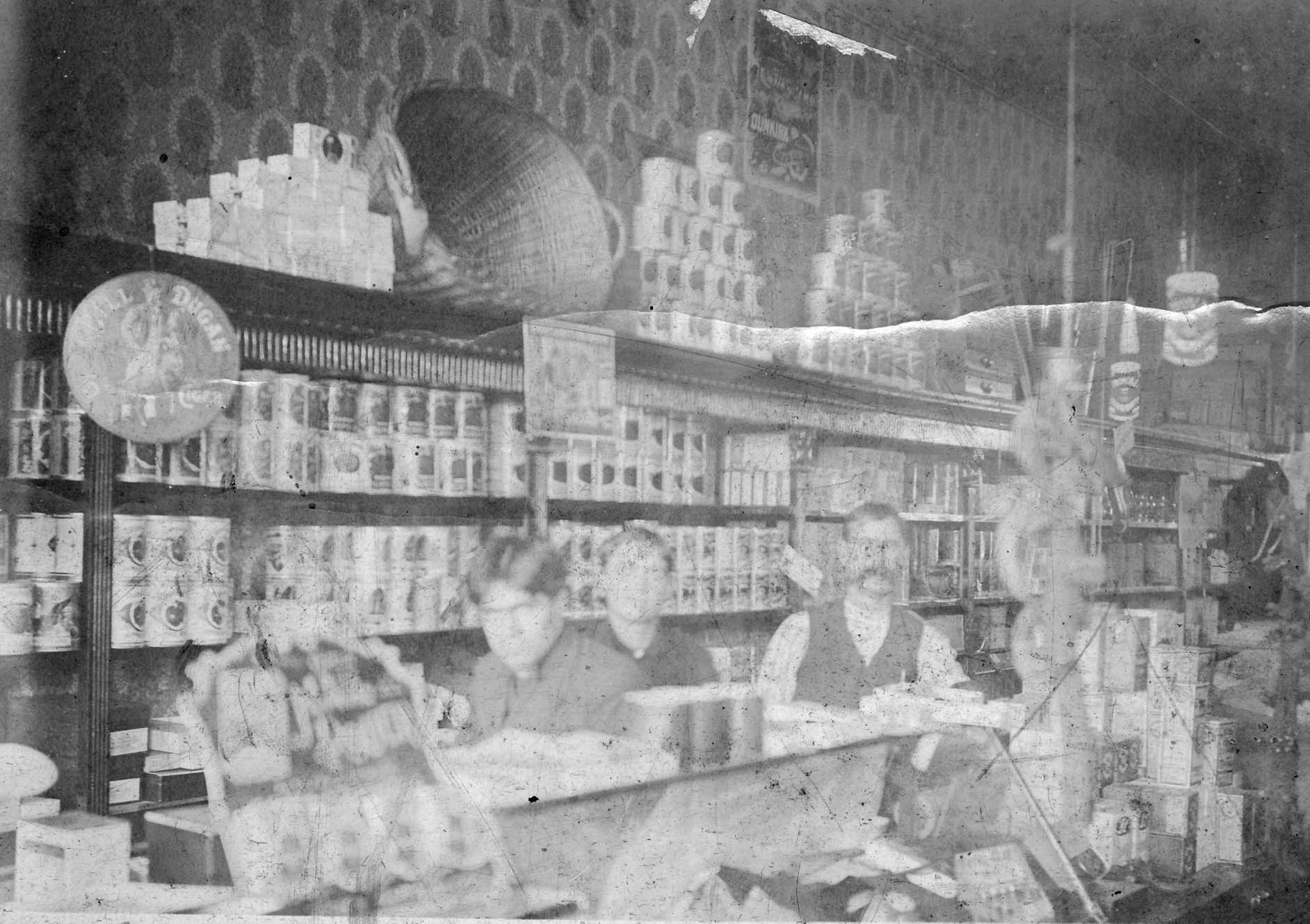 C. F. Jones Grocer used to be located at 2581 North High Street, where Schreiner’s Hardware Store is now. This image was taken around 1904 inside of the Jones Grocery Store. Shown are sons Charles and Clarence with their father Frank Jones.
.
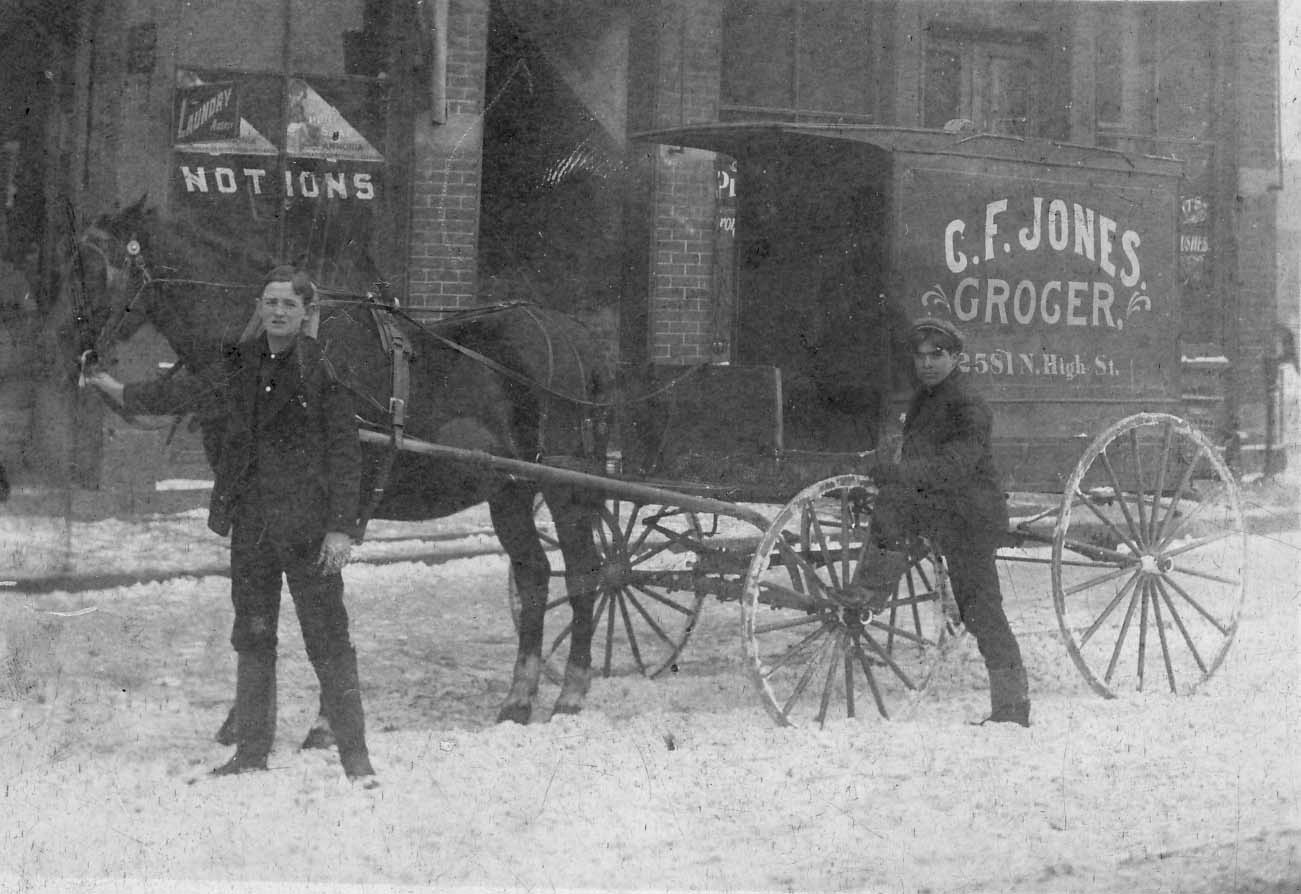 This image of their delivery wagon dates from 1909. Charles Jones is besides the wagon and the young man holding the horse is unknown. They are standing in front of their store.
.
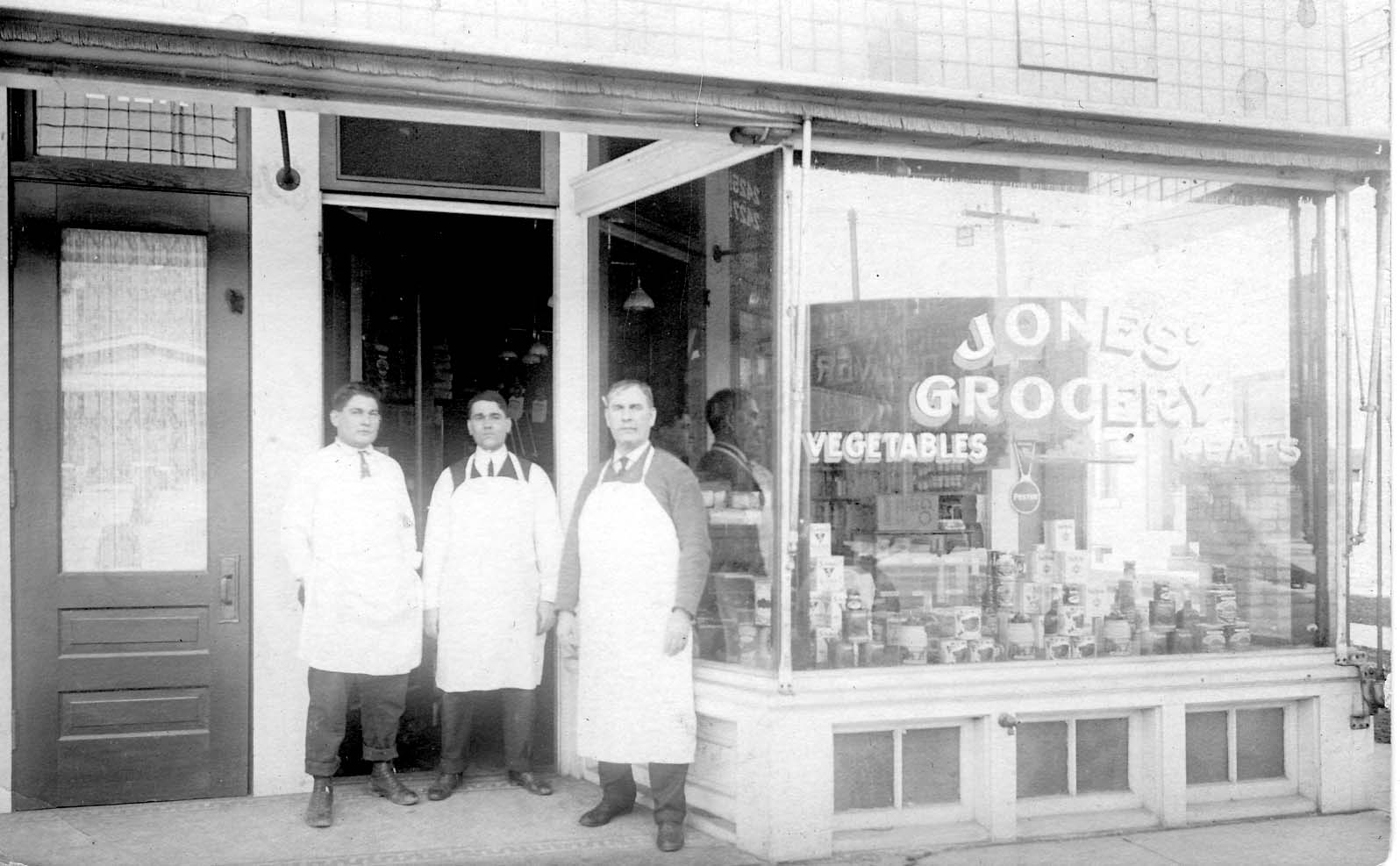 This photo of the C. F. Jones Grocer Co. was taken around 1916. Shown are Charles, Clarence, and their father Frank Jones.
.
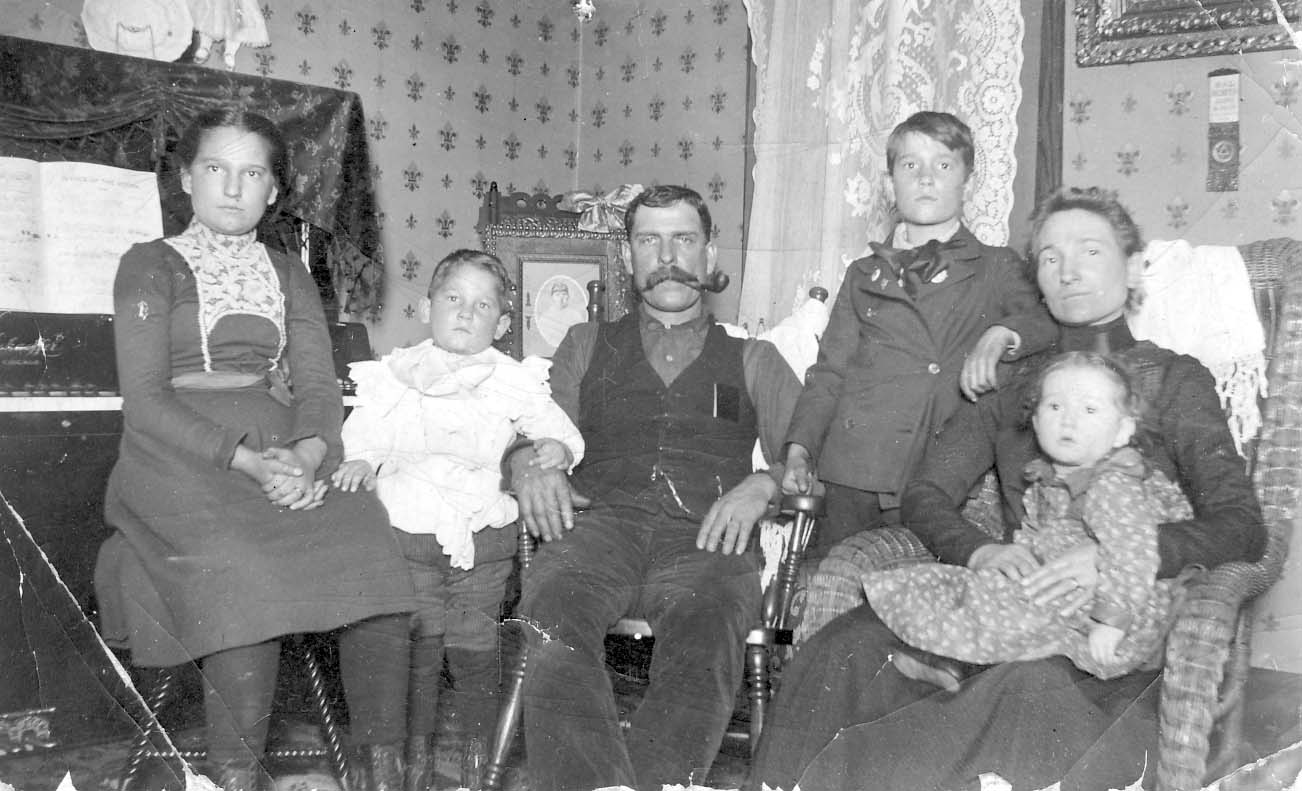 This is a picture of the C. Frank Jones family in their home at 2665 Adams Avenue, Columbus, circa 1900. Bertha May Jones Aurand (1889-1934), Charles M. Jones (1895-1956), C. Frank Jones (1861-1937), Clarence A. Jones (1891-1950), Miriam Tozer Jones (1869-1941), Gladys A. Jones Reiger (1899-1930). (Photos courtesy of Frank Jones.)
The answer to today’s hard economic times
“The Dominion Land Company has purchased the Whipp and Ingham farm containing 90 acres of land, Stop 15 C.D. & M. on North High Street. The ground was purchased by the company to supply numerous customers with large lots where the soil is rich. It is to be platted into extremely large lots and will be sold on easy terms so as to enable a great number of people to follow their regular work in the City and at the same time, have lands where they can have a nice garden and keep a few chickens and thus help the problem of the high cost of living…The name of this sub-division will be Highland Gardens.” –from The Dominion Land Company Columbus Home News, May 1913, Volume 1 Number 2.
(This photo is Louise Corp on Tulane Road, but I’m sure the chickens of Highland Gardens looked much the same. Photo courtesy of the Clintonville Historical Society.)
Overcrowding–always
 We tend to think of the use of prefabricated buildings for temporary quarters a new idea, but it seems to be as old as our township schools. I have found pictures of old World War I military barracks, and also portable voting booths, used for schools all over Clintonville. Our Lady of Peace used both types of buildings. Glenmont Elementary School began life as a cluster of portable schools. Clinton Elementary School handled overcrowding with temporary buildings. Shown here are some portable voting booths at the old tile factory along Arcadia (where North High School presently stands). (Photo courtesy of Wallie Palmer)
Mathias Armbruster
Mathias Armbruster was born in Wurtenburg Germany in 1839 and came to the U.S.A. in 1858. He operated Armbruster Scenic Studios in Columbus—he painted scenic theatrical stage sets. Armbruster purchased the area around what is now known as Walhalla Ravine, and converted Clinton Chapel at 3100 North High Street into his private residence. His son Albert’s house was just north of Mathias’ home, where the parking lot for Southwick-Good-Fortkamp funeral home now is. Mathias eventually sold most of the acreage to a real estate developer, and helped name the streets after his beloved Wagner Ring Operas.
Mathias died in Columbus in 1920. Here he is shown looking west from the cupola on his roof. (Photo courtesy of Leeann Faust)
In the center, a view of High Street taken from Armbruster’s cupola; Olentangy Park is in the background. (Photo courtesy of Leeann Faust)
The photo on the right shows Albert Armbruster’s house. (Photo courtesy of Leeann Faust)


More Armbruster Photos
Leeann Faust gave me some additional images of the Mathias Armbruster home at 3100 North High Street.
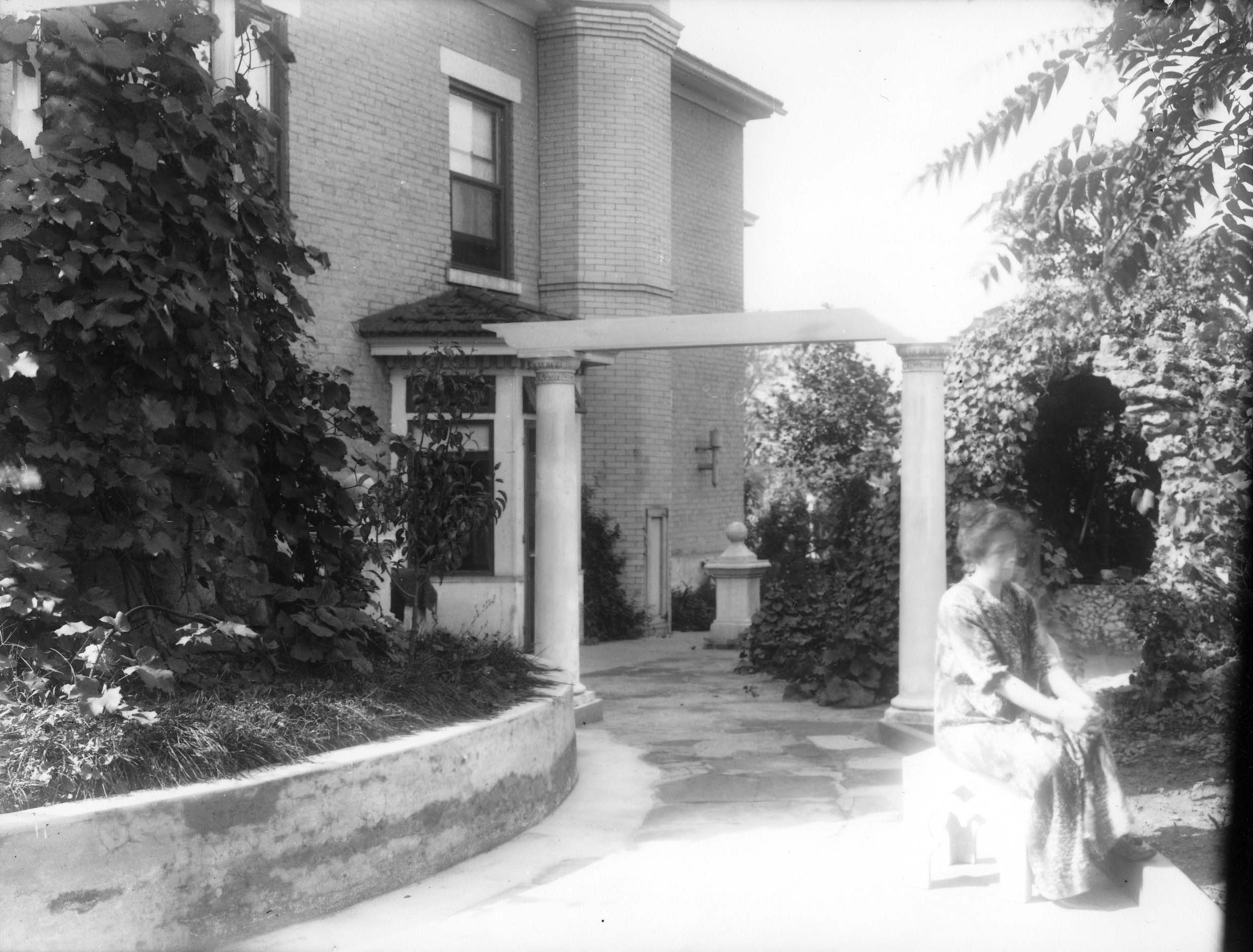 This photo shows the north side, kitchen door, and the house’s well below the arch. The verso of the photo says “Aunt Flora Armbruster Neilson”.
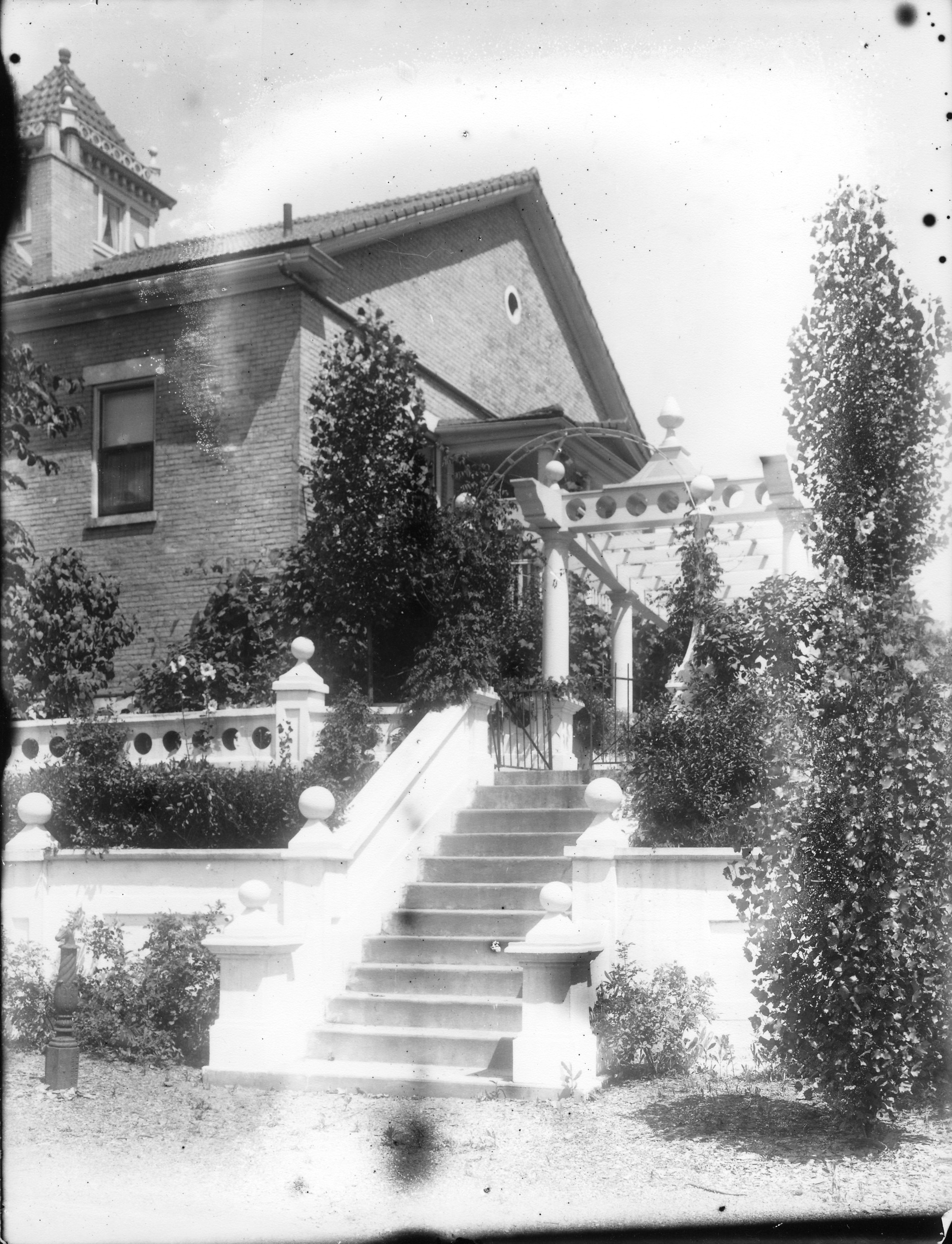 The verso of this photo says, “Back of 3100 North High Street [home of Mathias Armbruster] / Steps from Walhalla to Pergola”
 Pauline and Katrina facing west from the kitchen door at 3100 North High Street.
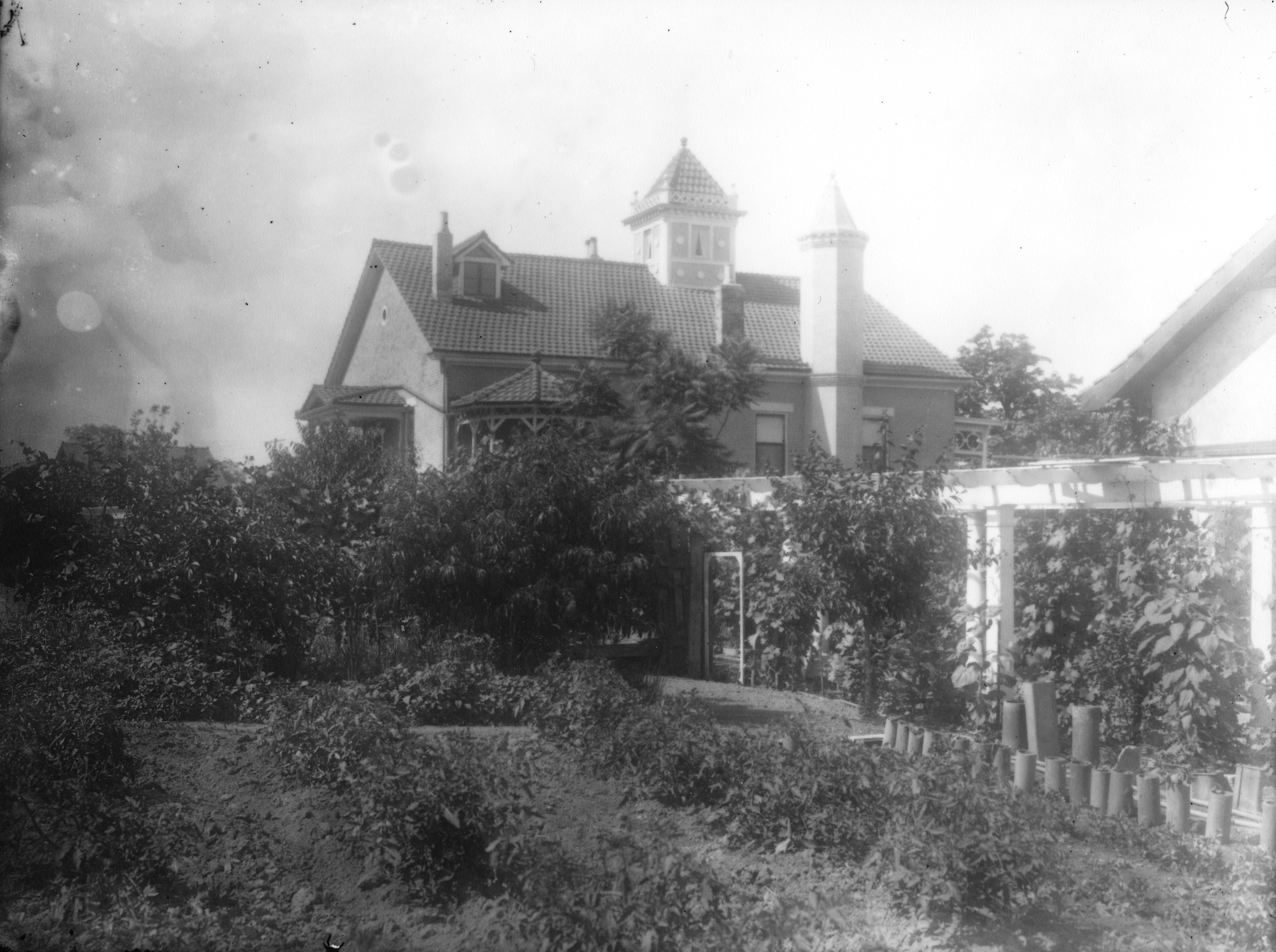 “Garden and Pergola / North side of [3100 North High Street].”
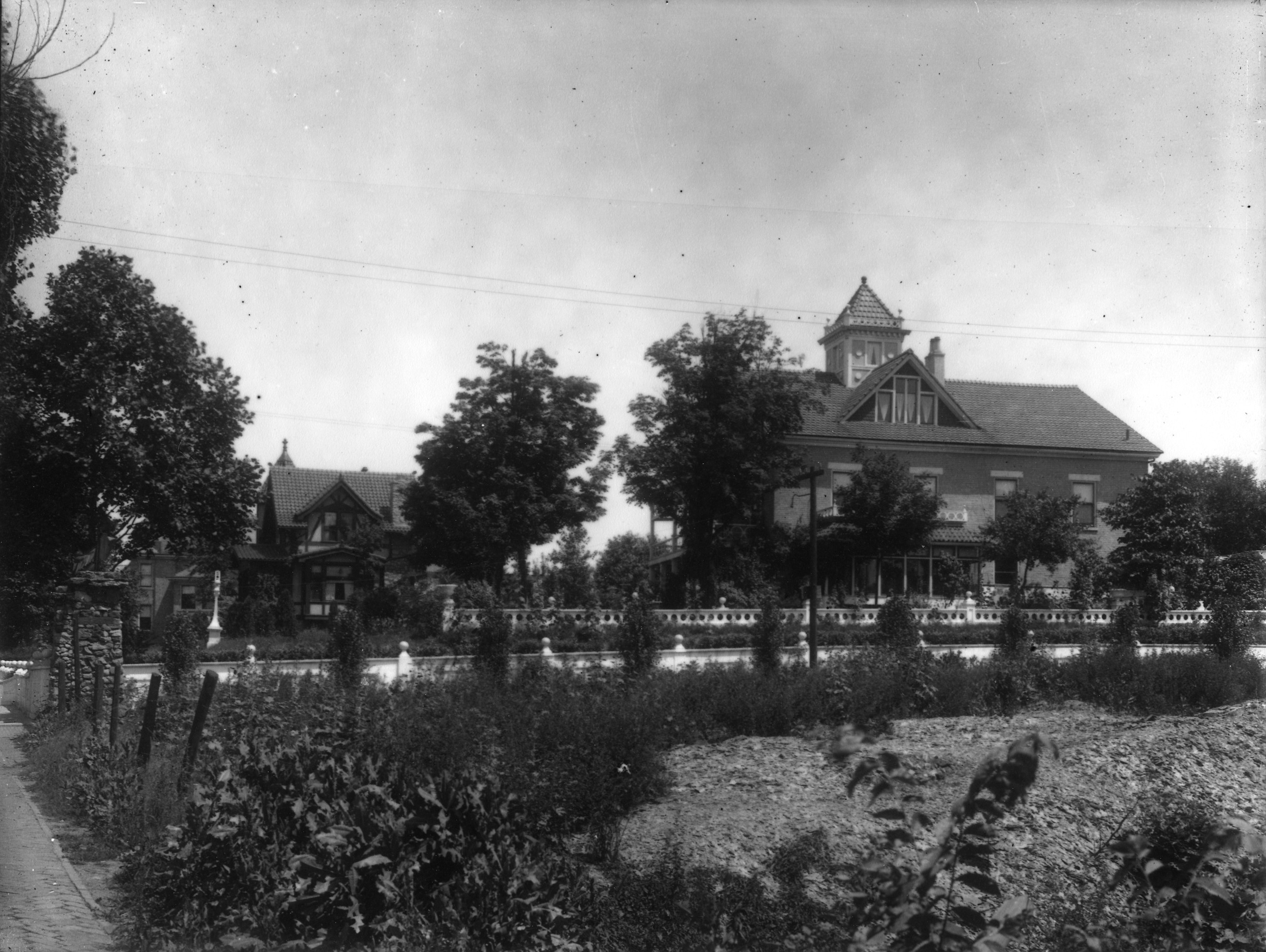 This picture shows Albert’s house, located just to the north of 3100 North High Street.
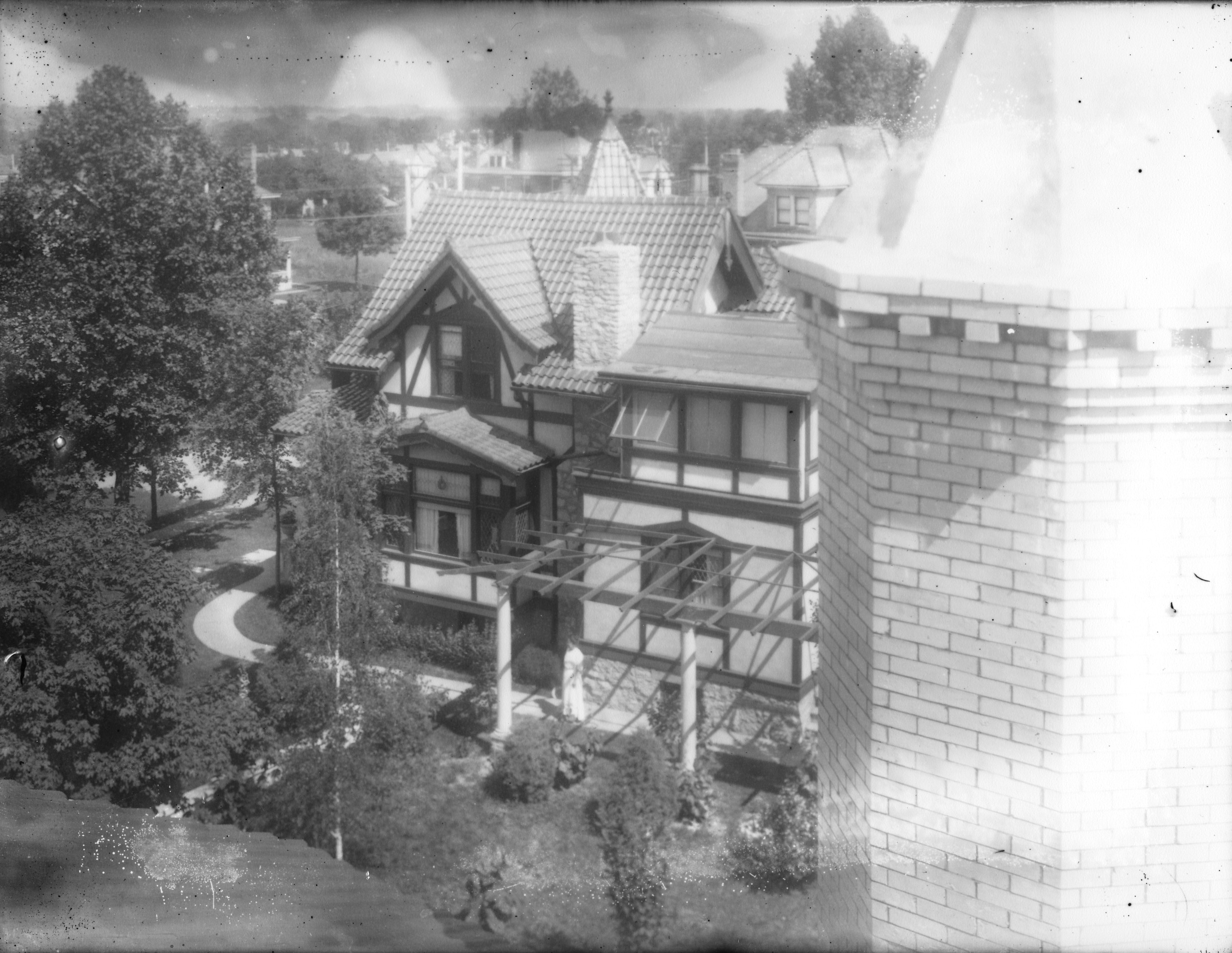 Another view of Albert’s house taken from the north window of 3100 North High Street.
(Photos courtesy of Leeann Faust.)
1916 Football
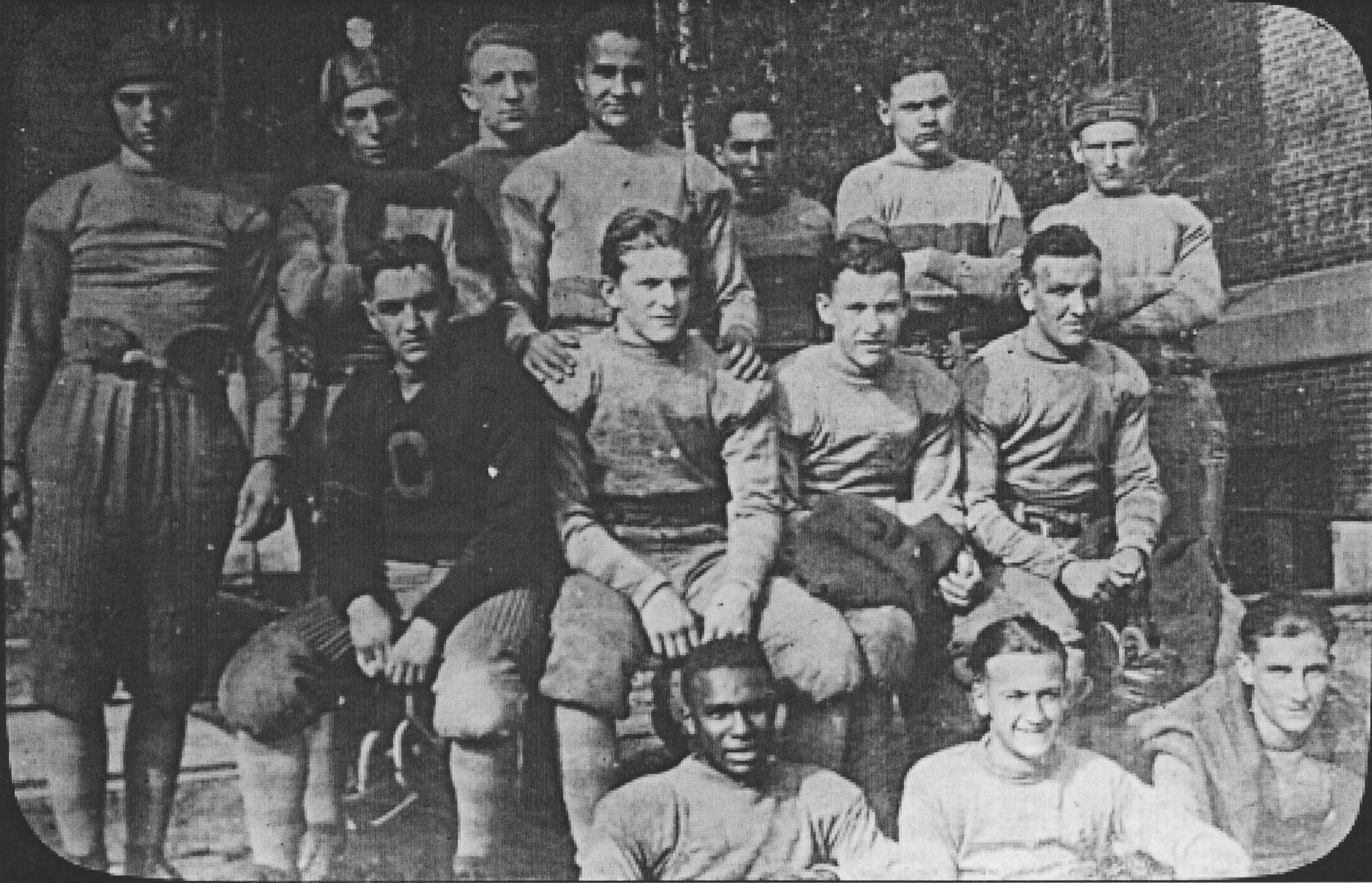 This is the championship Clinton Township High School football team of 1916, with Rand Hollenback (the one whose teammate has his hands on Rand’s shoulders).
Virginia Walcutt Gay
 I tell the story of Virginia Walcutt Gay in my book, Clintonville and Beechwold. She was born May 9, 1831, and passed away on May 8, 1914. Mrs. Gay was a member of a Columbus pioneer family–daughter of John Macey and Muriel Brodrick Walcutt–and a sister of General C. C. Walcutt, once Columbus mayor. Her husband, Harvey D. Gay, died in 1878. This is Virginia’s private mausoleum at Greenlawn cemetery, section 32, lot no. 35.
Orphanage at 218 Jason Avenue / 56 West Pacemont
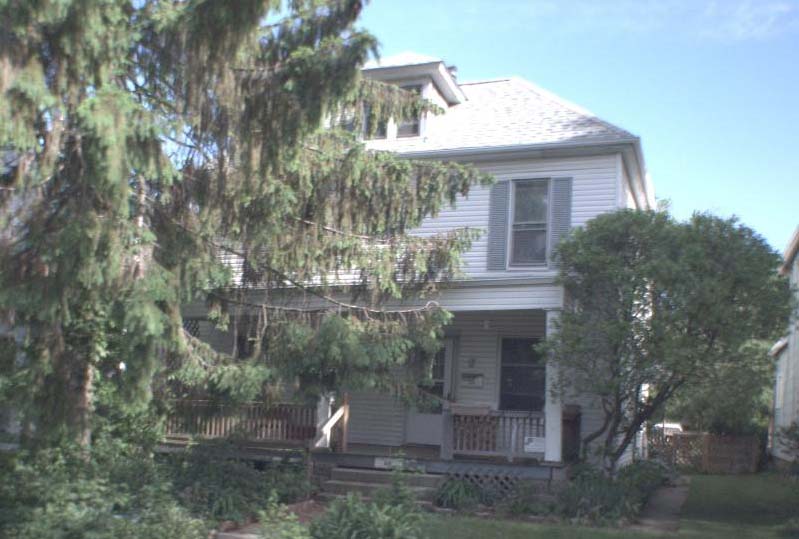 Back in 1910, this address served as a home for children.
First of all, in case you are wondering, there is currently no 218 Jason Avenue or 218 W. Pacemont. Pacemont Avenue was originally called Jason Avenue. The area where the orphanage stands was outside of the Columbus City limits in 1910 & 1920, during many of the years when it operated as an orphanage. When the western end of Jason/Pacemont was added as the “the Aldrich’s Riverside addition,” the house numbers were adjusted to compensate for all the new lots. The current address is 56 West Pacemont.
The boarding house/orphanage/nursery was run by Judiah & Mary Ella Throps (sometimes spelled Throp or Throop). Judiah was born in 1844, served in the Civil War, and died in 1913. (His occupation was listed as “Painter” and also, in 1910, as “Nursery.” Mary Ella was born in 1865, and died in 1933. (Her occupation was listed as “Housekeeper” and occasionally “Nurse”.) Both are buried in Union Cemetery.
According to the 1910 Census, the Throps had one 7 year old son living with them (son Ernest Throps). Mary was at the time 45 years old. They also had 12 young boarders living with them, all under the age of 6 and many just babies.
By the 1920 Census, Judiah had passed away. The 1920 census states that Mary (by this time, age 55) had 3 children living with in her household: Earnest Throps (age 16); William Throps (age 9), Mabel Leonard (a servant, age 29) and Glendus Leonard (age 5, listed as a boarder). (I can’t help wondering whether there were additional boarders, not listed by the census taker.)
By the 1930 Census, Mary was 64. By this time she had quite a few extra living companions: William Throps (son, age 19), Richard Throps (adopted son, age 4), Helen Gatewood (servant, age 22), Jeanne Paden (8), Oswin Poletzie (7), Shirley Poletzie (3), Elva Waton (18), Marie Obrien (6), Charles Jordan (6), Mick Tudor (3), Virginia Adkins (2), and Algie Donaldson (2).
This research was conducted by Scott Caputo of the Columbus Metropolitan Library, Main branch, Geneaology, History, & Travel Desk. We are so glad he discovered this history. Scott had a library client who knew that their grandmother had a child out of wedlock in 1910. The grandmother had put the infant in an “orphanage” located at 218 Jason Avenue, where he died shortly afterward. The infant was Harry White and is included in the 1910 census in a list of around a dozen “boarders” at this address. All are under 5 years old.
Here’s a directory of the source material used for the above information, and also linked to above:
Sanborn Maps
Censuses
Business Directories
Death and Civil War Records
Tozer Sisters
 The three Tozer sisters, photo taken in an unknown location. Josie Tozer Kissinger (1875-1947), Miriam Tozer Jones (1869-1941), and Jennie Tozer Hopkins (1864-1951). Miriam Jones is Frank Jones’ wife and the grandmother of Frank Jones. The Jones’ lived at 2665 Adams. (Photo courtesy of Frank Jones.)
As Mike LeMay has pointed out in his comment, this photo does not appear to have been taken in Ohio.
Ankroms
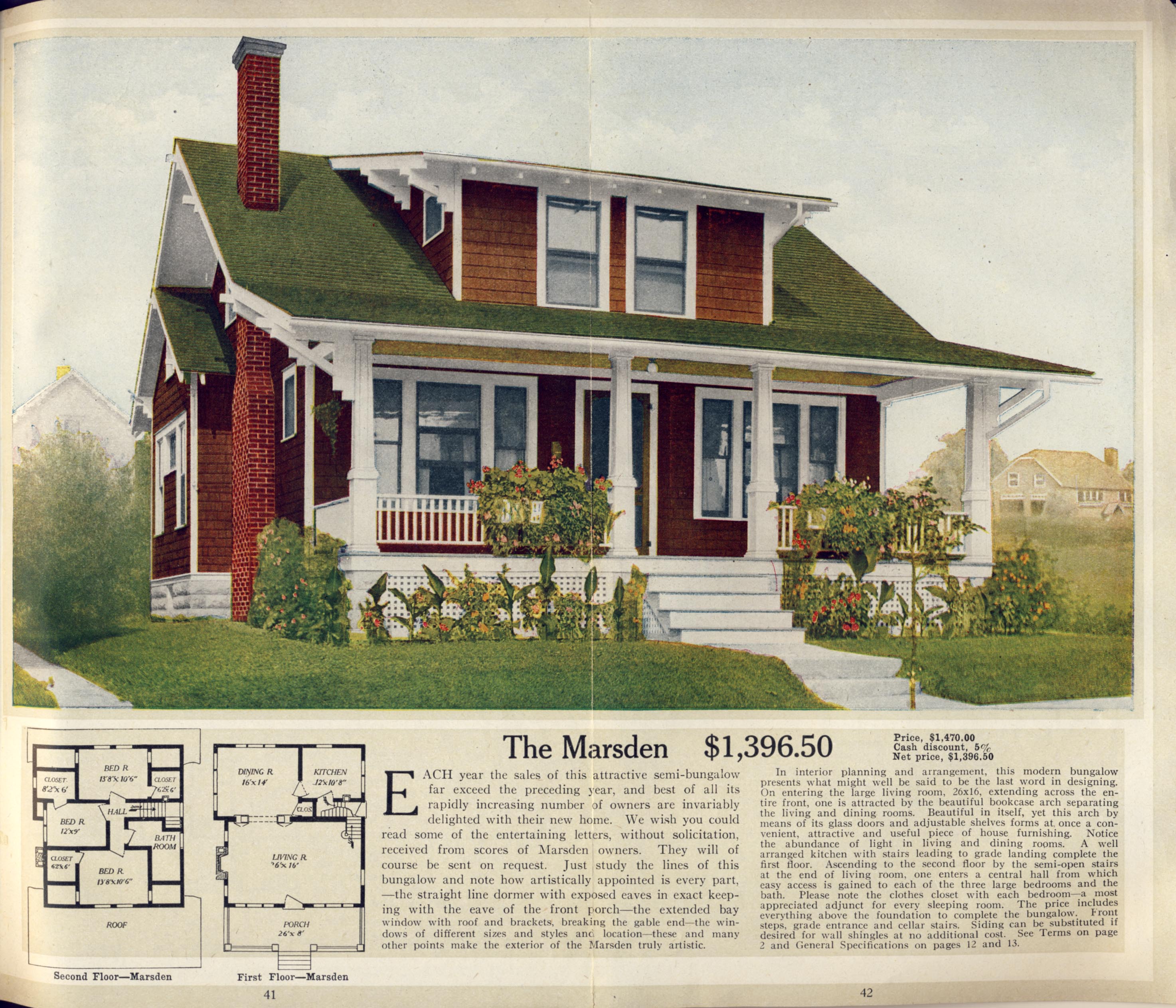
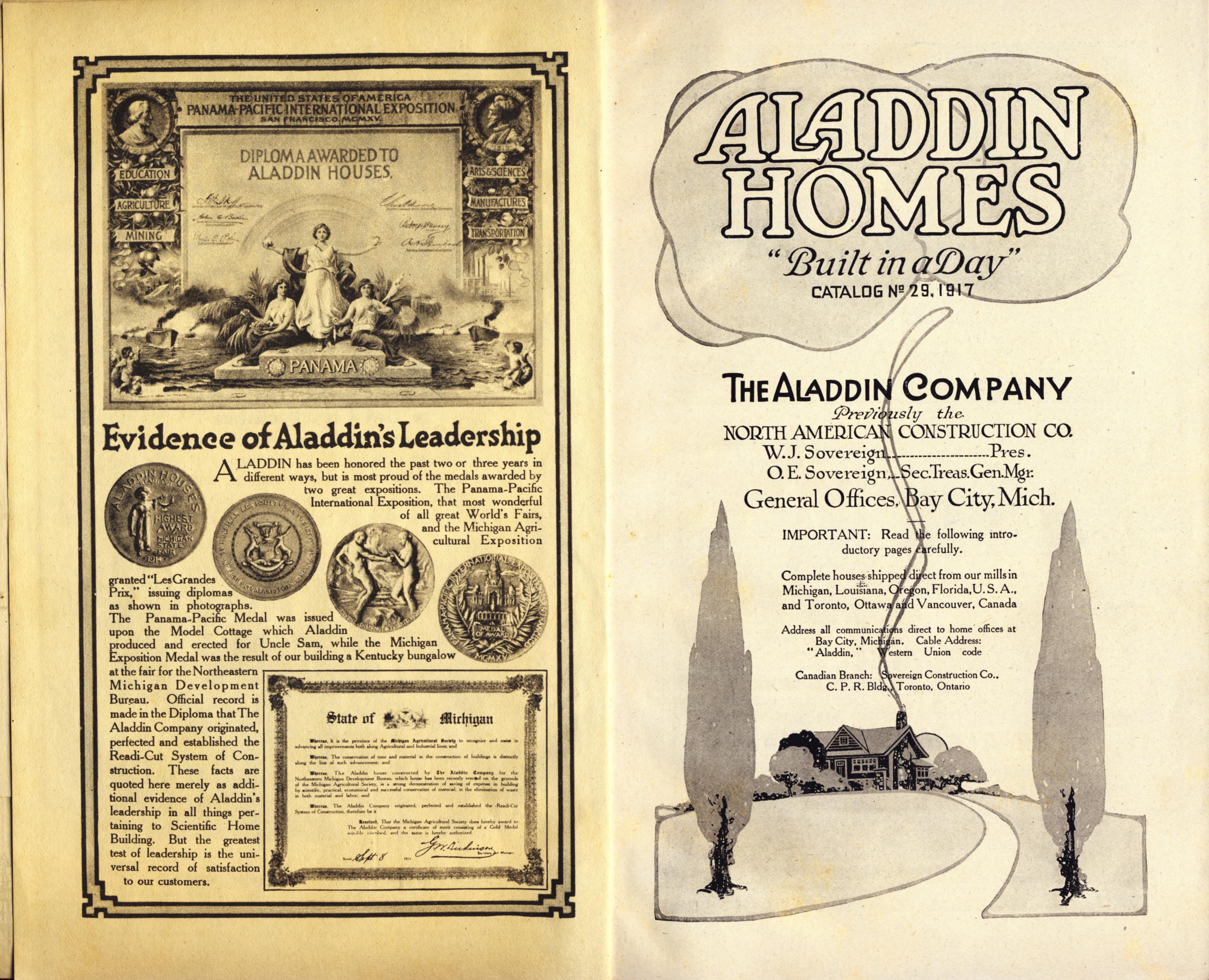
The house at 105 Weber was built around 1915, and current residents Tom and Margo Thacker have been researching the house and the family who lived there until 1965, the Ankrom family. The house itself is an Aladdin kit house; the images above are the Aladdin listing. In 1918 Charles Cornell, a machinist, lived in the house.
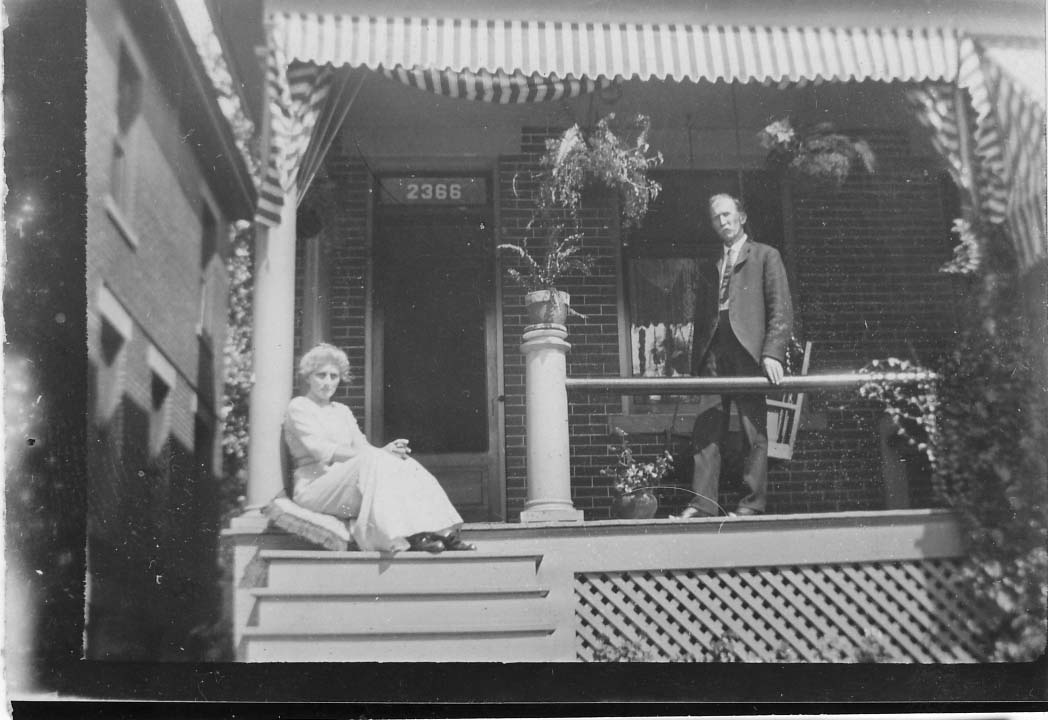 Solomon and Lydia Ankrom (shown to the left), their son Lindsey and their daughter Estella lived at 2366 North High Street in early 1918.
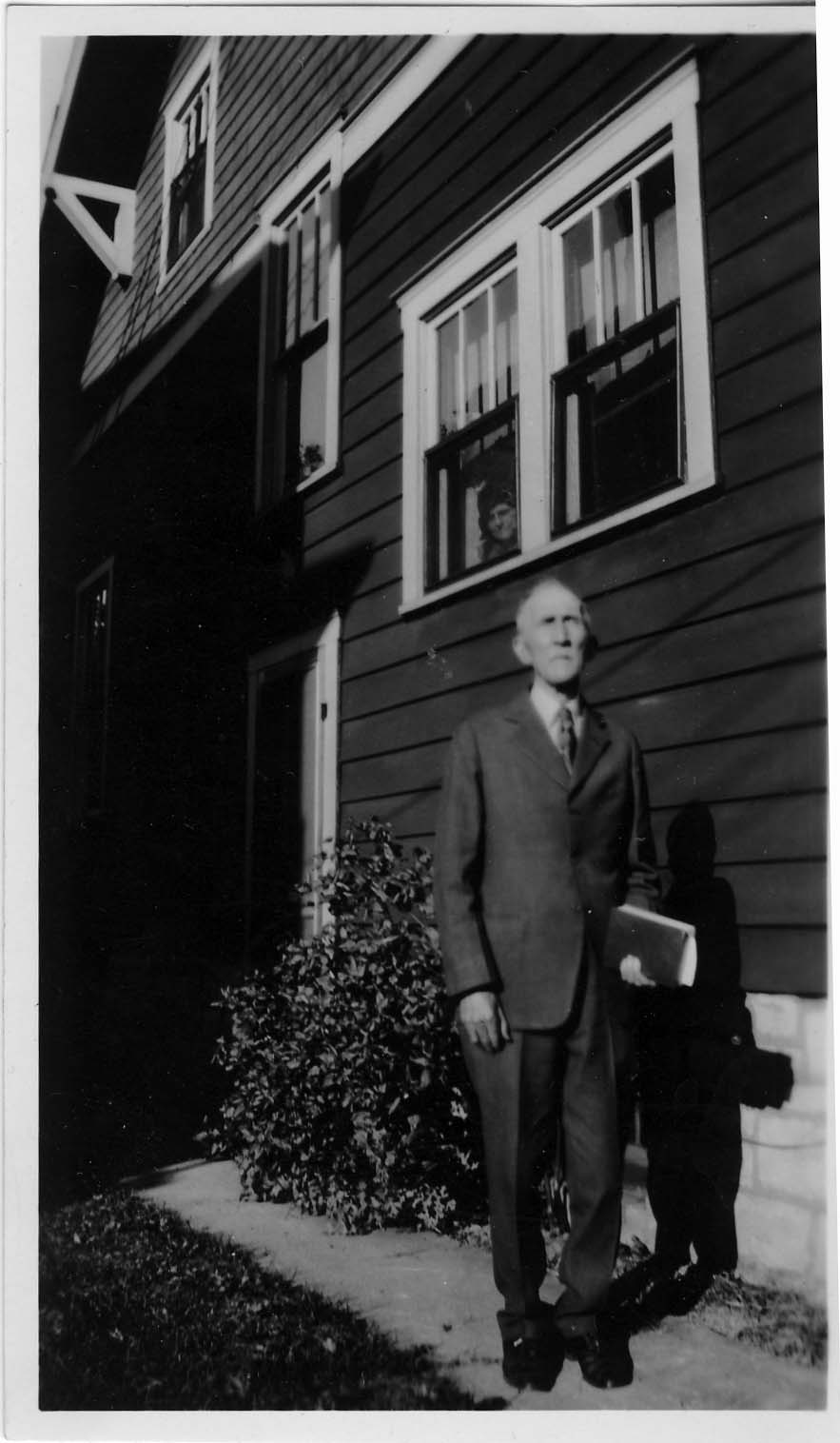
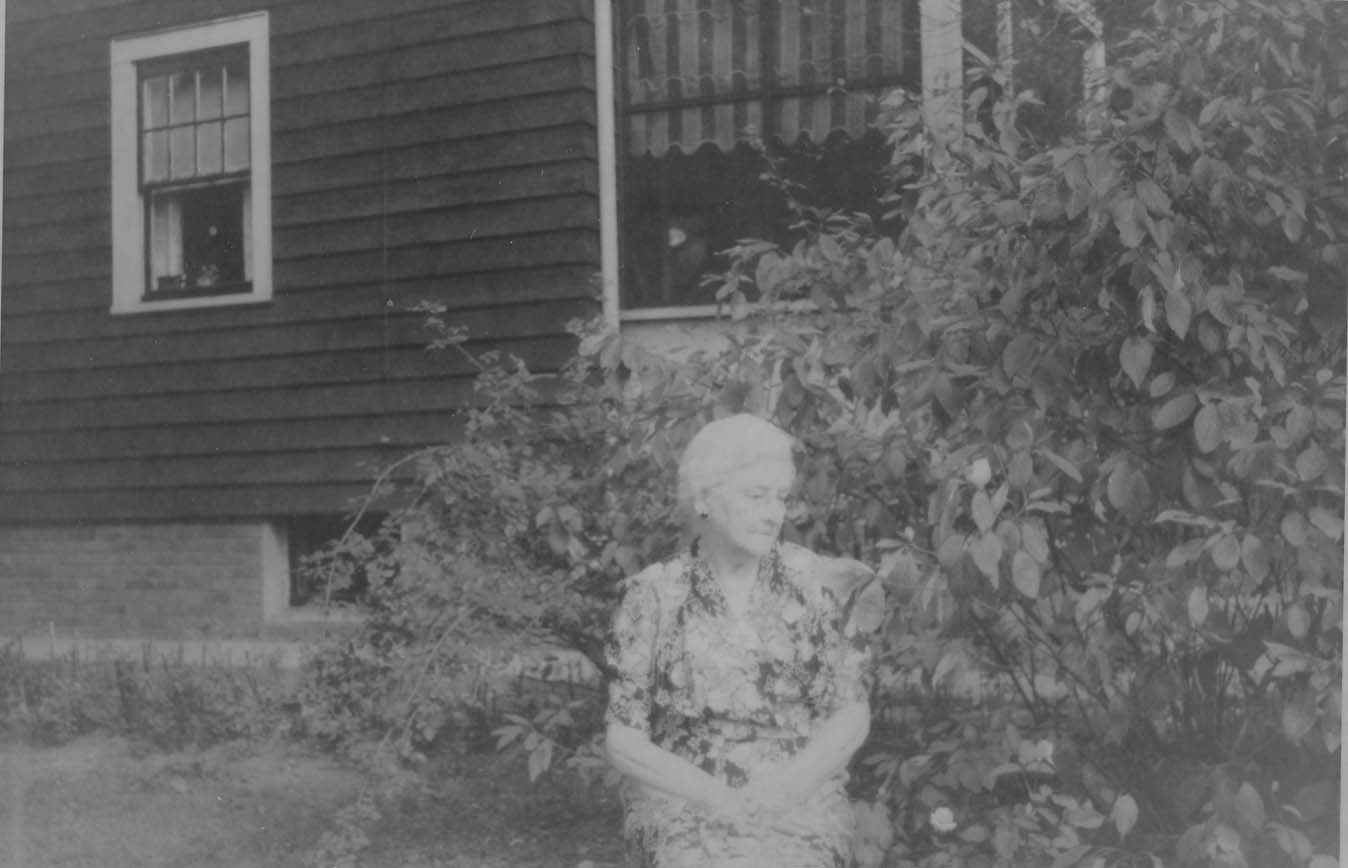 The Ankroms moved to 105 East Weber (shown in the photo on the right) around 1918/19. Solomon (1857-1935) was possibly a blacksmith, and may have been retired by the time he moved to Weber Road. Lydia Dixon Ankrom (1861-1948) was his wife. The family originally hailed from McArthur Ohio. Solomon and the rest of his family are buried in Sunset Cemetery.
After his marriage, son Lindsey (1884-1971) lived with his wife Grace Hafford Ankrom nearby at 100 Walhalla. In the wintertime the two households could probably wave at each other across the ravine. In 1918 he worked at the McDonald Steube Company Grocer Co., located at 60 East Gay Street. He married Grace Hafford Ankrom (1894-1975) in 1927. Prior to marrying Lindsey, Grace lived in the Hafford house at 100 Walhalla with her sister (and, I think, her brother). Grace was a teacher at Clinton School. For a bit more about this family, check my 100 Walhalla entry on this web site.
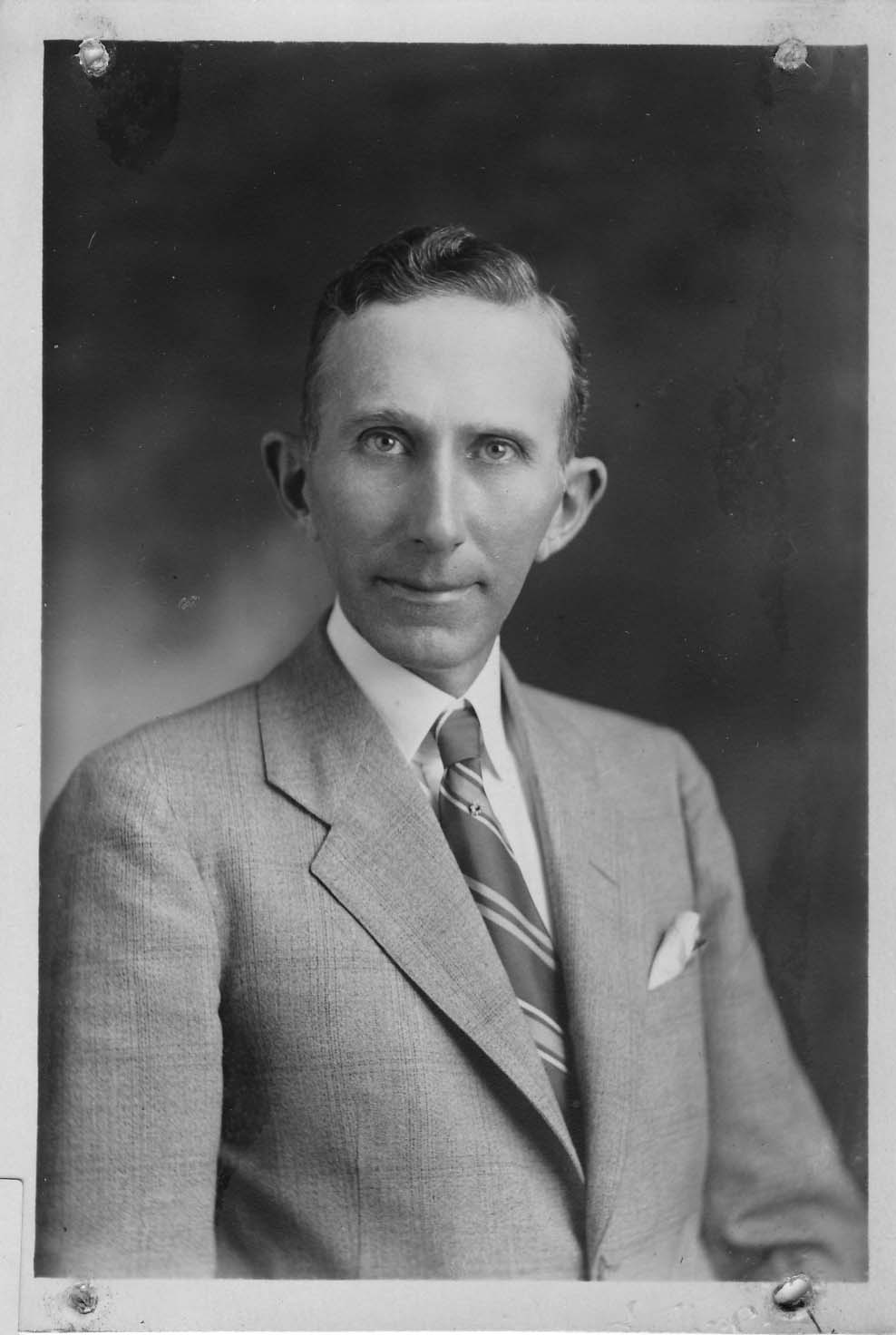
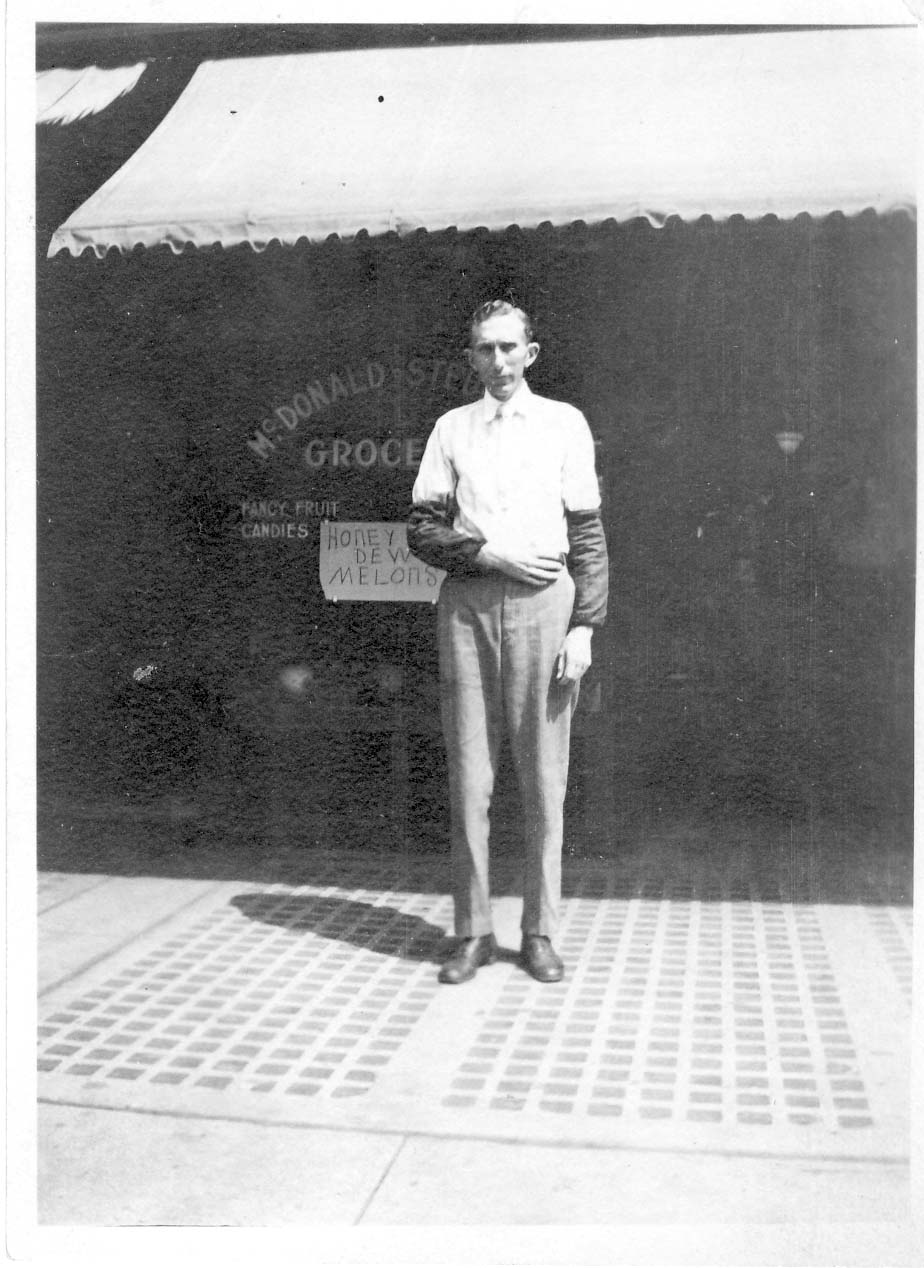
After his marriage, son Lindsey (1884-1971) lived with his wife Grace Hafford Ankrom nearby at 100 Walhalla. In the wintertime the two households could probably wave at each other across the ravine.
Estella (1888-1987) was Solomon and Lydia’s daughter. Estella never married, and probably lived in the 105 East Weber house until her death in 1987. She worked as a bookkeeper for Columbus Pharmacal on 326-336 Oak Street.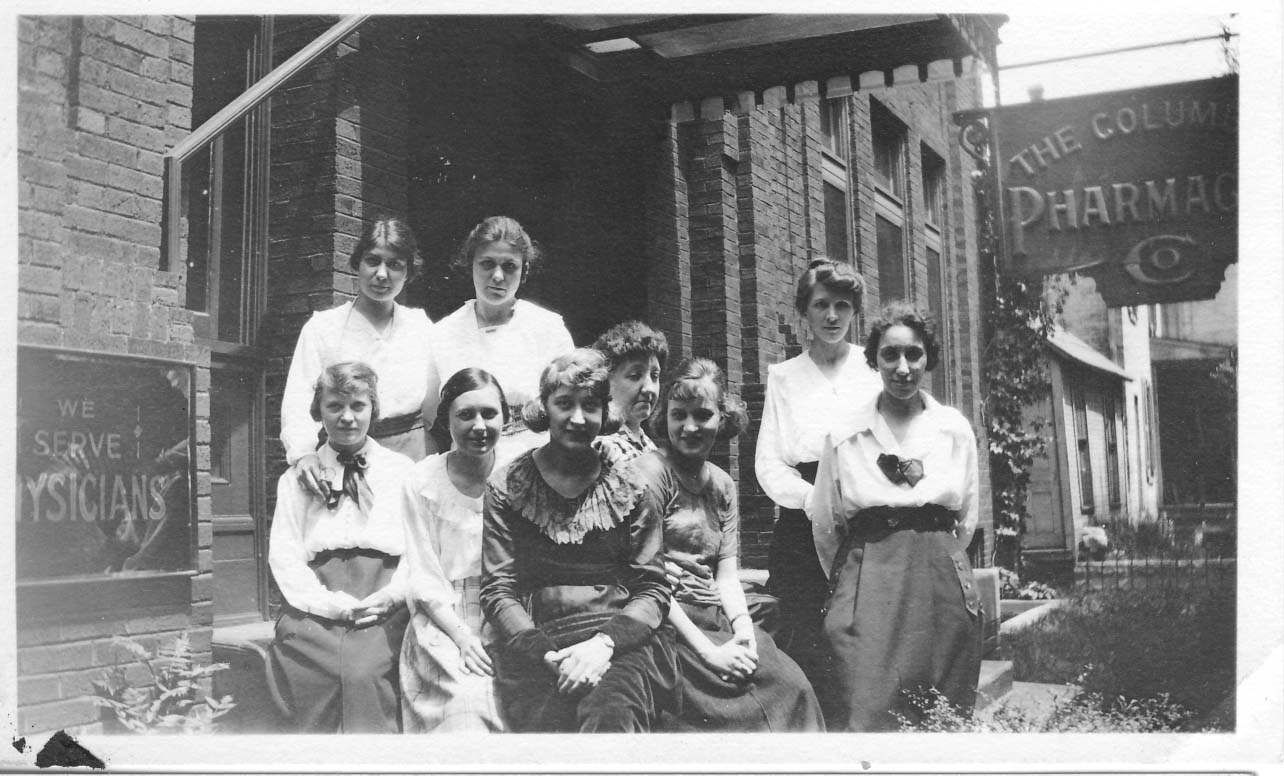
The final member of the Ankrom household was Sunny the cat, life dates unrecorded. Here’s Sunny enjoying Lydia’s lap with Lindsey and possibly Estella.
(Photos courtesy of Tom and Margo Thacker.)
100 Walhalla
In another entry on this web site, I mentioned that Lindsey and Grace Hafford Ankrom lived at 100 Walhalla with Grace’s sister Helen. Scott Hawley subsequently sent me some additional photos of the family and their home. Grace Hafford is Scott’s grandfather’s (Howard E. Hawley Jr.’s) aunt.
 This studio picture is Helen Hafford, in 1901. Like her sister Grace, Helen was a school teacher. (Photo courtesy of Scott Hawley.)
 This studio picture of Grace Greenwood Hafford (1883-1975) was taken in Chicago, Illinois in Jan 1909. (Photo courtesy of Albert Muth, Livonia, Michigan.)
 Lindsey and Grace after their wedding, with niece Genevieve Hawley (later Genevieve Muth) serving as flower girl, at 100 Walhalla. (Photo courtesy of Albert Muth, Livonia, Michigan.)
Lindsey in front of 100 Walhalla. (Photo courtesy of Scott Hawley.)
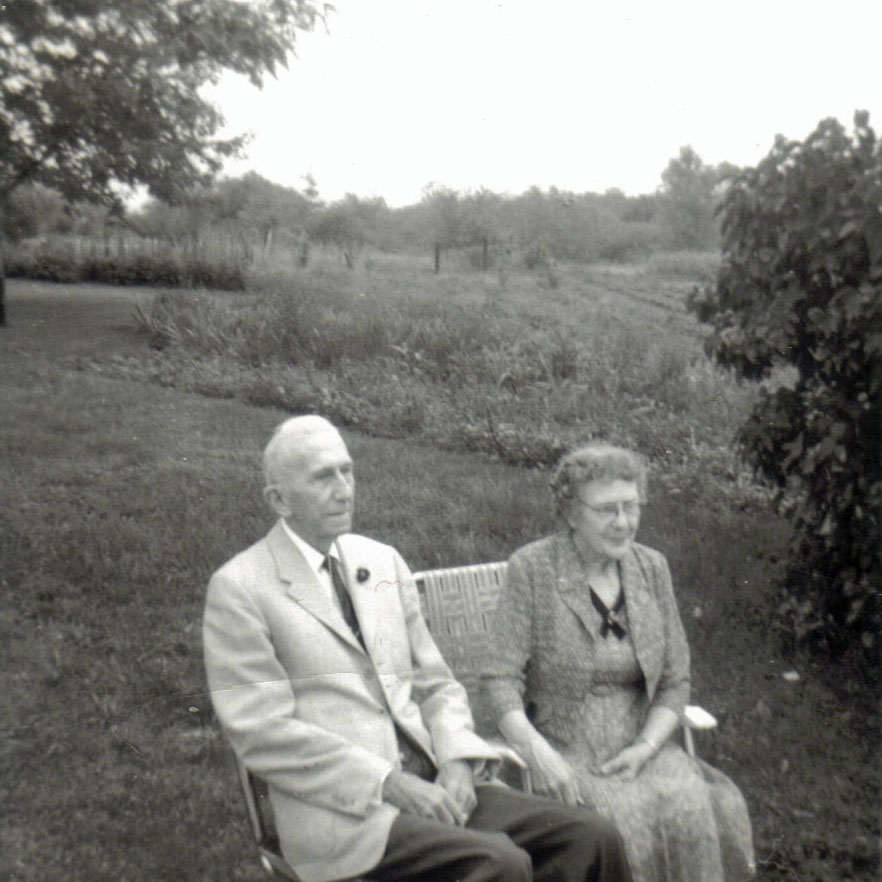
Another picture of Lindsey and Grace, taken in September 1965 at the Howard Hawley Sr farm on Miller-Paul Road in Harlem Township, Delaware, Ohio. (Photo courtesy of Albert Muth, Livonia, Michigan.)
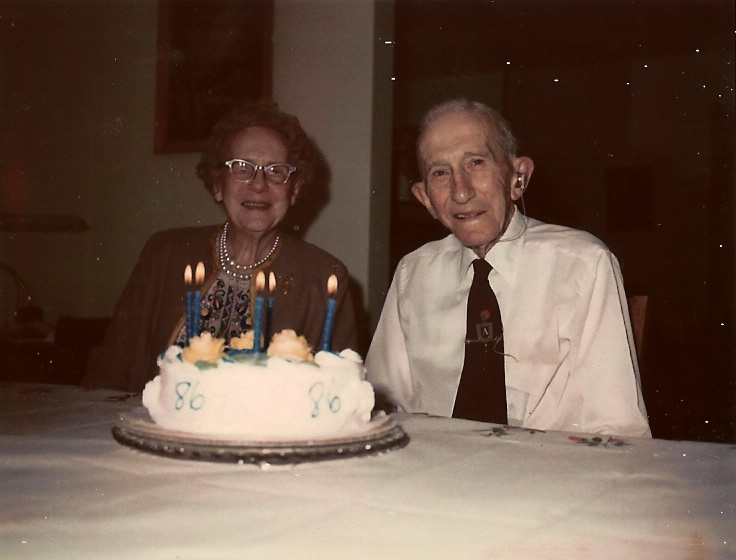
Grace and Lindsey on one of their birthdays, taken in the Hawley home on Piedmont Road. (Photo courtesy of Scott Hawley.)
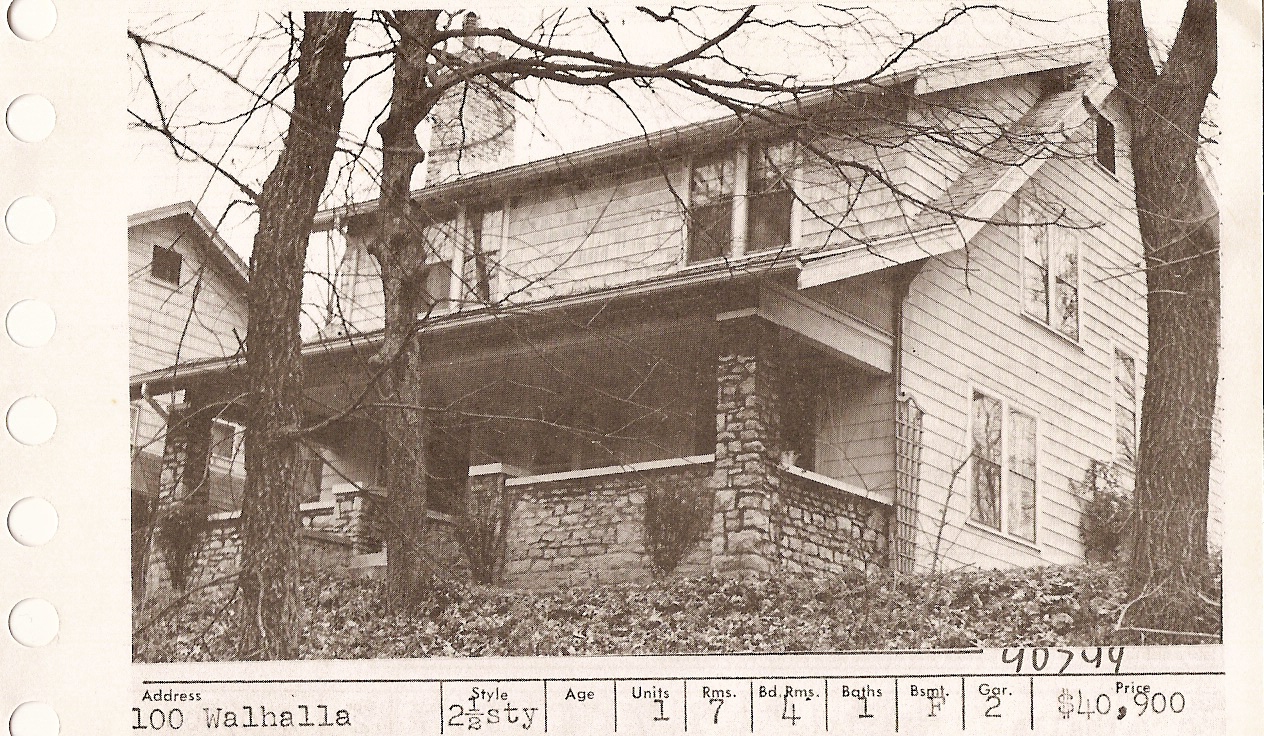
This photo of the house at 100 Walhalla was taken in 1975 and was used in the advertisement for the sale of the home. (Photo courtesy of Scott Hawley.)
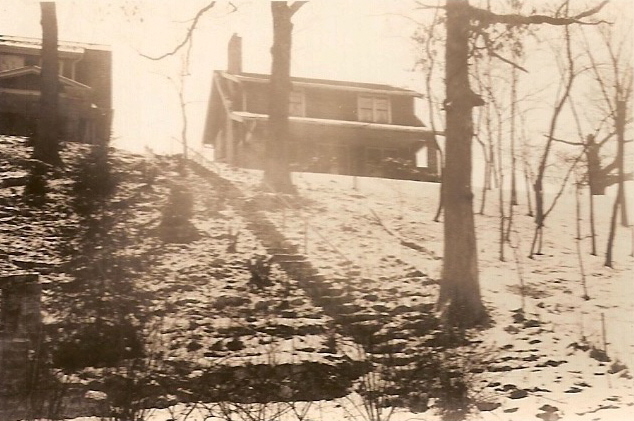
And one more of 100 Walhalla presumably in the 1930s or 1940s. (Photo courtesy of Scott Hawley.)
Bower & Company General Store
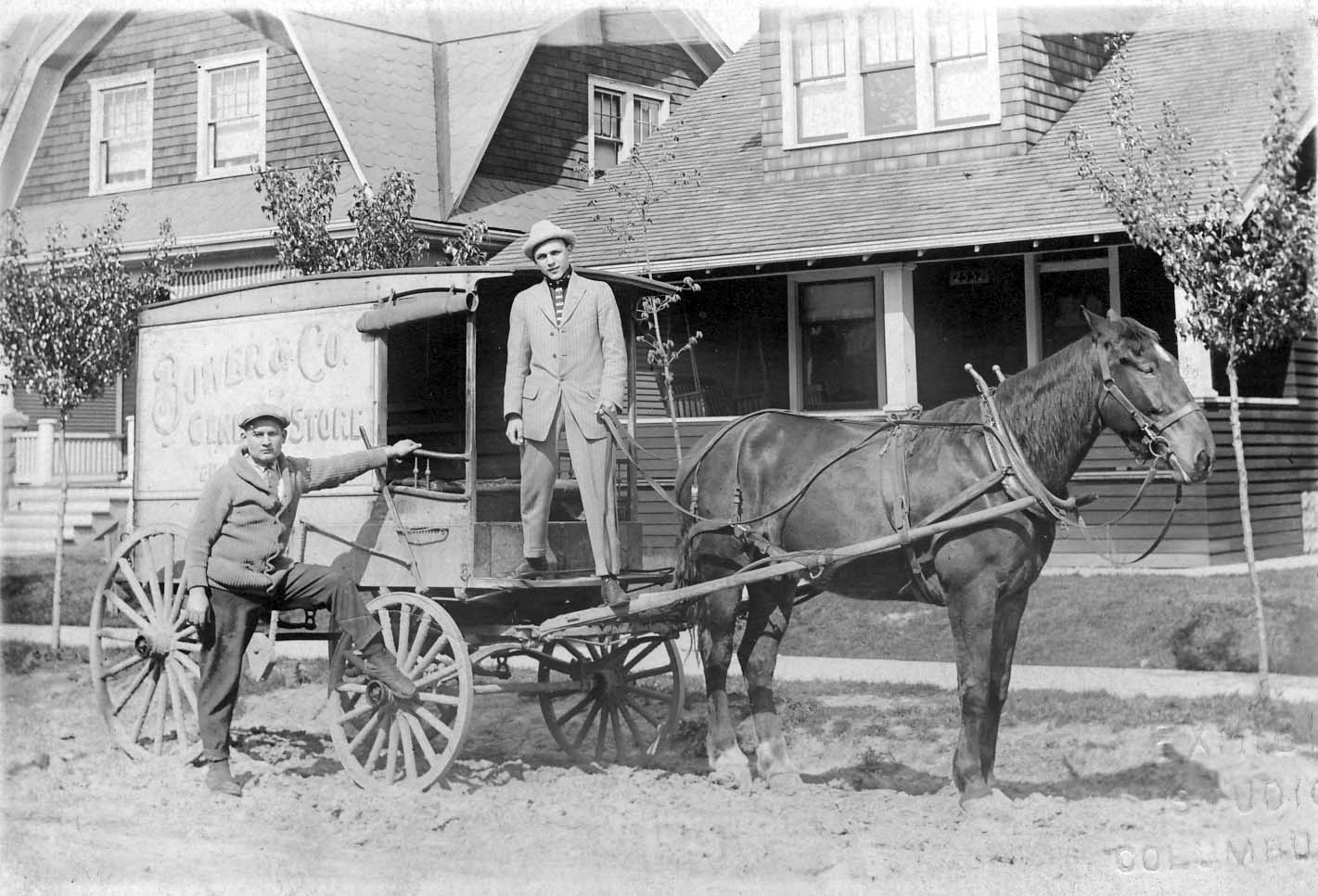 In 1914 the Bower & Company General Store was located at 2643 North High Street. (This address is currently a liquor store.) This is their delivery wagon around 1914. Standing on the wagon is Ott Helf, a friend of Charles Jones, standing next to the wagon. (Photo courtesy of Frank Jones.)
Never Too Many Cookes…(the article)
I wrote this article for the Clintonville Historical Society newsletter and am reproducing it here for your convenience…
Never Too Many Cookes…
by Shirley Hyatt
© Shirley Hyatt
We often think of Clintonville as having been established in 1847 near the intersection of Orchard Lane and North High Street on Bull family land, but we mustn’t forget that today’s Clintonville extends north to Worthington, and that other families contributed significantly to the development of Clintonville’s northern reaches.
One of the most vibrant little communities was centered near the intersection of today’s Henderson Road and North High Street (or more precisely, Cooke Road and North High Street). In streetcar days this was known as Cooke’s Corners, because it was established by the extended Cooke family.
Roswell Cooke came to Ohio from Connecticut in 1800 with his wife and five children. The two oldest sons, Chauncey and Rodney, took up adjoining land in the vicinity of today’s Henderson Road and North High Street. At the time the land was densely wooded, and the Cookes had to clear the land to establish their farms. By 1827 they operated large productive farms, had built grist and saw mills along the Olentangy River (near Weisheimer Road), and also operated a distillery.
Roswell died in 1827 at the age of 63. Son Rodney (1793-1833), a veteran of the War of 1812, married Laura Cowles and together they had nine children: Esther (married to L. J. Weaver), Roswell (m. Lorinda Skeels), Helen (m. John Good), Rosalia (m. John Webster), Rachel (m. William Buck), Laura (m. Lester Roberts), Rodney Romoaldo (m. Chloe Williams), Demon, and Henry C. (m. Abigail Taylor). Sadly, Rodney died when his youngest child was just 3 months old; wife Laura supported the family by working as a tailor. She herself lived until she was 73 years old.
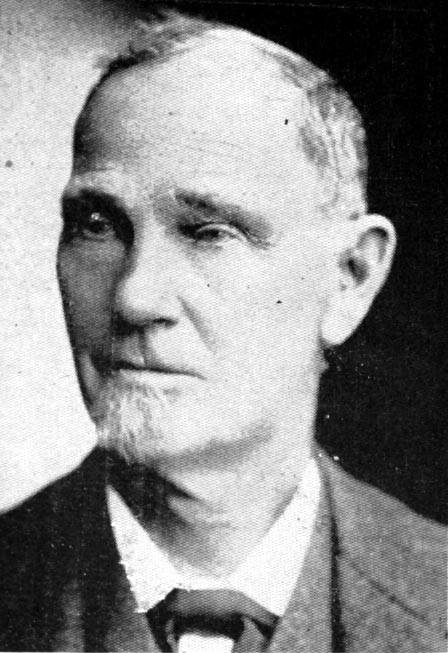
Genealogies state that Henry C. was born “near Olentangy Park in 1825.” After his marriage to Abigail in 1852, he moved back to the old Cooke family homestead and gradually purchased property from the other Cooke heirs. Eventually he consolidated 300 acres of good productive farmland. Henry and Abigail had seven children: Clara (married to Wellington Webster of Findlay OH), Flora (m. J. L. Armstrong), Albert Clement (m. Lulu Brown), Edwin (m. Ella Haines), Mary (m. David Maize), Alice (m. Charles Hess), and Harry Lester.
Henry C. Cooke worked for awhile as a teacher, then as a farmer. He also went into the stock business (i.e. shipping stock). In 1879 he went into business with A. G. Grant to form Cooke, Grant, and Cooke, which constructed heavy masonry bridges. (This company’s projects may include the present Henderson Road bridge and a few others in the area.) Henry was one of the promoters of the Worthington and Columbus streetcar line. He was prosperous, and built a magnificent house along present-day North High Street at Deland Avenue. (You can see its photo in my book.)
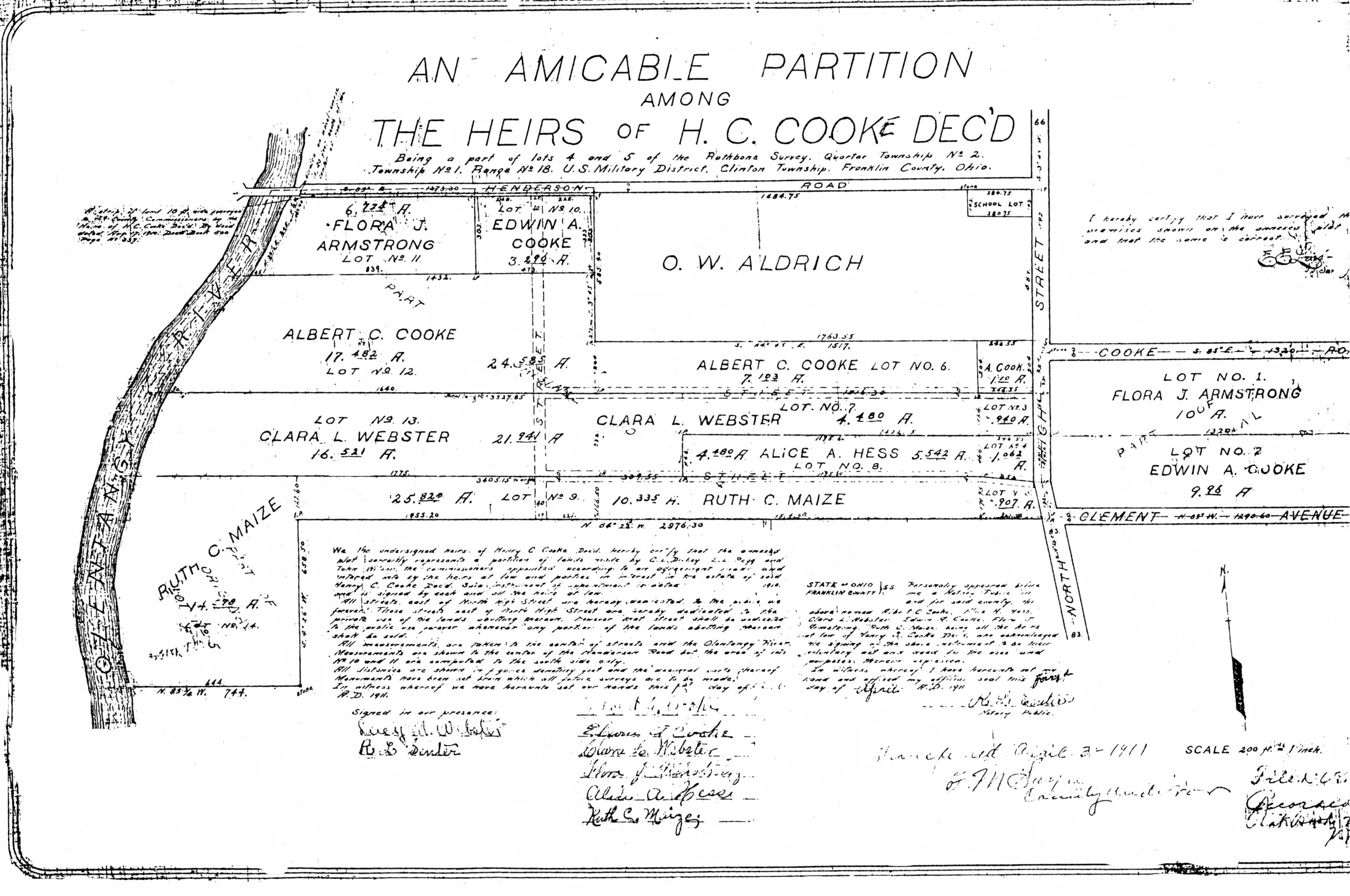
I named the spouses of Henry’s children above to show how tightly knit the community was. The Webster’s family farm was south of the Cookes’ along today’s North High Street. The Armstrongs, the Maizes, and the Bucks, and Albert Clement Cooke, all lived a very short distance from Henry. Daughter Alice—a schoolteacher at the Clinton Heights school—had married one of the great-grandsons of Balser Hess and they lived in Henry’s grand home.
John Buck was one of the early pioneers who received a military land grant in the area; some records state that he sold the original Cookes their land. Descendents of John Buck had a market on North High Street; long-time residents still remember Buck’s market today, and short-time residents may still recall the Buck residence, an Italianate-style house just north of the northeast corner of Henderson and North High. The Bucks were related to the Cookes by marriage.
George Whipp came to the area with his wife and two sons from Maryland in 1833. Whipp had received 160 acres of land in return for military service, and he also purchased the mill property that had been built by the Cookes. (At some point in time the old mill on the river was called “Whipps Mill” and Henderson Road bridge was known as “Whipps Bridge.”) His son George (b. 1817) was initially a carpenter, and was credited with building many of the houses of Clinton Township. Son George married a neighbor named Lucinda Smiley in 1838, and they had 10 children (one of whom was also named George). The family farmed, and though much of the acreage was eventually sold off, the Whipp family continued to own a truck farm in the area. Old timers can still recall the big orange sign for Whipp’s Orange Mill, a fruit stand located at 4588 North High Street featuring fresh squeezed orange or pineapple juice. The Whipps were related by marriage to the Bucks. (Note: sometimes the family spells its name with one “p”.)
An article about this tightly-knit community warrants mention of two other families, the Aldrich family and the Phinney family. Orlando Aldrich (b. 1840) was a prominent judge, lawyer and OSU law professor. Aldrich was the first president of the Worthington, Clintonville & Columbus Street Railway Company and served in this position from 1891 to 1898; he subsequently held an office of the Columbus, Delaware, & Marion Electric Railway. Aldrich had purchased 23 acres of land on the southwest corner of Henderson and North High in 1882; it was a fruit farm called Maple Grove Farm. Aldrich had three great hobbies: horticulture, collecting great art, and collecting rare books about archaeology. He engaged in these avocations from his lovely house located about where Maple Grove Church parking lot is located today. According to artist and local historian Bill Arter, Aldrich had a magnificent view of the river and OSU campus from the turret of his house. This house was moved slightly, rotated, and completely revamped in the 1920s by subsequent resident Frank Sweigart. (For more information, see my web site, www.clintonvillehistory.com.) It’s from this farm that the area around Henderson Road and North High Street and the church get their names today.
Barnabas Phinney (ca. 1813-1899) came to the area in 1838, and purchased 60 acres of land near the northwest corner of today’s Henderson Road and North High Street. In addition to farming, Phinney was an investor in the toll road running from Columbus to Worthington, and in the electric streetcar company. He married Mary Smiley and was probably brother-in-law to George Whip. Their house was said to be majestic. They had no children, and after his death most of the property was sold. At some point (circa 1893) the house was sold to the Schreyer family, and then chopped into apartments. I would love to see a picture of this grand old home. In 1913 a fire broke out; the city fire department was called but there were no water lines that far from the city, and so the building burned to the ground. (Luckily, no one died in the blaze.)
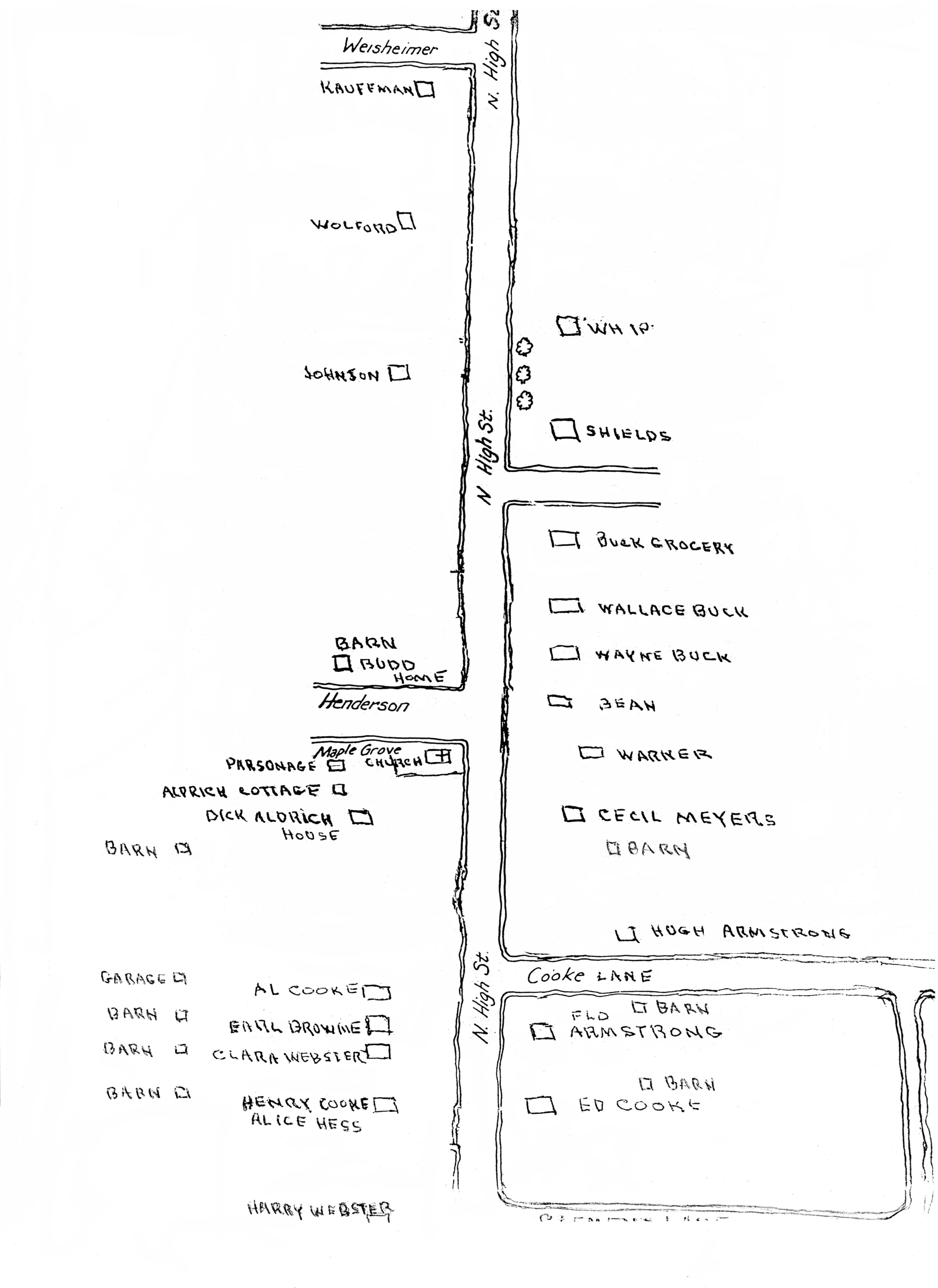
By the early 1900s, this was a tight and thriving community. The houses were handsome. The Cooke family held annual reunions at the Cooke house—old photos show the family eating at long tables arranged in the shape of a “C,” and they kept an ongoing register with names of attendees and minutes. The community held plays to entertain each other, went sledding on today’s North High Street, went horseback riding along Indian Springs Drive, worked and had fun, and worshipped.
The original Cookes were said to be Universalists, but somewhere along the way most of them became Methodists. In 1842 Chauncey Cooke had leased a 32-foot by 99-foot portion of his land on the corner of Henderson and North High to the Clinton Township School district to be used for both education and religious purposes. A school house was built in 1878, and it was used by the Clinton Township School District as well as by local Christian worshippers. When Orlando Aldrich purchased his beloved Maple Grove fruit farm, his tract surrounded the school and church property, and Aldrich expanded the land dedicated for school and church purposes to three-quarters of an acre. In 1919, when the school district had ceased using the building for educational purposes, ownership of the building and land reverted to the Cookes. Family members agreed to sign quit claims, and the property was put into the hands of the Como Avenue Methodist Church until a neighborhood church could be formalized. In 1920 Maple Grove Methodist Episcopal Church officially organized and assumed ownership of the church they had probably long worshipped in.
The Cooke family had a family cemetery located on the southeast corner of Cooke and High. When Bishop Watterson High School was built in 1958, the graves were disinterred and moved to Union or Greenlawn Cemeteries.
Luckily the activities of the neighborhood were documented by Lulu Brown Ohsner–a Cooke family member, neighborhood resident and parishioner of Maple Grove Church who has since passed away—in some presentations to Maple Grove Church about 15 years ago. And, many Cooke and Whipp family members still live in the Columbus area, and have family photos and memorabilia. Henry C. Cooke’s contracting company Cooke, Grant, Cooke is still in existence; the current name of this company is the Fritz-Rumer-Cooke Co., Inc. It incorporated in Ohio in 1911, and still specializes in railroads and other general contracting. Sadly, most (though not all!) of the lovely homes owned by the Cooke family members have been torn down.
Clinton Heights Avenue Trivia
 I recently had the benefit of reading an abstract from one of the north-side-of-Clinton-Heights-Avenue residents.
A couple interesting things from the abstract:
Calumet Street, according to the abstract, used to be called “Oak Hill” before the name was changed to “Beech Hill,” and then changed to “Calumet.”
The alley along the north side of Clinton Heights traversed through the school property and then to North Broadway. I have often wondered about this vacated alley, which runs behind the properties along the north side of Clinton Heights Avenue and the south side of East North Broadway. It’s a recessed, ravine-like greenspace that doubtless has many city services running along its banks. You can see this alley in the 1910 and 1920 maps on my web site. The rumor passed to me by former Clinton Heights neighbors was that the North Broadway residents had petitioned the city to vacate this alley, but when the city approved the request, they gave the alley property to the residents of Clinton Heights Avenue instead of splitting it between the residents of the two streets.
The abstract gave me specifics of the vacating. By ordinance No. 38053 duly passed by the Council of the City of Columbus, Ohio, on May 2, 1927, the first alley north of Clinton Heights Avenue “from Beech Hill Avenue to the west line of lot 68,” 12 feet, wide, was vacated. (No indication in City Council minutes of who actually submitted the petition, and I have not bothered to look.) The City Council minutes are attached <here>.
More about the land that became Clinton Heights Avenue…
Henry Cooke once owned part of the property that was later developed into the Clinton Land Company addition.
I have often read an old anecdote that James Chesnut (sometimes spelled “Chestnut”), who owned the house on Wall Street, had blocked the improvement of North High Street along his property near Brighton and North High Street, because a beloved locust tree would be damaged or removed by the paving. The abstract bore some of this out. In the abstract (relevant pages linked here), the property developers were assessed $5400 for improvements in the Worthington and Columbus Plank Road, but, they said, these improvements were never made, because James Chesnut (and others) “were defendants procuring an injunction perpetually enjoining the making of said improvements along his premises.” The Clinton Land Company owners sued, or perhaps countersued, stating that they had been assessed conditional on improvement of North High Street, which improvements had not been made. Who won: You can read the attached excerpts of the abstract and decide for yourself.
Patrick Murnan
Patrick Murnan lived from 1866-1937, and owned about 700 acres along North High Street north of Morse Road. I’m not going to repeat the story of Murnan here; it’s in my book. But, here’s a photo of the man himself.
Chesnut House

And another amazing old photo of North High Street from Stu Koblentz. This photo also looks north, and was taken just south of the intersection of High and North Broadway. The house on the west (left) behind the little shack (marked “ice”) is the Chesnut house (aka Chestnut house), described in this web site’s “Water for Cookies” entry and also found in my book. The school on the east (right) side of High Street is the old Clinton Township school building, a picture of which is also in my book. You can click on the image to see it in more detail.
Stu’s theory about the Chesnut house is as follows:
The image shows the Chesnut house, facing North High Street, about where it currently stands. The facade that faces Wall Street today is the facade facing High Street. This is verifiable in the chimney placements.
So I went through Joe Testa’s web site and I think I know what happened to the house.
As far as I can tell the house stood approximately at 3327-29 North High Street. In the 1910s, when the house (which appears to have been built in the 1860s or 70s) is pictured, the house had been moved on a pivot to its current location, with its northeast corner remaining close to its original placement. This would account for the front lot build out, the twist in the alley and the sudden reemergence of Wall Street as well as the placement of the house in the picture, and the current location of the house.
What is interesting to me is why did they go to all that trouble, when its fairly common in urban settings to build a street facade onto a house and call it a commercial building. I think that part of the reason is that the house sat further back from High Street, making it too far away to convert to a commercial space commonly found in that era.
Update 2025-08-25 by Shirley–Another possible reason for reorienting this house might be found here.
Behind every successful man…
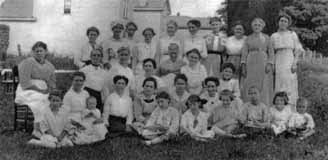
In my book I mentioned that the women of Clintonville were instrumental in building the community of Clintonville. According to North Broadway Methodist Church records, in 1906, the Ladies Aid Society was organized at Como Methodist Church. They pledged to earn $3000 a year for 5 years. They held bake sales and dinners, quilting parties and luncheons, and they met their goal. Their efforts were indispensable to construction of the Como Avenue Church Building and the Broadway Church. (Photo courtesy of North Broadway Methodist Church)
The play’s the thing


In 1925, members of Maple Grove Church presented a play at the church. The play was Friendly Helpers Class. It was a success and was taken on the road to the Linworth and King Avenue Methodist Churches. The left photo shows cast members Katherine Cooke (Barbee) and Lulu Browne (Ohsner), Dorothy Cooke (Hambleton) and a neighbor playacting for the camera in 1925. The photo on the right is the program for the June production. (Photo courtesy of the Ron Ohsner Family)
Sarah Breunig, community leader
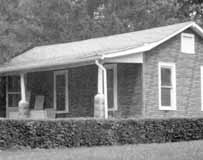 This house at 200 Glenmont is now gone, but it originally belonged to Sarah Breunig and her husband. Sarah moved to Clintonville as a young wife, before Glenmont was paved and before indoor plumbing. Sarah became one of the original community leaders of the Overbrook area. Sarah was a founding and active member in the Maple Grove Methodist Church, the Glenmont Community Club, Navy Mothers, and the Clintonville Women’s Club. She became the first female president of the Glenmont Community Club in 1968. (Photo courtesy of the Kerchner family)
Stella Wilson house
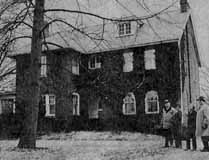 The Glenmont Community Club first met on March 2, 1921 at 45 Glenmont to “discuss improvements pertinent to the community.” It met at the Stella Wilson home; Stella was head of the science department of the old High School of Commerce (later known as Central High School) and had purchased the house in 1920 at the age of 58. Miss Wilson served as secretary and remained a primary force in the Glenmont Community Club until her death. Stella’s sister Ida was a physician; Ida acquired the house in the 1930s after Stella died. (Photo courtesy of the Kerchner family)
Lehman Machine
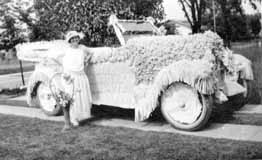 During Clintonville’s early years, it had many parades and this is one of the floats. The back of the photograph is labeled the “Lehman Machine” (machine was another name for automobile). According to the 1923 city directory, there was a David and Hattie Lehman living at 47 West Brighton Road. David was a sales manager for the Iron Clay Brick Company, and Hattie was a hemstitcher. (Photo courtesy of Amy Westervelt)
Korn family
 David and Alta Korn built a home at 4891 High Street, in old Beechwold, in 1920. They had an adopted son named William. The family was adversely affected by the Great Depression and lost their Old Beechwold house in 1932. This photo shows Alta and a child along the river. William raised his family in Clintonville and died in 1986. (Photo courtesy of the Clintonville Historical Society)
The Zimmerman Family and Olympic Swim Club
Libby Wetherholt recently gave this presentation about the Zimmerman family to the Clintonville Historical Society, and has kindly agreed to share it with us.
—
The Zimmerman Family and Olympic Swim Club
by Libby Weatherholt, March 8, 2016
The History of the Olympic Swim Club starts with Orr Samuel Zimmerman. (Photo courtesy of the Upper Arlington Historical Society)
Orr S. Zimmerman was born in Oakwood, Ohio in 1890 but moved to Columbus with his family when he was a child. He was educated in engineering at Ohio University and transferred his interest in mechanics to a career in the family automobile business.
In 1913, Zimmerman married Ethyle Cather, a native of Athens, Ohio. They moved to this house at 645 Dennison. (Photo courtesy of the Franklin County Auditor’s web site, property ID 010-044708 4/27/2014)
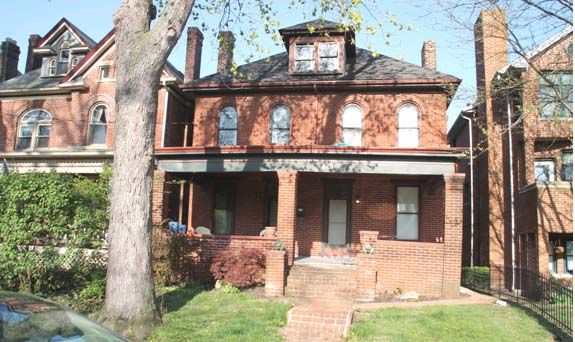
By 1916 the Zimmermans had begun building the house below at 1790 Cambridge Boulevard. (Photo courtesy of the Franklin County Auditor’s web site, property ID 070-000571 4/18/2014)
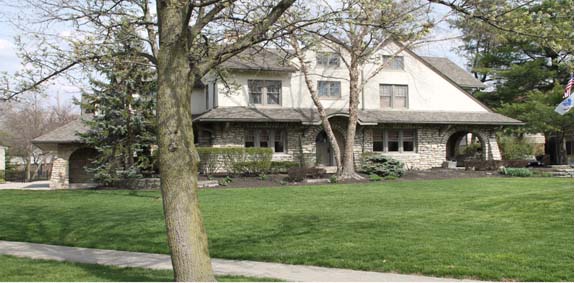
An historical picture can also be found on the Upper Arlington Historical Society web site.
The birth of their sons Robert Orr Zimmerman and Richard S. Zimmerman followed in 1918 and 1922, respectively.
By 1930, Audrey Ethyle Zimmerman had passed away and Orr had married Alice M. Zimmerman. The family had moved to 4497 Olentangy River Road—a house that remained an important part of the family history. (Photo courtesy of the Franklin County Auditor’s web site, property ID 010-006577 3/17/2014)

Zimmerman built the house in 1929 on what was then a 52-acre estate; at the time, Henderson was a country gravel road and Olentangy a narrow two-lane street. The architect was Thomas Tulley. Interior walls were decorated by a New York artist, with beautiful wooded scenes in both the trophy room and the living room. Two Canadian bear cubs, captured on a hunting trip, were raised in a small house on the property. In 1977 the house was a Decorators’ Show House. The house was destroyed in January, 2016.
Mr. Zimmerman had a special interest in outdoor sports, particularly hunting and fishing. Zimmerman’s hunting expedition in the Canadian Rockies with Upper Arlington founder and resident Ben Thompson was detailed in a November 1920 issue of the Norwester, complete with descriptions of the large game seen and hunted by the pair in British Columbia. Zimmerman submitted his own account of the trip to the Norwester, documenting the geography and vegetation of the region. (The Norwester magazine, published November 1917 through March 1922, chronicled early suburban life in the Upper Arlington, Grandview Heights, and Marble Cliff areas.)
Zimmerman also enjoyed pitching horseshoes and playing baseball. In 1920, he served as captain of the Upper Arlington “Lobsters” who battled the rival “Crabs” in the village baseball tournament. Mr. Zimmerman personally donated the “Zimmerman Cup,” the trophy awarded to the winning baseball team. He was also a member of the Upper Arlington Fishing Club and the president of the Upper Arlington Gymnasium Club, which oversaw the organization of indoor sports such as hand ball and volley ball. He was active in the Kiwanis and Athletic Clubs, and served as director of the Columbus Auto Trade Association.
The 1915 City Directory documents that Orr S. Zimmerman and Walter B. Charles owned Ohio Auto Sales Co. at 772-774-776 North High Street.
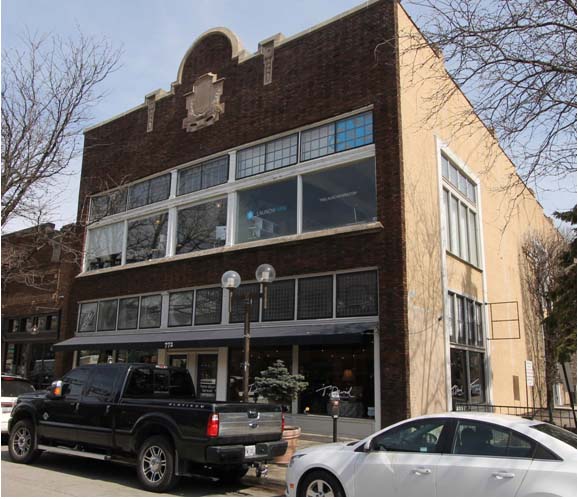
On June 30, 1941, Thomas Tully and Orr Zimmerman filed for a patent titled Means for producing formed strips of plastic materials, US 2323862 A. The patent was granted on July 6, 1943.
Richard Zimmerman married Dorothy Rupp, his high school sweetheart. They were parents of three children: Lynda, Ric, and Dan
Richard S. Zimmerman and his father, Orr Zimmerman, purchased the Olympic Beach from Frank Hauf in 1938, the same year it was built. The pool remained under ownership by members of the family until it closed in 2014.
Newt Jones, one of Richard’s grandchildren, purchased the Olympic Swim Club from his grandfather for $325,000 in 2002. Richard died shortly after on October 23, 2002 at the age of 81.
In 2014, Columbus Monthly Magazine staff picked Olympic Swim Pool as Columbus’ “best pool for athletes”:
For athletes: Olympic Swim Club
Built in 1938 and originally known as Olympic Beach, the Olympic Swim Club is a Columbus classic. Ohio State divers and swimmers practiced here in the ’70s and ’80s. Even Buckeyes football players would spend their off days at the club. After 76 summers, though, this is the Olympic’s last. “It was a business decision, but a very emotional and very sad one,” says third-generation owner Newt Jones, who has owned the Olympic for the past 13 years. Don’t miss your last chance to dive off the club’s rare 16-foot diving platform and experience a piece of Columbus history firsthand. “We just want people to come out for the last summer and enjoy it,” Jones says.
The following item comes from Shirley Hyatt’s Clintonville History web site:
Will You Swim in Pure Water?
Here, someone does a kamikaze dive off the tallest tower.
(Photos courtesy of the Zimmerman family)
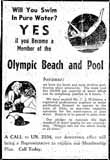 I love this ad for Olympic Beach in 1939. “Of interest to the ‘bathers’ of Northern Columbus is the care and precaution the management of the Olympic Pool is taking so that our families may swim in perfectly safe water, free from impurities and its dangers…“ Shortly after the pool was built, the Olympic Amusement Corporation, headed by Orr Zimmerman, assumed ownership of the pool. For many years the O.S.U. swimming and diving teams practiced there and many contestants for the summer Olympics came from all over the United States to train at the pool. Several national championships have been held there. Early on, only male lifeguards worked at the pool.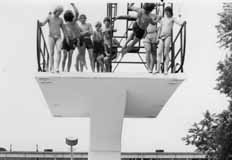
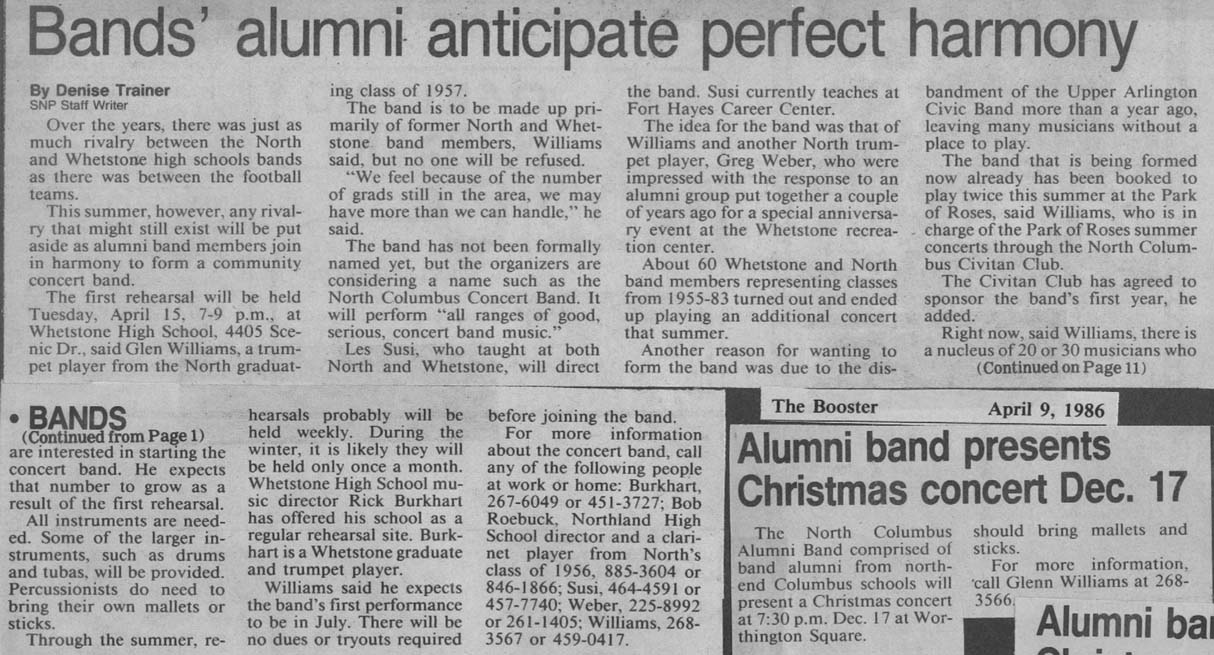
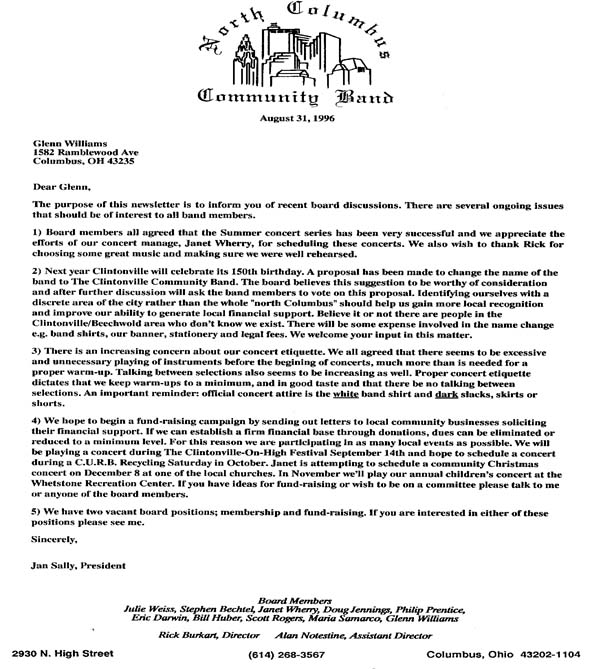

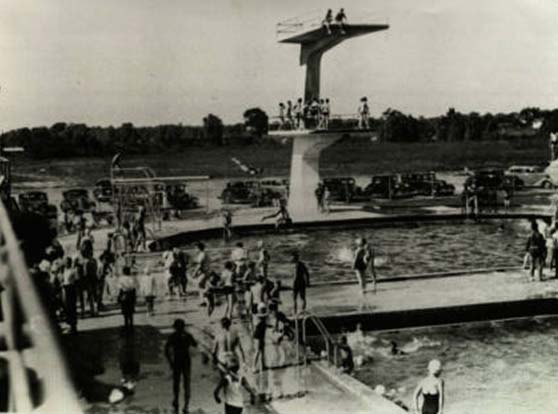 One of the early reasons for Olympic Pool’s notoriety and draw was its double platform diving board and its dive pool. The double platform survived into the 1990s, at which time the higher platform was removed.
The following images are from the Olympic Swim Club’s Facebook page.

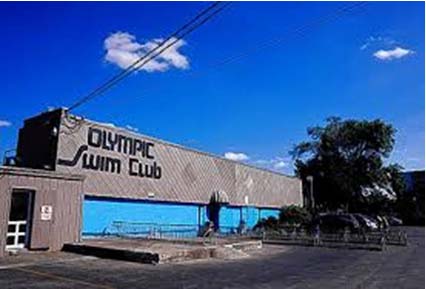
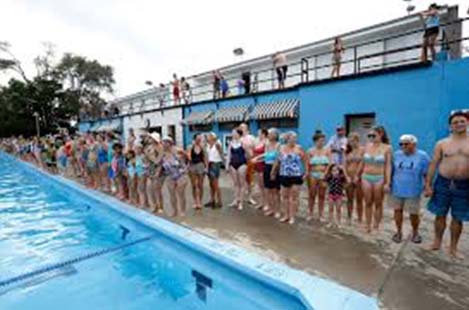
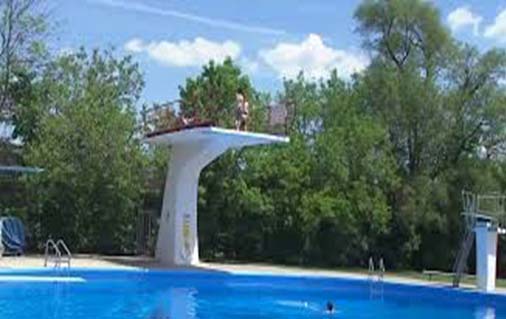

Dallas Dupre
Dallas Dupre, whose son still lives in Greater Columbus, was a landscape architect. He had an office located on the west side of North High Street near Weber Road (3073 North High Street), and is reputed to have been the founder of the early roadside park system throughout the U.S. The Dupre family lived in old Beechwold.
Elks Country Club
 I loved the story of Lawrence Huber (1893-1958) and his wife Eunice Louise Dougherty (1900-1986). Lawrence had applied for a job at the Elks Country Club. They told him they wanted the incumbent to be married, so he asked his girlfriend Eunice to marry him. She accepted and they married in 1922–and remained married the rest of thier lives.
Huber, under the direction of Donald Ross, helped to construct the Elks Country Club golf course, which was located north of Morse Road and east of High Street to Indianola Road. Huber eventually took  over the position of groundskeeper when the course opened the following year. Lawrence and Eunice, and their three children, lived in a residence on the Elks Country Club property while Lawrence was employed there. Huber was extremely innovative, and invented equipment as needed to cultivate and care for the greens. (Photo courtesy of Betty Huber)
Zinn’s Lumber Yard
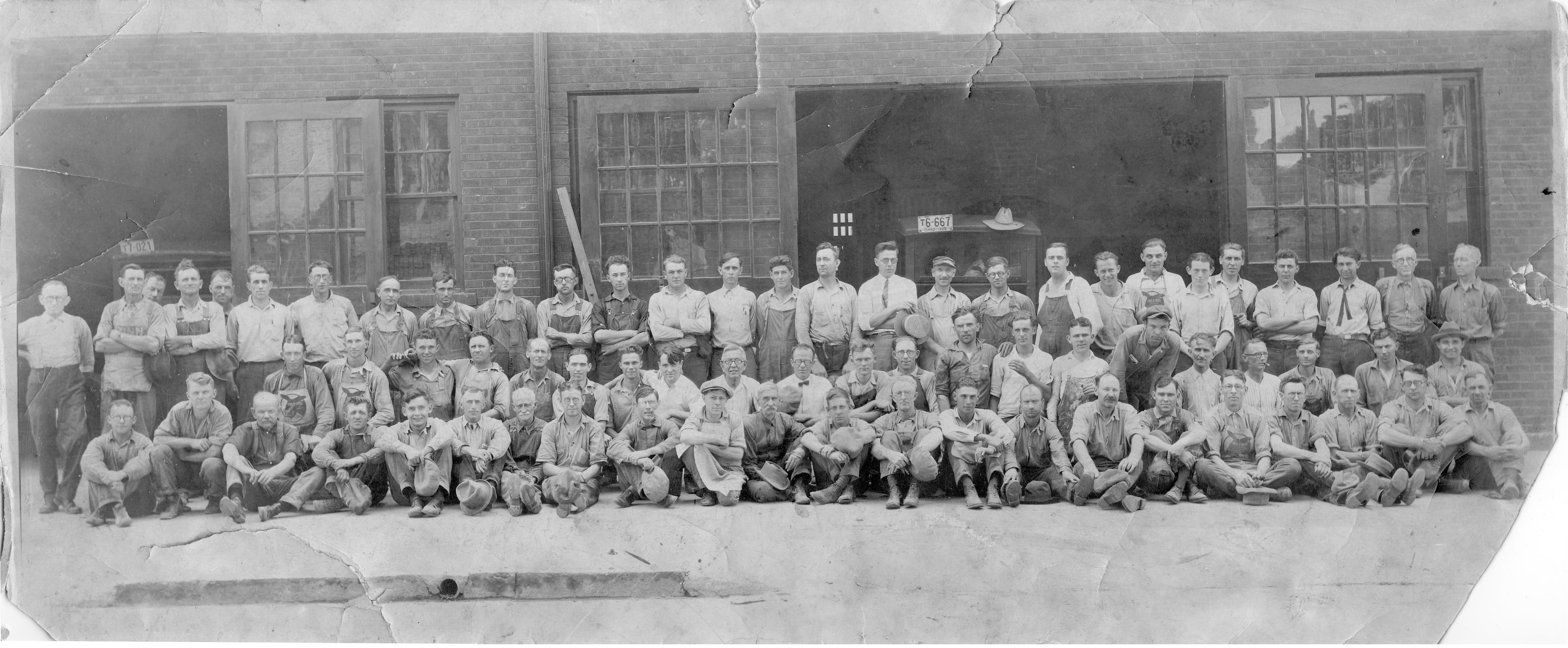
In 1892 at the age of 21, Mr. J. Harvey Zinn opened the lumber company at 19 East Hudson Street in partnership with Mr. S. M. Coe. Four years later he bought out Mr. Coe’s interest and built up the largest lumber yard in the city, both from the standpoint of size and from the amount of business done per year. This is a picture of Zinn’s Lumber Yard and workers. In November 1924 the Zinn Lumber Company caught fire and burned to a loss of $141,000. It was the largest fire in the city for that year. In 1931 Zinn was made vice-president of the Northern Savings Bank located at 2619 North High Street, and soon was promoted to President. Zinn divided his time between the two businesses.
As Bob Ohaver’s oral history explains, Zinn owned land along the Olentangy River from North Broadway to Kenworth Road, and in 1926 he built a residence at 285 Kenworth Road.
Zinn was one of the 4 people who cut the ribbon when the North Broadway bridge was dedicated in 1939.
Clintonville Woman’s Club
On February 4, 1939, six Clintonville ladies met at the house of Mrs. Frank Hiatt to discuss the need for a cultural, charitable, and civic group in Clintonville. 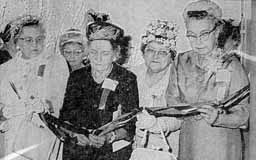 The women were Mrs. Walter H. Ives, Mrs. Herman O. Williams, Mrs. Frank Hiatt, Mrs. Russell Kennett, Mrs. Harry Mesloh, and Mrs. Rand P. Hollenback. Each woman made a list of representatives of all the local organizations and churches, and recruited them. The result was a list of 40 charter members. Their objective was “to encourage wholesome community life, to promote acquaintance among women of varied interests; and to secure cooperation in social, educational, civic, and welfare work in Clintonville.” They met in small groups, rotating the meetings between member’s houses. They also had 18 special interest groups. The annual dues were $3, $1 of which was set aside to build a club house. They achieved that goal through the generosity of the Kiwanis Club, which in 1951 gave the women’s club land on which to build at 3951 North High Street. Ground was broken in 1964, and in 1965 the building was dedicated. The club is still vibrant and the clubhouse can be rented special events. (Photo courtesy of the Kerchner family)
Bolon Diaries
The diaries of M. Gladys Bolon Cooper written from age 40, in 1939, until her death in 1989, are held by Ohio State University archives and have been transcribed and posted to the web. The writer was a Clintonville resident.
Indian Springs Golf Course Trophy
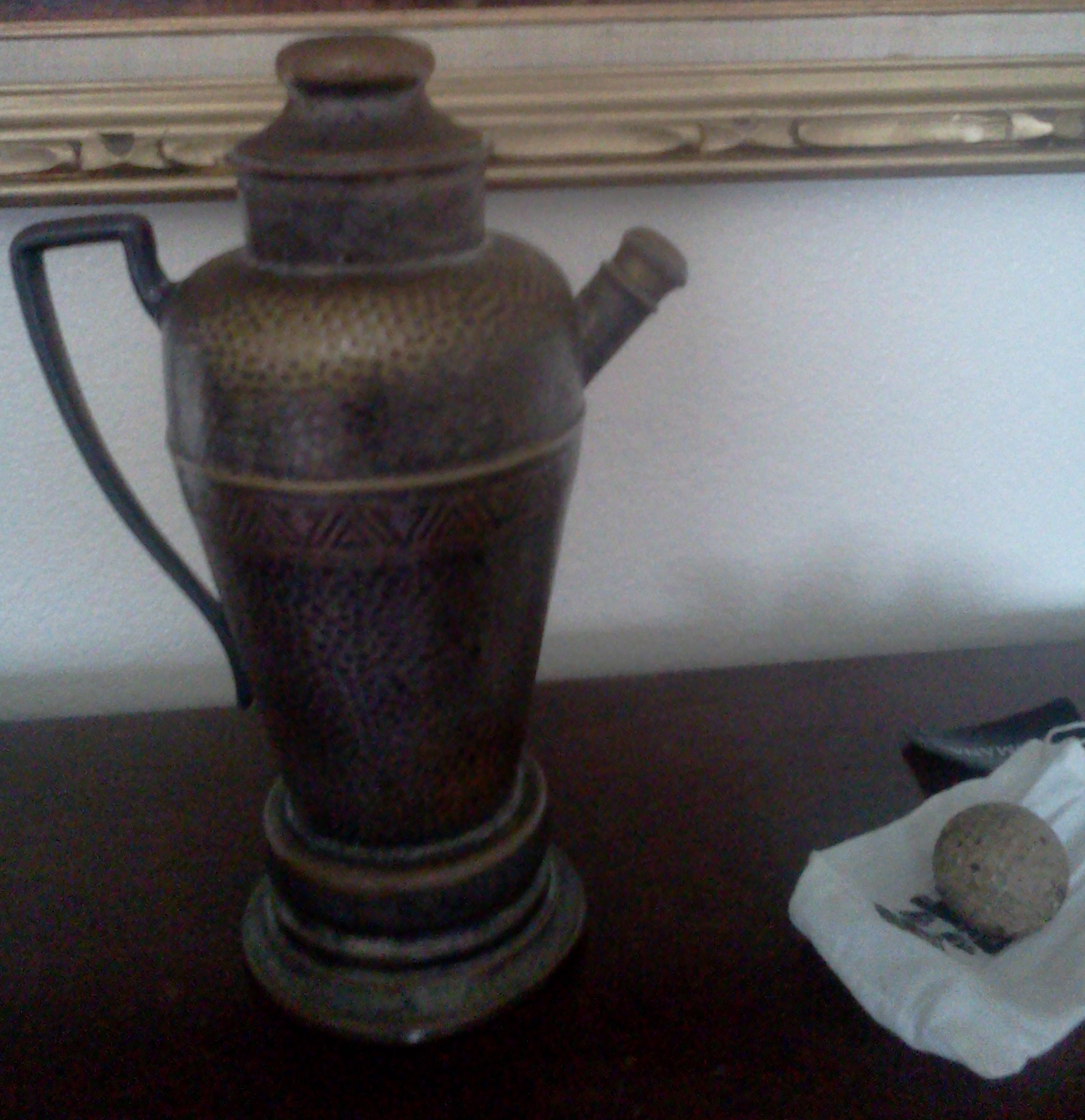 As the author of a book on the History of Clintonville, I often get fun calls from people who own a tiny bit of Clintonville history and want a bit more. This morning was one of those days. Ian Crowe called me from Utah. He’d purchased a trophy at a local estate sale, and was wondering where the trophy was from and who won it.
The trophy was for an Indian Springs Golf Club, in 1931. Could it be Clintonville’s own Indian Springs Golf Club?
Apparently Ian had called quite a few golf clubs by the same name, until he found my web site.
I referred the question to Scott Caputo at the Columbus Metropolitan Library. His research can be found here. He learned that the golf course did exist in 1931–Indian Springs Golf Club was listed in the telephone directory as early as 1929, and had been issued a building permit for a new clubhouse in 1931. He learned that there was a Norman I. Blanchard living on 385 Wyandotte, just 3-1/2 miles from the course. According to census records, Norman would have been about 23 or 24 at the time of the tournament.
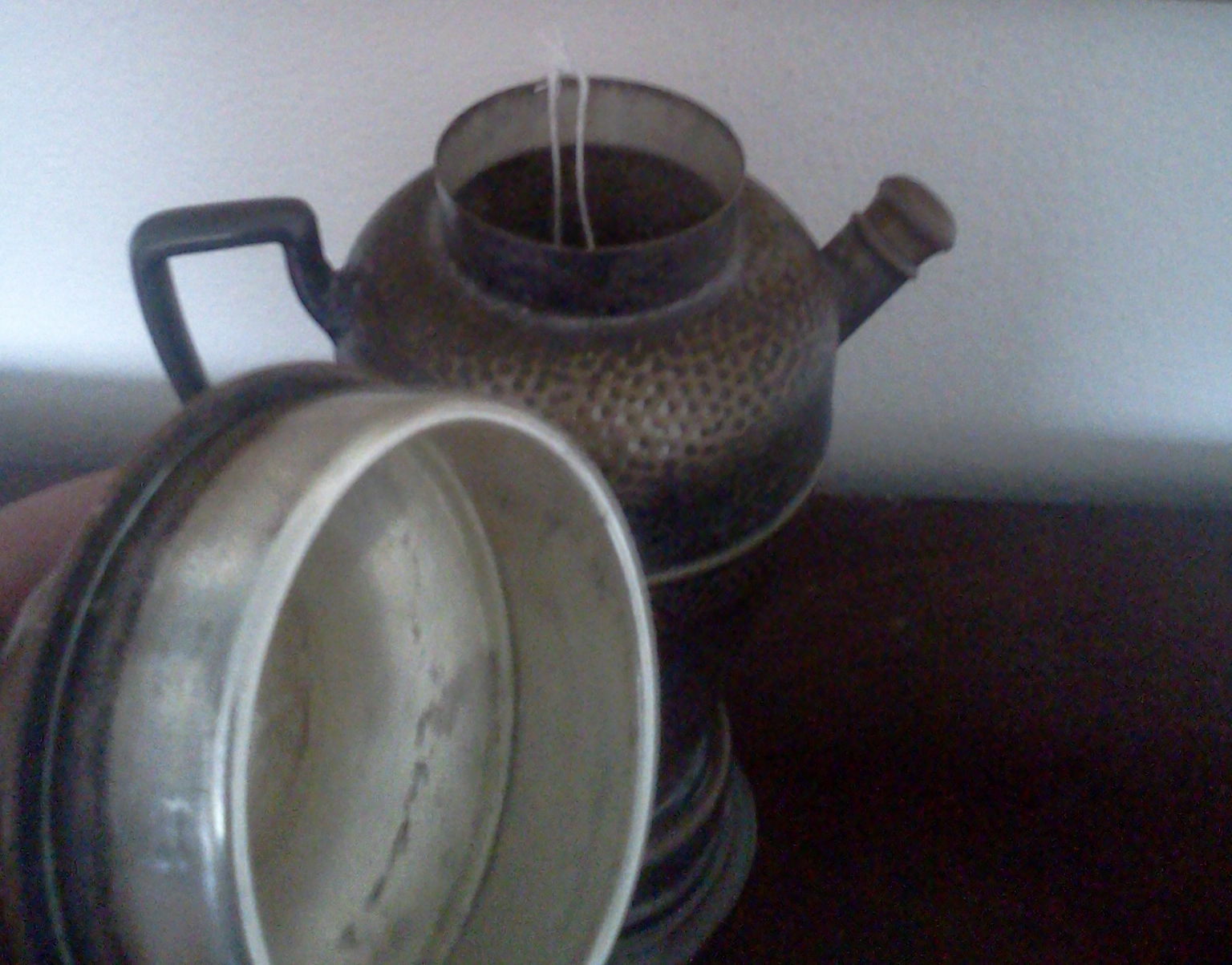
So, the trophy is extremely likely to have come from the Clintonville golf course.
When I exclaimed that the trophy was really a martini shaker, I was informed that this was a very common form of golf trophy back then.
Great job, Scott!
Flora Ohaver
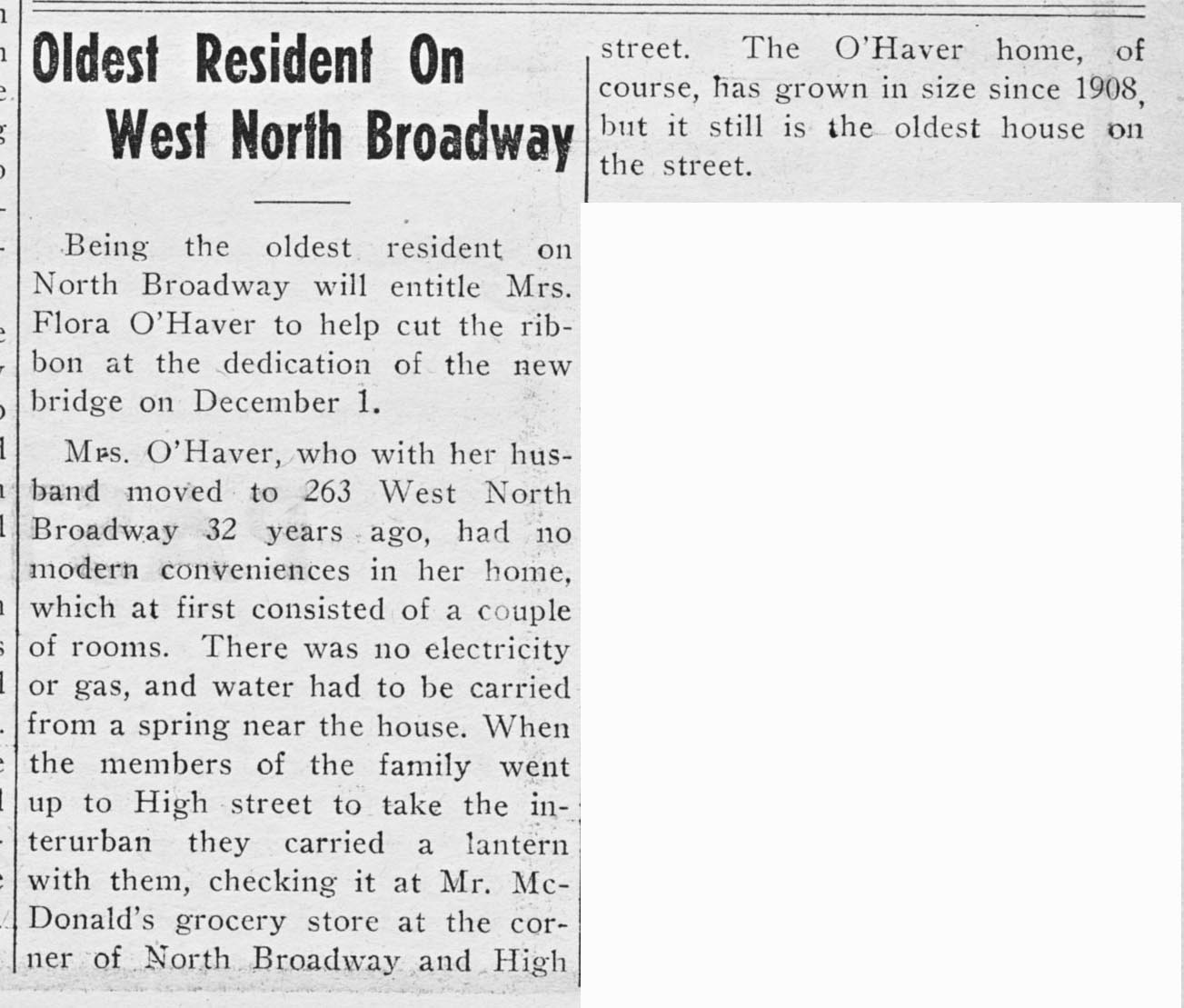 Flora Ohaver was one of the oldest residents of West North Broadway, and so she was selected to be one of 4 people to cut the ribbon dedicating the new Broadway bridge on December 1, 1939. She and her husband built their house at 263 West North Broadway in 1908. Her nephew Bob returned to live at this address on West North Broadway as well; his oral history is located on this web site. Bob passed away in June 2009.
Robert Ohaver (1937-2009)
Robert Ohaver (b. 1920) lived most of his life in Clintonville and on West North Broadway. He had many stories of old Clintonville to share with us. On September 12, 2003, several community members (Ann and Alan Woods, Barbara Hotchkiss, Nancy Kuhel) interviewed him and preserved the conversation on tape. Now you, too, can listen to Mr. Ohaver’s oral history.
Sadly, Bob Ohaver passed away on June 11, 2009. You can find his obituary here. There is another small entry about his aunt on this web site here.
Bob mother was Laura Ohaver and his father was Walter Harvey Ohaver. Bob also had an older brother named Jack Ohaver who lived in Clintonville at 116 E. Dunedin with his wife Clara Ohaver. Clara passed away May 24, 1993, and Jack passed away on June 14, 2000. Jack and Clara had two daughters. Sue Bowman was born May 8, 1940; she passed away January 4, 2000. Sandra Urban born July 30, 1945. [This family information came to me from Jack’s granddaughter and Sandy’s daughter, Lisa Adkins. Thanks, Lisa!]
Each file is about 30 minutes long.
Contents
Track 1.
Brief Ohaver biography; origins of his family moving to West North Broadway; his World War II years; Clinton Theatre; businesses and homes at the interesection of North Broadway and North High Streets; drugstores and candy stores in Clintonville; the house behind 3391 North High Street; Dispatch carrier’s substation; Olentangy Park; the streetcar storage barn at Arcadia.
Track 2.
Olentangy Park cont’d; street fair at North Broadway and High to celebrate Clinton Theatre, the opening of Clinton School pedestrain subway, and the paving of North High Street after a new sewer line had been installed; the Olentangy River; 3 canoe clubs; development of West North Broadway (“the Broadway Extension”) and the Scott farm; development of the area along the adjoining river bank; the Herron [spelling uncertain]/Zinn home at 285 West Kenworth; Bill Moose AKA “Indian Bill”; Chief Leatherlips.
Note: the “Dr. John Scott” is William H. Scott, president of OSU 1883-1895. See my book, page 17, for a photo of his house.
Track 3.
Chief Leatherlips cont’d; house at 273 Erie Road and excavation of nearby gravel pit; the Fuller farm/Whetstone Park; rambling through the woods; Indian Springs golf course; Bill Moose AKA “Indian Bill”; Olentangy Park; North Columbus including the Ramlow Building; Picadilly Theatre; streetcars and interurbans.
Track 4.
Southwick funeral home; Joy Hunt home; Graceland Shopper’s Mart and Patrick Murnan; Clinton Theatre; the Great Depression; Ohaver family; Brighton Road development; Ohaver’s WWII and postwar years.
Track 5.
Ohaver’s return to Columbus from California in 1962; bombing of the Clinton Theatre in the 1930s.
Jones Upholstery Store
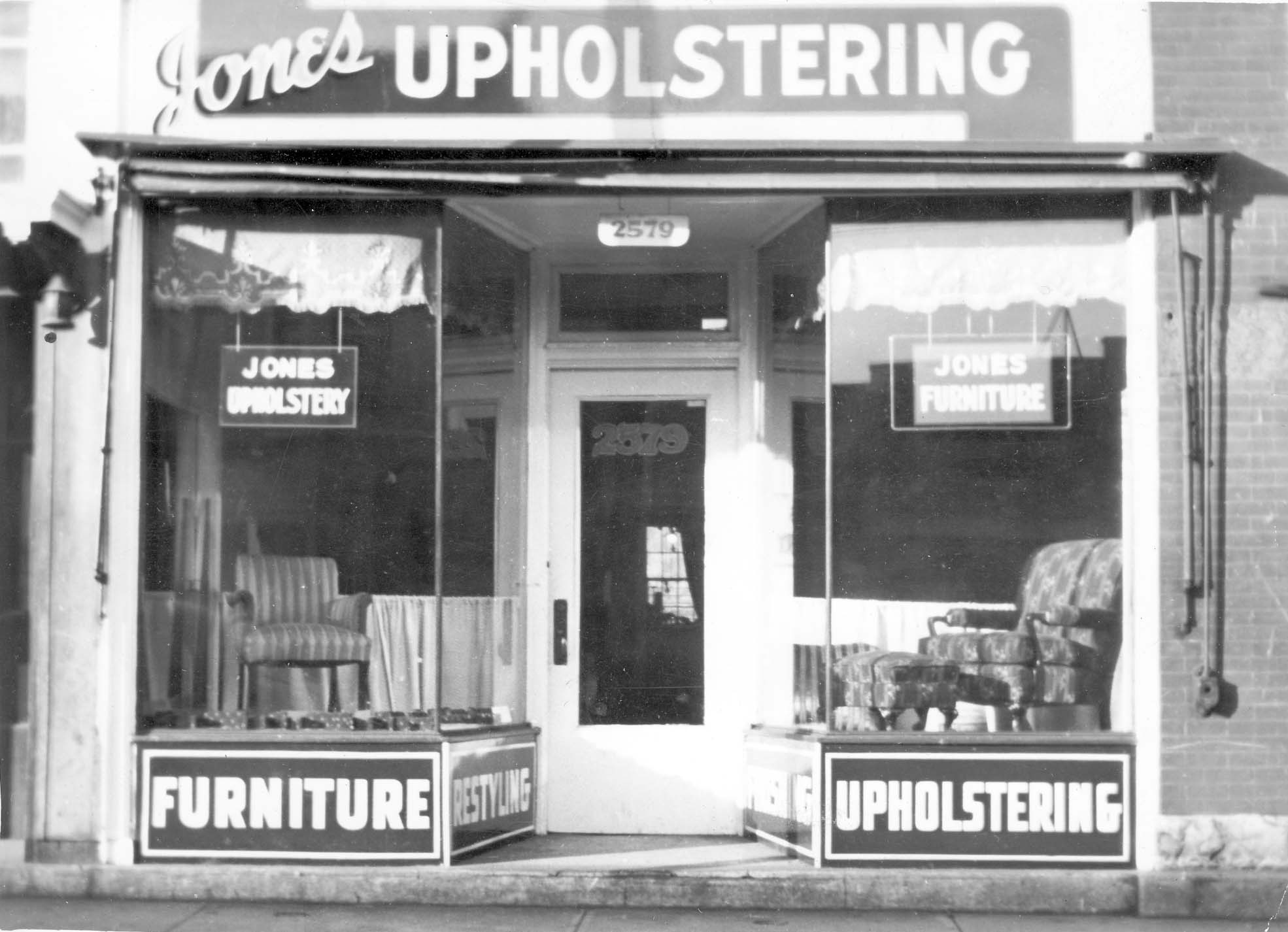 The North Columbus Kroger location at 2579 North High Street became Jone’s Upholstery business. Charles M. Jones moved here in 1943 while his son W. Frank Jones was overseas serving in WWII. When Frank came home in 1946, he worked as a partner with his father until his father’s death. (Charles and Frank are the son and grandson of C. F. Jones.) This photograph was taken in 1945.
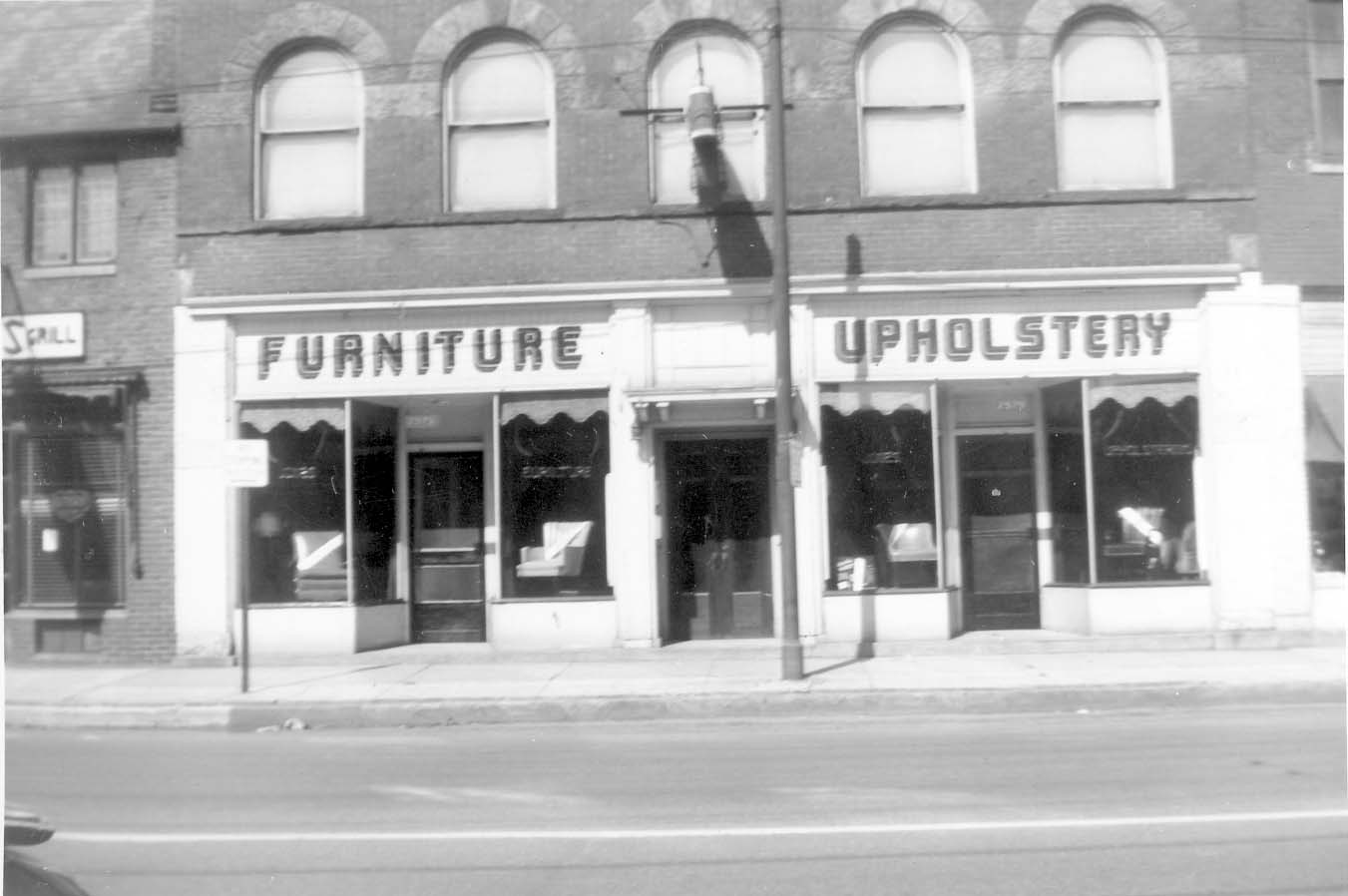 Frank continued the business until 1977 when Neocacia Masonic Lodge (which occupied the 2nd story of the building) sold the building. This photo was taken in 1951.
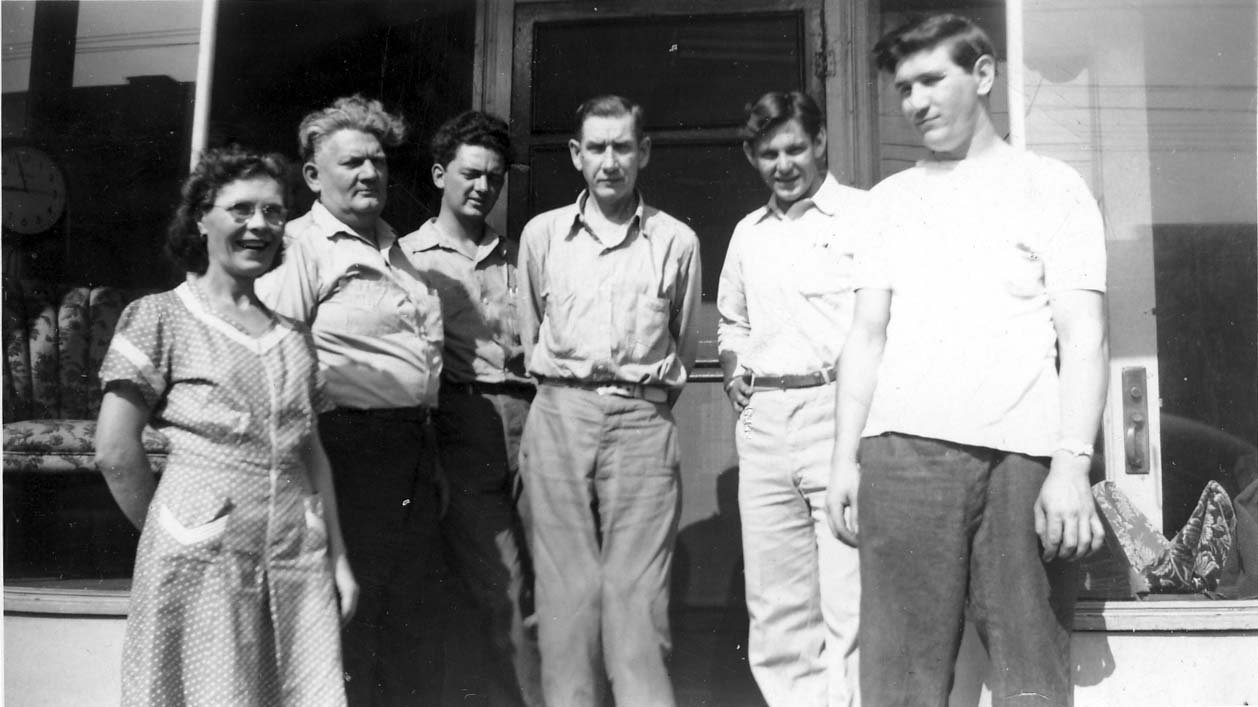 In 1947, here are: Jenny Mocabee, Charles M. Jones, Frank Jones, Ray Bennett, Dick Schaeffer, Bob Hill.
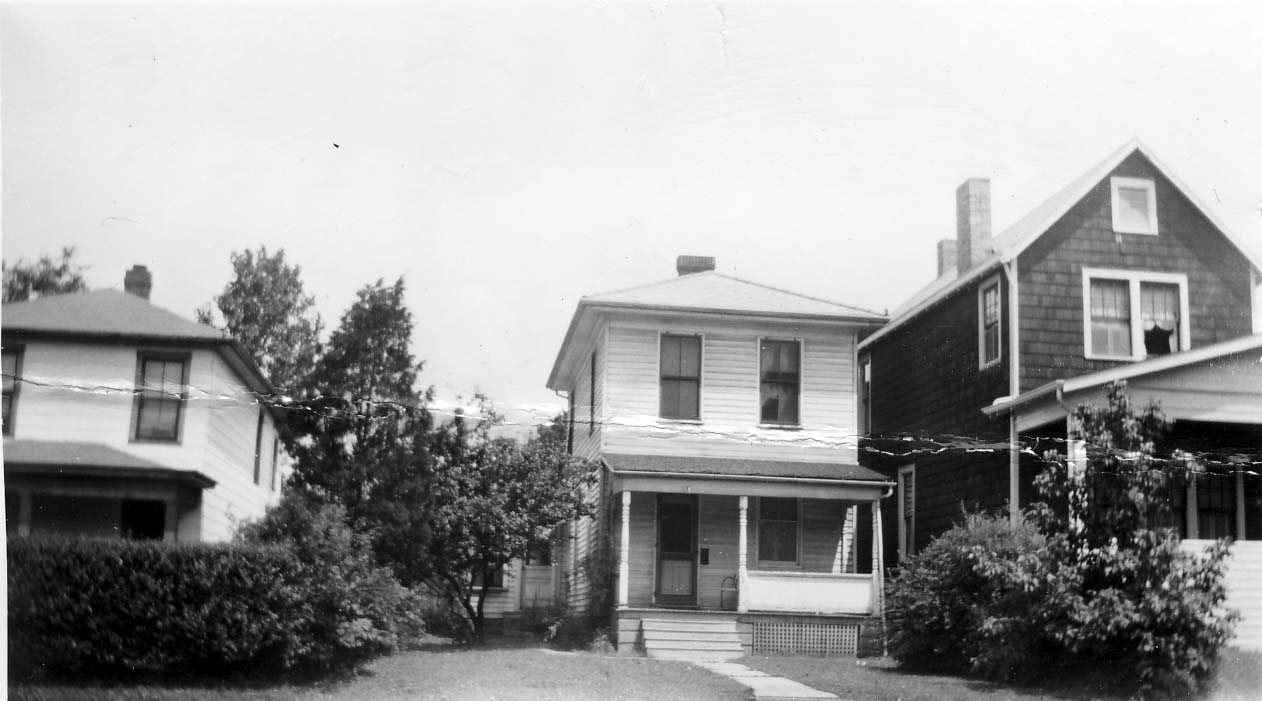
66 East Duncan Street, a house owned by Frank Jones, owner of Jones Upholstery. This house has since been torn down. (Photos courtesy of Frank Jones.)
Mayor George Sidney Marshall
 One of Clintonville’s notables was George Sidney Marshall (869-1956). He was raised on a farm in Perry County and attended Ohio State University. He graduated from OSU in 1894 and then from its law school in 1897. He was active in local politics, and became mayor in 1910 on the Republican ticket. After his term of mayor, he returned to the practice of Law and retired in 1946. He and his wife had a longstanding interest in music, and formed the Clintonville Music Study Club. In his retirement (and after the death of his wife), Marshall wrote a history of music in Columbus, a thorough account of all the local nonprofit musical organizations across the city. His book, called The History of Music in Columbus, Ohio, covers the period from February 14, 1812 to July 1, 1953 and was published by the Franklin County Genealogical Society.
George Sidney Marshall’s son, George B. Marshall, was also an attorney and served as a Franklin County Common Pleas Court Judge for 26 years. He retired in 1980 and died in 1981.
Fuller Farm & Whetstone Park
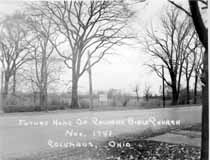 E.A. Fuller was a prominent Clinton Township horse trader at the turn of the century. I found the Clinton Township records for the late 1800s and early 1900s, and his name was frequently mentioned as buying or selling horses. I assume that the so-called “Fuller Farm”—where Calvary Bible Church, Whetstone Park, Clintonville Women’s Club, and The Church of Christ, Scientist are today—once belonged to this man. (Photo courtesy of Calvary Bible Church)
The vacant farm has been put to many uses. During World War II, the land used for victory gardens. (There were also victory gardens near Riverside Hospital.) Children put the area to their own purposes, scrambling through the undergrowth and playing by the river.  Many long-time residents recall a family that lived in the farm house—some have called it a log cabin, others say it was a chicken coop–of the old Fuller Farm. Some say the family was partly Native American; others say partly Romani; in any case, the family’s race added to their mystique and exoticism in the minds of the Clintonville children of the time. The family’s surname was Windsor; Mr. Windsor was a professor at OSU, and many of the people fondly recall daughter Zolithia [or Zelitha] (back row, 4th from left) and her brother Romanus (3rd rw, 2nd from right).
During or shortly after World War II, Rand Hollenback (founder of The Booster) lobbied for remaining land to be converted into a park, and the City of Columbus purchased the 161 acre farm. It became Whetstone Park. From early on the park has included a casting pond, softball diamond, tennis, picnic and playground, and archery field.
Chester Nicodemus’s Price List
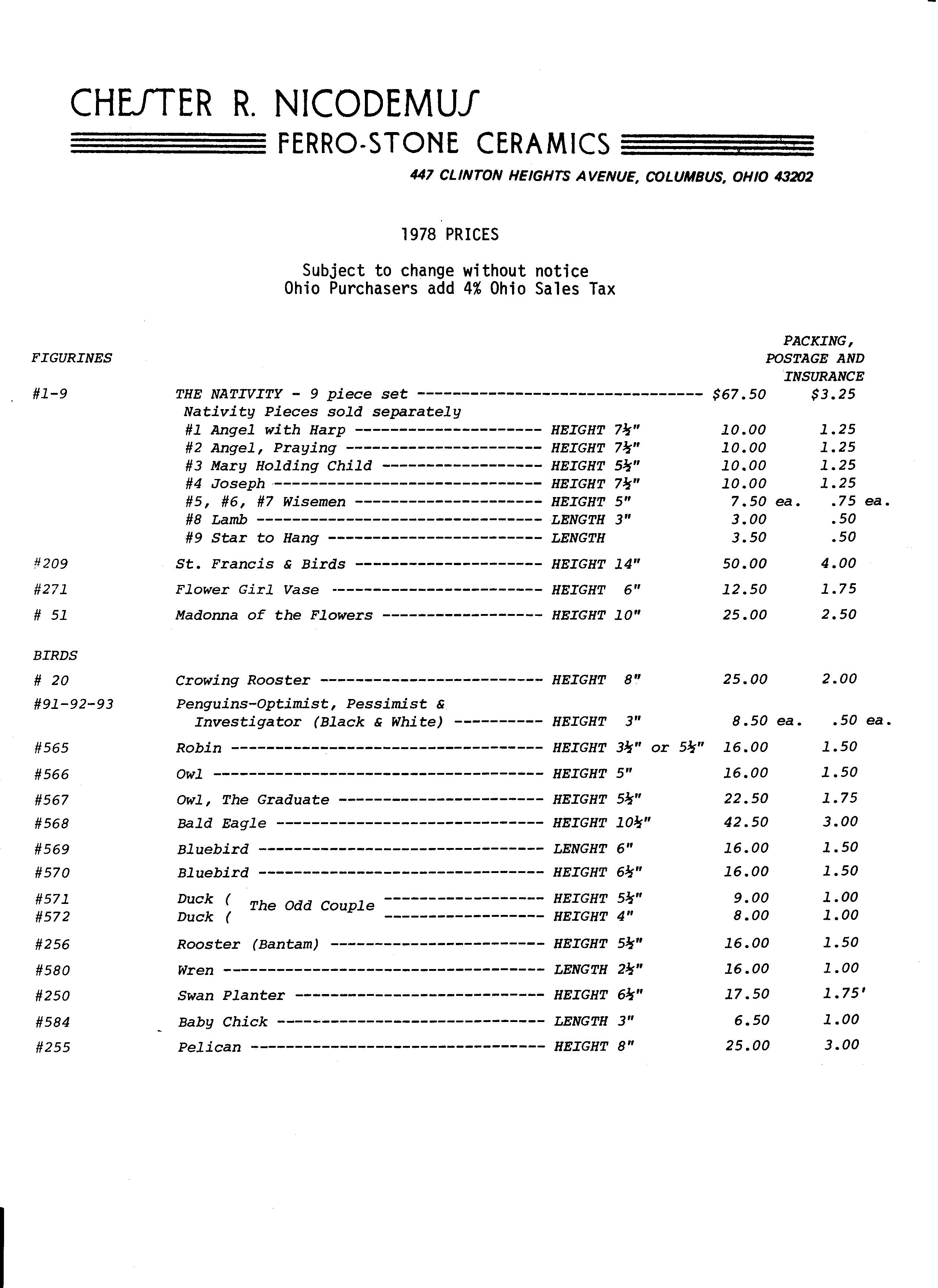 Chester Nicodemus is a favorite Clintonville person of mine, in part because he lived on my street. I was delighted when Joe Motil shared an old 1978 Nicodemus Pottery price list with me. The pottery was dear, even back then! (Document courtesy of Joe Motil)
D. H. Bradley, Veterinarian
Jan Bradley Zenisek shared these two family pictures with me. Her father, Dr. D. H. Bradley, operated his veterinary clinic on the ground floor of the home originally built by Henry Cooke and shown in my book and here. The Bradley family lived upstairs.
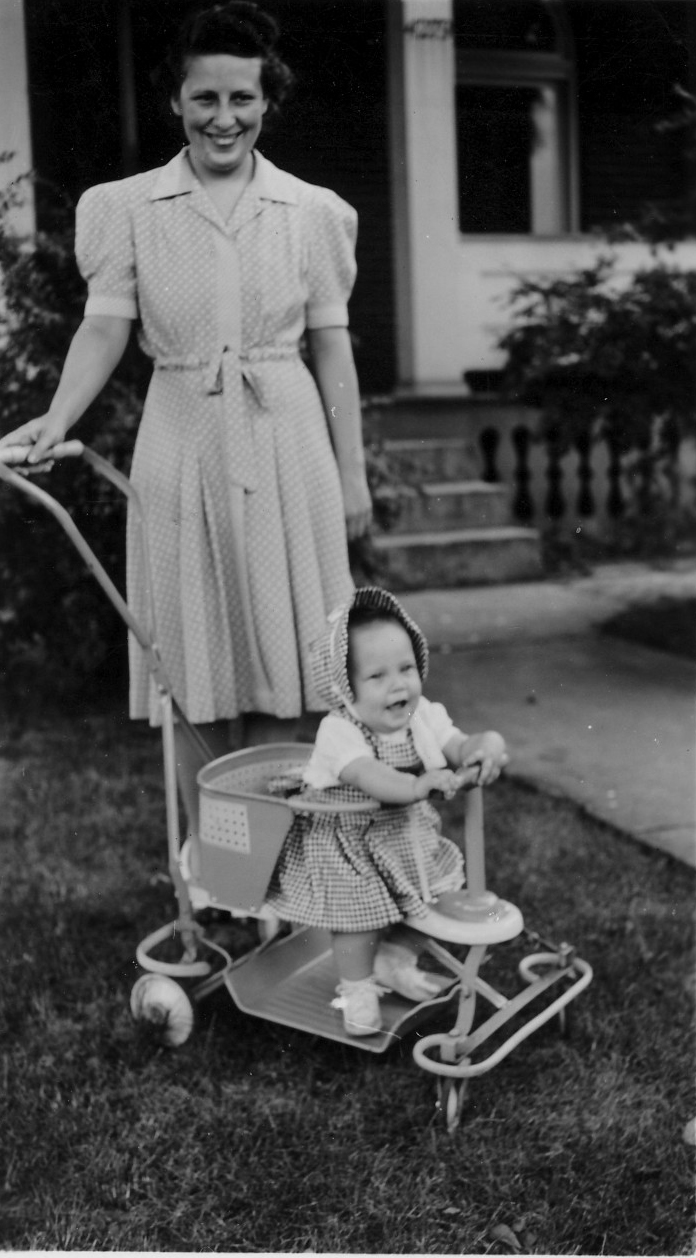 The photo on the left shows Jan’s mother, Ellen May Bradley, with Jan in 1941.
 The picture on the right shows Jan’s father (Dr. Bradley) holding Jan’s cousin Neal Cooper, and Jan’s grandfather George Cooper with Jan, outside the clinic/house in 1943. (Photos courtesy of Jan Bradley Zenisek.)
The house was later destroyed to make way for a car dealership. Jan salvaged the lovely arched windows and they now adorn her Riverlea home.
A.B. Graham (1868–1960)


A. B. Graham (Albert Belmont Graham) was an educator from Springfield OH. He had an idea: to get young people together to learn about agriculture and develop skills for farm living. He formed an organization to enable such practical learning. He originally called it the Boys and Girls Experimental Club, and then, the Boys and Girls Agricultural Club. By 1905 there were over 2,000 young people in sixteen Ohio counties participating in Agricultural Clubs. Graham was named Superintendent of Extension of the Ohio Cooperative Extension Service and the clubs were expanded nationwide. In 1916 the Boys and Girls Clubs officially became the 4-H Clubs.
 A.B. Graham eventually worked for the USDA in Washington DC. After his retirement in 1938 he moved back to Columbus. He lived in his home on Clinton Heights Avenue until his death at the age of 91 in January 14, 1960. These photos show him at his Clintonville home. Happily, today I live in that very same house.
What do the 4 H’s stand for? Well, originally, there were only 3 H’s and the insignia was a 3-leafed clover. The H’s stood for head, hearts, hands. Then a 4th H was added and the organization’s clover became 4-leafed. That last H stood for hustle. But “hustle” didn’t stand up to the test of time and was eventually replaced by a tamer “H,” that is, health.
(Photos courtesy of OSU Photo Archives, Drawer #213.)
Through Rose Colored Glasses
 In 1954 Nancy Blanchard, a 16-year-old student at Mifflin High School, became the first winner of Maiden of the Roses competition. The pageant, a yearly event held each June at the Park of Roses and sponsored by North Columbus Civitan, was held from 1954 until 1974. Thanks to Nancy and her cousin Joyce Schatz, we have Nancy’s clippings file from that era, and that newspaper articles are linked to the thumbnail images below as PDFs. [Clippings courtesy of Joyce Schatz.]
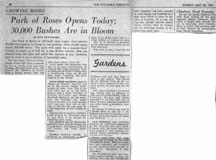
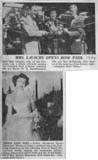
Chester Nicodemus
Chester Nicodemus (1901-1990) was a potter, known for his small clay birds fashioned from variously colored, high-iron-content Ohio clays. Several Clintonville residents showed me some of his birds as well as commemorative plates made for the Clintonville Women’s Club. He made teapots and pitchers, robins, eagles, and other wildlife.
Nicodemus earned a degree from Cleveland Art School in 1923 and then taught art at Dayton Art Institute and Wittenberg College. In 1932 he became dean of Columbus Art School, now known as Columbus College of Art and Design. He later taught at Ohio State University and served as president of the Columbus Art League.
 Nicodemus lived and had his studio (Nicodemus Ferro-Stone Ceramics) on Clinton Heights Avenue. There he produced more than 1,000 molds in his basement workshop. He had two home-made kilns in the garage, which also housed a showroom. Nicodemus pieces are known for their translucent glaze highlighting the clay’s red tint and producing russet brown undertones. Upon Nicodemus’ death and at his request, all the molds and glazes were destroyed. (Photo courtesy of Darrell Nicodemus)
Beechwold Hardware
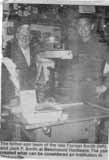 Forrest Smith began Beechwold Hardware in 1944 and 9 years later his son Jack joined him in the business. This photograph shows Forrest Smith and his son Jack around 1960. Jack’s son-in-law now owns the business, but Jack works at the store regularly when he’s not out playing golf. Beechwold Hardware may be the longest-running family-owned business in Clintonville. (Photo courtesy of Jack Smith)
Who Was Bishop Watterson?
 He was the second bishop of Columbus, occupying the episcopacy from 1880-1899. He was born in 1844 in Blairsville, PA and was ordained in 1868. He was president of Mt. St. Mary’s College, Emmitsburg, Maryland when he was selected to become Bishop of Columbus. His special interest was development of parochial schools. (Photo courtesy of Bishop Watterson High School)
In memorium: Nils Lindquist
Nils I. “Lindy” Lindquist, the owner of Lindy Productions which was in the old Beechwold Tavern building (most recently Cord Camera, at 4784 North High Street), passed away in October. This is another sad loss for the community. Our condolances to his wife Donna and his family. Lindy’s obituary, from the Columbus Dispatch, follows.
LINDQUIST Nils I. “Lindy” Lindquist, age 87, of Columbus, passed away Saturday, October 23, 2010. Lindy was born in Sweden and came to America at the age of six where he lived with his family in Carmel, NY. He was a graduate of Horace Mann School for boys in NYC where he earned his nickname “Lindy”. He joined the Navy and became a Seabee in 1943, the first year the Navel Construction Battalions were established. After WWII, the Navy sent him to Missouri University and Cornell for their NROTC Officers Training Program. He later received a BA from Bowling Green State University, attended the School of Modern Photography in NYC, and received a MA from The Ohio State University. He worked as a photographer for the Columbus Dispatch and worked in the PR department for Nationwide before starting Lindy Productions, Inc in 1966. He then operated three companies: Lindy Productions (a film production company), Ohio Newsfilm (a TV news reporting service) and Magnetic Studios (a sound recording company). Lindy was a writer, photographer, pilot, amateur radio operator, and a film producer; he worked in 34 countries and spoke three languages. He was an honorary lifetime member of the Golden Retriever Club of Columbus, Ohio. His detailed memoirs of the 87th Naval Construction Battalion are now a part of the American Folklife Center in the Library of Congress. Lindy is survived by his wife of 61 years, Donna; daughter, Karen Lindquist Elliott; granddaughters, Colleen Ann McClung, Ph.D., her husband, John Francis Enwright III, Ph.D., and Megan Kathleen McClung, LEED AP; great grandchildren, Evan Michael and Annika Erin Enwright. In keeping with the wishes of the family there will be no visitation. Arrangements by RUTHERFORD-CORBIN FUNERAL HOME, 515 High St., Worthington, OH 43085.
David Schreiner Dies
David H. Schreiner, age 92, died Thursday Feb 19, 2010. From the Columbus Dispatch Obituary:
“Founder and owner of Schreiner Plumbing And Hardware Co. in 1946. Veteran, U.S. Army Air Corps, WW II. Member of North High School Alumni and OSU Alumni, where he was the first “Script Ohio” snare drummer for the OSU Marching Band; member, Aladdin Shrine, Drum & Bugle Corp, Royal Order of Jesters Court 8; El Hajj; Kachina Club; Ambassadors Club; Last Man’s Club; Scioto Boat Club. Member, Northwest United Methodist Church.
“Survived by devoted wife of 61 years, Ruth; children, John “Jack” (Gloria) Schreiner, Daniel “Dan” (Glenda) Schreiner of AZ, and Nancy Schreiner; grandchildren, Debi (Jim) Lewis, Cathi (Jeff) Hill, Ben (Lara) Schreiner of GA, Tyson (Laura) Schreiner of WI, Andrew (Britta) Schreiner of NJ; great-grandchildren, Noah and Ethan Schreiner of GA and Ian Schreiner of WI; nieces and nephews.”
Carving out a Niche
 I wish I could have included these pictures of Jerry Devine’s chainsaw sculptures at Como Mower in my book because they are so Clintonville. Unfortunately I had too many pictures and too little space and so I used date (1970s) as a cut-off criteria. Weiland’s has a sculpture as does someone who lives in the vicinity of Northmoor. Note also, in the photograph, the old Darts USA store, which no longer exists. (Photo courtesy of Jerry Devine)
William Gillie
Another prominent Clintonville resident was William and Catherine Gillie. He was a Franklin County Court of Common Please judge for 25 years; by hobby a whittler and ice hockey player, and a contributor to Park of Roses and to many of the area’s senior centers. She was a major force in formation of Columbus’ LifeCare Alliance.
Fred Shannon
 Among the many accomplished people of Clintonville is Fred Shannon (1921-2007), a renowned photographer who worked for The Columbus Dispatch. In this picture he is wearing a Mickey Mouse strap given to him by his son. The story goes that Fred was taking pictures of the original Mickey Mouse creators and they were so tickled by the strap he was wearing, they made him cartoon which the Shannon family still has.
Notable people
I had originally planned to include a chapter in my book about notable Clintonville residents. Oddly, I was unable to acquire a balanced set of information about Clintonville’s notables. But here are the names of some of those who were nominated, either renowned for their contribution to Clintonville or because they were renown in their chosen field:
- Armbruster, Mathias (lived at 3100 North High Street where Southwick-Good & Fortkamp Funeral Chapel now stands)
- Barker, Skip, d. 2008
- Breunig, Sarah—civic leader (Glenmont Ave.)
- Dawson, Harold
- Dodge, Mel (201 Girard Ave)
- Dupre, Dallas–landscape architect (whose office was at 3073 North High) who is credited with founding the nation’s system of roadside parks
- Gessaman, Myron–Columbus mayor (he lived at 4206 Fairoaks Avenue and also at 147 Rustic Bridge Road)
- Gillie, William and Catherine
- Gowdy, Harry “Hank” (address listed as 384 Fallis Road)
- Graham, A.B.–founder of 4-H Clubs (lived at 159 Clinton Heights Avenue)
- Herbert, Paul M. (307 Olentangy Blvd.)
- Hollenback, Rand & his son Donal
- Hutchins, Edward F., 1925-2005, Dispatch writer, park director from 1971 – 1990s (5301 North High Street Apt. C)
- Jeffrey, Joseph A.
- Koblentz, Morris
- Koch, Freda Postle–journalist, writer and civic leader (Oakland Park Avenue)
- Marshall, George Sidney, 1869-1956–Columbus mayor
- Martin, James Boyd—architect (East North Broadway)
- Moose, Bill–last of the area’s local Wyandot Indians
- Morrill, Paul–artist
- Murnan, Patrick–owned a horse farm where Graceland Shopping Center now stands
- Nicodemus, Chester–artist (Clinton Heights Avenue)
- Reinhardt, Dana–Columbus mayor
- Rhodes, Jim–Ohio Governor
- Rogers, Carl–psychologist (lived at 4857 Rustic Bridge while a professor at OSU)
- Scott, William H.– president of OSU
- Sensenbrenner, Jack, 1902 – 1991–Columbus mayor
- Shannon, Fred–photographer
- Thomas, Edward Sinclair–naturalist
- Tyack, George E. (69 Croswell Road, in 1960)
There are of course many others and I welcome input on this list
Art and Artists in Clintonville
In addition to compiling a list of Clintonville’s “notable people,” I have often wanted to see a list of Clintonville art and artists. My list might include:
Jodi Kushins, artist of Smith’s Deli external mural
Smith’s Deli’s indoor murals as well
Chad Bender (children books)
Jerry Devine (chain saw art, out of Como Mower Service & Sales on Indianola)
Harlow Ballard (digital art)
Tim George (Etch-a-Sketch artist)
Chester Nicodemus (ceramics)
Mac O. Shaffer (photographer)
Fred Shannon (photographer)
Mathias Armbruster
Art in Clintonville churches
Marlo Bartels’ Skyline mural formerly at Clinton Elementary School
Please add to my list in the Comments below!