Home
Ackerman Floral
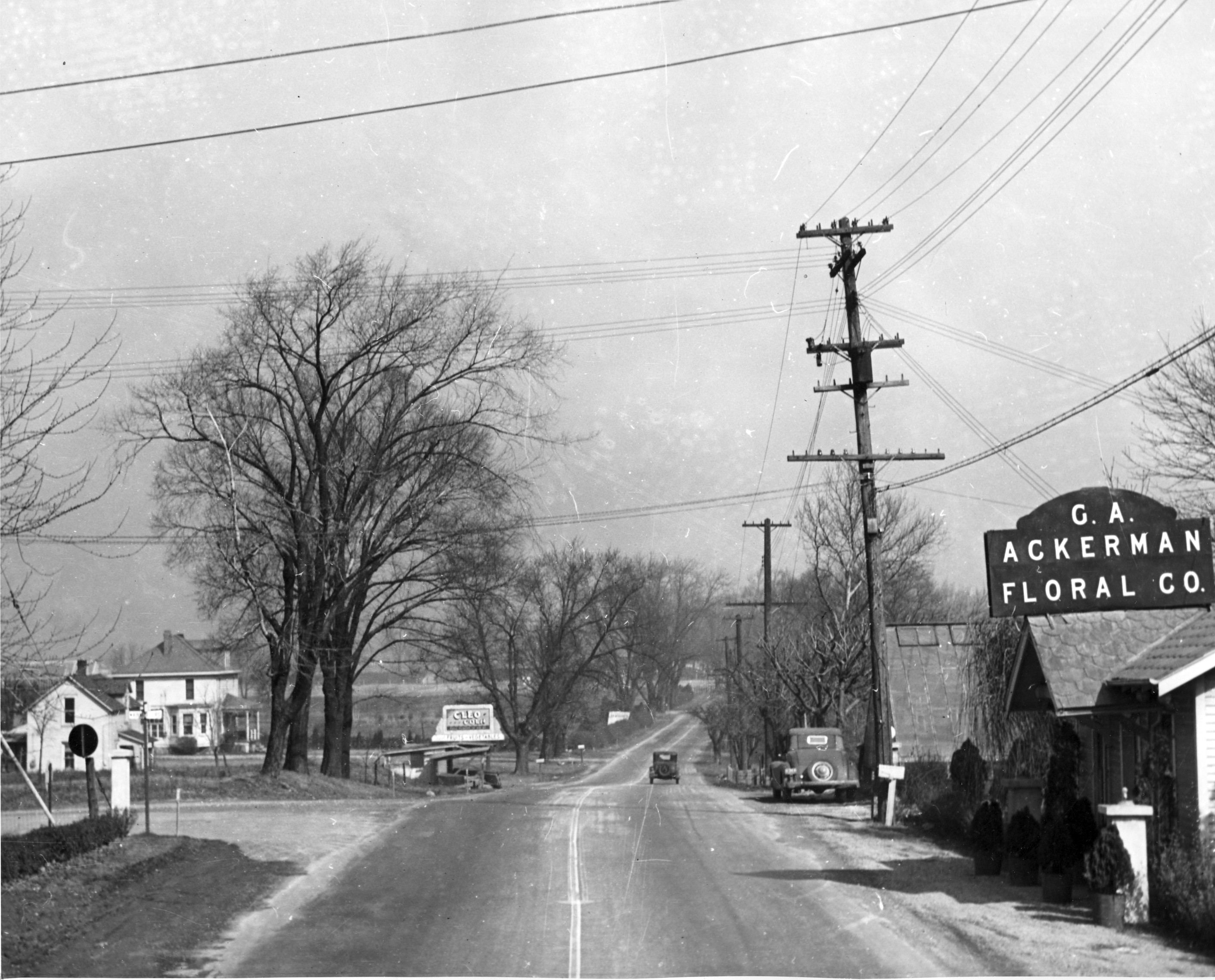 I cannot resist including this photograph of the Gus Ackerman Floral Company, even though it is most definitely NOT in Clintonville. It was located at 1794 Olentangy Road on the east side of Olentangy River Road, near Kinnear. (Photo courtesy of the Franklin County Engineers)
Indianola Business Corridor
Joe Motil has shared the following memories of Clintonville with us:
I haven’t noticed any historical information on the Indianola Business Corridor so I thought I would give you my recollections of what I remember. Located at the south east corner of Oakland Park & Indianola was a Sinclair gas station. The family which operated it lived just east of the Wonder Bread store and their last name was Cotter. South of the gas station was Broady’s Drug Store (I am not sure if the spelling is correct). I believe Mr. Broady lived on East North Broadway between Indianola and the railroad tracks. It was pretty much your typical drug store during the 50’s and 60’s. There was a soda fountain, pharmacy, comic books, etc. As kids we would scour the bushes and roadways for pop bottles and cash in on deposit money and buy candy and pop from the drug store. There was also a phone booth nearby that had a missing coin box cover that you could jingle your finger inside of to get the coins to come out of. Hey, we were just kids. We would then head to the comic book section of the store, grab something to read, sit on the floor and eat our candy and drink our pop. Mr. Broady never had a problem with this. I believe there was also a dry cleaning store named Nash Cleaners that was south of the drug store. I know there was another store in that strip but I can’t remember the name. Where the Burger King now stands was the Beverly (hamburger restaurant Big Boy). These were somewhat popular in Columbus during this time.
Across from the Sinclair gas station at the south west corner was a Shell gas station. It later became a little Greek restaurant. I am sure you have heard of the lumber yard that was located at the north east corner of Oakland Park and the railroad tracks. We used to take our red wagons there and load them up with scrap lumber that was placed in a big bin and use the wood to make tree forts. A Lawson’s convenience store was located next to the current United Dairy Farmers. My father used to buy milk and bread there on occasion especially when the bread was on sale for a dime a loaf. And I am pretty certain that there was a gas station on every corner of the intersection of Oakland Park and Indianola around the late or middle 60’s. And the A & P grocery store was just east of the India Oak (car wash).
Joe Motil
Metzger’s Grill
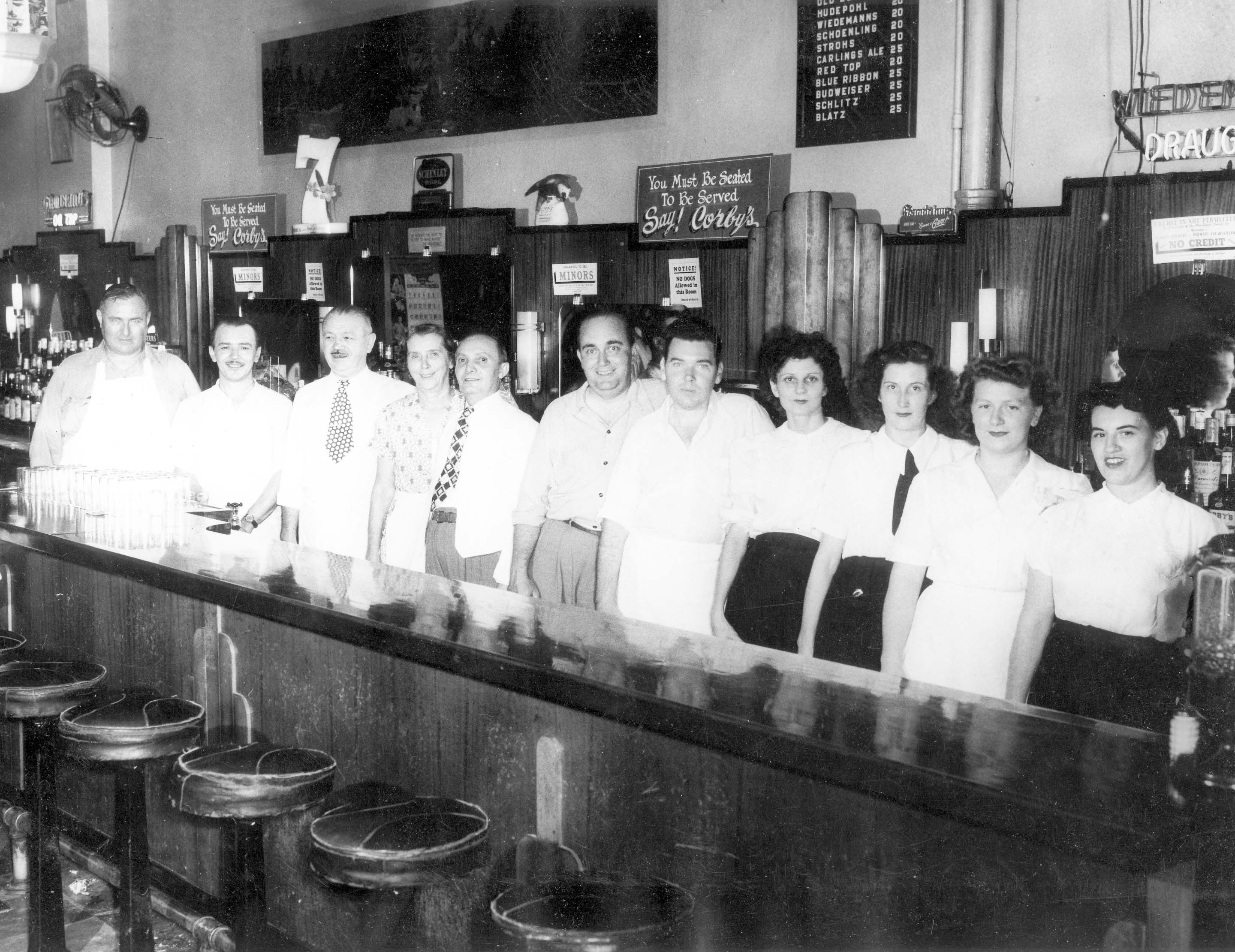 Metzger’s Grill was located at 2571 North High Street. The photos were taken in 1948. Employees (left to right) were Thurm Buckholtz, Bob Grady, ?, Min Metzger, Charley Redd, Jim Walker, ?, ?, Erma Young, Ruth Thomas, Opal Holly.
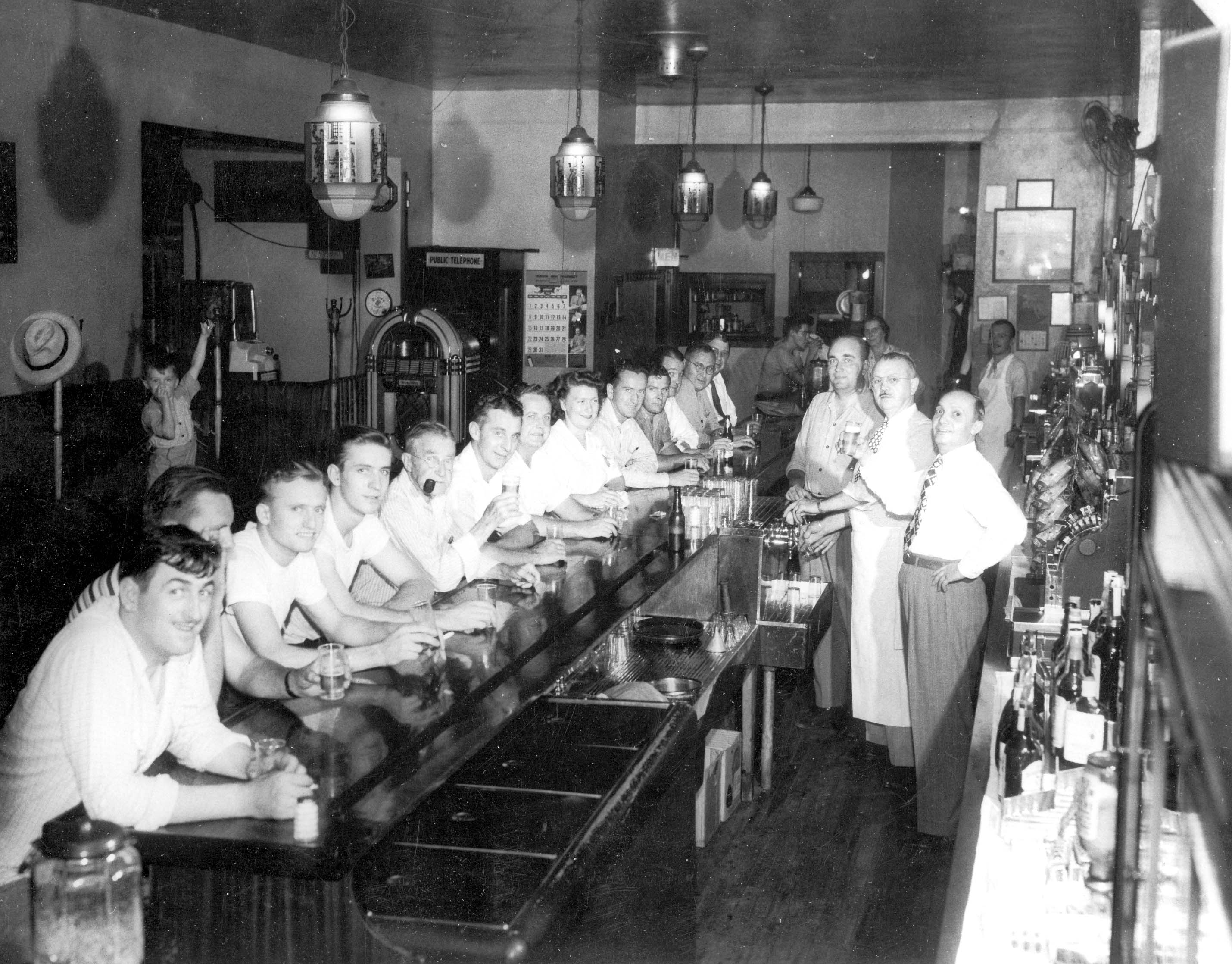 Some customers at the grill, front to back: #8 Ruth Thomas, #10 Eddie Thomas, #12 Thurm Buckholtz, #13 Doc Sly. Behind the bar: Charley Redd, Harvey Edgar, Jim Walker, Min Metzger.
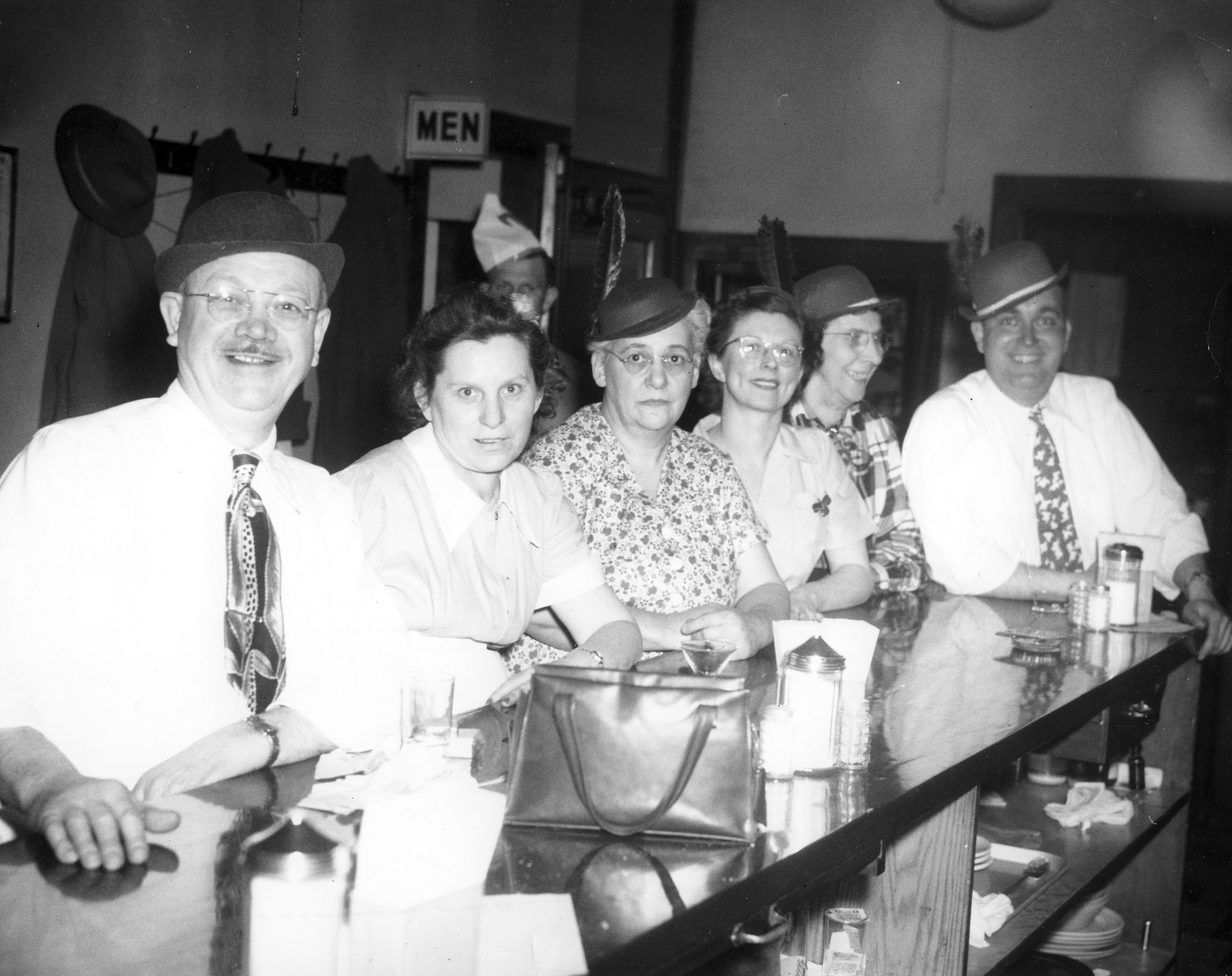 Here’s a picture of Harvey Edgar, ?, Ma Berwill, ?, Min Metzger, Jim Walker. (Photos courtesy of Frank Jones.)
Nicodemus’s Feats of Clay
 Here’s a very nice Columbus Dispatch article about Chester Nicodemus.
Chester Nicodemus’s Price List
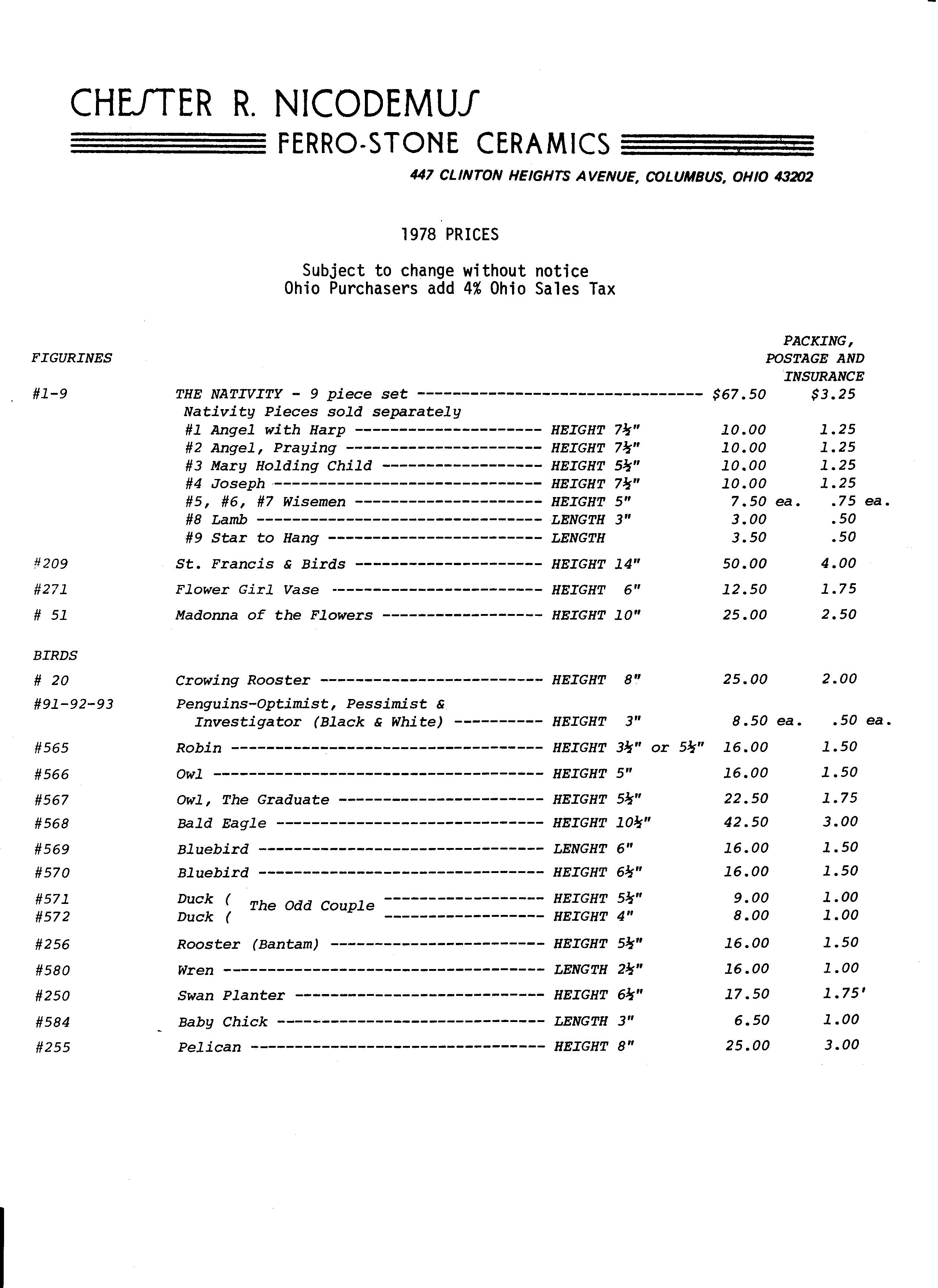 Chester Nicodemus is a favorite Clintonville person of mine, in part because he lived on my street. I was delighted when Joe Motil shared an old 1978 Nicodemus Pottery price list with me. The pottery was dear, even back then! (Document courtesy of Joe Motil)
D. H. Bradley, Veterinarian
Jan Bradley Zenisek shared these two family pictures with me. Her father, Dr. D. H. Bradley, operated his veterinary clinic on the ground floor of the home originally built by Henry Cooke and shown in my book and here. The Bradley family lived upstairs.
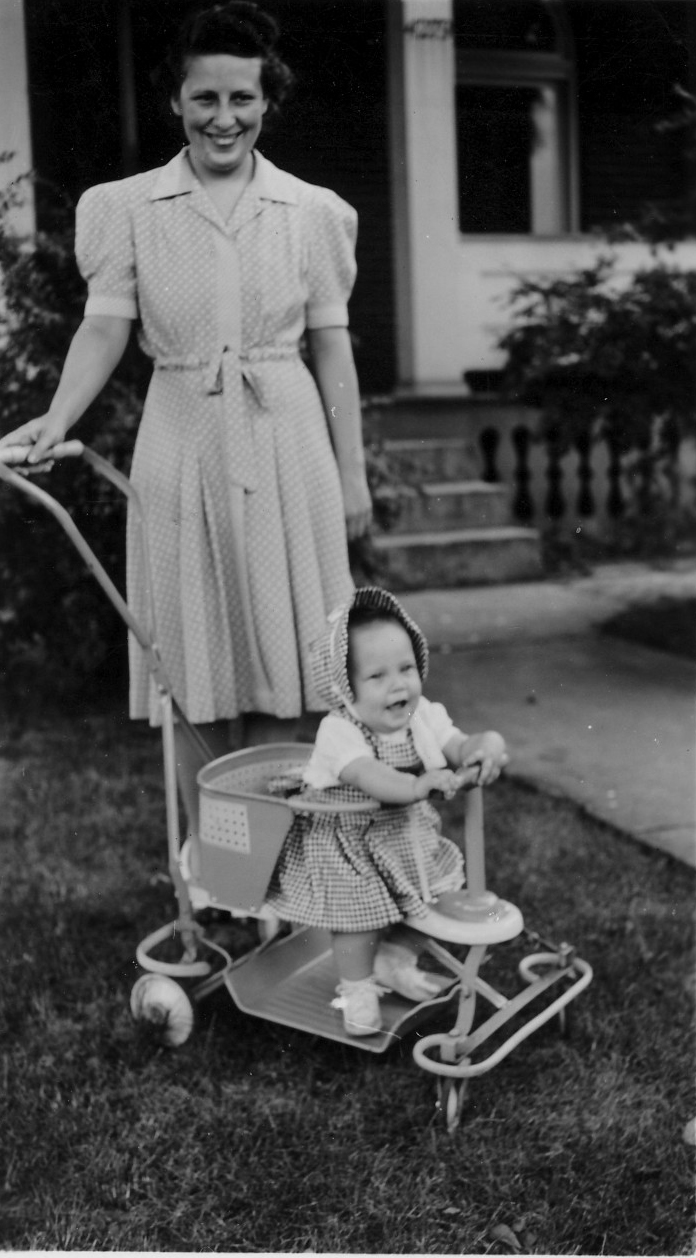 The photo on the left shows Jan’s mother, Ellen May Bradley, with Jan in 1941.
 The picture on the right shows Jan’s father (Dr. Bradley) holding Jan’s cousin Neal Cooper, and Jan’s grandfather George Cooper with Jan, outside the clinic/house in 1943. (Photos courtesy of Jan Bradley Zenisek.)
The house was later destroyed to make way for a car dealership. Jan salvaged the lovely arched windows and they now adorn her Riverlea home.