
80 West Cooke Avenue
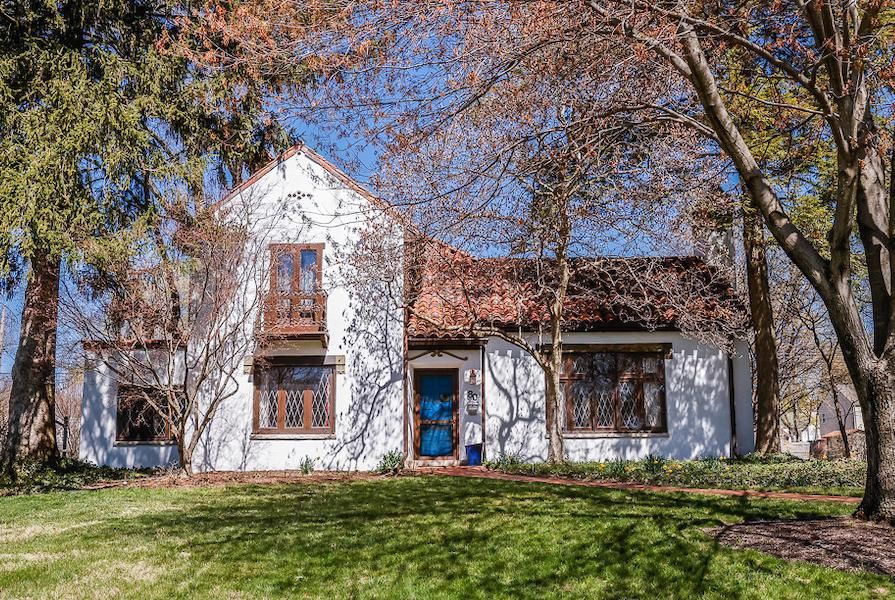 This lovely home at 80 West Cooke Rd was originally built in 1925 for Lulu & Carl Cooke. The Cookes owned it for 40 years, and the house has only had 4 owners since it was built. Fortunately the home’s original character and charm has been maintained throughout the years.
I believe I’ve passed the house many times without noticing it, and suspect its lines were obscured by foliage until recently. What a gem it is!
The house is in the Rosemary housing division, developed by Charles Johnson in 1923 and named after his mother.
As a side note, the Mediterranean Revival style–so unusual in Clintonville–reminds me of the old Zimmerman home that used to be located at the NW corner of Henderson and Olentangy River Roads.
There are also examples of that style at 44 West Jeffrey Place (left photo below) and 223 West Beechwold Blvd (right photo below) in Old Beechwold. An historic inventory for 44 West Jeffrey can be found here. 223 West Beechwold seems to have had the address “4923 West Beechwold” and may have been designed by architect Frank Kinzig, according to the Old Beechwold Historic District Nomination.
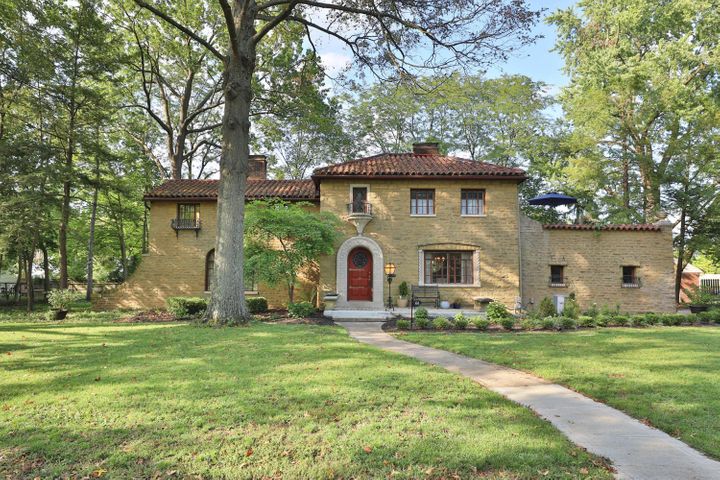
My friend Nancy Campbell tells me that in the 1920s, there was a lot of interest in exotic styles for houses, usually attributed to the young men who came back from WWI. Having seen more of the world, they were interested in Tudor, Mediterranean, Mission, Chateauesque (French) styles. The Sears and Aladdin kit houses, though offering predominantly Craftsman or “plain” styles, also offered the others. These three houses were more upscale versions of an interesting mix of styles. According to Virginia McAlester’s book, A Field Guide to American Houses: The Definitive Guide to Identifying and Understanding America’s Domestic Architecture, tile roofs were used in Spanish Eclectic, Mission, Italian Renaissance, and Prairie styles. The Cooke Rd. house seems somewhat Tudor, with the “musicians’ balcony” overlooking the living room.
[Real estate listing & photos courtesy of Judy Minister; historic architecture information from Nancy Campbell.]
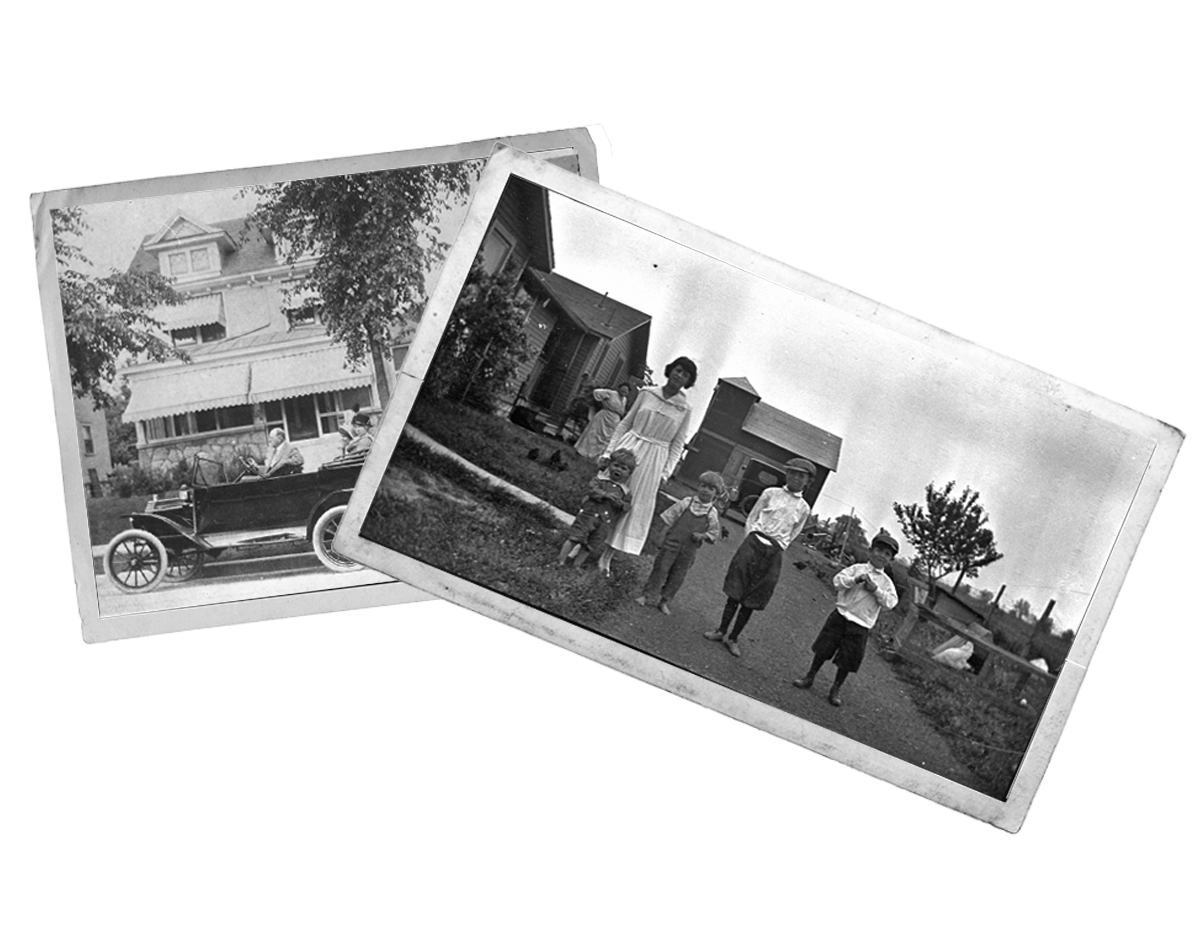
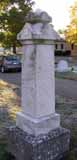 Another one of the first families of Clintonville was the Cooke family. According to the family’s history, Roswell Cooke (1764-1827) came to Ohio with his wife and five children in 1800 from Connecticut. His two eldest sons, Rodney and Chauncey, took up land 6 miles north of the state house, their farms adjoining (in the vicinity of Cooke Road and North High Street). They cleared the land and both erected “houses out of round, unhewn logs, with puncheon floors and primitive fire places, with mud-and-stick chimneys.” The brothers lived the rest of their lives on these farms. Family history states that in 1827 they constructed one of the first grist and saw mills on the Olentangy River, which later became known as the Whipp and then as the Weisheimer Mill. They also operated a distillery. (Photo courtesy of Terry Miller.)
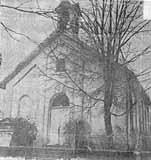 In 1842, Clinton Township School District 1 acquired land at Henderson and High Street from Chauncey Cooke, and in 1878, built a brick school building on the southwest corner. The building was used both as a school and for worship services by various denominations. In 1920, the district deeded the school to the Methodist Church, and the Maple Grove Methodist Episcopal Church was organized. It was at the time the only church between Clintonville and Worthington. (Photo courtesy of the Ron Ohsner family)
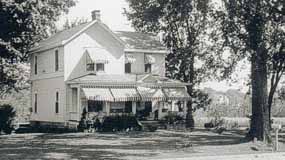 Another noted family in the vicinity of Henderson and High Street was the Armstrong family. Henry C. Cooke’s daughter Flora had married Llewellyn Armstrong. This is their house on the corner of Cooke Lane and High Street. A caption by Lulu Pearle Browne (Ohsner) also states “Clem Cooke [a son of Albert C. Cooke] born here—when first built Al and Lulu Cooke lived here.” (Photo courtesy of the Ron Ohsner family)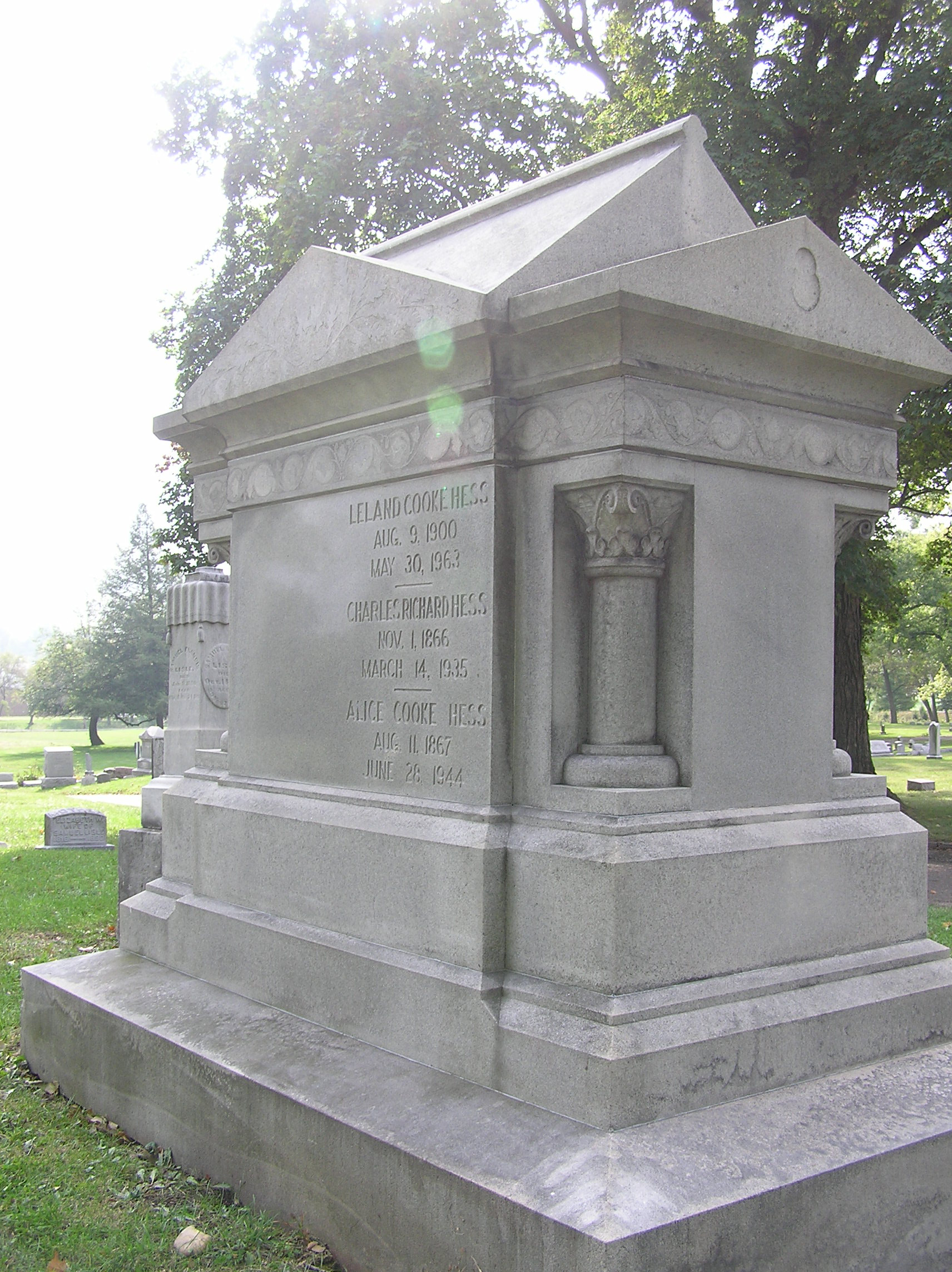


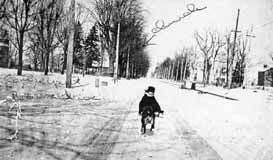 Here’s a picture of High Street looking north. Lulu Pearle Browne (Ohsner) and her dog are at the entrance to the driveway dividing the Browne and Al Cooke homes—presently