Home
Smith’s Skating Rink
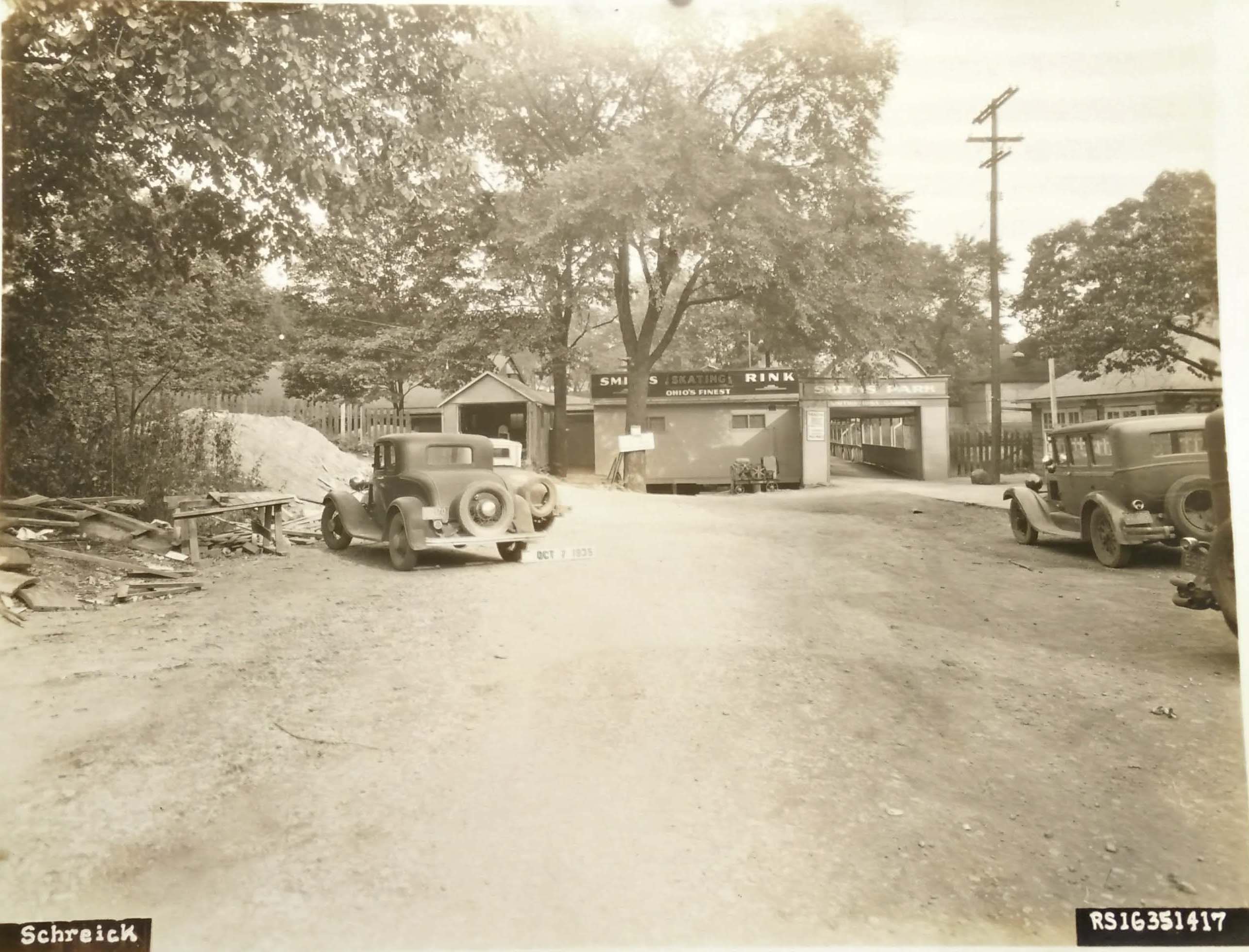 This is not Clintonville! But it is close enough that folks in the Clintonville neighborhood would surely have frequented it.
George W. Smith, a well-known Columbus dancing instructor, built Smith’s Iuka Dance Gardens around 1903. Two seasons later, Smith and his wife opened Smith’s Skating Rink, a roller skating rink.
Both establishments were located at 2150 North Fourth Street in Columbus, Ohio, until they closed in 1971.
George Willard Smith is interred in Greenlawn Abbey, and here is an excerpt about George and his wife Adele Green Smith from the Abbey’s web site:
[Image courtesy of Galen Gonser}Abbey resident George Willard Smith was known as the “King of the Outdoor Amusements” in the early days of the 20th century. He certainly didn’t start out that way. He was born on Christmas day, in 1860, in Syracuse, New York. His parents, John and Fannie Smith, were hard working blue collar kind of people. The family would make their way to Columbus in 1872 and John would find a job as a salesman. (The directories of the time list him as a “peddler”.) A few years later around 1875, George would join in with his father to help with rent and bills and they both would be carriage trimmers by the late 1870’s. Carriage trimmers were responsible for upholstering the seats, floors and roofs of buggies, and the Columbus Buggy Company was a large manufacturer in the city, employing well over 1,000 people by 1880. Work was so efficient, that they finished a buggy every 8 minutes on average. John would pass away in early 1882 at the age of 50, and which must’ve struck a chord in 22 year old George, with him not wanting to die young laboring away like his father did. It’s clear that George had another plan in mind. In those days it was very common to learn dance instruction by reading a book, as private lessons were expensive. Society minded people were getting waltz lessons and trying to be more genteel. George never spoke of any dance schools he attended, so the likely explanation as to how he learned and then taught dancing lessons was he got one of these books as well. (“The Universal Dancing Master,” written by Lucien Carpenter, was popular book published in the same year of John Smith’s death.) Although he was listed as still being a carriage trimmer until 1893, George started a “Home Academy of Dance” in 1894, giving himself the title of professor and calling himself a dancing master.
It’s not known how long Smith was courting Adele Green, daughter of William J. Green, a local Columbus physician. It’s possible that Adele, born in Knox county in 1880, was a student of George’s and he took a shine to her. George was 40 in 1900, Adele was 20, and they both shared an interest in dancing. It could also be that her father was a member of the Benevolent and Protective Order of the Elks, just like George was, and they were introduced to each other through that. Smith wasn’t an old man by any means, and even though it may look a little odd today, marrying a man many years older than her was a normal thing for a woman to do then. The age difference didn’t seem to matter to them much and they were married in 1902.
Smith actually had an article in the Columbus Dispatch claiming that he taught 26,000 people how to dance, and that he was going to officially retire from teaching his home dancing classes. He would still own them for several years, but would employ instructors. His big break was that he was able to lease some land from the Neil family in the area of Iuka Ravine where Northwood and 4th is today for a dance pavilion. A few years later, in 1905, there would also be a roller skating rink on the same property, which George named “Smith’s Iuka Park Gardens.” Roller skating competitions would be held in the rink, where the best skaters in the state would compete to see who could skate the fastest laps.1909 was the biggest year for such a competition.
George had enough money by this time to own and operate the B. F. Keith Theater on Gay Street, a vaudeville theater. His in laws lived in an apartment on the floors above the theater itself, and that’s also where Smith had his office…
As the teens waned and the 20’s came roaring, George and Adele would do less with the theater work and spend more time on their more profitable dance hall and skating rink ventures. Iuka Park Gardens became an institution for the community, even employing boys as young as 12 years old to help lace up the skate to the shoes of the patrons. Several people would meet their sweethearts for the first time at the rink, get their first kisses, and engagements there over the years. The Smith’s employees loved them and some would stay employed by them for decades. George’s brother in law Ivan would help run the business in 1938, and George would pass away in 1948. Adele would continue Iuka Park Gardens until her death in 1965, and it would remain open until Ivan had to close the business in 1971. The land was sold, the dance hall and rinks bulldozed, and the Iuka Park Commons apartments are there to this day. The Smiths had no children.
Winfield Scott & his House


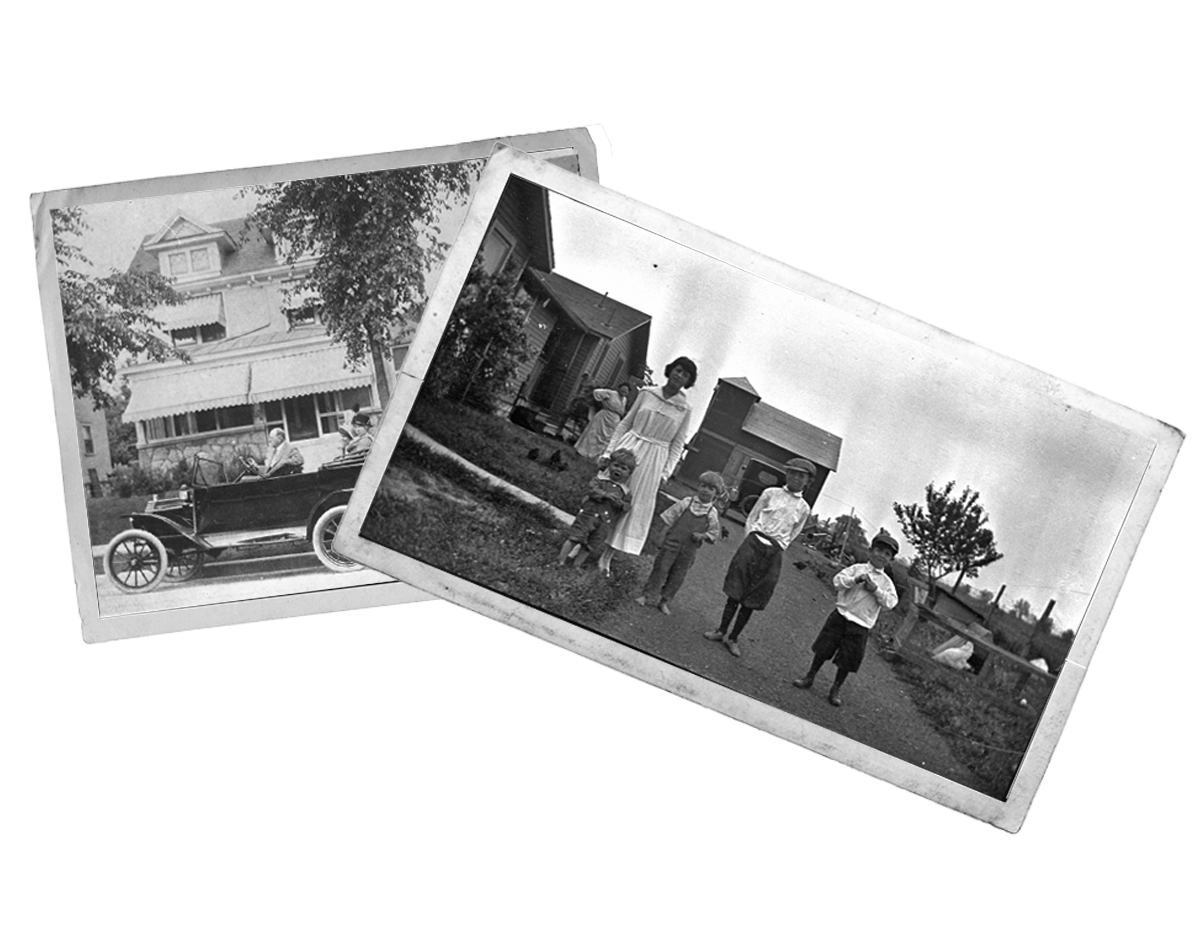
Two more terrific pictures taken in the old old days of 242 East North Broadway‘s history.
This house was known as the Winfield Scott house, after the owner in the early part of the 1900s. The people in the first photo are Winfield Scott (1848-1934) and his wife Francis Anna Whipple. This homeowner bears no relation to the Civil War general. He is also not the son or brother or nephew of a former OSU President.
There were various Winfield Scotts living at the same time and in the same areas, and it makes for some confusion. There is a Winfield Scott (1846-1916) who was the brother to William Henry Scott, the OSU president; William Henry lived on North High Street a scant block from 242 East North Broadway. (This is confirmed with matching parents’ names, Alexander and Susan Scott, appearing on both of their death certificates, viewed on Familysearch.org.) This Winfield brother was married to someone named Josephine.
The Winfield Scott living at 242 E. N. Broadway was the son of Lancelot and Jane Scott, and he was married to Francis Anna Whipple. He also had a son named Winfield Kenath Scott (spelling based on his death certificate) who lived from 1876-1915. Winfield and Francis had a daughter named Florence May Scott who married Clarence B. Hoover; their daughter was Elizabeth Hoover and Elizabeth lived in the Rosemary Parkway neighborhood of Clintonville. In 1991 she sent a letter to the homeowners of 242 E. N. Broadway and you can find that letter here.
There is a mention on OhioMemory.org, that the Winfield Scott who lived at 242 E N Broadway was the son of the OSU president William Henry Scott. But that is not the case. This Winfield was of the same generation as William Henry Scott and Winfield Scott, so they may have been cousins.
By the way, both of these Scott lines lived in Athens County in the 19th Century, so that adds to the evidence that they may have been related (and also adds to the confusion!
[Thanks to Nick at the Columbus Metropolitan Library Local History and Genealogy Desk for this genealogy information. The photographs came from Elizabeth Hoover and are shared courtesy of Gary Means and Jane Hoffelt.]Tigers & Lions & Bears! Oh My!
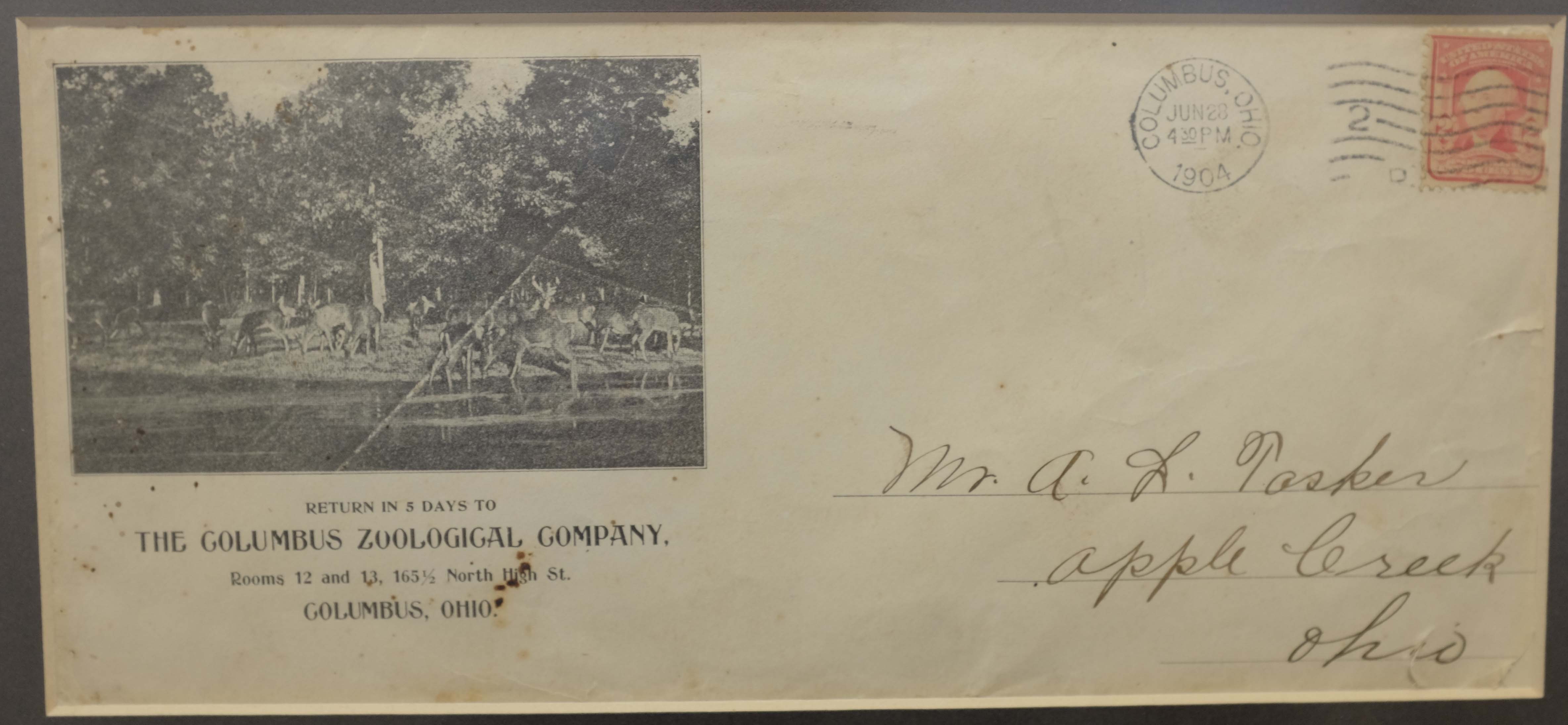
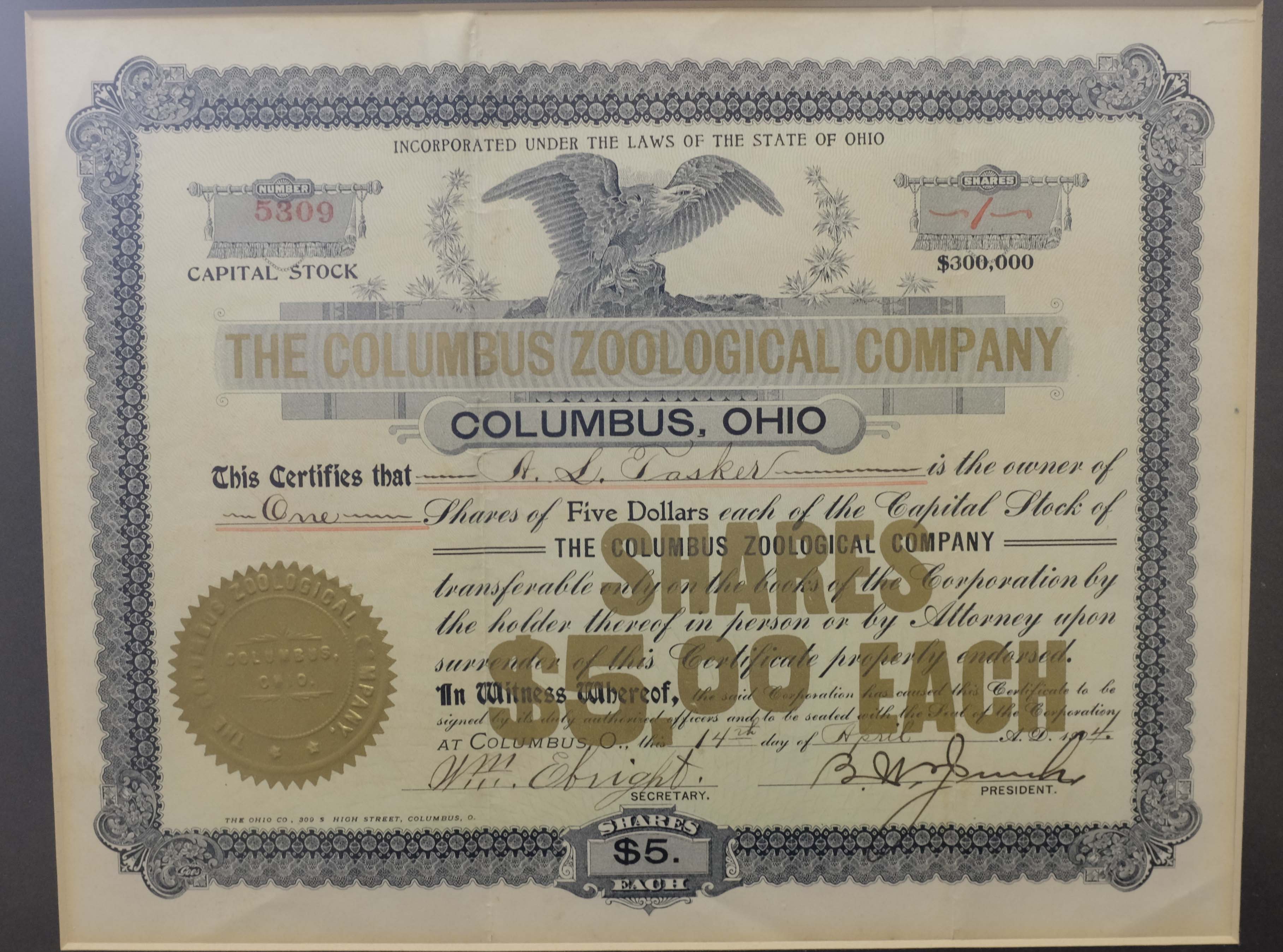
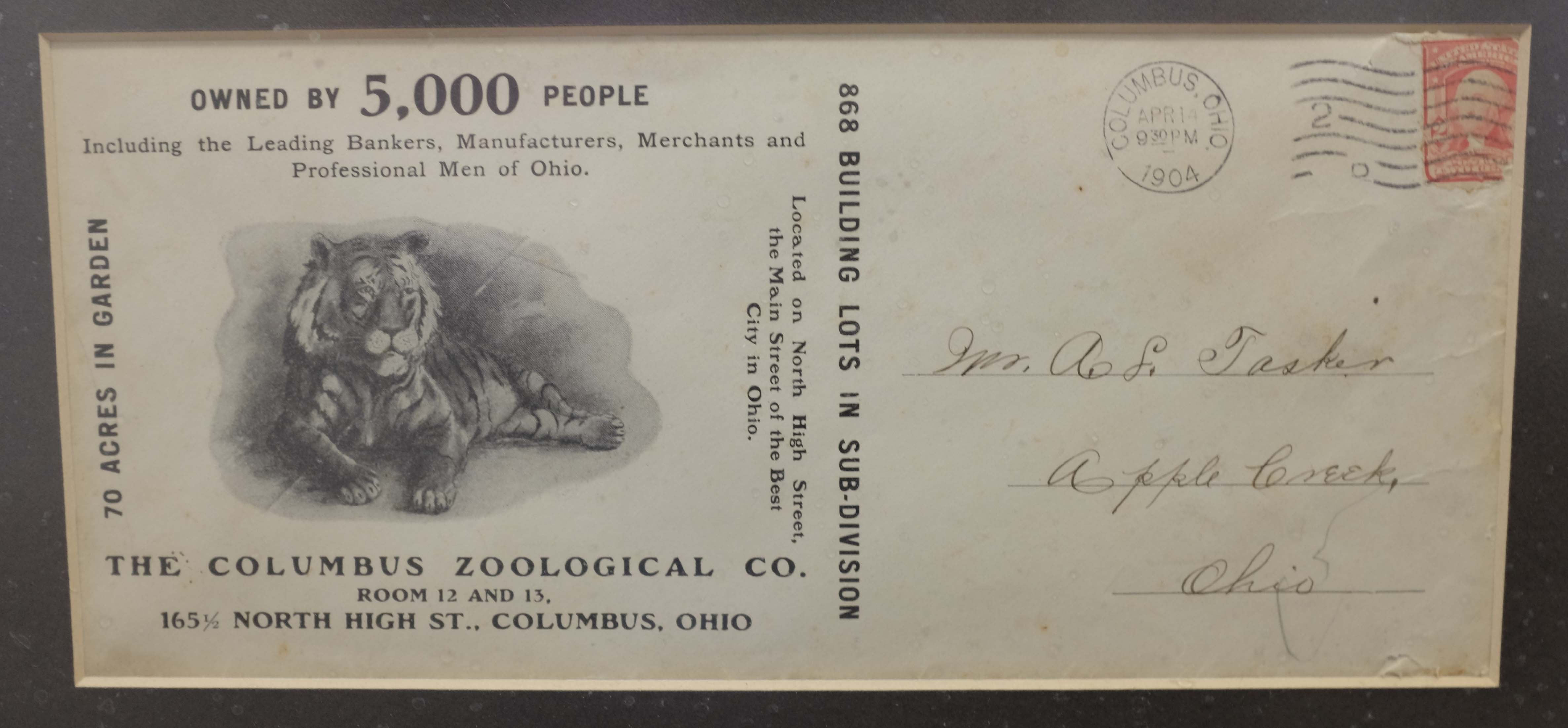
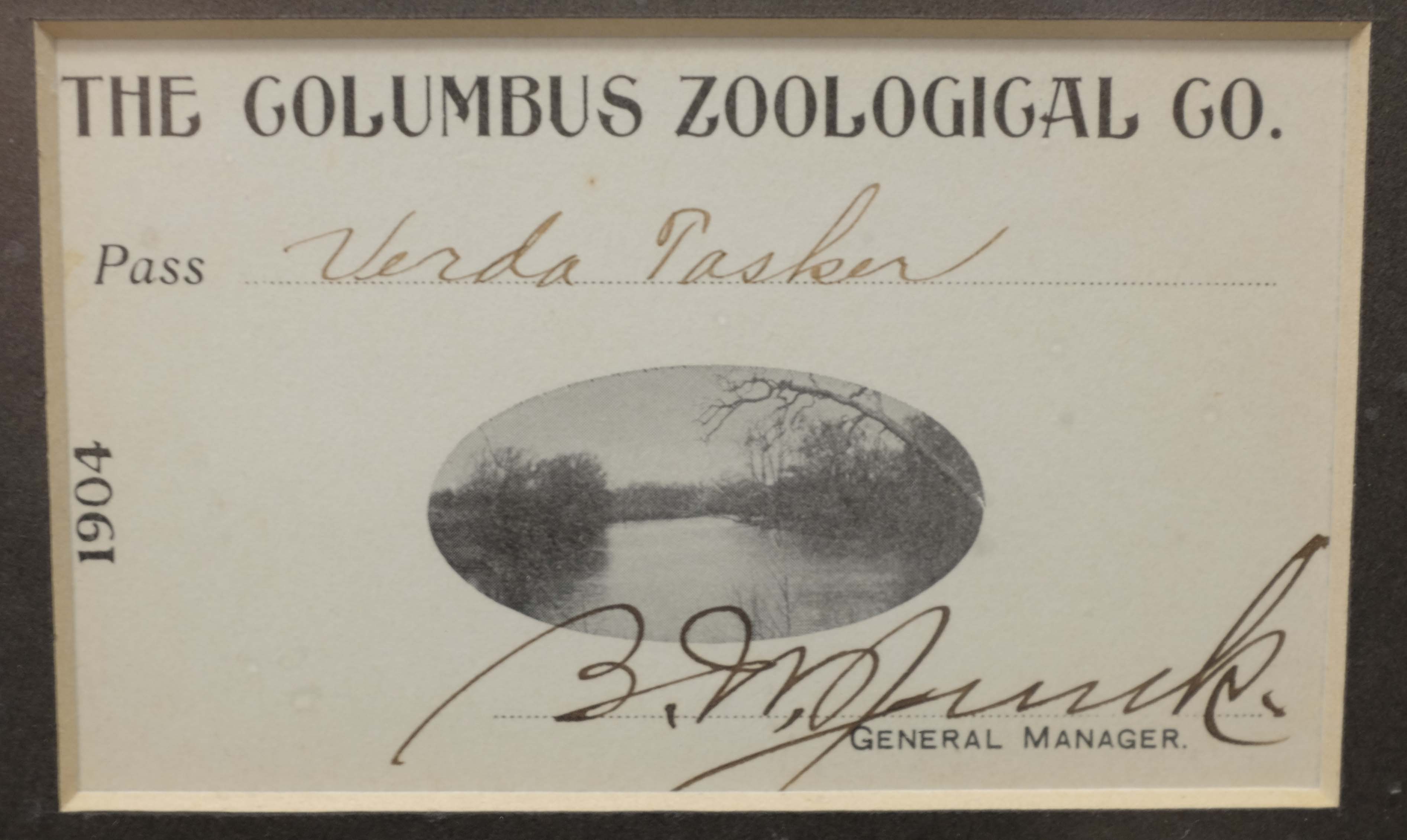
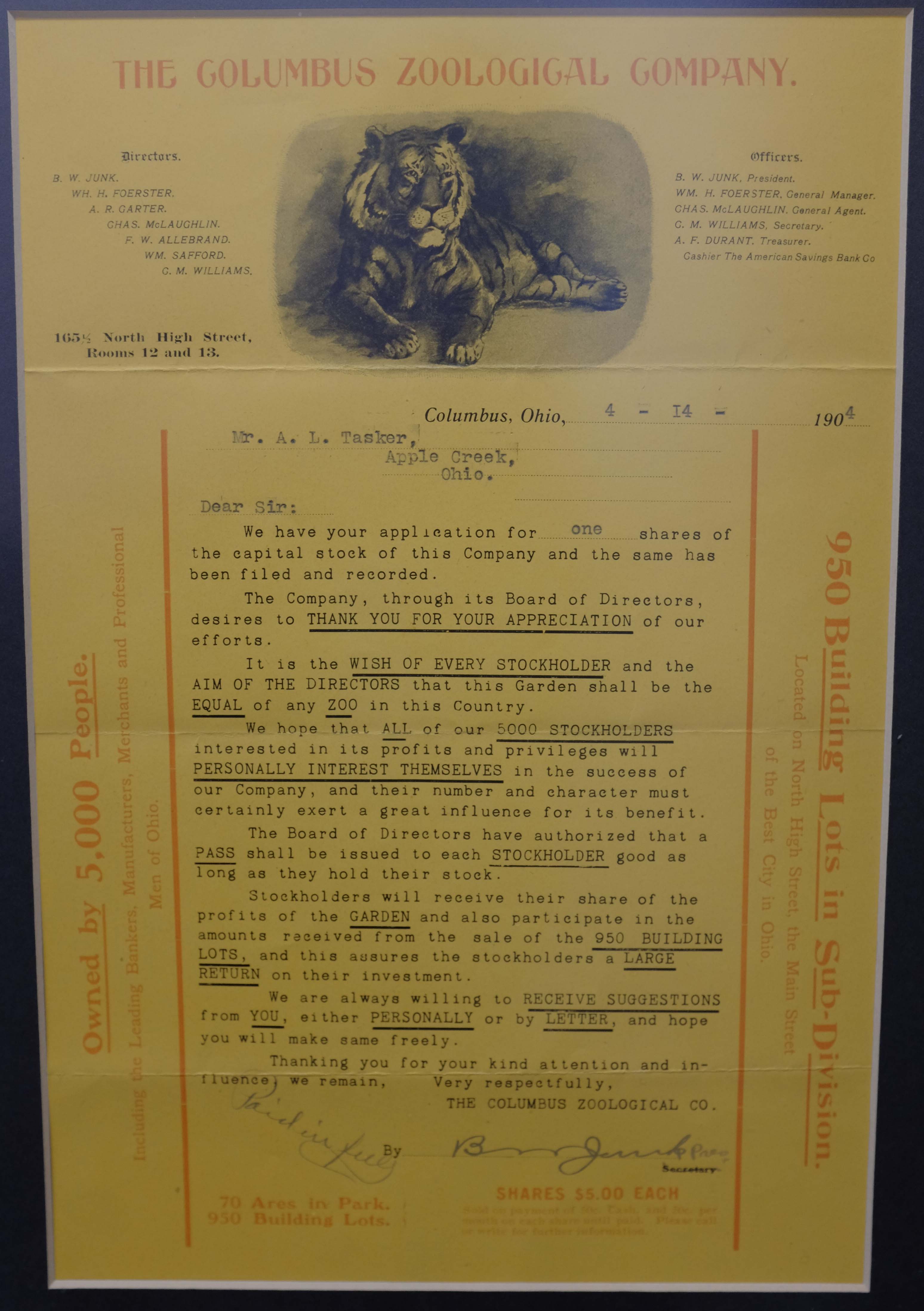
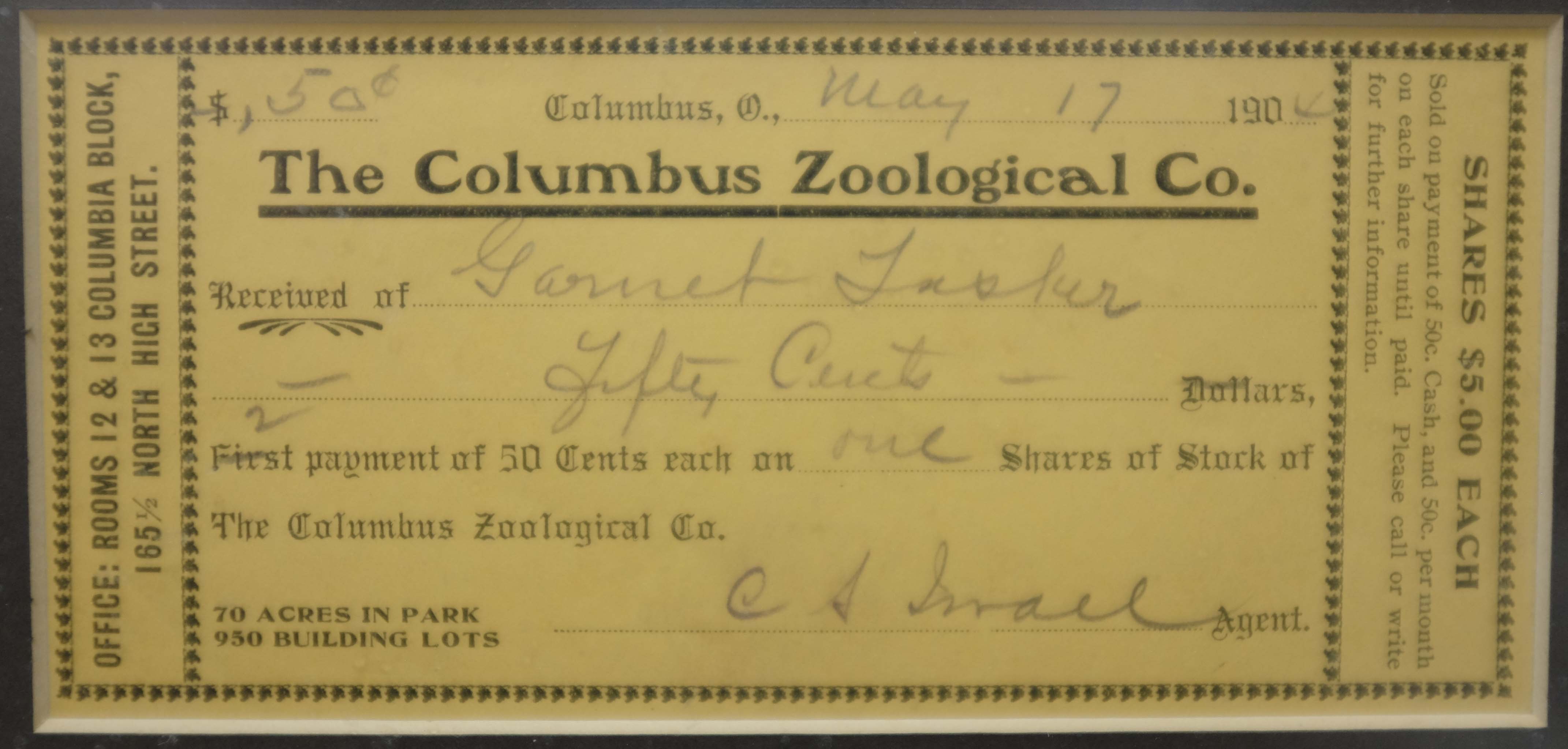
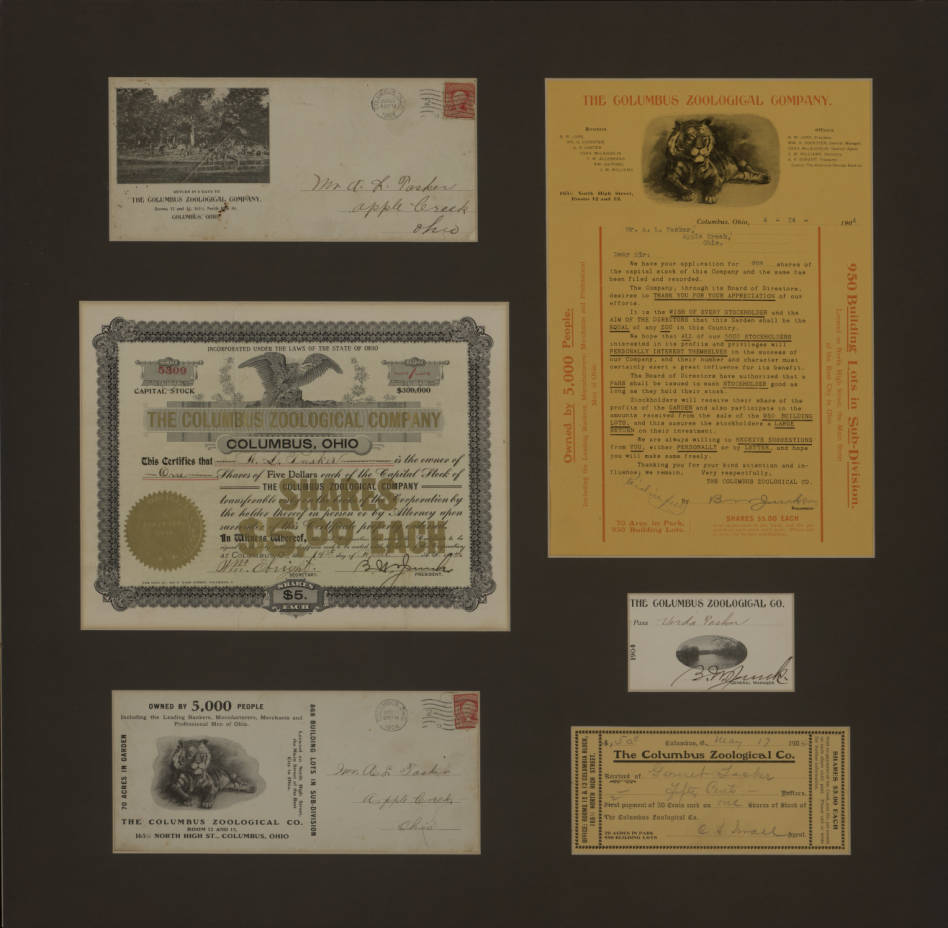 Wow-Alex D. Stanek has located some treasure! The Columbus Zoological Park was located south of Morse/Rathbone Road on the west side of High Street. The east side of High was the “Garden” which was divided into building lots. That neighborhood retains the name “Zooland”. The Zoo was established on land originally owned by John Rathbone. Rathbone died in 1853. That is when the land officially transferred to his daughter Eliza Wetmore and her heirs. Some of these documents feature a tiger. Prior research on the zoo revealed the existence of a meat eater in the animal collection but we’ve always assumed it to be a lion. One photo features a herd of white tail deer. Other animals included rattle snakes, a couple bear cubs, elk, and monkey imported from the Hagenbeck Zoo in Germany. Fabulous finds. [Text courtesy of the Clintonville Historical Society’s Newsletter. Pix courtesy of Alex D. Stranek and the Columbus Metropolitan Library.]
Take Me For a Ride In Your Car, Car..
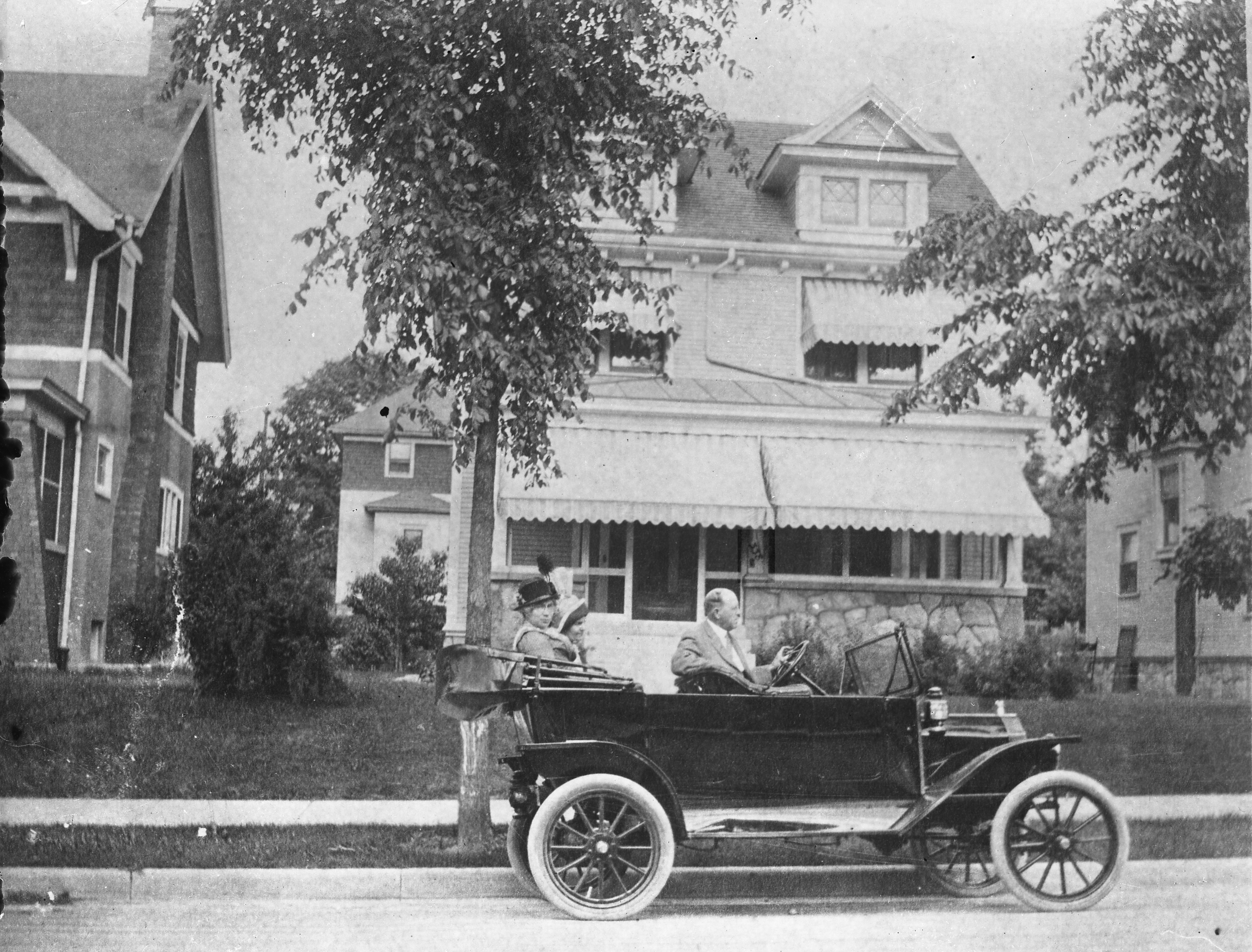 Ron Candage and Rick Lindner kindly identified the car in the photo that I use on my banner. It’s a 1914 Ford touring car.
From Rick:
The 1912 had no front doors (but did have an option to attach removable ones), the 1913 Ford had brass trim on the side lamps, and the 1915 Ford had curved rear fenders. So this pretty much sets the year at 1914.
From Ron:
Ford made 100s of thousands of these in each of these years and they had factories in other countries which produced right hand drive cars. The car in your picture could have been produced at the Ford Motor Company – Columbus Assembly Plant which was located at 427 Cleveland Ave. This factory started in 1914 and closed in 1939. The components arrived here by train and the automobiles were assembled at the plant for delivery to local dealers.
I’d love to also identify the house in the photo, which seems to be at the address “338 [something].” And check out those beautiful columns in the next-door neighbor’s house!
(I’ve rotated the photo since putting it in the banner.)
[Image by C.C. Hollenback, courtesy of the Dawson family.]I Scream, You Scream, We All Scream For Ice Cream!
 I wonder how many ice cream stands Clintonville has hosted over the years? Surely this one at Olentangy Amusement Park was among the earliest.
Indianola’s Rail

In response to John Krygier’s photos of Indianola’s substructure, Alex Campbell sent this lovely photo along.
He says,
There were streetcar tracks on Indianola Avenue from Glen Echo to Oakland Park. The Summit-Steelton standard gauge line was extended north from Glen Echo where the CD&M turned off to head for the private right of way of its Worthington Cutoff. I have conflicting information on just when the Indianola track was built; one date says early 1927 yet it shows up on a 1925 map. It was taken out of service in 1938 when the line was converted to a trolley coach line.
Here is a N. 4th St. photo from 1909 — Fourth Street and 17th Avenue view from southeast corner looking northwest from 17th and west of 4th looking east. Fourth Street north of Chittenden Ave. was the only streetcar line with side of the street right of way in Columbus.
The construction style used to reinforce Indianola (shown in John Krygier’s photos) appear to be similar to tracks used elsewhere in Columbus.
For good measure, Alex also sent along this picture of South 4th St. He says the school building in the left background can still be found on Google maps.