Home
Great Sale of Live Stock
Last April 2021, I posted an article by Clintonville Historical Society President Mary Rodgers, about the Clintonville Woman’s Club. The club was built on land that was once owned by a “horse trader” named E. A. Fuller.
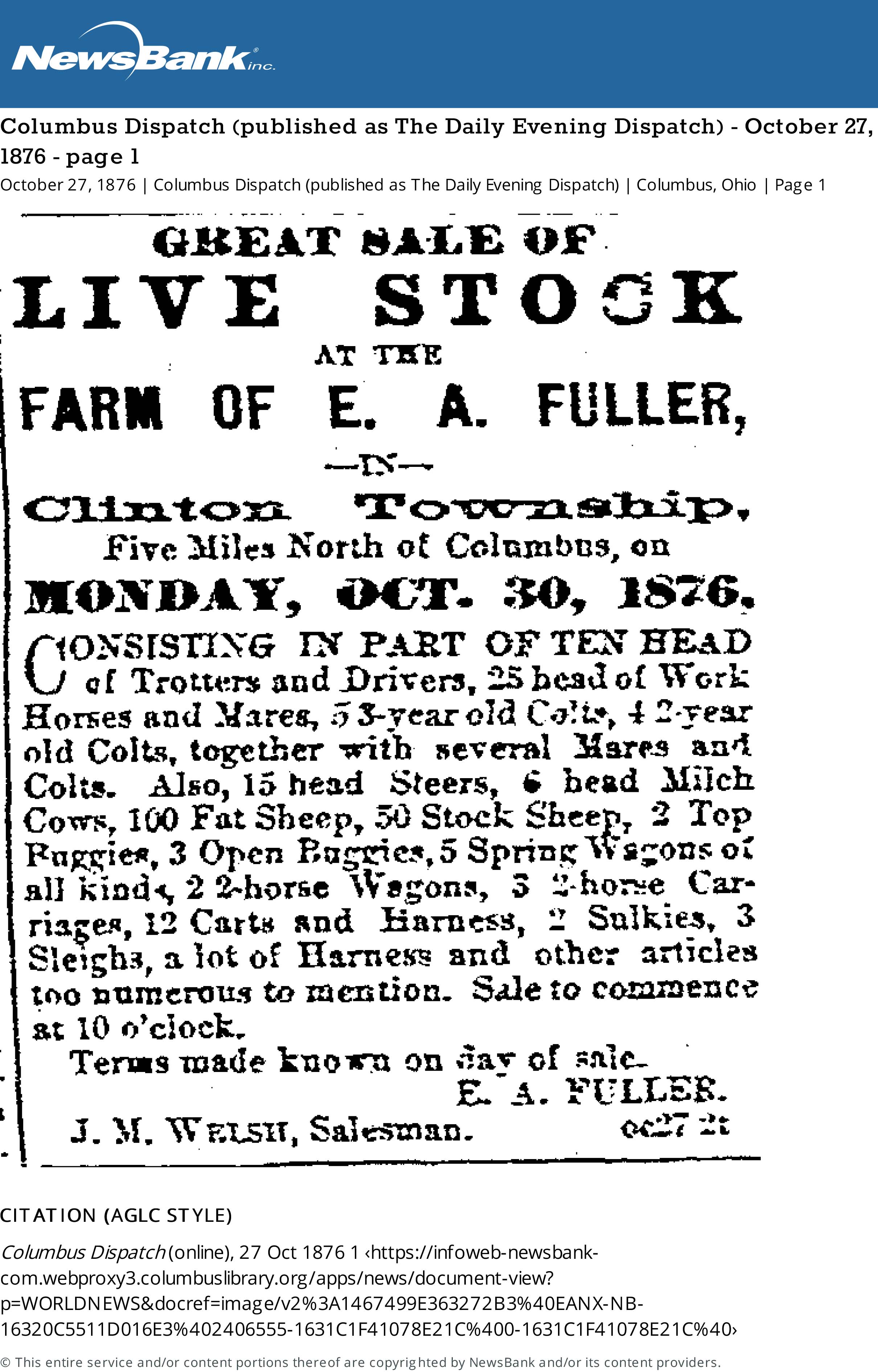 I recently found some old advertisements for horses–bought, sold, stabled–at E.A. Fullers Farm. Here’s one of them from the Columbus Dispatch (published as Columbus Evening Dispatch) October 27, 1876, page 1.
(I’m glad it was not a sale of dead stock.)
There are many more ads; here’s one for stabling horses near E.A. Fulller’s farm from the Columbus Dispatch (published as Columbus Evening Dispatch) November 12, 1877 page 4.
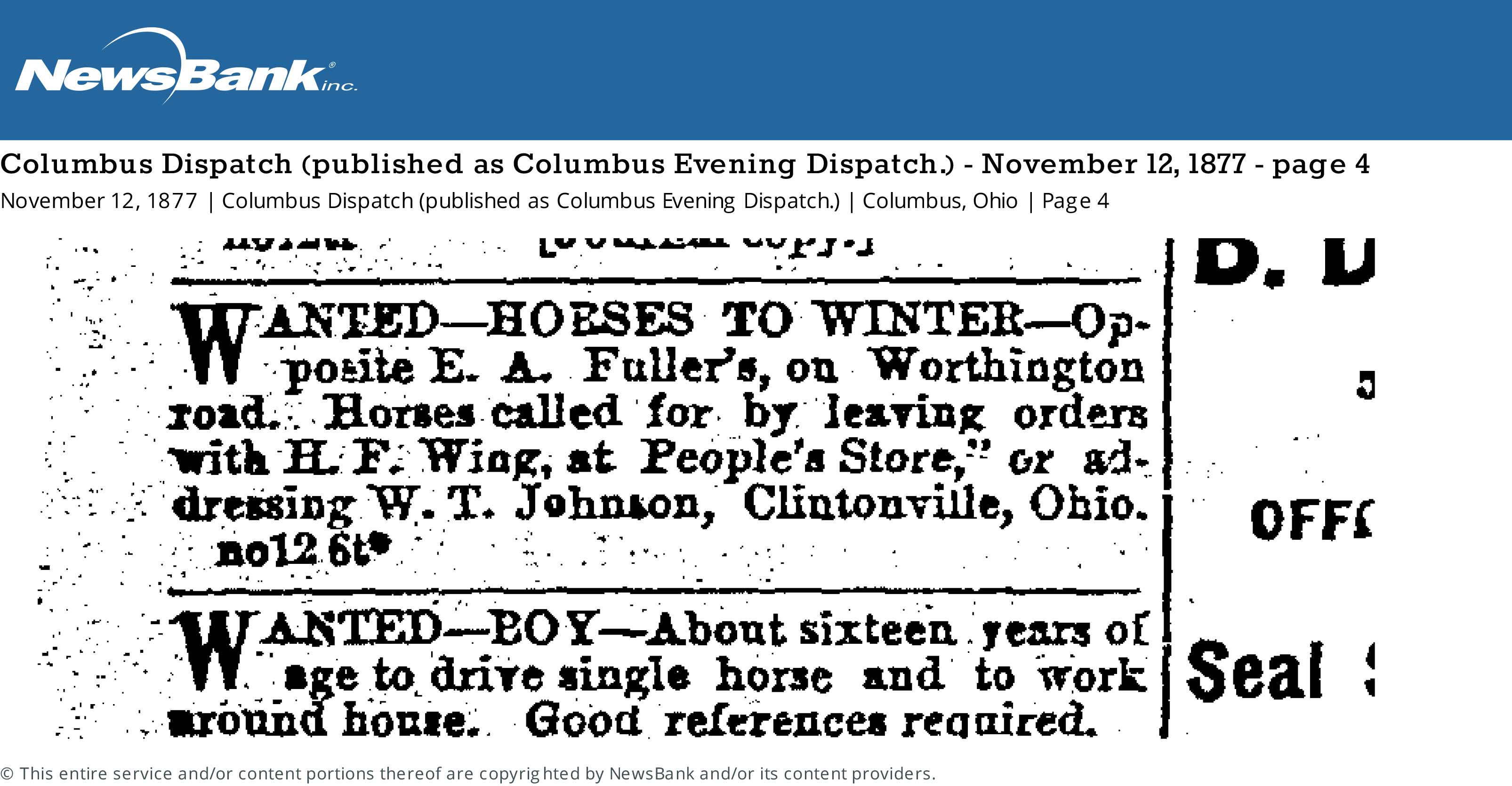
The Dispatch has lots of other ads as well, especially from 1902, for stabling horses at the Fuller farm. They’re great reminders of Clintonville’s agricultural past.
[Thanks to the Columbus Metropolitan Library for making the Digital Columbus Dispatch available and searchable online on CML’s web site.]OHC Discovery Tool
 Nancy Campbell, my historic-preservation go-to person–and the author of the Truman and Sylvia Bull Coe House and the A.B. Graham National Register of Historic Places nominations–shares a new feature on the Ohio History Connection web site. You can now search all of OHC’s archival collection (audiovisual, manuscripts, State Archives) and library (books, maps/atlases, newspapers, pamphlets, printed government documents) in one spot by following the link provided below:
https://ohiohistory.on.worldcat.org/discovery
Archival records will be indicated by an “Archival Material” note and include basic information about the collection. For more details, including locations and container inventories when available, click on the “View Record in ArchivesSpace” link toward the bottom of the record.
The “Libraries Worldwide” feature works, and is built into the system that hosts the catalog.
Of course my search in the illustration to the left, was for “Clintonville!”
Pierce Cleaners, Ford, & DQ
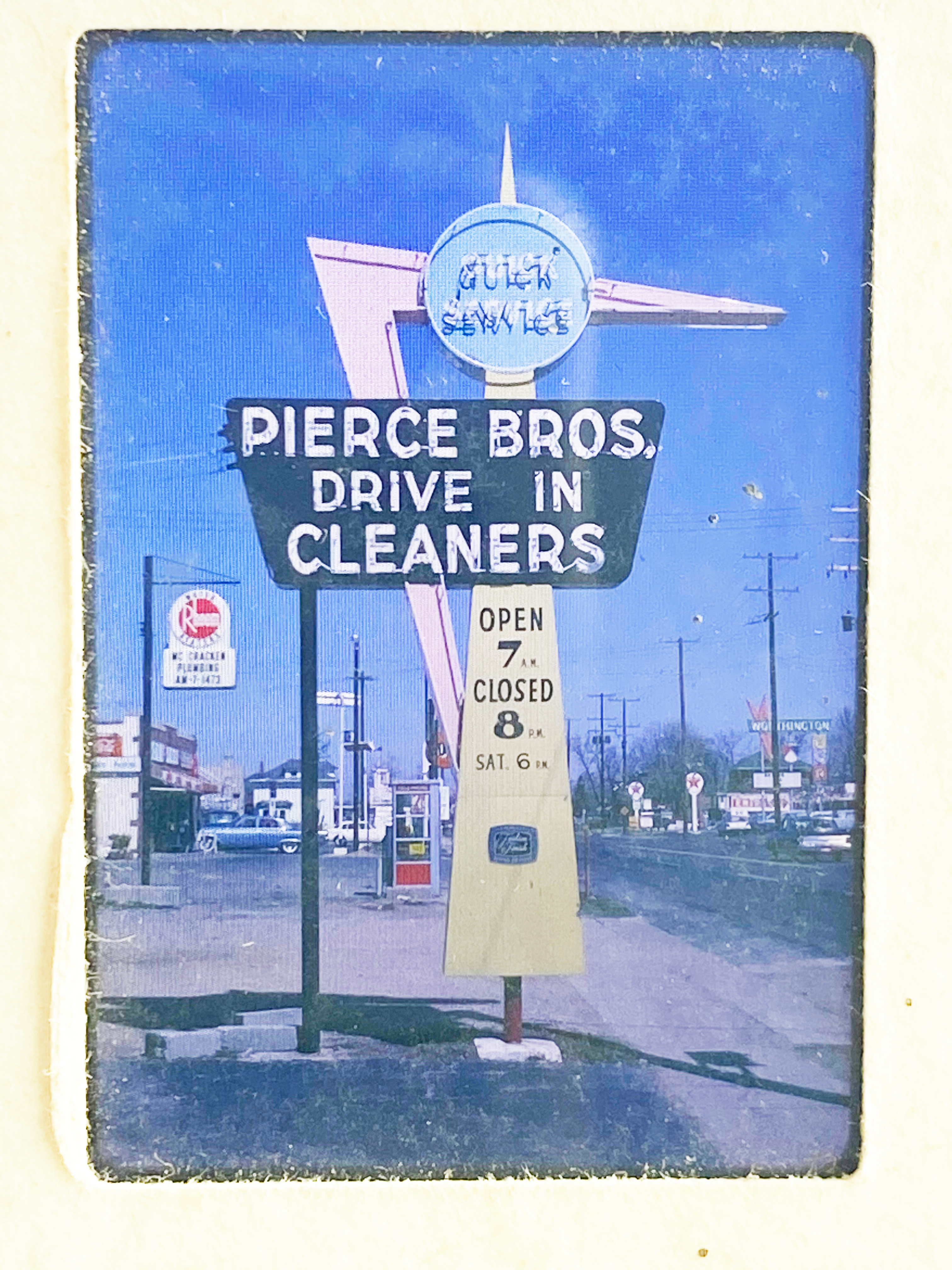 Pierce Cleaners was technically in Worthington, but here’s a great photo of its sign back in the day. This neon sign is by Fred Ervin–same company that created the Jerry’s/Sisters/Tee-Jaye’s sign at Morse and N High, and created around the same time.
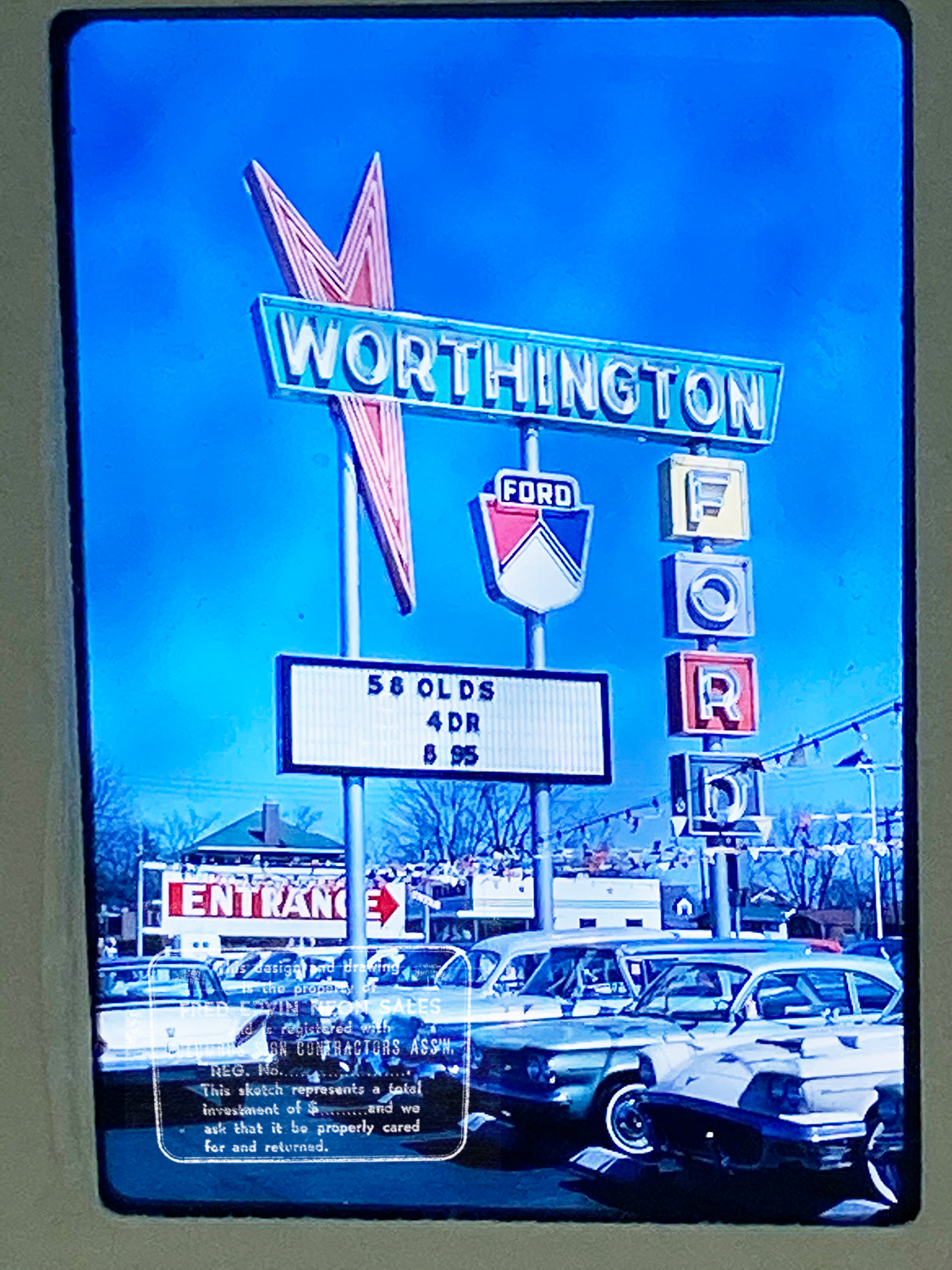
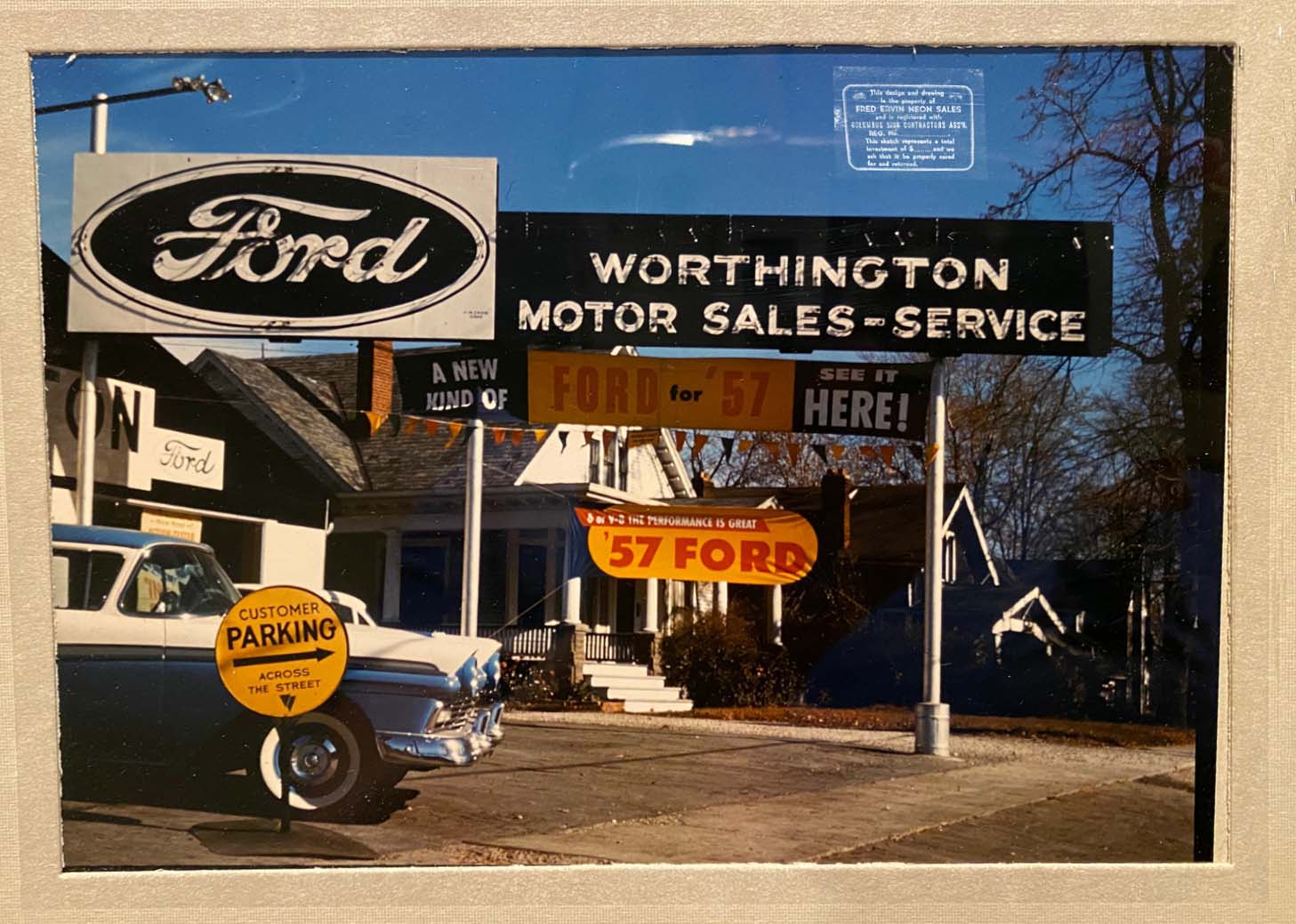
If you click on that photo of Pierce Cleaners to enlarge it, you may also notice the Ford dealership just north, on the east side of North High. Another of Fred Ervin’s signs! His signs are everywhere. On the left, the older Ford sign; on the right, a newer version.
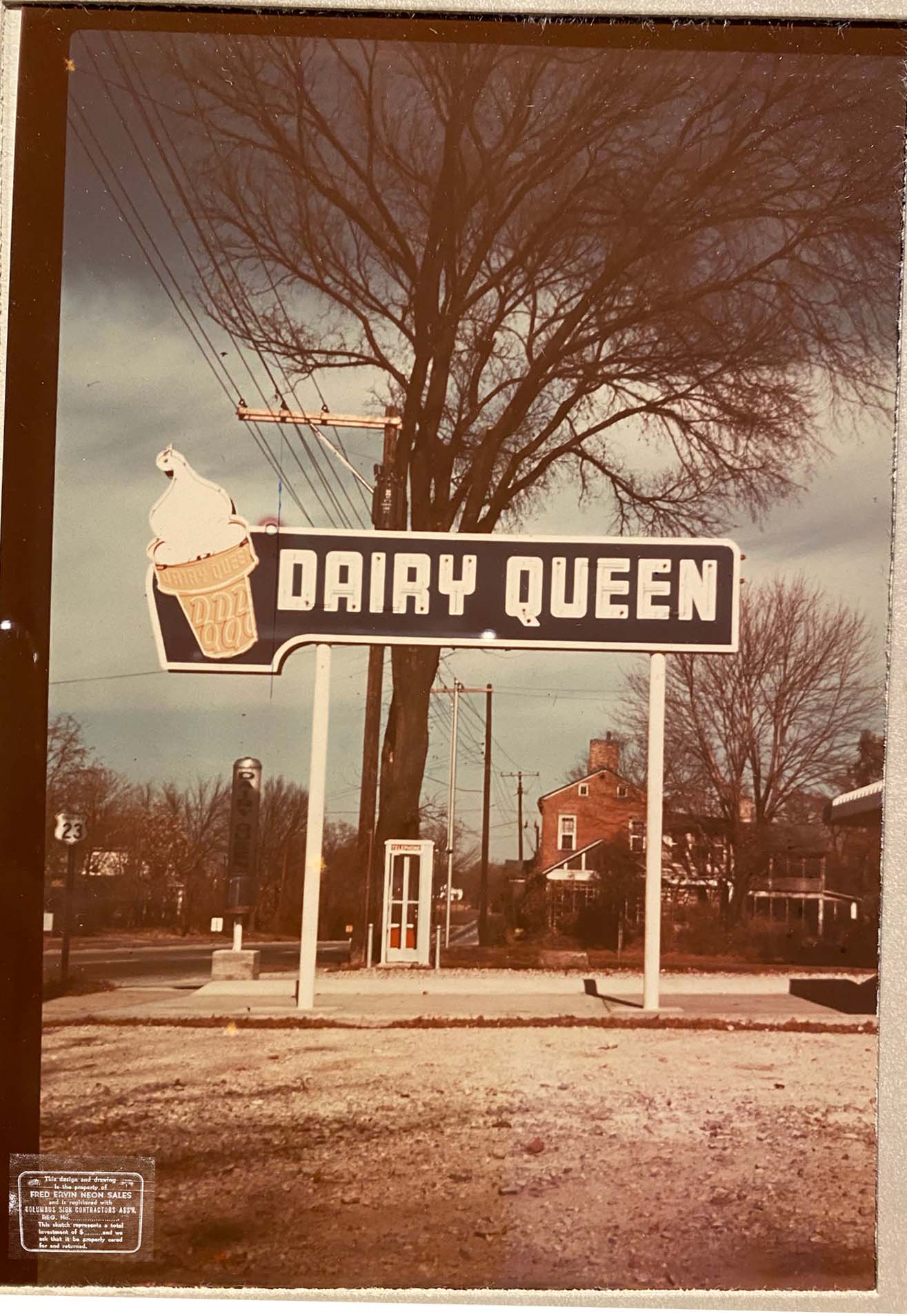
And while we’re pretending to be in Worthington, here’s an old photo of the Dairy Queen sign on North High Street just south of the Orange Johnson House Museum (which is itself worth a visit).
The First Post Office
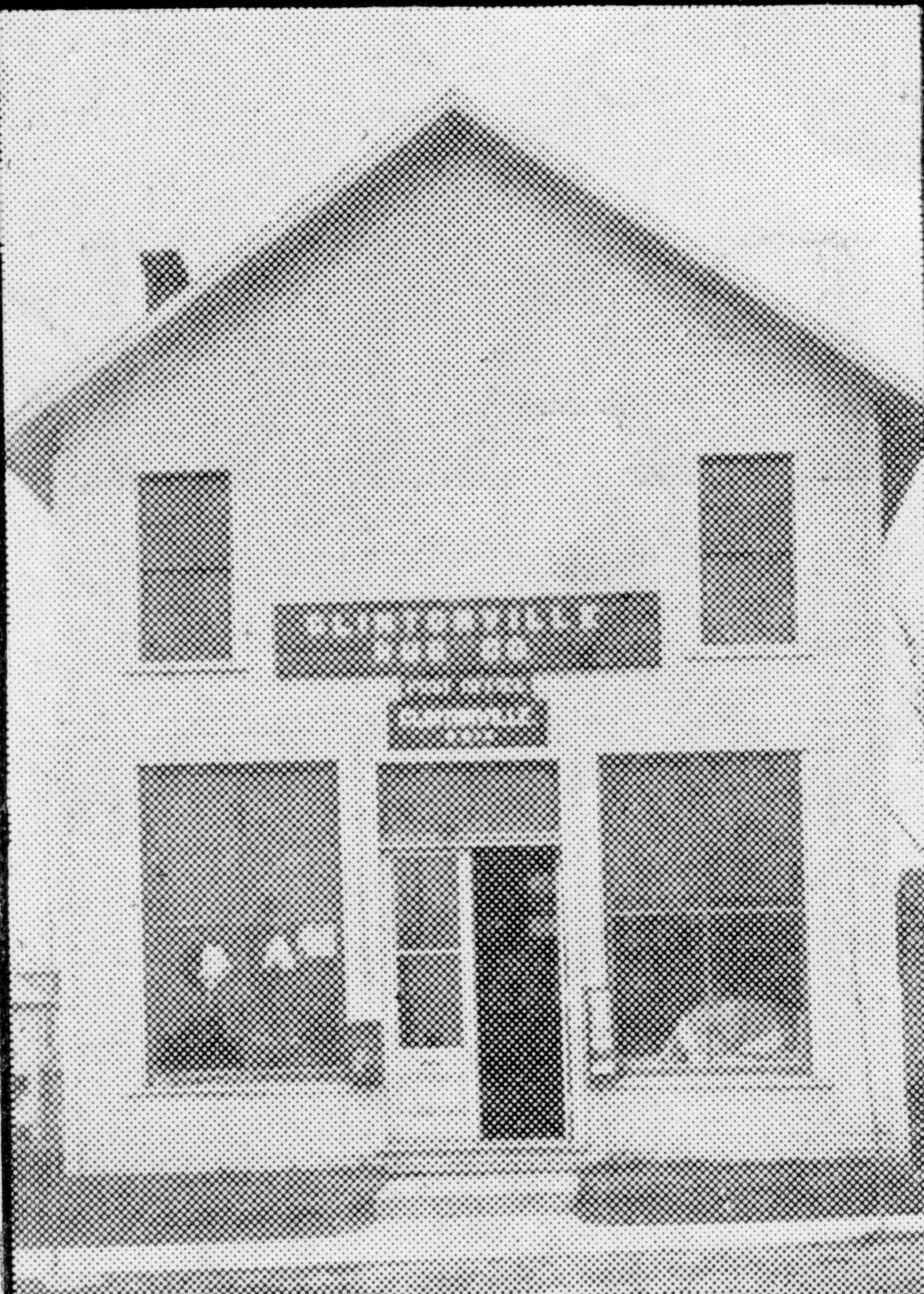 If you have not yet joined the Clintonville Historical Society, well, you ought to! Mary Rodgers sends out an interesting monthly newsletter that is chock-a-block full of good articles. In the October 2017 issue, she penned an article about Clintonville’s first post office.
Celebrating 170 years: The first Post Office
by Mary Rodgers
October 2017
We celebrate Clintonville’s birthday on September 13, 1847. That is the day that a post office opened using the name “Clintonville”. We know that the small town between Columbus and Worthington existed prior to the date but because the town was never formally platted, we do not have an alternative formal start date. On September 13, 1847, James Ferguson was appointed postmaster at the Clintonville Post Office. It was the practice at the time to locate the post office in a business operated by the postmaster. The names of the offices were determined by the postmaster and were usually associated with the area that they were located, the postmaster’s name or the postmaster’s business. In 1933, The Booster printed a photo of the post office. That photo is of a rug store! Mr. Ferguson was a blacksmith. Maybe he had a side operation?
Or, maybe this photo captured the building where Clintonville’s second postmaster set up operation? Harmon “Hammer” Houck was Clintonville’s second postmaster. He reigned from November of 1852 to April of 1854. The 1850 census lists him as a peddler. That might be consistent with a rag rug dealer.
James Ferguson reclaimed the position of postmaster in April of 1854. He and family originated in Lancaster Co. Pennsylvania. He was the son of John and Susanah (Hood) Ferguson. James was married to Hannah Murray around 1824. The Fergusons, at least three generations, came to Ohio in 1843. They arrived by wagon (note: Lancaster County, Pa is the birthplace of the Conestoga wagon!). Based on area maps, James purchased his Clintonville property from Alanson Bull. A question would be: How did Ferguson become aware of Bull’s interest in building a town? Did Bull run advertisements in Eastern newspapers of the time? That is a question for another day.
According to the 1850 Census, James Ferguson owned 5 acres of land, a home, two milk cows, a beef cow, five pigs, and 100 bushels of corn. His livestock was valued a $98, his machinery at $41 and his overall estate at $950. His estate was higher in value then his neighbors with more land. Perhaps that is an indication of its geographical position “in town”? Hannah Murray Ferguson, James’s wife, was a Quaker. Quakers were known to be involved in the Underground Railroad and the Fergusons are a part of the Clintonville Underground Railroad story. The Ferguson sons Joseph, John and Samuel all served in the Civil War. His son Joseph died in action in Perryville, KY. According to K. Haefner, 3rd great granddaughter of Hannah and James Ferguson, when sons John and Samuel returned from the war, the family moved to Findlay, OH. It would seem that John and Samuel met a number of men from Hancock County while serving. Those men told stories of the land and those tales impressed these young men. In Findlay, Samuel and John pursed wagon making. The shop they opened remained in operation beyond 1911.
Bourguignon House (193 East North Broadway)
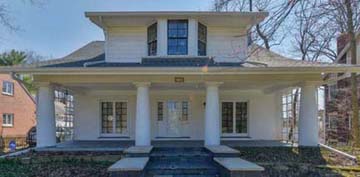
Paul-Henri Bourguignon was a talented visual artist, a prolific writer and journalist, a skillful photographer, and an avid observer of the human condition. His wife Erika was a world-renowned anthropologist. They lived at 193 East North Broadway until their deaths in 1988 and 2015 respectively.
Here’s a terrific house tour of their Clintonville home, showcasing their life and collections at 193 East North Broadway before the house was sold.
And here are some links to additional information about each of them:
About Paul-Henri Bourguignon
About Erika Bourguignon
Olentangy River ca 1957 & 1958
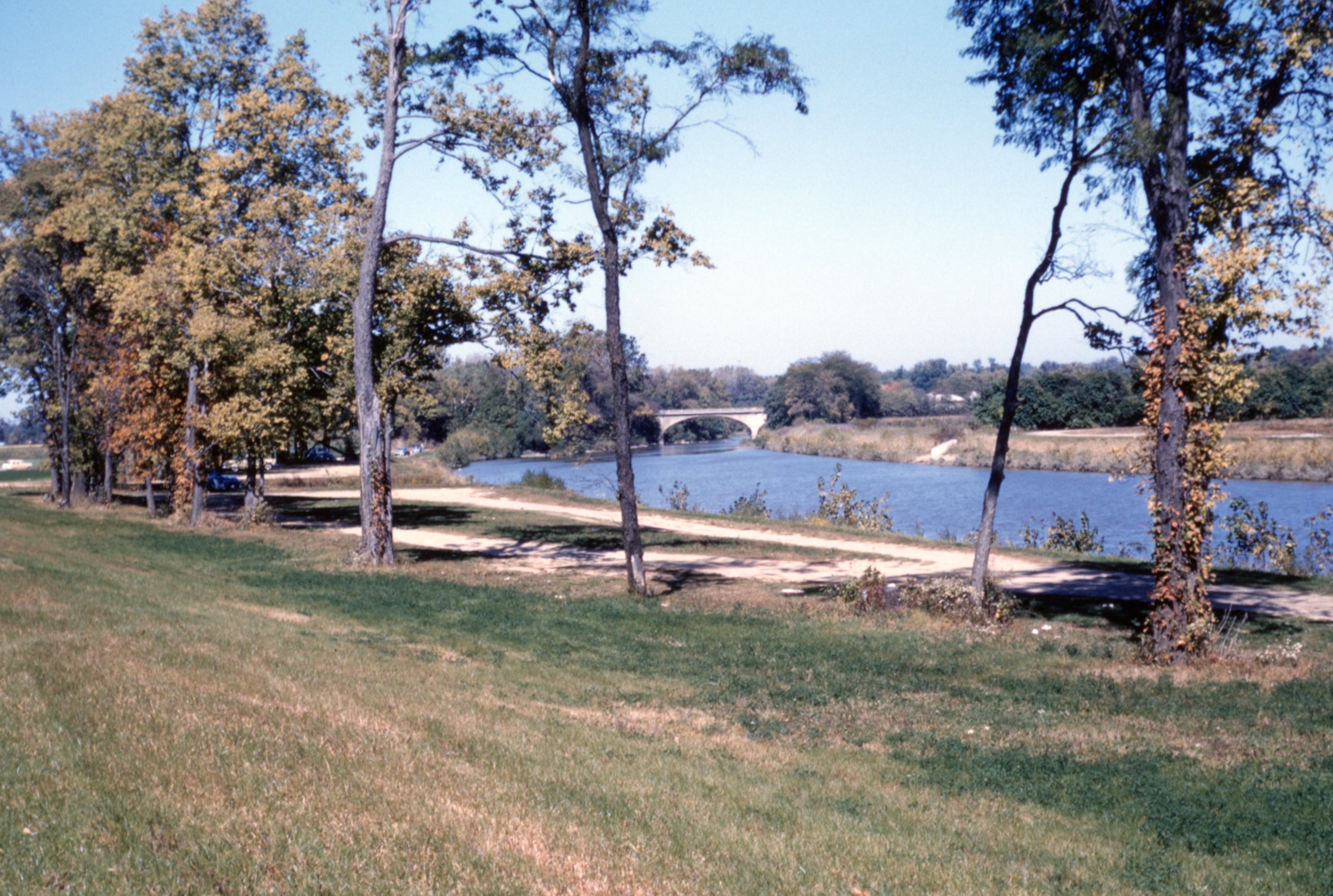
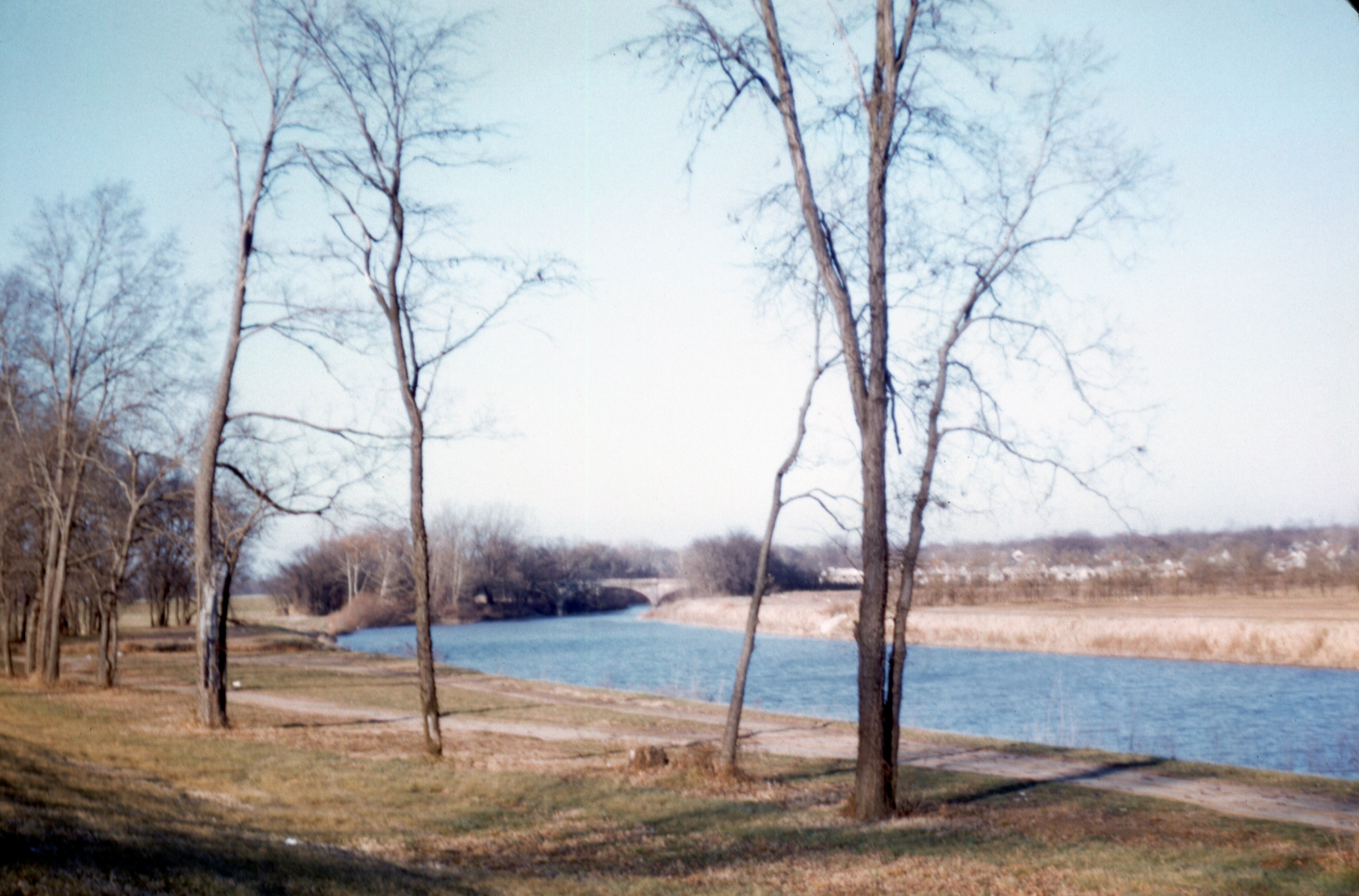
Two nice photos of the Olentangy River in the 1950s.
From Bill Pegues:
[These photos were taken by Frank Pegues and digitized by Jim Pegues, and came to us courtesy of Bill Pegues.]During 1954 my parents moved to Columbus, where my father taught history at Ohio State until 1997. A couple years ago my brother scanned my dad’s slide collection into digital format. My father had documented the location of the scenes in many of them but a fair number lacked any identity. Among these were two shots from an identical point on the Olentangy River in the late ’50s. I spent some time with these and on Google Earth trying to determine where exactly they were taken. Ultimately, I concluded with certainty (based on zooming in on the line of houses visible in the early 1958 photo, and comparing them with the Google Street View of the houses there today, as well as noting the curvature of the river) that they were shot on the west side of the Olentangy just downstream of the old Henderson Road bridge looking north. At the time my parents were renting a house on East Selby Blvd just over the Worthington-Columbus boundary. The preceding photos in the 1957 set were taken at an Ohio State football game that fall, and of the old Lane Avenue bridge as the leaves were beginning to turn. My parents would likely have driven up Olentangy River Road after these games and taken Henderson up to High before driving north to Selby.
The first feature in the 1957 photo that interested me is the parking lot at center-left, indicating that this was a popular spot for people to visit, and probably picnic and stroll around. At the time, SR-315 didn’t yet exist this far north (it wasn’t completed from Ackerman Road north to 270, if I recall correctly, until I was entering high school in 1980) so the only road running along the west side of the river was Olentangy River Road. The second feature of note is that the land on the east side of the river is, accordingly, the open field that would be the location of Whetstone High School (from which my brothers and I graduated in the late ’70s and early ’80s), constructed in 1960-61.