
Home
Tipping the Scales, & Life on the Edge
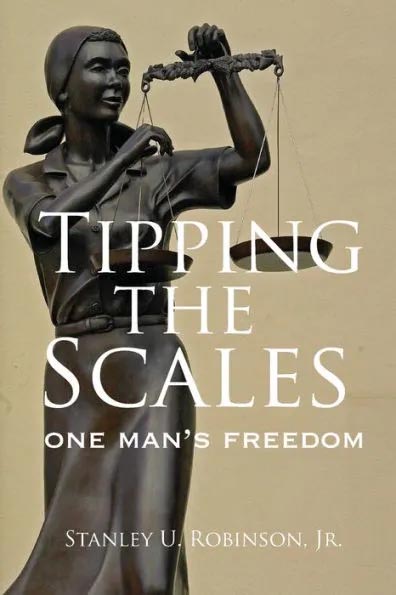
 Today is Martin Luther King Jr. Day, and so I thought I’d use this opportunity to write about my most recent “read”. It’s the book Tipping the Scales: One Man’s Freedom, by Stanley U Robinson with revisions and editing by his son David R Robinson. The book is available as an ebook and a print book.
As an historian wrote recently, heroism is neither being perfect, nor doing something spectacular. In fact, it’s just the opposite: it’s regular, flawed human beings, choosing to put others before themselves, even at great cost, even if no one will ever know, even as they realize the walls might be closing in around them. Such heroes did not wake up one morning and say to themselves that they were about to do something heroic. It’s that, when they had to, these people did what was right.
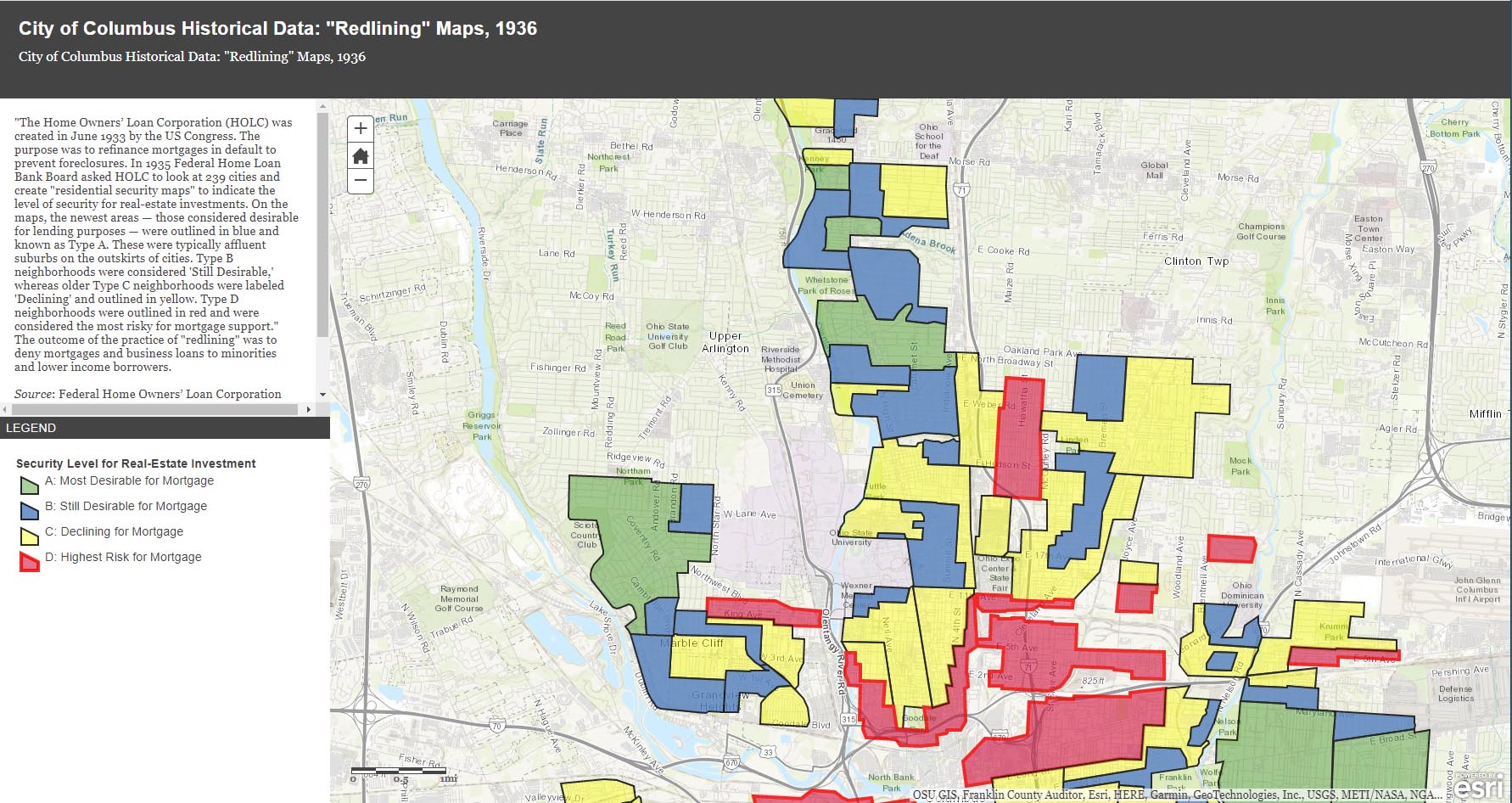
 This book tells the story of some local people who were heroes. In 1954 a Columbus interracial family (Phyllis and Wilson Head and their 2 children) decided to move to an all-white neighborhood. In the racist real estate environment of the time, this was taboo. Though it was decidedly unconstitutional to discriminate on the basis of race, discrimination was rampant. The Heads were represented, for the real estate transaction, by attorney Stanley U. Robinson. They were able to conceal Wilson Head’s Black identity only because the seller, banks, and insurer never bothered to ask about race. Once the sale had gone through and the Heads moved into their new house at 2166 Indianola Avenue, all hell broke loose. Attorney Robinson faced the wrath of the banking and real estate agent community (including a threat of disbarment), and his family was deluged with crank telephone calls from the bigoted new neighbors of the Heads. The Heads themselves faced bigotry, but were physically protected by prearranged police presence and local church members’ vigilance. The Heads “stuck to their principles” and refused to be intimidated or bought out.
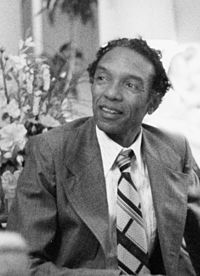 Though this act of segregation-busting was successful, in 1959 the Head family moved to Windsor, Canada “to get [the] children away from a racist society.” Wilson Head had a PhD and was a respected sociologist and civil rights leader, and the Heads’ (understandable!) move was Columbus’ loss. You can read more about Wilson Head here.
Next up on my reading list: Wilson Head’s own book, A Life on the Edge: Experiences in Black and White in North America. University of Toronto Press. ISBN 978-0-9680066-0-3.
139 West Dunedin Road
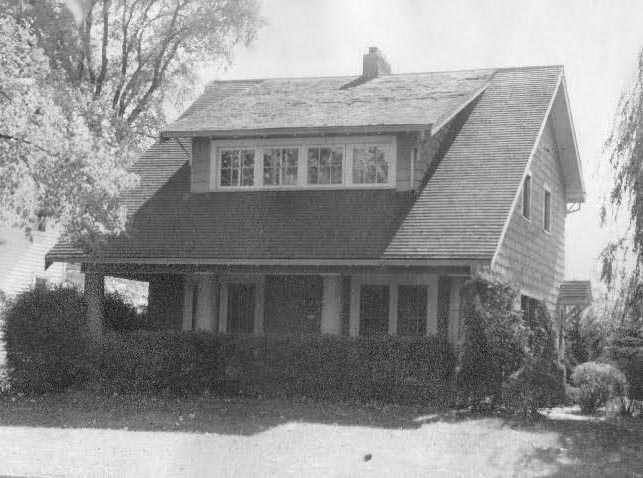
Margaret Nelson (née Van Ness) grew up in Clintonville, and has shared some old family photos.
Her family lived at the following addresses:
-
139 W Dunedin, 1939-1941 or 1942
175 E Tibet, 1942-1947
310 E Weber, 1948-1950
29 and 25 Tibet, 1950-1959
138 E N Broadway, 1960-1971
I’ll be sharing these old house photos in the months to come.
This photo is 139 West Dunedin. Ralph Taylor Van Ness (1902-1989) and his wife Norma Thorp Van Ness (1910-2000) bought this house in 1939; it was their first house as a married couple. They lived here until August 1942, when they moved to 175 Tibet Road.
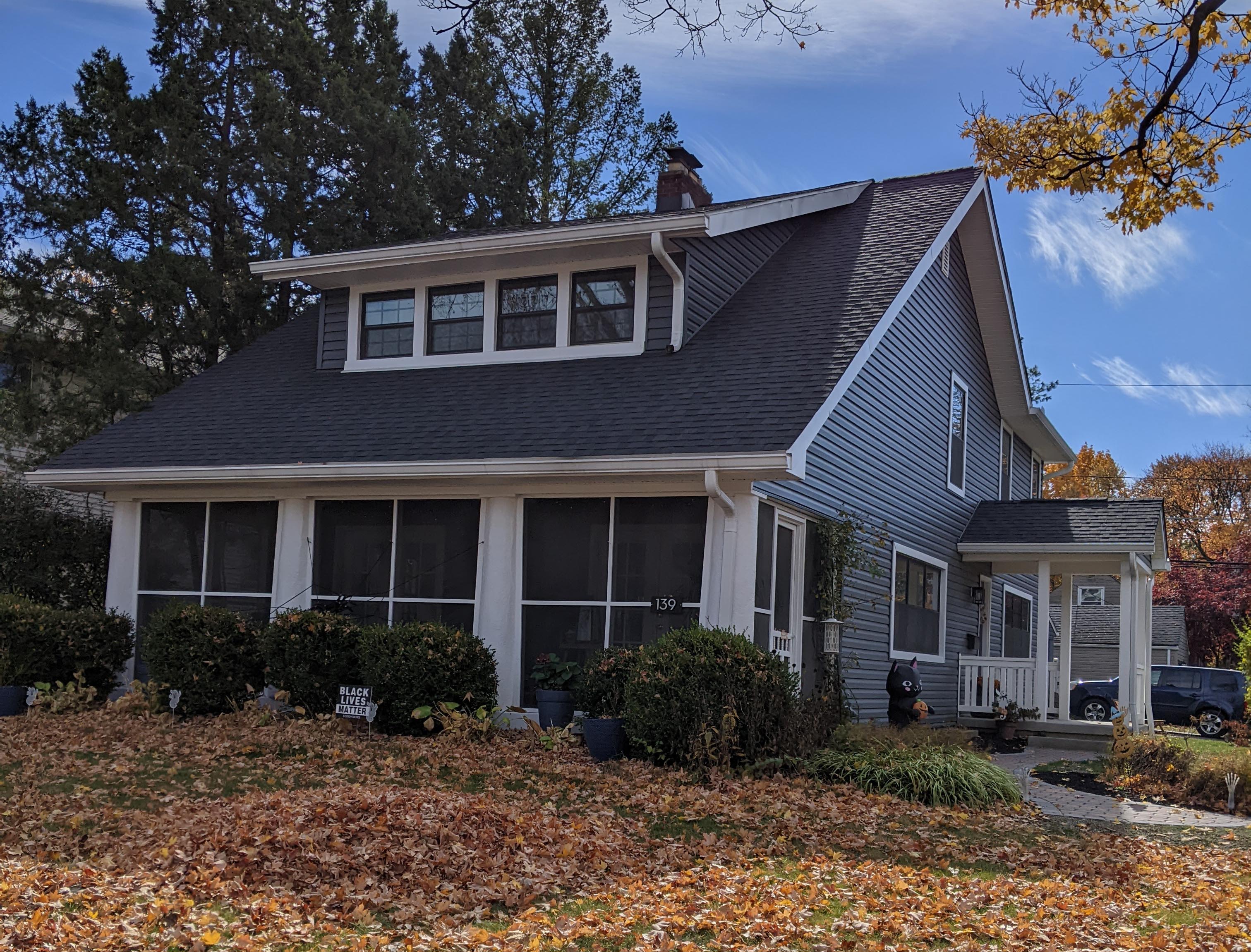
Here’s are some present-day photos; the house has since been screened in and added on to.

The Art of Fred M. Ervin
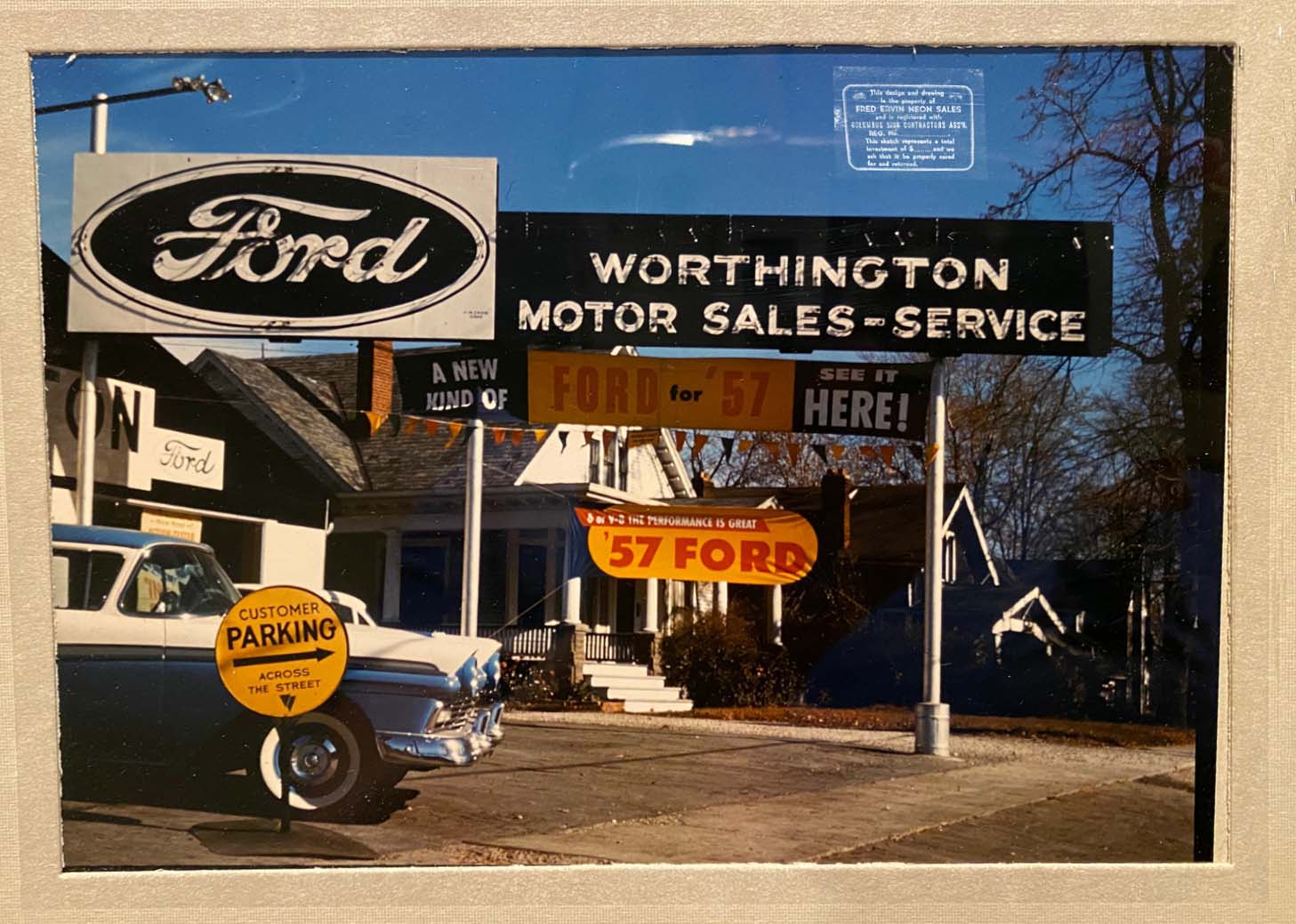 Amy Ervin Smithson shared this wonderful web site that shows the range of signage created by sign vendor Fred M. Ervin Sign Service, 2447 Middlesex Rd, Upper Arlington OH.
A Little Bit of Sewage Goes a Long Way
Last month I provided a glimpse of James Chesnut, who lived at 3338 N. Wall Street. James Chesnut was involved in significant litigation with the North Broadway developers and neighbors. Though last month I said James appears to have been irascible, I’d certainly be that way too if this happened to me. From the Dispatch:
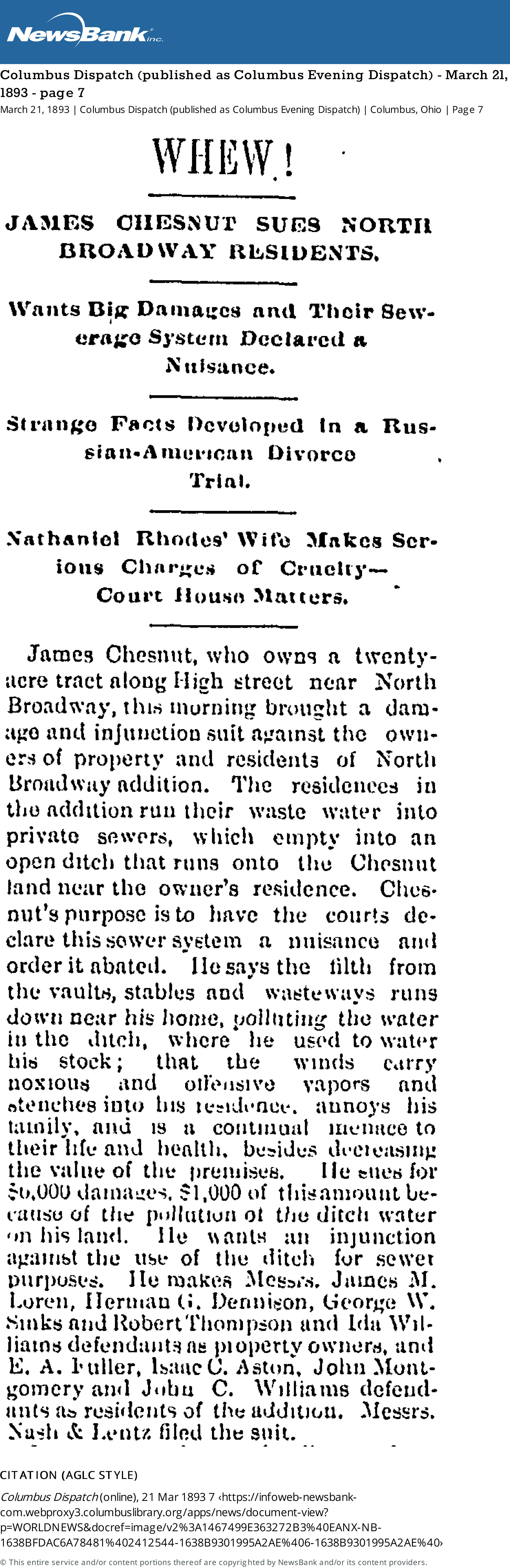
[From Columbus Dispatch (published as Columbus Evening Dispatch) March 21, 1883 page 7.]Whew!
James Chesnut Sues North Broadway Residents
Wants Big Damages and Their Sewerage System Declared a NuisanceJames Chesnut, who owns a 20-acre tract along High Street near North Broadway, this morning brought a damage and injunction suit against the owners of property and residents of North Broadway addition. The residences in the addition run their waste water into private sewers, which empty into an open ditch that runs onto the Chesnut land near the owner’s residence. Chesnut’s purpose is to have the courts declare this sewer system a nuisance and order it abated. He says the filth from the vaults, stables, and wasteways runs down near his house, polluting the water in the ditch, where he used to water his stock; that the winds carry noxious and offensive vapors and stenches into his residence, annoys his family, and is a continual menace to their life and health, besides decreasing the value of the premises. He sues for $6,000 damages, $1,000 of this amount because of the pollution of the ditch water on his land. He wants an injunction against the use of the ditch for sewer purposes…
A couple months later, the North Broadway developers issued a rejoinder:
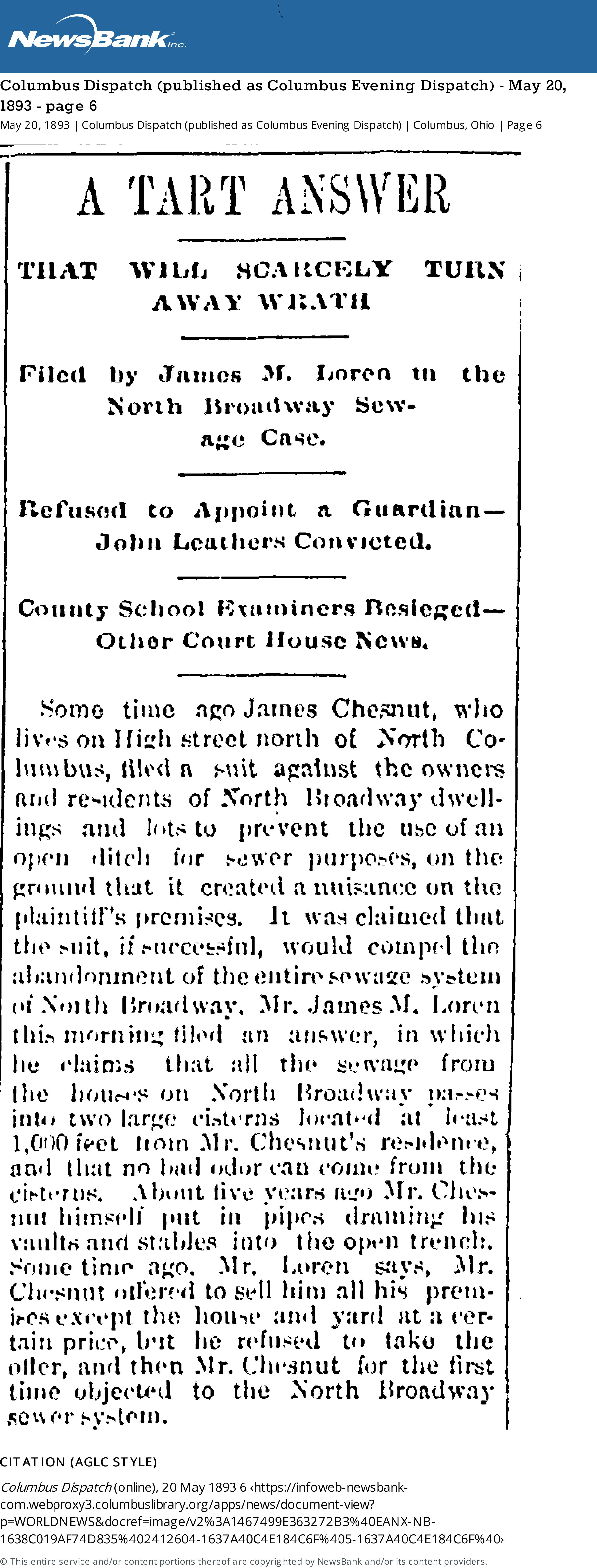
A Tart Answer
That Will Scarcely Turn Away Wrath
Filed by James M. Loren in the North Broadway Sewage CaseSome time ago James Chesnut, who lives on High Street north of North Columbus, filed a suit against the owners and residents of North Broadway dwellings and lots to prevent the use of an open ditch for sewer purposes, on the ground that it created a nuisance on the plaintiff’s premises. It was claimed that the suit, if successful, would compel the abandonment of the entire sewage system of North Broadway. Mr. James M. Loren this morning filed an answer, in which he claims that all the sewage from the houses on North Broadway passes into two large cisterns located at least 1,000 feet from Mr. Chesnut’s residence, and that no bad odor can come from the cisterns. About five years ago, Mr. Chesnut himself put in pipes draining his vaults and stables into the open trench. Some time ago, Mr. Loren says, Mr. Chesnut offered to sell him all his premises except the house and yard at a certain price, but he refused to take the offer, and then Mr. Chesnut for the first time objected to the North Broadway sewer system.
[From Columbus Dispatch (published as Columbus Evening Dispatch) May 20, 1883, page 6.]
Apparently Loren’s response was not accepted by the courts, for this article followed along in 1897:
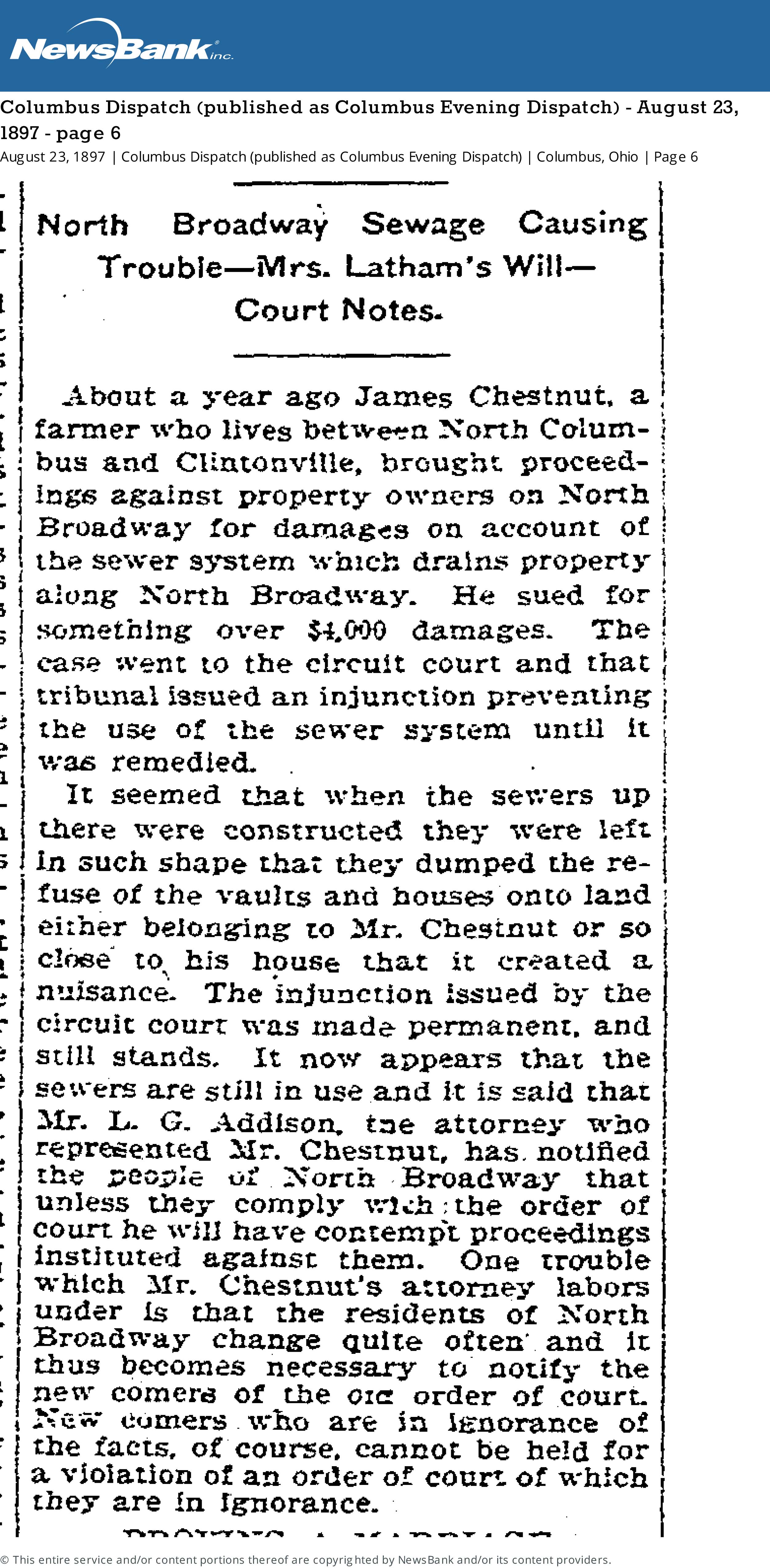
[From Columbus Dispatch (published as Columbus Evening Dispatch) Monday August 23, 1897 page 6.]North Broadway Sewage Causing Trouble
About a year ago James Chestnut, a farmer who lives between North Columbus and Clintonville, brought proceedings against property owners on North Broadway for damages on account of the sewer system which drains property along North Broadway. He sued for something over $4,000 damages. The case went to the circuit court and that tribunal issued an injunction preventing the use of the sewer system until it was remedied.
It seemed that when the sewers up there were constructed they were left in such shape that they dumped the refuse of the vaults and houses onto land either belonging to Mr. Chestnut or so close to his house that it created a nuisance. The injunction issued by the circuit court was made permanent and still stands. It now appears that the sewers are still in use and it is said that Mr. L. G. Addison, the attorney who represented Mr. Chestnut, has notified the people of North Broadway that unless they comply with the order of court he will have contempt proceedings instituted against them. One trouble which Mr. Chestnut’s attorney labors under is that the residents of North Broadway change quite often and it thus becomes necessary to notify the new comers of the […] order of court. New comers who are in ignorance of the facts, of course, cannot be held for a violation of an order of court of which they are in ignorance.
An Old Chestnut…or Rather, Chesnut
 Occasionally, the name of a local figure pops up with frequency, and one forms an image of, well may I say, an irascible neighbor? James Chesnut (often spelled “Chestnut”) is one of those guys; see other posts about him here.
Who was this guy, anyway? James Chesnut was born in Ireland on May 1, 1820, and he died at age 85 on May 26, 1905. Census records say James was a “machine sawyer,” “works in coal factory”, or “foreman and tool shop”. He seems to have owned 20 acres on North High Street. His wife was Christiana McEwan (b. Dec 24, 1825, d. Jul 14 1891). (One source says “Ewing” but I believe that’s wrong.) She is buried with James in Greenlawn Cemetery. Some census records say Christiana was born in England or Ireland, and there’s also a record that says her father lived in Ridgeway, PA.
James and Christiana had a daughter (one census record says “adopted daughter”), Fannie, who was born around 1854/55. She lived with her parents and seems to have remained single. She continued to live in the North High Street (now Wall Street) house through 1910, but by 1914 she’d moved to 2103 Summit Street. She lived there until her death in March 1932; she died at age 78 in University Hospital of injuries suffered when she was hit by a taxi the previous December. (Her obituary also names a sister, Jennie Reid, who lived in Bridgeport Connecticut.)
I love the Chesnut house, still in existence at 3338 N. Wall Street.
Clintonville Community Band
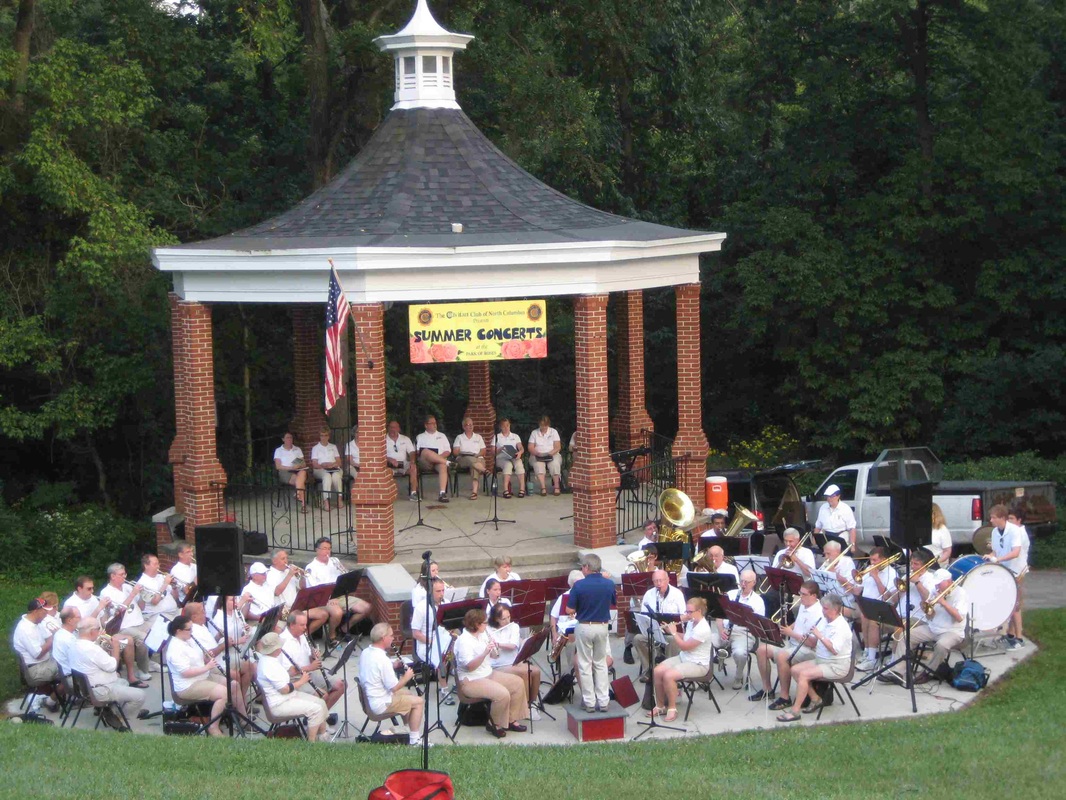 The Clintonville Community Band is one of the Clintonville’s hidden gems. Their concerts are typically free for community events, and they charge a nominal fee for other concerts. Here’s some of its history.
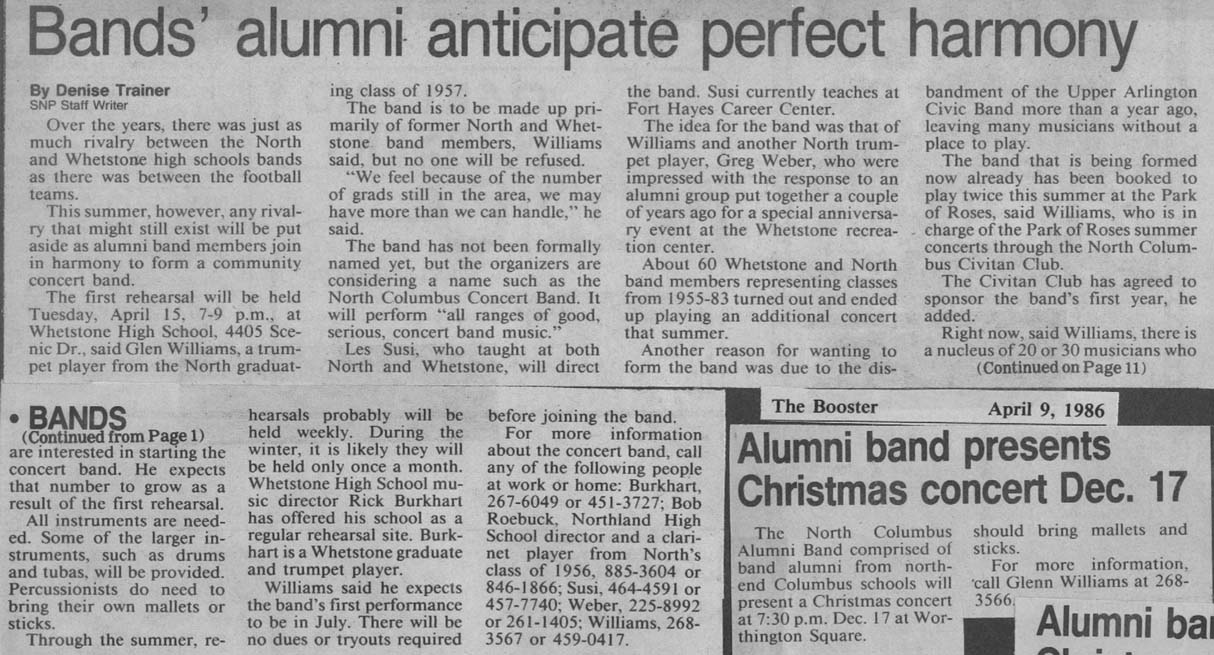
Glenn Williams and Greg Weber convened an organizational meeting for the band on February 27, 1986. Glenn Williams, Greg Weber, Rick Burkhart, and Les Susi, Bob Robuck, and Tom Davenport attended, and so you could credit them with being founders. At the time, the plan was to recruit musicians from any of the local high schools, and to refuse no one.
The first rehearsal was held April 15, 1986 at Whetstone High School. North Columbus Civitan funded the band’s first year. The Band had a concert that summer, as well as a Christmas concert.
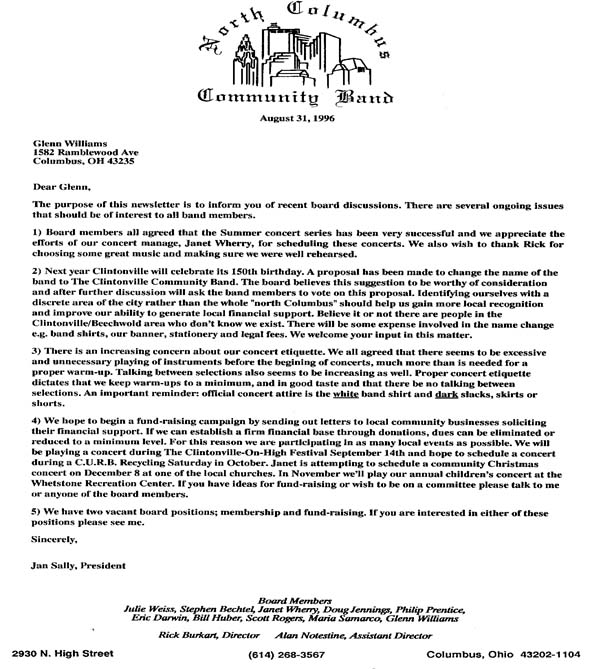
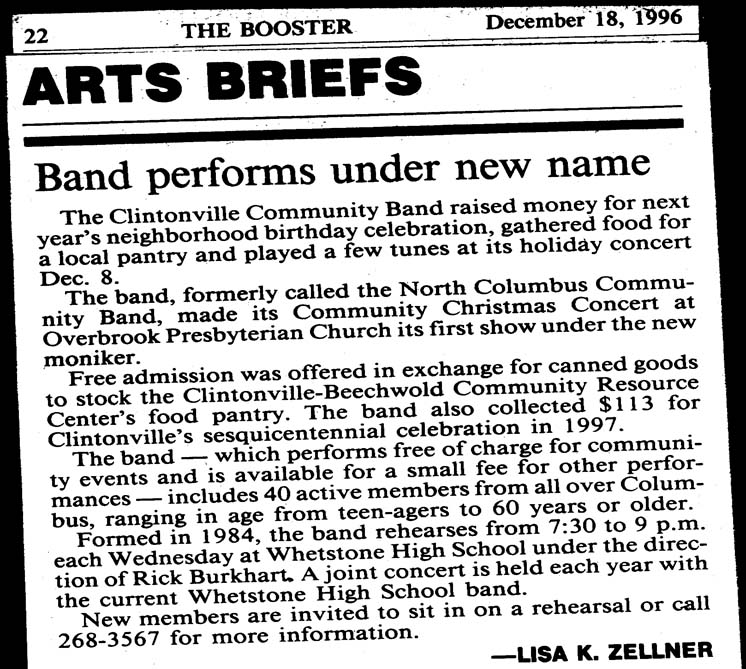 On August 31, 1996, they renamed themselves The Clintonville Community Band (from the North Columbus Community Band). By then they’d decided to play at as many local events as possible, including the “Clintonville-on-High” festival, CURB Recycling Saturday, a Christmas concert, and a children’s concert; the goal was to put themselves on a firm financial footing through good community exposure and an increase in donations. At the time they had about 40 active members.
In 2004, they celebrated their 20th year by commissioning a piece by Barry Kopetz. Would you like to hear that song? Click here.
Now, if you’ve read this far, you know they depend on donations. Just do it!
[All the material here is courtesy of the Clintonville Community Band and based on a talk that Glenn Williams, Stuart Smith, and Rick Burkhart gave at the Clintonville Historical Soceity.]