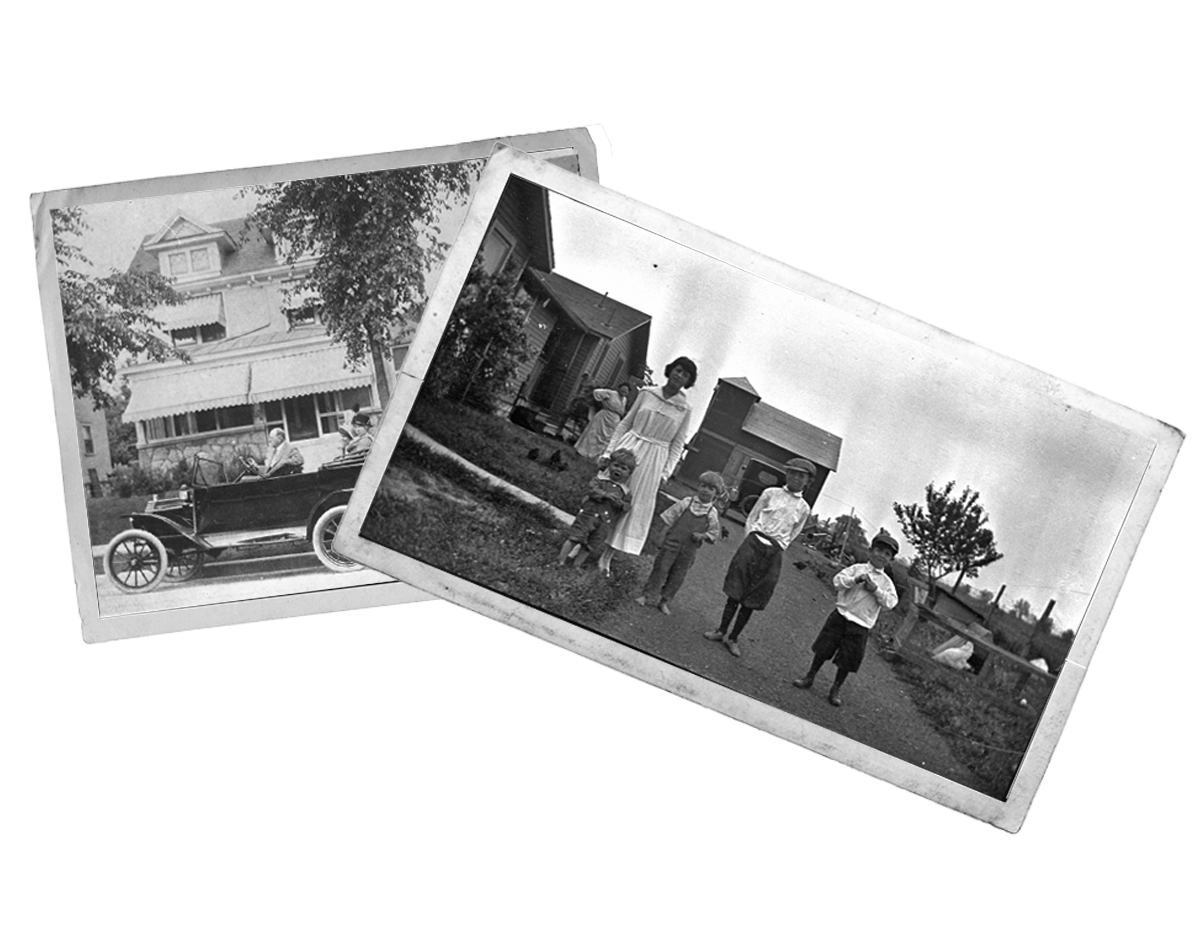
318 Orchard Lane (Columbus Canoe Club)
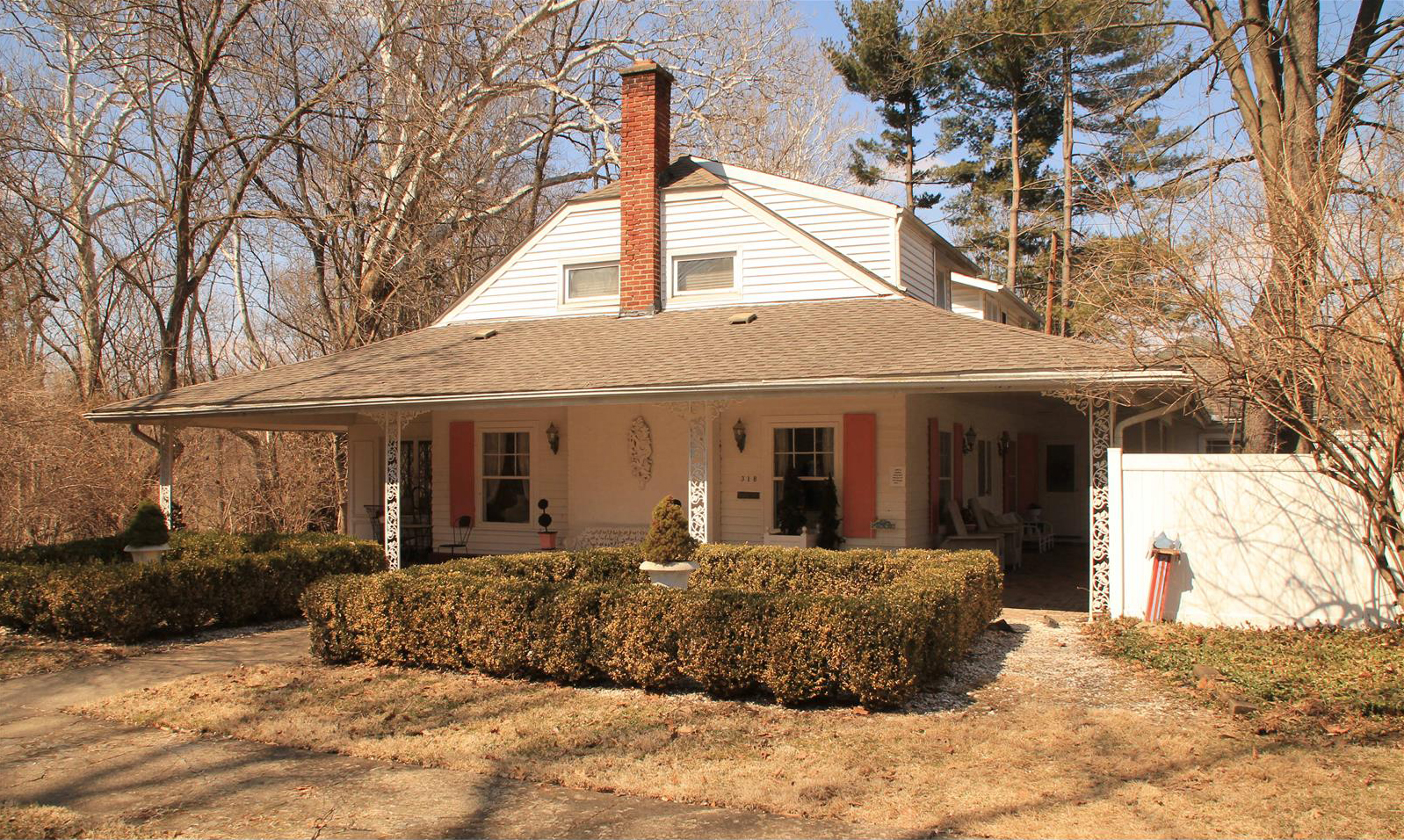 The Columbus Canoe Club–which had been turned into a residence back in 1959–is currently on the market, and you can see the inside of this residence here. It has only had 4 owners since it was built, and long-time owner Donna Hickey had given me a tour of the house back in 2009. So sorry to learn that Donna passed away in 2021.
A bit more info here
(I doubt this link to the realtor post will be up long.)
In Honor of Armistice Day
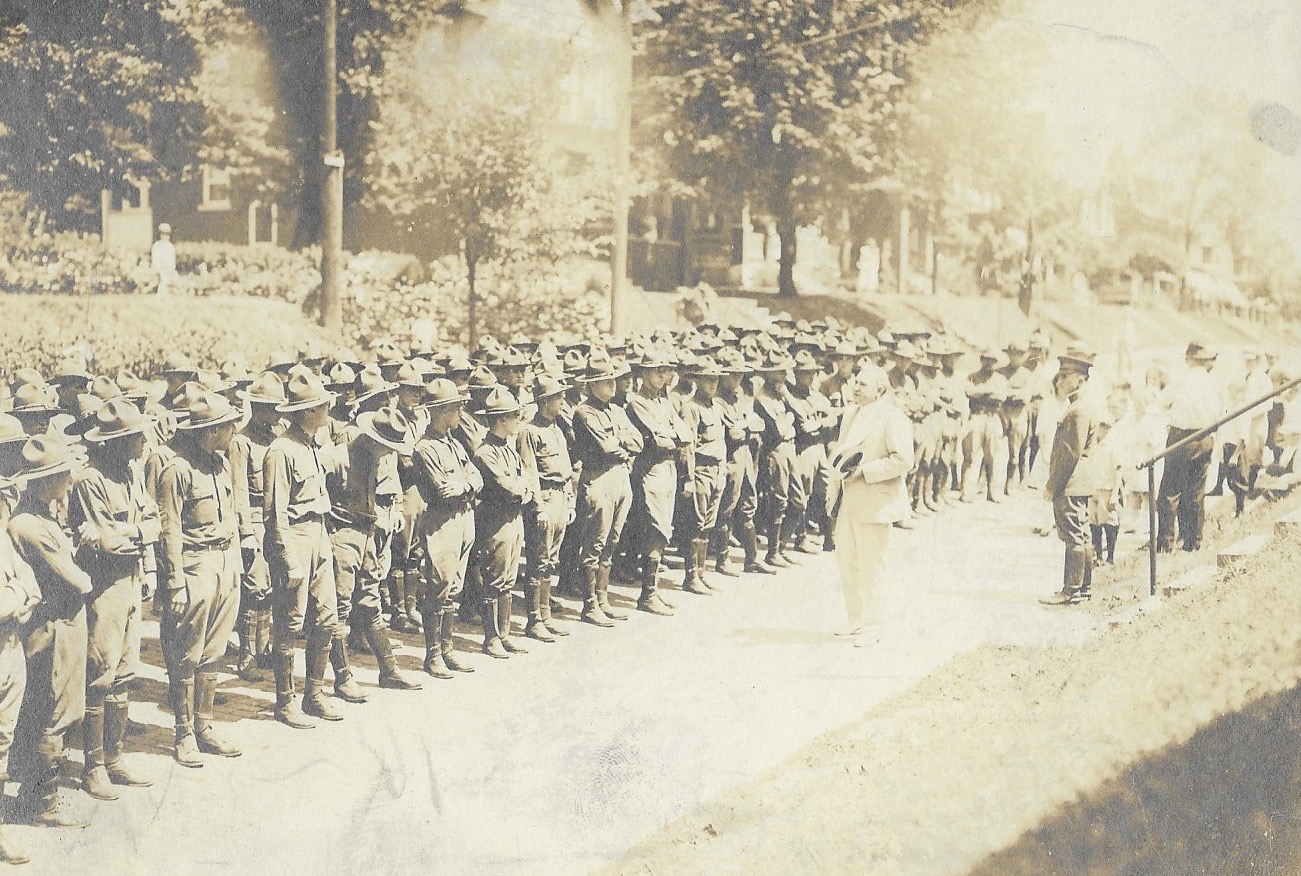 I have no World War I photos of soldiers in Clintonville. But in honor of Armistice Day aka Veterans Day, I am posting this photo of WW I soldiers, being addressed by Norman Barnes Thorp. This might be in front of 180 East Northwood, though I have been unable to confirm that location.
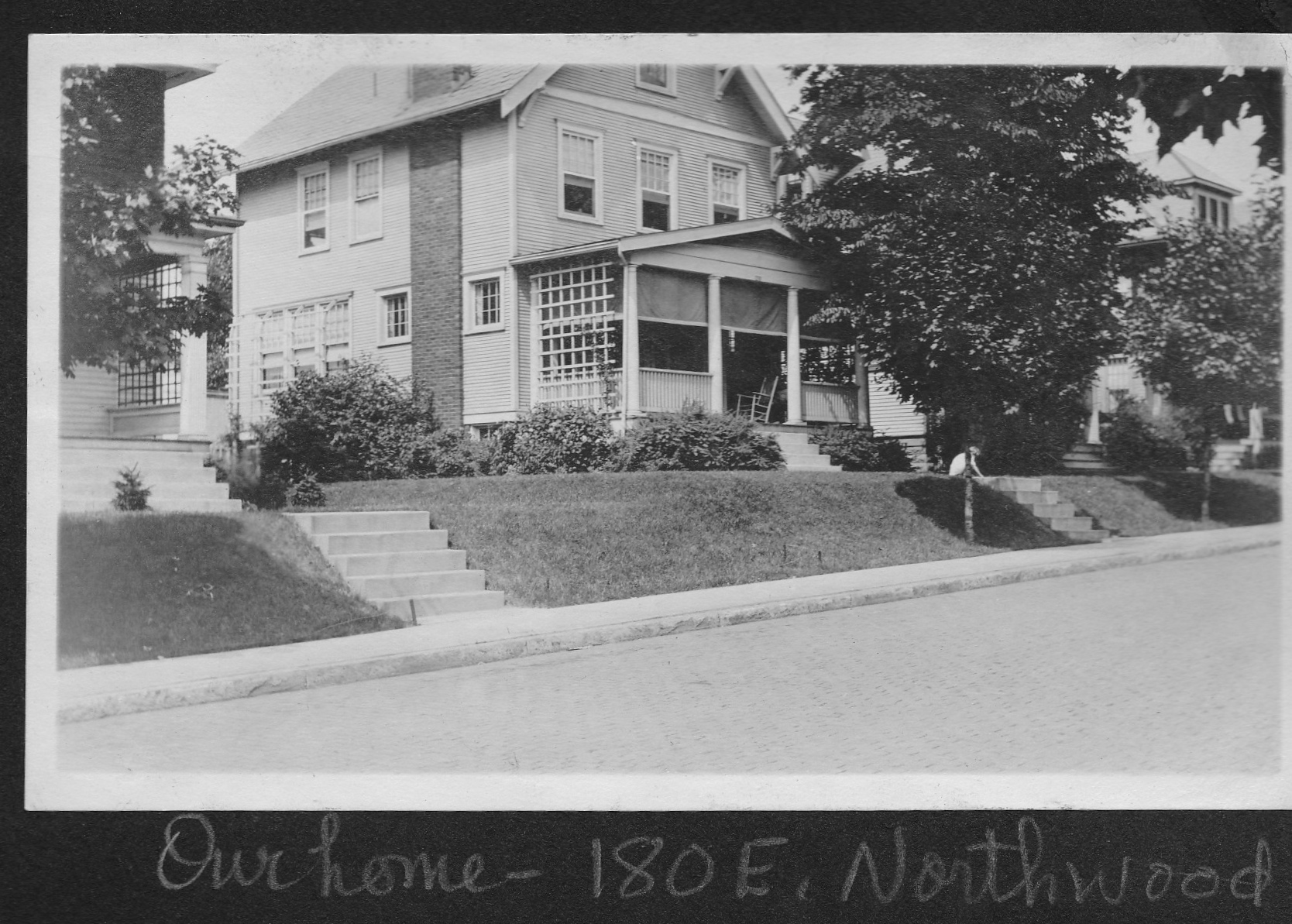 Margaret Nelson, a long time Clintonville resident who has shared many other family pix with us, shared the World War I photo with us. 180 East Northwood was built by Margaret’s grandparents, Johanna Gertrude (Edmondson) (1880-1967) and Norman Barnes Thorp (1867-1934) around 1909, and the house was subsequently owned by the Thorp’s daughter, Norma Thorp Van Ness.
Norman B. Thorp was active in the Northwood Flower and Garden Club, which in turn was active in various ways in the war effort. Of its 60 members, 9 men were in military service and 1 woman was an active nurse.
[Photos courtesy of Margaret Nelson.]Clintonville Community Band
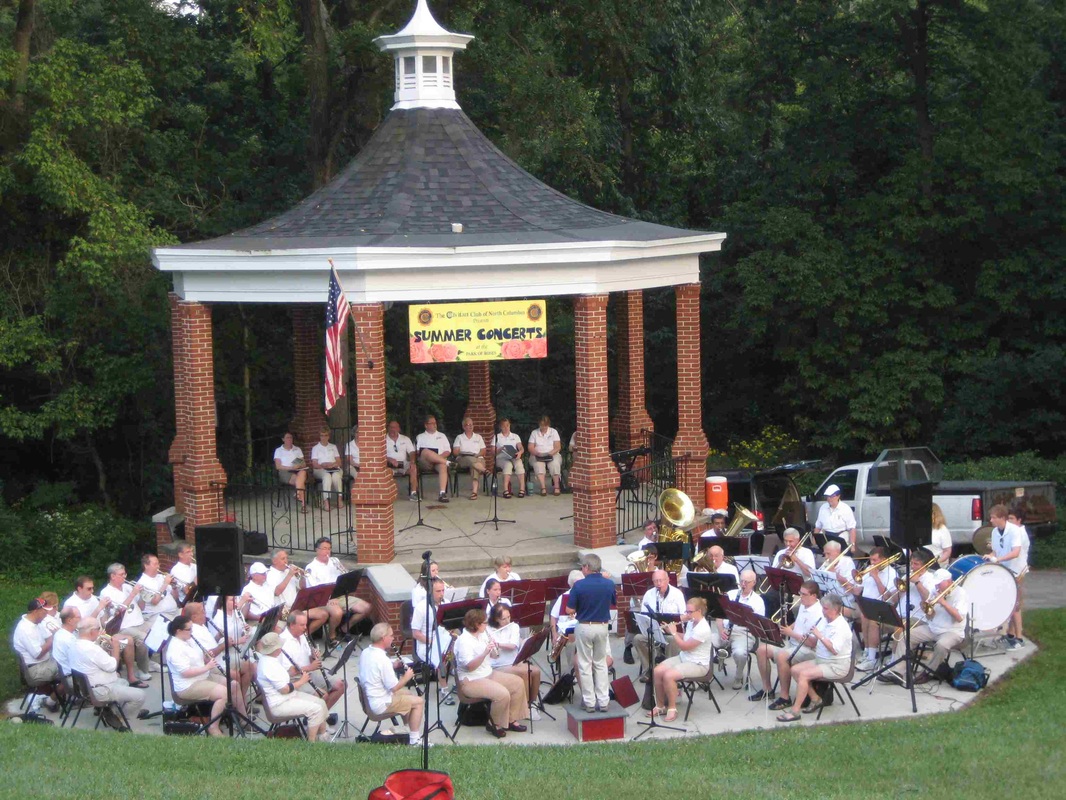 The Clintonville Community Band is one of the Clintonville’s hidden gems. Their concerts are typically free for community events, and they charge a nominal fee for other concerts. Here’s some of its history.
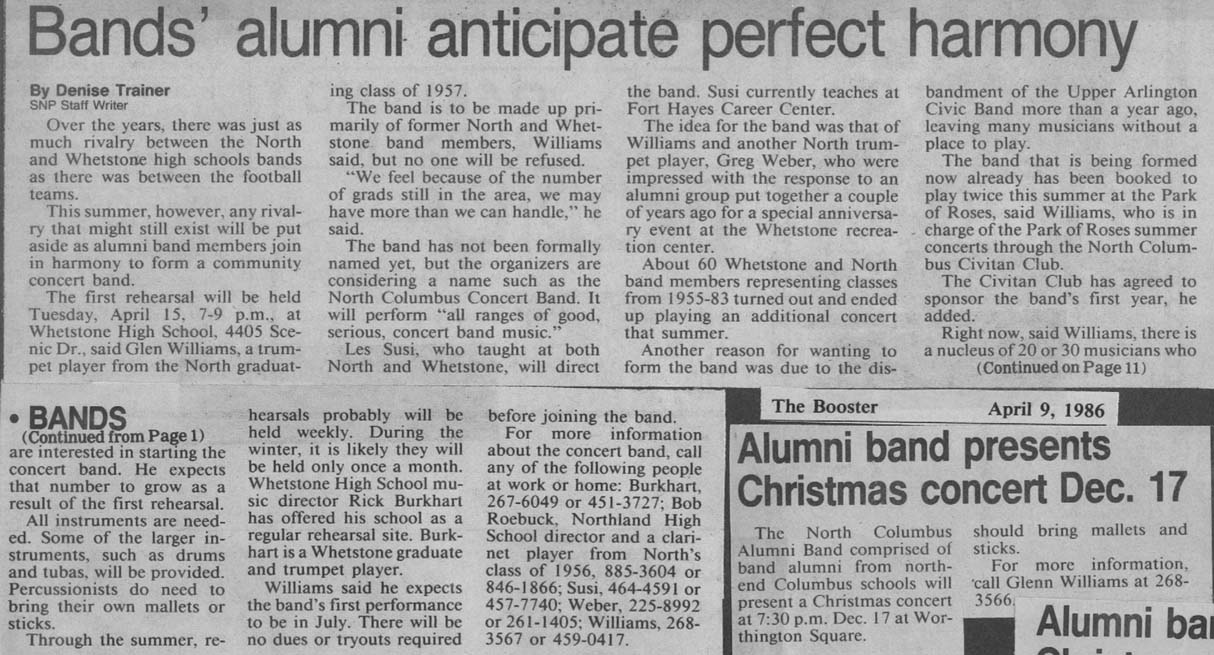
Glenn Williams and Greg Weber convened an organizational meeting for the band on February 27, 1986. Glenn Williams, Greg Weber, Rick Burkhart, and Les Susi, Bob Robuck, and Tom Davenport attended, and so you could credit them with being founders. At the time, the plan was to recruit musicians from any of the local high schools, and to refuse no one.
The first rehearsal was held April 15, 1986 at Whetstone High School. North Columbus Civitan funded the band’s first year. The Band had a concert that summer, as well as a Christmas concert.
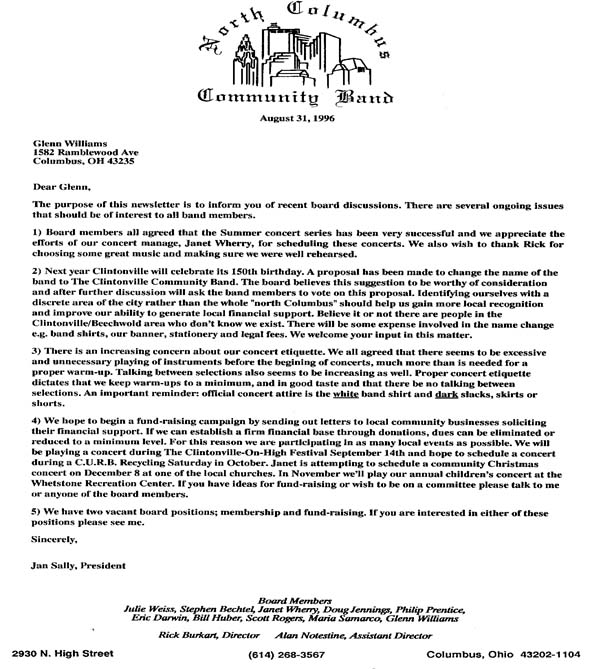
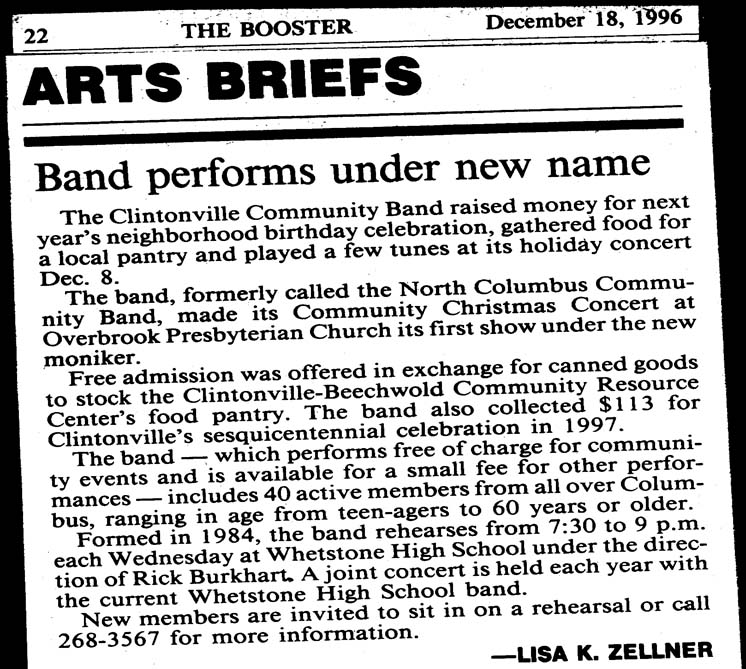 On August 31, 1996, they renamed themselves The Clintonville Community Band (from the North Columbus Community Band). By then they’d decided to play at as many local events as possible, including the “Clintonville-on-High” festival, CURB Recycling Saturday, a Christmas concert, and a children’s concert; the goal was to put themselves on a firm financial footing through good community exposure and an increase in donations. At the time they had about 40 active members.
In 2004, they celebrated their 20th year by commissioning a piece by Barry Kopetz. Would you like to hear that song? Click here.
Now, if you’ve read this far, you know they depend on donations. Just do it!
[All the material here is courtesy of the Clintonville Community Band and based on a talk that Glenn Williams, Stuart Smith, and Rick Burkhart gave at the Clintonville Historical Soceity.]The Clintonville Woman’s Club: the women before the Clubhouse
 Mary Rodgers has written a very nice article about the Clintonville Woman’s Club.
The Clintonville Woman’s Club: The Women Before the Clubhouse
by Mary Rodgers
[Courtesy of Mary Rodgers]I was recently asked to speak at an evening meeting of the Clintonville Woman’s Club. Specifically, I was asked to speak on the subject of the history of the land that the Clubhouse occupies. I have always understood that the Clubhouse was located on land from the old Fuller Farm. I was surprised to learn more about the “Fuller” family.
In the 1820s, John Rathbone sold farm lot 5 to Edward Amaziah Stanley. Using today’s landmarks, that land would have been bounded on the east by Indianola Avenue, on the west by the river, on the south by roughly Torrence Road and on the north by roughly Overbrook Drive. When Mr. Stanley died in 1862, his land holdings were passed down to his children. Harriet Marie Stanley (aka Hattie) was one of those children. She was born in Connecticut in 1831. Based on the extensive land holdings throughout Ohio, I believe her father Edward was an Ohio land speculator. After acquiring several thousand acres, in 1829, he returned to Connecticut to marry Abagail Talcott Hooker. Sometime between 1831 and 1834, the family moved to the Clintonville area.
In 1856, Hattie married Erskine Asa Fuller, aka E. A. Fuller. E. A. was known as a dealer in stock animals. When her father passed away, Hattie inherited all of farm lot 5 in Clinton Township Ohio. The 1870 census shows a large extended family living together in Clintonville–the Fullers and their daughters, Hattie’s mother, brother, sister, and several farm hands and servants. The combined household value per that census was in excess of $25,000. Hattie passed away in 1879. E.A. passed away in 1894. After their deaths, the farm was transferred equally to the four Fuller daughters–Abby, Mary, Katherine and Martha.
Martha Fuller and her sister Katherine Fuller Peters lived all of their lives in Clintonville. They owned two brick homes along High Street–Katherine’s just south of where the Library sits today and Martha’s where the Christian Science church sits today. Martha Fuller passed away in 1938. She left half of her land holdings to long time farm hand Matthew McCallen and half to her niece (sister Mary’s daughter) Helen Osborn.
Eventually, all the land was sold off, some to the Christian Science Church, some to the Calvary Bible Church, and the balance to the City of Columbus.
The Clintonville Woman’s Club land was purchased by the Kiwanis Club of Northern Columbus. That Club loaned the ladies the funds needed to build the Clubhouse. In turn, they held a mortgage on the property. The Woman’s Club members worked tirelessly and retire their debt to the Kiwanis within five short years! They have owned the Club house and property ever since.
The ‘ville Is Alive, with the Sound of Music…
 At a recent CHS meeting, Glenn Williams and Stuart Smith shared a song commissioned by the Clintonville Community Band for its 20th anniversary. Snapshots of Clintonville premiered on Oct 1, 2005. It is 11-minute 47-second duration.
Snapshots of Clintonville‘s composer was Barry E. Kopetz, who was Director of Bands and Professor of Conducting at Capital University at that time. Richard Burkart was the Clintonville Community Band’s director. The band has kept a great archive of its history; the program for this concert is here and the announcement of the commissioning of the piece is here.
The individual movements are
1) Main Theme
2) Gothic Gateway Entrance
3) Glen Echo Ravine
4) Bill Moose – Last Of The Wyandots
5) Dance
6) From The Banks Of The Olentangy
7) Underground Railroad
8) Columbus and Worthington Plank Road
9) Weisheimer House
10) McKendree Cemetery
11) Main Theme
The band has made a huge contribution to the community, by providing concerts year after year for more than 30 years. That doesn't mean they don't need your support and donations! I recommend going to their web site and donating today.
Are you still reading this? what are you waiting for? Donate!
Creative Reuse of a Garden House
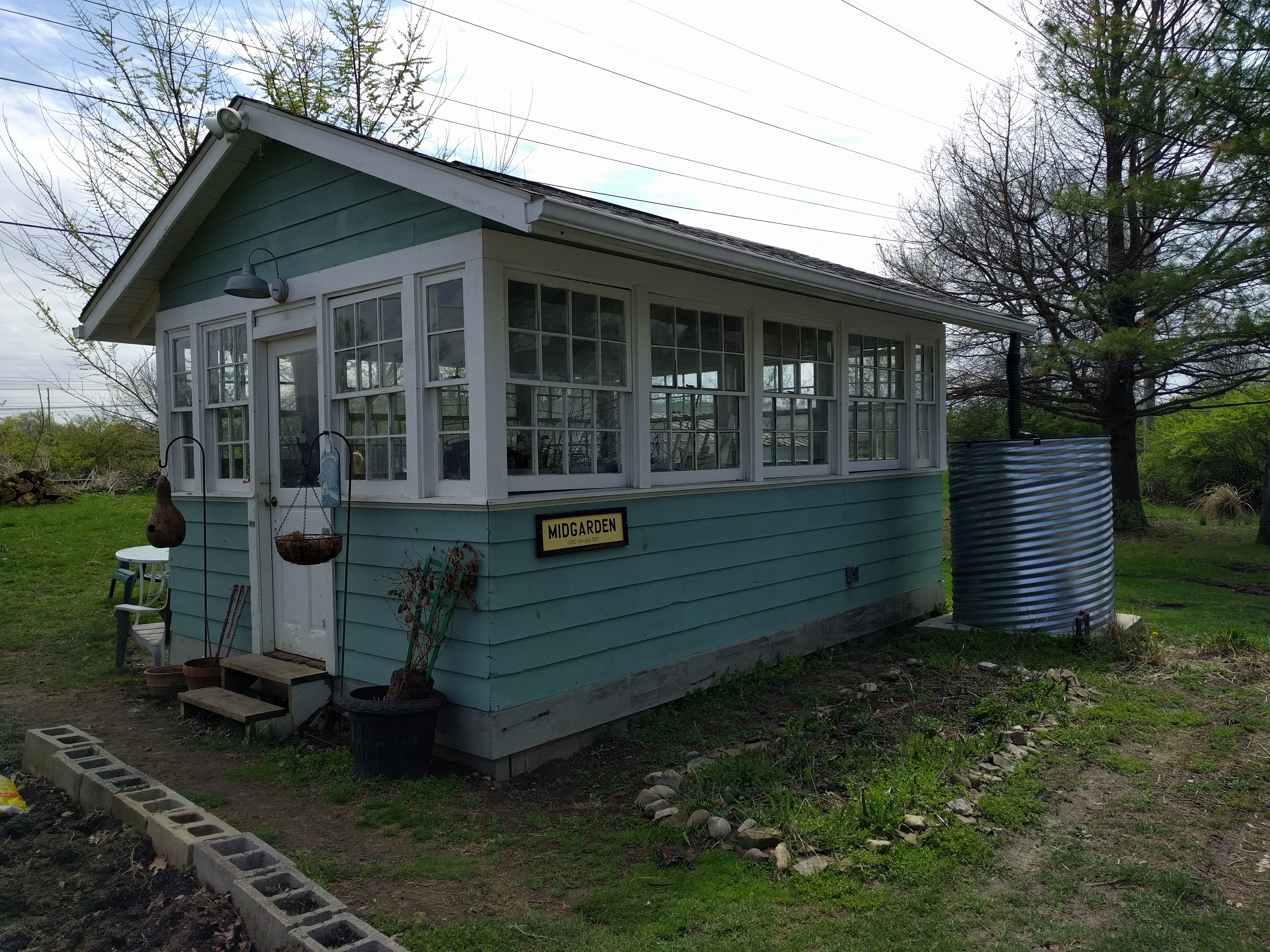 This little gem was once the garden house at Edgewater, summer home of Harvey and Emma Legg Zinn. (Harvey was founder of the Zinn Lumber Company.) It dates to the 1920s. Zinn’s property at the west end of Kenworth was eventually subdivided and several years ago an additional new house was built on the property.
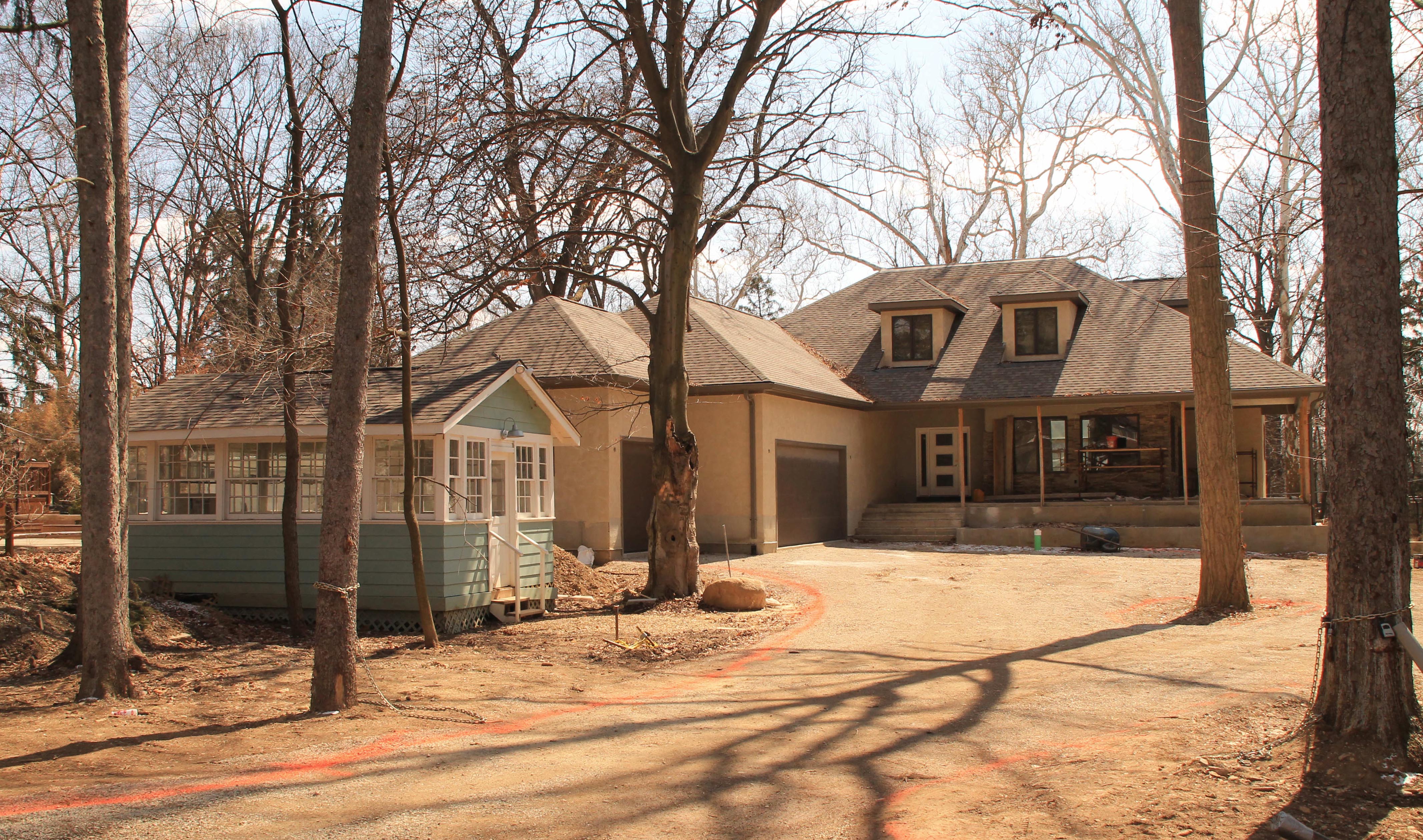 During construction of the new house, the builder, Kevin Clausen, used the garden house as an office for the building project (shown here in 2014).
Upon the house’s completion, the new homeowners, Gary and Kathy Flynn, donated this lovely shed to Clintonville Resource Center (CRC) instead of demolishing it. Thanks to the Clintonville Historical Society, the American Public Gardens Association, builder Kevin Clausen and some hearty volunteers, it was moved to its new home at the CRC Midgard Community Garden (aka Midgarden). The foundation work was completed in 2017 with the help of Tim Beachy and Anderson Concrete.
This building enables CRC staff and volunteers to collect rainwater for irrigation, start new plant seedlings on site, retrieve seeds for new plantings and provide a space for educational and informational gatherings. And of course, it adds a shedful of pretty to the landscape.
E. A. Fuller Farm
The Clintonville Historical Society October 2017 monthly newsletter contained an interesting article about the land at the Clintonville Women’s Club by Mary Rodgers.
________
The Clintonville Woman’s Club: The Women Before the Clubhouse
by Mary Rodgers
I was asked to speak at an evening meeting of the Clintonville Woman’s Club. Specifically, I was asked to speak on the subject of the history of the land that the Clubhouse occupies. I have always understood that the Clubhouse was located on land from the old Fuller Farm. I was surprised to learn more about the “Fuller” family.
In the 1820s, John Rathbone sold farm lot 5 to Edward Amaziah Stanley. Using today’s landmarks, that land would have been bounded on the east by Indianola Avenue, on the west by the river, on the south by roughly Torrence Road and on the north by roughly Overbrook Drive. When Mr. Stanley died in 1862, his land holdings were passed down to his children. Harriet Marie Stanley (aka Hattie) was one of those children. She was born in Connecticut in 1831. Based on the extensive land holdings throughout Ohio, I believe her father Edward was an Ohio land speculator. After acquiring several thousand acres, in 1829, he returned to Connecticut to marry Abagail Talcott Hooker. Sometime between 1831 and 1834, the family moved to the Clintonville area.
In 1856, Hattie married Erskine Asa Fuller, aka E. A. Fuller. E. A. has known as a dealer in stock animals. When her father passed away, Hattie inherited all of farm lot 5 in Clinton Township Ohio. The 1870 census shows a large extended family living together in Clintonville. The Fullers and their daughters, Hattie’s mother, brother, sister and several farm hands and servants. The combined household value per that census was in excess of $25,000. Hattie passed away in 1879. E.A. passed away in 1894. After their deaths, the farm was transferred equally to the four Fuller daughters–Abby, Mary, Katherine and Martha. Martha Fuller and her sister Katherine Fuller Peters lived all of their lives in Clintonville. They owned two brick homes along High Street; Katherine’s was just south of where the Library sits today and Martha’s was where the Christian Science church sits today. Martha Fuller passed away in 1938. She left half of her land holdings to long time farm hand Matthew McCallen and half to her niece (sister Mary’s daughter) Helen Osborn. Eventually, all the land was sold off, some to the Christian Science Church, and some to the Calvary Bible Church and the balance to the City of Columbus. The lane where the Clintonville Woman’s Club land is located was purchased by the Kiwanis Club of Northern Columbus. That Club loaned the ladies the funds needed to build the Clubhouse. In turn, they held a mortgage on the property. The Woman’s Club members worked tirelessly and retire their debt to the Kiwanis within five short years! They have owned the Club house and property ever since.
Moseying with Rick Pfeiffer through Clintonville
 Columbus City Attorney Rick Pfeiffer, who grew up in Clintonville, does a wonderful job giving an informal tour of the Clintonville community. (He has done this for the other neighborhoods of Columbus as well!) Thanks Rick! and we wish you well in your 2017 retirement.
Part One: https://bit.ly/CMosey1
Part Two: https://bit.ly/CMosey2
KKK
 In November, 1977, the Klu Klux Klan held a rally in Columbus, and met at the Howard Johnson Columbus North Motor Lodge. I’m glad for freedom of speech, sad and mad for what that speech consists of. (Post update: I previously thought this motor lodge was in Clintonville, now I believe it was on Rte 161.)
Defense Center
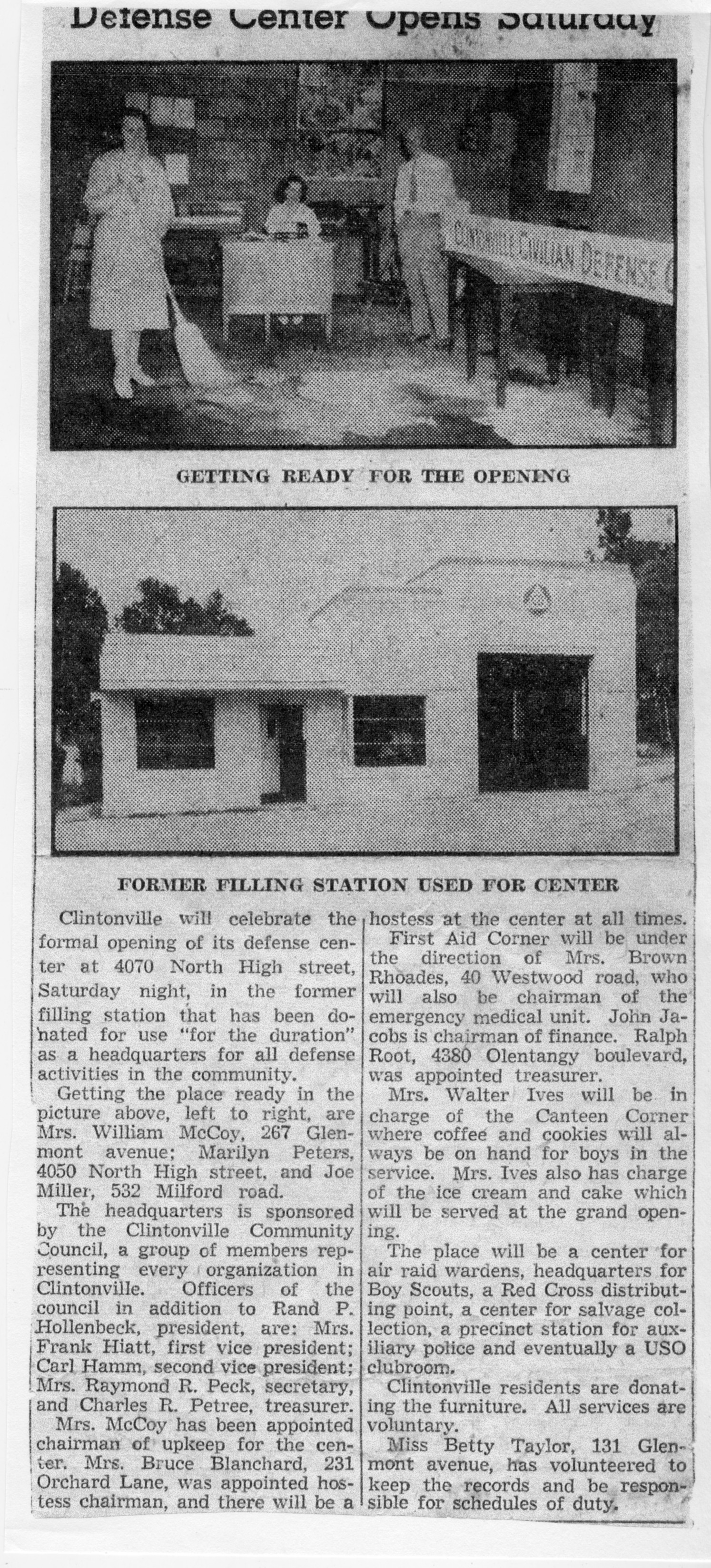
At a presentation I gave on the History of Clintonville, someone handed my husband this news item about the opening of the Defense Center in a former filling station at 4070 North High Street at the corner of Glenmont and North High Street in 1942.
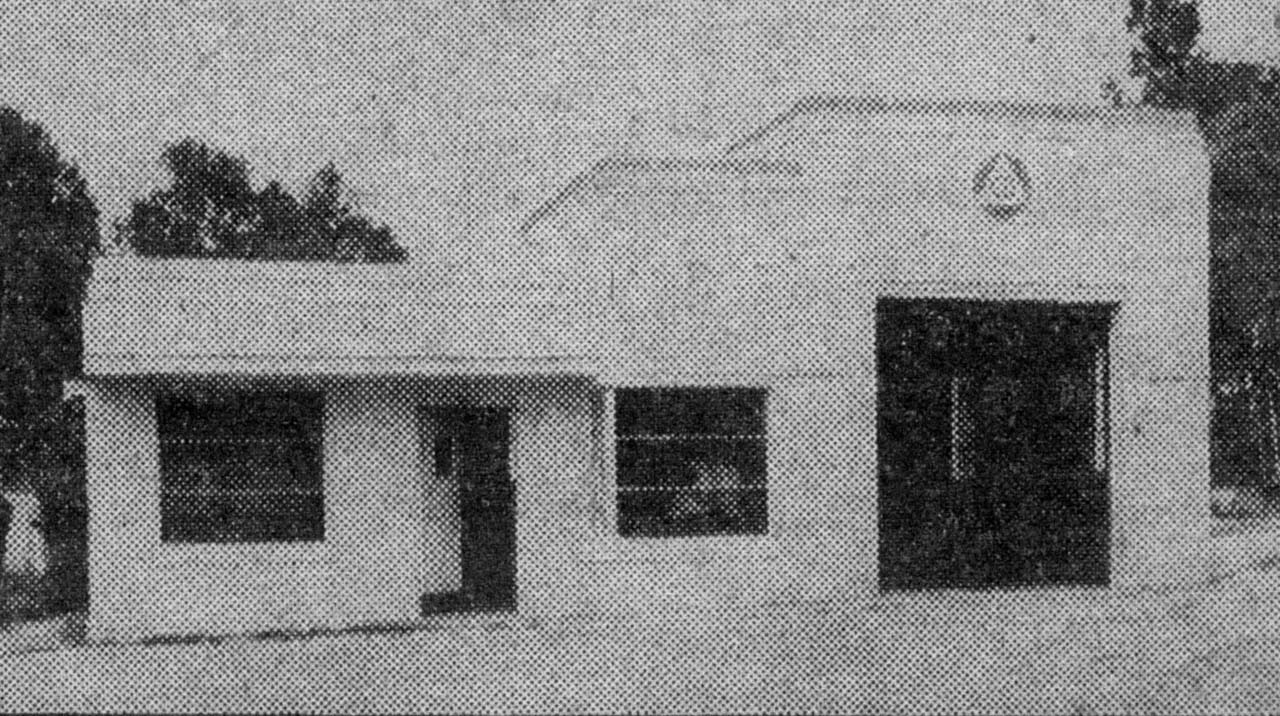 The Clintonville Community Council, a group of members representing every organization in Clintonville, sponsored the center. It was to be a center for air raid services, a headquarters for Boy Scouts, a Red Cross distribution point, a center for salvage collection, a precinct station for auxiliary police and eventually a USO clubroom. It included a first aid corner, and a canteen offering coffee and cookies.
In this picture, Mrs. William McCoy, Marilyn Peters, and Joe Miller are getting the place ready.

There is another photo here.
Notable Clintonvillites
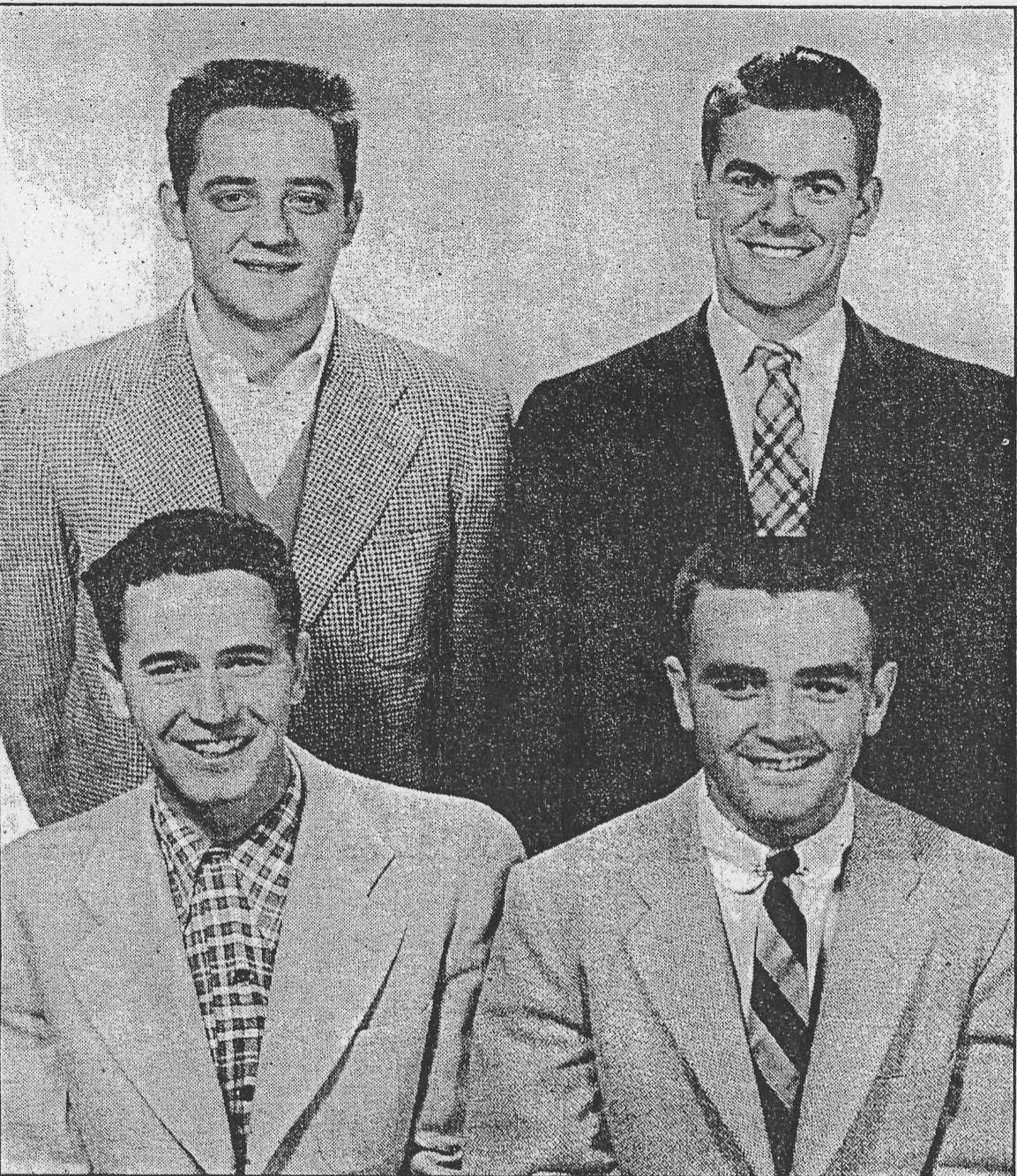 I enjoy the attached article by Don Hollenback originally published in a 1997 Booster. It enumerates some of the residents who made their mark on the community–Doc Rymer, Bill Taylor, Cookie Stevens, Ted Barclay and many others who formed Clintonville Boy Association, Boy Scout and Girl Scout troops, and more.
Voting
According to a transcript of a WBNS-Radio broadcast salute to Clintonville on May 27, 1959 and reprinted in The Clintonville Historical Society’s January 2009 issue of its newsletter, Clintonville Heritage, Clintonville’s first voting booth was located at the corner of Weber and High, and on Election Day, the Ladies Aid Societies would work all day, serving hot dinners to the farmers who came to vote.
Orphanage at 218 Jason Avenue / 56 West Pacemont
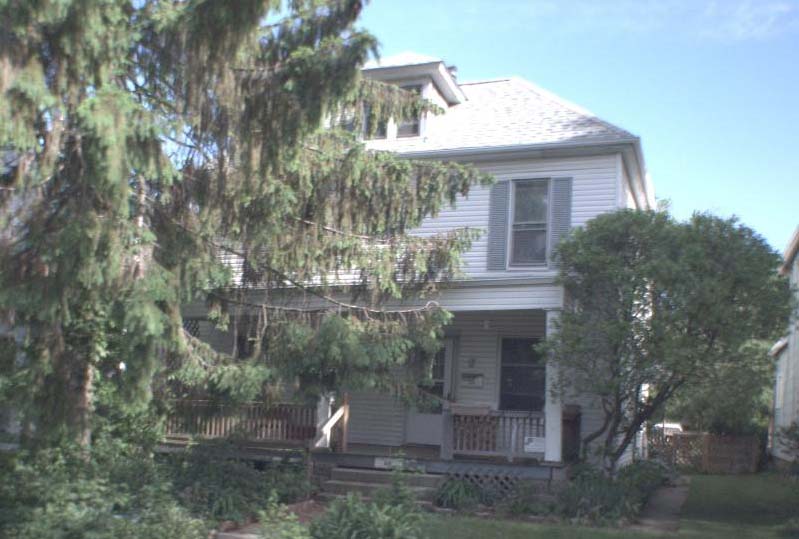 Back in 1910, this address served as a home for children.
First of all, in case you are wondering, there is currently no 218 Jason Avenue or 218 W. Pacemont. Pacemont Avenue was originally called Jason Avenue. The area where the orphanage stands was outside of the Columbus City limits in 1910 & 1920, during many of the years when it operated as an orphanage. When the western end of Jason/Pacemont was added as the “the Aldrich’s Riverside addition,” the house numbers were adjusted to compensate for all the new lots. The current address is 56 West Pacemont.
The boarding house/orphanage/nursery was run by Judiah & Mary Ella Throps (sometimes spelled Throp or Throop). Judiah was born in 1844, served in the Civil War, and died in 1913. (His occupation was listed as “Painter” and also, in 1910, as “Nursery.” Mary Ella was born in 1865, and died in 1933. (Her occupation was listed as “Housekeeper” and occasionally “Nurse”.) Both are buried in Union Cemetery.
According to the 1910 Census, the Throps had one 7 year old son living with them (son Ernest Throps). Mary was at the time 45 years old. They also had 12 young boarders living with them, all under the age of 6 and many just babies.
By the 1920 Census, Judiah had passed away. The 1920 census states that Mary (by this time, age 55) had 3 children living with in her household: Earnest Throps (age 16); William Throps (age 9), Mabel Leonard (a servant, age 29) and Glendus Leonard (age 5, listed as a boarder). (I can’t help wondering whether there were additional boarders, not listed by the census taker.)
By the 1930 Census, Mary was 64. By this time she had quite a few extra living companions: William Throps (son, age 19), Richard Throps (adopted son, age 4), Helen Gatewood (servant, age 22), Jeanne Paden (8), Oswin Poletzie (7), Shirley Poletzie (3), Elva Waton (18), Marie Obrien (6), Charles Jordan (6), Mick Tudor (3), Virginia Adkins (2), and Algie Donaldson (2).
This research was conducted by Scott Caputo of the Columbus Metropolitan Library, Main branch, Geneaology, History, & Travel Desk. We are so glad he discovered this history. Scott had a library client who knew that their grandmother had a child out of wedlock in 1910. The grandmother had put the infant in an “orphanage” located at 218 Jason Avenue, where he died shortly afterward. The infant was Harry White and is included in the 1910 census in a list of around a dozen “boarders” at this address. All are under 5 years old.
Here’s a directory of the source material used for the above information, and also linked to above:
Sanborn Maps
Censuses
Business Directories
Death and Civil War Records
Clinton-Como Park…
 was originally called the American Legion Park Playground, presumably because Post 82 owned it or gave it as a gift to the community. Today there is a conical mound at the park. The mound was “built” sometime in the 1960s (tentative date) from the dirt displaced by sewer line construction.
Columbus Canoe Club
The house that currently stands on the north side of Orchard Lane at the river was once the Columbus Canoe Club. It has had only 4 owners in its lifetime, and the present owner had to do considerable renovation on the building. The club originally had tennis courts; the space is now a swimming pool. Sadly I know of just one photo of the club, which is located at the Ohio Historical Society. The current home owner told me that Bill Arter, an artist who drew and researched Columbus buildings in a Dispatch column called “Columbus Vignettes,” was in the process of writing a column about the club when he passed away.
Tennis
 The Clinton League created a community tennis club and tennis courts on Dunedin near Calumet Street, using two vacant lots owned by J. E. Pierson.
Minstrel shows
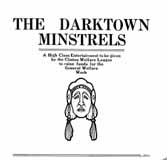 In the early part of the twentieth century, many Clintonville organizations and churches held minstrel shows, as fundraisers and for entertainment. I chose not to sanitize minstrel shows from my book, because they were an authentic part of Clintonville’s history, albeit the part we are all glad we’ve done away with. I regret any offense or hurt caused by these pictures.
Another kind of bridge
Does anyone out there have a picture of the Clintonville Bridge Club, which met in the basement of the Olentangy Village Tavern for perhaps 50 years until the 1970s/1980s?
Clintonville Woman’s Club
On February 4, 1939, six Clintonville ladies met at the house of Mrs. Frank Hiatt to discuss the need for a cultural, charitable, and civic group in Clintonville. 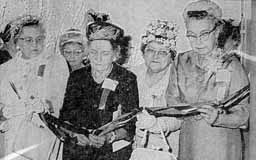 The women were Mrs. Walter H. Ives, Mrs. Herman O. Williams, Mrs. Frank Hiatt, Mrs. Russell Kennett, Mrs. Harry Mesloh, and Mrs. Rand P. Hollenback. Each woman made a list of representatives of all the local organizations and churches, and recruited them. The result was a list of 40 charter members. Their objective was “to encourage wholesome community life, to promote acquaintance among women of varied interests; and to secure cooperation in social, educational, civic, and welfare work in Clintonville.” They met in small groups, rotating the meetings between member’s houses. They also had 18 special interest groups. The annual dues were $3, $1 of which was set aside to build a club house. They achieved that goal through the generosity of the Kiwanis Club, which in 1951 gave the women’s club land on which to build at 3951 North High Street. Ground was broken in 1964, and in 1965 the building was dedicated. The club is still vibrant and the clubhouse can be rented special events. (Photo courtesy of the Kerchner family)
Civil Defense Center
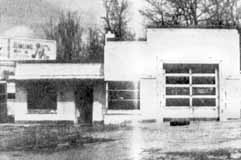 Because of gas rationing during World War II, many gas stations closed. In 1942, Clintonville Community Council (an umbrella group of Clintonville’s organizations) transformed this vacant gas station at 4070 North High Street to be a civil defense center and canteen for soldiers. It was furnished with first aid station, chairs, and a piano, and light refreshments were served. (Photo courtesy of the Kerchner Family)
There are a couple more pictures here.
A.B. Graham (1868–1960)


A. B. Graham (Albert Belmont Graham) was an educator from Springfield OH. He had an idea: to get young people together to learn about agriculture and develop skills for farm living. He formed an organization to enable such practical learning. He originally called it the Boys and Girls Experimental Club, and then, the Boys and Girls Agricultural Club. By 1905 there were over 2,000 young people in sixteen Ohio counties participating in Agricultural Clubs. Graham was named Superintendent of Extension of the Ohio Cooperative Extension Service and the clubs were expanded nationwide. In 1916 the Boys and Girls Clubs officially became the 4-H Clubs.
 A.B. Graham eventually worked for the USDA in Washington DC. After his retirement in 1938 he moved back to Columbus. He lived in his home on Clinton Heights Avenue until his death at the age of 91 in January 14, 1960. These photos show him at his Clintonville home. Happily, today I live in that very same house.
What do the 4 H’s stand for? Well, originally, there were only 3 H’s and the insignia was a 3-leafed clover. The H’s stood for head, hearts, hands. Then a 4th H was added and the organization’s clover became 4-leafed. That last H stood for hustle. But “hustle” didn’t stand up to the test of time and was eventually replaced by a tamer “H,” that is, health.
(Photos courtesy of OSU Photo Archives, Drawer #213.)
Kiwanis
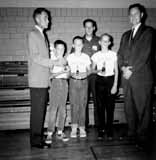 I love this picture of the Kiwanis Club of Northern Columbus, the oldest service club in the area, with some members of the Jet League, a baseball team the club sponsored. Over the years Kiwanis has held pancake breakfasts, fish fries, garage sales, peanut sales newspaper sales, and hosted a concession trailer for activities at Whetstone Park. They use the funds to sponsor teams, provide scholarships, sponsor the annual Whetstone Park egg hunt, and to contribute to Easter baskets for Children’s Hospital. One of their largest projects was to raise $50,000 for the lodge at Highbanks MetroPark. (Photo courtesy of Kiwanis of North Columbus)
Kiwanis Cont’d
Here are more pictures showing a few of Kiwanis’ contributions to Clintonville–
World War II memorial to fallen soldiers at Union Cemetery;softball team sponsorship; scholarship program; Easter egg hunt at Whetstone.


A Rose by Any Other Name…
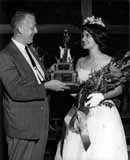 I’m enthralled by pictures of the Maiden of the Roses pageant, held at the Park of Roses each Father’s Day from about 1954 until 1974. The pageants were sponsored by North Columbus Civitan. They evoke an era which is now gone. The celebration included floats, a dance, and the beauty competition, with the award given to the Franklin County girl who “made the greatest contribution to the community and who has worked most in her school.” The 1964 Maiden was Lynn Wilson, from Upper Arlington High School. (Photo courtesy of Glenn Williams)
Maiden of the Roses Theme Song
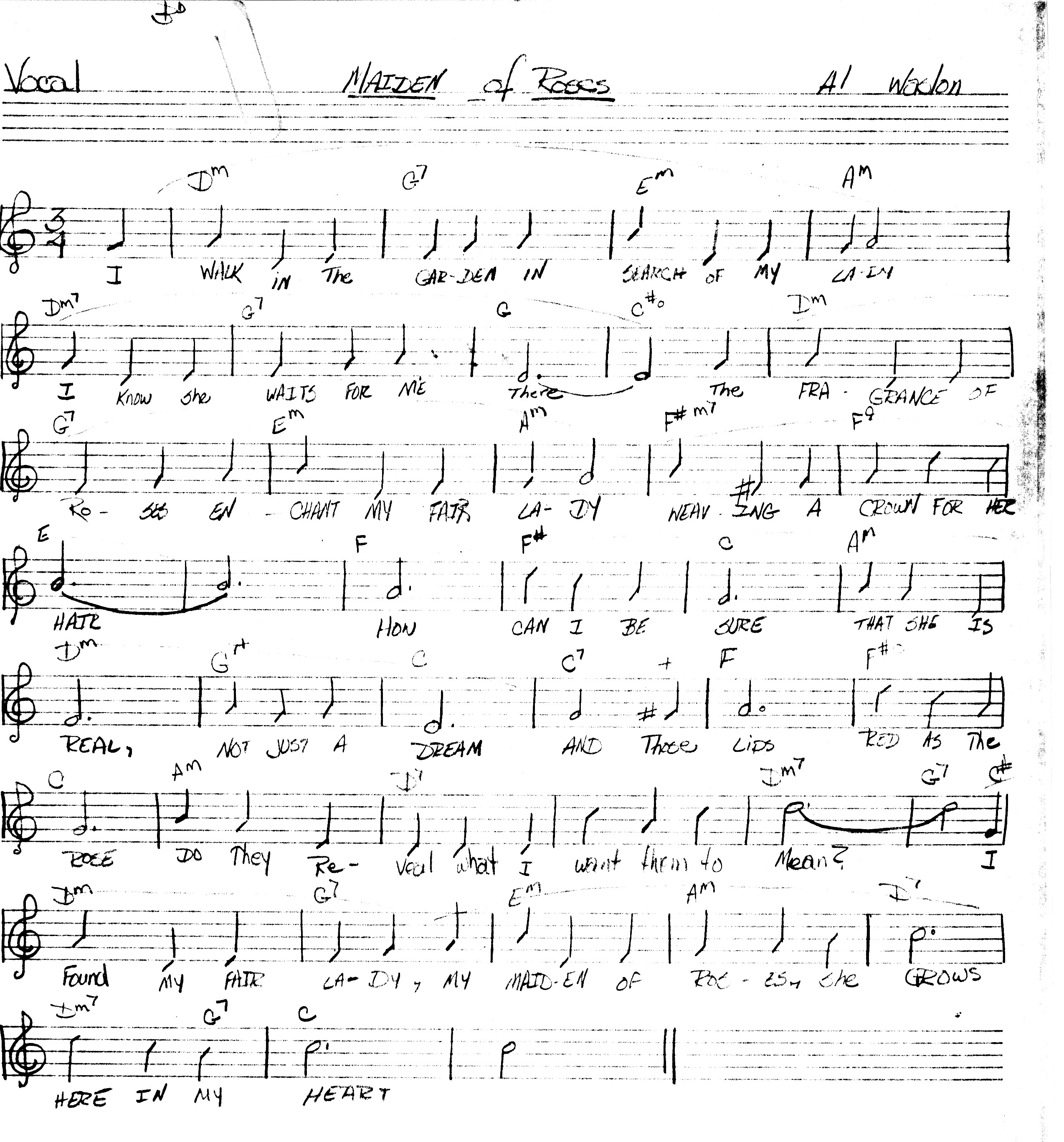
From 1954 or 1955 until 1974, North Columbus Civitan (along with Columbus Parks & Recreation) sponsored a Maiden of Roses Festival at the Rose Garden. While rummaging through Civitan’s archive for the festival, I came across a written composition of music, clearly intended to be played at the festival and perhaps at the award event. I don’t know who composed it (does the sheet say, “Al Waslon”?). My musician friend and technical advisor Mark Bendig played and recorded the tune for me and now you, too, can listen to it. Click the play button below to stop/play the music. (Access to Civitan’s archive courtesy of Glenn Williams, music courtesy of Mark Bendig.)
Clinton League
In the summer of 1912, a book agent promoted an 11-volume set of books entitled The Foundation for Young People. Buyers were entitled to a Certificate of Membership in the Child Welfare League of America. Twenty-five local women pledged, and 11 of them came to the first local meeting. In the early days they met in the guild room of Saint James Episcopal Church. They held readings and had discussions on predetermined topics. They supported Columbus’ Baby Camp; they held Minstrel shows to benefit the Belgian Relief Fund; they sponsored a hot lunch program in the local schools. Clintonville was outside the city limits in these early days and had no city library service, and so club members established a branch of the state library within Clinton School from 1914-1915, and when that was deemed impractical, they had a lending library at Cummings Drugstore located at Clinton Heights Avenue and North High Street—another idea that proved to be impractical. Eventually a Columbus Public Library 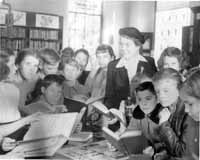 branch was put into Clintonville, and when the local group became aware of the local library’s need for books, they held a “book shower” to bring in book donations. They engaged in war relief work in 1917. They advocated getting rid of some dirty carriage sheds at the Clinton school. In 1915 they were also able to convert two vacant lots owned by J. E. Pierson on Dunedin near Beach Hill Avenue (now Calumet Street) for use as community tennis courts. The club contributed to the community through World War I, the flu epidemic of 1918, the Great Depression, World War II, the Korean War, and the Vietnam War. Over the years their name changed from Clinton Child Welfare League to the Clinton Social Welfare League (1913) to the Clinton Welfare League (1915) to the Clinton League (1925). The group disbanded around 1977. Their papers can be read on microfilm at the Ohio Historical Society.
From 1945 to 1953, they donated books to the Clintonville Library. In this photograph, Mrs. Miller presents books to the children at the Clintonville Library, on behalf of the Clinton League. (Photo courtesy of the Clintonville Historical Society)
Charity Newsies
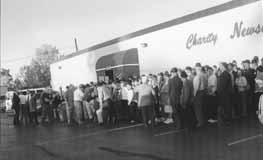 Until I worked on this book project, I didn’t know what the Charity Newsies–those guys wearing white jumpsuits asking for donations on street corners in December –did and why they did it. But after becoming acquainted with the organization I am so impressed with the group’s charitable accomplishments. Just in case you are as ignorant as I was about the group, here’s what they do: each year they equip needy schoolchildren—about 14,000 of them– with a wardrobe of new clothes for the school year. Every child in the program receives individual attention from a Charity Newsie member. The organization is totally independent and does not receive government money for their effort; they spend the year collecting money for the endeavor. And, they’ve been doing this for 100 years. This photo shows the Newsies when they first moved their headquarters from South High Street to Indianola Avenue (1995). (Photo courtesy of Charity Newsies)