Home
Clinton El West
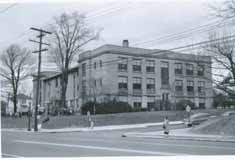 Overcrowded schools were a chronic problem, and the schools supplemented their brick-and-mortar ediifices with portable buildings. In response to the overcrowding of the east building, Clinton Elementary School’s west building was constructed in 1922. Both the east and west buildings have been in use for elementary and kindergarten grades since that time. (Photo courtesy of Columbus City Schools)
Sears houses


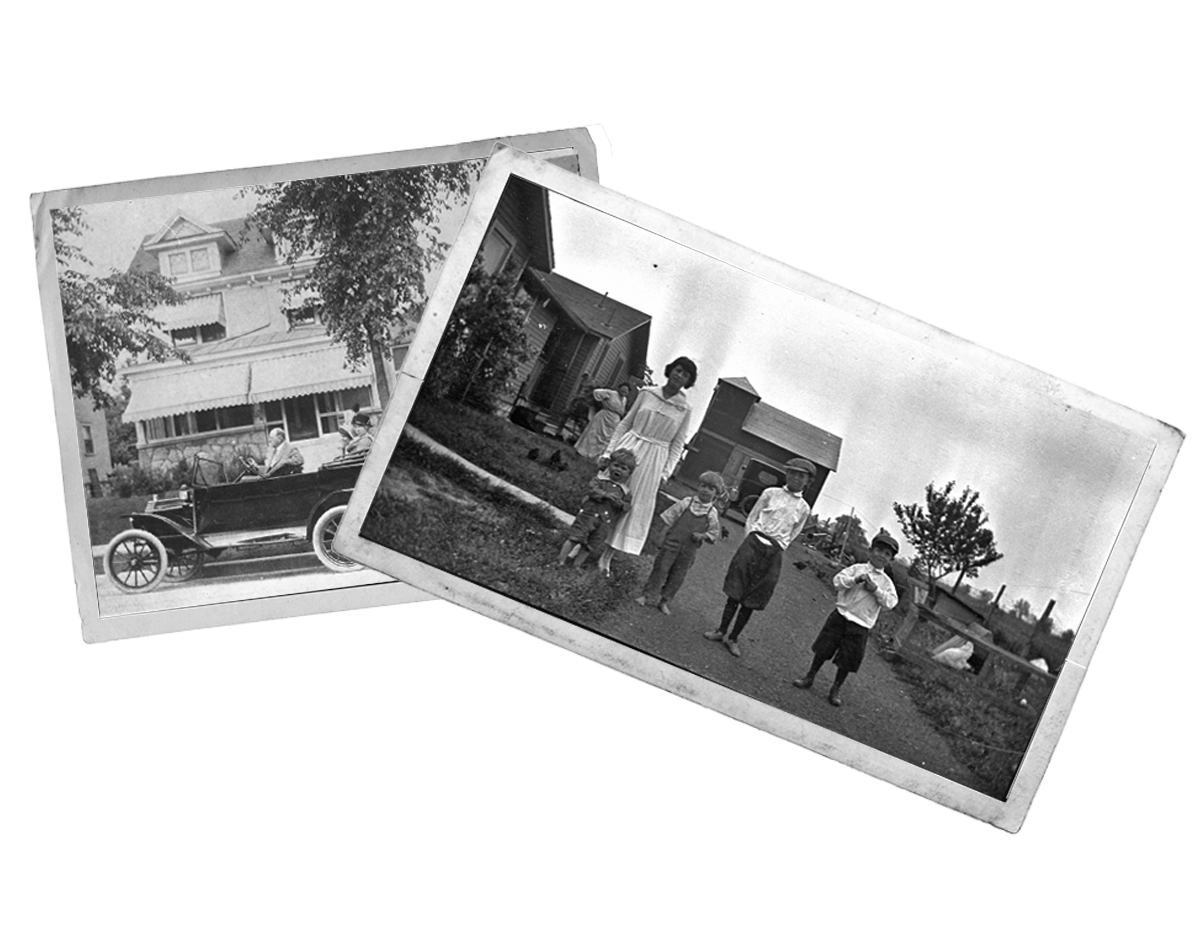
From 1908–1940, Sears, Roebuck and Co. sold “kit” homes through their mail order catalog. Customers chose a house from the catalog, and all the materials–precut lumber, carved staircase, nails, varnish, and instructions–would be shipped by railroad for homeowners to build themselves. The craftsman-style house at 149 Kelso was offered between 1911-1921 as “The Elmwood” in Sears’ catalog. (Photo courtesy of Lynn McNish)
Almost another Calvary Church…
As early as 1819, Methodists in Clintonville worshipped in people’s homes—the home of Eber Wilson has been mentioned– with circuit riders as preachers. Methodism was, in those days, a young and evangelical sect. When Thomas Bull, one of Clintonville’s early settlers, died in 1823, he left land in his will to build a church for the members, and that church was erected 15 years later at 3100 North High Street near Walhalla Road & High Street. Southwick Good Fortkamp Funeral Chapel occupies that building today.
The church membership decided in 1881 to sell the chapel and move the church to the thriving community of North Columbus, and they built a new church on East Tompkins. Several members dissented from this decision and, under the leadership of Eli Batterson, met at homes and at the Clinton School. In 1905 Howard Westervelt—great-grandson of Thomas Bull—reorganized a Methodist Sunday School, and church members worshipped in the home of Frank Dankworth at 70 West Lakeview. They founded Como Avenue Methodist Church in 1910. By 1924 they had outgrown that church and decided to build a new church edifice at North Broadway Avenue and Broadway Court. There were three candidates for the new church’s name: St. Paul, Calvary, and North Broadway; North Broadway was chosen.
Behind every successful man…
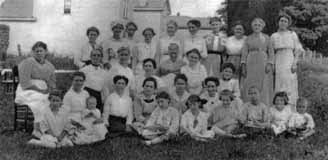
In my book I mentioned that the women of Clintonville were instrumental in building the community of Clintonville. According to North Broadway Methodist Church records, in 1906, the Ladies Aid Society was organized at Como Methodist Church. They pledged to earn $3000 a year for 5 years. They held bake sales and dinners, quilting parties and luncheons, and they met their goal. Their efforts were indispensable to construction of the Como Avenue Church Building and the Broadway Church. (Photo courtesy of North Broadway Methodist Church)
James Boyd Martin
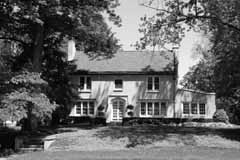 The North Broadway Methodist Church (built 1924) was designed by architect James Boyd Martin, who also designed his own house at 190 East North Broadway. His home is complete with an architecturally-consistent play house to the rear. Martin’s house was made of Indiana Limestone with green roofing tiles. (The original plans for the church called for limestone as well, but changed to brick for budget reasons.) Martin also built the house at 155 North Broadway as a wedding gift for his daughter. His son, Boyd Gibson Martin, eventually joined the architectural firm (Martin, Orr & Martin) and designed his own house at 256 East North Broadway as well as the Worthington Presbyterian Church (in 1927) and the Worthington and Westerville Libraries. Sadly, the Great Depression put the architectural firm out of business. (Photo courtesy of Lynn McNish)
The play’s the thing


In 1925, members of Maple Grove Church presented a play at the church. The play was Friendly Helpers Class. It was a success and was taken on the road to the Linworth and King Avenue Methodist Churches. The left photo shows cast members Katherine Cooke (Barbee) and Lulu Browne (Ohsner), Dorothy Cooke (Hambleton) and a neighbor playacting for the camera in 1925. The photo on the right is the program for the June production. (Photo courtesy of the Ron Ohsner Family)