Home
The First Clintonville Library
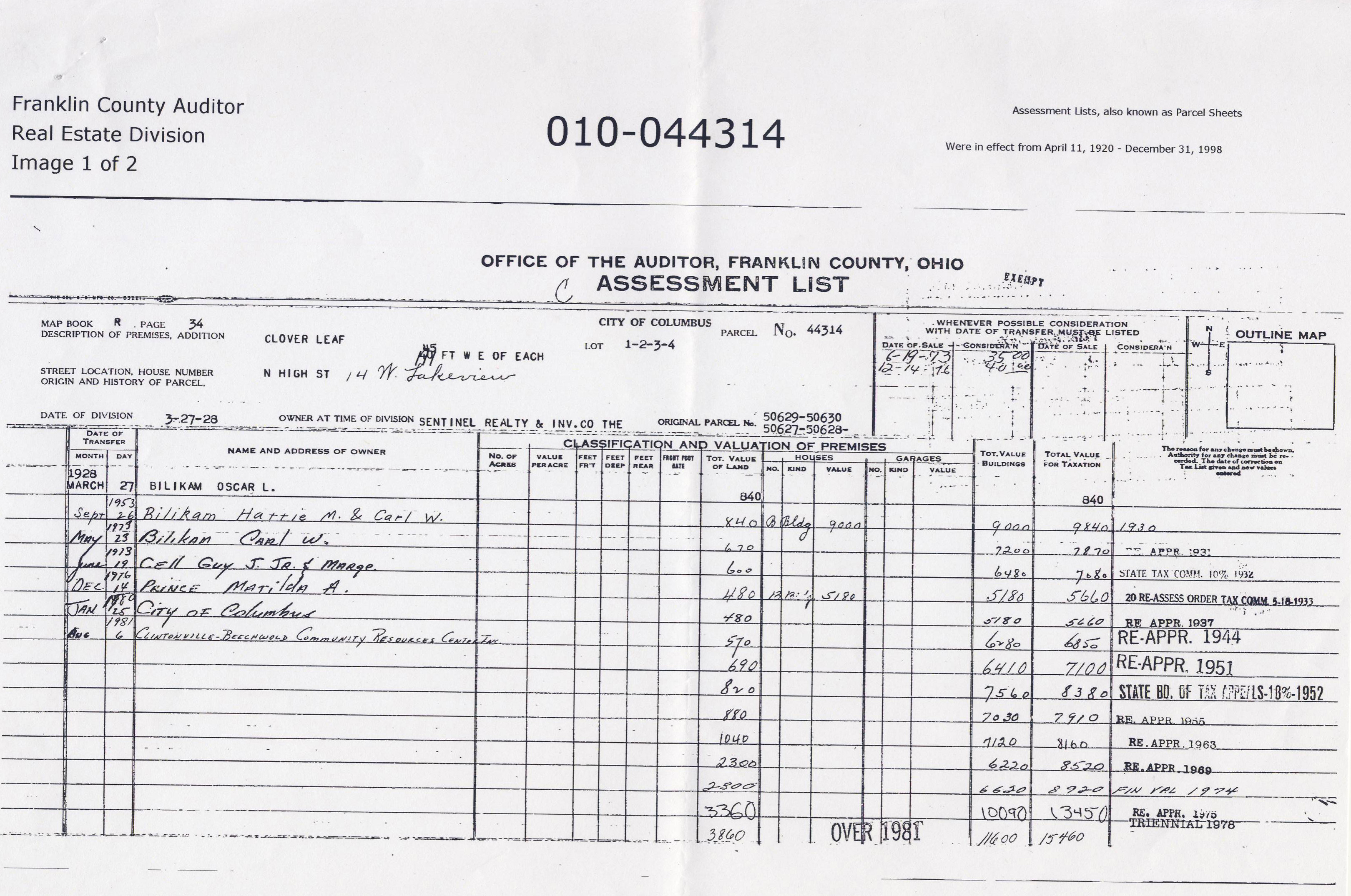
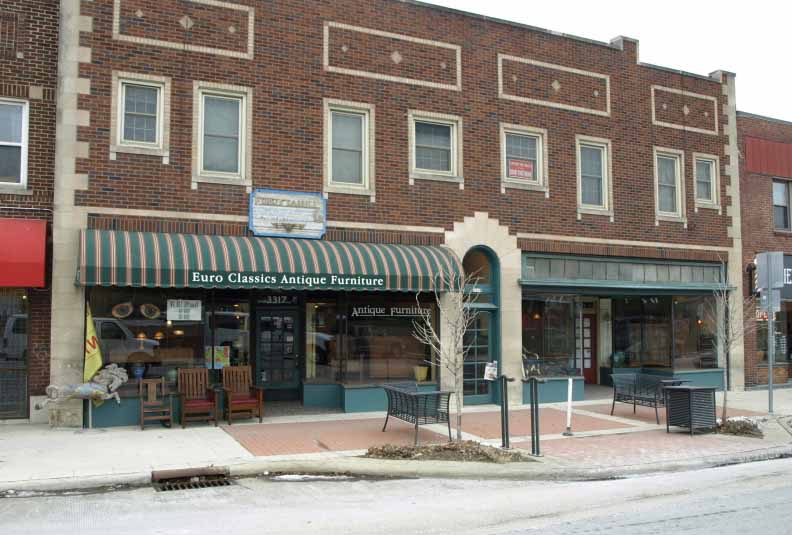 In my book, I wrote that the first Clintonville Library was at 3317 North High Street, near the corner of Longview and North High Street. What an intriguing fact! The Columbus Metropolitan Library Biography, History, and Travel Desk had brought this to my attention, and even sent me copies of minutes from old Board meetings where this was discussed. I’ve scanned them and you can read them here:
February 11, 1929 minutes
May 24, 1929 minutes
Tax Assessment List for 14 W. Lakeview, where the “new” library was built.
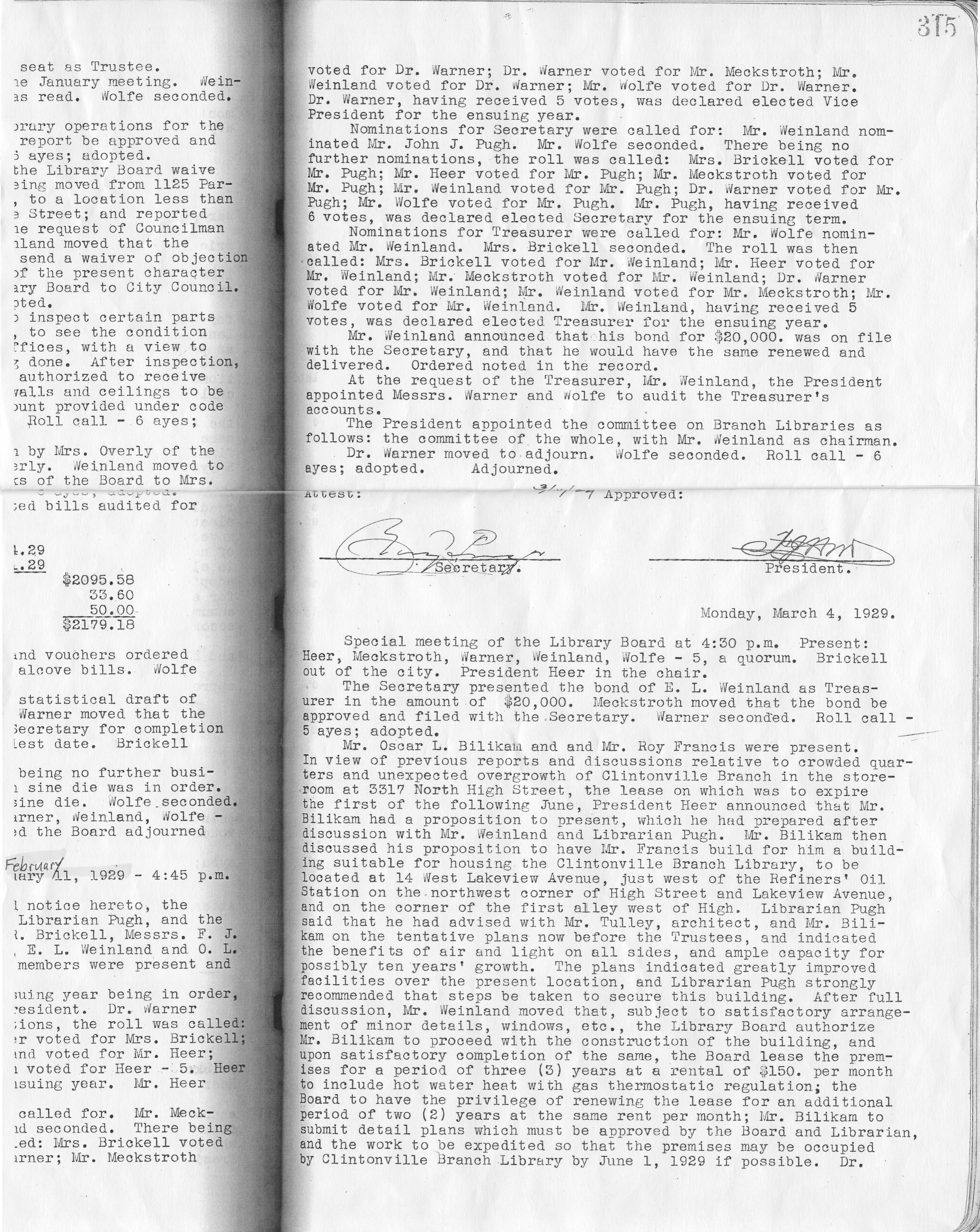
I’ve subsequently found an article in The Booster that told the same library story.
Patrick Murnan
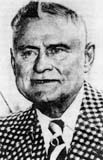 Patrick Murnan lived from 1866-1937, and owned about 700 acres along North High Street north of Morse Road. I’m not going to repeat the story of Murnan here; it’s in my book. But, here’s a photo of the man himself.
Clinton Elementary School
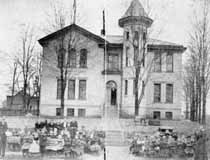 I would love to find a photograph of the original school at Clinton Heights and North High Street. According to one or two accounts, a Brevoort family member living in Michigan has one. The school pictured here ca. 1905 was the second Clinton Heights school building. It was yellow brick, contained 4 rooms, and faced High Street. Since students attended from all over Clinton Township in those days, many rode horses to school; the barn at the back was probably used for horses. According to the photo caption, most of the school moved into High Street for the picture. An interurban rail went up the center of High Street at the time, and the photographer probably stood on the tracks to take this picture. (Photo courtesy of Amy Westervelt)
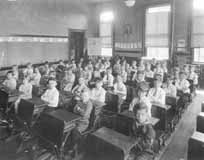 This is a picture of children in the classroom of the Clinton Heights school. (Photo courtesy of Amy Westervelt)
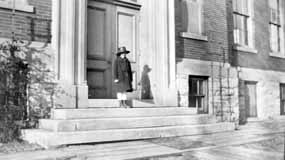 The second Clinton School was built in 1895 at 10 Clinton Heights Avenue. At the time, it housed both a grammar school and a high school. In 1904, the Clinton Township High School Building was built (pictured); it remains today as the Clinton Elementary East Building. A successor to the original building—still used–was built in 1922. (Photo courtesy of Amy Westervelt)
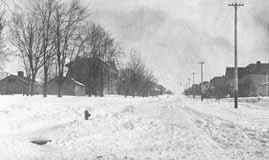 Overcrowding has been a chronic problem for schools. This photograph, looking east up Clinton Heights Avenue, shows some of the portable school buildings that were used as classrooms until newer school buildings could be erected. (Photo courtesy of Amy Westervelt)
3070 N High Street
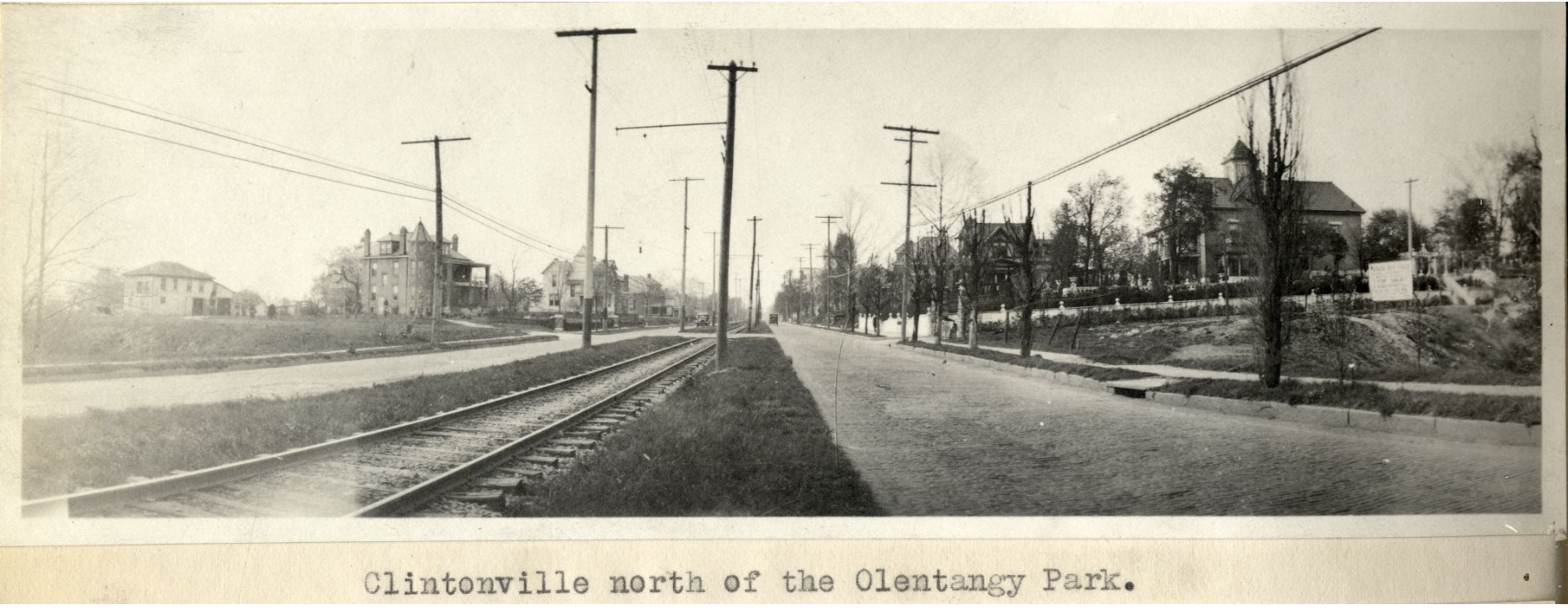
Here is an amazing photograph of High Street, given to me by Stu Koblentz, who found this image in an old student thesis by Forest Ira Blanchard. The photo looks north, taken around 3070 North High. On the right (east) side of High Street I believe is the house of Mathias Armbruster, which later became the Southwick Good Fortkamp Funeral Chapel at 3100 North High Street at Weber and High. I’m told that some gravestones from the old burial ground are visible on the right. Check my book, Clintonville and Beechwold, for a better photo of this house. You can click on the image to see it in more detail.
[Citation: Blanchard, Forest Ira. 1922. An introduction to the economic and social geography of Columbus, Ohio. Thesis (M.A.)–Ohio State University, 1922. On January 16, I replaced the grainy version of this image on this web site with a higher quality photo after Joe Smith alerted me to its existence.]Chesnut House

And another amazing old photo of North High Street from Stu Koblentz. This photo also looks north, and was taken just south of the intersection of High and North Broadway. The house on the west (left) behind the little shack (marked “ice”) is the Chesnut house (aka Chestnut house), described in this web site’s “Water for Cookies” entry and also found in my book. The school on the east (right) side of High Street is the old Clinton Township school building, a picture of which is also in my book. You can click on the image to see it in more detail.
Stu’s theory about the Chesnut house is as follows:
The image shows the Chesnut house, facing North High Street, about where it currently stands. The facade that faces Wall Street today is the facade facing High Street. This is verifiable in the chimney placements.
So I went through Joe Testa’s web site and I think I know what happened to the house.
As far as I can tell the house stood approximately at 3327-29 North High Street. In the 1910s, when the house (which appears to have been built in the 1860s or 70s) is pictured, the house had been moved on a pivot to its current location, with its northeast corner remaining close to its original placement. This would account for the front lot build out, the twist in the alley and the sudden reemergence of Wall Street as well as the placement of the house in the picture, and the current location of the house.
What is interesting to me is why did they go to all that trouble, when its fairly common in urban settings to build a street facade onto a house and call it a commercial building. I think that part of the reason is that the house sat further back from High Street, making it too far away to convert to a commercial space commonly found in that era.
Update 2025-08-25 by Shirley–Another possible reason for reorienting this house might be found here.
Water for cookies
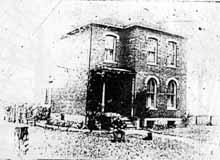 The township school located at Clinton Heights Avenue and North High Street did not, originally, have running water. Every day a child was designated to carry one bucket and dipper across High Street to the Chesnut house (see page 12 in my book, Clintonville and Beechwold) to fetch water that would be shared by the students. Legend has it that there were no lack of volunteers for water duty, as Mrs. Chesnut (or perhaps it was her daughter Fannie) always had cookies for the volunteer. This is a bad, yet significantly older, image of the Chesnut house.