Clintonville History header
Clintonville History photos
Clintonville History header
Clintonville History photos

Rathbone Cemetery and Clinton Chapel Cemetery

Joe Smith has an intriguing theory about Clintonville’s elusive Rathbone Cemetery. I think it’s interesting; what do you think?

From Joe:

I came across some maps that the Works Progress Administration (WPA) did from 1935-1943, as part of FDR’s “New Deal” programs. One Clinton Township map particularly caught my eye. It was named (by them) the “John Rathbone Cemetery.” There’s is a link to that particular map on an Ohio History Connection affiliated website (link here). To date, I have only found two other websites that make reference to that cemetery by name:
dev.clintonvillehistory.org/ website;
FCGHS website.

I have spent the past few days trying to locate this cemetery. It has been confusing, because the WPA listed it at the corner of US-23 and C-93. As you know, today US-23 follows Indianola Avenue starting at Hudson Street. But I believe prior to the 1960s it was actually still North High Street. C-93 is Hudson Street, according to the Franklin County Engineers (link to PDF here). So, using the WPA location (0.9 miles north of Hudson, and 150 feet east of High), we are at Clinton Chapel Cemetery!

I was very impressed by the WPA map drawings, well before computer aided design (CAD) and printers/plotters were available. So, I took their map and made a rough estimate of the dimensions of the “John Rathbone Cemetery,” and it also fits (within an acceptable tolerance) the known dimensions of Clinton Chapel Cemetery! Three of the boundaries are within 5% but the east boundary is off nearly 10%. I think that is due to inaccuracies with the measuring and/or digitization of their maps.

I know everyone likes maps, so I’ve attached the one I created (see above) to support my findings that Clinton Chapel now has at least three alternate names:
North M.E. Cemetery
Armbruster Cemetery
John Rathbone Cemetery

More from Joe:

There were six Clinton Township cemeteries that WPA reported on: Amaranth Abbey Mausoleum, John Rathbone Cemetery, Kempton Cemetery, Mc. Kendree M. E. Church Cemetery, Union Cemetery, and Webster Cemetery. Note, Cooke and Clinton Chapel Cemeteries were not on their list.

Here’s a link to the very cool 1920 Baist Map earlier (it’s here.)

Other general observations:

Both Rathbone and Clinton Chapel cemeteries were of similar orientation, size and shape (0.47 acres vs 0.50 acres). The Clinton acreage is also an estimate. I actually expected Rathbone acreage to be higher, given that each of the borders are slightly larger, but again I think this is more due to issues with precision.

Here is a comparison of the border dimensions (in feet) for each cemetery. The borders for Rathbone were estimated based on pixel counts on the WPA map.

Border Clinton Rathbone
North 200.00′ 200.00′
South’ 196.00′ 200.06′
East 97.02′ 107.06′
West 124.00′ 128.30′

What do you think? Talk about an “identity crisis!” Feel free to comment below.

To be sure, there remain some “unknowns”, such as the fact that Ohio Genealogical Society lists both a Rathbone Cemetery in Sharon Township and a John Rathbone Cemetery in Clinton Township. There may have been a family burial plot for the Rathbone/Wetmore family, graves in which were moved to Greenlawn at an unknown past date. I have no facts to back that up! I’m just leaving this possibility on the table until we can find out more. As Joe states, I mention a Rathbone Cemetery in prior posts. I learned about that from Algy McBride, past president of the Clintonville Historical Society and also of the Franklin County Genealogical Society. Algy passed away in 2015 and is greatly missed.

[This entire entry is courtesy of Joe Smith. Thanks Joe!]
2025-07-07T13:37:40+00:00July 7, 2025|Categories: 1800s, 1900-1940|Tags: |0 Comments

Underground Railroad in Clintonville

Debbie Shaw, retired CML librarian, recently provided some local resources about the Underground Railrooad in Clintonville and surrounding area. Thanks for agreeing to share this information, Debbie!


Here’s Debbie’s summary:

    This link has a short video as well as text below it from WOSU’s Columbus Neighborhood series on Clintonville; both discuss the Underground Railroad.

    and this video from the same series on Downtown/Franklinton shows another area involved in the Underground Railroad here in Columbus.

    This link is from the Clintonville History site by Shirley Hyatt. The October 2008 issue discusses Thomas Bull and his family and includes a brief section about the Underground Railroad. [Shirley adds: see my book Clintonville and Beechwold here (to buy it) or here (to borrow it) for a smidgen more information.]

    Article from the OSU Lantern Feb. 7, 1999.

    Historic Marker on OSU Campus.

    Another historical marker.

    Excerpt from the book The Underground Railroad: An Encyclopedia of People, Places and Operations by Mary Ellen Snodgrass.

    For a broader look at the Underground Railroad in Ohio, you can read the full text draft of The Mysteries of Ohio’s Underground Railroad by Wilbur H. Siebert here.

    And of course, the Columbus Metropolitan Library has a lot of this history. You can also access a lot online at the here.

Debbie also notes, “This material was easily Googled. As a former librarian, I know that there is a lot of info that is not online. By the way, if you do an advanced book search on books.google.com and limit to full text only and content = books, there are quite a few. I put underground railroad in the ‘with the exact phrase’ field and Ohio underground railroad in the ‘with all of the words’ field. Laws, history, etc. come up, including Ohio Before 1850 and Ohio History Sketches. Of course, some of it is a very brief part of the book. If you add Ohio into the search’s ‘subject’ field, this narrows it a lot.”

2026-03-12T15:55:15+00:00October 15, 2015|Categories: 1800s, Churches, People|Tags: , |0 Comments

Flora Armbruster

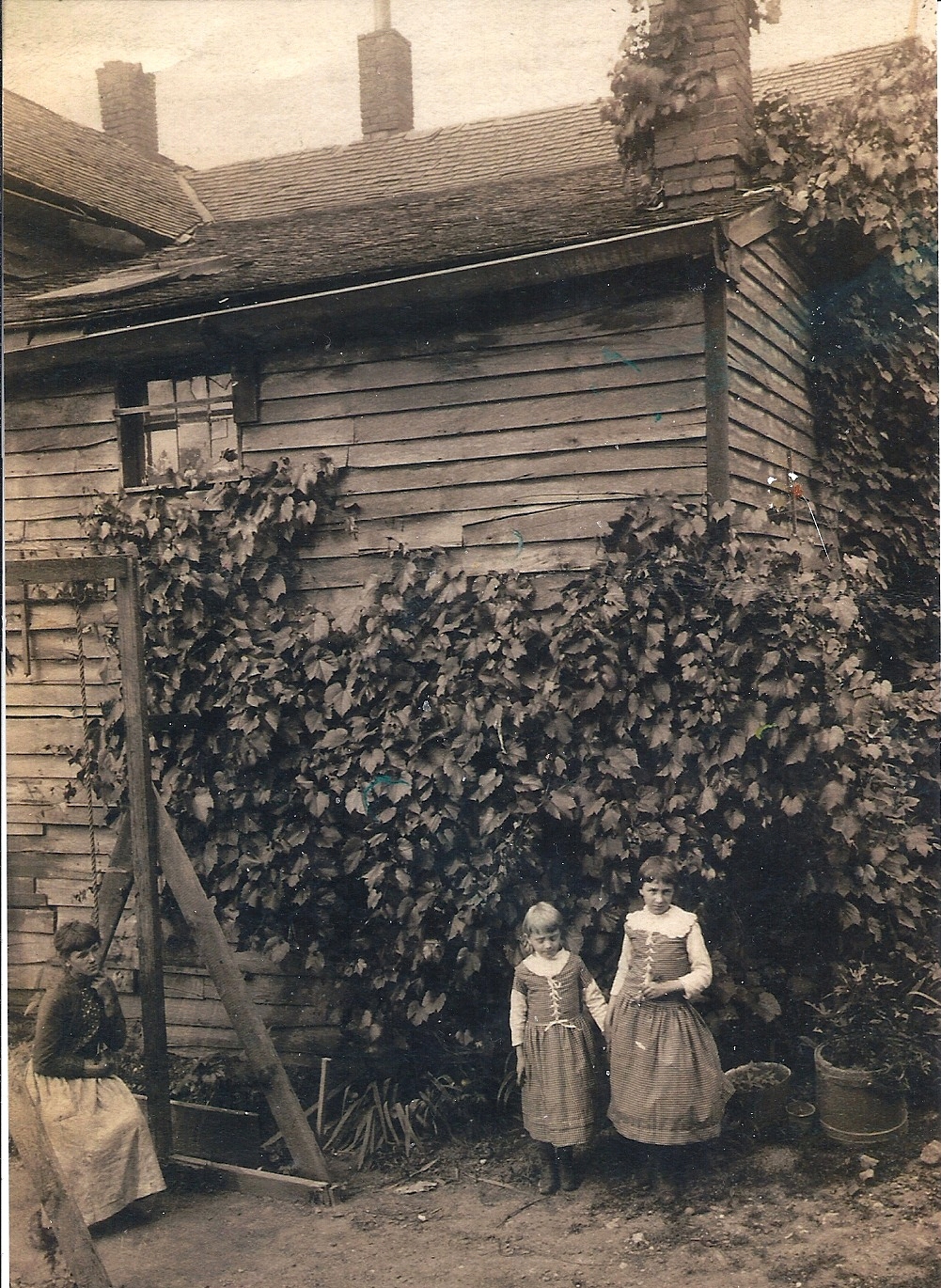
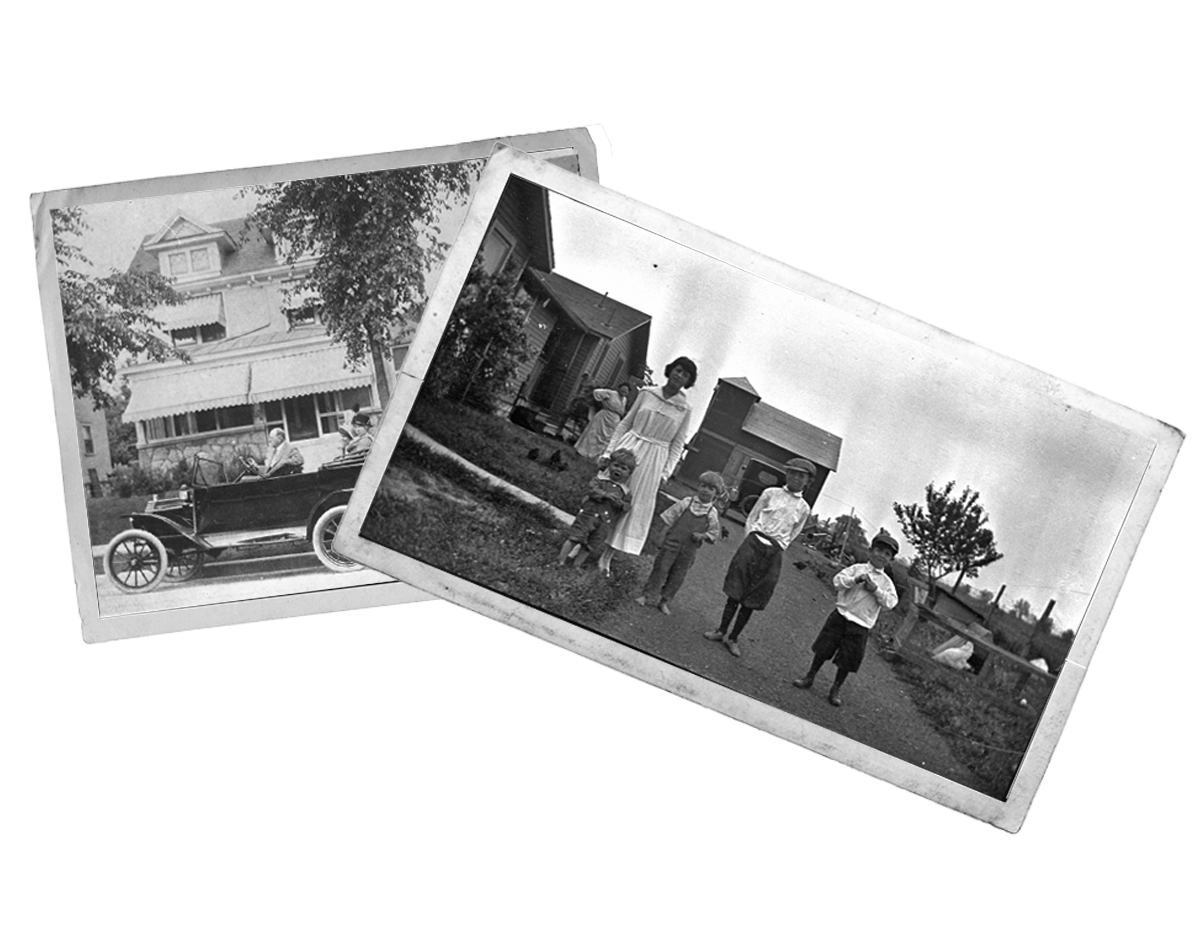
Leeann Faust has graciously shared an additional photograph of her family. This photo is of Rosa, Pauline and Flora Armbruster.

Leeann and her cousin David believe the photo was most likely taken at the house at 3100 North High Street but where and what the building–which looks the be rather rough construction–is, is not known. Leeann ponders, “Could it be the barn? That was where the house is that faces California stands today (on the east side of the side driveway). It could also be a storage building. We were looking at the things in the background. If it is the barn it might have been what was north of the house or if they were at the ends east or west. We know the barn faced the house so it couldn’t have be what was south. If it’s not the barn, we don’t know it’s position.”

If anyone has any guesses, please pass them on!

For additional photos, search “3100 North High” or “Armbruster” on this web site.

2013-12-26T14:51:55+00:00December 26, 2013|Categories: 1900-1940, Houses, People|Tags: |0 Comments

Graveyard at Armbruster home, AKA Clinton Chapel

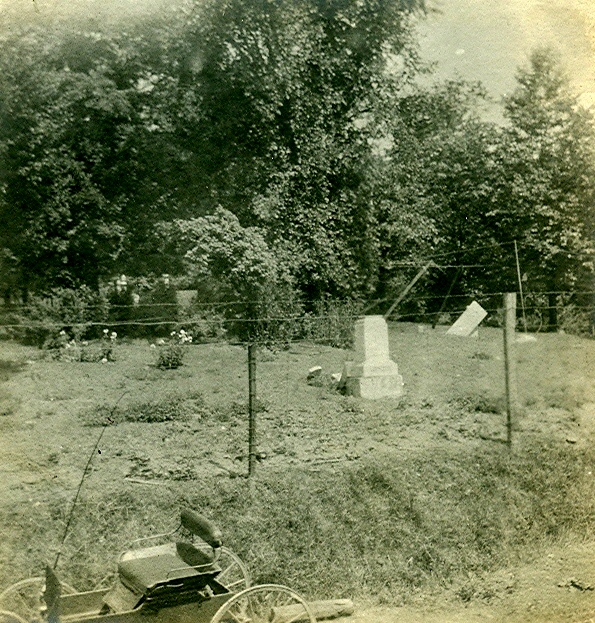
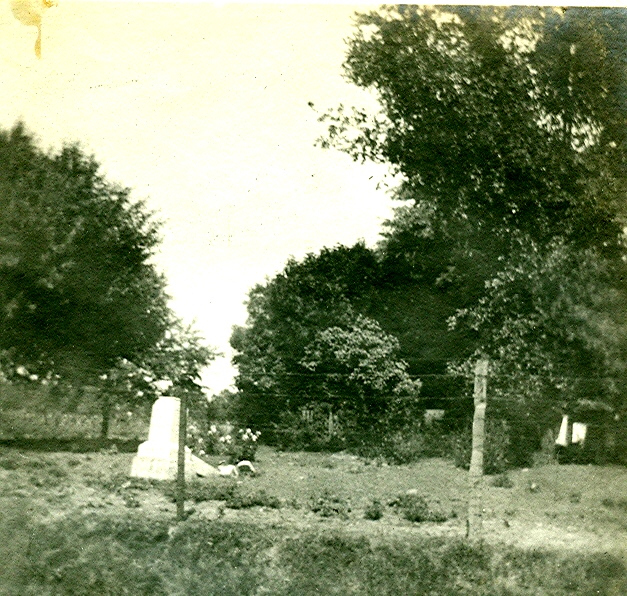
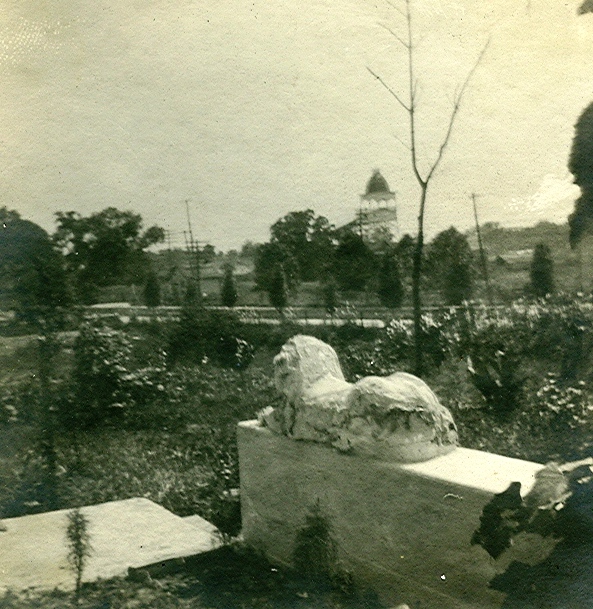
More fabulous pix from Leeann Faust of her ancestors’ home at 3100 North High Street. This was originally the site of Clinton Chapel, subsequently modified to make a residence for Mathias Armbruster; the building then became a funeral home and at the time of this update, the building is a day-care center. These photos show the old graveyard which was behind the house, as well as the lion with Olentangy Park in the distance. The graves were eventually moved, predominately to Union Cemetery.


For additional photos, search “3100 North High” or “Armbruster” on this web site.

(Photos courtesy of Leeann Faust)

2026-02-21T14:38:13+00:00December 26, 2013|Categories: 1900-1940, Churches, Houses|Tags: |0 Comments

Underground Railroad

Alonson Bull and his brother Jason were abolitionists, Jason serving as a “conductor” on the Underground Railroad from Clinton Chapel at 3100 North High Street. Jason’s photograph is in the Wilbur H. Siebert Collection at the Ohio Historical Society.

Edward L. Sebring (1839?-1905) worked with Jason Bull to aid fugitive slaves escaping to freedom in Canada from Columbus, Franklin County, Ohio, to the next safe station. His photograph is in the Wilbur H. Siebert Collection of the Ohio Historical Society.

2026-02-24T18:37:01+00:00October 17, 2008|Categories: 1800s, Churches, People|Tags: , , |0 Comments

Mathias Armbruster

Mathias Armbruster was born in Wurtenburg Germany in 1839 and came to the U.S.A. in 1858. He operated Armbruster Scenic Studios in Columbus—he painted scenic theatrical stage sets. Armbruster purchased the area around what is now known as Walhalla Ravine, and converted Clinton Chapel at 3100 North High Street into his private residence. His son Albert’s house was just north of Mathias’ home, where the parking lot for Southwick-Good-Fortkamp funeral home now is. Mathias eventually sold most of the acreage to a real estate developer, and helped name the streets after his beloved Wagner Ring Operas.

Mathias died in Columbus in 1920. Here he is shown looking west from the cupola on his roof. (Photo courtesy of Leeann Faust)

In the center, a view of High Street taken from Armbruster’s cupola; Olentangy Park is in the background. (Photo courtesy of Leeann Faust)

The photo on the right shows Albert Armbruster’s house. (Photo courtesy of Leeann Faust)

2008-10-03T09:00:08+00:00October 3, 2008|Categories: 1900-1940, Houses, People|Tags: |8 Comments

Floor Plan–3100 North High Street

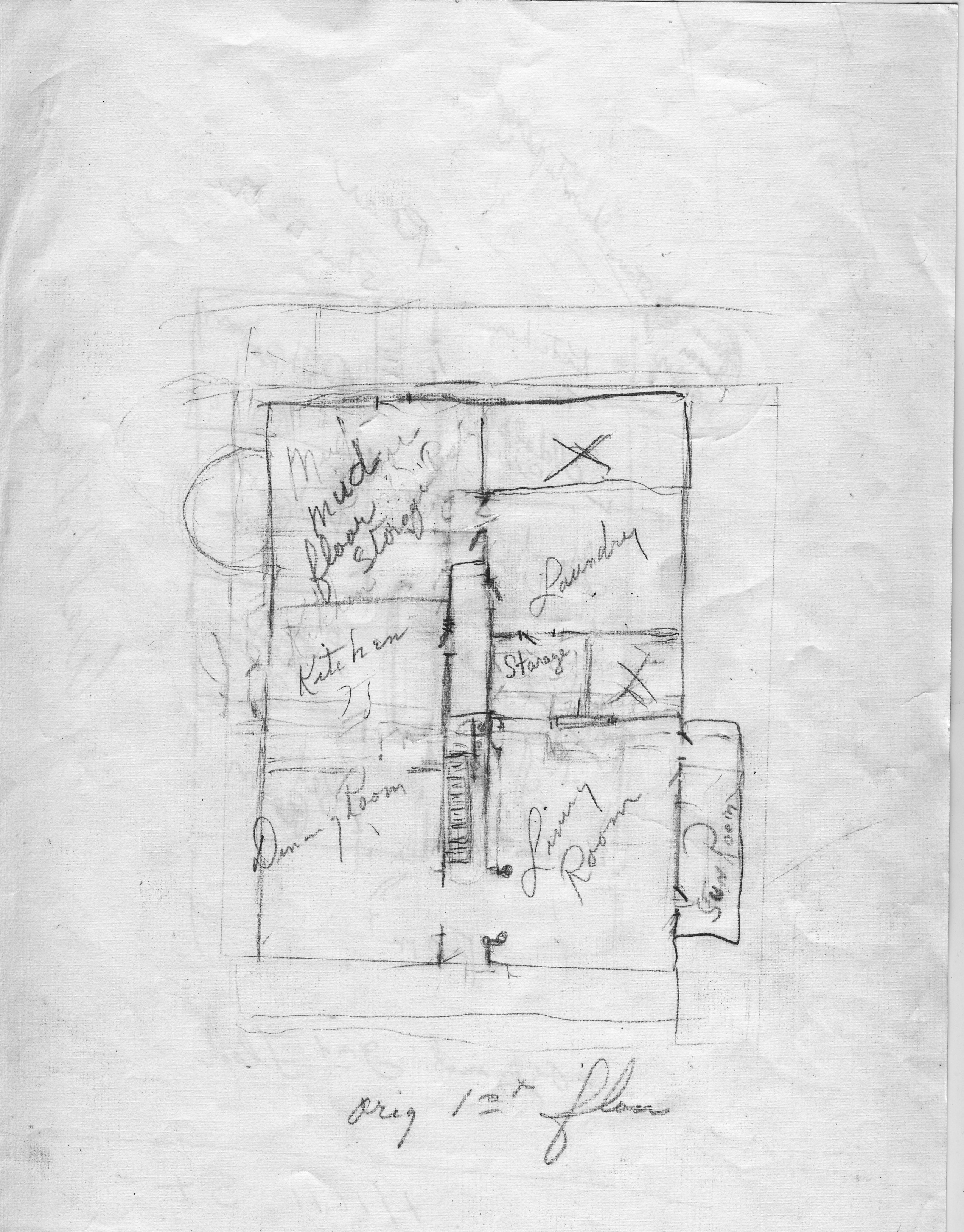
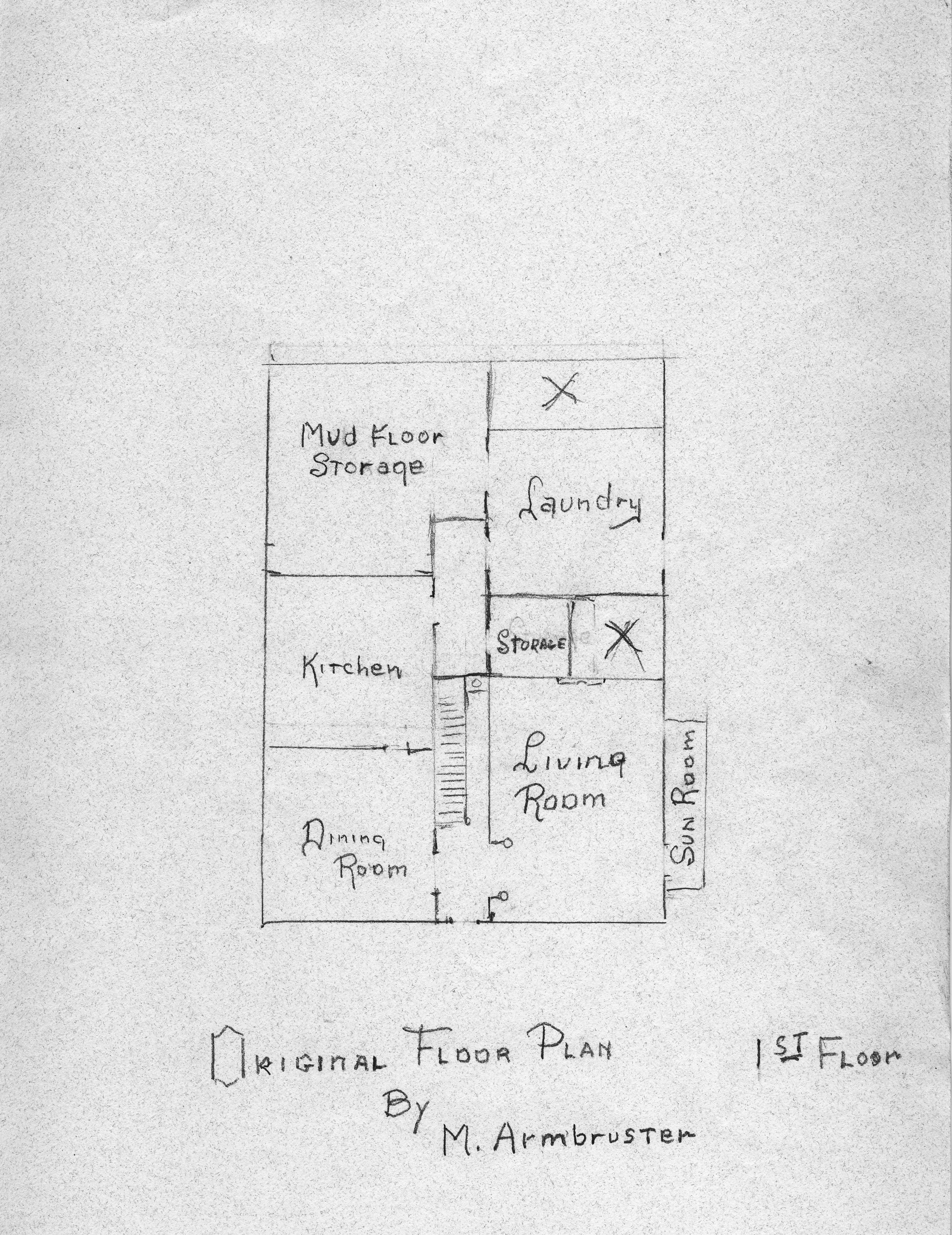
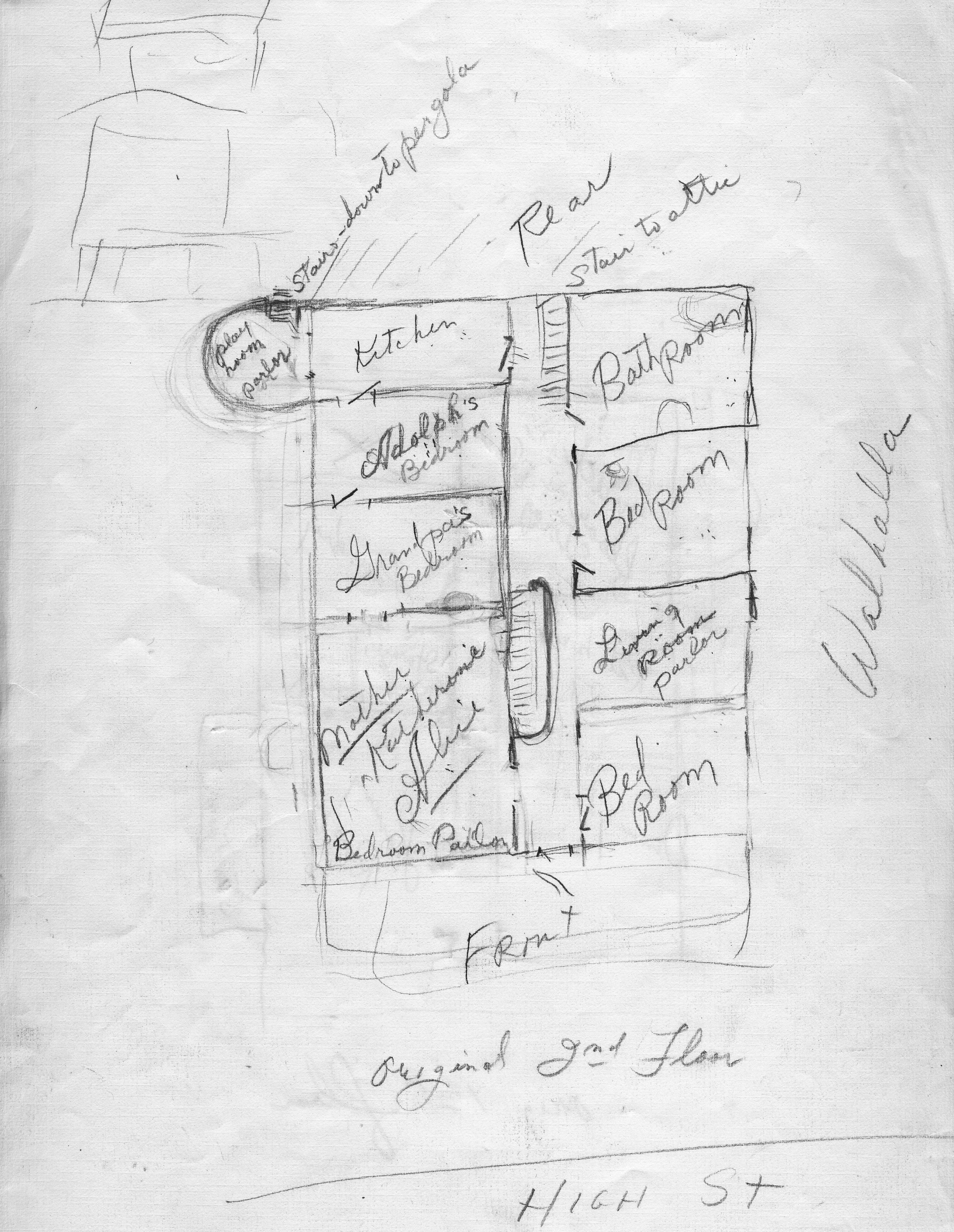
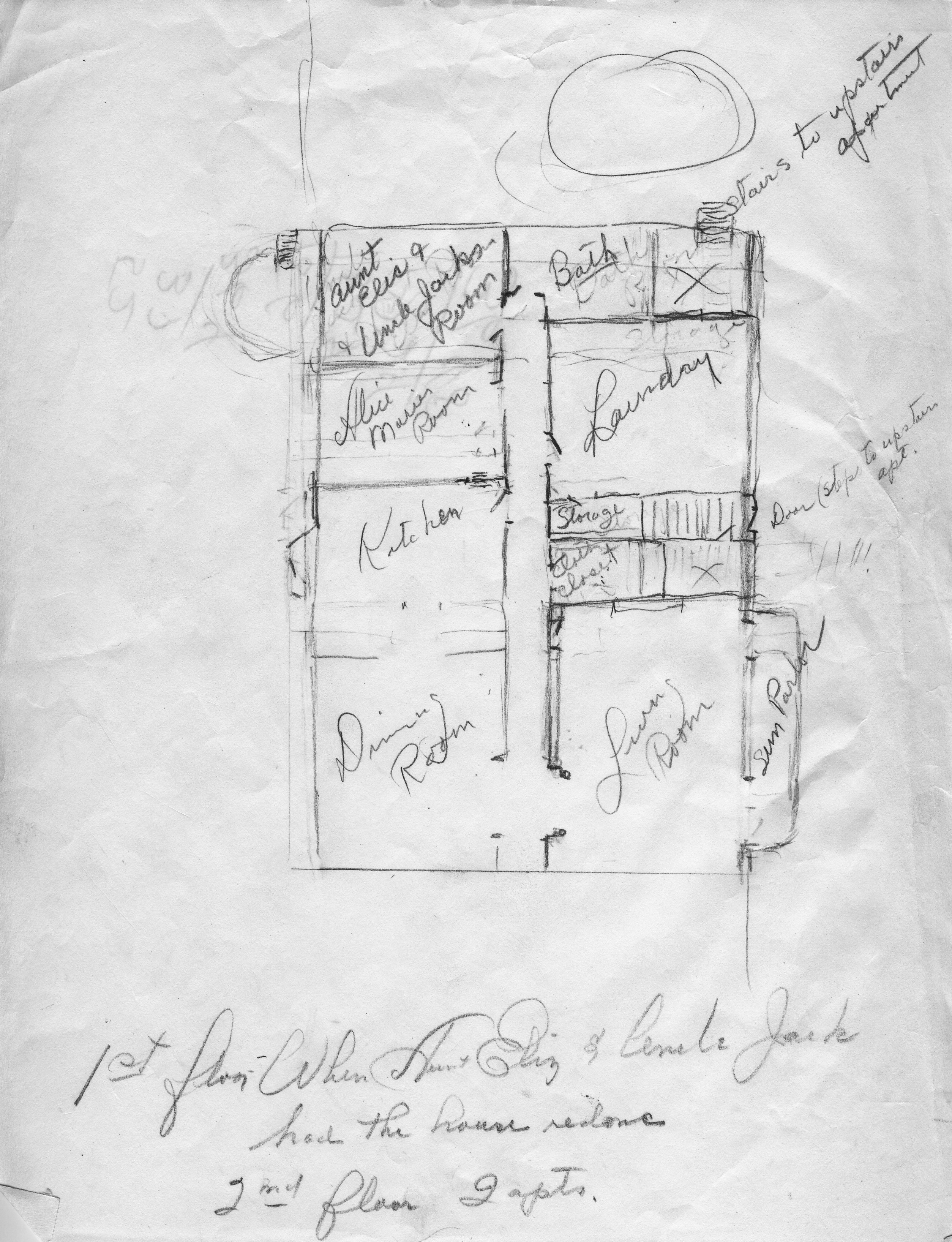
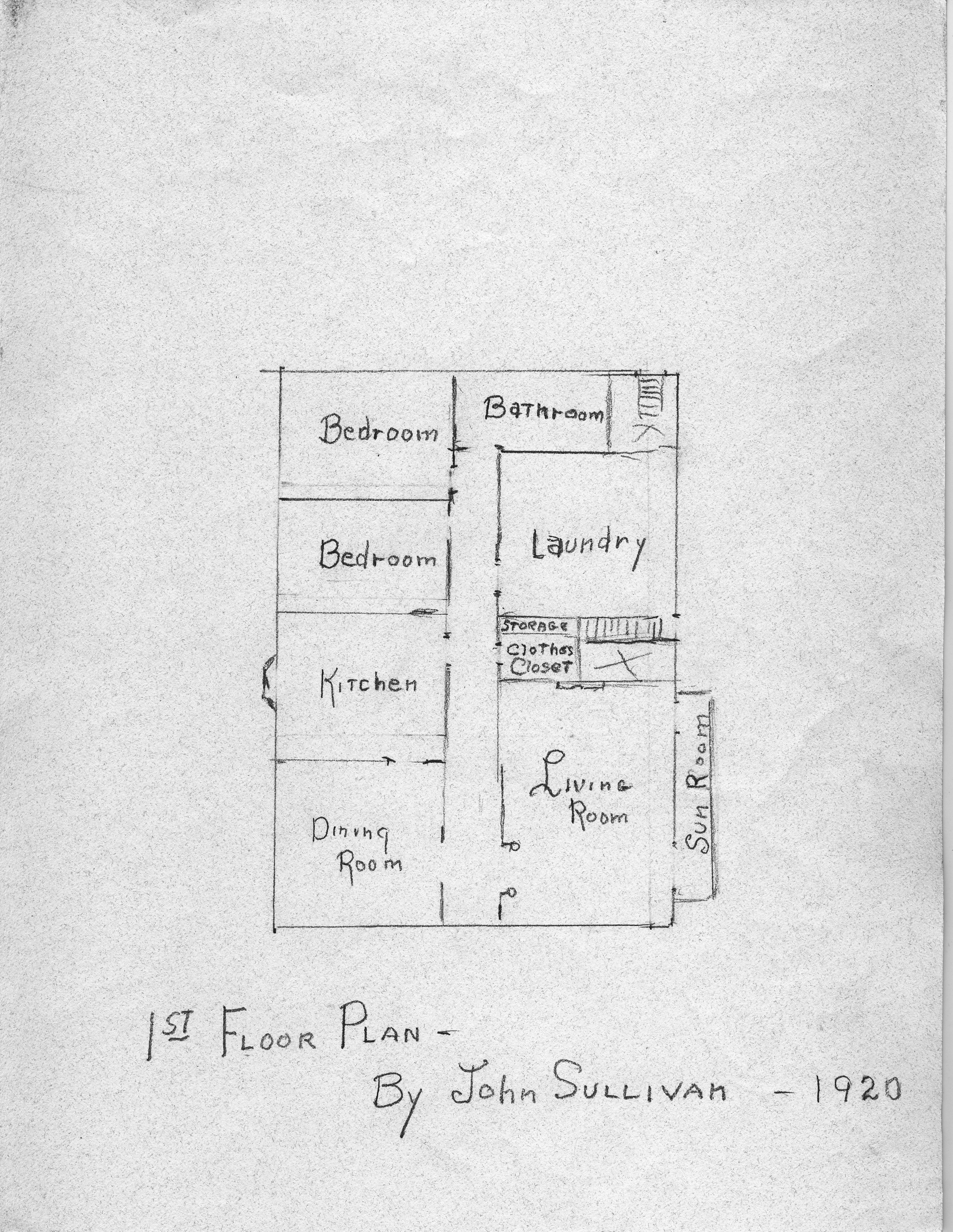
The building at 3100 North High Street, originally Clinton Chapel and presently a funeral home, was converted into a residence in the late 1800s by Mathias Armbruster. Leeann Faust’s mother–a descendent of Armbruster–sketched out “before and after” floor plans for 3100 North High Street, from memory. “Before” represents the floor plan when Mathias Armbruster lived there. “After” is the floor plan as modified by subsequent resident Uncle Jack Sullivan ca. 1920. The second floor was converted into apartments. I’m including both Leeann’s mother’s first draft, and her “cleaned up” versions.


These are the floor plans after Jack Sullivan modified the residence. The 2nd story had been converted into apartments and aren’t shown here.


(Photos courtesy of Leeann Faust.)

You can search this site for “3100 North High Street” or “Armbruster” for more pictures of this building.

2026-02-24T19:01:45+00:00October 3, 2008|Categories: 1900-1940, Houses|Tags: |1 Comment

3070 N High Street

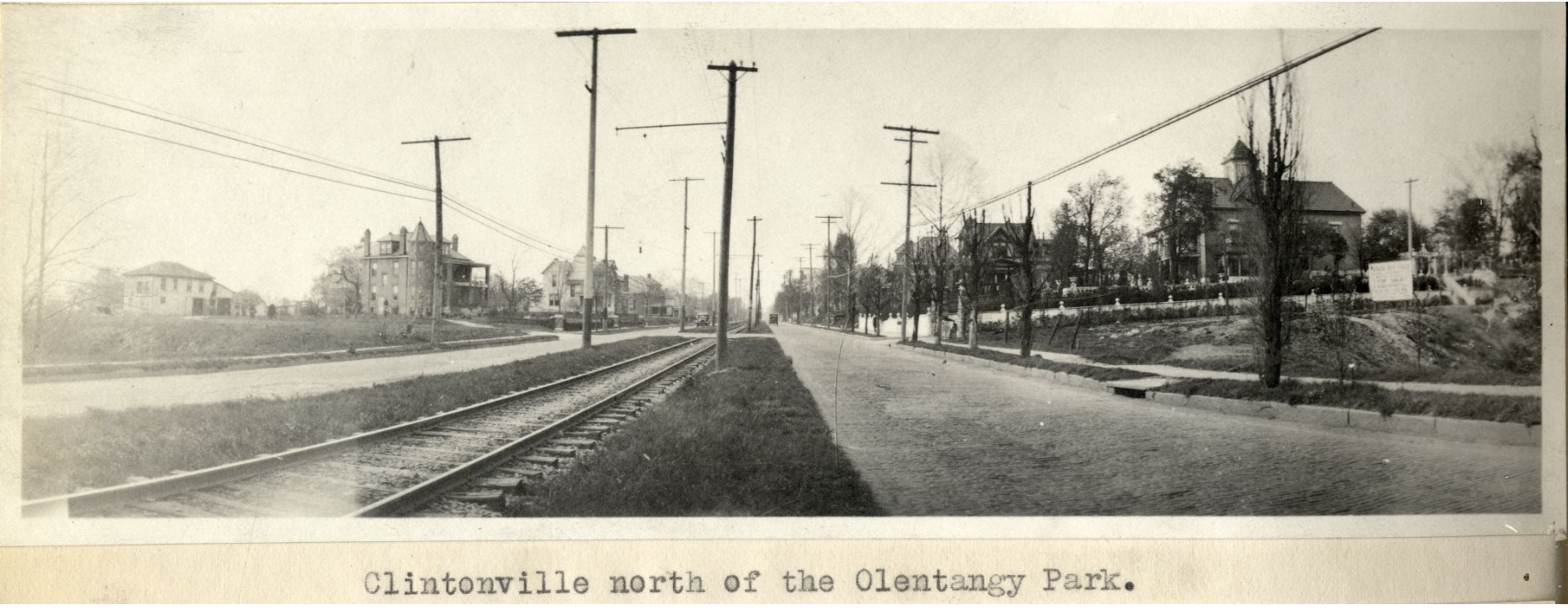
Here is an amazing photograph of High Street, given to me by Stu Koblentz, who found this image in an old student thesis by Forest Ira Blanchard. The photo looks north, taken around 3070 North High. On the right (east) side of High Street I believe is the house of Mathias Armbruster, which later became the Southwick Good Fortkamp Funeral Chapel at 3100 North High Street at Weber and High. I’m told that some gravestones from the old burial ground are visible on the right. Check my book, Clintonville and Beechwold, for a better photo of this house. You can click on the image to see it in more detail.

[Citation: Blanchard, Forest Ira. 1922. An introduction to the economic and social geography of Columbus, Ohio. Thesis (M.A.)–Ohio State University, 1922. On January 16, I replaced the grainy version of this image on this web site with a higher quality photo after Joe Smith alerted me to its existence.]

2008-09-26T11:46:05+00:00September 26, 2008|Categories: 1800s, 1900-1940, Businesses, Houses, Schools|Tags: , |0 Comments

Almost another Calvary Church…

As early as 1819, Methodists in Clintonville worshipped in people’s homes—the home of Eber Wilson has been mentioned– with circuit riders as preachers. Methodism was, in those days, a young and evangelical sect. When Thomas Bull, one of Clintonville’s early settlers, died in 1823, he left land in his will to build a church for the members, and that church was erected 15 years later at 3100 North High Street near Walhalla Road & High Street. Southwick Good Fortkamp Funeral Chapel occupies that building today.

The church membership decided in 1881 to sell the chapel and move the church to the thriving community of North Columbus, and they built a new church on East Tompkins. Several members dissented from this decision and, under the leadership of Eli Batterson, met at homes and at the Clinton School. In 1905 Howard Westervelt—great-grandson of Thomas Bull—reorganized a Methodist Sunday School, and church members worshipped in the home of Frank Dankworth at 70 West Lakeview. They founded Como Avenue Methodist Church in 1910. By 1924 they had outgrown that church and decided to build a new church edifice at North Broadway Avenue and Broadway Court. There were three candidates for the new church’s name: St. Paul, Calvary, and North Broadway; North Broadway was chosen.

2008-09-26T11:42:04+00:00September 26, 2008|Categories: 1800s, 1900-1940, Churches|Tags: , , |0 Comments
Go to Top