
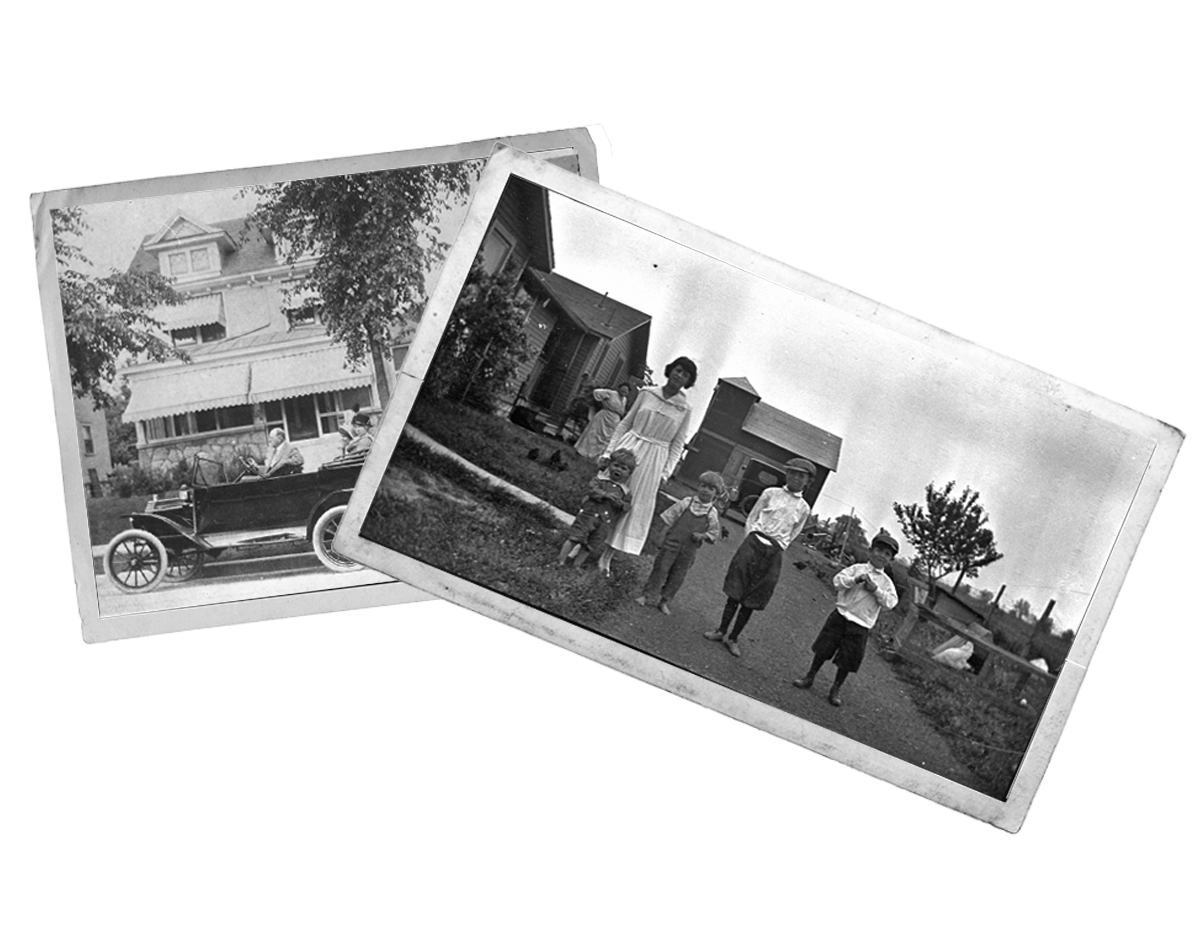

Minstrel shows
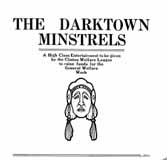 In the early part of the twentieth century, many Clintonville organizations and churches held minstrel shows, as fundraisers and for entertainment. I chose not to sanitize minstrel shows from my book, because they were an authentic part of Clintonville’s history, albeit the part we are all glad we’ve done away with. I regret any offense or hurt caused by these pictures.

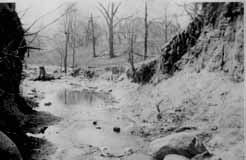 Old maps show at least 3 “Indian springs” within Clintonville. Overbrook Ravine, one of the Indian springs, was untamed and picturesque. Lore has it that Indians harvested cranberries along the brook. (Photo courtesy of Galen Gonser)
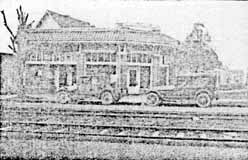 Joe Gratziano owned this market on the corner of North Broadway and High Street. It was a one-story brick building. Until quite recently, this building was still there but covered up. Note the house to the south of Gratziano’s, which exists today. Clinton Theatre had not yet been built.
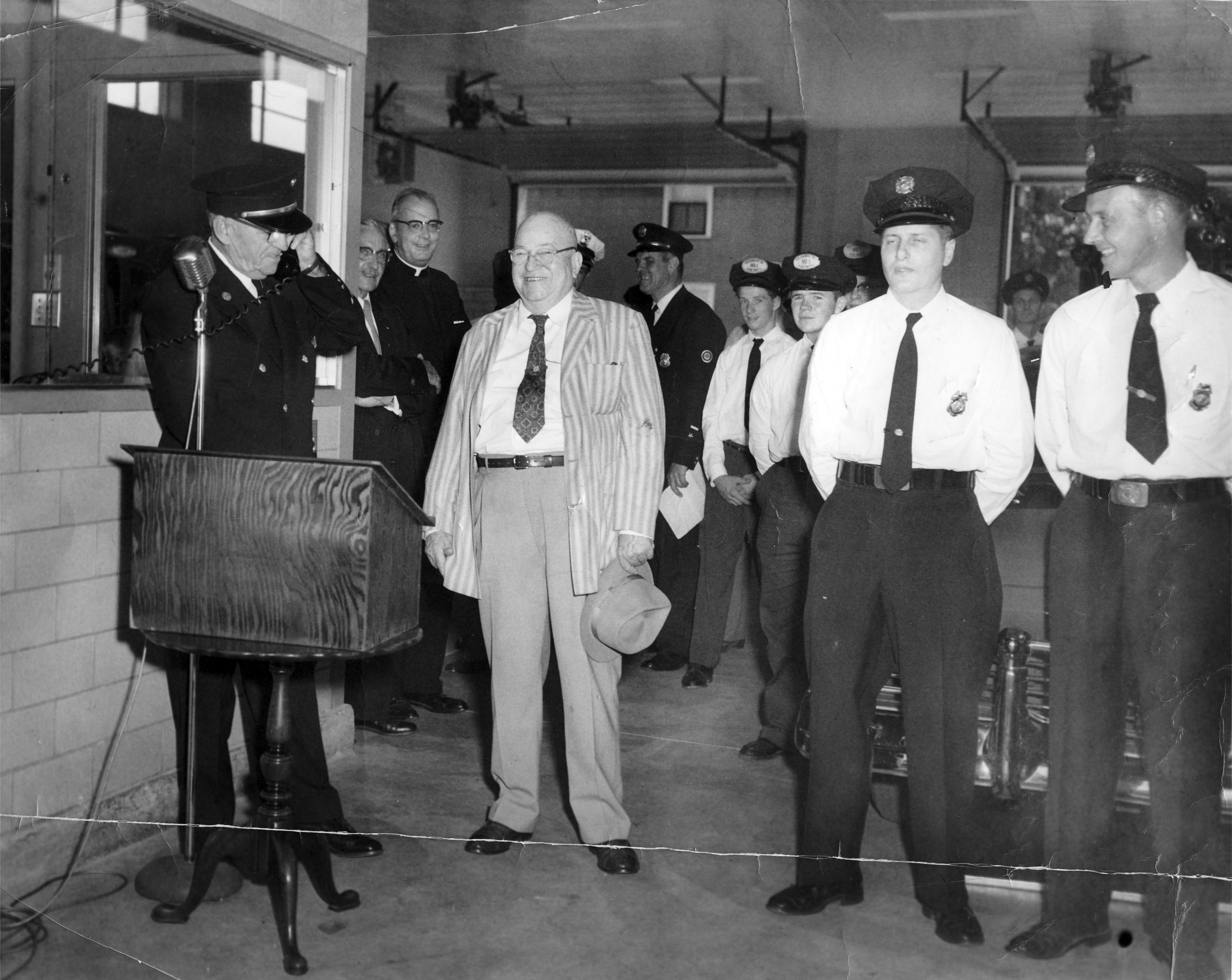
 Station #19—known locally as the Northmoor Engine House– was the only Columbus fire station built during the Great Depression. It was built in between 1930 and 1931 for $39,887. Architecturally, the colonial revival building was intended to blend into the neighborhood—and it did so quite well. The building was dedicated on March 10, 1931 (shown). The station motto is “The Pride on High” and a lion is the mascot logo.
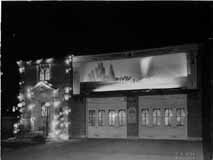 In the 1950s, The Columbus Dispatch ran an annual holiday decorating contest. The Northmoor fire house won several years in a row. (Photo courtesy of Central Ohio Fire Museum)
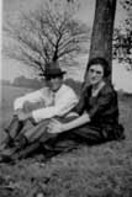 I loved the story of Lawrence Huber (1893-1958) and his wife Eunice Louise Dougherty (1900-1986). Lawrence had applied for a job at the Elks Country Club. They told him they wanted the incumbent to be married, so he asked his girlfriend Eunice to marry him. She accepted and they married in 1922–and remained married the rest of thier lives.
 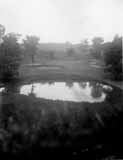 over the position of groundskeeper when the course opened the following year. Lawrence and Eunice, and their three children, lived in a residence on the Elks Country Club property while Lawrence was employed there. Huber was extremely innovative, and invented equipment as needed to cultivate and care for the greens. (Photo courtesy of Betty Huber)