
Toll House
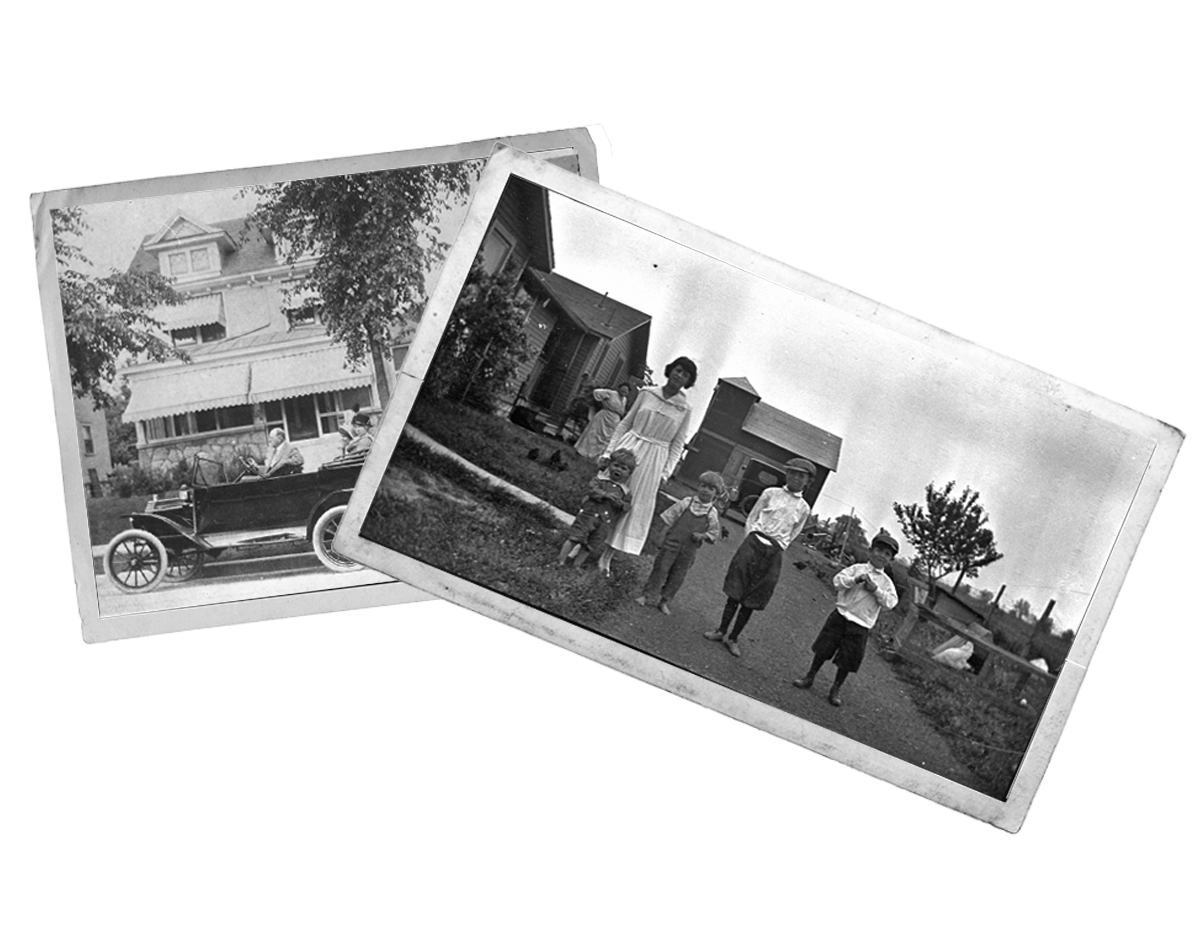
The Worthington Pike, now called High Street, was supported by funds collected from a toll gate which was located opposite from Olentangy Park. The gate was operated by the Applican family, parents of Mrs. N. E. McCoy. The pole was let down each night and not opened until 4:00 a.m. Dr. Albert Cooper was the North Columbus physician at that time. If he had gone north on a call. the toll keeper always waited up for him or else was roused from his sleep in the night to raise the pole and let the doctor pass through on his homeward trip. –from an old undated newspaper clipping
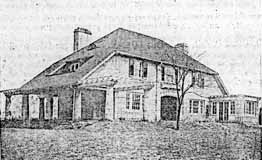 “The natural beauty of these lands would inspire even one not familiar with the business of platting of allotments. The elevation of this tract is nearly 920 feet above sea level. The middle section of these lands slope both east and west and to the south, thus giving the sunny side of the hill in winter and the shady side in Summer. The view from the top of the hill is the most magnificent and inspiring sight in or around Columbus. The rolling valley of the Olentangy River, dotted with beautiful forest trees, bungalows and other types of homes, show a real masterpiece of Nature’s Handiwork. Back of the beautiful valley the rising hills continue for miles and miles. The view in any direction from this beautiful location is almost without bounds…This new tract will be known as the Dominion Park Addition.” –from The Dominion Land Company Columbus Home News, May 1913, Volume 1 Number 2.
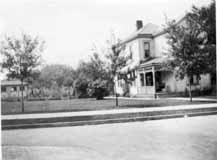 Como has a venerable history. The house of one of the Bull family members was located on Como; the oldest house in Clintonville is reputed to be there; Howard Westervelt (founder of North Broadway Methodist Church) lived there.
 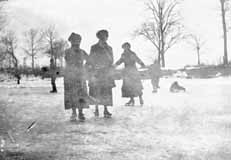 The river was a favorite skating spot in the early part of the century. Children also sledded on East North Broadway, and on “Mooney hill” at 259 Walhalla Road. In the summertime, there was a swimming hole colloquially called Bare-ass Beach in what is now Whetstone Park plus a legendary skinny-dipping spot in the river at the “Holt farm” near the C.D.& M. Interurban line’s Stop 18 around Lincoln and High. (Photo courtesy of Amy Westervelt)
 In 1918, after serving in WWI, Tom Pletcher came to Columbus hoping to find a job as a barber. Jimmy Kinnaird, a pharmacist at the corner of Brighton and North High Street, rented Pletcher a store room at the rear of the pharmacy. Pletcher ran the barbershop on Brighton (above) from 1919, and in 1921 moved to larger space at 3311 North High Street. After becoming ill, he sold the business in 1943 to a long-time employee named Bill Morgan. The barber shop moved again, in 1980 to 3325 North High Street. (Photo courtesy of the Clintonville Historical Society)
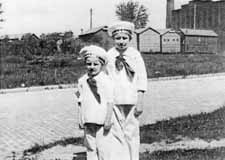 We tend to think of the use of prefabricated buildings for temporary quarters a new idea, but it seems to be as old as our township schools. I have found pictures of old World War I military barracks, and also portable voting booths, used for schools all over Clintonville. Our Lady of Peace used both types of buildings. Glenmont Elementary School began life as a cluster of portable schools. Clinton Elementary School handled overcrowding with temporary buildings. Shown here are some portable voting booths at the old tile factory along Arcadia (where North High School presently stands). (Photo courtesy of Wallie Palmer)

