
Home
Sherman Private School
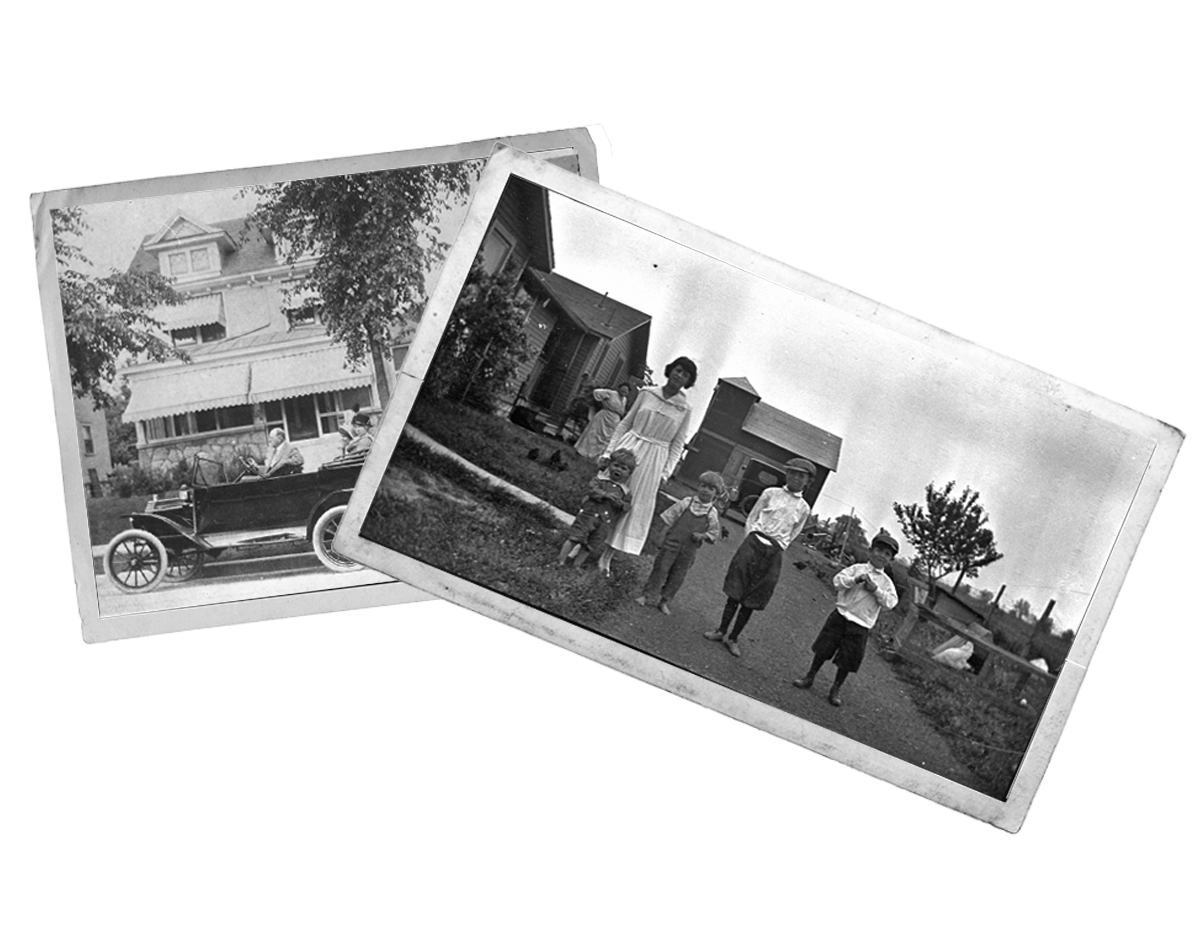
The Sherman Private School existed at 30 Webster Park Avenue in the early 1920s. Webster Park was a King-Thompson housing development and the school may have been an inducement to purchase houses in the area. (Advertisement courtesy of North Broadway Methodist Church)

East Como
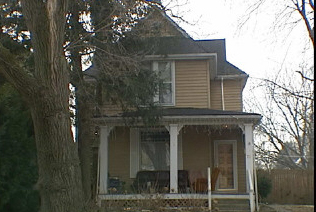 Perhaps the first house to be built on East Como was this house at 71 East Como. The owner from 1908-1926 said he recalled a little brook that ran near the house and a footbridge leading to High Street.
The Zimmerman Family and Olympic Swim Club
Libby Wetherholt recently gave this presentation about the Zimmerman family to the Clintonville Historical Society, and has kindly agreed to share it with us.
—
The Zimmerman Family and Olympic Swim Club
by Libby Weatherholt, March 8, 2016
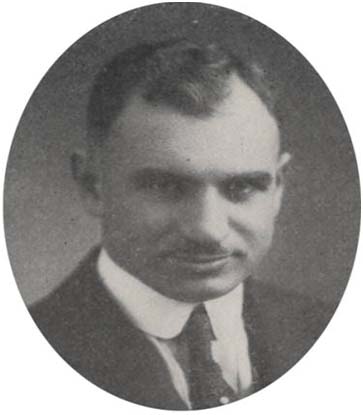
The History of the Olympic Swim Club starts with Orr Samuel Zimmerman. (Photo courtesy of the Upper Arlington Historical Society)
Orr S. Zimmerman was born in Oakwood, Ohio in 1890 but moved to Columbus with his family when he was a child. He was educated in engineering at Ohio University and transferred his interest in mechanics to a career in the family automobile business.
In 1913, Zimmerman married Ethyle Cather, a native of Athens, Ohio. They moved to this house at 645 Dennison. (Photo courtesy of the Franklin County Auditor’s web site, property ID 010-044708 4/27/2014)
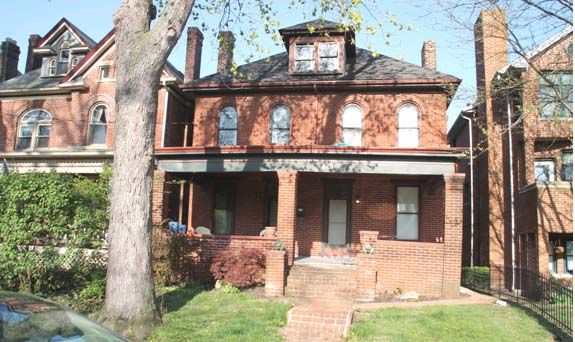
By 1916 the Zimmermans had begun building the house below at 1790 Cambridge Boulevard. (Photo courtesy of the Franklin County Auditor’s web site, property ID 070-000571 4/18/2014)
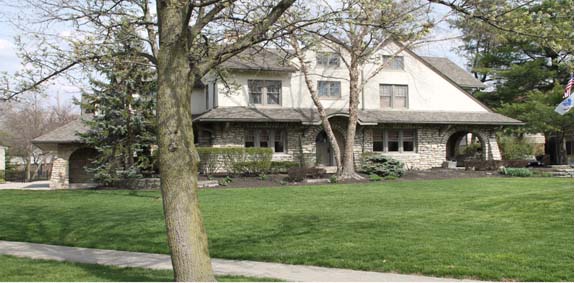
An historical picture can also be found on the Upper Arlington Historical Society web site.
The birth of their sons Robert Orr Zimmerman and Richard S. Zimmerman followed in 1918 and 1922, respectively.
By 1930, Audrey Ethyle Zimmerman had passed away and Orr had married Alice M. Zimmerman. The family had moved to 4497 Olentangy River Road—a house that remained an important part of the family history. (Photo courtesy of the Franklin County Auditor’s web site, property ID 010-006577 3/17/2014)

Zimmerman built the house in 1929 on what was then a 52-acre estate; at the time, Henderson was a country gravel road and Olentangy a narrow two-lane street. The architect was Thomas Tulley. Interior walls were decorated by a New York artist, with beautiful wooded scenes in both the trophy room and the living room. Two Canadian bear cubs, captured on a hunting trip, were raised in a small house on the property. In 1977 the house was a Decorators’ Show House. The house was destroyed in January, 2016.
Mr. Zimmerman had a special interest in outdoor sports, particularly hunting and fishing. Zimmerman’s hunting expedition in the Canadian Rockies with Upper Arlington founder and resident Ben Thompson was detailed in a November 1920 issue of the Norwester, complete with descriptions of the large game seen and hunted by the pair in British Columbia. Zimmerman submitted his own account of the trip to the Norwester, documenting the geography and vegetation of the region. (The Norwester magazine, published November 1917 through March 1922, chronicled early suburban life in the Upper Arlington, Grandview Heights, and Marble Cliff areas.)
Zimmerman also enjoyed pitching horseshoes and playing baseball. In 1920, he served as captain of the Upper Arlington “Lobsters” who battled the rival “Crabs” in the village baseball tournament. Mr. Zimmerman personally donated the “Zimmerman Cup,” the trophy awarded to the winning baseball team. He was also a member of the Upper Arlington Fishing Club and the president of the Upper Arlington Gymnasium Club, which oversaw the organization of indoor sports such as hand ball and volley ball. He was active in the Kiwanis and Athletic Clubs, and served as director of the Columbus Auto Trade Association.
The 1915 City Directory documents that Orr S. Zimmerman and Walter B. Charles owned Ohio Auto Sales Co. at 772-774-776 North High Street.
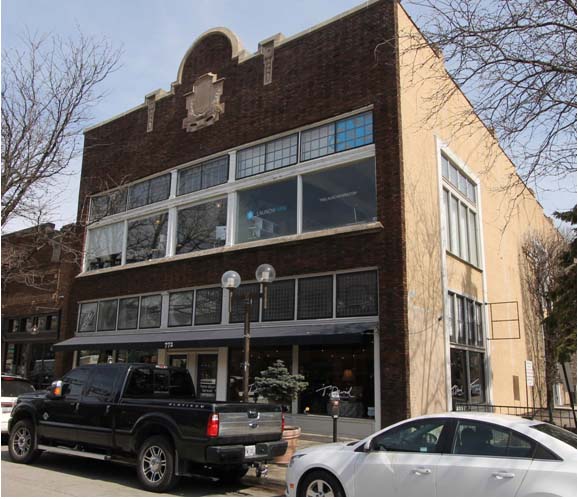
On June 30, 1941, Thomas Tully and Orr Zimmerman filed for a patent titled Means for producing formed strips of plastic materials, US 2323862 A. The patent was granted on July 6, 1943.
Richard Zimmerman married Dorothy Rupp, his high school sweetheart. They were parents of three children: Lynda, Ric, and Dan
Richard S. Zimmerman and his father, Orr Zimmerman, purchased the Olympic Beach from Frank Hauf in 1938, the same year it was built. The pool remained under ownership by members of the family until it closed in 2014.
Newt Jones, one of Richard’s grandchildren, purchased the Olympic Swim Club from his grandfather for $325,000 in 2002. Richard died shortly after on October 23, 2002 at the age of 81.
In 2014, Columbus Monthly Magazine staff picked Olympic Swim Pool as Columbus’ “best pool for athletes”:
For athletes: Olympic Swim Club
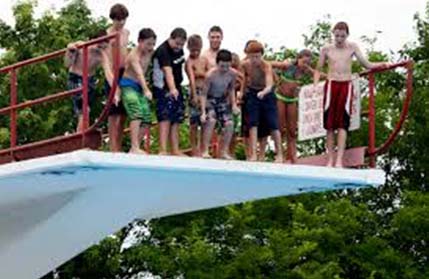
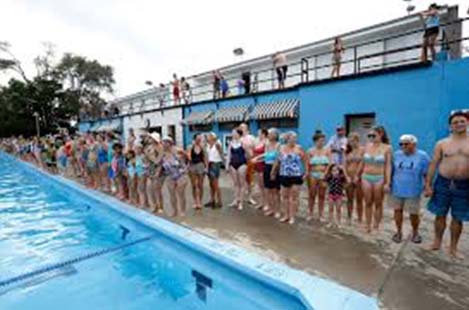
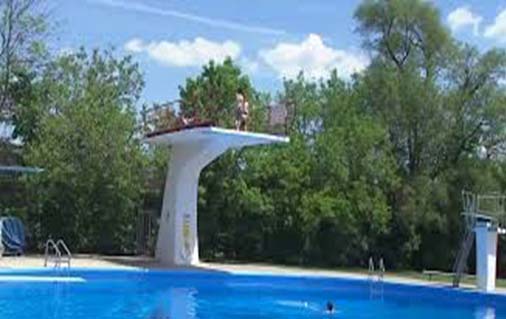
Built in 1938 and originally known as Olympic Beach, the Olympic Swim Club is a Columbus classic. Ohio State divers and swimmers practiced here in the ’70s and ’80s. Even Buckeyes football players would spend their off days at the club. After 76 summers, though, this is the Olympic’s last. “It was a business decision, but a very emotional and very sad one,” says third-generation owner Newt Jones, who has owned the Olympic for the past 13 years. Don’t miss your last chance to dive off the club’s rare 16-foot diving platform and experience a piece of Columbus history firsthand. “We just want people to come out for the last summer and enjoy it,” Jones says.
The following item comes from Shirley Hyatt’s Clintonville History web site:
Will You Swim in Pure Water?
I love this ad for Olympic Beach in 1939. “Of interest to the ‘bathers’ of Northern Columbus is the care and precaution the management of the Olympic Pool is taking so that our families may swim in perfectly safe water, free from impurities and its dangers…“ Shortly after the pool was built, the Olympic Amusement Corporation, headed by Orr Zimmerman, assumed ownership of the pool. For many years the O.S.U. swimming and diving teams practiced there and many contestants for the summer Olympics came from all over the United States to train at the pool. Several national championships have been held there. Early on, only male lifeguards worked at the pool.
Here, someone does a kamikaze dive off the tallest tower.
(Photos courtesy of the Zimmerman family)
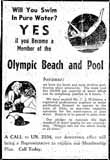 I love this ad for Olympic Beach in 1939. “Of interest to the ‘bathers’ of Northern Columbus is the care and precaution the management of the Olympic Pool is taking so that our families may swim in perfectly safe water, free from impurities and its dangers…“ Shortly after the pool was built, the Olympic Amusement Corporation, headed by Orr Zimmerman, assumed ownership of the pool. For many years the O.S.U. swimming and diving teams practiced there and many contestants for the summer Olympics came from all over the United States to train at the pool. Several national championships have been held there. Early on, only male lifeguards worked at the pool.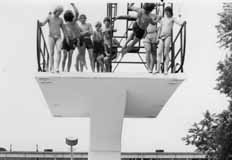
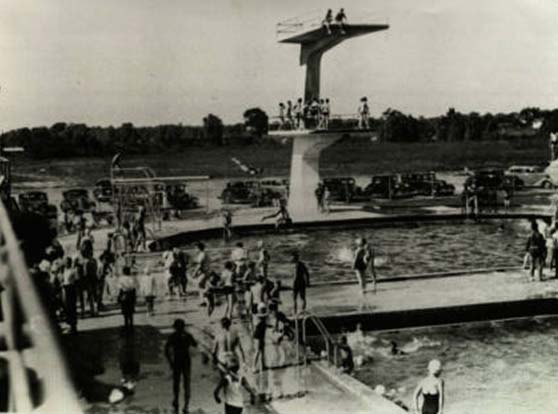 One of the early reasons for Olympic Pool’s notoriety and draw was its double platform diving board and its dive pool. The double platform survived into the 1990s, at which time the higher platform was removed.
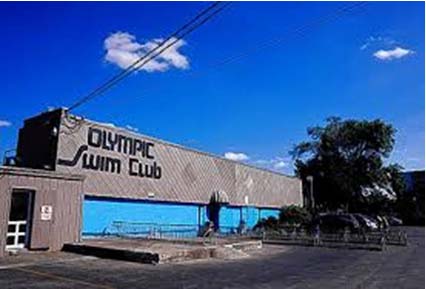
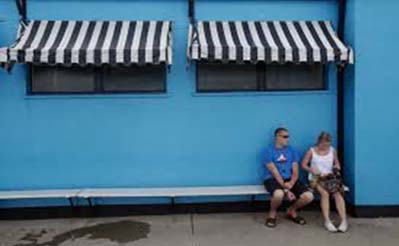
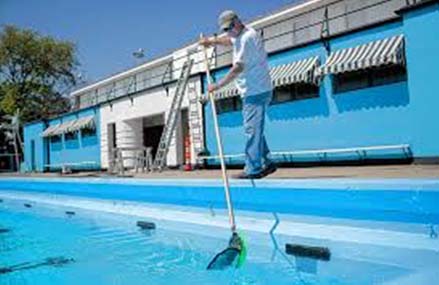
The following images are from the Olympic Swim Club’s Facebook page.
Gilbert Hamilton House
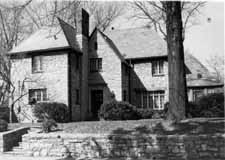 This house was built by Gilbert Hamilton, a real estate developer, in 1927. It sits on Glen Echo Ravine. The Gilbert Hamilton House is a lovely example of a Tudor Revival house, and displays old construction methods and design. The house is on the National Register of Historic Places. (Photo courtesy of the homeowner)
Zimmerman House
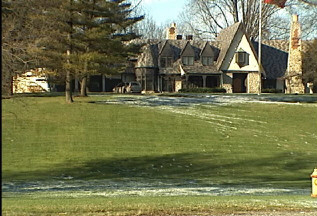 Orr Zimmerman, who owned the Olympic Swimming Pool, owned the Tudor-style house that still stands on the northwest corner of Henderson and Olentangy River Road. Zimmerman built the house in 1929 on what was then a 52-acre estate; at the time, Henderson was a country gravel road and Olentangy a narrow two-lane street. The architect was Thomas Tulley. Interior walls were decorated by a New York artist, with beautiful wooded scenes in both the trophy room and the living room. Two Canadian bear cubs, captured on a hunting trip, were raised in a small house on the property. In 1977 the house was a Decorators’ Show House.
Log House
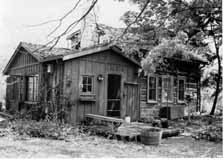 This diminutive log structure was built in Meigs County in 1840 and brought to Clintonville in 1937 by Grace McGrath, great-granddaughter of the original owner. The house was put next to McGrath’s home. McGrath was an art teacher at Central High School and she used it as an art studio. Subsequent owners have expanded the house with bathrooms, an updated kitchen and bedroom, and porch. (Photo by Inga Smith, photo displayed courtesy of the homeowner)