Home
KKK
 In November, 1977, the Klu Klux Klan held a rally in Columbus, and met at the Howard Johnson Columbus North Motor Lodge. I’m glad for freedom of speech, sad and mad for what that speech consists of. (Post update: I previously thought this motor lodge was in Clintonville, now I believe it was on Rte 161.)
A. B. Graham House
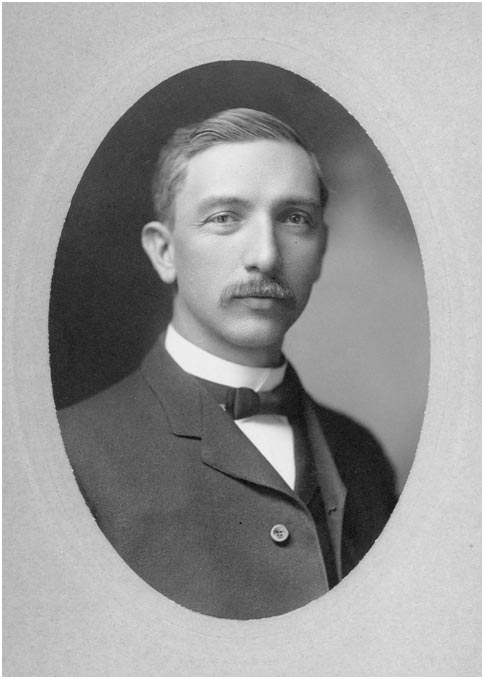 A. B. Graham (Albert Belmont Graham) was one of the key founders of the 4-H Club, and was also a leader in developing the nation’s county extension services that are still so helpful to farmers and gardeners and cooks. In his retirement years Mr. Graham lived at 159 Clinton Heights Avenue in Clintonville. (His son lived in Clintonville as well.) The Clinton Heights house is the last surviving house known to be associated with Mr. Graham, and on this basis the house has recently been put on the Register of Historic Places.
You can find more information elsewhere on this web site
Newspaper Boys
 Bob Henry (North High School Class of 1957) was kind enough to share this photograph of himself in the days when he was a Columbus Dispatch carrier.
The Dispatch sub-station he was posted from was located in the alley behind the Clinton Theater on High Street. This picture was taken circa 1950 and shows a bunch of Dispatch carriers in front of the station. Earl McBlain, shown in the doorway, was the station manager. From Bob:
[Photo courtesy of Bob Henry]In those days, the carriers, ages 10 to 15, would ride their bikes to the station after school, where Earl would count out our papers to us. The station had a bench along the walls, which we used to fold and bag our papers. In the center of the room was a pot-belly stove that burned yesterdays papers to keep us warm in the winter. Once we had bagged our papers, we rode to our routes throughout Clintonville. Mine was on West Dunedin, along Olentangy Blvd, Winthrop and Weston Place, about 70 houses. Carrying papers took a couple of hours each day, including Sat and Sun morning; on Thurs, and Fri nights we collected money from each house on the route, which required another couple of hours. I believe the cost was 40 cents per week for a seven-day subscription. The Weds Star cost another 15 cents. When my mom learned I was carrying the Star, which was a risqué paper in those days, she called Earl to complain, but he could not do anything about it.
On Saturdays before noon we had to go to the station to pay our paper bill of about $20 and kept the rest, about $8.
Defense Center
At a presentation I gave on the History of Clintonville, someone handed my husband this news item about the opening of the Defense Center in a former filling station at 4070 North High Street at the corner of Glenmont and North High Street in 1942.
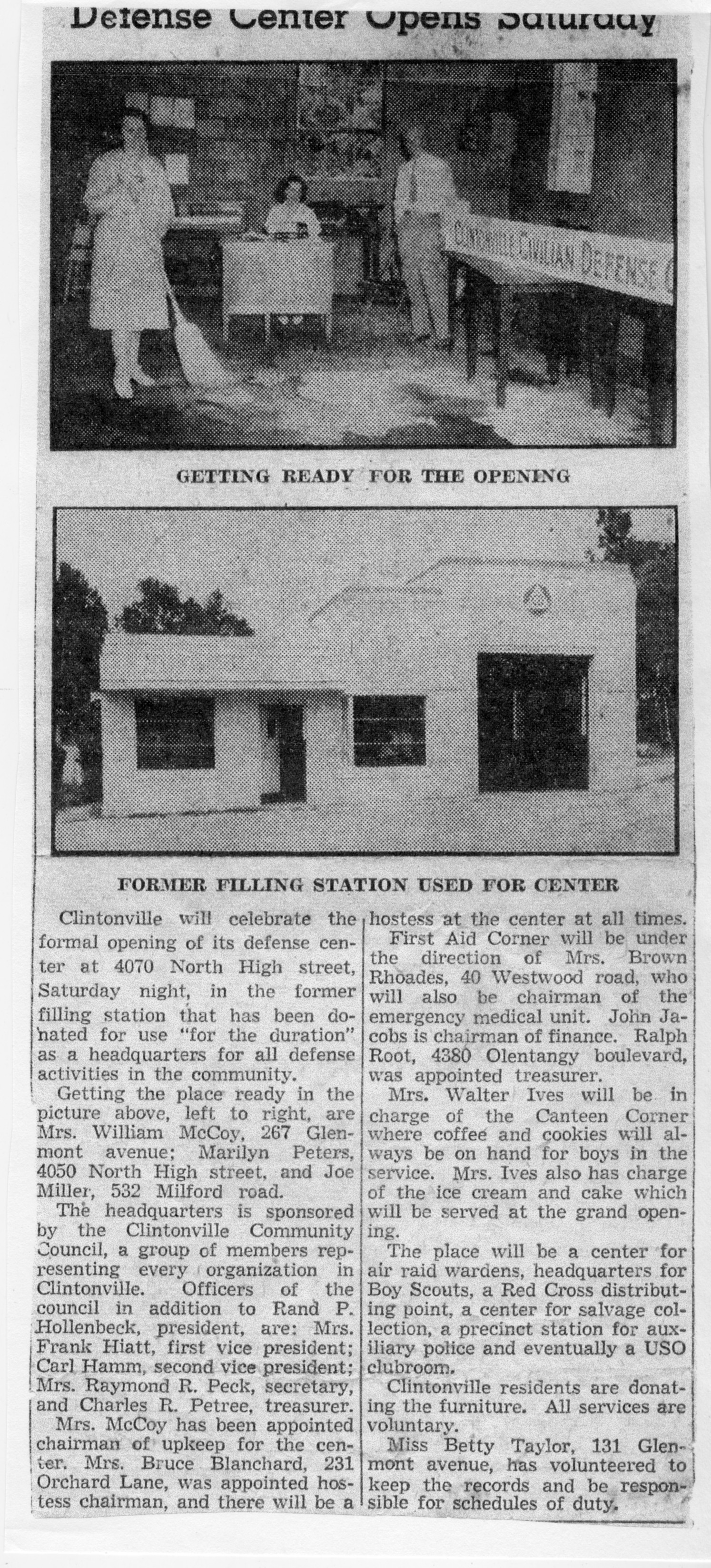
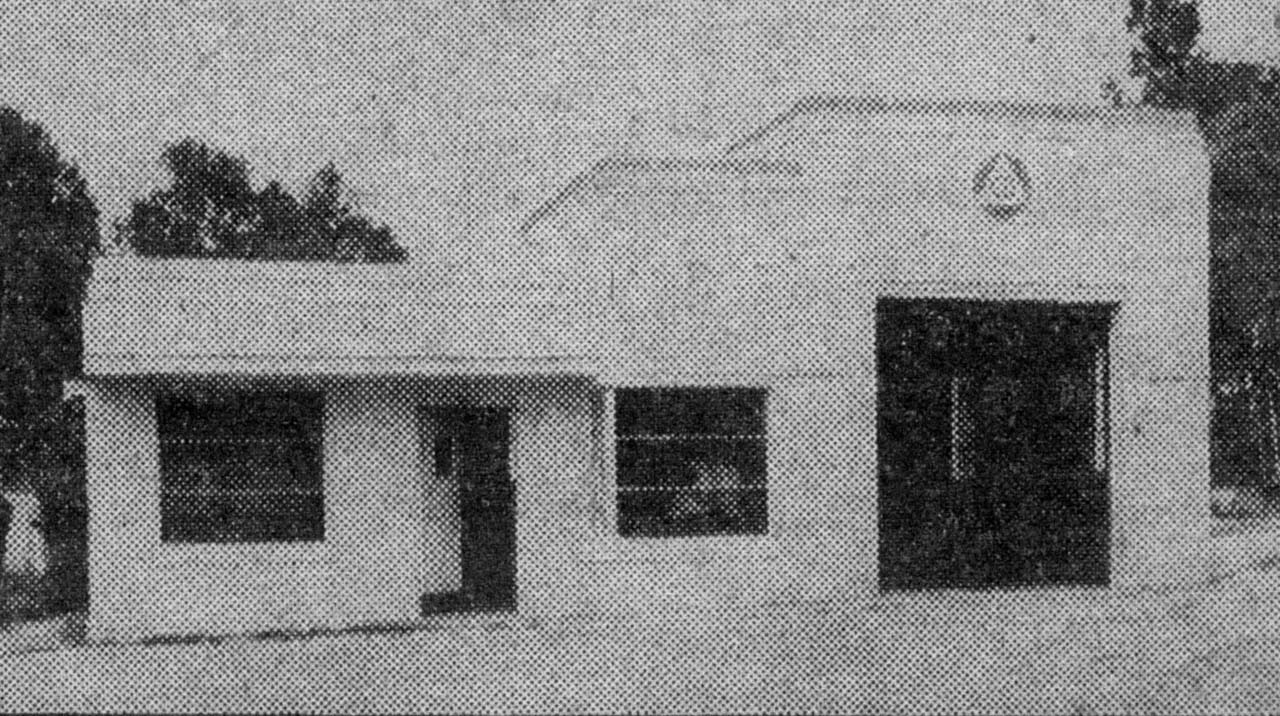 The Clintonville Community Council, a group of members representing every organization in Clintonville, sponsored the center. It was to be a center for air raid services, a headquarters for Boy Scouts, a Red Cross distribution point, a center for salvage collection, a precinct station for auxiliary police and eventually a USO clubroom. It included a first aid corner, and a canteen offering coffee and cookies.
In this picture, Mrs. William McCoy, Marilyn Peters, and Joe Miller are getting the place ready.

There is another photo here.
Underground Railroad in Clintonville
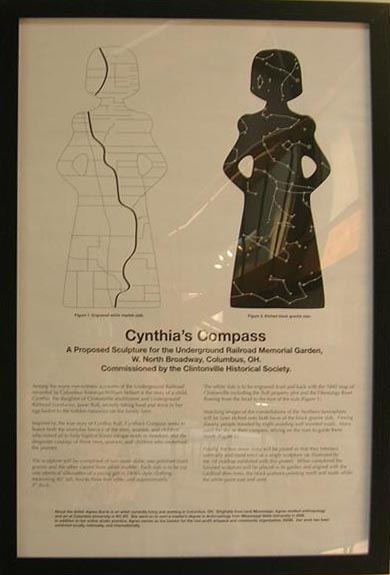 Debbie Shaw, retired CML librarian, recently provided some local resources about the Underground Railrooad in Clintonville and surrounding area. Thanks for agreeing to share this information, Debbie!
Here’s Debbie’s summary:
-
This link has a short video as well as text below it from WOSU’s Columbus Neighborhood series on Clintonville; both discuss the Underground Railroad.
and this video from the same series on Downtown/Franklinton shows another area involved in the Underground Railroad here in Columbus.
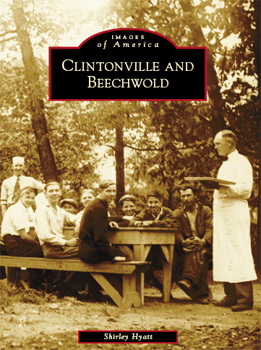
This link is from the Clintonville History site by Shirley Hyatt. The October 2008 issue discusses Thomas Bull and his family and includes a brief section about the Underground Railroad. [Shirley adds: see my book Clintonville and Beechwold here (to buy it) or here (to borrow it) for a smidgen more information.]
Article from the OSU Lantern Feb. 7, 1999.
Historic Marker on OSU Campus.
Another historical marker.
Excerpt from the book The Underground Railroad: An Encyclopedia of People, Places and Operations by Mary Ellen Snodgrass.
For a broader look at the Underground Railroad in Ohio, you can read the full text draft of The Mysteries of Ohio’s Underground Railroad by Wilbur H. Siebert here.
And of course, the Columbus Metropolitan Library has a lot of this history. You can also access a lot online at the here.
Debbie also notes, “This material was easily Googled. As a former librarian, I know that there is a lot of info that is not online. By the way, if you do an advanced book search on books.google.com and limit to full text only and content = books, there are quite a few. I put underground railroad in the ‘with the exact phrase’ field and Ohio underground railroad in the ‘with all of the words’ field. Laws, history, etc. come up, including Ohio Before 1850 and Ohio History Sketches. Of course, some of it is a very brief part of the book. If you add Ohio into the search’s ‘subject’ field, this narrows it a lot.”
The Grand Carousel–Request for Information
Carousel expert and author Eric Pahlke recently emailed me with a question. The question is about the Grand Carousel that currently operates at the Columbus Zoo & Aquarium.
Eric is trying to resolve some conflicting information about the history of the carousel. He writes,
The oft-repeated story is that the carousel came to Olentangy Park in 1914, and was moved to Scioto Ranch Park in 1937-38 after Olentangy closed. Scioto later became Zoo Park, which became Wyandot Lake Park, which is now a combination of Zoombezi Bay and Jungle Jack’s Landing. I have a source that says the city of Columbus bought the carousel in 1981. The carousel apparently operated at Wyandot Lake until 1999 and has been running at the Zoo since 2000.
The problem is that I have some photographic evidence that says the carousel started on Coney Island and didn’t come to Ohio until the mid-1920s. This alternative story doesn’t distinguish between the carousel then coming to Olentangy Park and then to Scioto, or directly to Scioto.
I’m hoping that someone has materials in their archives that would help solve this dilemma. The primary question is whether the carousel came to Olentangy Park in 1914 or sometime in the 1920s. After that is solved, the other issues probably follow.
Does anyone have any information that could shed light on the issue? Eric is the author of Treasures from the Golden Age: West Coast Carousels, and Treasures from the Golden Age: East Coast Carousels.