Home
Marathon
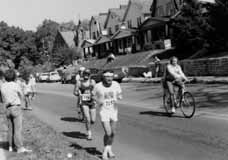 The Columbus Marathon began in 1980 and participants ran through Clintonville during its first three years. Runners ran north on Kenny to Henderson, over to the bicycle path then south to Piedmont, east on Piedmont to Calumet, then south toward campus. This picture shows Robert Koch at mile 21 near Arcadia Avenue and Calumet Street. (Photo courtesy of Robert Koch Family)
Clintonville Pharmacy
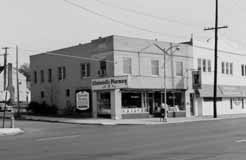 Clintonville Pharmacy at the corner of Dunedin and High was co-owned by pharmacists Charles McCarthy and Gordon Knight, who each also owned McCarthy and Knight’s Pharmacies, respectively. In keeping with the post-World War trend, none of these three pharmacies contained soda fountains, though they had them in an earlier era (when the drugstores were known as Rank’s, at Oakland Park and High, which later became McCarthy’s; as Hooper’s, at the corner of Dunedin and High; and as Cole’s, at Sheffield and High). The co-owned Clintonville Pharmacy closed in the 1980s. (Photo courtesy of Kroger)
Whetstone Library
The Whetstone branch of the Columbus Public Library was originally planned to be between the Recreation Center and the Clintonville Women’s Club. The library would rent the land from the park for $1.00 a year. The plans to build the library were controversial at the time. I did not find records describing why they changed the location, and don’t know what the library pays today. The new library at 3909 North High Street was dedicated in 1985.
Clinton League
In the summer of 1912, a book agent promoted an 11-volume set of books entitled The Foundation for Young People. Buyers were entitled to a Certificate of Membership in the Child Welfare League of America. Twenty-five local women pledged, and 11 of them came to the first local meeting. In the early days they met in the guild room of Saint James Episcopal Church. They held readings and had discussions on predetermined topics. They supported Columbus’ Baby Camp; they held Minstrel shows to benefit the Belgian Relief Fund; they sponsored a hot lunch program in the local schools. Clintonville was outside the city limits in these early days and had no city library service, and so club members established a branch of the state library within Clinton School from 1914-1915, and when that was deemed impractical, they had a lending library at Cummings Drugstore located at Clinton Heights Avenue and North High Street—another idea that proved to be impractical. Eventually a Columbus Public Library 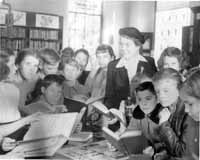 branch was put into Clintonville, and when the local group became aware of the local library’s need for books, they held a “book shower” to bring in book donations. They engaged in war relief work in 1917. They advocated getting rid of some dirty carriage sheds at the Clinton school. In 1915 they were also able to convert two vacant lots owned by J. E. Pierson on Dunedin near Beach Hill Avenue (now Calumet Street) for use as community tennis courts. The club contributed to the community through World War I, the flu epidemic of 1918, the Great Depression, World War II, the Korean War, and the Vietnam War. Over the years their name changed from Clinton Child Welfare League to the Clinton Social Welfare League (1913) to the Clinton Welfare League (1915) to the Clinton League (1925). The group disbanded around 1977. Their papers can be read on microfilm at the Ohio Historical Society.
From 1945 to 1953, they donated books to the Clintonville Library. In this photograph, Mrs. Miller presents books to the children at the Clintonville Library, on behalf of the Clinton League. (Photo courtesy of the Clintonville Historical Society)
Halloween
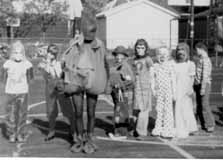 I wonder how long school children have been parading in their costumes on Halloween day. Certainly they were doing so early on at Glenmont Elementary School. In the early days, neighbors probably turned out to watch the parade; nowadays they are more likely to watch from inside their houses. (Photo courtesy of Indian Springs Elementary School)
Schools
Here are a few photographs of schools that I was unable to fit into my book.
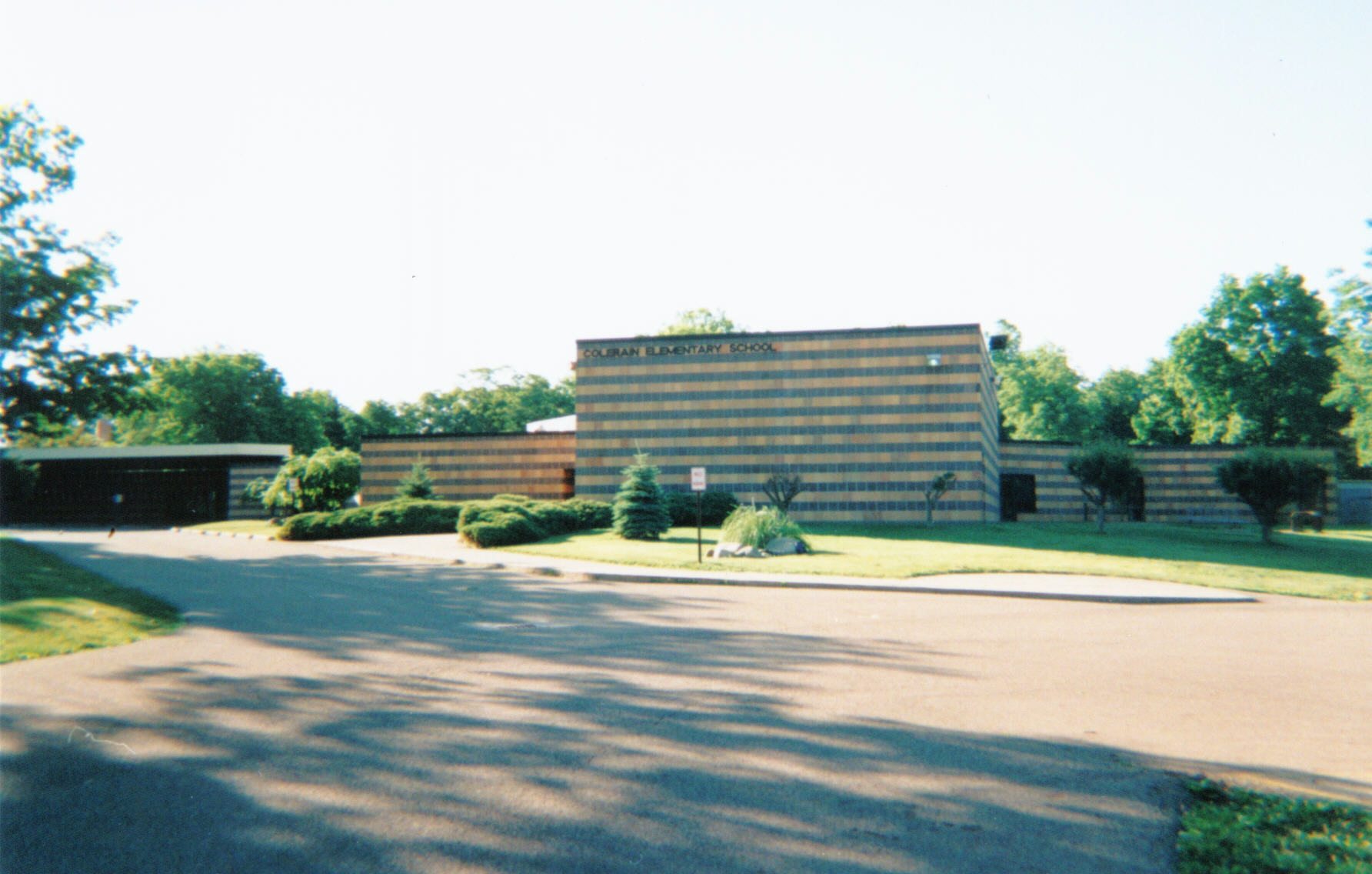 Colerain School, which is located at 499 East Weisheimer Road.
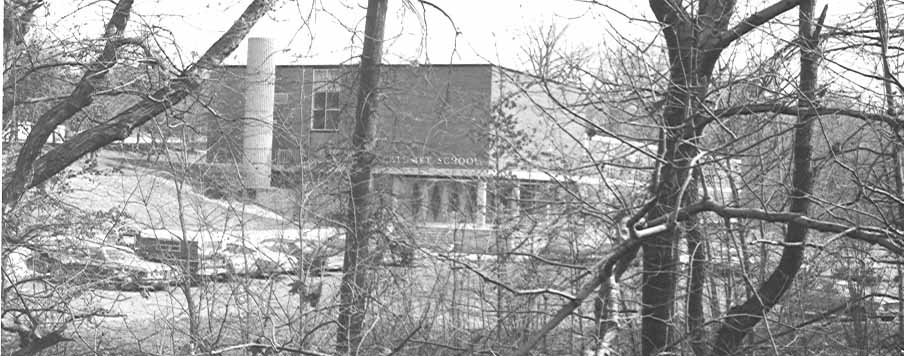
Calumet Elementary School, at 2774 Calumet Street.
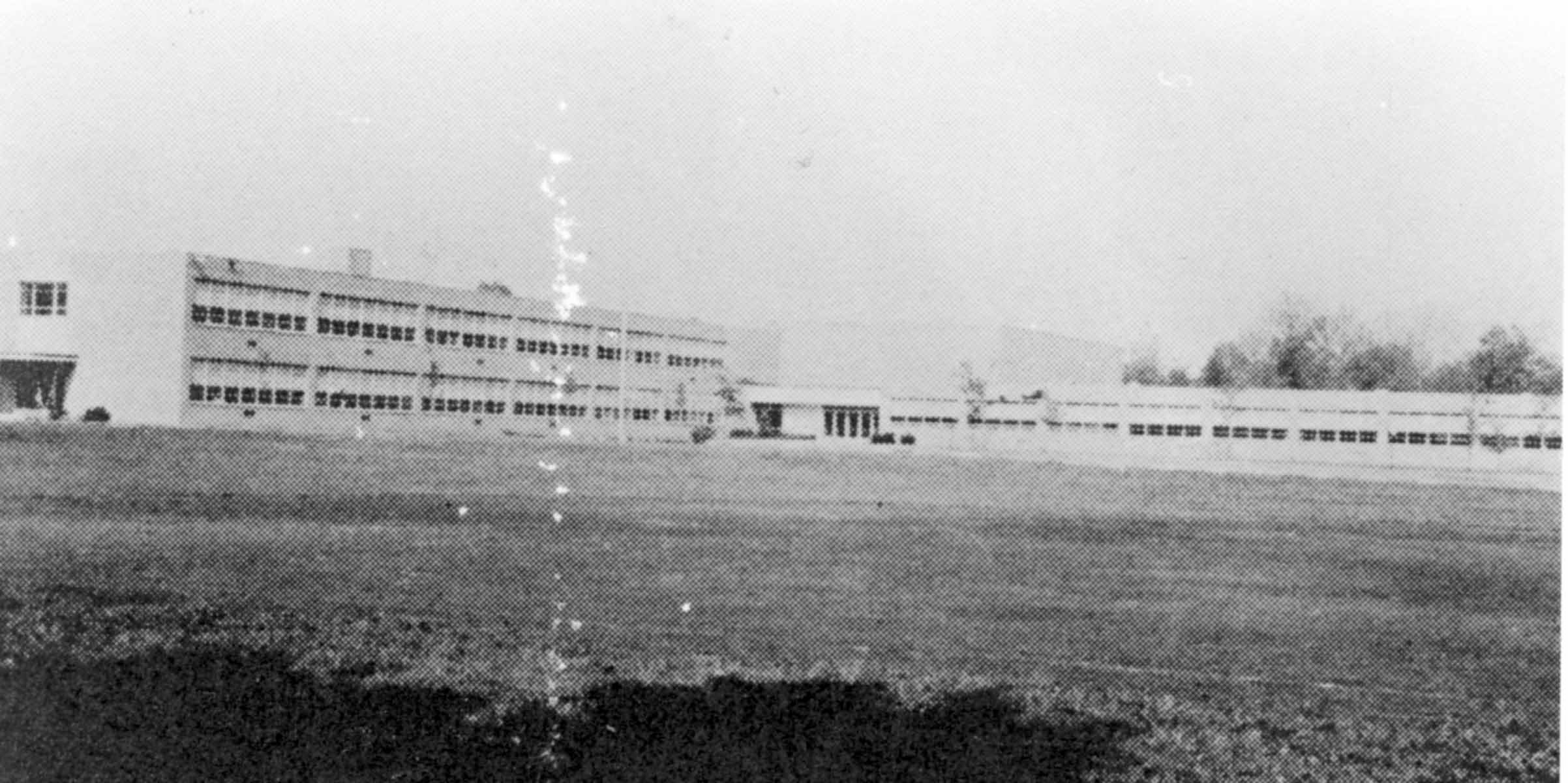
Dominion Middle School, located at 330 E Dominion Blvd.