
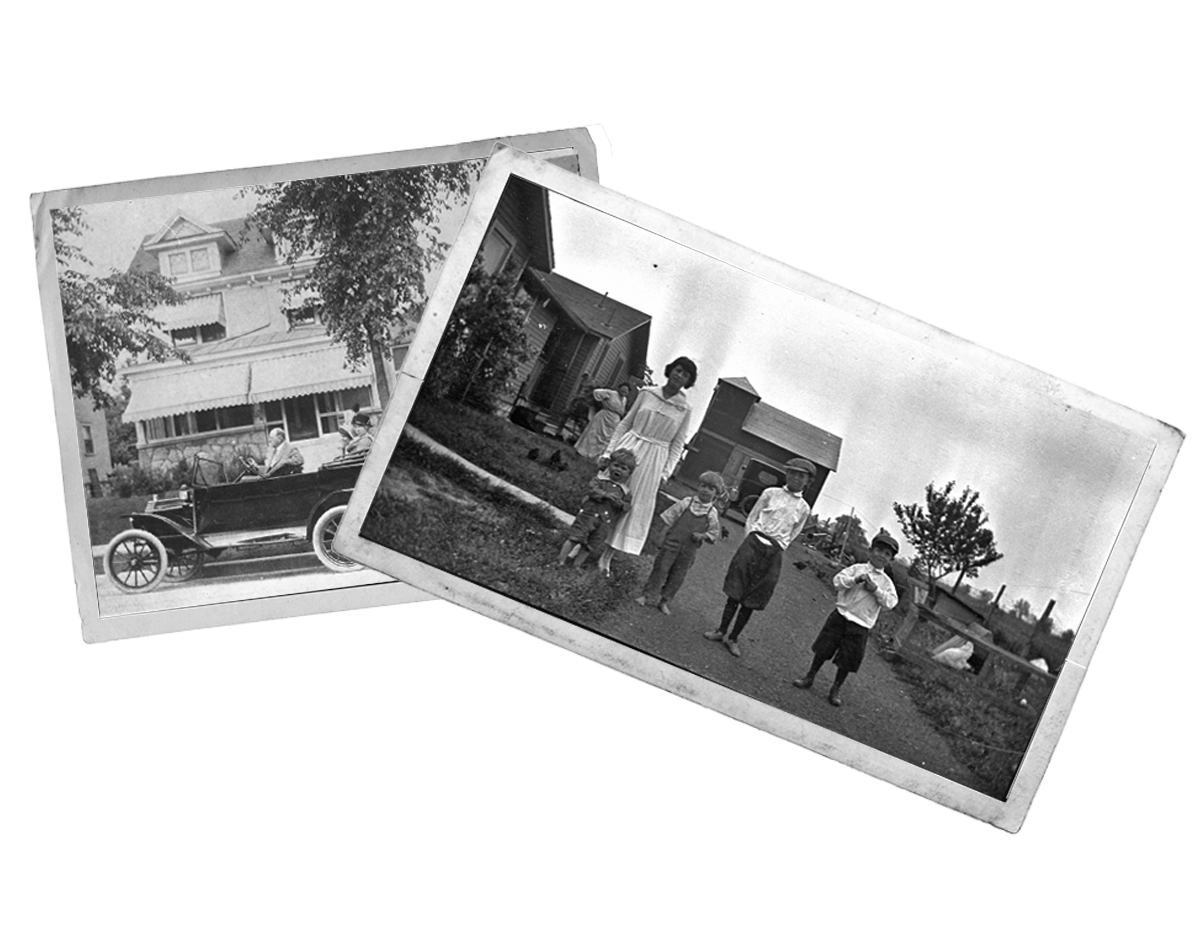
Remembering the Rosemary Neighborhood by Knopf & Near
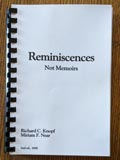
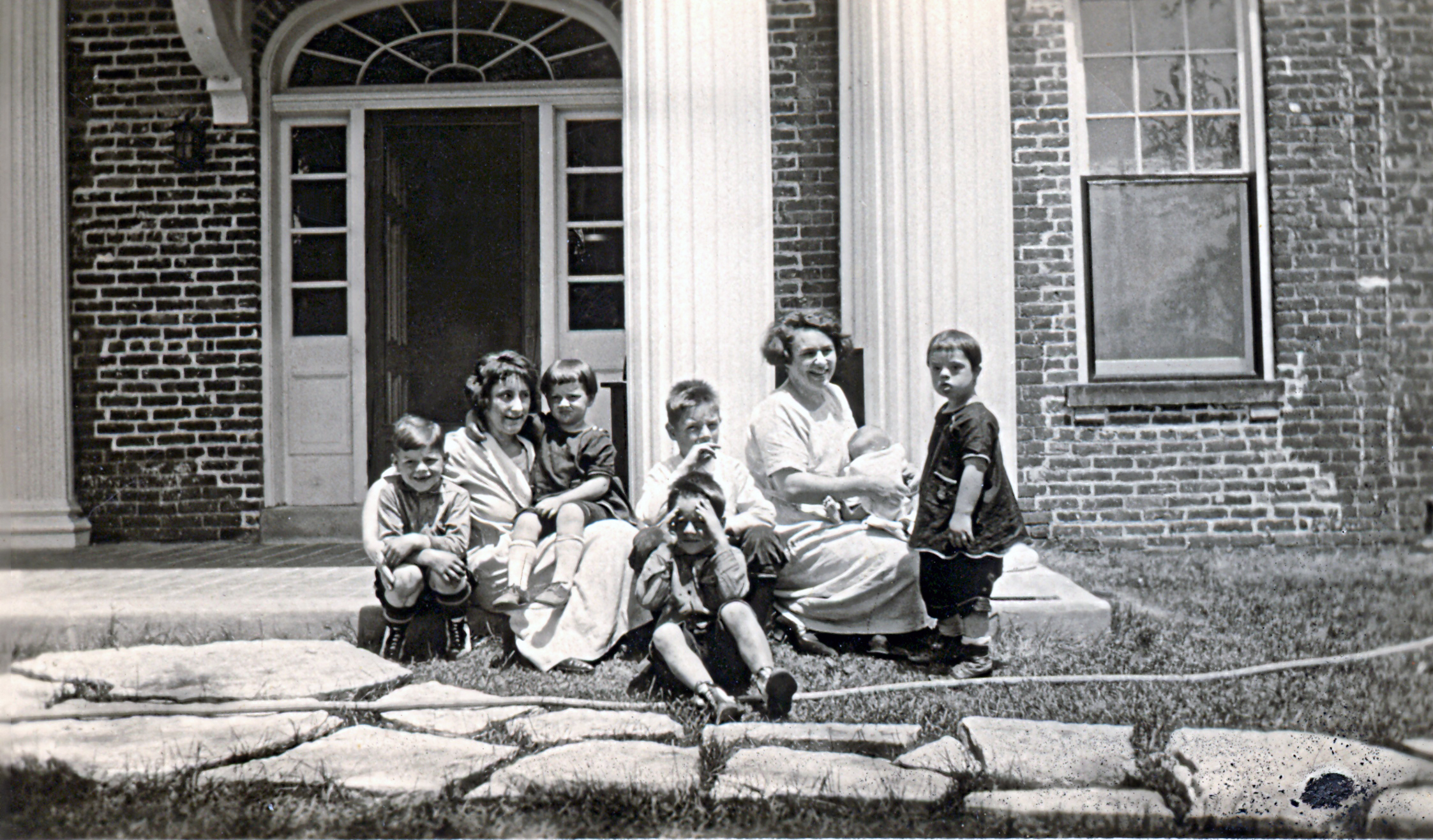
David Penniman, a resident of the Rosemary neighborhood, sleuthed out a copy of a document penned in 1984-88 by Richard C Knopf and Miriam F Near. The document, entitled Reminiscences: Not Memoirs, is a free-wheeling remembrance of growing up in the neighborhood around Henderson and Rosemary Parkway in the 1920s, 1930s, and 1940s. Dave’s copy came from Ann and Keith Bossard of Dominion Blvd; Dave then digitized the 97 page book and shared it with us. Thanks, Dave!
Both Richard and Miriam are deceased; their obituaries are linked below.
Richard C Knopf, 1/4/1925 – 7/17/2002
Miriam Fowle Near, 6/28/1924 – 12/10/2009
I’m so appreciative of people who preserve local history, as Richard and Miriam, and Dave, have done.
[Digital version of the Knopf and Near typescript courtesy of David Penniman. Knopf obituary came courtesy of the Ashtabula Public Library System based on a search and tip from Nick Taggart, retired librarian par excellence at the Columbus Metropolitan Library.]
 Another one of the first families of Clintonville was the Cooke family. According to the family’s history, Roswell Cooke (1764-1827) came to Ohio with his wife and five children in 1800 from Connecticut. His two eldest sons, Rodney and Chauncey, took up land 6 miles north of the state house, their farms adjoining (in the vicinity of Cooke Road and North High Street). They cleared the land and both erected “houses out of round, unhewn logs, with puncheon floors and primitive fire places, with mud-and-stick chimneys.” The brothers lived the rest of their lives on these farms. Family history states that in 1827 they constructed one of the first grist and saw mills on the Olentangy River, which later became known as the Whipp and then as the Weisheimer Mill. They also operated a distillery. (Photo courtesy of Terry Miller.)
 In 1842, Clinton Township School District 1 acquired land at Henderson and High Street from Chauncey Cooke, and in 1878, built a brick school building on the southwest corner. The building was used both as a school and for worship services by various denominations. In 1920, the district deeded the school to the Methodist Church, and the Maple Grove Methodist Episcopal Church was organized. It was at the time the only church between Clintonville and Worthington. (Photo courtesy of the Ron Ohsner family)
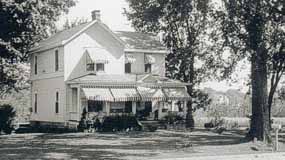 Another noted family in the vicinity of Henderson and High Street was the Armstrong family. Henry C. Cooke’s daughter Flora had married Llewellyn Armstrong. This is their house on the corner of Cooke Lane and High Street. A caption by Lulu Pearle Browne (Ohsner) also states “Clem Cooke [a son of Albert C. Cooke] born here—when first built Al and Lulu Cooke lived here.” (Photo courtesy of the Ron Ohsner family)

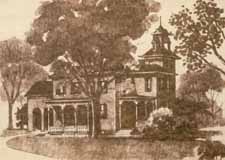 The land just south of Henderson and High was originally owned by Asa L. Parker, and was called Maple Grove Farm. Parker had purchased the land at sheriff’s sale in 1875 for $3,144. Judge Orlando W. Aldrich acquired the land from Parker in 1882, for the sum of $10,000. The old Aldrich home was charming, with a tower jutting two stories above the roof of the house. Judge Aldrich had used the tower as a study and a personal art gallery. From it one got a very good view of the Ohio State University buildings and the river valley. (Drawing by Bill Arter)
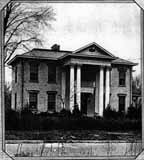 The farm remained in the Aldrich family until 1923, when Charles F. Johnson purchased it and sold it in turn to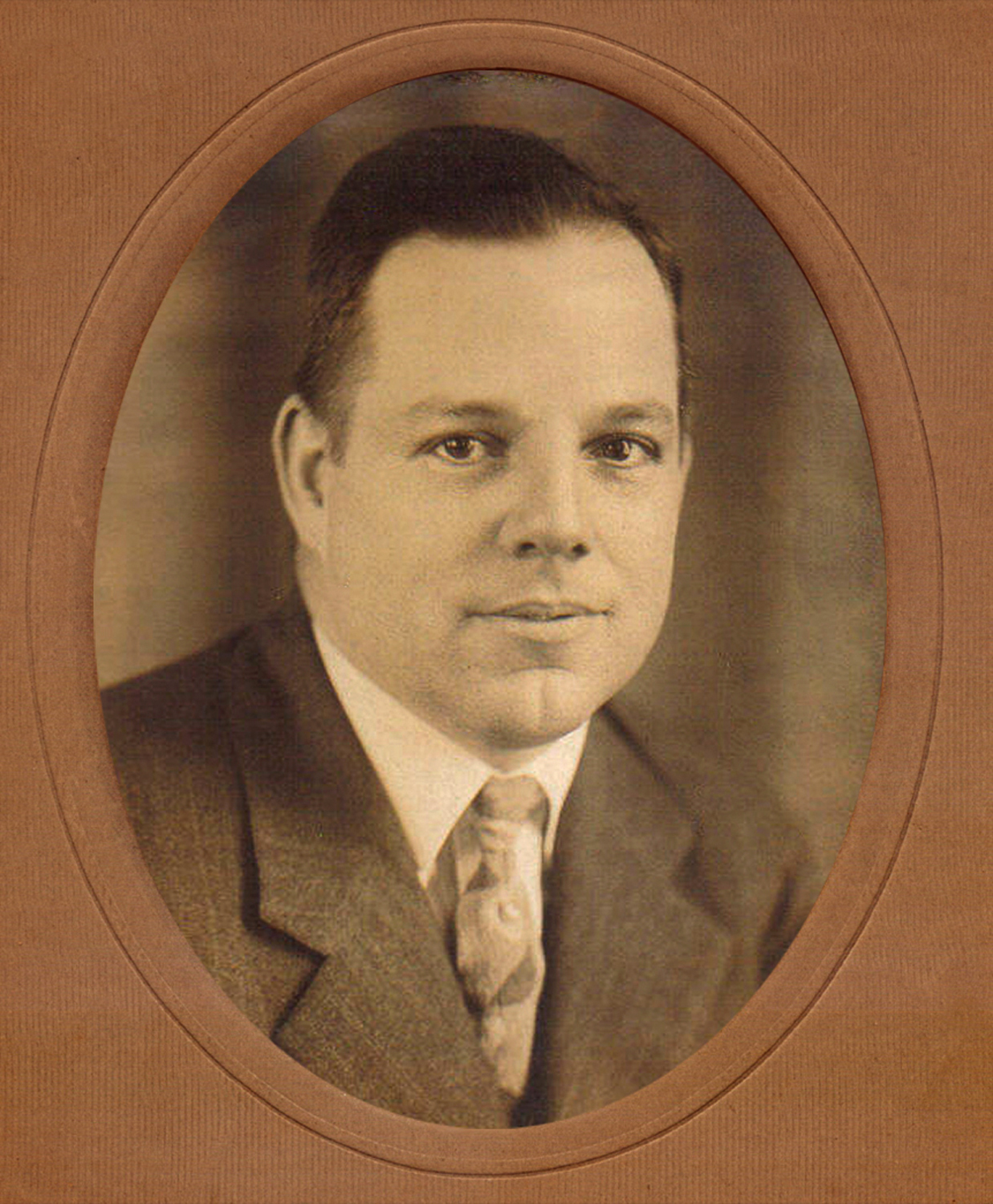
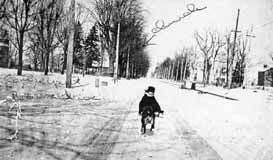 Here’s a picture of High Street looking north. Lulu Pearle Browne (Ohsner) and her dog are at the entrance to the driveway dividing the Browne and Al Cooke homes—presently
 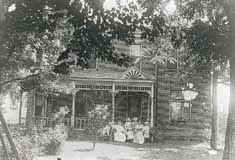 Ed Cooke was one of the sons of H. C. Cooke. This was the house of Ed Cooke; it was located on the east side of High Street where the Beechwold Theatre building—now the Columbus Sports Connection– now stands.
 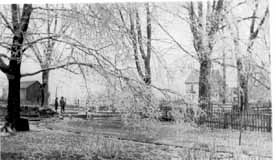 This is a picture taken from Ed Cooke’s yard, looking northwest toward the Webster and Browne homes. According to the picture caption written by Lulu Pearle Browne (Ohsner), the fence at the right divided Ed Cooke’s “dooryard” and “barnyard;” and a hollowed stone watering trough stood under the big tree at the corner of the picket fence to water horses going and coming from the barnyard. The larger figure standing in High Street looking north is Al Cooke. The barn across High Street is the Hess barn. (Photos courtesy of the Ron Ohsner family)