Park of Roses
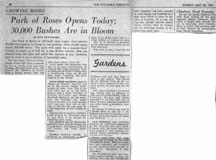
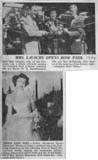
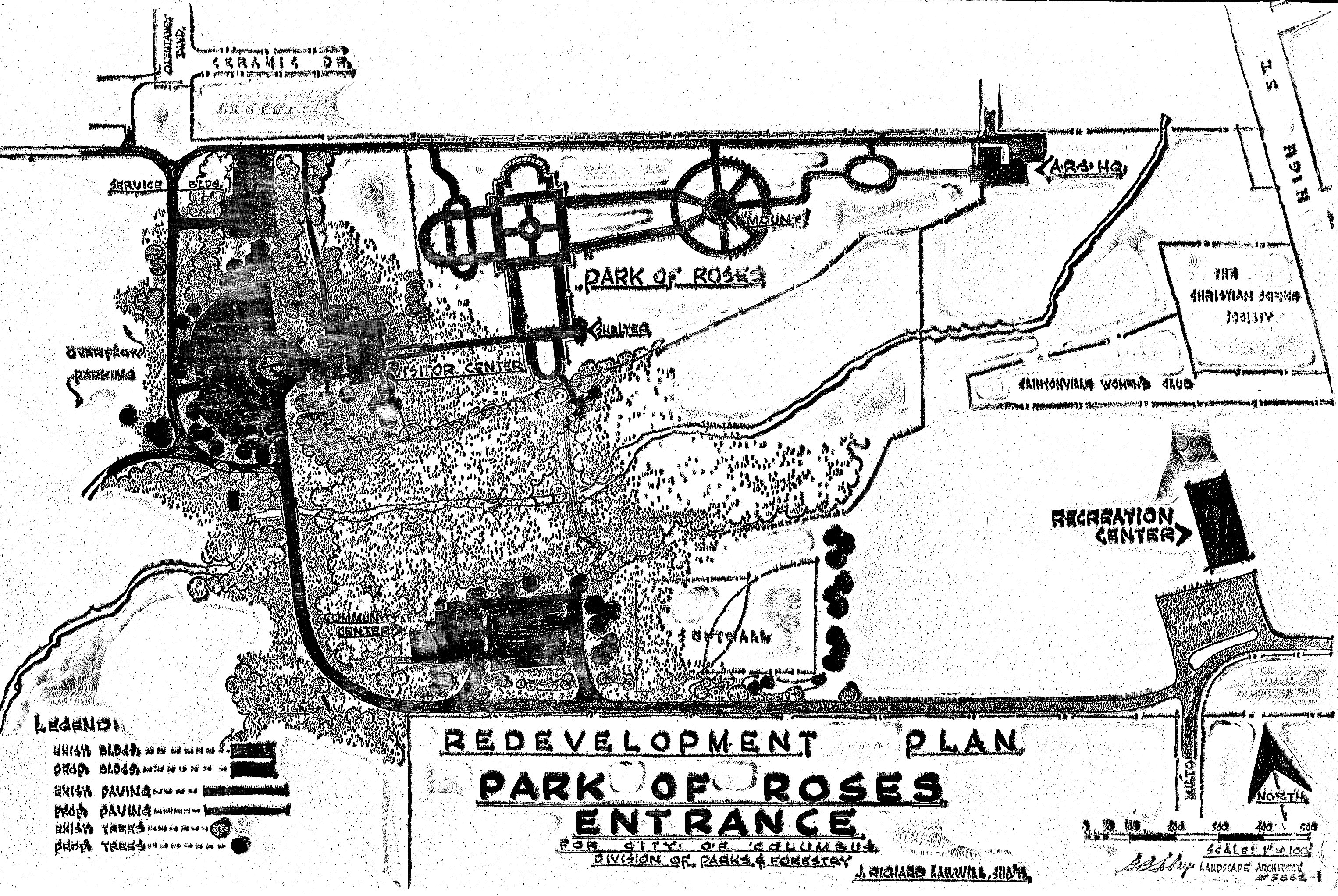 Members of the Columbus Rose Club & The Central Ohio Rose Society had long dreamed about a municipal rose garden for Columbus. Late in 1951 a committee was formed, consisting of members from both rose clubs, meeting several times with Mayor James A. Rhodes. The result being on April 19, 1952 Columbus City Council passed an ordinance and issued bonds for the Park of Roses. At the same time the Mayor created an advisory council known as the Columbus Rose Commission, administered by the Columbus Recreation & Parks Department, whose duties were to plan and execute a rose garden to be located in Whetstone Park. George B. Tobey, landscape architect, joined the efforts for park design and development. (Photo courtesy of the Clintonville Historical Society)
 Construction began June 1952. Minimal grading was necessary as the gentle slope of the meadow was ideal for drainage and air circulation. The entire area of 13 acres had sandy loam topsoil to a depth of 11-15 inches, which was indeed fortunate. All beds were excavated to a depth of 24 inches. The existing soil was removed and mixed with imported peat moss and commercial fertilizer. The materials were mixed four times before returning to the beds. The beds were allowed to settle before any planting was begun. (Photo courtesy of Terry Miller)
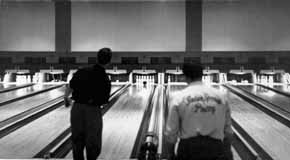 There were at least 3 bowling alleys in Clintonville: Olentangy Bowling Center (shown here), where Giant Eagle is today; at Graceland (northwest end), and also on the east side of High Street between Oakland Park and Dunedin. Hanging out at bowling alleys was a big deal for many teenagers—whether you bowled or not was immaterial. (Photo courtesy of Galen Gonser)
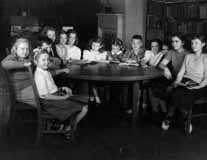 Reading has always been a popular Clintonville activity, in part because of its great library programs. The children above are planning the activities for the 1954 National Book Week. (Photo courtesy of the Clintonville Historical Society)
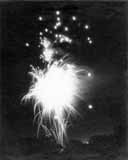 Clintonville’s Fourth of July celebration goes back at least as far as the 1930s, when The Booster and local business association sponsored an annual summer or fall community picnic at Olentangy Amusement Park. (The annual get-together may well be older yet.) Much like today, the early events had pet parades, bike parades, and fireworks. After the amusement park closed, the annual event was held at the Columbus Zoo. And then, when Whetstone Park was dedicated in the early 1950s, the community picnic was moved there and “annualized” to be held on the Fourth of July. The annual community breakfast, originally held for the volunteer workers of the Fourth of July picnic, quickly became another holiday tradition.
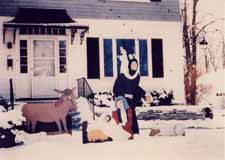 In a previous post, I mentioned that Engine House 19 won the Dispatch’s annual holiday decorating content. This house at on East North Broadway won the contest three years in a row. (Photo coourtesy of Judy Kress)
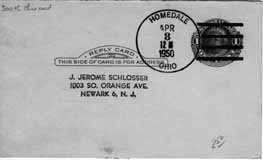 Besides the Orchard and High Street Post office, and the Evanston Post Office, there have been sundry other post offices serving the Clintonville area. This is a cancellation of Homedale’s post office, 1950, located during the 1950s in what would later become part of northern Clintonville. (Photo courtesy of Dave Foust)
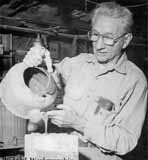 Nicodemus lived and had his studio (Nicodemus Ferro-Stone Ceramics) on Clinton Heights Avenue. There he produced more than 1,000 molds in his basement workshop. He had two home-made kilns in the garage, which also housed a showroom. Nicodemus pieces are known for their translucent glaze highlighting the clay’s red tint and producing russet brown undertones. Upon Nicodemus’ death and at his request, all the molds and glazes were destroyed. (Photo courtesy of Darrell Nicodemus)